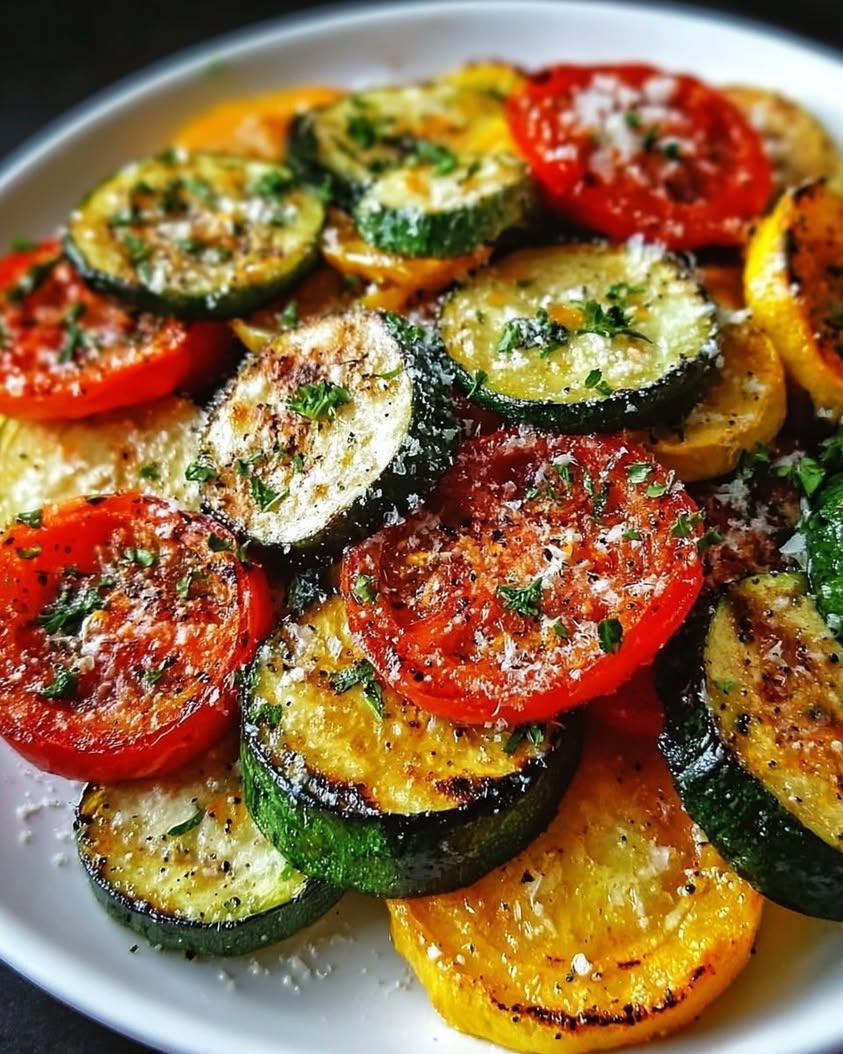
Oven-Roasted Zucchini, Squash, and Tomatoes with Parmesan: A Vibrant Summer Side Dish
This Oven-Roasted Zucchini, Squash, and Tomatoes with Parmesan recipe captures the very essence of a summer garden on a single sheet pan. Imagine tender, caramelized vegetables mingling with juicy, burst tomatoes, all crowned with a golden, savory crust of melted Parmesan cheese. The process transforms simple, fresh produce into a side dish that feels both rustic and elegant. Consequently, it is a perfect solution for busy weeknights yet impressive enough for weekend entertaining. The magic happens in the oven, where high heat coaxes out natural sugars and deep, complex flavors with minimal effort from you.
Furthermore, this dish celebrates seasonal abundance. When zucchini and summer squash overflow at the farmers market, this recipe provides a delicious and reliable way to enjoy them. The addition of cherry tomatoes brings a welcome pop of acidity and color, balancing the sweetness of the roasted squash. Finally, a generous sprinkle of Parmesan cheese adds a salty, umami-rich finish that ties everything together beautifully. This Oven-Roasted Zucchini, Squash, and Tomatoes with Parmesan is more than just a recipe; it is a celebration of fresh, simple ingredients treated with respect.
Ultimately, the appeal lies in its versatility. You can serve it alongside grilled chicken or fish, toss it with pasta, or even top it with a fried egg for a hearty vegetarian meal. The recipe is forgiving and adaptable, encouraging you to make it your own. Whether you are a seasoned cook or just starting out, this guide will walk you through every step to ensure perfect results every time. Let us dive into the vibrant world of this easy roasted vegetable medley.
Quick Recipe Highlights
- Flavor Profile: This dish offers a harmonious blend of sweet, savory, and tangy notes. The natural sugars in the zucchini and squash caramelize during roasting, creating a deep sweetness. Meanwhile, the tomatoes provide a bright, acidic contrast, and the Parmesan cheese contributes a rich, salty umami finish that perfectly balances the vegetables.
- Texture: You will experience a delightful contrast in every bite. The zucchini and squash become tender and almost creamy inside while developing lightly crisp, golden edges. The cherry tomatoes soften and may burst, releasing their juicy interior. The Parmesan cheese forms a delicate, crispy crust on top, adding a satisfying crunch.
- Aroma: As it roasts, your kitchen will fill with an irresistible fragrance. Initially, you will smell the earthy, herbal notes of olive oil and garlic. Subsequently, the sweet, caramelized scent of roasting vegetables takes over. Finally, the nutty, savory aroma of browning Parmesan cheese signals that your dish is ready to enjoy.
- Visual Appeal: This dish is a feast for the eyes with its vibrant color palette. The green and yellow of the squash play beautifully against the red of the tomatoes. After roasting, the colors deepen, and the golden-brown cheese topping adds a professional, finished look that makes the plate incredibly inviting.
- Skill Level Needed: This is an ideal recipe for beginners. The techniques involve simple slicing, tossing, and roasting. There is no complicated knife work or precise temperature control required. Essentially, if you can use a knife and an oven, you can master this easy roasted vegetable dish with confidence.
- Special Equipment: You need only very basic kitchen tools. A good chef’s knife and cutting board are essential for prepping the vegetables. A large mixing bowl helps with even coating. Most importantly, a sturdy rimmed baking sheet is crucial for containing juices and allowing for proper air circulation during roasting.
Recipe Overview
- Difficulty Level: We classify this Oven-Roasted Zucchini, Squash, and Tomatoes with Parmesan as an easy recipe. The steps are straightforward and sequential, requiring no advanced culinary skills. You simply chop, season, and roast. There is no fussy technique or demanding timing, making it a stress-free cooking project for any home cook.
- Category: This versatile dish fits into multiple meal categories. Primarily, it serves as a stellar vegetable side dish for proteins like chicken, steak, or fish. Alternatively, you can easily transform it into a main course by adding beans, grains, or pasta. It also works wonderfully as part of a brunch spread or a potluck contribution.
- Cuisine: While the method of roasting vegetables is universal, this particular combination leans into Mediterranean and Italian-American culinary traditions. The use of olive oil, garlic, and Parmesan cheese is classic in those regions. The focus on fresh, seasonal produce prepared simply is a hallmark of rustic Mediterranean cooking.
- Cost: This is an exceptionally budget-friendly recipe, especially in the summer months. Zucchini, squash, and tomatoes are often very affordable when in season. The other ingredients—oil, garlic, salt, pepper, and Parmesan—are common pantry staples. Overall, you can create a generous, impressive side dish for four people for just a few dollars.
- Season: This recipe is perfect for late spring through early fall. That is when zucchini, yellow squash, and tomatoes are at their peak of flavor, sweetness, and affordability. However, you can make it year-round using greenhouse vegetables, though the flavor intensity may be slightly milder during the winter.
- Occasion: Its flexibility makes it suitable for countless occasions. It is a quick weeknight side, a healthy meal prep component, or a beautiful addition to a holiday table like Thanksgiving. For example, its bright colors make it a festive dish for summer barbecues and casual dinner parties alike.
Why You’ll Love This Recipe
First and foremost, the taste and texture of this Oven-Roasted Zucchini, Squash, and Tomatoes with Parmesan are utterly irresistible. The roasting process intensifies the natural flavors of the vegetables in a way that boiling or steaming simply cannot match. You get sweet, caramelized edges on the squash, juicy bursts of flavor from the tomatoes, and a savory, crispy cheese topping that adds a luxurious element. Each forkful delivers a satisfying contrast between tender vegetable flesh and delightful crispy bits. This combination makes even the most vegetable-averse eater come back for seconds, proving that healthy food can be deeply craveable.
Additionally, the convenience factor is a major win. This is a true one-pan wonder that minimizes both prep time and cleanup. After a quick chop and toss, the oven does nearly all the work for you. This hands-off approach frees you up to prepare the rest of your meal, set the table, or simply relax. Moreover, the recipe is incredibly forgiving; a few extra minutes in the oven will not ruin it. This makes it a reliable staple for busy evenings when you want a healthy, homemade side without the stress of complicated techniques or constant stirring.
From a nutritional standpoint, this dish is a powerhouse. Zucchini and yellow squash are low in calories but high in essential nutrients like vitamin C, vitamin A, and potassium. Tomatoes are famous for their lycopene content, an antioxidant with numerous health benefits. Cooking tomatoes actually increases the bioavailability of lycopene. Using olive oil adds heart-healthy monounsaturated fats. Therefore, this Oven-Roasted Zucchini, Squash, and Tomatoes with Parmesan is not just delicious; it is a vibrant contribution to a balanced diet, packed with vitamins, antioxidants, and fiber.
For entertaining, this recipe offers tremendous social value. It is visually stunning, making your table look abundant and thoughtfully prepared. It caters easily to various dietary needs, being naturally gluten-free and vegetarian. You can easily double or triple the recipe to feed a crowd using multiple sheet pans. Guests always appreciate a flavorful, colorful vegetable dish that feels special. Serving this shows you care about both flavor and presentation, elevating a simple gathering into a more memorable occasion.
Finally, the cost-effectiveness and accessibility are undeniable. The main ingredients are among the most affordable produce items, particularly during their peak season. You likely already have the oil, salt, pepper, and garlic in your kitchen. Even the Parmesan cheese, while a premium ingredient, is used sparingly to maximize impact. This means you can create a restaurant-quality vegetable side for a fraction of the cost of dining out. Essentially, this recipe delivers maximum flavor and visual appeal with minimal financial investment, making it a smart choice for everyday and special meals alike.
Historical Background and Cultural Significance
The practice of roasting vegetables is as old as cooking itself, rooted in the basic human use of fire. However, the specific combination of zucchini, squash, tomatoes, and cheese finds its modern heart in the culinary traditions of the Mediterranean basin. In countries like Italy, Greece, and southern France, a philosophy of “cucina povera” or “poor cooking” emphasized transforming humble, readily available ingredients into deeply satisfying meals. Summer squash and tomatoes, being prolific growers in warm climates, became staples in this tradition. Roasting them was a simple way to concentrate their flavors and create a filling dish.
Culturally, this dish represents the celebration of the summer harvest. In many Mediterranean villages, the abundance of zucchini and tomatoes necessitates creative and preserving techniques. Dishes like ratatouille in France or caponata in Sicily share a similar spirit: using olive oil and slow cooking to meld the flavors of seasonal vegetables. Adding cheese, particularly hard, aged cheeses like Parmesan or Pecorino, was a way to add richness and protein to vegetable-centric meals. This Oven-Roasted Zucchini, Squash, and Tomatoes with Parmesan is a streamlined, weeknight-friendly descendant of these slower-cooked, regional stews and bakes.
The recipe has evolved significantly with modern kitchen technology. Historically, these vegetables might have been cooked in a heavy pot over a hearth or in a communal oven. The contemporary use of a standard home oven and a baking sheet makes the process faster and more accessible to everyone. The high-heat roasting method we use today emphasizes caramelization and texture contrast more than the softer, stewed results of older methods. The addition of Parmesan, while inspired by Italian cuisine, is now a global favorite, showcasing how culinary ideas travel and adapt.
Regional variations of this concept are endless. In Provence, herbes de Provence might be used instead of simple Italian seasoning. In the American South, a sprinkle of smoked paprika could add a different dimension. Some versions include breadcrumbs mixed with the cheese for extra crunch. Others might add a drizzle of balsamic glaze after roasting. This adaptability is key to the recipe’s enduring popularity. It provides a perfect template that home cooks around the world can customize based on their local produce, pantry staples, and personal taste preferences, keeping the spirit of seasonal, simple cooking alive.
Ingredient Deep Dive
Zucchini & Yellow Summer Squash: Both zucchini and yellow squash are varieties of summer squash, cultivated for thousands of years in the Americas before being brought to Europe. They are technically fruits but treated as vegetables in cooking. Nutritionally, they are very low in calories and carbohydrates but excellent sources of vitamin C, manganese, and antioxidants like lutein and zeaxethin, which support eye health. When selecting, choose firm, medium-sized squash with glossy, unblemished skin; overly large ones can be seedy and watery. Store them unwashed in a plastic bag in the refrigerator’s crisper drawer for up to a week. For substitutions, pattypan squash or even thick slices of eggplant can work using similar roasting times.
Cherry or Grape Tomatoes: Tomatoes originated in South America and are a cornerstone of Mediterranean cuisine post-Columbian Exchange. Cherry tomatoes are particularly prized for roasting because their high sugar content caramelizes beautifully, and their thick skin helps them hold shape. They are packed with lycopene, vitamin C, potassium, and folate. Lycopene, a powerful antioxidant, becomes more bioavailable when tomatoes are cooked. Choose tomatoes that are plump, smooth, and deeply colored, still attached to their vine if possible for maximum flavor. Store them at room temperature out of direct sunlight; refrigeration damages their texture and flavor. If substituting, use diced Roma or plum tomatoes, though they may release more liquid.
Parmesan Cheese: Authentic Parmigiano-Reggiano is a hard, granular cheese from Italy with a history dating back nearly 1,000 years. It is made from raw cow’s milk and aged for a minimum of 12 months, developing complex umami and nutty flavors. It is a good source of protein and calcium but also high in sodium and saturated fat, so a little goes a long way. Always buy a block and grate it yourself; pre-grated cheese contains anti-caking agents that prevent proper melting and browning. Store the wrapped block in the refrigerator. For substitutions, Pecorino Romano offers a saltier, sharper punch, while a vegetarian hard cheese or nutritional yeast can provide a dairy-free alternative.
Olive Oil: Extra virgin olive oil (EVOO) is the unrefined juice of olives, central to the Mediterranean diet for millennia. It contains monounsaturated fats and antioxidants like polyphenols, linked to heart health and reduced inflammation. Its flavor is crucial here, so use a good-quality EVOO you enjoy tasting. It acts as a cooking medium, promotes caramelization, and helps the seasonings adhere. Store it in a cool, dark place to prevent rancidity. For higher-temperature roasting, some prefer avocado oil for its higher smoke point, but you will sacrifice the distinctive fruity, peppery notes of EVOO.
Garlic: Garlic has been used both culinarily and medicinally for over 5,000 years. It contains allicin, a compound with potential antibacterial and antiviral properties. When roasted, garlic mellows dramatically, losing its sharp bite and becoming sweet, creamy, and nutty. Choose firm, plump heads with tight, papery skin. Store in a cool, dry, dark place with good air circulation; do not refrigerate. For this recipe, minced fresh garlic is best for distributing flavor. As a substitute, 1/4 teaspoon of garlic powder can be used, though the flavor profile will be less complex and more one-dimensional.
Common Mistakes to Avoid
- Crowding the Pan: Overfilling the baking sheet is the most common error. When vegetables are piled on top of each other, they steam instead of roast. This results in soggy, pale vegetables rather than caramelized, crispy-edged ones. Always use a large enough pan and spread the vegetables in a single, even layer, even if it means using two pans.
- Underseasoning: Vegetables need ample seasoning to shine. Do not be shy with salt and pepper. Season at the tossing stage so every piece gets coated. Remember, the Parmesan adds saltiness, but the vegetables themselves need a good base layer of seasoning to bring out their natural flavors during the roasting process.
- Using Pre-Grated Parmesan: Pre-grated cheese contains cellulose or other anti-caking agents. These prevent the cheese from melting into a nice, crispy crust and can leave a gritty texture. For the best results, always buy a block of Parmesan and grate it fresh just before using. The difference in flavor and texture is dramatic.
- Skipping the Preheat: Putting vegetables into a cold oven drastically changes the cooking process. A properly preheated oven ensures immediate sizzling and caramelization. If the oven is not hot, the vegetables will leach moisture and become mushy before they have a chance to brown properly.
- Cutting Vegetables Inconsistently: If your vegetable pieces are different sizes, they will cook unevenly. Smaller pieces will burn before larger ones are tender. Take a moment to slice the zucchini and squash into uniform half-moons or chunks so everything finishes roasting at the same time for a perfect texture throughout.
- Adding Cheese Too Early: Sprinkling the Parmesan at the beginning of roasting will cause it to burn and become bitter. The cheese should be added in the last 5-10 minutes of cooking. This allows it to melt and form a perfect golden crust without scorching, protecting its nutty flavor.
- Not Tossing Halfway Through: Ovens have hot spots. If you do not open the oven and give the vegetables a good stir or shake halfway through the cooking time, the pieces on the edges will cook faster than those in the center. A quick toss ensures even exposure to heat and consistent browning.
- Using a Wet Bowl: After washing your vegetables, ensure they are thoroughly dried before tossing them with oil. Excess water on the veggies or in the mixing bowl will create steam on the pan, hindering the roasting process and leading to soggy results instead of beautifully caramelized ones.
Essential Techniques
Uniform Slicing: Consistent sizing is non-negotiable for even cooking. Aim for slices of zucchini and squash that are about 1/4 to 1/2-inch thick. If they are too thin, they will shrivel and burn; if too thick, the centers will be undercooked while the outsides are done. Use a sharp chef’s knife and take your time. A visual cue for success is that all pieces look roughly the same size and shape when spread on your cutting board before mixing.
Dry Tossing: This technique ensures every vegetable piece gets a thin, even coating of oil and seasoning. Place your dried vegetables in a large, dry mixing bowl. Drizzle the oil over them, then add your seasonings. Use your hands or two large spoons to toss and tumble everything together vigorously. You should see a light, shiny gloss on every piece without any pools of oil at the bottom of the bowl. This guarantees maximum flavor and proper browning.
Single-Layer Roasting: Spreading the vegetables in a single, uncrowded layer is the secret to caramelization, not steaming. After tossing, pour them onto your baking sheet and arrange them so they are not touching or overlapping. If necessary, use two pans. This allows hot air to circulate around each piece, evaporating surface moisture quickly and encouraging the Maillard reaction that creates complex, savory flavors and a beautiful color.
Timed Cheese Addition: Adding the grated Parmesan at the correct moment is a simple but crucial technique. Sprinkle it evenly over the vegetables during the last 5-10 minutes of roasting. This timing allows the cheese to melt, bubble, and turn golden brown without burning. The visual cue is a melted, lightly spotted golden crust. If you see the cheese turning dark brown or black, it was added too early or the oven rack is too high.
Pro Tips for Perfect Oven-Roasted Zucchini, Squash, and Tomatoes with Parmesan
First, for extra flavor, let your seasoned vegetables marinate for 15-20 minutes before roasting. This allows the salt to draw out a little moisture and the garlic and herbs to penetrate. Just do not let them sit too long or they will become watery.
Second, consider using the convection roast setting if your oven has it. The fan circulates hot air more efficiently, leading to faster and more even browning. If using convection, reduce the oven temperature by 25 degrees Fahrenheit and check for doneness a few minutes early.
Third, add a splash of acid after roasting. A light drizzle of balsamic glaze, lemon juice, or a high-quality aged vinegar just before serving can brighten all the flavors and cut through the richness of the cheese beautifully.
Fourth, mix up your herbs. While Italian seasoning is classic, try fresh thyme, rosemary, or oregano. Add fresh, delicate herbs like basil or parsley after roasting to preserve their bright color and flavor.
Fifth, for a richer crust, mix your grated Parmesan with a tablespoon of fine breadcrumbs or panko before sprinkling. This creates an even crispier, more textured topping that adds another dimension to the dish.
Sixth, roast on parchment paper or a silicone mat for easier cleanup. The tomatoes may release sticky juices that can caramelize and stick to a bare pan. Lining the pan guarantees your vegetables will release easily and saves you from scrubbing.
Seventh, do not discard any leftover pan juices. After removing the vegetables, scrape any caramelized bits and savory juices from the pan and drizzle them over the top of the finished dish for an intense flavor boost.
Eighth, let the dish rest for 5 minutes after taking it out of the oven. This allows the vegetables to reabsorb some of their own juices and the cheese to set slightly, making serving easier and the flavors more cohesive.
Variations and Adaptations
For regional variations, explore different herb and cheese profiles. A French version might use herbes de Provence and Gruyère cheese. A Greek adaptation could include oregano, lemon zest, and crumbled feta added after roasting. For a Spanish twist, sprinkle with smoked paprika and Manchego cheese. These simple swaps can transport the basic recipe across the Mediterranean with authentic flavors.
Seasonal adaptations are easy. In fall, swap the tomatoes for cubed butternut squash and add sliced red onion. In winter, use hearty vegetables like Brussels sprout halves and cauliflower florets, adjusting roasting times as needed. Spring might bring asparagus and new potatoes to the mix. The roasting method remains constant, but the vegetable palette changes with the calendar.
Dietary modifications are straightforward. For a vegan version, omit the Parmesan and use a sprinkle of nutritional yeast mixed with breadcrumbs for a cheesy, crunchy topping. For a dairy-free option, a drizzle of garlic-infused olive oil after roasting adds great flavor. To make it keto or low-carb, ensure you are using a sugar-free seasoning blend and enjoy as is; the vegetables are naturally low in net carbs.
Flavor variations can come from your spice rack. Add heat with red pepper flakes or a pinch of cayenne in the oil. For an earthy note, add a teaspoon of ground cumin or coriander. Umami depth can be boosted with a sprinkle of mushroom powder or a dash of soy sauce (tamari for gluten-free) mixed into the oil before tossing.
Texture modifications can cater to different preferences. For more crunch, add sliced red onion or bell pepper, which retain some bite. For a softer, more melded dish, roast the vegetables longer at a slightly lower temperature until they are very tender and almost jammy, perfect for spreading on crusty bread.
Presentation alternatives can elevate the dish. Serve it in a rustic ceramic dish straight from the oven. Alternatively, spoon it over a bed of creamy polenta, fluffy quinoa, or tangled pasta. For individual servings, present it in small ramekins or on toasted crostini as an elegant appetizer.
Serving and Presentation Guide
For plating, choose a shallow, wide bowl or a platter with a lip to contain any juices. Use a large spoon or spatula to gently transfer the vegetables, trying to keep some of the cheesy topping visible on top. Avoid piling them high in a mound; instead, spread them out slightly to showcase the beautiful colors and textures. Garnish with a final flourish of fresh, tender herbs like torn basil, chopped parsley, or chives. A final drizzle of high-quality extra virgin olive oil adds shine and reinforces the flavor.
Traditional accompaniments include simple grilled or roasted proteins. It pairs perfectly with herb-roasted chicken, grilled flank steak, pan-seared salmon, or seared scallops. For a vegetarian feast, serve it alongside a hearty grain salad, a white bean puree, or a crusty loaf of bread to soak up the delicious juices. It is a classic side for Italian-themed meals alongside pasta dishes.
Modern serving suggestions think outside the side dish box. Toss the warm roasted vegetables with cooked pasta, a ladle of pasta water, and extra Parmesan for a quick primavera. Use them as a vibrant topping for pizza or flatbread. Fold them into scrambled eggs or an omelet for a luxurious breakfast. Spoon them over a bed of greens while still warm to wilt the lettuce slightly for a hearty salad.
Temperature considerations are important. This dish is best served warm, immediately after the cheese has set from the oven. However, it is also delicious at room temperature, making it excellent for picnics or potlucks. Avoid serving it cold from the refrigerator, as the textures can become less appealing. If you must reheat, do so gently in a warm oven or skillet to re-crisp the cheese slightly.
Portion control is easy with this healthy dish. A standard serving is about one cup of the roasted vegetable mix. Because it is so flavorful and satisfying, a little goes a long way as a side. If serving as a main component for a vegetarian meal, aim for 1.5 to 2 cups per person, possibly with added protein like chickpeas or a fried egg on top.
Wine and Beverage Pairing
For wine pairings, you want something that complements the sweet vegetables, acidic tomatoes, and savory cheese without overpowering them. A crisp, unoaked white wine like Sauvignon Blanc or Pinot Grigio works beautifully, as their acidity matches the tomatoes and cuts through the oil. A light-bodied red served slightly chilled, such as a Beaujolais or a Pinot Noir, can also be delightful, especially if you are serving the dish with a grilled meat. The key is to avoid heavily oaked or high-tannin wines that might clash with the vegetables’ delicate flavors.
Non-alcoholic alternatives should offer refreshment and cleansing qualities. Sparkling water with a squeeze of lemon or lime is always a winner. For more flavor, try a ginger beer or a tart cherry spritzer. Iced herbal teas, like mint or basil tea, can echo the herbal notes in the dish. A simple, not-too-sweet lemonade also provides a nice contrast to the savory, umami-rich components of the recipe.
While not a traditional coffee or tea dish, certain beverages could work if serving this for brunch or a light lunch. A medium-roast coffee would be too bold, but a light, citrusy tea like Earl Grey or a green tea could be pleasant. Ultimately, the focus should be on beverages that refresh the palate between bites of the flavorful, garlicky, and cheesy vegetables.
Temperature considerations for beverages are standard: white wines and non-alcoholic spritzers should be well-chilled. Light reds are best served at a cool cellar temperature, around 55°F. Iced teas and lemonades should be cold. The goal is to have a drink that feels refreshing against the warm, savory notes of the Oven-Roasted Zucchini, Squash, and Tomatoes with Parmesan.
Serving suggestions are simple. Pour wines into appropriate glassware to enhance their aroma. Serve non-alcoholic options in tall glasses with plenty of ice and perhaps a herb garnish that mirrors the dish, like a sprig of thyme or a basil leaf. This attention to detail makes the entire meal feel more cohesive and thoughtfully prepared.
Storage and Shelf Life
Proper storage is key to maintaining quality. Allow the leftovers to cool completely to room temperature before storing, as placing hot food in the refrigerator can raise the internal temperature and promote bacterial growth. Transfer the vegetables to an airtight container. They will keep in the refrigerator for 3 to 4 days. The Parmesan topping will soften in the fridge, but the flavors will remain good.
Reheating instructions are important for texture. The microwave will make the vegetables soggy and the cheese rubbery. For best results, reheat leftovers in a conventional oven or toaster oven at 375°F for about 10 minutes, or until warmed through. You can also reheat them in a dry skillet over medium heat, stirring occasionally, to help re-crisp some of the edges and the cheese.
Freezing is not generally recommended for this dish. The high water content in zucchini and tomatoes means they will become very mushy and watery upon thawing. The texture will be compromised significantly. If you must freeze it, expect to use the thawed product in soups, stews, or sauces where texture is less critical, rather than as a standalone side dish.
Signs of spoilage are typical for cooked vegetables. Discard the leftovers if you notice an off or sour smell, significant mold growth (often fuzzy and green or white), or if the vegetables have become slimy to the touch. When in doubt, it is always safer to throw it out. Proper cooling and refrigeration are your best defenses against spoilage.
Make Ahead Strategies
You can significantly speed up dinner prep by employing make-ahead strategies. The vegetables can be washed, dried, and sliced 1 day in advance. Store the sliced zucchini and squash in one airtight container or resealable bag, and the tomatoes in another. Keep them in the refrigerator. This prevents the tomatoes from making the squash watery. The garlic can also be minced ahead of time.
On the day of cooking, simply take your pre-prepped vegetables from the fridge, let them sit on the counter for 10-15 minutes to take the chill off, then proceed with tossing them in oil and seasoning. This cold-to-oven method is fine and will not drastically alter the roasting time. Grate your Parmesan cheese fresh when you are ready to cook for the best flavor and melting quality.
For full meal prep, you can roast the entire dish and portion it into containers for lunches throughout the week. While the cheese topping will soften, the flavors will meld and still be delicious. Reheat gently as described above. Alternatively, for a fresher taste, you could roast the vegetables without the cheese, store them, and then add fresh grated Parmesan when reheating individual portions.
The quality impact of prepping vegetables a day ahead is minimal. The key is to keep them dry and cold. Avoid seasoning them until just before roasting, as salt will draw out moisture over several hours, leading to soggier results. The make-ahead approach turns this already quick recipe into a true 15-minute hands-on meal, perfect for the busiest of schedules.
Scaling Instructions
Halving the recipe is simple for smaller households. Use half the amount of all ingredients. You can use a standard baking sheet; just keep the vegetables in a single layer on one half of the pan. The cooking time may reduce by a few minutes, so start checking for doneness around the 18-20 minute mark. All other techniques remain the same.
Doubling or tripling the recipe for a crowd is easy but requires planning. Double or triple all ingredients proportionally. The critical factor is pan space: you must use multiple baking sheets to avoid crowding. Rotate the pans from top to bottom rack and turn them around front to back halfway through roasting to ensure even cooking. You may need to add a few extra minutes to the total cook time due to the increased volume in the oven.
Equipment adjustments are necessary when scaling. For larger batches, ensure you have enough large mixing bowls for tossing. If baking multiple sheets at once, consider if your oven has a convection setting to promote even air circulation. If not, it is still fine; just be diligent about rotating the pans. Do not try to roast more than two standard sheet pans in a home oven at once, as it will obstruct airflow.
Timing modifications are minimal when scaling up or down. The oven temperature should remain constant at 425°F. The main variable is the time needed for the increased moisture to evaporate from a larger batch. For doubled recipes, add approximately 5-7 minutes to the cook time, checking frequently after the 25-minute mark. Always rely on visual cues—golden edges and melted cheese—over strict timer settings.
Nutritional Deep Dive
A serving of this Oven-Roasted Zucchini, Squash, and Tomatoes with Parmesan provides a well-balanced mix of macronutrients. It is relatively low in carbohydrates, with most coming from the fiber-rich vegetables rather than simple sugars. The olive oil contributes healthy monounsaturated fats, which are beneficial for heart health. The Parmesan cheese adds a modest amount of protein and saturated fat. Overall, it is a nutrient-dense dish that fits well into various dietary patterns, offering satisfaction without excessive calories.
The micronutrient profile is impressive. Zucchini and squash are excellent sources of vitamin C, an antioxidant crucial for immune function and skin health, and vitamin A (from beta-carotene), important for vision. Tomatoes contribute more vitamin C and are the premier dietary source of lycopene. Garlic offers trace amounts of manganese, vitamin B6, and selenium. Olive oil contains vitamin E and polyphenols. Together, they make this side dish a powerful contributor to your daily vitamin and antioxidant intake.
Specific health benefits are linked to the key ingredients. The lycopene in cooked tomatoes is associated with a reduced risk of certain cancers and heart disease. The fiber in the vegetables promotes digestive health and satiety. The monounsaturated fats in olive oil support healthy cholesterol levels. The antioxidants throughout combat oxidative stress and inflammation in the body. Eating a diet rich in colorful vegetables like this is consistently linked to better long-term health outcomes.
For dietary considerations, this dish is naturally gluten-free and vegetarian. It can be part of a low-carb or keto diet, as zucchini and squash are low in net carbs. Those on a low-sodium diet should be mindful of the salt and Parmesan cheese; you can reduce both. For weight management, it is a high-volume, low-calorie food that helps fill you up with beneficial nutrients, making it an excellent choice for supporting healthy eating habits.
Dietary Adaptations
Gluten-Free: This recipe is naturally gluten-free as written. Simply ensure that any dried herb blends or seasonings you use are certified gluten-free, as some blends contain additives with gluten. There is no flour or other gluten-containing ingredient in the standard preparation.
Dairy-Free/Vegan: To make this dairy-free and vegan, omit the Parmesan cheese. For a cheesy, umami flavor and crispy topping, combine 3 tablespoons of nutritional yeast with 2 tablespoons of fine breadcrumbs (use gluten-free if needed) and a pinch of salt. Sprinkle this mixture over the vegetables in the last 5 minutes of roasting. The result is a savory, crunchy topping that mimics the role of Parmesan.
Low-Carb/Keto: This dish is already excellent for low-carb and keto diets. Zucchini and yellow squash are among the lowest-carb vegetables. Just double-check that your Italian seasoning blend does not contain added sugar or starches, which is rare but possible. Enjoy a generous serving as your vegetable side.
Paleo: For a Paleo adaptation, omit the Parmesan cheese, as dairy is not typically included in strict Paleo diets. You can add extra flavor with a sprinkle of chopped nuts like almonds or pine nuts in the Print
Oven-Roasted Zucchini, Squash, and Tomatoes with Parmesan
- Total Time: 45 minutes
- Yield: 4
Description
A vibrant and healthy vegetable medley roasted to tender perfection, topped with melted Parmesan cheese for a savory finish.
Ingredients
- 2 medium zucchinis, sliced into 1/2-inch rounds
- 2 medium yellow squash, sliced into 1/2-inch rounds
- 1 pint cherry tomatoes, halved
- 3 tablespoons olive oil
- 3 cloves garlic, minced
- 1 teaspoon dried oregano
- 1/2 teaspoon salt
- 1/4 teaspoon black pepper
- 1/2 cup grated Parmesan cheese
- 2 tablespoons fresh basil, chopped
Instructions
- Preheat the oven to 400°F (200°C) and line a large baking sheet with parchment paper.
- In a large bowl, toss the zucchini, squash, tomatoes, olive oil, garlic, oregano, salt, and pepper until evenly coated.
- Spread the vegetables in a single layer on the prepared baking sheet.
- Roast in the preheated oven for 20-25 minutes, or until vegetables are tender and lightly browned.
- Remove from oven, sprinkle evenly with Parmesan cheese, and return to oven for 3-5 minutes until cheese is melted.
- Garnish with fresh basil before serving warm.
Notes
You can customize the seasonings to taste.
- Prep Time: 15 minutes
- Cook Time: 30 minutes
- Method: Main
- Cuisine: American