No-Knead Rosemary Cranberry Bread with Olive Oil & Sea Salt: The Effortless Artisan Loaf
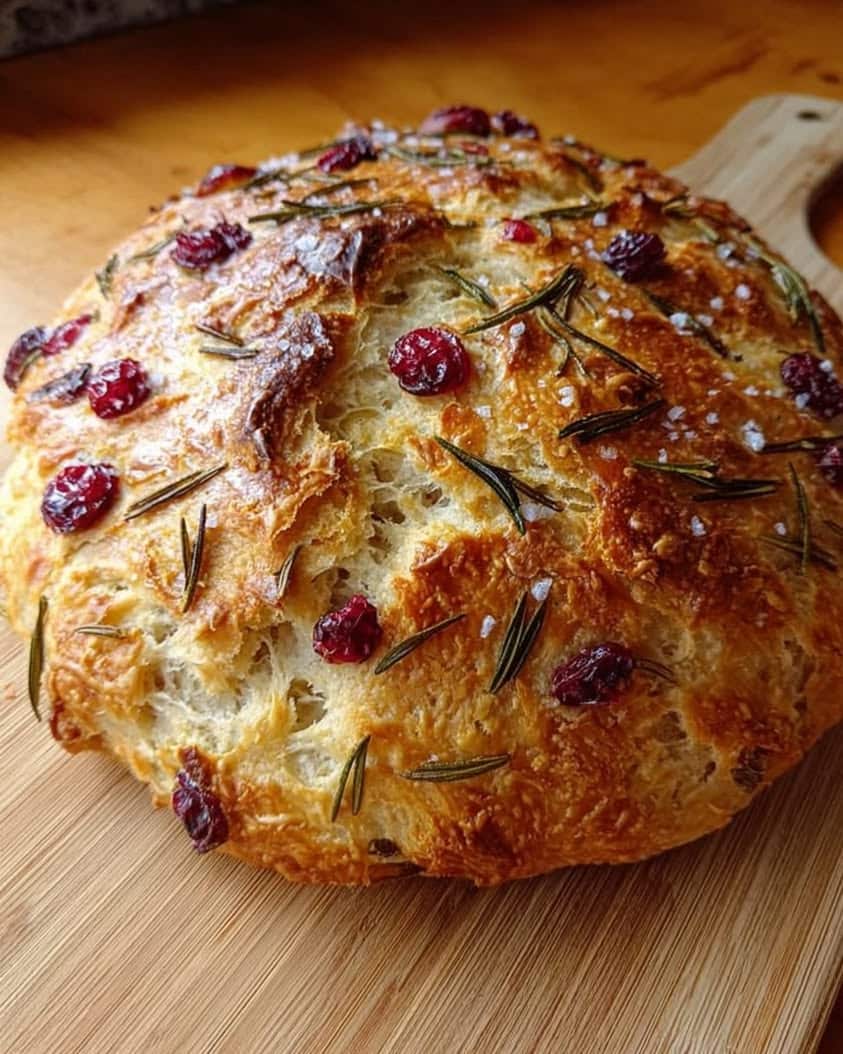
Imagine pulling a golden, crackling loaf of bread from your oven, its crust dusted with sea salt and its interior studded with ruby cranberries and fragrant rosemary. This No-Knead Rosemary Cranberry Bread with Olive Oil and Sea Salt delivers that exact experience with shockingly little effort. This recipe transforms simple pantry staples into a show-stopping centerpiece, perfect for both weeknight dinners and special holiday gatherings. Moreover, the magic of a long, slow rise develops incredible flavor and an airy, open crumb that rivals any professional bakery.
The beauty of this No-Knead Rosemary Cranberry Bread with Olive Oil and Sea Salt lies in its forgiving nature. Consequently, you don’t need any special skills or equipment, just a bit of patience while the yeast works its magic overnight. The result is a beautifully rustic loaf with a complex flavor profile: the earthy pine of rosemary, the sweet-tart pop of cranberries, the rich fruitiness of olive oil, and the savory crunch of flaky sea salt. Ultimately, this bread is as much a pleasure to make as it is to eat.
Quick Recipe Highlights
- Flavor Profile: This bread masterfully balances savory and sweet. The aromatic rosemary provides an earthy backbone, while the dried cranberries offer bright, tangy sweetness. Additionally, the high-quality olive oil enriches the crumb, and the sea salt on top creates the perfect savory finish.
- Texture: Expect a crisp, shattering crust that gives way to a tender, chewy, and remarkably airy interior. The cranberries add delightful juicy bursts, creating a wonderful contrast with the soft bread surrounding them.
- Aroma: As it bakes, your kitchen will fill with the comforting scent of toasting wheat and the herbal perfume of rosemary. The olive oil contributes a subtle fruity note, making the entire process a sensory delight.
- Visual Appeal: The loaf bakes to a deep, burnished gold with a beautifully irregular shape. The cranberries peek through the crust like jewels, and the flakes of sea salt sparkle on the surface, promising a rustic, artisanal look.
- Skill Level Needed: This is a beginner-friendly recipe designed for success. Since it requires no kneading and minimal handling, it’s perfect for novice bakers or anyone intimidated by traditional bread-making techniques.
- Special Equipment: You only need a large mixing bowl, a wooden spoon, and a heavy oven-safe pot with a lid, like a Dutch oven. The pot creates the perfect steamy environment for that professional-grade crust.
Recipe Overview
- Difficulty Level: We rate this No-Knead Rosemary Cranberry Bread with Olive Oil and Sea Salt as “Easy.” The process involves simply mixing ingredients and letting time do the work. There’s no complicated shaping or precise kneading required, making it virtually foolproof for bakers of all levels.
- Category: This recipe falls squarely into the category of Artisan Breads and Yeast Breads. It’s also a fantastic Holiday Bread or Special Occasion side, though it’s simple enough for everyday enjoyment.
- Cuisine: While no-knead bread has modern roots, the flavors are inspired by Mediterranean and American holiday cuisines. The use of olive oil and rosemary nods to Italian focaccia, while the cranberries are a classic North American addition.
- Cost: This is an incredibly cost-effective homemade bread. Basic flour, yeast, and salt are inexpensive, and the cranberries and rosemary are used in small amounts. Compared to a similar loaf from a bakery, you save significantly while achieving superior quality.
- Season: This bread is truly versatile across all seasons. However, it shines brightest in the fall and winter, as the rosemary and cranberry pairing evokes cozy, festive feelings perfect for Thanksgiving and Christmas tables.
- Occasion: Serve it as an impressive appetizer with olive oil for dipping, as a side for soups and stews, or as part of a holiday feast. It also makes a thoughtful and delicious homemade gift when wrapped in parchment and twine.
Why You’ll Love This Recipe
First and foremost, the taste and texture of this No-Knead Rosemary Cranberry Bread with Olive Oil and Sea Salt are utterly irresistible. Each bite delivers a symphony of contrasts: the crunchy, salty crust against the soft, pillowy interior, and the herbal rosemary against the sweet-tart cranberry. This complexity of flavor makes it far more interesting than a plain loaf. Furthermore, the satisfaction of breaking into a homemade boule you created yourself is an unbeatable feeling that store-bought bread simply cannot match.
The convenience factor of this recipe is a major win. You spend about 15 minutes actively preparing the dough, then you walk away for 12 to 18 hours. This hands-off approach fits seamlessly into a busy schedule. You can mix the dough before bed and bake it the next evening for dinner, or mix it in the morning for fresh bread by nighttime. This flexibility demystifies artisan bread baking, proving you don’t need a whole day dedicated to the kitchen to produce spectacular results.
From a nutritional standpoint, you have complete control over the ingredients in your No-Knead Rosemary Cranberry Bread with Olive Oil and Sea Salt. You can choose unbleached flour, a high-quality extra virgin olive oil, and unsweetened dried cranberries. Unlike commercial breads, there are no preservatives, dough conditioners, or excess sugar. Additionally, the olive oil provides heart-healthy monounsaturated fats, and the rosemary contains antioxidants, making this a more wholesome choice for you and your family.
This loaf possesses incredible social and entertaining value. Presenting a warm, homemade loaf at a dinner party instantly elevates the meal and impresses your guests. It sparks conversation and shows a level of care and craftsmanship. Similarly, bringing it to a potluck or as a hostess gift is always appreciated. The beautiful appearance and gourmet flavor profile make it look like you went to a specialty bakery, when in reality you executed a simple, stress-free recipe.
Finally, the cost-effectiveness and accessibility are undeniable. The ingredients are basic and affordable, available at any standard grocery store. For the price of one mediocre bakery loaf, you can make several of these beautiful breads at home. This accessibility empowers you to enjoy high-quality artisan bread regularly, turning a simple weeknight meal into something special without straining your budget.
Historical Background and Cultural Significance
The story of no-knead bread is a relatively modern culinary revolution. Food writer Mark Bittman famously published the recipe developed by Jim Lahey of Sullivan Street Bakery in the New York Times in 2006. This method upended traditional bread-making wisdom by proving that a very wet dough and a very long fermentation could develop gluten and flavor without any manual kneading. The technique democratized artisan bread baking for home cooks worldwide, making the dream of a perfect, crusty loaf achievable in a home oven with minimal effort.
Culturally, bread itself is a universal staple, a symbol of sustenance and community across countless civilizations. The act of breaking bread together is a foundational social ritual. This No-Knead Rosemary Cranberry Bread with Olive Oil and Sea Salt builds on that tradition by incorporating festive, celebratory flavors. Rosemary has long been associated with remembrance, friendship, and celebration in European folklore. Meanwhile, cranberries are deeply ingrained in North American food culture, particularly as a staple of Thanksgiving dinners, symbolizing harvest and abundance.
The evolution of this specific recipe is a testament to home cook creativity. Bakers began experimenting with the basic no-knead formula, adding herbs, cheeses, fruits, and nuts to create endless variations. The addition of rosemary and cranberry is a natural and popular progression, combining Old World herbal notes with New World fruit. The use of olive oil in the dough, rather than just for dipping, further enriches it and connects it to Mediterranean baking traditions, where olive oil is a fundamental ingredient.
Regional variations of this concept are endless. In Provence, you might find a no-knead bread with herbes de Provence and olives. In Tuscany, sun-dried tomatoes and basil could be the star additions. The cranberry and rosemary version has a particularly strong foothold in North American holiday baking. Some bakers add orange zest for a brighter citrus note, while others might incorporate walnuts or pecans for added crunch. This adaptability is the recipe’s greatest strength, allowing it to reflect local tastes and seasonal ingredients.
Ingredient Deep Dive
Bread Flour: Bread flour is the structural hero of this loaf. Its higher protein content (typically 12-14%) compared to all-purpose flour creates more gluten. During the long fermentation, this gluten network develops strength, trapping gas bubbles from the yeast and giving the bread its lofty, airy crumb and chewy texture. For the best No-Knead Rosemary Cranberry Bread with Olive Oil and Sea Salt, stick with bread flour. If you must substitute, all-purpose flour will work but may yield a slightly less chewy, more tender crumb. Store flour in a cool, dry place in an airtight container to prevent it from absorbing moisture and odors.
Active Dry Yeast: This microscopic fungus is the leavening agent, responsible for making the bread rise. It feeds on the sugars in the flour, producing carbon dioxide gas that gets trapped in the gluten network. The long, cold rise called for in no-knead baking allows for slower fermentation, which develops more complex, slightly sour flavors. Ensure your yeast is fresh for reliable results. You can test it by proofing it in warm water with a pinch of sugar; if it becomes foamy after 5-10 minutes, it’s active. Store yeast in the refrigerator or freezer to extend its shelf life significantly.
Dried Cranberries: These little ruby gems provide pockets of sweet and tangy flavor that contrast beautifully with the savory bread. They are typically made by partially dehydrating fresh cranberries, often with added sugar to balance their natural tartness. For this recipe, you can use sweetened or unsweetened varieties based on your preference. For a more sophisticated touch, try plumping them before use by soaking in warm water, orange juice, or even a little wine for 15 minutes, then draining. This prevents them from drawing too much moisture from the dough during baking and makes them extra juicy.
Fresh Rosemary: Rosemary is an aromatic evergreen herb native to the Mediterranean. Its needle-like leaves impart a powerful, piney fragrance and a slightly bitter, lemony-pine flavor that stands up beautifully to the long baking process. Fresh rosemary is essential here; dried rosemary can be woody and harsh. To prepare it, strip the leaves from the stem by pinching the top and running your fingers down. Then, chop the leaves finely to distribute the flavor evenly throughout the dough. Rosemary is rich in antioxidants and has been linked to improved digestion and memory.
Extra Virgin Olive Oil: This ingredient does double duty. In the dough, it enriches the crumb, tenderizes it slightly, and contributes a subtle fruity, peppery background note. On top, a final brush adds sheen and helps the sea salt adhere. Using a good-quality extra virgin olive oil you enjoy tasting is recommended, as its flavor will come through. Olive oil is a cornerstone of the Mediterranean diet, packed with monounsaturated fats and antioxidants. For storage, keep it in a cool, dark place to preserve its flavor and health benefits.
Flaky Sea Salt: The final flourish is not just decorative. Flaky sea salt, like Maldon, provides delightful bursts of savory salinity that enhance every other flavor in the bread. Its delicate, crunchy texture contrasts with the soft crust. The salt is added after baking so it doesn’t dissolve into the dough. This finishing salt is minimally processed, retaining trace minerals. Avoid using fine table salt here, as it will simply taste salty without the textural pop. The salt also balances the sweetness of the cranberries perfectly.
Common Mistakes to Avoid
- Using Hot Water to Mix the Dough: Water that is too hot (above 115°F) can kill the yeast, preventing your bread from rising. Always use lukewarm water, ideally between 105°F and 115°F. It should feel warm but not hot to the touch.
- Skimping on the Rise Time: The long, slow fermentation is non-negotiable for developing the flavor and structure of no-knead bread. Do not rush the 12-18 hour bulk fermentation. The dough should look bubbly and roughly doubled in size before you proceed.
- Using a Pot That Isn’t Oven-Safe: The Dutch oven method is crucial for steam. Ensure your pot and its lid can withstand 450°F. Pots with plastic handles or non-stick coatings not rated for high heat can be damaged or release fumes.
- Not Preheating the Pot: You must place your empty Dutch oven in the oven as it preheats for a full 30 minutes. A blazing hot pot is what instantly creates steam from the wet dough, leading to that signature crackly, blistered crust.
- Over-Flouring the Shaping Surface: When turning the dough out to shape it, use just a light dusting of flour. Too much flour worked into the surface can create dry, tough patches in the final loaf and prevent proper seam sealing.
- Forgetting to Score the Dough: Making a shallow slash (about ½ inch deep) on top of the loaf just before baking is essential. This “score” gives the expanding dough a controlled place to burst open. Without it, the bread may tear unpredictably.
- Opening the Oven Too Early: Resist the urge to open the oven door during the first 30 minutes of baking with the lid on. This releases the precious steam that is creating the crust. Peeking can result in a paler, softer crust.
- Slicing the Bread While Hot: It is incredibly tempting to cut into a warm loaf, but the interior is still setting. Slicing too soon can lead to a gummy texture. Allow the No-Knead Rosemary Cranberry Bread with Olive Oil and Sea Salt to cool on a wire rack for at least one hour.
- Storing Bread in the Refrigerator: Refrigeration accelerates staling in bread. Instead, store your completely cooled loaf at room temperature in a paper bag or wrapped in a clean kitchen towel for up to 2 days. For longer storage, freeze it.
Essential Techniques
The Long, Cold Fermentation: This is the cornerstone technique of no-knead baking. By allowing the very wet dough to rest for 12-18 hours at room temperature, you give wild yeasts and bacteria time to work. They slowly break down starches and proteins, developing complex, slightly tangy flavors and strengthening the gluten network without any kneading. The visual cue for success is a dough that is bubbly on top, jiggly, and has roughly doubled in size. A common pitfall is placing the bowl in a drafty or too-cold spot, which can stall fermentation.
Dutch Oven Steam Baking: This technique replicates the steam-injected ovens of professional bakeries. Preheating a heavy, lidded pot (like a Dutch oven) creates an intensely hot, enclosed environment. When the wet dough is placed inside, it immediately releases moisture as steam. This steam keeps the dough surface supple during the initial oven spring, allowing for maximum expansion. Then, as the steam evaporates and you remove the lid, the crust can dry out and crisp up beautifully. The key is ensuring your pot is preheated for the full 30 minutes to be scorching hot.
Handling a High-Hydration Dough: No-knead dough is intentionally very wet and sticky, which can be intimidating. The trick is to use a light touch and plenty of flour on your hands and work surface. When turning it out, use a bowl scraper or flexible spatula. Do not try to knead it into a smooth ball. Instead, use a “fold and tuck” motion to gently shape it into a loose round. The goal is to create surface tension on top without deflating all the precious gas bubbles inside. Wetting or oiling your hands slightly can also prevent excessive sticking.
Pro Tips for Perfect No-Knead Rosemary Cranberry Bread
For the most vibrant rosemary flavor, chop the leaves very finely just before adding them to the dough. This releases their aromatic oils. You can even lightly toast the chopped rosemary in the warm oven for a minute to intensify its fragrance before incorporating.
If your dried cranberries are very hard, plump them first. Soak them in hot water, tea, or a splash of orange liqueur for 10-15 minutes, then drain and pat dry thoroughly with a paper towel before mixing into the dough. This prevents them from becoming little rocks in your baked bread.
For an even more blistered, professional-looking crust, place an ice cube into the preheated Dutch oven (being careful of the steam) right after you add the dough and just before putting the lid on. The extra burst of steam enhances oven spring and crust texture.
Let the shaped dough rest on parchment paper for its 30-minute pre-bake rest. Then, you can use the parchment as a “sling” to lower the dough safely into the scorching hot Dutch oven without burning yourself or deflating the loaf.
Invest in an inexpensive oven thermometer. Home oven temperatures are often inaccurate. Baking your No-Knead Rosemary Cranberry Bread with Olive Oil and Sea Salt at the correct 450°F is critical for proper crust formation and internal doneness.
After baking, for an extra glossy and flavorful crust, brush the hot loaf with a bit more high-quality olive oil before sprinkling with the sea salt. The heat will help the oil soak in and set the salt in place.
Listen to your bread. A properly baked loaf will sound hollow when you tap on the bottom. If it sounds dense or dull, it may need a few more minutes in the oven without the lid to finish cooking through.
Variations and Adaptations
For regional variations, consider swapping the cranberries and rosemary for other classic pairings. A French-inspired version could use chopped pitted olives and herbes de Provence. An Italian twist might include sun-dried tomatoes and fresh basil. For a hearty Northern European feel, try adding toasted caraway seeds and a handful of rye flour in place of some bread flour.
Seasonal adaptations make this recipe a year-round staple. In spring, fold in chopped asparagus tips and lemon zest. For summer, try fresh blueberries and thyme. Autumn is perfect for this rosemary-cranberry version or one with diced apple and cinnamon. In winter, consider a festive mix of chopped dried figs, orange zest, and walnuts.
Dietary modifications are straightforward. For a vegan version, ensure your cranberries are not processed with animal-derived sugar. For a gluten-free adaptation, use a high-quality 1:1 gluten-free flour blend formulated for bread and add 1 teaspoon of xanthan gum if the blend doesn’t contain it. Note that the texture will be different but still delicious.
Flavor variations are endless. Add a tablespoon of orange zest to the dough to complement the cranberries. For a savory kick, mix in a half-cup of grated sharp cheddar or Parmesan cheese. For a hint of sweetness, drizzle a tablespoon of honey into the warm water when mixing. A spoonful of whole grain or Dijon mustard can add a subtle, sophisticated depth.
Serving and Presentation Guide
For plating, place the whole, rustic loaf on a wooden cutting board or a simple ceramic platter. Provide a sharp serrated bread knife alongside for guests to slice their own pieces, which adds to the interactive, communal feel of the meal. Alternatively, pre-slice it and fan the slices out slightly for an elegant buffet presentation.
Garnishing is simple but effective. A fresh sprig of rosemary tucked next to the loaf or scattered around the board adds a touch of green. You can also place a small bowl of high-quality olive oil for dipping, perhaps infused with extra chopped rosemary and black pepper, right beside it. A few extra dried cranberries sprinkled around the base of the board tie the visual theme together.
Traditional accompaniments include soups, stews, and salads. This bread is perfect for sopping up the last bits of a hearty minestrone or beef stew. It also pairs wonderfully with a cheese board, complementing soft cheeses like brie and hard cheeses like aged gouda. For a classic Italian appetizer, serve it with a dish of olive oil and balsamic vinegar.
Modern serving suggestions include using thick slices for gourmet sandwiches, like turkey with cranberry sauce and brie. You can also cube day-old bread to make an exceptional herb and cranberry stuffing or bread pudding. For brunch, toast slices and top with ricotta, a drizzle of honey, and a few fresh cranberries.
Wine and Beverage Pairing
Wine pairings for this bread focus on complementing its savory, herbal, and fruity notes. A medium-bodied Pinot Noir with its red fruit character and earthy undertones is a classic and excellent match. Alternatively, a dry Rosé, especially one with herbal notes, can bridge the gap between the bread’s sweet and savory elements beautifully. For white wine lovers, an oaked Chardonnay with hints of vanilla or a floral Viognier can stand up to the rosemary’s intensity.
Non-alcoholic alternatives offer just as much pleasure. A tart cranberry spritzer (sparkling water with a splash of unsweetened cranberry juice) echoes the bread’s fruit component. For something warmer, a rosemary-infused tea or a simple hot apple cider with a cinnamon stick makes a cozy pairing, especially in the fall and winter months.
Coffee and tea pairings work wonderfully, particularly for breakfast or brunch service. A medium-roast coffee with low acidity won’t clash with the bread’s flavors. A black tea like Earl Grey, which contains bergamot oil, complements the herbal rosemary beautifully. For a more adventurous pairing, try a smoky Lapsang Souchong tea.
Storage and Shelf Life
For optimal freshness, store your completely cooled No-Knead Rosemary Cranberry Bread with Olive Oil and Sea Salt at room temperature. Wrap it loosely in a clean kitchen towel or place it in a paper bag. This allows the crust to remain crisp while the interior stays moist. Avoid plastic bags at room temperature, as they trap moisture and quickly turn the crust soft and chewy. Stored this way, the bread is best enjoyed within 2 days.
For longer storage, freezing is the best method. Wrap the completely cooled loaf or individual slices tightly in plastic wrap, then place in a freezer-safe bag, squeezing out all the air. The bread can be frozen for up to 3 months. To serve, thaw at room temperature while still wrapped to prevent condensation from making it soggy. For a fresh-from-the-oven experience, you can reheat thawed slices or the whole loaf in a 350°F oven for 5-10 minutes.
Signs of spoilage are typically easy to spot. Mold will appear as fuzzy spots in blue, green, or white. If you see any mold, discard the entire loaf, as spores can penetrate throughout. Staling is different from spoilage; stale bread will be hard and dry throughout but is still safe to eat. You can revive stale bread by sprinkling it with water and reheating it in a 350°F oven for a few minutes.
Make Ahead Strategies
This entire recipe is designed as a make-ahead wonder. The most effective strategy is to mix the dough in the evening. Let it ferment at room temperature overnight (12-18 hours). The next day, you can shape it and let it rest for its final 30-minute proof. Then, bake it for fresh bread at dinnertime. This schedule requires only about 20 minutes of active work during your busy day.
You can also extend the timeline further by utilizing the refrigerator. After the initial 12-18 hour room temperature ferment, you can gently deflate the dough, cover it tightly, and refrigerate it for up to 3 days. This cold retardation slows fermentation even more, developing even deeper flavor. When ready to bake, let the cold dough sit at room temperature for an hour before shaping and proceeding with the final proof and bake.
For the ultimate convenience, you can par-bake the loaf. Bake it with the lid on for the full 30 minutes, then remove the lid and bake for just 5 more minutes (instead of 15). The interior will still be slightly underdone. Let it cool completely, then wrap and freeze. To finish, bake the frozen loaf directly in a 350°F oven for 20-25 minutes until heated through and the crust is crisp.
Scaling Instructions
Halving the recipe is simple for a smaller loaf. Precisely divide all ingredient quantities by two. Use a smaller oven-safe pot, like a 3-quart Dutch oven, if you have one. The fermentation and baking times will remain roughly the same, but keep a close eye during the final uncovered bake, as a smaller loaf may cook slightly faster.
Doubling or tripling the recipe is great for gift-giving or large gatherings. Multiply all ingredients accurately. You must mix and ferment each batch of dough in its own separate large bowl; do not try to combine a double batch in one bowl, as the yeast won’t distribute evenly and the dough will be unmanageably large. You will need to bake the loaves one at a time in your Dutch oven, or use multiple pots if available.
When scaling, remember that the active hands-on time barely increases, but the space and equipment needs do. Ensure you have enough counter space for shaping multiple sticky doughs. The key to success is maintaining the same ingredient ratios and respecting the fermentation timeline for each individual batch, regardless of how many you are making.
Nutritional Deep Dive
A typical slice of this No-Knead Rosemary Cranberry Bread with Olive Oil and Sea Salt provides a balance of carbohydrates, modest protein, and healthy fats. The primary macronutrient is complex carbohydrates from the bread flour, which offer sustained energy. The olive oil contributes monounsaturated fats, known for supporting heart health. The cranberries add a small amount of dietary fiber and natural sugars, while the rosemary provides trace amounts of iron, calcium, and vitamin B6.
The micronutrient profile includes iron from the enriched bread flour and rosemary, which is crucial for oxygen transport in the blood. The olive oil is a source of vitamin E, a powerful antioxidant. While not a significant source of vitamins, the bread does contribute to your daily intake of selenium and folate from the flour. Using whole grain bread flour would significantly increase the fiber, B vitamin, and mineral content.
For portion control, remember that one recipe yields about 10 substantial slices. Enjoying one or two slices as part of a balanced meal is a reasonable serving. Pairing the bread with a protein source like soup, cheese, or lean meat and a large serving of vegetables creates a nutritionally complete meal. The bread’s satisfying texture and rich flavor can help you feel content with a reasonable portion.
Dietary Adaptations
For a gluten-free version, substitute the bread flour with a trusted gluten-free all-purpose flour blend that includes xanthan gum. Brands like Bob’s Red Mill 1-to-1 or King Arthur Measure for Measure work well. The dough will be even sticker, so shaping will require lightly oiled hands and perhaps baking it in a parchment-lined loaf pan instead of free-form in a Dutch oven. The texture will be more cake-like but still delicious.
A vegan adaptation is simple, as the base recipe contains no animal products. The only potential concern is the dried cranberries; some brands are processed with animal-derived sugar. Check the label to ensure they are vegan-friendly. All other ingredients—flour, water, yeast, olive oil, rosemary, salt—are naturally plant-based.
For a lower-sodium version, you can reduce the salt in the dough by half (to ¾ teaspoon) and omit the flaky sea salt topping. The flavor will be less pronounced but still enjoyable. To compensate, boost other flavors by adding more rosemary, a crack of black pepper, or a teaspoon of garlic powder to the dough.
Troubleshooting Guide
If your dough didn’t rise, the yeast may be old or the water temperature was incorrect. Next time, proof your yeast in the warm water with a pinch of sugar first to ensure it’s active. Also, ensure your rising spot is warm enough (around 70°F). If the kitchen is cold, place the bowl in an unheated oven with the light on for gentle warmth.
A dense, gummy crumb often results from under-baking or slicing the bread while it’s still hot. Always use an instant-read thermometer; the internal temperature should reach 200-210°F. Furthermore, ensure you let the bread cool completely on a wire rack for at least one hour so the interior structure can set properly.
If the crust is pale and soft, your oven or Dutch oven wasn’t hot enough, or you released the steam too early. Confirm your oven temperature with a thermometer. Preheat the empty Dutch oven for the full 30 minutes. Do not open the oven door at all during the first 30 minutes of lidded baking.
When the bread sticks to the Dutch oven, it’s usually because the pot wasn’t preheated long enough or you didn’t use a parchment sling or enough cornmeal/flour on the bottom. Always use a round of parchment paper to lower the dough in, or generously dust the bottom of the preheated pot with cornmeal or flour just before adding the dough.
Recipe Success Stories
Community feedback on this No-Knead Rosemary Cranberry Bread with Olive Oil and Sea Salt is overwhelmingly positive. Many home bakers report it becoming their go-to “company bread” because it never fails to impress. One reader shared that she now makes a double batch every Thanksgiving, baking one for dinner and gifting the second, unbaked dough to a friend with baking instructions—a truly thoughtful present. Another mentioned that her teenage children, usually uninterested in baking, love making this because the “no-knead” aspect feels like a fun science experiment.
Variation successes abound. A baker from Oregon substituted fresh huckleberries for the cranberries when in season, reporting spectacular results. Another added a handful of toasted pine nuts for extra crunch. A common adaptation is using half whole wheat flour for a heartier loaf, which works beautifully but may require a tablespoon or two more water to achieve the same shaggy dough consistency. These stories highlight the recipe’s fantastic flexibility.
Photography tips from successful bakers emphasize natural light. The best photos are taken in daylight, with the loaf sliced open to reveal the airy crumb and colorful cranberries. A simple wooden background, a dusting of flour on the board, and a sprig of fresh rosemary make for a stunning shot. Many note that the “crack” of the crust as it cools makes for a wonderful audio cue that the bread is perfect, adding to the overall sensory experience of making it.
Frequently Asked Questions
Can I use all-purpose flour instead of bread flour? Yes, you can. The bread will still be delicious but may have a slightly less chewy, more tender crumb. Bread flour’s higher protein content creates stronger gluten, which is ideal for the open structure of no-knead bread.
My dough is extremely wet and sticky. Is that normal? Absolutely. A wet, shaggy, sticky dough is exactly what you want for no-knead bread. This high hydration is what creates the steamy environment inside the Dutch oven and leads to those beautiful large air pockets in the crumb. Trust the process and use flour on your hands for handling.
Can I skip the Dutch oven? The Dutch oven is crucial for trapping steam. If you don’t have one, you can use any heavy, oven-safe pot with a tight-fitting lid, like a deep cast-iron skillet with a foil-covered baking sheet as a lid, or a ceramic cloche. The principle is to create an enclosed, hot, steamy space.
Why is my bread so sour? A longer fermentation (closer to 18-24 hours) or a warmer room temperature will produce more acetic acid, leading to a tangier, more sourdough-like flavor. If you prefer a milder taste, aim for the shorter end of the fermentation range (12-14 hours).
Can I use fresh cranberries? Fresh cranberries are very tart and contain more moisture. If using them, chop them coarsely and expect a more pronounced tart flavor and potentially a slightly wetter dough. You may want to toss them in a tablespoon of the recipe’s flour first to coat them.
How do I know when the bread is done baking? The best test is an instant-read thermometer inserted into the center of the loaf; it should read between 200°F and 210°F. Visually, the crust should be a deep, golden brown. The loaf will also sound hollow when tapped on the bottom.
Can I add nuts to this bread? Definitely. Toasted walnuts or pecans are a classic pairing with cranberries and rosemary. Add up to ½ cup of chopped nuts when you mix in the cranberries. Toasting the nuts first brings out their oil and flavor, preventing them from becoming soft in the baked bread.
What if I don’t have 12-18 hours for the first rise? While the long rise is ideal for flavor, you can do a shorter, warmer rise. Place the dough in a lightly oiled bowl, cover, and let rise in a warm place (about 80°F) for 4-6 hours, until bubbly and doubled. The flavor will be less complex but the bread will still be good.
My bread collapsed when I scored it. What happened? This usually means the dough was over-proofed (fermented for Print
No-Knead Rosemary Cranberry Bread with Olive Oil & Sea Salt
- Total Time: 45 minutes
- Yield: 4
Description
A rustic, aromatic loaf infused with fresh rosemary, sweet dried cranberries, and a hint of sea salt, made effortlessly without kneading.
Ingredients
- 3 cups all-purpose flour
- 1 1/2 teaspoons salt
- 1/2 teaspoon active dry yeast
- 1 1/2 cups lukewarm water
- 2 tablespoons extra virgin olive oil
- 2 tablespoons fresh rosemary, chopped
- 3/4 cup dried cranberries
- Coarse sea salt for sprinkling
Instructions
- In a large bowl, mix flour, salt, yeast, rosemary, and cranberries.
- Add water and olive oil, stirring until a shaggy dough forms. Cover with plastic wrap and let rise at room temperature for 12-18 hours.
- Preheat oven to 450°F (230°C) with a Dutch oven inside for 30 minutes. Transfer dough to a floured surface, shape into a ball, and place on parchment paper.
- Carefully place dough with parchment into the hot Dutch oven. Sprinkle with sea salt. Cover and bake for 30 minutes, then uncover and bake for 15 more minutes until golden.
- Let cool completely on a wire rack before slicing.
Notes
You can customize the seasonings to taste.
- Prep Time: 15 minutes
- Cook Time: 30 minutes
- Method: Main
- Cuisine: American