No-Knead Rosemary Cranberry Bread with Olive Oil & Sea Salt: Effortless Artisan Loaves at Home
Imagine pulling a golden, crackling loaf of bread from your oven. The scent of earthy rosemary and sweet cranberries fills your kitchen. This No-Knead Rosemary Cranberry Bread with Olive Oil and Sea Salt delivers that exact experience with shockingly little effort. Consequently, this recipe transforms simple pantry staples into a stunning centerpiece. It is perfect for both novice bakers and seasoned bread makers seeking a reliable, impressive bake.
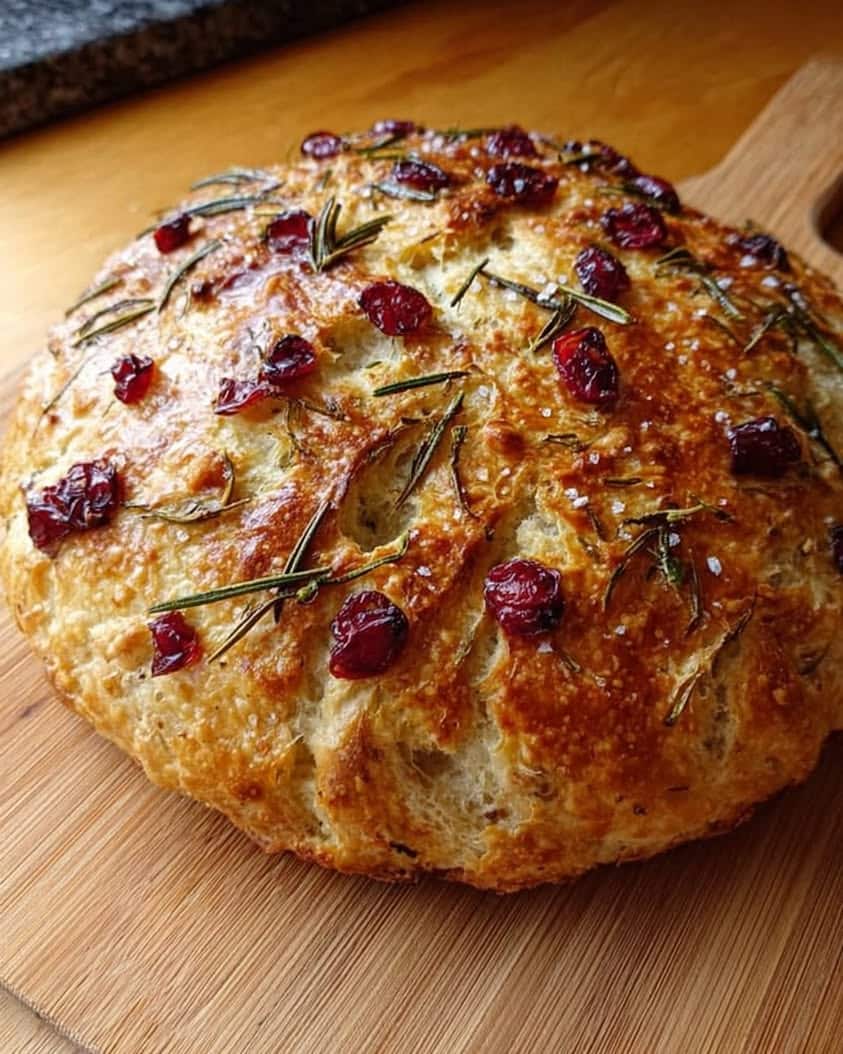
The magic of this No-Knead Rosemary Cranberry Bread with Olive Oil and Sea Salt lies in its patient, slow fermentation. Time does the heavy lifting, developing deep, complex flavors and an airy, open crumb. Meanwhile, you are free to go about your day. The result is a rustic, artisanal loaf with a crisp, salted crust and a tender, flavorful interior. Ultimately, it rivals any bakery offering, yet it costs just pennies to make.
Every slice of this homemade bread tells a story of contrasting flavors. Tart dried cranberries play against the piney fragrance of fresh rosemary. Furthermore, a generous glug of fruity olive oil enriches the dough, ensuring a moist crumb that stays fresh for days. A final sprinkle of flaky sea salt on top creates delightful bursts of salinity. This No-Knead Rosemary Cranberry Bread with Olive Oil and Sea Salt is not just food; it is a sensory celebration.
Quick Recipe Highlights
- Flavor Profile: This bread masterfully balances savory and sweet notes. The rosemary provides an herbal, woody backbone, while the cranberries contribute a bright, tangy fruitiness. Additionally, the olive oil adds a subtle fruitiness and richness, and the sea salt enhances every other ingredient.
- Texture: Expect a crisp, shattering crust that gives way to a soft, chewy, and remarkably open crumb. The cranberries add pleasant, juicy pockets, and the slow-rise method creates an irregular, holey structure perfect for soaking up soups or olive oil.
- Aroma: As it bakes, the aroma is utterly intoxicating. First, you will smell the toasting wheat and yeast. Then, the herbal scent of rosemary blooms, followed by the sweet, jammy fragrance of warming cranberries. It is the ultimate welcome-home scent.
- Visual Appeal: The loaf boasts a beautiful, rustic shape with a dusting of flour. The crust blisters and cracks naturally in the oven, revealing a deep golden-brown color. Meanwhile, ruby-red cranberries peek through the slices, and the flakes of sea salt sparkle on the surface.
- Skill Level Needed: This recipe is famously beginner-friendly. It requires no special kneading skills, no complicated shaping techniques, and uses a simple mixing bowl. Success hinges more on patience and timing than on any advanced baking skill.
- Special Equipment: You need only a large mixing bowl, a wooden spoon, and a Dutch oven or heavy lidded pot. The Dutch oven is crucial as it traps steam, creating the professional-level crust that makes this No-Knead Rosemary Cranberry Bread with Olive Oil and Sea Salt so special.
Recipe Overview
- Difficulty Level: We rate this recipe as “Easy” because it eliminates the most intimidating steps of traditional bread baking. There is no kneading, no need for a stand mixer, and the shaping is very forgiving. The primary requirement is planning ahead for the long, slow rise, which is mostly hands-off time.
- Category: This bread fits beautifully into several categories. It is a yeast bread, a no-knead bread, and a rustic artisan loaf. It serves wonderfully as a side dish for soups and salads, as a base for crostini, or simply as a snack bread with cheese and charcuterie.
- Cuisine: While no-knead methods have modern popularity, the flavors are inspired by Mediterranean and European peasant baking traditions. The use of olive oil, rosemary, and sea salt is classically Italian, while the cranberry addition nods to North American ingredients, creating a delicious fusion.
- Cost: This is an incredibly cost-effective recipe to make at home. A loaf of similar quality from a specialty bakery could cost eight dollars or more. By contrast, the flour, yeast, rosemary, cranberries, and olive oil for this No-Knead Rosemary Cranberry Bread with Olive Oil and Sea Salt likely total under three dollars.
- Season: This bread is truly versatile year-round. However, it feels particularly fitting for fall and winter. The rosemary and cranberries evoke holiday warmth. Conversely, it is also lovely in spring and summer for picnics and alongside fresh salads.
- Occasion: It is perfect for casual family dinners, holiday feasts as an alternative to rolls, or as a heartfelt homemade gift. Bring it to a potluck, and you will instantly become the most popular guest. It elevates any meal from ordinary to special.
Why You’ll Love This Recipe
First and foremost, the taste and texture are simply extraordinary. Each bite delivers a symphony of flavors: the initial crunch of salt and crust, the soft, yielding crumb, the pop of tart berry, and the lingering note of rosemary. This No-Knead Rosemary Cranberry Bread with Olive Oil and Sea Salt satisfies on every level. Moreover, the contrast between the crispy exterior and the cloud-like interior is a textural dream. You will find it impossible to stop at just one slice, especially when it is still warm from the oven.
The convenience factor cannot be overstated. This recipe dismantles the myth that good bread requires a full day of labor. You mix the dough in about five minutes, then let time and yeast work their magic. Therefore, you can prepare it in the evening for baking the next afternoon, or in the morning for a fresh loaf at dinnertime. It fits seamlessly into a busy schedule. Ultimately, the “no-knead” technique is a game-changer, producing superior results with minimal active effort.
From a nutritional perspective, homemade bread like this No-Knead Rosemary Cranberry Bread with Olive Oil and Sea Salt is a smarter choice. You control every ingredient, avoiding the preservatives and additives common in store-bought loaves. Olive oil provides heart-healthy monounsaturated fats. Additionally, cranberries offer antioxidants and fiber. While it is still a carbohydrate, it is a wholesome, satisfying one that fuels your body with real, recognizable ingredients.
This loaf possesses immense social and entertaining value. There is an undeniable magic in serving a beautiful, homemade bread to guests. It communicates care and craftsmanship. Furthermore, the stunning appearance and incredible aroma make it a fantastic conversation starter. Whether you are hosting a formal dinner or a casual game night, this bread makes the occasion feel more special and curated. It is a simple way to impress and delight everyone at your table.
Finally, the cost-effectiveness and accessibility seal the deal. Artisan bakery prices continue to climb, but the core ingredients for bread remain inexpensive. A bag of flour and jar of yeast go a very long way. Consequently, baking this No-Knead Rosemary Cranberry Bread with Olive Oil and Sea Salt regularly can lead to significant savings. Importantly, the ingredients are easy to find at any standard grocery store, making this gourmet experience accessible to all home cooks.
Historical Background and Cultural Significance
The story of no-knead bread is a fascinating modern chapter in baking history. While slow-fermentation methods are ancient, the specific technique popularized for home bakers gained fame in the early 2000s. Food writer Mark Bittman published a recipe developed by Jim Lahey of Sullivan Street Bakery in New York City. This recipe revolutionized home baking by proving that a wet dough and a long, slow rise in a covered pot could produce a spectacular loaf without kneading. Our No-Knead Rosemary Cranberry Bread with Olive Oil and Sea Salt is a direct descendant of that groundbreaking method.
Culturally, bread is a universal symbol of sustenance and community. The act of breaking bread together is a ritual across countless cultures. This particular recipe, however, blends traditions. The use of olive oil and rosemary roots it firmly in the culinary traditions of the Mediterranean, where such breads have been baked for centuries in wood-fired ovens. The addition of cranberries, a native North American fruit, introduces a New World twist. Therefore, this loaf represents a beautiful fusion of Old World technique and New World ingredients.
The evolution of the recipe showcases home baker creativity. The original no-knead formula was a simple white bread. Almost immediately, bakers began experimenting with add-ins and flavorings. Herbs, dried fruits, nuts, and seeds became popular inclusions. Our version with rosemary and cranberry is a classic and beloved adaptation. It demonstrates how a foundational technique can be personalized endlessly. Today, the no-knead method is a global phenomenon, with countless variations shared across blogs and kitchens worldwide.
Regional variations of this concept are endless. In Provence, you might find a similar bread with herbes de Provence and olives. In Germany, bakers might add rye flour and caraway seeds. The basic principle remains constant: a high-hydration dough, a long fermentation, and steam-baking in a closed vessel. Our No-Knead Rosemary Cranberry Bread with Olive Oil and Sea Salt is a distinctly American take, utilizing a beloved holiday fruit in a versatile, everyday format. It is a testament to how recipes travel and adapt, creating new traditions along the way.
Ingredient Deep Dive
Bread Flour: Bread flour is the powerhouse of this recipe, chosen for its higher protein content (typically 12-14%). This protein, primarily glutenin and gliadin, forms more gluten when hydrated. Gluten is the elastic network that traps the carbon dioxide produced by yeast, allowing the bread to rise high and develop an open, airy crumb. While all-purpose flour can work in a pinch, bread flour provides superior structure and chew. For best results, store it in a cool, dry place or even in the freezer to extend its shelf life and prevent any insect infestation.
Active Dry Yeast: This microscopic fungus is the leavening agent, responsible for making the bread rise. When activated with water, yeast consumes sugars in the flour and produces carbon dioxide gas and alcohol. The long, slow rise called for in this No-Knead Rosemary Cranberry Bread with Olive Oil and Sea Salt allows for more flavor development as byproducts of fermentation accumulate. Ensure your yeast is fresh for reliable results. You can test it by proofing it in warm water with a pinch of sugar; if it becomes foamy after 5-10 minutes, it is active and ready to use.
Sea Salt: Salt does far more than just add flavor. It tightens the gluten structure, strengthening the dough and giving the crumb a better texture. It also regulates yeast activity, preventing over-fermentation. We use fine sea salt in the dough for even distribution and flaky Maldon-style sea salt on top for garnish. The large flakes provide delightful bursts of salinity and a beautiful, sparkling finish. Always use a non-iodized salt for baking, as iodine can impart an unpleasant chemical flavor and inhibit yeast activity.
Fresh Rosemary: Rosemary is a woody, perennial herb with a potent piney and lemony fragrance. Historically, it symbolizes remembrance and fidelity. In cooking, its robust flavor stands up well to long baking times without disappearing. For this bread, fresh rosemary is non-negotiable; dried rosemary becomes woody and unpleasant. Strip the leaves from the stem and chop them finely to distribute the flavor evenly. Rosemary is also rich in antioxidants and anti-inflammatory compounds, adding a subtle health boost to your loaf.
Dried Cranberries: Dried cranberries add pockets of sweet-tart juiciness that contrast beautifully with the savory bread. Opt for unsweetened or fruit-juice-sweetened varieties if possible to avoid an overly sugary result. You can use other dried fruits like cherries, apricots, or raisins as substitutes. For extra plumpness and to prevent them from burning or absorbing too much moisture from the dough, consider soaking them in warm water, orange juice, or even a little brandy for 10-15 minutes before adding them to the dough. Pat them dry before use.
Extra Virgin Olive Oil: A quality extra virgin olive oil enriches the dough, contributing to a tender crumb and a longer shelf life. It also adds a subtle fruity, peppery note that complements the rosemary and cranberries. The fat coats the flour proteins, slightly inhibiting gluten formation, which results in a more tender texture. Since the flavor is present, use an oil you enjoy tasting. Avoid “light” olive oils, which are highly processed and lack flavor. Store your olive oil in a cool, dark place to preserve its quality.
Common Mistakes to Avoid
- Using Hot Water to Activate Yeast: Water that is too hot (above 115°F) will kill the yeast, leaving you with a dense, flat loaf. Conversely, water that is too cold will not activate it properly. Aim for lukewarm water, around 105-110°F, which feels warm but not hot to the touch.
- Over-Measuring Flour: The most common mistake in bread baking is using too much flour. This dough is meant to be very wet and shaggy, almost like a thick batter. If you add extra flour to make it less sticky, you will create a dense, dry bread. For accuracy, fluff your flour with a spoon, spoon it into your measuring cup, and level it off with a knife.
- Not Letting the Dough Rise Long Enough: The long, slow fermentation is the soul of this recipe. Rushing this process by placing the dough in a very warm spot for a shorter time will result in less flavor development and a weaker gluten structure. Trust the timeline. The dough should look bubbly and roughly doubled in size.
- Forgetting to Preheat the Dutch Oven: The preheated Dutch oven is critical for creating an instant burst of steam and the perfect oven spring. Placing the dough into a cold pot will yield a pale, dense crust. Always preheat your empty Dutch oven with the lid on for a full 30 minutes before baking.
- Using a Dull or Serrated Knife to Score the Dough: A dull knife will drag and deflate the dough instead of making a clean cut. A serrated knife will catch and tear. Use a very sharp paring knife, a razor blade, or a dedicated bread lame. Make a confident, swift slash about ½ inch deep.
- Opening the Oven Too Early: The initial covered baking time creates a steamy environment for the crust to form properly. Peeking during the first 30 minutes releases that precious steam and can cause the bread to collapse or bake unevenly. Resist the temptation and watch through the oven window instead.
- Not Letting the Bread Cool Completely: Cutting into a warm loaf is incredibly tempting, but the interior is still cooking from residual heat. Slicing it too soon releases steam and can make the crumb gummy. For clean slices and the best texture, let your No-Knead Rosemary Cranberry Bread with Olive Oil and Sea Salt cool on a wire rack for at least one hour.
- Storing Bread in the Refrigerator: Refrigeration is the enemy of fresh bread. The cold temperature accelerates starch retrogradation, making it stale and hard much faster. Always store your bread at room temperature in a paper bag or wrapped in a clean kitchen towel. For longer storage, slice and freeze it.
Essential Techniques
Autolyse (Resting the Flour and Water): While not a formal autolyse, the initial mixing step where you combine just the flour, water, and yeast before adding salt and other ingredients serves a similar purpose. This short rest allows the flour to fully hydrate, which begins gluten development passively. Consequently, the dough becomes smoother and easier to handle with minimal mixing. This technique reduces total mixing time and can improve the extensibility of the final dough, contributing to a better oven spring and more open crumb structure.
Long, Cold Fermentation: This is the cornerstone technique for this No-Knead Rosemary Cranberry Bread with Olive Oil and Sea Salt. Allowing the dough to rise slowly, often at room temperature or in a cooler spot for 12-18 hours, allows for complex flavor development as organic acids build up. It also strengthens the gluten network without physical kneading. The key visual cue for success is a dough that is bubbly on the surface, has more than doubled in volume, and collapses slightly when the bowl is jiggled. This slow rise is what creates the signature tangy, nuanced flavor.
Folding (Instead of Kneading): For wet, no-knead doughs, a series of “folds” helps organize the gluten. To fold, wet your hand, grab one side of the dough from underneath, and stretch it up and over the center. Turn the bowl and repeat three or four times. This gentle action aligns the gluten strands, builds strength, and incorporates air without deflating the delicate structure. Perform this step once or twice during the first few hours of the rise if the dough seems very slack. It makes the dough easier to handle later.
Baking with Steam in a Dutch Oven: Professional bakers inject steam into ovens to keep the crust soft and elastic during the initial oven spring, allowing the loaf to expand fully before setting. A home Dutch oven perfectly mimics this environment. The preheated cast iron holds intense heat, and the sealed lid traps the moisture evaporating from the dough itself. This creates the ideal conditions for a thin, crisp, blistered crust. After removing the lid, the dry heat finishes the crust to a deep, golden brown.
Pro Tips for Perfect No-Knead Rosemary Cranberry Bread with Olive Oil and Sea Salt
First, for the most accurate results, consider weighing your flour with a kitchen scale. A cup of flour can vary in weight by 20% or more depending on how you scoop it. Using 500 grams of bread flour ensures consistency every single time.
Second, if your kitchen is very cold, extend the rise time. Conversely, if it is very warm, the dough may be ready sooner. Judge readiness by the look of the dough—bubbly and doubled—not strictly by the clock.
Third, line your proofing basket or bowl with a well-floured kitchen towel (not terry cloth). Use a mix of rice flour and all-purpose flour for dusting. Rice flour does not absorb water, so it prevents sticking much more effectively than wheat flour alone.
Fourth, when preheating your Dutch oven, place it on a lower-middle rack. This ensures the bottom of the bread does not get too dark before the top is finished. The entire loaf bakes more evenly in this position.
Fifth, experiment with scoring patterns. A single deep slash down the center is classic, but an off-center slash or a tic-tac-toe pattern can create different expansion and a unique, artisanal look. The key is to be swift and decisive.
Sixth, listen to your bread. When you think it is done, tap the bottom of the loaf. It should sound hollow, like a drum. This is the most reliable indicator that the interior is fully baked through.
Seventh, for an extra glossy, professional-looking crust, you can brush the loaf very lightly with water or milk just before scoring and baking. This creates a slightly shinier finish, though the natural matte look is also beautiful.
Eighth, keep a baking journal. Note the room temperature, rise times, and any modifications you made. This helps you perfect the recipe for your specific environment and preferences over time.
Variations and Adaptations
Regional Variations: Travel the world from your kitchen by changing the add-ins. For an Italian twist, use chopped sun-dried tomatoes and kalamata olives with the rosemary. For a French Provençal version, substitute the rosemary for herbes de Provence. A German-inspired loaf might include a tablespoon of caraway seeds and replace a quarter of the bread flour with rye flour for a deeper, earthier flavor.
Seasonal Adaptations: Make this bread a year-round favorite. In spring, fold in chopped asparagus tips and lemon zest. For summer, try chopped fresh apricots and thyme. In autumn, apples and walnuts are a perfect match. The basic no-knead dough is a blank canvas for whatever is fresh and inspiring at the market.
Dietary Modifications: For a vegan version, ensure your cranberries are not sweetened with honey. The recipe is already dairy-free. For a gluten-free adaptation, use a high-quality 1:1 gluten-free flour blend formulated for bread and add 1 teaspoon of xanthan gum if the blend does not contain it. The texture will be different but still delicious.
Flavor Variations: Beyond herbs and fruit, consider savory additions like crispy fried shallots, grated sharp cheddar cheese, or cooked, crumbled bacon. For a sweeter breakfast bread, increase the cranberries, add orange zest, and sprinkle the top with coarse sugar instead of sea salt before baking.
Texture Modifications: For added crunch and nutrition, incorporate seeds. A quarter cup of sunflower seeds, pepitas, or a mix of sesame, flax, and poppy seeds adds wonderful texture. Toast the seeds first to maximize their flavor. You can also press additional seeds onto the top of the loaf after scoring for a decorative, crunchy topping.
Presentation Alternatives: Instead of one large boule, divide the dough into two portions after the first rise. Shape them into smaller rounds or even into an oval bâtard shape. Adjust baking time downward for smaller loaves. You can also bake the dough in a preheated loaf pan for a more traditional sandwich bread shape.
Serving and Presentation Guide
Plating Techniques: Present your No-Knead Rosemary Cranberry Bread with Olive Oil and Sea Salt on a simple wooden cutting board or a slate slab. Place the whole loaf prominently, with a sharp bread knife beside it. This invites guests to tear or slice their own piece, creating an interactive and communal dining experience. For individual plates, place a thick slice slightly off-center, perhaps leaning against a small bowl of soup or a salad.
Garnishing Ideas: While the loaf is beautiful on its own, a final drizzle of high-quality extra virgin olive oil over a sliced portion adds sheen and flavor. You can also sprinkle a few extra fresh rosemary leaves or dried cranberries around the board for color. A small bowl of flaky sea salt on the side allows guests to add an extra pinch if desired.
Traditional Accompaniments: This bread is sublime with a dish of your best olive oil for dipping, perhaps with a splash of balsamic vinegar. A soft, spreadable cheese like goat cheese, Brie, or whipped ricotta is a perfect partner. For a heartier option, serve with a selection of cured meats like prosciutto or salami to create an instant charcuterie board centerpiece.
Modern Serving Suggestions: Use day-old slices to make incredible crostini. Toast them and top with whipped feta and honey, avocado and chili flakes, or roasted mushrooms. Crumble stale bread into soups or salads as gourmet croutons. You can also use it for a next-level turkey and cranberry sauce sandwich after the holidays.
Temperature Considerations: This bread is best served warm or at room temperature. If you have baked it ahead and it has cooled completely, you can refresh it by wrapping the whole loaf in aluminum foil and warming it in a 350°F oven for 10-15 minutes. For individual slices, a quick toast brings back the crispness of the crust.
Portion Control Tips: A standard 1-pound loaf like this typically yields 10-12 substantial slices. When serving as an appetizer or side, one loaf is ample for 4-6 people. If it is the star of a bread-and-cheese dinner, plan for 2-3 people per loaf. Remember, it is so delicious that people often come back for seconds!
Wine and Beverage Pairing
Wine Pairings: The savory-sweet profile of this bread pairs wonderfully with a variety of wines. A dry Rosé, with its bright acidity and red fruit notes, complements the cranberries beautifully. A medium-bodied Pinot Noir has the earthiness to match the rosemary without overpowering the bread. For white wine lovers, an Oregon Pinot Gris or a French Chardonnay with minimal oak offers a crisp, clean contrast that highlights the olive oil and herbs.
Non-Alcoholic Alternatives: Sparkling water with a twist of orange or lemon peel cleanses the palate between bites. A tart cranberry spritzer (unsweetened cranberry juice mixed with soda water) echoes the flavors in the bread. For a warmer option, a lightly sweetened hibiscus tea provides a floral, tangy counterpoint that is both refreshing and sophisticated.
Coffee/Tea Pairings: This bread makes an exceptional companion to your morning or afternoon hot beverage. The earthy notes in a medium-roast coffee or a single-origin black tea like Assam pair nicely with the toasted wheat flavors. An herbal tea, such as a lemon verbena or a mint blend, can be a refreshing and palate-cleansing choice that doesn’t compete with the bread’s robust flavors.
Temperature Considerations: Serve your chosen beverage at its ideal temperature. White wines and rosés should be chilled but not ice-cold, around 45-50°F, so their flavors aren’t muted. Red wines like Pinot Noir are best slightly below room temperature, around 55-60°F. Non-alcoholic spritzers should be well-chilled, while teas and coffees should be served hot to provide a comforting contrast to the room-temperature bread.
Serving Suggestions: When hosting, offer a choice of two beverages—perhaps one alcoholic and one non-alcoholic—to cater to all guests. Present the wine in proper stemware and the non-alcoholic options in attractive glasses. Encourage guests to take a bite of the bread, then a sip of their drink, and notice how the flavors interact and change. This turns a simple snack into a tasting experience.
Storage and Shelf Life
Storage Methods: The best way to store your No-Knead Rosemary Cranberry Bread with Olive Oil and Sea Salt is at room temperature. Once completely cool, wrap it in a clean linen or cotton kitchen towel, or place it in a paper bag. These materials allow the crust to remain crisp while preventing the interior from drying out too quickly. Avoid plastic bags at room temperature, as they trap moisture and quickly turn the crust soft and chewy, promoting mold.
Temperature Requirements: As mentioned, room temperature (around 68-72°F) is ideal for short-term storage of 1-3 days. Never refrigerate bread, as it accelerates staling. The starch molecules recrystallize much faster in the cold, making the bread hard and dry. If your kitchen is very humid, storing in a bread box or a loosely closed paper bag can help prevent excess moisture absorption.
Container Recommendations: A traditional bread box with air vents is perfect. Alternatively, a large ceramic or stoneware bowl with a loose-fitting plate as a lid works well. The goal is to protect the bread from dust and pests while still allowing a slight exchange of air to maintain the ideal crust texture.
Signs of Spoilage: Visible mold, usually blue, green, or white fuzzy spots, means the entire loaf should be discarded. A sour or off smell is another clear indicator. If the bread just feels very hard and dry, it is stale, not spoiled. Stale bread is still safe to eat and can be revived or used for other purposes like breadcrumbs or croutons.
Reheating Instructions: To refresh a whole loaf, wrap it in aluminum foil and warm in a 350°F oven for 15-20 minutes. For individual slices, a toaster or toaster oven is perfect to re-crisp the crust. You can also briefly run a stale slice under water and then place it directly on the oven rack at 350°F for about 5 minutes; the water turns to steam, rehydrating the crumb.
Freezing Guidelines: For long-term storage, freezing is excellent. Slice the completely cooled loaf, place the slices on a baking sheet to flash-freeze for an hour, then transfer them to a heavy-duty freezer bag, squeezing out all the air. You can also freeze half or whole loaves wrapped tightly in foil and then plastic wrap. Thaw at room temperature or toast directly from frozen.
Make Ahead Strategies
Prep Timeline: This recipe is inherently a make-ahead recipe due to its long rise. The most common strategy is to mix the dough in the evening (Day 1, 8 PM). Let it rise at room temperature overnight (12 hours). Shape and do the second rise in the morning (Day 2, 8 AM – 10 AM). Bake by late morning (Day 2, 11 AM) for fresh bread at lunch or dinner.
Storage Between Steps: For even more flexibility, you can slow down the first rise by placing the covered bowl of dough in the refrigerator immediately after mixing. It will ferment slowly for up to 3 days, developing even more flavor. When ready to bake, remove it from the fridge, let it come to room temperature for 1-2 hours, then proceed with shaping and the second rise.
Quality Impact Assessment: The cold, extended fermentation (retarding) often improves flavor complexity, adding subtle sourdough-like notes. The texture may become slightly more chewy, which many people prefer. There is no negative quality impact; in fact, it often makes the dough easier to handle as it firms up slightly when cold.
Assembly Tips: If you need to pause after shaping the dough for its final rise, you can cover the proofing basket with plastic wrap and refrigerate it for several hours (up to 8). This is called a “cold proof.” Remove it from the fridge about 30 minutes before you plan to bake, then score and bake as directed. This helps with scheduling a precise baking time.
Reheating Guidelines: Since the goal is to serve it fresh, reheating a fully baked make-ahead loaf is done as described in the storage section. The key is to re-crisp the crust in the oven, not the microwave, which will make it tough and rubbery.
Fresh Element Additions: If you are making the dough days ahead, add the cranberries and rosemary during the final mix before the long rise, not before refrigerating. This ensures the fruits do not become overly soggy or leach too much color into the dough during the extended cold ferment.
Scaling Instructions
Halving the Recipe: Halving this No-Knead Rosemary Cranberry Bread with Olive Oil and Sea Salt is straightforward for a smaller loaf. Simply divide all ingredient quantities by two. Use a smaller mixing bowl. The rise times may be slightly shorter, so watch for the visual cues (bubbly, doubled) rather than the clock. Bake in a smaller (3-4 quart) Dutch oven or a preheated loaf pan, and reduce the baking time by 5-10 minutes, checking for doneness with the hollow sound test.
Doubling or Tripling: Doubling is easy: multiply all ingredients by two. Use a very large bowl, as the dough will expand significantly. You can let it rise in the same bowl, but ensure there is plenty of headspace. You will need to bake the loaves one at a time unless you have multiple Dutch ovens. Shape the second loaf while the first bakes, keeping it covered. Tripling follows the same principle, though managing the timing for three separate bakes requires careful planning.
Equipment Adjustments: When scaling up, ensure your mixing bowl is large enough—the dough should fill no more than one-third of the bowl after mixing to allow for expansion. For halving, a standard 4-quart bowl is fine. Your Dutch oven size should match the loaf; a half recipe fits a 3-4 quart pot, while a full or double recipe needs a 5-7 quart Dutch oven for proper expansion.
Timing Modifications: Rise times are primarily dependent on dough mass and temperature. A halved batch in the same warm kitchen may rise slightly faster. A doubled batch in the same bowl may take slightly longer because the center of the larger dough mass stays cooler. Always use the visual cues of bubbles and volume as your primary guide, not strict timetables.
Storage Considerations: Scaling up means you will have more bread to store. Plan your freezing strategy in advance. Slice and freeze portions in separate bags so you can thaw only what you need. A double batch is perfect for gifting a fresh loaf to a friend or neighbor.
Nutritional Deep Dive
Macro Breakdown: A typical slice of this No-Knead Rosemary Cranberry Bread with Olive Oil and Sea Salt provides a balance of carbohydrates, a small amount of protein, and fat from the olive oil. The primary macronutrient is complex carbohydrates from the bread flour, which provide sustained energy. The olive oil contributes heart-healthy monounsaturated fats, which can help with satiety. The protein content, while not high, comes from the gluten in the wheat, which is essential for the bread’s structure.
Micronutrient Analysis: This bread offers more than just empty calories. The whole wheat flour (if used in part) provides B vitamins, iron, and magnesium. Rosemary contains antioxidants like rosmarinic acid and carnosic acid. Cran Print
No-Knead Rosemary Cranberry Bread with Olive Oil & Sea Salt
- Total Time: 45 minutes
- Yield: 4
Description
A rustic, aromatic bread that requires no kneading, featuring fragrant rosemary, sweet dried cranberries, and a drizzle of olive oil and sea salt for a savory finish.
Ingredients
- 3 cups all-purpose flour
- 1 1/2 teaspoons salt
- 1/2 teaspoon instant yeast
- 1 1/2 cups warm water
- 1/4 cup dried cranberries
- 2 tablespoons fresh rosemary, chopped
- 2 tablespoons olive oil
- 1 teaspoon coarse sea salt
Instructions
- In a large bowl, mix flour, salt, and yeast. Add warm water and stir until a shaggy dough forms.
- Fold in dried cranberries and rosemary. Cover bowl with plastic wrap and let rise at room temperature for 12-18 hours.
- Preheat oven to 450°F (230°C) with a Dutch oven inside for 30 minutes. Transfer dough to a floured surface, shape into a ball, and place on parchment paper.
- Carefully place dough with parchment into the hot Dutch oven. Drizzle with olive oil and sprinkle with sea salt. Cover and bake for 30 minutes, then uncover and bake for 15 minutes until golden brown.
- Remove bread from Dutch oven and let cool on a wire rack for at least 1 hour before slicing.
Notes
You can customize the seasonings to taste.
- Prep Time: 15 minutes
- Cook Time: 30 minutes
- Method: Main
- Cuisine: American