No-Knead Rosemary Cranberry Bread with Olive Oil & Sea Salt: An Effortless Artisan Loaf
Imagine pulling a rustic, crackling loaf of bread from your own oven, its crust shimmering with olive oil and sea salt, and its interior studded with tart cranberries and fragrant rosemary. This No-Knead Rosemary Cranberry Bread with Olive Oil & Sea Salt makes that dream an effortless reality. This recipe completely transforms the intimidating process of artisan bread baking into a simple, hands-off project. Essentially, you just mix a few ingredients, let time do the work, and bake. The result is a stunningly beautiful and delicious loaf that rivals anything from a professional bakery.
The magic of this No-Knead Rosemary Cranberry Bread with Olive Oil & Sea Salt lies in its long, slow fermentation. This technique develops incredible depth of flavor and an open, airy crumb without any strenuous kneading. Meanwhile, the combination of savory, piney rosemary and sweet-tart dried cranberries creates a sophisticated flavor profile that is perfect for everything from a holiday cheese board to everyday sandwiches. A final drizzle of rich olive oil and a sprinkle of flaky sea salt before baking creates an unforgettable, savory crust. Ultimately, this bread is a celebration of simple ingredients elevated by patience and technique.
Furthermore, this loaf fills your kitchen with an aroma that is nothing short of magical. As it bakes, the scent of toasting rosemary and caramelizing flour mingles with the warmth of the oven. The sound of the crust crackling as it cools is your reward for a job well done. This No-Knead Rosemary Cranberry Bread with Olive Oil & Sea Salt is more than just food; it is a sensory experience and a testament to the joy of homemade baking. It proves that with minimal effort, you can create something truly extraordinary.
Quick Recipe Highlights
- Flavor Profile: This bread masterfully balances savory and sweet notes. The earthy, aromatic rosemary complements the bright, tangy pop of dried cranberries perfectly. Additionally, the olive oil and sea salt crust adds a luxurious, savory finish that ties all the flavors together.
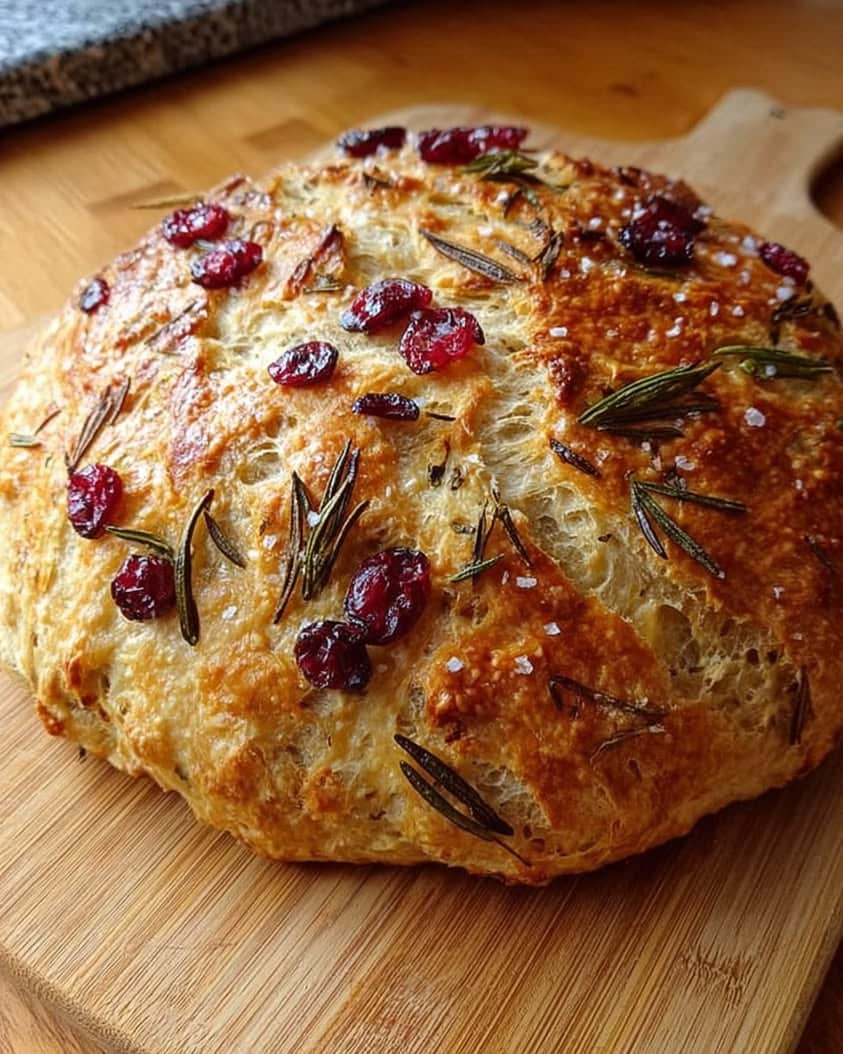
- Texture: Expect a crisp, shattering crust that gives way to a tender, chewy, and wonderfully open crumb. The cranberries add delightful juicy bursts, while the long fermentation creates those desirable irregular holes characteristic of great artisan bread.
- Aroma: While baking, the kitchen fills with the warm, woody scent of rosemary and the toasty, nutty fragrance of baking bread. The olive oil also contributes a subtle, fruity aroma that makes the entire experience incredibly inviting.
- Visual Appeal: The loaf boasts a gorgeous, rustic appearance with a deeply golden, crackled crust. The cranberries create beautiful ruby-red speckles throughout the light interior, and the coarse sea salt on top provides a sparkling, professional finish.
- Skill Level Needed: This recipe is ideal for absolute beginners. Since there is no kneading and very little hands-on work, success relies more on patience and timing than on any advanced baking skill. Anyone can achieve bakery-quality results.
- Special Equipment: You only need a large mixing bowl, a wooden spoon, and a Dutch oven with a lid. The Dutch oven is crucial as it traps steam, creating the perfect environment for that crisp, professional crust to develop.
Recipe Overview
- Difficulty Level: This No-Knead Rosemary Cranberry Bread with Olive Oil & Sea Salt is rated “Easy” because it eliminates the most technical steps of traditional bread baking. There is no kneading, no precise windowpane tests, and no complicated shaping. The recipe relies on a slow, cold fermentation that develops gluten and flavor naturally. Your primary job is simply to mix and wait, making it foolproof for novices yet satisfying for experienced bakers.
- Category: This versatile loaf falls into several categories. It is a perfect homemade bread recipe, an impressive artisan loaf, and a fantastic holiday or special occasion side. Moreover, it serves as a wonderful breakfast bread, a base for gourmet sandwiches, or a centerpiece for a cheese and charcuterie board.
- Cuisine: While no-knead bread has modern roots, the flavor inspiration draws from Mediterranean and rustic European baking traditions. The use of olive oil and rosemary is classically Italian, while the method of long fermentation is a principle found in many old-world sourdough practices. This recipe is a beautiful fusion of timeless technique and contemporary convenience.
- Cost: This bread is incredibly cost-effective to make at home. A bag of flour, a jar of yeast, and some dried herbs and fruit yield multiple loaves for the price of one artisan loaf from a store. Specifically, the ingredients for this No-Knead Rosemary Cranberry Bread with Olive Oil & Sea Salt typically cost a fraction of what you would pay at a bakery, offering tremendous value.
- Season: This bread shines brightest in the fall and winter months. The warming rosemary and festive cranberries make it a natural fit for Thanksgiving and Christmas gatherings. However, its bright flavor and versatility make it a delightful year-round recipe, perfect for spring brunches or summer picnics.
- Occasion: It is ideal for holiday dinners, potlucks, and gift-giving. Furthermore, it elevates a simple weeknight soup into a special meal. This loaf also makes an impressive contribution to any brunch spread or a thoughtful homemade present for neighbors and friends.
Why You’ll Love This Recipe
First and foremost, the taste and texture of this No-Knead Rosemary Cranberry Bread with Olive Oil & Sea Salt are utterly captivating. Each bite delivers a symphony of contrasts: the crisp, salty crust against the soft, chewy interior, and the savory rosemary against the sweet-tart cranberry. This complexity of flavor and mouthfeel is what makes artisan bread so special. You get a professional-quality loaf with a deeply satisfying eating experience that store-bought bread simply cannot match. The satisfaction of slicing into your own beautiful creation is an unparalleled joy for any home cook.
Secondly, the convenience factor is a major win. Traditional bread baking can feel like a full-day commitment with constant attention. This recipe, however, requires about 15 minutes of active effort. You mix the dough before bed or in the morning, let it ferment slowly on its own schedule, and bake it when convenient. This hands-off approach fits seamlessly into a busy life. The no-knead method is genuinely revolutionary, proving that incredible bread doesn’t require muscle or a stand mixer, just a little planning.
From a nutritional perspective, this homemade loaf is a healthier choice. You control every ingredient, ensuring there are no unnecessary preservatives, additives, or excess sugar. The olive oil provides heart-healthy monounsaturated fats, and the cranberries offer a boost of antioxidants and fiber. Compared to most commercial breads, this version is cleaner and more wholesome. Baking it yourself connects you to your food in a meaningful way, fostering a greater appreciation for simple, real ingredients.
Moreover, this bread has tremendous social and entertaining value. Arriving at a gathering with a warm, homemade loaf instantly makes you the star of the party. It sparks conversation and shows care and effort. Serving this No-Knead Rosemary Cranberry Bread with Olive Oil & Sea Salt to family and friends creates a warm, welcoming atmosphere. It is a food that encourages people to gather, share, and enjoy each other’s company, turning an ordinary meal into a memorable event.
Finally, its cost-effectiveness and accessibility are undeniable. As mentioned, the ingredients are pantry staples and dried goods, making it an affordable luxury. You do not need any fancy equipment beyond a heavy pot. This recipe democratizes artisan baking, making it accessible to anyone with an oven. The return on investment—a stunning, delicious loaf for pennies—is incredible. Once you master this formula, you will never look at store-bought artisan bread the same way again.
Historical Background and Cultural Significance
The story of no-knead bread is a fascinating modern chapter in baking history. While the technique feels ancient, its popularization is relatively recent. Food journalist Mark Bittman famously published Jim Lahey’s no-knead bread recipe in the New York Times in 2006, sparking a home-baking revolution. This method leveraged a very wet dough and a long, slow fermentation to develop gluten without manual kneading. The recipe for No-Knead Rosemary Cranberry Bread with Olive Oil & Sea Salt is a direct descendant of this innovation, adding flavorful twists to a now-classic technique that returned the joy of bread-making to countless home kitchens.
Culturally, bread holds profound significance across the globe as a symbol of sustenance, community, and sharing. The act of breaking bread together is a near-universal gesture of hospitality. This particular loaf, with its festive additions, taps into the tradition of enriched and celebratory breads baked for special occasions and holidays. By incorporating rosemary, an herb symbolizing remembrance, and cranberries, a native North American fruit, it creates a fusion that feels both timeless and contemporary. It honors the ancient ritual of bread-making while embracing modern flavors and convenience.
The evolution of this recipe showcases how home baking adapts. Initially, the plain no-knead loaf was a revelation for its simplicity and crackling crust. Quickly, bakers began experimenting with add-ins like herbs, cheeses, dried fruits, and nuts. The addition of rosemary and cranberry is a natural progression, creating a loaf that is perfect for holiday tables and winter meals. The final drizzle of olive oil and sea salt is a nod to contemporary tastes that prize high-quality, flavorful fats and finishing salts. This evolution reflects a desire for bread that is not only easy but also packed with character.
Regional variations of this concept are endless. In Provence, one might add herbes de Provence and olives. In Tuscany, sun-dried tomatoes and basil. The cranberry and rosemary combination has a particularly American feel, especially suited to Thanksgiving. One could easily adapt this No-Knead Rosemary Cranberry Bread with Olive Oil & Sea Salt formula with walnuts and maple for a New England twist, or with apricots and pistachios for a Middle Eastern flair. This adaptability is the recipe’s greatest strength, allowing each baker to imprint their own cultural or personal preferences onto a foolproof base.
Ingredient Deep Dive
Bread Flour: Bread flour is the foundation of this No-Knead Rosemary Cranberry Bread with Olive Oil & Sea Salt. Its higher protein content (typically 12-14%) is crucial. This protein, primarily glutenin and gliadin, combines with water to form gluten. The long, slow fermentation of the no-knead method develops this gluten network gently, creating the structure for those beautiful air pockets. Bread flour yields a chewier, more robust crumb than all-purpose flour. For best results, store it in an airtight container in a cool, dark place to prevent it from absorbing moisture and odors. If you must substitute, all-purpose flour will work but may produce a slightly less chewy texture.
Fresh Rosemary: Rosemary is an ancient herb steeped in symbolism, often representing remembrance, friendship, and fidelity. Its robust, pine-like aroma can withstand long baking times without dissipating. Nutritionally, rosemary contains antioxidants like rosmarinic acid and is traditionally believed to aid memory and digestion. For this recipe, use fresh rosemary; its oils are more vibrant than dried. Strip the leaves from the woody stem and chop them finely to distribute the flavor evenly. You can substitute with about one-third the amount of dried rosemary, but the flavor will be less bright.
Dried Cranberries: Dried cranberries add pockets of sweet-tart juiciness to the bread. Native to North America, cranberries were a staple for Indigenous peoples and early colonists. They are rich in vitamin C, fiber, and unique phytonutrients like proanthocyanidins. For baking, choose fruit juice-sweetened dried cranberries if possible to avoid excessive added sugar. Plumping them in warm water or orange juice for 10 minutes before adding to the dough can prevent them from drawing moisture from the bread during baking. As a substitution, try dried cherries, chopped apricots, or raisins for a different flavor profile.
Extra Virgin Olive Oil: Olive oil is central to Mediterranean cuisine and culture, symbolizing peace, wisdom, and prosperity. In this recipe, it enriches the dough slightly and, most importantly, creates an incredible crust when drizzled on top before baking. The oil fries the surface of the dough in the hot Dutch oven, contributing to blistering and browning. Choose a good-quality extra virgin olive oil for its fruity, peppery notes. Store olive oil in a cool, dark place away from heat to prevent rancidity. For a different flavor, you could use melted butter or a neutral oil like avocado oil, but you will lose the distinctive fruity aroma.
Flaky Sea Salt: The flaky sea salt sprinkled on top is not just a garnish; it is a critical flavor and texture component. It provides delightful bursts of salinity that contrast with the sweet cranberries and rich bread. Maldon salt is a popular choice for its delicate, pyramid-shaped flakes. Sea salt contains trace minerals not found in highly processed table salt. It should always be added after the final proof, just before baking, so the flakes don’t dissolve. Do not substitute with fine table salt, as it will be too salty and lack the textural crunch. Store sea salt in a dry, sealed container.
Common Mistakes to Avoid
- Using Hot Water to Activate Yeast: Many bakers think they need hot water to “wake up” the yeast. However, water that is too hot (above 115°F) can kill the yeast, resulting in a dense, flat loaf. Always use lukewarm water, ideally between 100-110°F—comfortable to the touch like warm bath water.
- Not Letting the Dough Ferment Long Enough: The long, slow rise is the heart of the no-knead method. Rushing this process (fermenting for only 4-6 hours instead of 12-18) means the gluten and flavor won’t fully develop. Be patient; the timing is flexible but should not be drastically shortened.
- Using a Pot That Isn’t Oven-Safe: The Dutch oven must be able to withstand 450°F with its lid on. Using a pot with plastic handles or a non-oven-safe lid is dangerous and can cause melting or cracking. Always verify your cookware’s maximum oven temperature rating.
- Forgetting to Preheat the Dutch Oven: Placing the dough into a cold pot will not create the necessary oven spring or steam burst. The pot must be screaming hot to mimic a professional bread oven’s environment. Preheat it for a full 30 minutes as directed.
- Adding Salt Directly to the Yeast: While not as critical with instant yeast, salt can inhibit yeast activity if they come into direct contact in dry form. It is best practice to mix the salt in with the flour first to create a buffer.
- Over-Flouring the Towel During the Second Rise: When placing the shaped dough on a floured towel for its final proof, use enough flour to prevent sticking, but not so much that a thick layer gets baked onto the crust. A mixture of flour and cornmeal works well.
- Not Scoring the Dough Deeply Enough: A shallow, timid slash will seal over quickly in the oven and restrict the bread’s expansion. Use a very sharp blade (razor, lame, or serrated knife) and make a confident, decisive cut about ½-inch deep to control where the bread expands.
- Cutting the Bread While It’s Hot: The bread continues to cook and set its structure as it cools. Slicing into a hot loaf releases steam and can make the interior gummy. Resist the temptation and let your No-Knead Rosemary Cranberry Bread with Olive Oil & Sea Salt cool for at least one hour.
Essential Techniques
Autolyse (Resting After Initial Mix): After you first mix the flour, water, and yeast, the recipe instructs a short rest before adding the salt. This period, called autolyse, allows the flour to fully hydrate. Consequently, gluten strands begin to form naturally, making the dough smoother and easier to handle. This simple pause reduces mixing time and improves the dough’s extensibility, leading to a better final texture. The key is to cover the bowl to prevent a skin from forming. Do not skip this step, as it significantly improves the dough’s workability.
Long, Cold Fermentation: This is the cornerstone technique for No-Knead Rosemary Cranberry Bread with Olive Oil & Sea Salt. Fermenting the dough for 12-18 hours, often in a cooler spot, allows wild yeasts and bacteria to work slowly. This process develops complex, tangy flavors and strengthens the gluten network without physical kneading. The cool temperature also makes the wet dough easier to handle later. The visual cue for success is a dough that has doubled or tripled in size, is bubbly on top, and has a slightly domed surface.
Shaping a High-Hydration Dough: Handling the very wet, sticky dough after its long rise can be tricky. The technique relies on a light touch and using flour to prevent sticking. Gently coax the dough from the bowl onto a floured surface. Then, use a bench scraper or floured hands to fold the edges into the center, creating surface tension without deflating all the bubbles. The goal is a loose, round shape, not a tight ball. Over-handling at this stage will result in a dense loaf.
Creating Steam in a Home Oven: Professional bread ovens inject steam to keep the crust soft initially, allowing maximum oven spring. At home, the Dutch oven perfectly replicates this. The preheated, lidded pot traps the dough’s natural moisture, creating a steamy micro-oven. After 30 minutes, removing the lid releases the steam, allowing the crust to dry, harden, and achieve its deep golden color. Never skip the lidded baking phase, as it is essential for the loaf’s rise and crust development.
Pro Tips for Perfect No-Knead Rosemary Cranberry Bread with Olive Oil & Sea Salt
First, for the most accurate results, weigh your flour using a kitchen scale. Cup measurements can vary drastically, and too much flour will make a dry, dense dough. Aim for 430 grams of bread flour for perfect hydration.
Second, if your kitchen is very warm, the dough may over-ferment and become sour and slack. In this case, reduce the first rise time or place the bowl in a slightly cooler spot, like a basement or a turned-off oven.
Third, when adding the cranberries and rosemary during the final folds, distribute them evenly but gently to avoid tearing the delicate gluten structure you’ve worked so hard to develop.
Fourth, if your dough seems impossibly wet and sticky when shaping, don’t panic. Use wet hands or a well-floured bench scraper instead of adding excessive flour, which can toughen the bread.
Fifth, for an even more blistered, artisanal crust, refrigerate the shaped dough on its towel for its final 30-minute rise. The cold dough hitting the hot pot creates dramatic oven spring and blistering.
Sixth, invest in a bread lame or use a fresh razor blade for scoring. A dull knife will drag and deflate the dough instead of making a clean, decisive cut that allows for beautiful expansion.
Seventh, listen to your bread as it cools. The crackling and popping sounds, called “singing,” are signs of a perfectly baked, crisp crust contracting as it cools.
Eighth, for the ultimate flavor, use a high-quality, fruity extra virgin olive oil for the final drizzle. Its flavor will bake directly into the crust, adding an incredible aromatic dimension.
Variations and Adaptations
For regional variations, consider an Italian-inspired version with chopped sun-dried tomatoes, kalamata olives, and a tablespoon of grated Parmesan cheese folded into the dough. A French twist might include herbes de Provence and a handful of grated Gruyère. For a taste of the Pacific Northwest, try adding toasted walnuts and chopped dried figs instead of cranberries, maintaining the rosemary for an earthy note.
Seasonal adaptations are simple and fun. In spring, fold in lemon zest and chopped fresh thyme. For summer, try a combination of chopped dried tomatoes and basil. Autumn is perfect for this classic cranberry-rosemary pairing, while winter welcomes additions like chopped dried apples, walnuts, and a pinch of cinnamon for a sweeter, spiced loaf.
Dietary modifications are straightforward. For a vegan version, ensure your cranberries are sweetened with fruit juice, not honey. To make it dairy-free, the recipe already is—just confirm your olive oil brand. For a gluten-free adaptation, use a high-quality 1:1 gluten-free flour blend formulated for bread and add 1 teaspoon of xanthan gum if the blend doesn’t contain it. The texture will be different but still delicious.
Flavor variations are endless. Swap rosemary for fresh thyme or sage. Exchange cranberries for dried cherries, blueberries, or chopped apricots. Add a tablespoon of honey or maple syrup to the water for a subtly sweeter dough. For a savory kick, fold in a half-cup of shredded sharp cheddar cheese and a pinch of smoked paprika.
Texture modifications can cater to different preferences. For a denser, sandwich-style loaf, reduce the water by 2-3 tablespoons. For an even more open, holey crumb, increase the water by a tablespoon or two and handle the dough even more gently during shaping. Adding a quarter-cup of toasted pine nuts or chopped walnuts will introduce a delightful crunch.
Presentation alternatives include baking the dough in a preheated loaf pan for a more traditional sandwich shape. You can also divide the dough into smaller portions to make individual rolls. Before the final proof, you can roll the shaped dough in everything bagel seasoning or rolled oats for a different crust texture and look.
Serving and Presentation Guide
For plating, place the cooled loaf directly on a wooden cutting board. Use a sharp serrated bread knife to slice it thickly, showcasing the beautiful crumb and ruby-red cranberry specks. Arrange the slices slightly fanned out or stacked. The rustic, homemade look is part of the charm, so embrace it rather than striving for overly perfect slices.
Garnishing ideas are simple but effective. Place a small sprig of fresh rosemary beside the loaf on the board. You can also serve it with a small dish of high-quality olive oil for dipping, sprinkled with extra flaky salt and cracked black pepper. For a festive touch during the holidays, tuck a few fresh cranberries and rosemary sprigs around the base of the bread on the serving platter.
Traditional accompaniments include softened butter, ideally a cultured European-style butter. A creamy goat cheese or a sharp white cheddar also pairs beautifully. For a sweet contrast, serve with fig jam or orange marmalade. This bread is a classic partner for soups and stews, particularly a creamy tomato soup or a hearty beef stew.
Modern serving suggestions include using thick slices for gourmet grilled cheese sandwiches, perhaps with brie and apple. Cube stale bread for a standout Thanksgiving stuffing or holiday bread pudding. Slice it thinly, toast it, and use it as a base for crostini topped with whipped feta, honey, and walnuts.
Temperature considerations are key. This bread is best served at room temperature on the day it is baked. If you must warm it, place slices in a 350°F oven for 5 minutes or toast them lightly. Avoid microwaving, as it can make the bread tough and chewy. The crust will soften over time, but re-crisping in the oven restores its glory.
Portion control tips are helpful given how irresistible it is. A standard loaf yields about 8-10 substantial slices. If serving as an appetizer with other items, plan for 1-2 slices per person. As a side with soup or salad, 2 slices is a generous serving. Remember, it is a hearty bread, so a little goes a long way in terms of satisfaction.
Wine and Beverage Pairing
Wine pairings for this bread are delightful. The savory herbs and tangy fruit make it versatile. A medium-bodied Pinot Noir with its red fruit notes complements the cranberries beautifully. Alternatively, a crisp, unoaked Chardonnay or a French Chablis can cut through the richness of the olive oil. For a festive pairing, a dry rosé sparkling wine offers acidity and bubbles that cleanse the palate between bites of the hearty bread.
Non-alcoholic alternatives are equally exciting. A tart cranberry spritzer (sparkling water with a splash of unsweetened cranberry juice) echoes the bread’s flavors. Apple cider, either warm or chilled, is a classic fall pairing. For something more sophisticated, try a rosemary-infused lemonade, where the herbal notes in the drink mirror those in the bread.
Coffee and tea pairings work wonderfully, especially for breakfast or brunch. A medium-roast coffee with nutty or chocolatey notes stands up well to the bread’s robust flavor. For tea, a strong English Breakfast or an Earl Grey with its citrusy bergamot is excellent. An herbal tea like a mint or a ginger-turmeric blend can be a soothing, digestif-style pairing after a meal.
Temperature considerations for beverages depend on the meal. Serve white wines and sparkling options well-chilled. Red wines should be served slightly below room temperature. Non-alcoholic spritzers and lemonade are best cold, while cider can be served either way. Coffee and tea, of course, should be hot to provide a comforting contrast to the room-temperature bread.
Serving suggestions involve simplicity. Pour wine into appropriate stemware to allow the aromas to develop. Serve non-alcoholic drinks in tall, clear glasses with ice and a garnish—a rosemary sprig for the spritzer or an apple slice for the cider. Present coffee in a sturdy mug and tea in a proper teapot with cups. The goal is to make the beverage experience feel as special and considered as the bread itself.
Storage and Shelf Life
Storage methods are crucial for maintaining quality. Once completely cool, store the No-Knead Rosemary Cranberry Bread with Olive Oil & Sea Salt in a paper bag at room temperature for up to 2 days. The paper allows the crust to stay crisp while the interior remains moist. Avoid plastic bags initially, as they will trap moisture and turn the crisp crust soft and chewy. After the second day, if any remains, you can transfer it to a plastic bag to prevent it from drying out further.
Temperature requirements are straightforward: room temperature is ideal. Do not refrigerate bread, as the cold temperature accelerates starch retrogradation (staling), making it go dry and hard much faster. The cool, dry environment of a bread box or a cupboard is perfect. Keep it away from direct sunlight or heat sources like the stove or toaster.
Container recommendations include a bread box, a ceramic bread crock with a loose-fitting lid, or the paper bag method mentioned above. If using a plastic bag after day two, leave it slightly open or poke a few holes to allow minimal airflow and prevent condensation. A clean tea towel wrapped around the loaf can also work for short-term storage.
Signs of spoilage to watch for are mold, which appears as fuzzy green, blue, or white spots, or an off, sour smell. Due to the lack of preservatives, homemade bread will mold before it truly “stales.” If you see any mold, discard the entire loaf, as spores can penetrate throughout. Staleness is characterized by a dry, hard texture and loss of flavor, but the bread is still safe to eat.
Reheating instructions can revive day-old bread. For the whole loaf, sprinkle the crust lightly with water and heat in a 350°F oven for 10-15 minutes until warm and crisp. For slices, toasting is the best method. Avoid the microwave for reheating whole loaves, as it makes bread gummy, though a quick 10-second zap can soften a single slice if needed.
Freezing guidelines are excellent for long-term storage. Wrap the completely cooled loaf tightly in plastic wrap, then in aluminum foil or place it in a heavy-duty freezer bag. Remove as much air as possible. It will keep for up to 3 months. Thaw at room temperature in its wrapping, then re-crisp in the oven as described above. You can also slice the loaf before freezing and toast slices directly from frozen.
Make Ahead Strategies
The prep timeline for this bread is inherently a make-ahead dream. You can mix the dough in the evening, let it ferment overnight for 12-18 hours, shape it in the morning, and let it have its final rise while you go about your day, baking it in the afternoon for dinner. Alternatively, mix it in the morning for baking that evening. The schedule is highly flexible to fit your life.
Storage between steps is simple. After the initial mix and autolyse, the dough stays in its covered bowl at room temperature. After the long fermentation, you can actually retard the dough in the refrigerator for up to 24 hours if your schedule changes. This slows the yeast activity dramatically. Simply take it out, let it come to room temperature for an hour, then shape and proceed with the final rise.
Quality impact assessment of make-ahead steps is positive. The long, slow fermentation only improves flavor and texture. Retarding the dough in the fridge can develop even more complex, tangy notes similar to sourdough. The key is to ensure the dough doesn’t over-proof. If it collapses or smells extremely alcoholic, it has gone too far, but within the recommended timeframes, the make-ahead process is beneficial.
Assembly tips for the final steps are minimal because the dough is assembled at the beginning. The only “assembly” is the gentle folding in of cranberries and rosemary after the autolyse, which takes just a minute. Have your add-ins measured and ready so you can incorporate them quickly without overworking the dough.
Reheating guidelines for a fully baked, make-ahead loaf are the same as for storage. The bread is best served the day it’s baked. If you must bake it a day early, follow the storage instructions and use the oven-reheating method with a sprinkle of water to restore the crust’s crispness before serving.
Fresh element additions after baking are not typical for this bread, as all flavors are baked in. However, you could brush the hot loaf with a little more olive oil as it comes out of the oven for extra shine and aroma. Serving it with fresh, softened butter or a flavored compound butter is the best way to add a fresh, last-minute element.
Scaling Instructions
Halving the recipe is simple for a smaller household. Precisely halve all ingredients by weight for the best results. Use a 3-quart or smaller Dutch oven if you have one. The fermentation times will remain roughly the same, though the smaller mass of dough may proof a bit faster. Keep an eye on it, and proceed with shaping when it is bubbly and doubled. The bake time may be reduced by 5-10 minutes; start checking for doneness at the 35-minute mark (after removing the lid).
Doubling or tripling the recipe requires a bit more planning. You must mix the dough in a very large bowl or separate batches to ensure even mixing. Do not attempt to bake a double batch in one Dutch oven; the loaf will be too dense. Instead, divide the dough after the long fermentation and shape into two or three separate loaves. You will need to bake them sequentially, or if you have multiple Dutch ovens, simultaneously. Adjust oven racks to accommodate.
Equipment adjustments are necessary when scaling. For a single, standard recipe, a 4.5 to 6-quart Dutch oven is ideal. For a halved recipe, a 3-quart works. When doubling, ensure you have enough large bowls for mixing and enough Dutch ovens or a willingness to bake in batches. You may also need additional proofing towels and space for the shaped loaves to rise without touching.
Timing modifications when scaling are minimal for the fermentation stage. Whether you make one loaf or three, the 12-18 hour first rise remains consistent. The final 30-minute rise after shaping is also the same. The main change is in the baking time. Multiple loaves baked sequentially will extend your active kitchen time. Plan for about 1.5 hours of oven time per loaf, including the preheat time for the pot.
Storage considerations for multiple loaves are easy. Cool the loaves completely. You can freeze the extras immediately for best quality. Wrap them well as described in the freezing section. This allows you to enjoy homemade bread over several weeks, pulling a loaf from the freezer whenever you need one, which is a fantastic strategy for efficient baking.
Nutritional Deep Dive
The macro breakdown for a typical slice of this No-Knead Rosemary Cranberry Bread with Olive Oil & Sea Salt is balanced. It provides complex carbohydrates from the bread flour for sustained energy. The olive oil contributes healthy monounsaturated fats, which are beneficial for heart health. The cranberries add a small amount of natural sugar and fiber. While not a high-protein food, the bread flour does offer more protein than all-purpose, contributing to the chewy texture and providing some satiety.
A micronutrient analysis reveals several benefits. Rosemary is a source of antioxidants like rosmarinic acid and carnosic acid. Cranberries are famous for their vitamin C content and proanthocyanidins, which support urinary tract health. Olive oil is rich in vitamin E and polyphenols. The sea salt provides trace minerals like magnesium and potassium, though it should still be consumed in moderation due to its sodium content.
Health benefits of this homemade bread include control over ingredients, avoiding processed additives and high-fructose corn syrup often found in commercial bread. The fiber from the whole cranberries and the flour aids digestion. The healthy fats from olive oil can help reduce inflammation. The act of baking itself can also be a mindful, stress-reducing activity, contributing to overall well-being.
Dietary considerations are important to note. This recipe contains gluten from the bread Print
No-Knead Rosemary Cranberry Bread with Olive Oil & Sea Salt
- Total Time: 45 minutes
- Yield: 4
Description
A rustic, aromatic loaf with fragrant rosemary, sweet-tart cranberries, and a golden crust, made effortlessly without kneading.
Ingredients
- 3 cups all-purpose flour
- 1 1/2 teaspoons salt
- 1/2 teaspoon active dry yeast
- 1 1/2 cups warm water
- 1/2 cup dried cranberries
- 2 tablespoons fresh rosemary, chopped
- 2 tablespoons extra virgin olive oil
- 1 teaspoon coarse sea salt for topping
Instructions
- In a large bowl, mix flour, salt, yeast, cranberries, and rosemary. Stir in warm water and olive oil until a shaggy dough forms.
- Cover bowl with plastic wrap and let rise at room temperature for 12-18 hours, until dough is bubbly and doubled.
- Preheat oven to 450°F (230°C) with a Dutch oven inside for 30 minutes. Shape dough into a round, sprinkle with sea salt, and place in hot Dutch oven.
- Bake covered for 30 minutes, then uncovered for 15 minutes until golden brown. Cool on a wire rack before slicing.
Notes
You can customize the seasonings to taste.
- Prep Time: 15 minutes
- Cook Time: 30 minutes
- Method: Main
- Cuisine: American