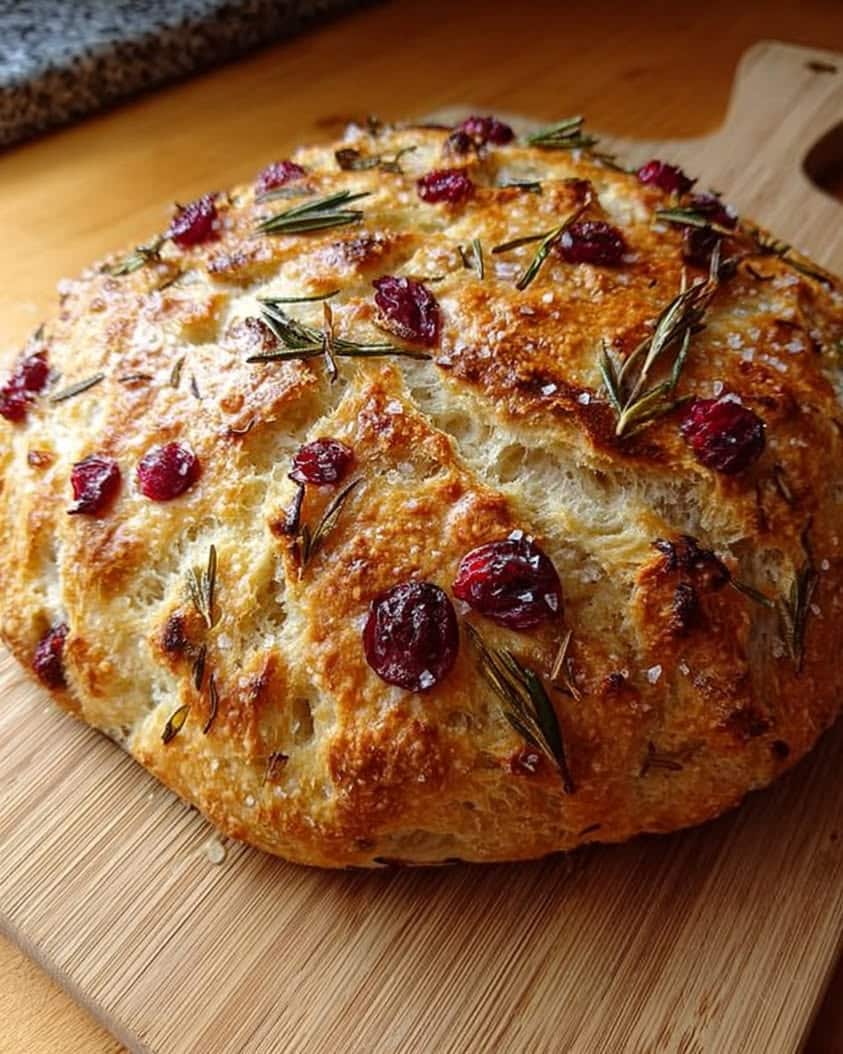
No-Knead Rosemary Cranberry Bread with Olive Oil & Sea Salt: The Effortless Artisan Loaf
Imagine pulling a stunning, crackling-crusted loaf from your own oven, its aroma filling your kitchen with the scent of earthy rosemary and sweet, tart cranberries. This No-Knead Rosemary Cranberry Bread with Olive Oil & Sea Salt makes that dream an effortless reality. Moreover, it requires no special skills, no fancy equipment, and absolutely no kneading. The magic happens while you sleep, as a simple mixture of flour, water, and yeast transforms into a bubbly, active dough ready for baking.
Consequently, this recipe is a gateway to the world of artisan baking for everyone. The final result is a loaf with a professional-quality, crisp crust that gives way to a soft, chewy, and beautifully open crumb. Each bite delivers a perfect harmony: the piney fragrance of fresh rosemary, the juicy burst of cranberries, and the rich fruitiness of good olive oil, all finished with a delicate crunch of flaky sea salt. Ultimately, it’s bread that looks and tastes like it came from a boutique bakery, yet it was made with minimal hands-on effort in your own home.
Quick Recipe Highlights
- Flavor Profile: This No-Knead Rosemary Cranberry Bread with Olive Oil & Sea Salt masterfully balances savory and sweet. The herbal, slightly piney notes of fresh rosemary beautifully complement the bright, tart pop of dried cranberries. Additionally, a generous drizzle of high-quality olive oil adds a fruity richness, while a final sprinkle of flaky sea salt enhances every other flavor.
- Texture: The hallmark of this no-knead bread is its incredible texture. A long, slow fermentation creates an airy, irregular crumb structure that is delightfully chewy and soft. Conversely, baking in a preheated Dutch oven traps steam, producing a crust that is shatteringly crisp and thin, providing the perfect contrast to the tender interior.
- Aroma: As this bread bakes, it perfumes your entire home. First, you’ll smell the warm, toasty notes of baking flour and yeast. Then, the unmistakable, comforting scent of rosemary emerges, followed by the sweet, jammy fragrance of the cranberries caramelizing. The overall aroma is deeply inviting and complex.
- Visual Appeal: This loaf is a showstopper. It bakes into a beautiful, rustic round with a deeply golden, blistered crust. When you slice it open, the interior reveals a stunning landscape of irregular holes, speckled with ruby-red cranberries and flecks of green rosemary. It looks both artisanal and utterly homemade.
- Skill Level Needed: This recipe is specifically designed for beginners. Since there is no kneading involved, it eliminates the most intimidating step of traditional bread-making. The process relies on time, not technique, making it foolproof for bakers of any experience level who can measure ingredients and operate an oven.
- Special Equipment: The only special tool recommended is a heavy, oven-safe pot with a lid, like a Dutch oven. This vessel is crucial as it mimics a professional baker’s steam-injected oven, creating the perfect environment for that crisp crust. Otherwise, you only need a large mixing bowl and a wooden spoon.
Recipe Overview
- Difficulty Level: We classify this No-Knead Rosemary Cranberry Bread with Olive Oil & Sea Salt as “Easy” because it eliminates complex techniques. The active work time is under 20 minutes, and the recipe’s success is built into the extended resting period. There is no need to monitor dough development or worry about over-kneading. Essentially, the yeast and time do all the hard work for you.
- Category: This versatile loaf fits multiple categories beautifully. Primarily, it is a yeast bread and an artisan loaf. Furthermore, it can serve as a festive holiday bread, a special weekend breakfast treat, or a stunning accompaniment to soups and salads. Its sweet and savory profile makes it suitable for any meal.
- Cuisine: While no-knead bread has roots in European artisan traditions, this particular recipe is a modern American fusion. It combines the classic Italian focaccia flavor pairing of rosemary and olive oil with the New World ingredient of cranberries. The no-knead method itself was popularized in the early 2000s, making this a contemporary classic.
- Cost: This bread is incredibly cost-effective to make at home. A basic loaf costs a fraction of what you would pay at a bakery. The most significant investment is a bottle of good olive oil, but you only use a small amount. Dried cranberries and fresh rosemary are relatively inexpensive, especially when compared to the premium price of a similar artisan loaf.
- Season: This No-Knead Rosemary Cranberry Bread with Olive Oil & Sea Salt shines brightest in the fall and winter. The warming herbs and festive cranberries evoke the holiday season perfectly. However, it is a delightful year-round bread. In spring and summer, pair it with fresh salads or serve it at outdoor gatherings.
- Occasion: This loaf is perfect for any gathering where you want to impress with minimal stress. It is ideal for holiday dinners, Thanksgiving feasts, Christmas brunches, or cozy weekend meals. Additionally, it makes a wonderful homemade gift when wrapped in parchment and tied with twine.
Why You’ll Love This Recipe
First and foremost, you will adore the spectacular taste and texture of this No-Knead Rosemary Cranberry Bread with Olive Oil & Sea Salt. Each slice offers a symphony of flavors and sensations. You get the initial crunch of the crust, followed by the soft, yielding chew of the crumb. Then, bursts of tart-sweet cranberry and the aromatic earthiness of rosemary hit your palate, all rounded out by the smooth richness of olive oil. It is complex, satisfying, and far superior to most store-bought bread.
Secondly, the convenience factor is unbeatable. This recipe demands less than 20 minutes of active effort. You simply mix the ingredients, let time work its magic, shape the dough, and bake. There is no need for a stand mixer, no messy kneading on the counter, and no stress about developing gluten. You can start the dough before bed and bake it for lunch the next day. It fits seamlessly into a busy schedule.
Furthermore, from a nutritional perspective, homemade bread like this is a better choice. You control every ingredient that goes into your No-Knead Rosemary Cranberry Bread with Olive Oil & Sea Salt. There are no preservatives, artificial flavors, or excess sugar. You can opt for unbleached flour, organic cranberries, and high-quality olive oil. The rosemary offers antioxidants, and the cranberries provide vitamin C and fiber.
Additionally, the social and entertaining value of this loaf is immense. There is an undeniable pride and joy in serving a beautiful, homemade loaf of bread to friends and family. It becomes a centerpiece of the meal and a guaranteed conversation starter. The process of baking it can also be a relaxing, therapeutic ritual that fills your home with wonderful anticipation.
Finally, this recipe is remarkably cost-effective and accessible. The ingredients are basic pantry staples for most home cooks. Investing in a Dutch oven is a one-time cost that pays for itself after just a few loaves, compared to bakery prices. This No-Knead Rosemary Cranberry Bread with Olive Oil & Sea Salt proves that extraordinary, artisan-quality food does not require a professional kitchen or a large budget.
Historical Background and Cultural Significance
The story of no-knead bread is a fascinating modern culinary tale. While the basic ingredients—flour, water, salt, and yeast—are ancient, the specific no-knead method was revolutionized by baker Jim Lahey in 2006. Lahey, owner of Sullivan Street Bakery in New York City, developed a technique using a very wet dough and a long, slow fermentation (often 12-18 hours). This method allows gluten strands to develop naturally through time and enzymatic action, rather than through mechanical kneading. Consequently, his recipe, published in the New York Times, sparked a global home-baking renaissance.
Culturally, bread holds a sacred place in countless societies as a symbol of sustenance, community, and skill. The act of breaking bread together is a universal gesture of fellowship. This No-Knead Rosemary Cranberry Bread with Olive Oil & Sea Salt democratizes that tradition. It removes the barrier of perceived difficulty, allowing anyone to participate in the ancient, rewarding practice of bread-making. It represents a shift towards slow food and mindful cooking in a fast-paced world.
The evolution of this specific recipe showcases culinary fusion. The combination of rosemary and olive oil is deeply rooted in Mediterranean cuisine, particularly Italian focaccia and French fougasse. Cranberries, however, are native to North America. Incorporating them into a European-style bread is a distinctly New World innovation. This blend creates a loaf that honors Old World techniques while celebrating New World ingredients, resulting in a uniquely modern recipe.
Regional variations of this concept are endless. In different areas, bakers might substitute the cranberries for olives, sun-dried tomatoes, or nuts. The rosemary could be replaced with thyme, sage, or herbes de Provence. Some might use whole wheat or rye flour for part of the all-purpose flour. The core no-knead method remains constant, but the flavor additions adapt to local tastes and available ingredients, making it a wonderfully flexible template for creativity.
Ingredient Deep Dive
Bread Flour: Bread flour is the foundation of this No-Knead Rosemary Cranberry Bread with Olive Oil & Sea Salt. It has a higher protein content (12-14%) than all-purpose flour, which is crucial. This protein, primarily glutenin and gliadin, forms more gluten when hydrated. The long fermentation of the no-knead method develops this gluten network slowly, creating the strong, elastic structure needed to trap gas bubbles from the yeast. This results in the lofty rise and chewy, open crumb that defines great artisan bread. For best results, use unbleached bread flour and store it in a cool, dry place.
Fresh Rosemary: Fresh rosemary is non-negotiable for the brightest flavor. This woody herb has been used since ancient times for culinary, medicinal, and symbolic purposes. It contains antioxidants like rosmarinic acid and is known for its distinctive piney, slightly peppery aroma. When chopped and mixed into the dough, its oils permeate the bread during baking. To select the best rosemary, look for vibrant green sprigs that are flexible, not brittle. You can store it in the refrigerator wrapped in a damp paper towel for up to a week.
Dried Cranberries: Dried cranberries provide pockets of chewy sweetness and tangy contrast. They are made from fresh cranberries that are sweetened and dried, concentrating their flavor. They offer dietary fiber, vitamin C, and various phytonutrients. In this bread, their moisture and sugar content can slightly affect fermentation, so it’s best to use them as-is without soaking. Look for fruit-juice-sweetened varieties to avoid added refined sugars. If they are very dry, a quick toss in the olive oil before adding can help prevent them from burning.
Extra Virgin Olive Oil: A good quality extra virgin olive oil contributes fruity, peppery notes and rich moisture. It coats the flour particles, which can tenderize the crumb slightly and add flavor complexity. Olive oil is a cornerstone of the Mediterranean diet, rich in heart-healthy monounsaturated fats and antioxidants. For baking, choose a robust but not overpowering EVOO. Its flavor will mellow during baking but still provide a wonderful background note. Store olive oil in a cool, dark place to prevent rancidity.
Flaky Sea Salt: The flaky sea salt used as a finish is a textural and flavor masterpiece. Unlike fine table salt that dissolves, large flakes like Maldon provide intermittent bursts of salinity and a delightful crunch. Sea salt contains trace minerals from its source. Sprinkling it on just before baking ensures it stays on the surface, creating a perfect salty contrast to the sweet cranberries and rich bread. Do not substitute it with fine salt in the topping, as it will absorb and can make the crust taste overly salty in spots.
Common Mistakes to Avoid
- Using All-Purpose Flour Instead of Bread Flour: This is a critical error. All-purpose flour has a lower protein content, which means it develops less gluten. Your No-Knead Rosemary Cranberry Bread with Olive Oil & Sea Salt may spread too much, have a denser crumb, and lack the characteristic chewy texture. Bread flour provides the necessary structural strength for the open, airy holes.
- Not Letting the Dough Ferment Long Enough: The long, slow rise is the engine of this recipe. Cutting it short (less than 12 hours at room temperature) means the yeast and bacteria haven’t fully developed the flavor or structure. The dough won’t be as bubbly or flavorful, and the final loaf will be dense. Patience is the most important ingredient.
- Using a Pot That Isn’t Oven-Safe: Your Dutch oven or heavy pot must be rated for the high baking temperature (450°F). Pots with plastic handles or non-stick coatings not rated for such heat can melt, release toxic fumes, or crack. Always check the manufacturer’s instructions. Cast iron or enameled cast iron is ideal.
- Not Preheating the Pot: Placing the dough into a cold pot will not generate the instant steam and intense bottom heat needed for a good “oven spring” (the initial rapid rise) and a crisp crust. Always preheat your empty pot with the lid on for the full 30 minutes while your oven comes to temperature.
- Overhandling the Dough During Shaping: When you turn the risen dough out to shape it, be very gentle. The goal is to create surface tension by folding it onto itself, not to punch it down or knead it. Aggressive handling will deflate all the beautiful bubbles created during fermentation, leading to a tight, tough crumb.
- Forgetting to Score the Dough: Neglecting to make a shallow slash on top of the loaf before baking prevents it from expanding properly in the oven. The crust sets quickly, and without a designated weak point to expand from, the bread can burst unpredictably and unevenly. A simple, confident slash with a razor blade or very sharp knife is essential.
- Opening the Dutch Oven Too Soon: The first 30 minutes of baking with the lid on creates a steamy microenvironment crucial for crust development. Peeking during this time releases the steam and can cause the crust to set prematurely, limiting the loaf’s final rise. Trust the process and keep the lid on for the full duration.
- Slicing the Bread While Hot: It is incredibly tempting to slice into your beautiful, fragrant loaf immediately. However, the interior is still setting as it cools. Slicing too soon releases steam, making the crumb gummy and causing it to compress. For perfect slices, you must let the No-Knead Rosemary Cranberry Bread with Olive Oil & Sea Salt cool completely on a wire rack for at least 2 hours.
Essential Techniques
Autolyse (Resting the Flour and Water): Although not always formally called for in basic no-knead recipes, allowing your flour and water to rest together for 20-30 minutes before adding yeast and salt is a pro technique. This period, called autolyse, allows the flour to fully hydrate. Enzymes begin breaking down starches into sugars, and gluten starts forming naturally. The result is a dough that is easier to handle, more extensible, and often develops better flavor and a more open crumb. It’s a simple rest that yields a noticeably better texture in your final loaf.
Long, Cold Fermentation: This is the heart of the no-knead method. After the initial mix, the dough rests at room temperature for 12-18 hours. During this time, wild yeasts and bacteria present in the flour and environment become active. They slowly consume sugars, producing carbon dioxide (for rise) and organic acids (for flavor). This slow process develops complex, tangy flavors and a strong gluten network without any kneading. For even more flavor development, you can refrigerate the dough after the first 2-3 hours at room temperature, extending the fermentation up to 72 hours.
Creating Surface Tension During Shaping: Shaping is not about kneading; it’s about gently folding. Turn the wet, bubbly dough onto a floured surface. With floured hands, pull the edges of the dough into the center, rotating to form a rough ball. Then, using a bench scraper or your hands, drag the ball towards you to tighten the “skin” on the bottom. This surface tension is vital. It acts like a balloon, containing the gas bubbles and helping the loaf hold its round shape and rise upwards, rather than spreading out flat during baking.
Baking with Steam in a Dutch Oven: The Dutch oven mimics a professional baker’s oven. Preheating it is critical. When the wet dough hits the scorching-hot pot, it instantly creates a burst of steam. The lid traps this moisture for the first half of baking. This steam keeps the dough surface supple and elastic, allowing for maximum oven spring (the final rapid rise). Then, removing the lid lets the moisture escape, enabling the crust to dry, harden, and caramelize into that perfect, crisp, golden-brown finish.
Pro Tips for Perfect No-Knead Rosemary Cranberry Bread with Olive Oil & Sea Salt
1. Weigh Your Ingredients: For absolute consistency, use a digital kitchen scale. Flour measured by volume can vary by over 20% depending on how you scoop it. This variation dramatically affects hydration and final texture. Weighing ensures your dough has the perfect balance every single time.
2. Use Lukewarm Water, Not Hot: Water that is too hot (over 110°F) can kill the yeast, halting fermentation before it starts. Conversely, cold water will drastically slow it down. Aim for water that feels barely warm to the touch, around 100-105°F, to gently activate the yeast for a steady, long rise.
3. Let Dough Rise in a Warm Spot: The ideal ambient temperature for the 12-18 hour rise is about 70°F. If your kitchen is cooler, the fermentation will take longer. You can place the bowl in a turned-off oven with the light on, which creates a perfect, slightly warm environment. If it’s very warm, the dough may be ready sooner.
4. Don’t Skimp on the Second Rise: After shaping, the dough needs a second, shorter rest (about 30-60 minutes). This allows the gluten to relax slightly and the yeast to produce a final burst of gas, ensuring a light and airy loaf. The dough should look puffy and slightly expanded.
5. Score with Confidence: Use a very sharp blade—a lame, razor blade, or sharp paring knife. Make one decisive, shallow slash (about 1/2 inch deep) across the top of the loaf right before baking. A hesitant, sawing motion will drag the dough and not open cleanly. A good score controls the expansion.
6. Check for Doneness with a Thermometer: The most reliable way to know your bread is done is to check its internal temperature. Insert an instant-read thermometer into the center of the loaf. It should read between 205°F and 210°F. This is more accurate than relying solely on crust color or the hollow-sound test.
7. Cool Completely on a Wire Rack: As soon as the bread comes out of the pot, transfer it to a wire rack. This allows air to circulate around the entire loaf, preventing the bottom crust from becoming soggy from trapped steam. This step is crucial for achieving that perfect, crisp crust all over.
Variations and Adaptations
Regional Variations: This recipe is a fantastic canvas. For a Provençal twist, replace the rosemary with herbes de Provence and add a handful of niçoise olives. For a more Germanic flavor, use caraway seeds and substitute the cranberries with chopped, toasted walnuts. An Italian-inspired version could include sun-dried tomatoes and basil. The basic no-knead method remains your guide.
Seasonal Adaptations: Embrace what’s in season. In spring, fold in fresh peas, lemon zest, and dill. Summer calls for chopped sun-dried tomatoes and fresh oregano. Autumn is perfect for this rosemary-cranberry combo or for adding roasted pumpkin seeds. In winter, try a version with chopped figs, walnuts, and a touch of orange zest.
Dietary Modifications: For a whole-grain version, substitute up to 50% of the bread flour with whole wheat flour or rye flour. Note that whole grains absorb more water, so you may need to add an extra tablespoon or two. For a vegan version, ensure your dried cranberries are not sweetened with honey. The recipe is naturally dairy-free.
Flavor Variations: The add-in possibilities are endless. Consider sharp cheddar cheese and jalapeño for a savory kick. Try blueberries and lemon thyme for a brighter profile. For a sweeter breakfast bread, add orange zest and a handful of chocolate chips along with the cranberries. A tablespoon of honey or maple syrup in the dough can enhance sweetness.
Texture Modifications: For a more rustic, hearty texture, add 1/4 cup of rolled oats or sunflower seeds to the dough. For a richer, more tender crumb, replace 2 tablespoons of water with an equal amount of milk or buttermilk. For extra crunch on the crust, sprinkle the loaf with sesame seeds, poppy seeds, or rolled oats after brushing with olive oil.
Presentation Alternatives: Instead of a round boule, you can bake this dough in a preheated loaf pan for a more traditional sandwich shape. For individual servings, divide the dough after the first rise into 6-8 pieces, shape into small rounds, and bake on a preheated baking stone or sheet pan. These make perfect personal rolls.
Serving and Presentation Guide
Plating Techniques: Present your No-Knead Rosemary Cranberry Bread with Olive Oil & Sea Salt as the star it is. Place the whole loaf on a wooden cutting board or a simple slate slab. Position a sharp bread knife alongside it. For a more styled look, tear the loaf in half to reveal the beautiful, speckled interior and lean the halves against each other. This creates height and visual interest on your table.
Garnishing Ideas: While the bread is stunning on its own, a simple garnish can elevate it. Just before serving, drizzle a little extra virgin olive oil over the cut surface and sprinkle with a few fresh rosemary leaves and an extra pinch of flaky salt. You can also place a small bowl of high-quality olive oil for dipping, infused with crushed red pepper or balsamic vinegar.
Traditional Accompaniments: This bread pairs wonderfully with soft cheeses. Serve it with a creamy goat cheese, a wedge of Brie, or a sharp aged cheddar. For a classic pairing, offer a bowl of hearty soup like butternut squash, tomato bisque, or a rustic lentil stew. The bread is perfect for sopping up every last drop.
Modern Serving Suggestions: Use thick slices for gourmet grilled cheese sandwiches, perhaps with Brie, turkey, and a cranberry relish. Cube day-old bread for a festive Thanksgiving stuffing or panzanella salad. For breakfast, toast slices and top with ricotta, a drizzle of honey, and a few extra cranberries. It also makes exceptional croutons for salads.
Temperature Considerations: This bread is best served at room temperature the day it is baked. If you must serve it warm, reheat slices in a 350°F oven for 5-10 minutes to re-crisp the crust. Avoid the microwave, as it will make the crust soft and chewy. The flavors are also more pronounced when the bread is not piping hot.
Portion Control Tips: A standard 8-10 slice loaf is perfect for 4-6 people as part of a meal with other dishes. If serving as an appetizer with cheese and charcuterie, one loaf can comfortably serve 8-10 people. To ensure everyone gets a piece of the beautiful center, use a sharp serrated knife and use a gentle sawing motion without pressing down.
Wine and Beverage Pairing
Wine Pairings: The sweet-tart cranberries and herbal rosemary in this bread create versatile pairing options. A dry Rosé, with its bright acidity and red fruit notes, complements the cranberries beautifully. A medium-bodied Pinot Noir has enough earthiness to match the rosemary without overpowering the bread. For white wine lovers, an off-dry Riesling or a Viognier can handle the sweetness and herbal components gracefully.
Non-Alcoholic Alternatives: Sparkling water with a twist of orange or a few muddled cranberries and a rosemary sprig makes a refreshing, festive pairing. A tart cranberry juice spritzer (half juice, half soda water) echoes the bread’s flavors. For a warmer option, a lightly sweetened hibiscus tea or an apple cider, served hot or cold, works wonderfully.
Coffee and Tea Pairings: This bread is fantastic with breakfast coffee or an afternoon tea. A medium-roast coffee with nutty or chocolatey notes pairs well. For tea, consider an Earl Grey, whose bergamot citrus notes lift the cranberry flavor, or a smoky Lapsang Souchong, which can stand up to the rosemary’s boldness. A chai tea latte’s spices also harmonize with the bread’s warm flavors.
Temperature Considerations: Serve white wines and sparkling options well-chilled (45-50°F). Red wines like Pinot Noir should be served slightly cooler than room temperature, around 55-60°F. Non-alcoholic spritzers should be icy cold. Coffee and tea should be served hot to provide a comforting contrast to the room-temperature bread.
Serving Suggestions: When serving wine, offer the bread on a separate board from strong cheeses or pungent charcuterie to allow guests to appreciate its flavor independently. For a beverage flight, offer small pours of a Rosé, a Pinot Noir, and a sparkling cranberry spritzer so guests can discover their favorite pairing with the No-Knead Rosemary Cranberry Bread with Olive Oil & Sea Salt.
Storage and Shelf Life
Storage Methods: The best way to store artisan bread is at room temperature. Once completely cool, place the loaf in a paper bag, which allows the crust to stay crisp. You can then put the paper bag inside a loosely closed plastic bag to prevent it from drying out too quickly. Avoid storing in an airtight container or tight plastic bag immediately, as this will trap moisture and turn the crust soft and chewy.
Temperature Requirements: Room temperature (around 68-72°F) is ideal for short-term storage. Do not refrigerate your No-Knead Rosemary Cranberry Bread with Olive Oil & Sea Salt. The refrigerator’s cold, dry environment accelerates staling (retrogradation of starch), making the bread go stale and hard much faster than at room temperature. The fridge is the enemy of good bread texture.
Container Recommendations: After the first day, a bread box is the perfect storage solution. If you don’t have one, the paper-and-plastic bag method works well. For cut loaves, store them cut-side down on a cutting board to protect the exposed crumb. You can cover the cut end with the paper bag or a clean kitchen towel.
Signs of Spoilage: Artisan bread without preservatives will stale before it molds under proper storage. Mold appears as fuzzy spots of blue, green, or white. If you see any mold, discard the entire loaf, as spores can penetrate throughout. Staleness is characterized by a hard, dry texture and loss of flavor—this bread is still safe to eat and can be revived.
Reheating Instructions: To revive day-old bread and restore its crisp crust, preheat your oven to 350°F. Sprinkle the loaf lightly with water or run the crust briefly under the tap. Place it directly on the oven rack for 5-10 minutes until warm and crisp. For single slices, a toaster works perfectly.
Freezing Guidelines: This bread freezes exceptionally well for long-term storage. Let it cool completely, then wrap the whole loaf or individual slices tightly in plastic wrap, followed by aluminum foil or a freezer bag. Label with the date. It will keep for up to 3 months. Thaw at room temperature in its wrapping, then refresh in the oven as described above.
Make Ahead Strategies
Prep Timeline: The entire recipe is designed to be made ahead. The most effective strategy is to mix the dough in the evening. Let it ferment at room temperature overnight (12-18 hours). The next morning, shape the dough and let it have its second rise. You can then bake it for lunch or dinner. Alternatively, after the first rise, you can refrigerate the dough for up to 3 days, baking it when convenient.
Storage Between Steps: After the initial mix and first rise, the dough can be refrigerated in its covered bowl. The cold dramatically slows fermentation, developing even more complex sourdough-like flavors. When ready to bake, take the bowl out of the fridge, shape the cold dough, and let it come to room temperature and puff up for 1.5-2 hours before baking as usual.
Quality Impact Assessment: The long, cold fermentation in the fridge (up to 72 hours) generally improves flavor, creating more tangy, nuanced notes. The texture may become slightly more open and chewy. There is no negative quality impact from making the dough ahead; in fact, it is highly recommended for the best possible No-Knead Rosemary Cranberry Bread with Olive Oil & Sea Salt.
Assembly Tips: If planning to bake the same day, simply follow the recipe timeline. For a next-day bake, mix the dough before bed. For a “ready when you are” approach, use the refrigerator method. Shape the dough only when you are ready for the final rise and bake, as shaped dough does not hold well for extended periods.
Reheating Guidelines: Since you are baking from a pre-fermented dough, no reheating of ingredients is needed. If the dough has been in the fridge, it’s fine to shape it while cold; just account for the longer second rise as it warms up. Bake directly from room temperature for the best oven spring.
Fresh Element Additions: The add-ins (cranberries, rosemary) are mixed in at the beginning. If you worry about the cranberries bleeding color during a very long cold ferment, you can fold them in during the shaping stage instead. This ensures vibrant red pockets in your final baked loaf.
Scaling Instructions
Halving the Recipe: Halving this No-Knead Rosemary Cranberry Bread with Olive Oil & Sea Salt is straightforward for a smaller loaf. Precisely halve all ingredient weights using a scale. The fermentation times will remain similar, though the smaller mass of dough may ferment slightly faster. Use a smaller oven-safe pot, like a 3-quart Dutch oven, for baking. The bake time may be reduced by 5-10 minutes; always check for an internal temperature of 205-210°F.
Doubling or Tripling: You can easily double or triple the recipe to make multiple loaves. Mix the dough in a very large bowl. The fermentation time may increase slightly due to the larger volume. The key is to divide the dough for the second rise and baking. Shape each portion into its own boule and let them rise on separate pieces of parchment. Bake one loaf at a time in your preheated pot for consistent results.
Equipment Adjustments: When scaling up, ensure your mixing bowl is large enough—the dough will nearly triple in volume during the first rise. For baking multiple loaves, you need either multiple Dutch ovens or a baking schedule. You can bake one loaf, remove it, re-preheat the pot for 15-20 minutes, and then bake the next. Alternatively, bake on a preheated baking stone or steel with a steam pan underneath, though the crust may differ.
Timing Modifications: Bulk fermentation (first rise) time is influenced by dough quantity and temperature. A double batch in the same warm environment may rise faster. A triple batch may take longer. Rely on visual cues: the dough should be bubbly, domed, and nearly doubled. The second rise time after shaping is less affected by scaling.
Storage Considerations: Multiple loaves mean you’ll have more bread to store. Follow the same room-temperature storage guidelines for each loaf. For long-term storage, freezing is your best friend. Cool the extra loaves completely, wrap them well, and freeze. Thaw and refresh in the oven when needed, ensuring no bread goes to waste.
PrintNo-Knead Rosemary Cranberry Bread with Olive Oil & Sea Salt
- Total Time: 45 minutes
- Yield: 4
Description
A rustic, aromatic bread that requires no kneading, featuring fragrant rosemary, sweet dried cranberries, and a drizzle of olive oil with flaky sea salt for a savory finish.
Ingredients
- 3 cups all-purpose flour
- 1 1/2 teaspoons salt
- 1/2 teaspoon instant yeast
- 1 1/2 cups warm water
- 2 tablespoons fresh rosemary, chopped
- 3/4 cup dried cranberries
- 2 tablespoons olive oil
- 1 teaspoon flaky sea salt
Instructions
- In a large bowl, mix flour, salt, yeast, rosemary, and cranberries. Add warm water and stir until a shaggy dough forms.
- Cover bowl with plastic wrap and let rise at room temperature for 12-18 hours until dough is bubbly and doubled in size.
- Preheat oven to 450°F (230°C) with a Dutch oven inside for 30 minutes. Carefully transfer dough to the hot Dutch oven, drizzle with olive oil, and sprinkle with sea salt.
- Bake covered for 30 minutes, then uncovered for 15 minutes until golden brown. Cool on a wire rack before slicing.
Notes
You can customize the seasonings to taste.
- Prep Time: 15 minutes
- Cook Time: 30 minutes
- Method: Main
- Cuisine: American