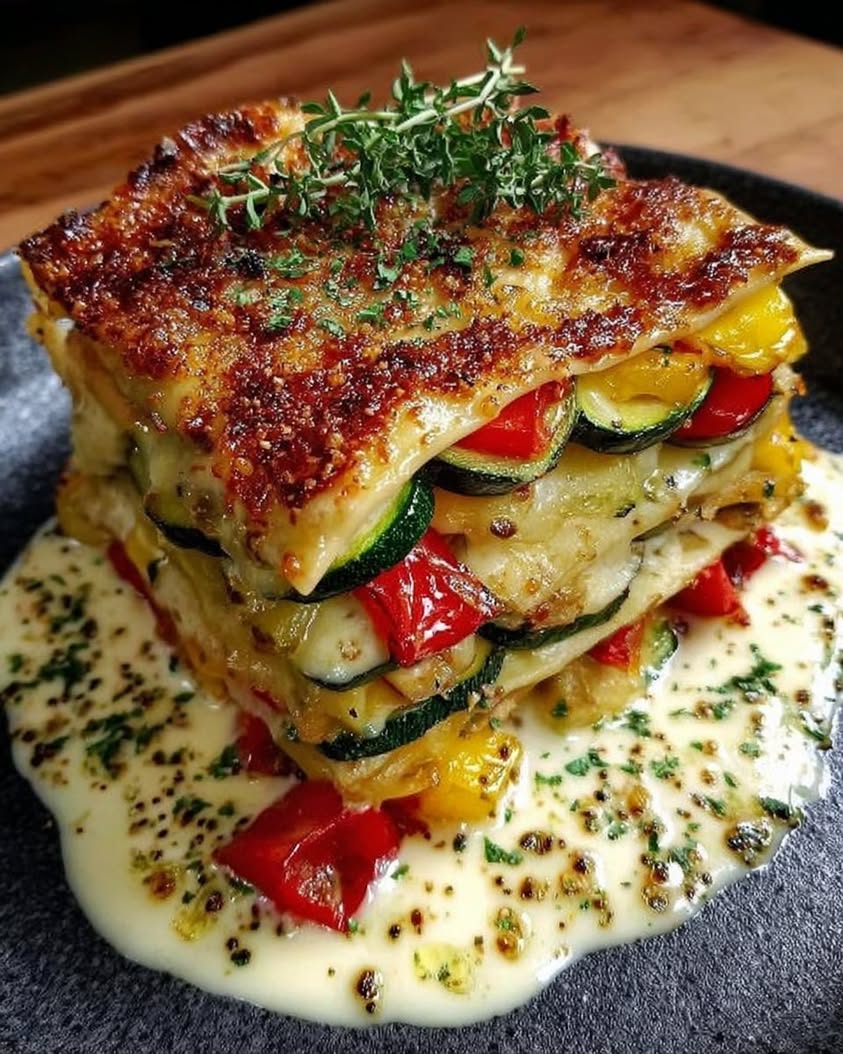
Golden Layered Mediterranean Vegetable Lasagna with Creamy Garlic Herb Cheese Drizzle: A Flavor-Packed Vegetarian Feast
Imagine a dish that captures the vibrant essence of the Mediterranean sun, layer by golden layer. This Golden Layered Mediterranean Vegetable Lasagna with Creamy Garlic Herb Cheese Drizzle is exactly that. It is a celebration of fresh produce, aromatic herbs, and rich, comforting textures. Moreover, it transforms the classic Italian pasta bake into a vegetarian masterpiece bursting with color and flavor. Each forkful offers a journey through roasted vegetables, savory sauces, and a tangy, creamy drizzle that ties everything together beautifully.
This recipe is perfect for anyone seeking a hearty, meatless meal that doesn’t compromise on satisfaction. The process of building this lasagna is almost as rewarding as eating it. You will roast zucchini, eggplant, and bell peppers until they are caramelized and tender. Then, you will layer them with no-boil lasagna noodles, a robust marinara, and a blend of creamy cheeses. Ultimately, the crowning glory is a luscious garlic herb cheese drizzle that adds a final punch of flavor. Consequently, this dish is ideal for Sunday dinners, potlucks, or any occasion that calls for impressive, crowd-pleasing food.
Beyond its incredible taste, this Golden Layered Mediterranean Vegetable Lasagna is a feast for the eyes. The cross-section reveals stripes of deep red sauce, golden roasted vegetables, and white cheese. Finally, the green-flecked creamy drizzle on top adds a gorgeous finishing touch. This recipe proves that vegetarian cooking can be both decadent and nourishing. It brings people together around the table with its familiar comfort and exciting new flavors.
Quick Recipe Highlights
- Flavor Profile: This lasagna delivers a symphony of savory, tangy, and slightly sweet notes. The roasted vegetables contribute a deep, caramelized sweetness that contrasts perfectly with the bright, acidic marinara sauce. Meanwhile, the creamy garlic herb cheese drizzle adds a rich, tangy, and aromatic finish that elevates every bite.
- Texture: Experience a wonderful contrast of textures in every layer. You get the tender, almost melt-in-your-mouth quality of the roasted vegetables. Then, there’s the satisfying bite of the al dente pasta noodles. Furthermore, the creamy cheese layers and the silky drizzle create a luxurious mouthfeel that is incredibly satisfying.
- Aroma: As this lasagna bakes, your kitchen will fill with an irresistible fragrance. First, you’ll smell the earthy sweetness of roasting vegetables. Then, the garlic and herbs from the drizzle will mingle with the tomato sauce and bubbling cheese. Ultimately, the aroma is warm, inviting, and unmistakably Mediterranean.
- Visual Appeal: This dish is a showstopper on any table. The layers create a beautiful striped effect when sliced. Additionally, the vibrant colors from the red peppers, green zucchini, and purple eggplant shine through. The white and golden cheese topping with the green herb drizzle makes it look professionally crafted.
- Skill Level Needed: This is a moderate-level recipe due to the multiple components. You need basic knife skills for chopping vegetables and comfort with roasting and layering techniques. However, the instructions are clear and sequential, making it achievable for confident beginners and a enjoyable project for experienced cooks.
- Special Equipment: You will need a few key tools for efficiency. A large baking sheet for roasting the vegetables is essential. Additionally, a 9×13 inch baking dish is necessary for assembling the lasagna. A blender or food processor is helpful for making the creamy drizzle smooth and lump-free.
Recipe Overview
- Difficulty Level: We rate this Golden Layered Mediterranean Vegetable Lasagna as moderate. The reason is the multi-step process involving prepping and roasting vegetables, making a sauce, and careful layering. However, none of the steps are technically difficult. With good organization, even a novice cook can achieve fantastic results. The payoff in flavor and presentation is well worth the effort.
- Category: This dish fits perfectly into several meal categories. Primarily, it is a magnificent vegetarian main course that can anchor any dinner. It also works wonderfully as a hearty casserole for potlucks or family gatherings. Furthermore, it makes excellent leftovers for meal prep, as the flavors deepen overnight.
- Cuisine: This recipe is inspired by the sun-drenched flavors of the Mediterranean basin. It draws from Italian pasta traditions, Greek vegetable preparations, and French herb usage. The focus on olive oil, fresh vegetables, garlic, and herbs creates a fusion that celebrates the best of coastal European cooking. It is a modern take on classic comfort food.
- Cost: Preparing this lasagna is moderately cost-effective, especially when vegetables are in season. The main expenses are the cheeses and the lasagna noodles. Using seasonal produce can lower the cost significantly. Overall, it yields 8 generous servings, making it a budget-friendly option for feeding a crowd compared to meat-based lasagnas.
- Season: This dish is truly fantastic year-round, but it shines brightest in late summer and early fall. This is when zucchini, eggplant, and bell peppers are at their peak of flavor and affordability. However, you can make it in winter using good-quality jarred roasted peppers and stored vegetables. It brings a taste of sunshine to colder months.
- Occasion: This lasagna is incredibly versatile for events. It is perfect for a cozy family Sunday supper or a festive holiday meal for vegetarian guests. Additionally, it travels well for potlucks and is impressive enough for dinner parties. You can even prepare it ahead for a stress-free entertaining option.
Why You’ll Love This Recipe
First and foremost, the taste and texture of this Golden Layered Mediterranean Vegetable Lasagna are utterly divine. Each bite offers a complex layering of flavors that dance on your palate. You experience the sweet, concentrated taste of oven-roasted vegetables, the tangy richness of tomato sauce, and the creamy, garlicky punch of the herb drizzle. The textures are equally compelling, from the tender veggies to the perfectly cooked pasta and the gooey cheese. It is a deeply satisfying meal that will have everyone asking for seconds. Furthermore, it is a fantastic way to enjoy a large variety of vegetables in one delicious, comforting package.
From a convenience standpoint, this recipe offers several benefits. While it requires some prep time, much of the work can be done in stages. For instance, you can roast the vegetables a day ahead. The layering process itself is simple and almost therapeutic. Moreover, using no-boil lasagna noodles saves a significant step and reduces cleanup. Once assembled, the lasagna bakes hands-off in the oven, allowing you to prepare sides or simply relax. Consequently, it is an ideal recipe for planned meals where you want impressive results without last-minute stress.
Nutritionally, this vegetarian lasagna is a powerhouse. It is packed with vitamins, minerals, and fiber from the array of colorful vegetables. Eggplant and zucchini provide potassium and antioxidants, while bell peppers are loaded with Vitamin C. Using part-skim ricotta and mozzarella adds protein and calcium without excessive fat. Olive oil, a cornerstone of the Mediterranean diet, contributes heart-healthy monounsaturated fats. This dish proves that comfort food can also be nourishing and support a balanced diet. It is a meal that makes you feel good both during and after eating.
For social and entertaining value, this lasagna is a true champion. It is a large-format dish designed to feed a crowd, making it perfect for gatherings. Its stunning visual appeal makes it a centerpiece on the buffet table. Because it is vegetarian, it accommodates a wide range of dietary preferences without feeling like a compromise. Guests will be delighted by its depth of flavor and beautiful presentation. It sparks conversation and is often the star of the meal, ensuring your hosting success.
Finally, this recipe is cost-effective and accessible. The ingredients are common and can be found in most grocery stores. You can easily adapt it based on what vegetables are on sale or in season. Compared to a meat lasagna, it can be more economical, especially when you consider the price of quality ground meat. It yields a large number of servings, providing excellent value. This Golden Layered Mediterranean Vegetable Lasagna with Creamy Garlic Herb Cheese Drizzle is an investment in a delicious, wholesome meal that everyone can enjoy.
Historical Background and Cultural Significance
The story of lasagna begins in ancient times, though its modern form is deeply Italian. The word “lasagna” likely derives from the Greek “lasanon,” meaning a cooking pot, which the Romans adopted as “lasanum.” Early versions were more like a flat sheet of dough cooked in a broth. However, the layered pasta dish we know today, with cheese and sauce, evolved in the Naples region during the Middle Ages. Tomatoes, a New World ingredient, were not added until the 18th century, revolutionizing the dish. This Golden Layered Mediterranean Vegetable Lasagna pays homage to that tradition while embracing a broader, vegetable-centric Mediterranean palette.
Culturally, lasagna holds a place of honor as a celebratory and communal dish. In Italy, it is often reserved for Sundays, holidays, and large family gatherings. The act of layering the ingredients is seen as an act of care and love. Our vegetable-focused version taps into the equally rich culinary tradition of the wider Mediterranean. This region has a long history of creating vibrant, plant-based dishes using eggplants, zucchini, peppers, and herbs. Combining these two traditions creates a dish that speaks to shared values of family, abundance, and savoring fresh, seasonal ingredients.
The evolution of this specific recipe reflects modern culinary trends and dietary awareness. As more people seek to reduce meat consumption without sacrificing flavor, vegetable lasagnas have surged in popularity. The technique of roasting vegetables before layering is a relatively modern twist that intensifies flavor and improves texture. The creamy garlic herb cheese drizzle is a contemporary garnish that adds restaurant-style flair. This recipe represents an evolution from the classic meat-and-cheese bechamel version to a lighter, brighter, yet equally indulgent creation. It is a testament to how traditional dishes can adapt and thrive.
Regional variations of vegetable lasagna abound, offering endless inspiration. In Southern Italy, you might find a “lasagna di melanzane” focusing on eggplant. Greek “pastitsio,” while different in pasta shape, shares the concept of layered pasta, meat (or vegetables), and sauce. French “tian” is a layered vegetable casserole without pasta. Our version is a fusion that borrows the best ideas: the Italian layered structure, the Greek love for oregano and feta in the drizzle, and the French emphasis on herbes de Provence. This cross-cultural approach makes the Golden Layered Mediterranean Vegetable Lasagna a globally inspired, universally appealing dish.
Ingredient Deep Dive
Eggplant: This versatile nightshade has a history spanning Asia, the Middle East, and the Mediterranean. It adds a meaty, substantial texture to the lasagna. Nutritionally, it is low in calories and a good source of fiber, antioxidants, and nasunin, a compound found in its purple skin. When selecting, choose firm, heavy eggplants with smooth, shiny skin and a bright green cap. Avoid those with wrinkles or soft spots. To prepare, salting is optional for this recipe since roasting will concentrate its flavor, but it can help reduce bitterness in larger eggplants. Store uncut in a cool place, not the refrigerator, for a few days.
Zucchini: A summer squash native to the Americas but embraced wholeheartedly by Italian cuisine. It provides a mild, slightly sweet flavor and tender texture. It is rich in water, Vitamin C, manganese, and antioxidants like lutein. Pick small to medium-sized zucchini that feel firm and have bright, taut skin. Larger ones can be seedy and watery. For this lasagna, cutting them into even half-moons ensures they roast evenly and layer neatly. Store in a plastic bag in the refrigerator’s crisper drawer for up to a week. You can substitute yellow squash for a color variation.
Bell Peppers: These sweet peppers, especially the red ones, are mature versions of green peppers, offering higher sugar and vitamin content. They bring a vibrant color, sweetness, and a slight crunch. They are an excellent source of Vitamins A and C. Choose peppers with firm, glossy skin and no soft spots or wrinkles. Roasting them intensifies their natural sweetness and makes the skin easy to peel. For a time-saving option, high-quality jarred roasted red peppers work well. Store fresh peppers in the fridge’s vegetable drawer.
No-Boil Lasagna Noodles: A modern kitchen convenience that simplifies the lasagna-making process. These noodles are par-cooked and dried, so they absorb moisture from the sauces during baking, cooking to al dente perfection. They ensure even layers and eliminate the step of boiling and handling hot, sticky pasta. Look for a brand made from durum wheat semolina for the best texture. It is crucial that your sauce and vegetable layers are sufficiently saucy and not dry, as the noodles need that liquid to cook properly. You can use regular lasagna noodles, but you must boil them first according to package directions.
Ricotta Cheese: A fresh, mild Italian cheese made from whey. It provides a creamy, slightly grainy texture and a subtle milky flavor that binds the layers. It is a good source of protein and calcium. For best results, use whole-milk or part-skim ricotta. Avoid non-fat ricotta, as it can be grainy and lack creaminess. Draining excess liquid from the ricotta by letting it sit in a fine-mesh strainer for 15-20 minutes prevents a watery lasagna. Mixing it with an egg helps stabilize the layer. For a dairy-free version, blended firm tofu or a commercial vegan ricotta can be substitutes.
Feta Cheese (in the drizzle): A brined, crumbly cheese with Greek origins, known for its tangy, salty flavor. It adds a distinctive Mediterranean character to the creamy drizzle. Feta is traditionally made from sheep’s or goat’s milk and is a good source of calcium and probiotics. When blended, it creates a wonderfully tangy and thick sauce. Look for authentic Greek feta in brine for the best flavor. Pre-crumbled feta often contains anti-caking agents that can affect blending smoothness, so a block is preferable. For the drizzle, it combines with cream cheese to create a perfect balance of tang and richness.
Common Mistakes to Avoid
- Skipping the Vegetable Roasting: Do not layer raw vegetables. Roasting is crucial as it caramelizes their natural sugars, concentrates flavor, and evaporates excess water. Raw vegetables will release too much liquid during baking, resulting in a soggy, watery lasagna. Take the time to roast them until tender and slightly golden.
- Using a Dry Marinara Sauce: The sauce must be loose and plentiful. No-boil noodles rely on absorbing moisture from the sauce to cook through. If your sauce is too thick, the noodles will remain hard and crunchy. Consider adding a little water or vegetable broth to your jarred sauce to achieve a saucier consistency.
- Overloading the Cheese Layers: While cheese is delicious, spreading it too thickly can create a dense, heavy barrier. This can prevent the layers from melding together and make the lasagna difficult to slice neatly. Use a moderate, even hand when spreading the ricotta mixture for the best texture.
- Not Seasoning Each Layer: Seasoning only the final product is a common error. Vegetables should be well-seasoned with salt and pepper before roasting. The ricotta mixture needs salt and herbs. The sauce should be flavorful. Building layers of seasoning ensures every bite is perfectly seasoned from the inside out.
- Cutting the Lasagna Immediately: Impatience leads to a messy slice. After baking, the lasagna needs to rest for at least 15-20 minutes. This allows the layers to set, the cheese to firm up slightly, and the internal heat to distribute evenly. Cutting too soon will cause it to slump and ooze.
- Ignoring the Drizzle Consistency: The creamy garlic herb cheese drizzle should be pourable but not runny. If it is too thick, it will clump and not drizzle attractively. If too thin, it will soak into the top and disappear. Adjust with a tablespoon of milk or water to reach the perfect ribbon-like consistency.
- Using the Wrong Baking Dish: A 9×13 inch dish is standard for this recipe. Using a smaller, deeper dish will result in too many layers, potentially leading to undercooked noodles and overflow. Using a larger, shallower dish will make the layers too thin and cause drying. Stick to the recommended size.
- Forgetting to Cover with Foil: The initial baking period requires the dish to be tightly covered with aluminum foil. This traps steam, which is essential for cooking the no-boil noodles properly and preventing the top from burning before the center is hot. Remove the foil only for the final browning phase.
Essential Techniques
Roasting Vegetables for Maximum Flavor: This technique is non-negotiable for a successful vegetable lasagna. Roasting at a high heat (around 425°F) causes the natural sugars in the vegetables to caramelize, creating deep, sweet, and complex flavors. It also drives off excess moisture, which is critical to prevent a soggy final dish. The key is to cut the vegetables into uniform sizes so they cook evenly. Toss them generously with olive oil, salt, and pepper, and spread them in a single layer on a baking sheet. Do not overcrowd, as this will steam them instead of roasting. They are done when tender and showing golden-brown spots.
Building Balanced Layers: Proper layering ensures every component cooks evenly and each slice has the perfect ratio of ingredients. Start with a thin layer of sauce on the bottom to prevent sticking. Then follow the sequence: noodles, sauce, vegetables, ricotta mixture. Repeat, ending with a layer of noodles, sauce, and shredded mozzarella. Press down gently on each layer after adding the noodles to ensure contact and eliminate air pockets. The goal is even distribution, not towering mounds of any single ingredient. A balanced structure bakes more uniformly and slices cleanly.
Creating a Silky Creamy Drizzle: The drizzle is a signature element that should be smooth, flavorful, and pourable. The technique involves using a blender or food processor to fully emulsify the ingredients. Start by blending the cream cheese and feta until smooth, scraping down the sides as needed. Then, with the motor running, slowly stream in the milk or cream. This gradual addition prevents the mixture from seizing or becoming lumpy. Finally, add the fresh herbs and pulse just to combine, preserving their color and flecks. The result should coat the back of a spoon and fall in a thick ribbon.
The Resting Period: This final, passive technique is vital for structural integrity. When the lasagna comes out of the oven, the cheeses are molten, the sauces are bubbling, and everything is fluid. Allowing it to rest for 15-20 minutes gives the starches in the pasta and sauces time to set and reabsorb some of the free liquids. The internal temperature will also even out. This rest transforms the lasagna from a loose, jiggly mass into a firm, sliceable masterpiece. Use this time to prepare a salad or finish the creamy drizzle.
Pro Tips for Perfect Golden Layered Mediterranean Vegetable Lasagna
First, roast your vegetables in batches if necessary. Overcrowding the baking sheet leads to steaming, not roasting. For the best caramelization, give them space. Consequently, they will brown beautifully and lose more water, which is key for a non-soggy outcome.
Second, consider adding a layer of fresh spinach. Simply wilt a bunch of fresh spinach, squeeze out all the water, and add it as a layer with the roasted vegetables. This introduces another color, texture, and a boost of nutrients without altering the cooking time.
Third, taste your marinara sauce before assembling. Jarred sauces can vary in seasoning and acidity. You may want to add a pinch of sugar to balance acidity, extra garlic, or a handful of fresh basil. A flavorful sauce is the backbone of the entire dish.
Fourth, let the ricotta mixture come to room temperature before spreading. Cold ricotta is stiff and difficult to spread in a thin, even layer. Letting it warm up slightly makes the assembly process much smoother and more precise.
Fifth, use a sharp, serrated knife to cut the baked lasagna. A serrated knife glides through the crispy top cheese layer and the tender pasta without dragging or compressing the beautiful layers you worked so hard to create.
Sixth, reserve some of the fresh herbs from the drizzle for garnish. Sprinkling a few extra chopped basil or oregano leaves over the drizzled lasagna just before serving adds a pop of fresh color and a burst of aroma that delights the senses.
Seventh, if you have time, let the assembled, unbaked lasagna rest in the refrigerator for an hour or overnight. This allows the noodles to start absorbing moisture, which can lead to even more tender pasta and integrated flavors after baking.
Eighth, place your baking dish on a sheet pan before putting it in the oven. This catches any potential bubble-overs from the sauce or cheese, saving you from a messy oven cleanup and preventing smoking or burning on the oven floor.
Variations and Adaptations
For regional variations, you can take this lasagna in many directions. A Greek-inspired version could use a béchamel sauce instead of ricotta and add Kalamata olives and spinach. A Provençal twist might include layers of sautéed mushrooms and a drizzle with herbes de Provence. An Italian “Norma” style would focus solely on eggplant and add a ricotta salata garnish. The basic framework is wonderfully adaptable to different culinary traditions within the Mediterranean umbrella.
Seasonal adaptations are easy and recommended. In spring, use asparagus, artichoke hearts, and peas. Summer is perfect for the classic zucchini, eggplant, and pepper combo. For fall, incorporate roasted butternut squash, kale, and caramelized onions. In winter, rely on hearty mushrooms, frozen spinach (thawed and squeezed), and jarred roasted peppers. Using seasonal produce ensures peak flavor and often better value.
Dietary modifications are straightforward. For a gluten-free lasagna, use certified gluten-free no-boil noodles or thin slices of zucchini or eggplant as the noodle layers. To make it vegan, substitute the cheeses: use a tofu ricotta blend, vegan mozzarella shreds, and a drizzle made from blended cashews, nutritional yeast, lemon, and herbs. For a lower-carb option, replace the pasta layers with thin slices of eggplant or large portobello mushroom caps.
Flavor variations can personalize the dish immensely. Add heat with crushed red pepper flakes in the sauce or drizzle. Introduce umami with a layer of sautéed mushrooms or sun-dried tomatoes. For a richer taste, add a layer of béchamel sauce along with or instead of the ricotta. Incorporate different herbs like dill, mint, or tarragon in the drizzle for a unique aromatic profile.
Texture modifications can cater to different preferences. For a creamier interior, increase the amount of ricotta mixture. For more bite, add a layer of toasted pine nuts or walnuts between the vegetables. If you enjoy a crispier top, use a mix of mozzarella and Parmesan, and broil for the last 2-3 minutes (watch closely!). For a smoother vegetable layer, you can puree some of the roasted vegetables into the marinara sauce.
Presentation alternatives can make the dish feel new. Instead of a large rectangle, assemble individual lasagnas in small oven-safe dishes or mason jars for a cute, portion-controlled serving. You can also deconstruct it: serve the roasted vegetables and creamy drizzle over cooked lasagna noodles or even polenta rounds. For a party, bake it in a round springform pan for a stunning “lasagna cake” presentation.
Serving and Presentation Guide
Plating this lasagna is part of the enjoyment. Use a sharp, thin spatula or pie server to lift out clean squares. Wipe the spatula clean between cuts for neat edges. Place each portion slightly off-center on a warm, wide-rimmed plate. This positioning allows room for the creamy drizzle to artfully pool around the base and for any garnish.
Garnishing elevates the visual appeal. Beyond the drizzle, consider a light sprinkle of microgreens, a few whole basil leaves, a dusting of smoked paprika, or a final drizzle of high-quality extra virgin olive oil. A small side of dressed arugula or a lemon wedge on the plate adds freshness and color contrast.
Traditional accompaniments keep the meal balanced. A simple green salad with a lemony vinaigrette is classic and cuts through the richness. Garlic bread or focaccia is perfect for soaking up any remaining sauce. For a lighter option, serve with roasted cherry tomatoes or steamed green beans drizzled with lemon.
Modern serving suggestions might include a charcuterie-style board to start, featuring olives, marinated artichokes, and hummus, tying into the Mediterranean theme. For a full feast, pair it with a chilled soup like gazpacho in summer or a white bean salad. This approach makes the lasagna the star of a curated culinary experience.
Temperature considerations are key. Serve the lasagna hot or very warm. The cheese should be soft and the interior steaming. If it has cooled too much after resting, a quick 30-second zap in the microwave per plate can revive it. However, the drizzle is best applied just before serving at room temperature or slightly cool for a pleasant temperature contrast.
Portion control is easy with this hearty dish. One standard square from a 9×13 pan is a generous main course serving. For a lighter meal or as part of a larger buffet, you can cut smaller rectangles or squares. Remember, it is rich and filling, so guests may be satisfied with slightly less than they initially think.
Wine and Beverage Pairing
Wine pairings for this vegetable lasagna should complement its richness and acidity. A medium-bodied Italian red like Chianti Classico or Barbera works wonderfully. Their bright acidity cuts through the cheese and matches the tomato sauce, while their earthy notes harmonize with the roasted vegetables. Alternatively, a fuller-bodied white like an oak-aged Chardonnay or a Vermentino can stand up to the creamy elements. The buttery notes in the Chardonnay pair beautifully with the cheese sauce and drizzle.
For non-alcoholic alternatives, consider sophisticated options that mirror the meal’s complexity. A sparkling lemonade with a sprig of rosemary provides effervescence and herbal notes. Iced hibiscus tea offers a tart, cranberry-like flavor that contrasts nicely with the richness. A high-quality blood orange Italian soda is both festive and flavorful. Even a simple glass of chilled club water with a squeeze of lemon and cucumber slices can be a refreshing palate cleanser.
Coffee and tea pairings are excellent for a post-meal treat. After enjoying this lasagna, a strong espresso or a macchiato is a classic Italian way to finish. The bitterness of the coffee balances the lingering richness. For tea, an herbal peppermint or ginger tea can aid digestion. A black tea like Earl Grey, with its citrusy bergamot notes, also makes a lovely, aromatic conclusion to the meal.
Temperature considerations for beverages are straightforward. Serve red wines slightly below room temperature, around 60-65°F. White wines and sparkling options should be well-chilled. Non-alcoholic sparkling drinks are best served very cold. Coffee, of course, should be hot, while iced tea is a refreshing option for a warm-weather meal.
Serving suggestions involve presentation. Pour wine into appropriate stemware to enhance the aroma. Serve non-alcoholic options in elegant glasses with garnishes. Offer coffee in small cups alongside a bowl of sugar and lemon peel. Providing a choice of beverages caters to all guests and elevates the entire dining experience from a simple meal to a memorable occasion.
Storage and Shelf Life
Proper storage is essential for maintaining quality and safety. Once cooled to room temperature, cover the baking dish tightly with plastic wrap or aluminum foil, or transfer portions to airtight containers. You must refrigerate the lasagna within two hours of baking to prevent bacterial growth. The creamy drizzle should be stored separately in its own sealed container in the refrigerator.
Temperature requirements are non-negotiable. The lasagna must be kept refrigerated at 40°F or below. Do not leave it out on the counter for extended periods. When reheating, ensure the internal temperature reaches 165°F to ensure it is safe to eat. The drizzle can be served cold or at room temperature; there is no need to reheat it.
Container recommendations depend on the form. For the whole pan, covering the original baking dish is fine. For individual portions, shallow airtight containers prevent sogginess and allow for even reheating. Glass containers are ideal as they do not absorb odors and can go from fridge to microwave or oven safely. Always label containers with the date.
Signs of spoilage are important to recognize. Discard the lasagna if you notice an off or sour smell, significant mold growth (often fuzzy and green, white, or black), or if it has been stored in the fridge for more than 5 days. A slight separation of liquids is normal upon reheating, but excessive water or a slimy texture on the vegetables or pasta indicates spoilage.
Reheating instructions are key to restoring enjoyment. For best results, reheat individual portions in the microwave covered with a damp paper towel to add steam and prevent drying out. Heat in 60-second intervals until hot. For larger pieces, reheat in a 350°F oven, covered with foil, for 20-30 minutes. You can add a tablespoon of water or sauce to the dish to keep it moist.
Freezing guidelines allow for long-term storage. This lasagna freezes exceptionally well. Cool it completely, then wrap the whole pan or individual portions tightly in plastic wrap followed by heavy-duty foil or place in freezer bags. Label with the date. It will keep for up to 3 months. Thaw overnight in the refrigerator before reheating. The drizzle does not freeze well due to the dairy separation; it’s best made fresh.
Make Ahead Strategies
A smart prep timeline can turn this recipe into a weeknight possibility. You can roast all the vegetables up to 3 days in advance and store them in the fridge. The marinara sauce can be made or doctored 2-3 days ahead. The ricotta mixture can be prepared and kept covered in the fridge for a day. The lasagna can be fully assembled (except the final mozzarella topping and drizzle) 24 hours before baking. Cover tightly and refrigerate. Add 10-15 minutes to the baking time if starting from cold.
Storage between steps is simple. Keep prepped components in separate airtight containers in the refrigerator. This prevents cross-flavors and allows you to assess each element’s readiness. If storing the assembled, unbaked lasagna, press a piece of plastic wrap directly onto the surface before covering with foil to prevent the top noodles from drying out.
Assessing quality impact is positive. Make-ahead steps often improve the final dish. Allowing flavors to meld in the refrigerator overnight results in a more cohesive and deeper flavor profile. The noodles begin to hydrate slowly, which can lead to a more tender texture. The key is ensuring components are not overly watery before assembly to prevent sogginess.
Assembly tips for make-ahead are crucial. When assembling a cold lasagna, spread the ricotta mixture thinly as it will be firmer. You may need to let the sauce sit out for 15 minutes to loosen up if it thickened in the fridge. Remember to add the final layer of shredded mozzarella just before baking, not before refrigeration, to prevent it from becoming gummy.
Reheating guidelines for a fully made-ahead and baked lasagna are straightforward. If you’ve baked it, cooled it, and stored it, reheat covered in a 350°F oven until the center is hot, about 30-40 minutes for a whole pan. For individual slices, the microwave method is fastest. Always apply the fresh drizzle after reheating, never before.
Fresh element additions are the final touch. No matter how much you prepare ahead, always plan to make the creamy garlic herb cheese drizzle fresh on the day of serving. Its bright, tangy flavor and vibrant green flecks are at their best within a few hours of making. Similarly, any fresh herb garnish should be added just before serving.
PrintGolden Layered Mediterranean Vegetable Lasagna with Creamy Garlic Herb Cheese Drizzle
- Total Time: 45 minutes
- Yield: 4
Description
A vibrant, vegetarian lasagna layered with roasted Mediterranean vegetables, golden lasagna noodles, and a rich tomato sauce, topped with a creamy garlic herb cheese drizzle for a fresh, flavorful twist.
Ingredients
- 1 package (9 oz) no-boil lasagna noodles
- 2 medium zucchinis, sliced into rounds
- 1 large eggplant, cubed
- 1 red bell pepper, sliced
- 1 yellow bell pepper, sliced
- 1 onion, chopped
- 3 cloves garlic, minced
- 2 cups marinara sauce
- 1 cup ricotta cheese
- 1 cup shredded mozzarella cheese
- 1/2 cup grated Parmesan cheese
- 1/4 cup olive oil
- 1 tsp dried oregano
- 1 tsp dried basil
- Salt and black pepper to taste
- For the drizzle: 1/2 cup Greek yogurt, 2 tbsp cream cheese, 1 clove garlic (minced), 1 tbsp fresh parsley (chopped), 1 tsp lemon juice
Instructions
- Preheat oven to 400°F (200°C). Toss zucchini, eggplant, bell peppers, and onion with olive oil, oregano, basil, salt, and pepper. Roast on a baking sheet for 20-25 minutes until golden and tender.
- In a bowl, mix ricotta cheese with half of the minced garlic. Set aside.
- In a 9×13 inch baking dish, spread a thin layer of marinara sauce. Layer no-boil lasagna noodles, followed by half of the roasted vegetables, half of the ricotta mixture, and a sprinkle of mozzarella and Parmesan. Repeat layers, ending with noodles on top.
- Cover the top layer with remaining marinara sauce and cheeses. Cover with foil and bake at 375°F (190°C) for 25 minutes. Remove foil and bake for another 10 minutes until bubbly and golden.
- While baking, prepare the drizzle by whisking Greek yogurt, cream cheese, remaining garlic, parsley, and lemon juice until smooth. Drizzle over the lasagna before serving.
Notes
You can customize the seasonings to taste.
- Prep Time: 15 minutes
- Cook Time: 30 minutes
- Method: Main
- Cuisine: Mediterranean