Easy Mediterranean Ground Beef Stir Fry Recipe for a Flavorful Weeknight Meal
Are you searching for a delicious and healthy dinner that comes together in under 30 minutes? This Easy Mediterranean Ground Beef Stir Fry Recipe for a Flavorful Weeknight Meal is your perfect solution. Moreover, it transforms simple ground beef and fresh vegetables into a vibrant, aromatic dish bursting with classic Mediterranean flavors. Consequently, you get a wholesome, satisfying meal that feels both gourmet and incredibly approachable.
This recipe masterfully combines lean protein with a rainbow of vegetables, all coated in a savory, herbaceous sauce. The result is a one-pan wonder that delivers on nutrition, taste, and convenience. Ultimately, it’s designed to become a reliable staple in your weekly rotation, impressing family and friends with minimal effort.
Quick Recipe Highlights
- Flavor Profile: This dish features a robust, savory base from the ground beef, beautifully balanced by the bright acidity of tomatoes and lemon juice. Furthermore, aromatic herbs like oregano and parsley add a fresh, earthy depth that is unmistakably Mediterranean.
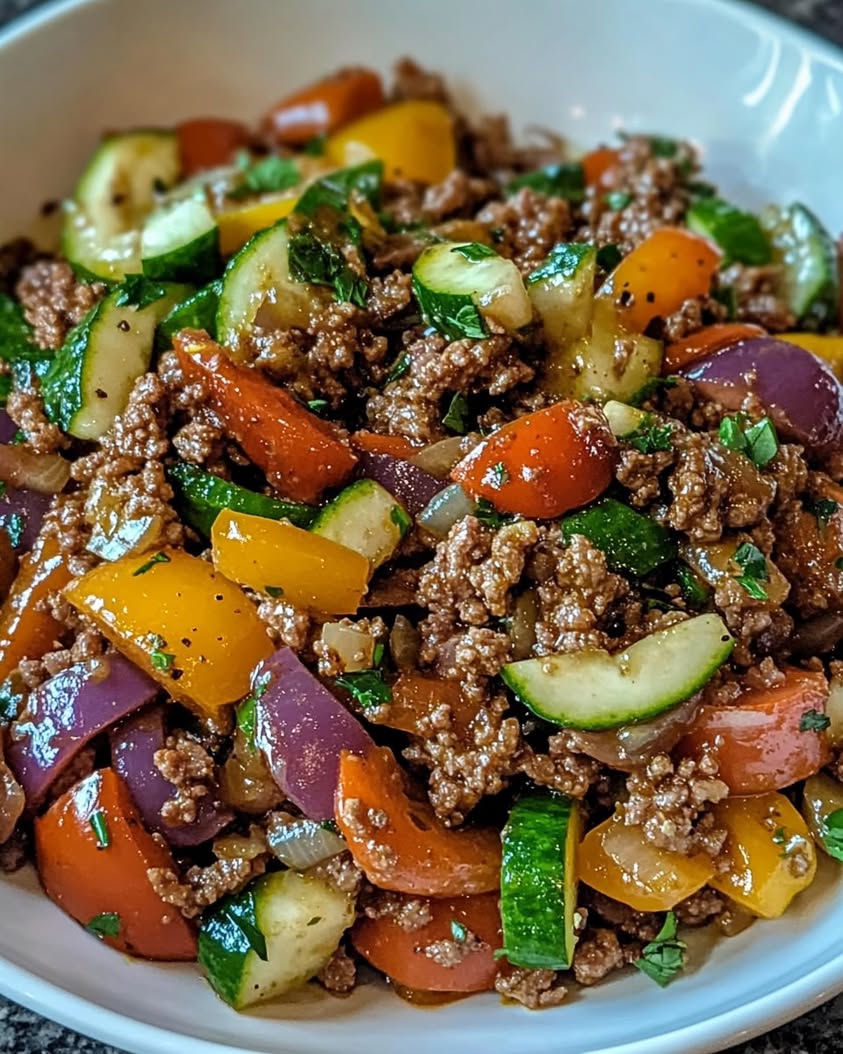
- Texture: You will enjoy a delightful contrast of textures. The ground beef provides a satisfying, crumbly heartiness, while the bell peppers and zucchini retain a pleasant crunch. Additionally, the final dish has a juicy, saucy consistency that clings perfectly to rice or pasta.
- Aroma: As it cooks, your kitchen will fill with an irresistible fragrance. The initial scent of browning beef and garlic gives way to the sweet, grassy notes of sautéed vegetables and the warm, piney aroma of dried oregano.
- Visual Appeal: This stir fry is a feast for the eyes with its vibrant color palette. The deep red of the tomatoes, bright green of the zucchini, and rich red of the bell peppers create a visually stunning dish that looks as good as it tastes.
- Skill Level Needed: This is a beginner-friendly recipe. It requires basic knife skills for chopping and fundamental cooking techniques like browning meat and sautéing vegetables. Therefore, even novice cooks can achieve fantastic results.
- Special Equipment: You only need one large skillet or wok and a few basic kitchen tools. A sharp knife and a sturdy wooden spoon are the main essentials, making this recipe accessible to any home cook.
Recipe Overview
- Difficulty Level: We rate this recipe as “Easy” because it follows a straightforward, linear cooking process. The steps are simple: brown the meat, sauté the aromatics and vegetables, then combine everything with the sauce. There are no complex techniques or finicky timing requirements, so it’s forgiving for cooks of all levels.
- Category: This versatile dish fits multiple categories. Primarily, it’s a quick and healthy main course perfect for busy weeknights. It also works wonderfully as a meal prep option, as the flavors improve overnight. You can even serve it as a hearty, protein-packed filling for wraps or pitas.
- Cuisine: The recipe draws direct inspiration from the sun-drenched flavors of the Mediterranean basin. It incorporates core ingredients like olive oil, garlic, oregano, lemon, and fresh vegetables that are staples in Greek, Italian, and Levantine cooking, creating a fusion that is both authentic and adaptable.
- Cost: This is a very budget-friendly meal. Ground beef is typically an affordable protein, and the vegetables used are common and inexpensive, especially when in season. The dried herbs and spices are pantry staples, making the overall cost per serving remarkably low.
- Season: This dish is fantastic year-round but truly shines in late summer and early fall. That’s when zucchini, bell peppers, and tomatoes are at their peak freshness, sweetness, and affordability, elevating the flavor of the entire stir fry.
- Occasion: It’s ideal for casual family dinners, effortless weeknight entertaining, or a simple yet impressive date night at home. The quick preparation means you spend less time cooking and more time enjoying the meal with your loved ones.
Why You’ll Love This Easy Mediterranean Ground Beef Stir Fry Recipe
First and foremost, the taste is absolutely incredible. Each bite delivers a symphony of savory, tangy, and herbaceous notes that are deeply satisfying. The lean ground beef soaks up the garlicky, tomato-based sauce, while the fresh vegetables add pops of sweetness and texture. Consequently, your palate never gets bored, making every forkful a delightful experience. This dish proves that healthy food does not have to be bland or boring; it can be explosively flavorful and deeply comforting.
From a practical standpoint, the convenience is a major win. This entire meal cooks in one pan, which means minimal cleanup. The prep work is simple chopping, and the active cooking time is just about 15 minutes. Therefore, from start to finish, you can have a restaurant-quality dinner on the table in half an hour. This makes it a lifesaver on those evenings when time is short but you still want a wholesome, home-cooked meal.
Nutritionally, this recipe is a powerhouse. It’s packed with lean protein from the ground beef, which helps keep you full and supports muscle maintenance. The variety of vegetables provides a broad spectrum of vitamins, minerals, and dietary fiber. Using olive oil as the cooking fat adds heart-healthy monounsaturated fats. Altogether, it’s a balanced meal that fuels your body without weighing you down.
For social gatherings, this stir fry is a fantastic choice. It’s easy to double or triple the recipe to feed a crowd without much extra effort. The colorful, appealing presentation makes it look like you spent hours in the kitchen. Serve it over a big platter of couscous or with warm pita bread on the side, and you have a communal, shareable feast that encourages conversation and connection.
Finally, the cost-effectiveness and accessibility of the ingredients cannot be overstated. You likely have many of the dried spices and oils in your pantry already. The fresh ingredients are readily available at any grocery store and are often among the most affordable produce items. This recipe demonstrates how to create a luxurious-tasting meal on a modest budget, making gourmet-inspired eating accessible to everyone.
Historical Background and Cultural Significance
The concept of cooking minced meat with vegetables and aromatics has ancient roots across the Mediterranean. Historically, resourceful home cooks developed similar dishes to make the most of available ingredients. The technique of quickly cooking ingredients over high heat in a single vessel is practical and fuel-efficient, aligning with traditional cooking methods found from Southern Europe to the Middle East. This Easy Mediterranean Ground Beef Stir Fry Recipe is a modern interpretation of those timeless, efficient cooking principles.
Culturally, the combination of these specific ingredients speaks to the Mediterranean dietary pattern, renowned for its health benefits. The emphasis on olive oil, vegetables, herbs, and lean protein reflects a culinary philosophy centered on freshness, simplicity, and balance. Dishes like this are the backbone of daily family meals in regions like Greece and Southern Italy, where eating is both a necessity and a celebrated social ritual. This recipe brings a taste of that convivial, health-conscious culture into your home kitchen.
The recipe has evolved significantly with global ingredient availability. Originally, such a dish would have been made with locally sourced meat, seasonal vegetables, and wild herbs. Today, we have the luxury of combining bell peppers, zucchini, and tomatoes—New World ingredients—with Old World spices like oregano, creating a fusion that is now considered classically Mediterranean. This evolution shows how cuisine adapts and grows, absorbing new influences while retaining its core identity.
Regional variations of this concept are endless. In Greece, you might find a similar mixture used as a filling for stuffed peppers or tomatoes (“Yemista”). In Turkey, it could be seasoned with mint and served over eggplant. In Italy, it might become a quick “ragù” for pasta. Our stir fry version embraces the speed and convenience of modern life while honoring the flavor foundations of these rich culinary traditions. It’s a global citizen on a plate, perfect for today’s interconnected world.
Ingredient Deep Dive
Lean Ground Beef: This protein forms the hearty base of our stir fry. Nutritionally, lean ground beef (90/10 or 93/7) is an excellent source of high-quality protein, iron, zinc, and B vitamins, particularly B12. When selecting it, look for a bright red color with fine texture and minimal visible fat. For storage, keep it refrigerated and use within 1-2 days of purchase, or freeze it for up to 3 months. For substitutions, ground lamb offers an authentic Mediterranean alternative, while ground turkey or chicken provides a lighter option. Plant-based ground “meat” crumbles work perfectly for a vegetarian adaptation.
Bell Peppers and Zucchini: These vegetables provide color, texture, and vital nutrients. Bell peppers, especially red ones, are loaded with vitamin C and antioxidants. Zucchini adds moisture, fiber, and a mild flavor that absorbs the dish’s spices. Choose peppers that are firm with taut, glossy skin, and select zucchini that are small to medium-sized and feel heavy for their size. Store them unwashed in your refrigerator’s crisper drawer. You can substitute yellow squash for zucchini, or use a mix of different colored peppers for even more visual appeal.
Dried Oregano: This herb is the quintessential flavor of the Mediterranean. Oregano’s history dates back to ancient Greece, where it was a symbol of joy. Its robust, slightly bitter, and piney flavor is essential to the dish’s character. Nutritionally, it contains antioxidants and has antimicrobial properties. For the best flavor, purchase whole dried leaves and crush them between your fingers just before adding to the pan. Store dried oregano in a cool, dark place. If you must substitute, marjoram is a close cousin, though milder. In a pinch, an Italian herb blend can work.
Extra Virgin Olive Oil: More than just a cooking fat, olive oil is a foundational flavor. It contributes fruity, peppery notes and healthy monounsaturated fats. Always use a good-quality extra virgin olive oil for its superior flavor and nutrient profile. Store it in a dark, cool cupboard away from heat and light to prevent rancidity. While other oils can be used for cooking, the unique taste of olive oil is irreplaceable for authentic Mediterranean flavor. For a finishing drizzle, use your best bottle.
Common Mistakes to Avoid
- Overcrowding the Pan: Adding all the vegetables at once will steam them instead of sautéing. This results in soggy, limp vegetables rather than achieving a flavorful sear with slight caramelization. Always cook in batches if your pan is not large enough to hold everything in a single layer.
- Using Ground Beef with High Fat Content: While fat equals flavor, using 80/20 ground beef can make the final dish excessively greasy. The excess fat will pool in the pan and create an oily sauce. Opt for 90% lean or higher for a cleaner, healthier result where the other flavors can shine.
- Not Browning the Beef Properly: Simply gray-ing the meat is a missed opportunity. You want to achieve a deep, brown crust on some of the beef pieces. This browning, called the Maillard reaction, creates complex, savory flavors that form the foundation of the entire dish. Don’t stir too frequently; let it sit and sear.
- Adding Garlic Too Early: If you add minced garlic at the same time as onions or with raw beef, it will likely burn and turn bitter during the longer cooking process. Always add garlic later, just before the liquid ingredients, to gently cook it and release its aroma without scorching.
- Overcooking the Vegetables: Zucchini and bell peppers should retain a slight bite (al dente). If you cook them until they are completely soft and mushy, you lose their fresh texture and vibrant color. Add them towards the end of the cooking process and just cook until tender-crisp.
- Skipping the Acid: The lemon juice or vinegar at the end is not optional. This brightening acid cuts through the richness of the beef and oil, balancing the entire dish and making the flavors pop. Without it, the stir fry can taste flat and one-dimensional.
- Using Stale Dried Herbs: Dried oregano loses its potency after about six months. If your spices have been in the cabinet for years, they will contribute very little flavor. Always smell your dried herbs before using; they should be fragrant. If not, it’s time for a new bottle.
- Not Seasoning in Layers: Season only at the end, and you’ll have a bland exterior with a seasoned center. Instead, season the beef lightly with salt and pepper as it browns. Then, season the vegetables as they cook. Finally, taste and adjust the seasoning at the very end after combining everything.
Essential Techniques
Proper Searing/Browning of Ground Beef: This technique is crucial for developing deep, meaty flavor. To master it, ensure your pan is hot before adding the beef. Break the beef into small crumbles but avoid constantly stirring. Let it sit undisturbed for a minute or two to allow contact with the hot surface, creating a fond (browned bits) on the bottom of the pan. The visual cue for success is a mixture of browned, crispy bits and fully cooked gray meat. The common pitfall is stirring too often, which steams the meat instead of searing it.
Sautéing Vegetables to Al Dente: The goal is to cook vegetables quickly over medium-high heat until they are just tender but still retain color and crunch. The importance lies in texture contrast and nutrient preservation. To master it, have your vegetables uniformly chopped and add them to hot oil. Listen for a sizzle. Stir frequently but not constantly, cooking just until they brighten in color and soften slightly. The visual cue is vibrant, slightly wilted vegetables that offer resistance when pierced with a fork. Overcooking is the main pitfall, leading to dull, mushy results.
Building and Reducing a Pan Sauce: After browning meat and vegetables, deglazing the pan with tomato paste and water creates a flavorful sauce. The technique involves scraping up the fond (the browned bits) with your liquid, which dissolves those flavor-packed particles into the sauce. Letting it simmer for a few minutes allows the sauce to thicken slightly and the flavors to meld. The visual cue for a good reduction is a sauce that coats the back of a spoon and clings to the ingredients, rather than pooling waterly in the pan. Rushing this step is a common mistake.
Pro Tips for Perfect Easy Mediterranean Ground Beef Stir Fry
First, prep all your ingredients before you turn on the stove. This “mise en place” ensures a smooth, stress-free cooking process since the stir fry comes together very quickly once started.
For maximum flavor, toast your dried oregano in the dry, hot pan for about 30 seconds before adding oil. This quick bloom releases its essential oils and intensifies its aroma dramatically.
If you have time, let the browned ground beef drain on a paper towel-lined plate for a moment before returning it to the pan. This simple step removes excess grease for a cleaner final dish.
Resist the urge to add extra water beyond what the recipe calls for. The vegetables will release their own natural juices as they cook, contributing to the sauce’s body.
Finish the dish with a final drizzle of high-quality extra virgin olive oil and a sprinkle of fresh parsley or crumbled feta cheese just before serving. This adds a layer of fresh flavor and richness.
For a deeper tomato flavor, substitute the water with a splash of dry red wine or a low-sodium beef broth when deglazing the pan.
Let the finished stir fry rest off the heat for 5 minutes before serving. This allows the flavors to marry and the sauce to thicken slightly as it cools.
Variations and Adaptations
Regional Variations: For a Greek twist, add a teaspoon of dried mint and finish with crumbled feta cheese and Kalamata olives. For an Italian-inspired version, use a blend of basil and oregano, add a pinch of red pepper flakes, and serve over polenta. A Middle Eastern adaptation could include a teaspoon of ground cumin and allspice, served over fluffy couscous with a side of yogurt sauce.
Seasonal Adaptations: In spring, use asparagus tips and fresh peas. During summer, incorporate diced eggplant and cherry tomatoes. For fall, swap in cubed butternut squash and mushrooms. In winter, use hearty greens like chopped kale or Swiss chard, adding them at the very end to just wilt.
Dietary Modifications: For a gluten-free meal, ensure your tomato paste is certified GF and serve over rice, quinoa, or gluten-free pasta. To make it dairy-free, simply omit any cheese garnish. For a lower-carb or keto option, increase the ground beef portion, reduce the higher-carb vegetables like tomatoes, and serve over cauliflower rice.
Flavor Variations: Add a tablespoon of capers or chopped green olives for a briny punch. Stir in a tablespoon of harissa paste for a spicy North African kick. For a smoky note, add a teaspoon of smoked paprika along with the oregano.
Texture Modifications: For a chunkier texture, use ground beef chunks or small meatballs instead of crumbled beef. For a saucier result, add an extra half cup of crushed tomatoes or broth and let it reduce longer. To add crunch, top with toasted pine nuts or slivered almonds before serving.
Presentation Alternatives: Instead of a bowl, serve the stir fry in hollowed-out bell pepper halves. Use it as a hearty filling for warm pita pockets or whole-wheat wraps. For an elegant appetizer, serve smaller portions in endive leaves or on crostini.
Serving and Presentation Guide
Plating Techniques: For a family-style presentation, mound the hot stir fry in the center of a large, shallow platter. Surround it with your chosen base, such as rice or couscous, creating a border. This allows guests to serve themselves easily. For individual plates, place a bed of grains first, then use a large spoon to create a generous, slightly off-center mound of the stir fry on top, allowing some of the grain to show around the edges.
Garnishing Ideas: Fresh herbs are your best friend. A generous scattering of chopped fresh parsley or dill adds color and a bright finish. For richness, add crumbles of feta or goat cheese. A final drizzle of your best extra virgin olive oil adds sheen and flavor. A lemon wedge on the side is both functional and decorative.
Traditional Accompaniments: In the Mediterranean, this type of dish is often served with simple, starchy bases that soak up the flavorful sauce. Classic choices include fluffy white rice, pearl couscous (ptitim), orzo pasta, or crusty bread for dipping. A simple side salad of cucumber, tomato, and red onion with a lemon-olive oil dressing complements it perfectly.
Modern Serving Suggestions: For a low-carb option, serve over cauliflower rice or zucchini noodles. Spoon it into a baked sweet potato for a hearty, nutrient-dense meal. Use it as a high-protein topping for a green salad, turning it into a deconstructed bowl.
Temperature Considerations: This dish is best served hot, immediately after cooking. However, it is also delicious at room temperature, making it excellent for picnics or packed lunches. If you must reheat, do so gently in a skillet with a splash of water to prevent drying out, as microwaving can make the vegetables mushy.
Portion Control Tips: A standard serving is about 1.5 to 2 cups of the stir fry mixture. Using a measuring cup to portion it over your grain can help manage intake. Remember, the vegetables add significant volume with fewer calories, so loading your plate with the stir fry itself is a healthy strategy.
Wine and Beverage Pairing
Wine Pairings: The savory, herbaceous, and slightly acidic profile of this stir fry pairs beautifully with medium-bodied reds and crisp whites. A Greek Agiorgitiko or an Italian Chianti Classico offers enough acidity to cut through the richness without overpowering the dish. For white wine lovers, a Assyrtiko from Santorini or a Vermentino from Sardinia provides a citrusy, mineral counterpoint that complements the lemon and herbs perfectly.
Non-Alcoholic Alternatives: Sparkling water with a squeeze of lemon or lime is a classic, refreshing choice. For something more elaborate, try a minty iced tea or a pomegranate spritzer (pomegranate juice mixed with club soda and a sprig of rosemary). These drinks mirror the bright, herbal notes in the food.
Coffee/Tea Pairings: While not a traditional pairing, a light herbal tea after the meal can be delightful. A mint tea or a lemon-ginger tea aids digestion and echoes the meal’s flavors. A medium-roast coffee with low acidity could also work if served after a short break, as its nutty notes can be a pleasant finish.
Temperature Considerations: Serve red wines slightly below room temperature (around 60°F) and white wines well-chilled (45-50°F). Non-alcoholic sparkling drinks should be ice-cold to provide a refreshing contrast to the warm, savory food.
Serving Suggestions: Always offer water as the primary beverage to cleanse the palate. If serving wine, pour modest glasses to allow guests to appreciate the food pairing without overwhelming their senses. For a casual dinner, placing a pitcher of infused water or iced tea on the table encourages refills and keeps everyone hydrated.
Storage and Shelf Life
Storage Methods: Allow the stir fry to cool completely to room temperature before storing, but do not leave it out for more than two hours. Transfer it to an airtight container. You can store the stir fry separately from any grain or pasta to prevent the base from becoming soggy.
Temperature Requirements: Refrigerate promptly. The dish will keep safely in the refrigerator for 3 to 4 days. For longer storage, freezing is an excellent option.
Container Recommendations: Use glass or BPA-free plastic containers with tight-fitting lids. For freezing, consider using heavy-duty freezer bags, laying them flat to save space and speed up thawing.
Signs of Spoilage: Discard the stir fry if you notice an off or sour smell, significant discoloration (like a grayish hue on the beef), or visible mold. If the texture becomes slimy or excessively mushy, it is best to err on the side of caution and throw it out.
Reheating Instructions: The best method is reheating in a skillet over medium heat. Add a tablespoon or two of water or broth to create steam and prevent drying out. Stir frequently until heated through. You can also use a microwave, but heat in 60-second intervals, stirring between each, to ensure even warming.
Freezing Guidelines: This stir fry freezes very well for up to 2-3 months. Freeze in portion-sized containers for easy meals. To thaw, place in the refrigerator overnight. Reheat from thawed using the skillet method mentioned above. Note that zucchini may become slightly softer after freezing and thawing, but the flavor will remain excellent.
Make Ahead Strategies
Prep Timeline: You can prep components 1-2 days in advance. Chop all vegetables (onions, peppers, zucchini, garlic) and store them separately in airtight containers in the refrigerator. Measure out your dried spices and have your tomato paste, lemon, and broth ready. This reduces your active cooking time to just 15 minutes on the day of serving.
Storage Between Steps: Keep pre-chopped vegetables in the fridge. Store aromatic vegetables (onions, garlic) separately from the others to preserve their distinct flavors. Keep ground beef in its original packaging or sealed container until ready to cook.
Quality Impact Assessment: Pre-chopping vegetables may cause minimal moisture loss but will not significantly impact flavor or texture. Pre-measuring spices and sauces has no negative effect. The key is to cook the dish fresh for the best texture, especially for the zucchini.
Assembly Tips: When ready to cook, simply pull your prepped containers from the fridge. Follow the recipe steps as written. Having everything ready means you can focus on the cooking technique—proper browning and sautéing—without the pressure of chopping.
Reheating Guidelines: If you fully cook the dish ahead, cool it quickly and refrigerate. Reheat gently in a covered skillet with a splash of liquid. Avoid boiling, as this will overcook the vegetables.
Fresh Element Additions: If making ahead, consider adding the fresh lemon juice and any fresh herb garnishes (like parsley) only after reheating and just before serving. This ensures their bright, fresh flavors are at their peak.
Scaling Instructions
Halving the Recipe: Halving this Easy Mediterranean Ground Beef Stir Fry Recipe is straightforward. Simply divide all ingredient quantities by two. Use a medium-sized skillet instead of a large one. The cooking times will remain roughly the same, but keep a closer eye as smaller quantities can cook slightly faster. This is perfect for a dinner for two with minimal leftovers.
Doubling or Tripling: To feed a crowd, double or triple the ingredients. The key adjustment here is equipment: you will likely need to cook in batches. Brown the beef in batches to avoid steaming. You may also need to sauté vegetables in batches. Use the largest pot or Dutch oven you have. Cooking times may increase slightly as you work with larger volumes.
Equipment Adjustments: Scaling up requires larger cooking vessels. For a double batch, a large Dutch oven or a wide braising pan is ideal. For a triple batch, consider using two large skillets simultaneously. Ensure you have a large enough bowl to hold the cooked beef if batching is necessary.
Timing Modifications: When scaling up, prep time increases linearly with the amount of chopping. Active cooking time may increase by 25-50% due to batch cooking. Factor this extra time into your meal planning to avoid stress.
Storage Considerations: A larger batch means more leftovers. Plan your storage containers in advance. Portion the finished stir fry into meal-sized containers for easy grab-and-go lunches throughout the week. Remember, it freezes beautifully, so don’t hesitate to freeze portions of a large batch for future quick meals.
Nutritional Deep Dive
Macro Breakdown: A typical serving of this stir fry (without rice) is an excellent balance of macronutrients. The lean ground beef provides high-quality protein, essential for satiety and muscle repair. The olive oil contributes healthy fats that support heart health and nutrient absorption. The vegetables offer complex carbohydrates and fiber, which aid digestion and provide sustained energy. This balance helps regulate blood sugar and keeps you full for hours.
Micronutrient Analysis: This dish is a micronutrient powerhouse. Bell peppers are exceptionally high in Vitamin C, boosting immunity. Zucchini provides potassium and manganese. Tomatoes offer lycopene, a potent antioxidant. The lean beef is rich in bioavailable iron and zinc, crucial for oxygen transport and immune function. Garlic and onions contain beneficial sulfur compounds and prebiotics.
Health Benefits: Following the Mediterranean dietary pattern associated with this recipe is linked to reduced risk of heart disease, cognitive decline, and certain cancers. The combination of fiber, lean protein, and healthy fats promotes cardiovascular health. The antioxidants combat oxidative stress and inflammation in the body.
Dietary Considerations: This recipe is naturally gluten-free and dairy-free (unless garnished with cheese). It can be adapted for low-carb, paleo, or Whole30 diets by serving it over cauliflower rice. It’s a balanced option for those managing diabetes due to its high fiber and protein content, which slow glucose absorption.
Portion Analysis: A standard serving provides a substantial volume of food due to the high vegetable content, promoting fullness with moderate calories. This is a key principle of volumetrics, a healthy eating strategy for weight management. You get a large, satisfying plate of food that is nutrient-dense but not calorie-dense.
Weight Management Tips: To keep the calorie count in check, be mindful of the oil used for sautéing—measure it with a spoon instead of pouring. Increase the ratio of vegetables to ground beef for even more fiber and volume. Serve over a smaller portion of whole grains like quinoa or brown rice to increase fiber further.
Dietary Adaptations
Gluten-Free: This recipe is inherently gluten-free as written. Simply ensure your tomato paste and any broth used are certified gluten-free, as some brands may contain additives with gluten. Serve with naturally gluten-free sides like rice, quinoa, or roasted potatoes.
Dairy-Free: The base recipe contains no dairy. To keep it dairy-free, avoid garnishing with feta or other cheeses. Instead, finish with a drizzle of olive oil, fresh herbs, or a squeeze of lemon for added flavor without dairy.
Vegan: Substitute the ground beef with two cans of drained and rinsed brown lentils or a plant-based ground “meat” alternative. Use vegetable broth instead of water for deglazing. The vegetables, herbs, and spices create a flavor profile that works beautifully with plant-based proteins.
Low-Carb/Keto: Increase the ground beef portion to 1.5 pounds. Reduce or omit the higher-carb tomatoes and onions, focusing on low-carb vegetables like extra bell peppers and zucchini. Add mushrooms for bulk. Serve over cauliflower rice or simply enjoy it in a bowl on its own.
Paleo: Use 100% grass-fed ground beef if possible. Ensure your tomato paste contains no added sugar or sulfites. Omit any dairy garnish. This adaptation fits perfectly within Paleo guidelines, offering a meal rich in protein and vegetables with healthy fats.
Low-FODMAP: This requires specific modifications. Use garlic-infused olive oil instead of fresh garlic to impart flavor without the high-FODMAP compounds. Replace the onion with the green tops of scallions (green parts only). Limit the zucchini to a small amount per serving and ensure tomatoes are ripe. These swaps make the dish gentle on sensitive digestive systems.
Troubleshooting Guide
Texture Issues (Too Soggy): If your stir fry is watery, the likely cause is overcrowding the pan or adding too much liquid. The solution is to cook over medium-high heat uncovered to allow excess moisture to evaporate. Next time, ensure your pan is large enough and add vegetables in batches if needed. Also, salt vegetables after they’ve sautéed a bit, as salt draws out water.
Flavor Balance (Too Bland): A bland result usually means underseasoning or using stale spices. Fix it immediately by adding salt in small increments and a final splash of acid (lemon juice or vinegar). For future attempts, remember to season in layers and always bloom your dried spices in oil for 30 seconds to activate their flavors.
Temperature Problems (Beef Stewing vs. Browning): If the beef released a lot of liquid and steamed, your pan was not hot enough, or the beef had too high a fat content. For now, continue cooking to evaporate the liquid. Next time, pat the beef dry briefly with a paper towel before adding it to a very hot, preheated pan.
Equipment Challenges (Non-Stick vs. Stainless Steel): A non-stick skillet prevents sticking but can inhibit the formation of a good fond (browned bits) for the sauce. A stainless steel or cast-iron skillet is superior for browning. If using non-stick, you may need to add a teaspoon of sugar to the tomatoes to help develop a deeper, caramelized flavor to compensate.
Ingredient Substitutions (Missing an Item): No zucchini? Use yellow squash or chopped eggplant. No fresh tomato? Use a tablespoon of sun-dried tomato paste or a handful of halved cherry tomatoes. No oregano? Use a blend of thyme and marjoram. The recipe is flexible, so use what you have while trying to maintain the balance of fresh, savory, and acidic elements.
Timing Concerns (Vegetables Overcooked): If your vegetables turned to mush, they were added too early or cooked too long. Unfortunately, this can’t be reversed. For next time, follow the recipe order strictly: cook the heartier onions first, then add quicker-cooking peppers and zucchini towards the end, just to heat through and soften slightly.
PrintMediterranean Ground Beef Stir Fry
- Total Time: 45 minutes
- Yield: 4
Description
A quick and flavorful one-pan dish featuring seasoned ground beef, fresh vegetables, and Mediterranean spices, perfect for a healthy weeknight dinner.
Ingredients
- 1 lb lean ground beef
- 1 red bell pepper, sliced
- 1 yellow onion, diced
- 2 cloves garlic, minced
- 1 cup cherry tomatoes, halved
- 1 tsp dried oregano
- 1/2 tsp ground cumin
- Salt and black pepper to taste
- 2 tbsp olive oil
- Fresh parsley for garnish
Instructions
- Heat olive oil in a large skillet or wok over medium-high heat.
- Add diced onion and sliced bell pepper, sauté for 5 minutes until softened.
- Add ground beef, breaking it up with a spoon, and cook until browned, about 7-8 minutes.
- Stir in minced garlic, oregano, cumin, salt, and pepper, cooking for 1 minute until fragrant.
- Add cherry tomatoes and cook for another 3-4 minutes until they start to soften.
- Remove from heat, garnish with fresh parsley, and serve warm.
Notes
You can customize the seasonings to taste.
- Prep Time: 15 minutes
- Cook Time: 30 minutes
- Method: Main
- Cuisine: Mediterranean