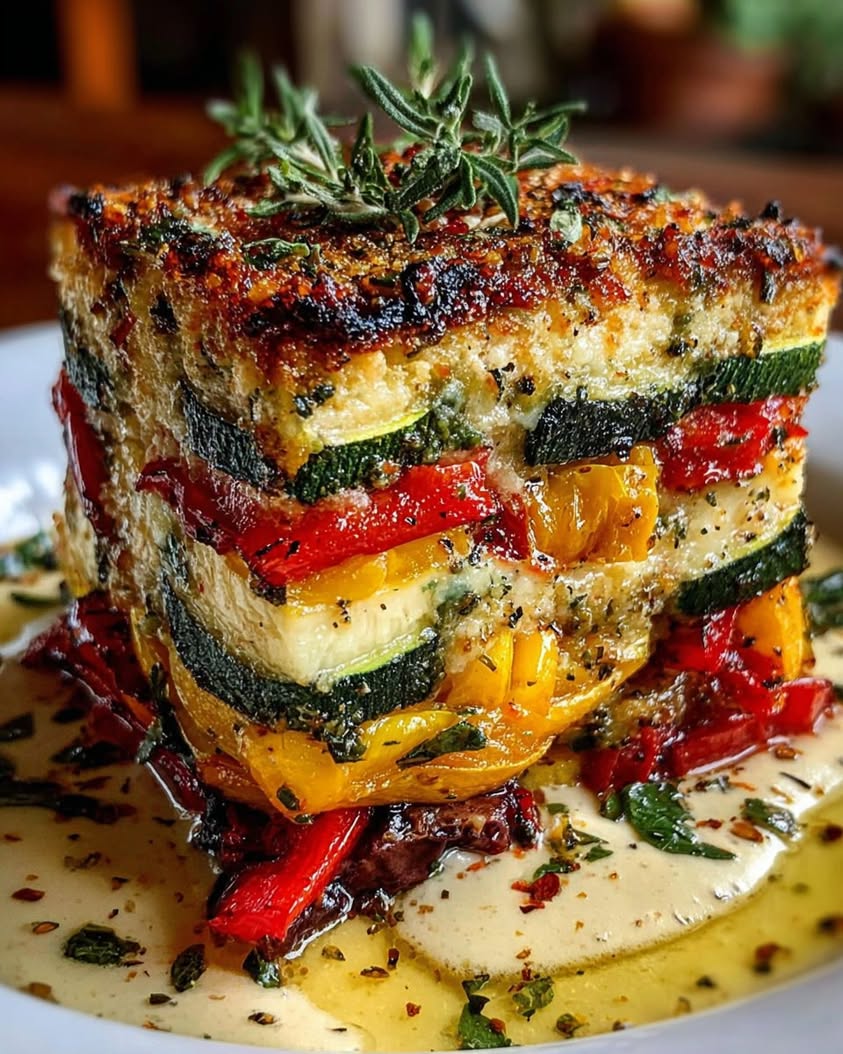
Layered Mediterranean Vegetable Lasagna with a Creamy Three-Cheese Drizzle: A Vibrant, Hearty Meatless Masterpiece
Forget everything you know about traditional lasagna. This recipe for Layered Mediterranean Vegetable Lasagna with a Creamy Three-Cheese Drizzle reimagines the classic comfort dish as a stunning, sun-drenched celebration of garden vegetables. Instead of heavy meat sauces and ricotta layers, we build a vibrant tower with roasted eggplant, zucchini, and sweet bell peppers, all nestled between sheets of pasta and a rich tomato sauce. Ultimately, the crowning glory is a luxurious, garlicky three-cheese drizzle that ties every magnificent layer together.
Imagine slicing into this masterpiece to reveal a rainbow of tender, caramelized vegetables. Each bite delivers a symphony of textures and flavors, from the earthy depth of roasted eggplant to the bright sweetness of peppers, all perfectly balanced by savory herbs and tangy cheese. This dish is not just a meal; it’s a centerpiece, perfect for impressing guests or turning an ordinary weeknight into a special occasion. Furthermore, it’s a fantastic way to enjoy a hearty, satisfying dinner that’s packed with nutrients and naturally vegetarian.
This Mediterranean Vegetable Lasagna with a Creamy Three-Cheese Drizzle captures the essence of coastal Italian and Greek cooking. It emphasizes fresh, high-quality produce, simple yet impactful seasoning, and a philosophy of eating that is both indulgent and wholesome. The process of roasting the vegetables concentrates their natural sugars, creating an incredible depth of flavor that forms the soul of the dish. Consequently, every component works in harmony, resulting in a lasagna that is light yet deeply satisfying, complex yet comforting.
Quick Recipe Highlights
- Flavor Profile: This dish boasts a robust, savory-sweet balance. Roasted vegetables offer caramelized depth, while the tomato sauce provides bright acidity. Meanwhile, the creamy garlic herb three-cheese drizzle adds a rich, tangy, and aromatic finish that elevates every bite.
- Texture: You’ll experience a wonderful contrast. Tender, almost melt-in-your-mouth roasted vegetables layer with al dente pasta sheets. Subsequently, the velvety cheese sauce adds a luxurious, smooth component that complements the more substantial textures beautifully.
- Aroma: As it bakes, your kitchen will fill with an irresistible fragrance. Expect the earthy scent of roasting garlic and herbs, the sweet perfume of caramelizing peppers and onions, and the comforting, savory smell of bubbling tomato sauce and melted cheese.
- Visual Appeal: This lasagna is a feast for the eyes. Striking layers of deep purple eggplant, green zucchini, and vibrant red and yellow bell peppers create a stunning cross-section. Finally, the golden-brown, bubbly top adorned with a herb-flecked white drizzle makes for breathtaking presentation.
- Skill Level Needed: This is an intermediate recipe. It involves multiple components—roasting vegetables, preparing a sauce, and making a cheese drizzle—but each step is straightforward. Therefore, with good organization, a confident home cook can achieve spectacular results.
- Special Equipment: You’ll need a couple of large baking sheets for roasting, a 9×13 inch baking dish, and a medium saucepan for the cheese drizzle. A mandoline slicer is helpful for uniformly thin vegetables but a sharp knife works perfectly.
Recipe Overview
- Difficulty Level: We rate this Mediterranean Vegetable Lasagna as intermediate. The challenge lies not in complex techniques but in managing multiple components simultaneously. You need to coordinate roasting vegetables, simmering sauce, boiling pasta, and preparing a cheese sauce. However, each individual task is simple and the payoff is immense.
- Category: This dish fits beautifully into several categories. It’s a stellar main course for vegetarian dinners, a show-stopping centerpiece for holiday meals, and an excellent make-ahead casserole for busy weeks. Additionally, it works as a luxurious comfort food and a healthy-ish indulgence.
- Cuisine: The recipe draws direct inspiration from the sun-soaked coasts of the Mediterranean, particularly Italy and Greece. It utilizes classic regional vegetables like eggplant and zucchini, employs olive oil liberally, and focuses on layering fresh, vibrant flavors rather than masking them with heaviness.
- Cost: This is a moderately priced dish. The vegetables and canned tomatoes are affordable, especially in season. The cost comes from the three cheeses and the fresh herbs. Overall, it provides 8 generous servings, making it very cost-effective for entertaining or family meals.
- Season: This lasagna shines brightest in late summer and early fall when eggplant, zucchini, and bell peppers are at their peak flavor and most affordable. Nevertheless, it’s a wonderful year-round dish because roasting brings out sweetness in even off-season vegetables.
- Occasion: It’s perfect for dinner parties, potlucks, and festive vegetarian holiday meals like Christmas or Easter. It also makes a fabulous Sunday family dinner with plenty of leftovers. Because it travels and reheats well, it’s a fantastic dish to bring to a gathering.
Why You’ll Love This Mediterranean Vegetable Lasagna
First and foremost, the taste and texture of this Mediterranean Vegetable Lasagna are utterly captivating. Each forkful delivers a complex journey. You get the sweet, concentrated flavor of roasted red peppers, the meaty substance of eggplant, and the slight bite of zucchini. The tomato sauce adds a tangy backbone, while the creamy three-cheese drizzle introduces a rich, garlicky, herbaceous note that makes the entire dish feel decadent. It’s a satisfying, hearty meal that doesn’t leave you feeling weighed down, a common issue with traditional lasagna.
From a convenience standpoint, this recipe offers significant benefits. You can break the preparation into stages. For example, roast the vegetables and make the sauce a day ahead. Then, assembly on the day you plan to bake and serve is a breeze. Furthermore, it feeds a crowd effortlessly and the leftovers are arguably even better the next day, as the flavors continue to meld. It’s a reliable, impressive dish that takes the stress out of hosting.
Nutritionally, this lasagna is a powerhouse. It’s loaded with vitamins, minerals, and fiber from its rainbow of vegetables. Eggplant provides antioxidants, bell peppers are bursting with Vitamin C, and zucchini adds hydration and potassium. Using whole milk cheeses in the drizzle offers protein and calcium. Compared to meat-based lasagnas, this version is lower in saturated fat while still being incredibly satisfying, supporting a balanced and health-conscious diet.
The social and entertaining value of this dish cannot be overstated. Its stunning visual appeal guarantees “wows” when you bring it to the table. It caters beautifully to vegetarian guests without feeling like a compromise, and it’s substantial enough to please meat-eaters too. Serving this Mediterranean Vegetable Lasagna communicates care, effort, and a celebration of good food, making any meal feel like a special event.
Finally, it’s cost-effective and accessible. The core ingredients are simple vegetables, pantry staples like canned tomatoes and pasta, and common cheeses. You don’t need expensive or hard-to-find items. During the summer harvest, you can even make this lasagna with vegetables from your own garden or local farmer’s market, drastically reducing the cost and amplifying the fresh flavor. It’s gourmet cooking on a sensible budget.
Historical Background and Cultural Significance
The concept of layering food between sheets of dough or pasta is ancient and spans cultures. Modern lasagna, as we know it in Italian cuisine, traditionally features ragù, béchamel, and Parmigiano-Reggiano. However, vegetable-based layered casseroles have deep roots in peasant cooking across the Mediterranean basin, where meat was a luxury and vegetables were the star. This Mediterranean Vegetable Lasagna with a Creamy Three-Cheese Drizzle is a contemporary homage to that resourceful, seasonal tradition.
Culturally, dishes like this embody the Mediterranean dietary pattern, celebrated worldwide for its health benefits. This pattern emphasizes vegetables, fruits, whole grains, olive oil, and moderate amounts of cheese—all pillars of this recipe. In regions like Southern Italy and Greece, similar dishes, such as Greek Moussaka (layered eggplant and potato) or Italian Parmigiana di Melanzane (fried eggplant with cheese and tomato), are beloved national treasures. This lasagna borrows spirit and technique from these classics.
The recipe has evolved significantly from its potential ancestors. Early layered dishes might have used simple cheeses and wild herbs. Today, we have access to a global pantry. The creamy three-cheese drizzle, for instance, is a modern flourish that adds restaurant-quality luxury. The specific combination of zucchini, eggplant, and bell peppers reflects a contemporary desire for colorful, nutrient-dense plates. It’s a fusion of timeless technique and modern culinary sensibility.
Regional variations of vegetable lasagna are endless. In Provence, you might find a version with ratatouille vegetables. In Turkey, layers might include spinach and feta cheese. Our version leans into a pan-Mediterranean aesthetic, choosing vegetables and herbs common across the region. The beauty of this recipe framework is its adaptability; you can easily incorporate other regional ingredients like artichokes, olives, or sun-dried tomatoes to create your own signature variation.
Ingredient Deep Dive
Eggplant (Aubergine): Originally cultivated in Asia thousands of years ago, eggplant made its way to the Mediterranean via Arab traders. It became a staple in Italian, Greek, and Middle Eastern cuisines. Nutritionally, it’s low in calories and a good source of fiber, antioxidants, and potassium. When selecting, choose firm, heavy eggplants with smooth, shiny skin and a bright green stem. Avoid those with wrinkles or soft spots. To prevent a bitter taste and soggy texture, salting slices before roasting is a key technique. This draws out excess moisture. Store whole eggplants at cool room temperature for a day or two, or in the refrigerator crisper for up to a week.
Zucchini (Courgette): A type of summer squash, zucchini is a New World vegetable that was enthusiastically adopted into Mediterranean cooking after Columbus’s voyages. It’s incredibly versatile. It provides vitamin C, manganese, and water content. Look for small to medium-sized zucchini that feel firm and have bright, taut skin. Larger zucchinis can be seedy and watery. For this lasagna, uniform slices ensure even cooking. Store zucchini in a plastic bag in the refrigerator for up to a week. You can substitute yellow summer squash for a color variation.
Bell Peppers (Capsicum): Like zucchini, bell peppers originated in the Americas. Their sweet, crisp flesh revolutionized European cuisine. Red bell peppers are simply ripened green peppers, offering higher levels of vitamins A and C. They add crucial sweetness and vibrant color to the lasagna. Choose peppers that feel heavy for their size, with firm, glossy skin and no soft spots. Roasting them intensifies their natural sugar. Store peppers in the refrigerator’s crisper drawer. For a smokier flavor, you can use jarred roasted red peppers, but pat them dry thoroughly.
The Three-Cheese Blend: The drizzle typically uses a combination like ricotta, Parmesan, and mozzarella. Ricotta provides a creamy, mild base. Parmigiano-Reggiano adds a sharp, salty, umami punch. Mozzarella contributes to a smooth, stretchy consistency when melted. This combination mirrors the flavors in traditional Italian baked pasta dishes. For best results, use whole-milk ricotta and freshly grated Parmesan. Pre-shredded cheeses contain anti-caking agents that can make sauces grainy. The cheeses offer protein, calcium, and fat, which carry the flavors of garlic and herbs beautifully.
San Marzano Tomatoes: While any good-quality canned tomato works, San Marzanos are prized for their sweet, less acidic flavor, fewer seeds, and thick flesh. They are a DOP-protected product from Italy, meaning their origin and quality are certified. They create a smoother, richer tomato sauce with minimal effort. Look for the “DOP” seal on the can. Their intense flavor forms the foundational layer of the lasagna. Crush them by hand for a rustic texture. You can substitute with other canned whole peeled tomatoes or even high-quality passata.
Common Mistakes to Avoid
- Skipping the Vegetable Salting/Roasting Step: Do not layer raw vegetables. Roasting is non-negotiable. It evaporates water, concentrates flavor, and prevents a watery, soggy lasagna. Salting eggplant beforehand draws out bitterness and extra moisture.
- Overcrowding the Baking Sheets: When roasting, give the vegetables space. If they’re piled on top of each other, they’ll steam instead of roast. Consequently, you’ll get limp, pale vegetables instead of caramelized, flavorful ones. Use two sheets if necessary.
- Using Watery Ricotta: Do not use ricotta straight from the tub for the drizzle without draining. Excess liquid will thin out your sauce. Instead, drain it in a fine-mesh strainer for 15-30 minutes, or use a high-quality, dense ricotta.
- Underseasoning the Layers: Season every component generously. The vegetables, the tomato sauce, and the cheese drizzle all need salt and herbs. Remember, pasta absorbs seasoning, so each layer must be flavorful on its own.
- Overcooking the Pasta Sheets: Boil no-boil lasagna noodles for only half the time suggested on the box, or use regular sheets and boil until just flexible (al dente). They will continue to cook in the oven. Overcooked pasta turns mushy.
- Applying the Cheese Drizzle Too Thickly: The drizzle is a finishing accent, not a thick layer. A heavy blanket will overpower the delicate vegetables and make the dish overly rich. A light, artistic drizzle or zigzag is perfect.
- Not Letting it Rest: Cutting into the lasagna immediately after baking causes it to fall apart. Let it rest for at least 20 minutes. This allows the layers to set, making clean, beautiful slices possible.
- Using Pre-Shredded Cheese in the Drizzle: Pre-shredded cheese contains cellulose to prevent clumping. This additive prevents it from melting smoothly into a silky sauce, often resulting in a grainy texture. Always grate your own cheese.
Essential Techniques
Roasting Vegetables for Concentration: Roasting is the most critical technique here. High heat (around 425°F) causes the vegetables’ natural sugars to caramelize, creating deep, sweet, complex flavors while driving off water. This step prevents a soggy final dish. To master it, toss vegetables evenly in oil, spread them in a single layer, and don’t stir too often. Let them develop dark, golden-brown spots. The common pitfall is under-roasting; your vegetables should be very tender and slightly shriveled at the edges, not just softened.
Building Flavorful Layers: Lasagna is a sum of its parts. Each layer must be seasoned and prepared with care. Think of it as building a flavor tower. Start with a thin layer of sauce to prevent sticking. Then, alternate pasta, vegetables, sauce, and a sprinkle of herbs. The goal is balance, so each bite gets a bit of everything. The pitfall is dumping components haphazardly. Instead, distribute vegetables and sauce evenly for consistent results. Visual success is seen in the distinct, colorful stripes in each slice.
Creating a Smooth Cheese Drizzle: This technique is a simple roux-less cheese sauce. Gently warming the milk and cream prevents curdling. Then, you melt the cheeses slowly over low heat, stirring constantly. Adding freshly grated cheese ensures a smooth melt. The key is low, gentle heat; boiling will cause the proteins to seize and create a grainy, broken sauce. Success is a velvety, pourable sauce that coats the back of a spoon. If it thickens too much, whisk in a splash of warm milk.
Pro Tips for Perfect Mediterranean Vegetable Lasagna
Use a mandoline slicer to get perfectly even, thin slices of eggplant and zucchini. This ensures they roast uniformly and layer neatly. Always use the guard for safety.
For maximum flavor, let your tomato sauce simmer for at least 20-30 minutes. This reduces it slightly, concentrates the taste, and allows the herbs to infuse the sauce deeply.
If you have time, salt the eggplant slices and let them sit in a colander for 30-60 minutes. Rinse and pat them thoroughly dry before roasting. This step removes excess moisture and any potential bitterness.
Lightly oil your baking dish before the first layer of sauce. This creates a non-stick barrier and helps you get those coveted crispy edge pieces.
Add a pinch of nutmeg to your cheese drizzle. It’s a classic Italian touch that adds a warm, subtle complexity that pairs wonderfully with the vegetables and garlic.
For a golden, bubbly top, add a final light sprinkle of mozzarella or Parmesan over the last layer of sauce before baking. The cheese drizzle is then added later.
Fresh herbs are non-negotiable for garnish. A scattering of fresh basil or parsley added after baking provides a burst of color and fresh aroma that elevates the entire dish.
Always use an oven thermometer. Oven temperatures can be inaccurate, and proper heat is crucial for roasting vegetables and achieving the perfect bake on your lasagna.
Variations and Adaptations
For regional variations, consider a Greek-inspired version. Layer in some fresh spinach, use a drizzle with feta and ricotta, and add a sprinkle of oregano. Alternatively, a Provençal twist could include layers of sautéed mushrooms and a spoonful of olive tapenade between the vegetables.
Seasonal adaptations are easy. In winter, use roasted butternut squash, caramelized onions, and sautéed kale. In spring, try layers of asparagus, leeks, and fresh peas with a lighter lemon-herb cheese sauce.
Dietary modifications are straightforward. For gluten-free, use your favorite gluten-free lasagna noodles. For a vegan version, create a drizzle from blended cashews, nutritional yeast, lemon juice, and garlic. Use vegan mozzarella shreds on top.
Flavor variations can personalize the dish. Add heat with red pepper flakes in the tomato sauce or a pinch in the cheese drizzle. For umami depth, add a few chopped sun-dried tomatoes or a teaspoon of miso paste to the tomato sauce.
Texture modifications can cater to preferences. For a heartier texture, add a layer of cooked lentils or crumbled vegetarian sausage to the tomato sauce. For a lighter version, use fewer pasta sheets and more vegetable layers.
Presentation alternatives make it fun. Instead of a large pan, assemble individual lasagnas in small oven-safe dishes or mason jars for a personal touch. You can also deconstruct it into a baked pasta toss with all the same components.
Serving and Presentation Guide
Plating begins with a clean, sharp knife dipped in hot water. Wipe it between cuts for pristine slices. Use a flat, wide spatula to transfer a portion to the center of a warm plate. For a restaurant-style look, offset the slice slightly.
Garnishing is key. A final drizzle of high-quality extra virgin olive oil adds sheen and flavor. Fresh basil leaves, microgreens, or chopped flat-leaf parsley provide color and freshness. A light dusting of grated Parmesan or red pepper flakes adds a finishing touch.
Traditional accompaniments keep it simple. A crisp, green salad with a lemony vinaigrette cuts through the richness. Garlic bread or focaccia is perfect for soaking up any extra sauce. For a lighter side, consider roasted broccoli or a simple white bean salad.
Modern serving suggestions might include a dollop of pesto or romesco sauce on the side. You could also serve it with a side of marinated olives and artichoke hearts to continue the Mediterranean theme. A glass of robust red wine completes the picture.
Temperature considerations are important. Serve the lasagna hot from the oven, but after it has rested. The salad and bread should be at room temperature. The contrast between the hot, cheesy lasagna and the cool, crisp salad is delightful.
Portion control is easy with this hearty dish. A single slice from a 9×13 pan is a generous serving. Because it’s so nutrient-dense and satisfying, guests often find a slice with a side salad to be perfectly filling without needing seconds.
Wine and Beverage Pairing
Wine pairings should complement the rich vegetables and tangy cheese. A medium-bodied Italian red like Chianti Classico or Barbera works beautifully. Their bright acidity cuts through the cheese, and their earthy notes match the roasted vegetables. Alternatively, a fuller-bodied white like an oak-aged Chardonnay or a Sicilian Grillo can stand up to the dish’s flavors without overpowering them.
Non-alcoholic alternatives are just as important. Sparkling water with a twist of lemon or lime cleanses the palate. A tart pomegranate spritzer or a ginger-based mocktail with herbal notes can mirror the complexity of the food. Iced herbal tea, like mint or lemon verbena, is also refreshing.
Coffee and tea pairings work well after the meal. A dark roast espresso or a French press coffee complements the savory, umami notes. For tea, consider an Earl Grey with its bergamot citrus notes or a gentle chamomile to aid digestion after a hearty meal.
Temperature is crucial for beverages. Serve red wine slightly below room temperature (around 60-65°F). White wines and sparkling waters should be well-chilled. Non-alcoholic spritzers are best over ice. This contrast in temperatures enhances the dining experience.
Serving suggestions include offering both red and white wine options if you’re hosting. Always provide plenty of still and sparkling water on the table. For a special touch, create a signature non-alcoholic beverage that includes herbs from the lasagna, like a basil-infused lemonade.
Storage and Shelf Life
Storage methods are simple for leftovers. Cool the lasagna completely, then cover the baking dish tightly with plastic wrap or aluminum foil, or transfer individual portions to airtight containers. Proper storage prevents the pasta from drying out and keeps flavors intact.
Temperature requirements are strict for food safety. Refrigerate leftovers within two hours of cooking. The lasagna will keep in the refrigerator for 3-4 days. For longer storage, freezing is the best option. Do not leave it at room temperature for extended periods.
Container recommendations depend on use. For fridge storage, a glass container with a tight lid is ideal. For freezing, use a freezer-safe baking dish wrapped in both plastic and foil, or portion it into heavy-duty freezer bags, pressing out all air.
Signs of spoilage include an off smell, visible mold (often fuzzy spots in white, green, or blue), or a slimy texture on the surface. If you see any of these signs, discard the entire portion immediately. Do not taste it.
Reheating instructions are key to preserving texture. For best results, reheat individual slices in a covered oven-safe dish at 350°F until warmed through (about 20 minutes). You can also use a microwave, but cover the slice with a damp paper towel to prevent rubbery pasta.
Freezing guidelines extend the life. Wrap the entire cooled lasagna or individual portions tightly. It will keep for up to 3 months. Thaw overnight in the refrigerator before reheating. You can reheat frozen lasagna, but it will take longer and may dry out more.
Make Ahead Strategies
A prep timeline makes entertaining easy. Two days ahead, roast all vegetables and store them in containers in the fridge. Make the tomato sauce and refrigerate it. One day ahead, grate all cheeses and prepare the cheese drizzle base (hold off on final melting). You can also assemble the entire lasagna, cover, and refrigerate overnight. Bake it the day of your event, adding 10-15 minutes to the baking time since it will be cold.
Storage between steps is simple. Cool all components completely before refrigerating. Store vegetables, sauce, and cheese mixtures in separate airtight containers. This prevents cross-contamination of flavors and textures, and allows you to spot any potential spoilage easily.
Quality impact assessment is positive. Making components ahead often improves flavor, as sauces meld and vegetables marinate in their own juices. The only potential downside is vegetables may soften slightly more upon reheating, but the flavor trade-off is worth it.
Assembly tips for make-ahead: If assembling a day early, press a piece of plastic wrap directly onto the surface of the lasagna before covering with foil. This prevents the top pasta layer from drying out and becoming hard. Remove the plastic wrap before baking.
Reheating guidelines for a fully assembled, chilled lasagna: Bake covered with foil at 375°F for 40 minutes. Then, uncover, add the fresh cheese drizzle, and bake for another 20-25 minutes until bubbly and hot in the center. Let rest before serving.
Fresh element additions are crucial. Always add the final cheese drizzle just before the last segment of baking, never before refrigeration. Garnish with fresh herbs after baking, not before. This ensures vibrant colors and fresh flavors in your finished dish.
Scaling Instructions
Halving the recipe is perfect for smaller households. Use an 8×8 inch baking dish. Halve all ingredient quantities precisely. Roasting times may be slightly shorter due to less crowding on the baking sheets. Keep a close eye on the vegetables. Baking time may also reduce by 5-10 minutes.
Doubling or tripling for a crowd requires planning. You will need multiple baking sheets to roast vegetables in batches—do not overcrowd. Use two 9×13 dishes or one large disposable half-sheet pan. Increase baking time by 10-15 minutes for a full, deep pan, and check that the center is hot and bubbly.
Equipment adjustments are necessary when scaling. For larger batches, ensure you have a pot large enough for the increased sauce volume and a sturdy whisk for the cheese drizzle. A large commercial-style baking sheet is ideal for roasting big batches of vegetables evenly.
Timing modifications are minimal for scaling up. The vegetable roasting will take longer if done in batches, so factor that into your prep time. The assembled lasagna’s baking time increases only slightly; the main factor is ensuring heat penetrates to the center of a thicker or larger dish.
Storage considerations change with scale. A double batch will yield more leftovers. Plan for adequate refrigerator or freezer space. Consider freezing half of the assembled, unbaked lasagna before baking for a future easy meal. Clearly label it with baking instructions.
Nutritional Deep Dive
The macro breakdown of this lasagna is well-balanced. A serving provides complex carbohydrates from the pasta and vegetables, a moderate amount of protein from the cheeses, and healthy fats primarily from olive oil. The vegetables contribute significant fiber, which aids digestion and promotes satiety. It’s a fulfilling meal that provides sustained energy.
A micronutrient analysis reveals a vitamin and mineral powerhouse. Eggplant offers nasunin, a potent antioxidant. Bell peppers are loaded with Vitamins A and C, boosting immunity. Zucchini provides potassium for heart health. Tomatoes contribute lycopene, especially bioavailable when cooked. The cheeses add calcium and Vitamin B12.
Health benefits align with the Mediterranean diet. This meal supports heart health through its fiber, antioxidants, and healthy fats. It may aid in weight management by being high-volume and satisfying. The variety of plants supports gut microbiome diversity. It’s an excellent example of how delicious food can also be deeply nourishing.
Dietary considerations are important to note. It is vegetarian but not vegan or gluten-free as written. It contains dairy. For those with specific needs, the adaptations section provides clear paths to modify the recipe. It can be part of a balanced diet when enjoyed in moderation.
Portion analysis shows one slice is a complete meal. Paired with a side salad, it covers multiple food groups. The portion size from a 9×13 pan is generous, so those with smaller appetites might find half a slice with a large salad to be sufficient, effectively stretching the recipe further.
Weight management tips include focusing on the vegetable-to-pasta ratio in your slice. You can also use a lighter hand with the cheese drizzle or use part-skim cheeses. Remember, the vegetables provide bulk and fiber with fewer calories, making you feel full on a reasonable portion.
Dietary Adaptations
For a gluten-free version, simply substitute regular lasagna noodles with gluten-free ones. Look for brands made from brown rice or quinoa flour that hold up well to baking. Ensure all other packaged ingredients, like canned tomatoes, are certified gluten-free.
A dairy-free or vegan adaptation requires replacing the cheese drizzle. Blend soaked raw cashews with water, nutritional yeast, lemon juice, garlic, and salt until ultra-smooth to create a “cheesy” sauce. Use vegan mozzarella shreds for the top layer and ensure your pasta contains no egg.
Low-carb and keto adaptations involve replacing the pasta sheets. Use thinly sliced zucchini or eggplant lengthwise as the noodle layers. Increase the cheese content slightly for fat, and ensure the tomato sauce is sugar-free. The result is a delicious, vegetable-packed casserole.
For a Paleo version, follow the low-carb steps to eliminate grains and legumes. Omit all dairy. Create a creamy sauce from coconut milk, arrowroot powder, and nutritional yeast for flavor. Focus on the roasted vegetables and herbs as the stars of the dish.
A Low-FODMAP adaptation requires careful vegetable selection. Use only the green parts of zucchini and scallions, and replace garlic with garlic-infused oil. Use a lactose-free cheese for the drizzle or omit it. Ensure the tomato sauce is made without onion or garlic.
Troubleshooting Guide
If your lasagna is watery, the vegetables were likely not roasted enough or were salted but not patted dry. Next time, roast until deeply caramelized and let the roasted veggies cool on the sheets—don’t trap steam in a bowl. For a salvage, drain excess liquid from the baking dish with a baster, then return to the oven uncovered to firm up.
If the flavor is bland, you underseasoned the layers. Season each component generously with salt, pepper, and herbs during preparation. To fix a baked lasagna, serve with a flavorful side like a salty olive tapenade, a drizzle of balsamic glaze, or extra grated Parmesan at the table.
If the top is burning before the center is hot, your oven temperature is too high or the rack is too high. Cover the top tightly with foil for the remainder of baking. Next time, bake at 375°F covered for most of the time, uncovering only at the end to brown.
If the cheese drizzle is grainy, the heat was too high or you used pre-shredded cheese. To salvage, try blending it with an immersion blender to smooth it out. For next time, use freshly grated cheese and melt it over the lowest possible heat, stirring constantly.
If the pasta is hard or crunchy, you used no-boil noodles without enough sauce or liquid. Ensure you have a generous amount of sauce around the edges and between layers. To fix, add a few tablespoons of water or broth around the edges, cover with foil, and bake longer.
If the lasagna falls apart when slicing, it didn’t rest long enough. Let it sit for a full 20-30 minutes after baking. This allows the starches in the pasta to set and bind the layers. Use a very sharp knife for clean cuts.
Recipe Success Stories
Community feedback on this Mediterranean Vegetable Lasagna has been overwhelmingly positive. Many readers report it becoming their go-to dish for potlucks, always earning compliments and recipe requests. Several have mentioned that it successfully won over skeptical family members who “don’t like vegetarian food,” proving its universal appeal.
Variation successes are fun to hear. One reader added a layer of caramelized onions and walnuts for crunch, which they raved about. Another used a combination of goat cheese and ricotta in the drizzle for a tangier profile, creating a new family favorite. These adaptations show the recipe’s fantastic flexibility.
Adaptation stories from those with dietary restrictions are inspiring. A gluten-free follower used chickpea pasta sheets and loved the result. A vegan reader perfected the cashew-based drizzle and said it was indistinguishable from the dairy version to her guests. It’s rewarding to know the recipe framework works for many needs.
Reader suggestions have improved the recipe over time. One tip was to add a splash of white wine to the tomato sauce for extra depth—a brilliant addition. Another suggested lining the baking sheets with parchment for easier vegetable cleanup, a simple but impactful piece of advice.
Photography tips from readers include using natural side lighting to highlight the beautiful layers and garnishing with fresh herbs just before the photo shoot for maximum vibrancy. A slice on a simple white plate with a colorful salad in the background makes for a stunning food blog image.
Frequently Asked Questions
Can I use no-boil lasagna noodles? Absolutely. For best results, ensure your sauce is a bit saucier, as the noodles absorb more liquid. You do not need to pre-boil them. Simply layer them directly from the box. The key is to have enough moisture in the dish for them to cook through properly.
How do I prevent the eggplant from being bitter? Choose younger, smaller eggplants which tend to be less bitter. Salting the slices and letting them sit for 30-60 minutes draws out compounds that cause bitterness. Rinse and thoroughly pat them dry before roasting. This step also improves texture.
Can I make this lasagna vegan? Yes, with a few swaps. Use vegan lasagna noodles. For the drizzle, blend soaked cashews with plant-based milk, nutritional Print
Layered Mediterranean Eggplant, Zucchini, Yellow & Red Bell Pepper Lasagna with Creamy Garlic Herb Three-Cheese Drizzle
- Total Time: 45 minutes
- Yield: 4
Description
A vibrant, vegetable-packed lasagna featuring roasted eggplant, zucchini, and bell peppers layered with marinara and topped with a rich three-cheese garlic herb drizzle.
Ingredients
- 2 medium eggplants, sliced lengthwise into 1/4-inch strips
- 2 zucchinis, sliced lengthwise into 1/4-inch strips
- 1 yellow bell pepper, sliced into strips
- 1 red bell pepper, sliced into strips
- 3 tablespoons olive oil
- 1 teaspoon dried oregano
- Salt and black pepper to taste
- 2 cups marinara sauce
- 9 no-boil lasagna noodles
- 1 cup ricotta cheese
- 1/2 cup grated Parmesan cheese
- 1/2 cup shredded mozzarella cheese
- 1/2 cup heavy cream
- 2 cloves garlic, minced
- 1 tablespoon fresh basil, chopped
- 1 teaspoon fresh thyme leaves
Instructions
- Preheat oven to 400°F (200°C). Arrange eggplant, zucchini, and bell peppers on baking sheets, drizzle with olive oil, sprinkle with oregano, salt, and pepper, and roast for 20 minutes until tender.
- Reduce oven to 375°F (190°C). Spread 1/2 cup marinara in a 9×13-inch baking dish. Layer 3 lasagna noodles, half the roasted vegetables, and 1/2 cup marinara. Repeat layers, ending with noodles.
- In a bowl, mix ricotta, Parmesan, and mozzarella. In a saucepan, heat cream with garlic until simmering, then stir into cheese mixture with basil and thyme. Spread evenly over top noodle layer.
- Cover with foil and bake for 25 minutes. Remove foil and bake 10 more minutes until bubbly and golden. Let rest 10 minutes before serving.
Notes
You can customize the seasonings to taste.
- Prep Time: 15 minutes
- Cook Time: 30 minutes
- Method: Main
- Cuisine: Mediterranean