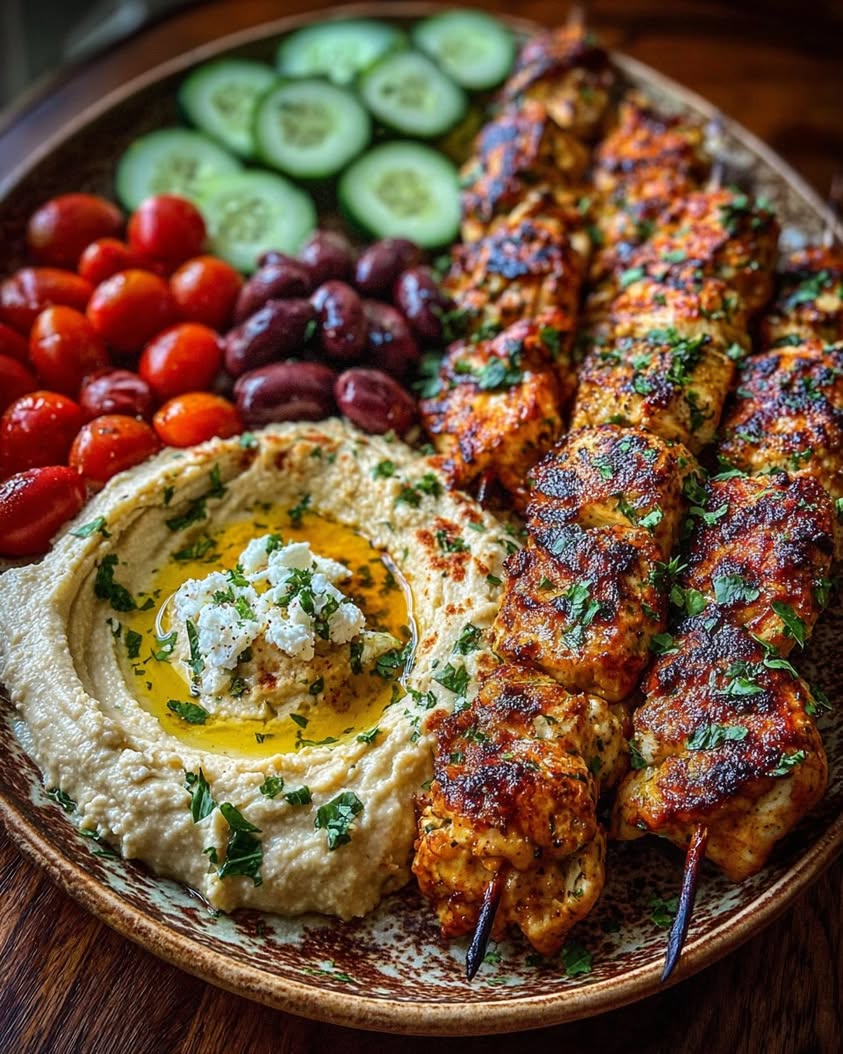
Grilled Mediterranean Chicken Skewers with Creamy Homemade Hummus: A Flavor-Packed Weeknight Feast
Imagine the sizzle of perfectly charred chicken hitting a hot grill. Now, picture the vibrant aroma of lemon, garlic, and oregano filling your kitchen. This recipe for Grilled Mediterranean Chicken Skewers with Creamy Homemade Hummus delivers exactly that experience. Consequently, it transforms simple ingredients into a stunning, restaurant-quality meal right at home. Moreover, it brings the sunny, healthy flavors of the Mediterranean coast to your dinner table any night of the week.
These Grilled Mediterranean Chicken Skewers are marinated in a zesty, herb-infused bath that guarantees juicy, flavorful meat in every bite. Paired with a velvety smooth homemade hummus, this dish offers a beautiful balance of smoky, savory, and creamy textures. Ultimately, it is a complete meal that feels celebratory yet comes together with minimal fuss. Whether you are hosting a summer barbecue or simply need a quick, nutritious family dinner, this recipe is your perfect solution. Furthermore, it is a fantastic way to enjoy lean protein and wholesome legumes in one delicious package.
Quick Recipe Highlights
- Flavor Profile: These skewers boast a bright, herbaceous taste from fresh oregano and lemon, balanced by the earthy depth of garlic and the subtle smokiness from grilling. The hummus adds a creamy, nutty, and slightly tangy counterpoint that ties the whole dish together beautifully.
- Texture: You get a fantastic contrast between the juicy, slightly charred exterior of the chicken and its tender interior. The hummus provides an ultra-smooth and creamy base, while optional vegetable additions on the skewer can introduce a pleasant crunch.
- Aroma: As the skewers cook, they release an irresistible fragrance of grilling meat, caramelizing lemon, and toasted herbs. The hummus contributes its own inviting scent of sesame and fresh garlic, creating an olfactory promise of a delicious meal.
- Visual Appeal: The golden-brown chicken skewers are visually striking against the pale beige canvas of the hummus. Garnished with a drizzle of olive oil, a sprinkle of paprika, and fresh herbs, the plate looks vibrant, colorful, and incredibly appetizing.
- Skill Level Needed: This is a beginner-friendly recipe. The techniques involve simple chopping, mixing, and grilling. As long as you can thread food onto a stick and manage a grill or grill pan, you can absolutely master this dish.
- Special Equipment: You will need wooden or metal skewers. If using wooden ones, soaking them in water for 30 minutes prevents burning. A grill, grill pan, or even a broiler is essential for cooking. A food processor or high-powered blender makes the hummus perfectly smooth.
Recipe Overview
- Difficulty Level: We rate this recipe as “Easy” because it breaks down into very straightforward steps: marinating, skewering, and grilling. The hummus requires simple blending. There are no complex knife skills or advanced cooking methods required. Even a novice cook can achieve impressive results by following the clear instructions.
- Category: This dish fits perfectly into multiple categories. Primarily, it is a main course or entree. Additionally, the skewers can serve as a hearty appetizer for a party. The hummus also doubles as a fantastic standalone dip or spread for sandwiches and wraps.
- Cuisine: The recipe draws direct inspiration from the diverse culinary traditions of the Eastern Mediterranean. Specifically, it incorporates flavors common in Greek, Lebanese, and Turkish cooking, such as oregano, lemon, garlic, and tahini. It is a modern, accessible interpretation of classic flavor combinations from that region.
- Cost: This is a very cost-effective meal. Chicken thighs offer great flavor at a lower price point than breasts. The hummus ingredients—chickpeas, tahini, lemon—are pantry staples that are inexpensive in bulk. Overall, you can feed a family of four a restaurant-quality meal for a fraction of the cost of dining out.
- Season: While fantastic year-round, this recipe truly shines in the spring and summer months. The bright, fresh flavors pair wonderfully with warm weather. Grilling outdoors becomes an enjoyable part of the cooking process. It is the ideal food for al fresco dining and casual gatherings.
- Occasion: Its versatility makes it suitable for countless occasions. It is a simple weeknight dinner, a show-stopping dish for weekend guests, a healthy meal prep option, or the star of a picnic or potluck. The skewers and hummus are universally appealing and crowd-pleasing.
Why You’ll Love This Recipe
First and foremost, the taste and texture combination is simply unbeatable. Each bite of the Grilled Mediterranean Chicken Skewers delivers a burst of juicy, herb-marinated chicken with a hint of smoky char. When dragged through the cool, creamy homemade hummus, the contrasting temperatures and textures create a symphony in your mouth. The hummus itself, rich with tahini and brightened with lemon, is far superior to any store-bought version. Consequently, you will find yourself savoring every single mouthful.
From a convenience standpoint, this recipe is a weeknight hero. The marinade comes together in minutes, and while the chicken rests, you can whip up the hummus. The active cooking time on the grill is short, meaning you can have a spectacular meal on the table in well under an hour. Furthermore, the components are excellent for meal prep. You can marinate the chicken overnight and make the hummus a day ahead, making assembly a breeze. This efficiency is a major win for busy households.
Nutritionally, this meal is a powerhouse. Chicken provides high-quality, lean protein essential for muscle repair and satiety. Chickpeas in the hummus are loaded with fiber, plant-based protein, and essential vitamins like folate and iron. The olive oil and tahini contribute heart-healthy monounsaturated fats. Together, they create a balanced plate that fuels your body without weighing you down. It is a delicious way to eat clean and feel great.
For entertaining, these Grilled Mediterranean Chicken Skewers with Creamy Homemade Hummus are a guaranteed hit. They look impressive arranged on a platter, encouraging communal, interactive eating. The recipe scales up effortlessly to feed a crowd. Guests can customize their plates, adding other Mediterranean sides like tabbouleh, pita bread, or a Greek salad. It fosters a relaxed, sharing-style meal that is perfect for social gatherings.
Finally, the cost-effectiveness and accessibility are key benefits. You do not need expensive or hard-to-find ingredients. Everything required is available at a standard grocery store. By making your own hummus, you save money and avoid the preservatives found in many commercial brands. This recipe proves that eating incredibly well does not require a lavish budget or a trip to a specialty market.
Historical Background and Cultural Significance
The concept of cooking meat on skewers over an open flame is ancient and spans countless cultures. In the Eastern Mediterranean, the practice evolved into dishes like Greek souvlaki and Turkish shish kebab. Historically, this method was practical for nomadic and pastoral peoples. It required minimal equipment—just a sharp stick and a fire—and cooked meat quickly and evenly. The simple seasoning of local herbs, olive oil, and lemon juice highlights the quality of the ingredients, a hallmark of Mediterranean cuisine.
Hummus, meaning “chickpea” in Arabic, has a rich and debated history. While its exact origin is claimed by several Middle Eastern cultures, its consumption dates back centuries. Originally, it was a simple, nutritious paste of mashed chickpeas, tahini, lemon, and garlic. It served as a staple food, providing sustained energy. Over time, hummus transcended its humble beginnings to become a beloved dish worldwide, symbolizing shared culinary heritage across the Levant.
The evolution of pairing grilled meats with hummus is a natural and logical progression within the region’s foodways. The creamy, cool hummus provides a perfect counterbalance to the hot, spiced, and charred meat. This combination represents a beautiful duality in texture and temperature. In modern times, this pairing has become a standard offering in mezze spreads, representing communal dining and the art of combining simple elements to create a feast.
Regional variations of this pairing are fascinating. In Greece, the chicken might be marinated with more oregano and served with tzatziki alongside the hummus. In Lebanon, the spice blend might include sumac or allspice, and the hummus would be garnished with whole chickpeas and toasted pine nuts. Israeli cuisine might incorporate more paprika or cumin into the chicken marinade. Each variation tells a story of local tastes and available ingredients, showcasing the adaptability of this foundational concept.
Ingredient Deep Dive
Boneless, skinless chicken thighs are the ideal choice for these Grilled Mediterranean Chicken Skewers. Thighs contain slightly more fat than breasts, which translates to incredible juiciness and flavor, especially when exposed to high-heat grilling. This fat also helps the meat stay tender and forgiving, reducing the risk of drying out. Culturally, dark meat is often preferred in many Mediterranean grilling traditions for its richer taste. When selecting chicken, look for pieces that are uniform in size for even cooking. You can substitute chicken breasts, but monitor them closely as they cook faster and can become dry.
Tahini, a paste made from toasted sesame seeds, is the soul of authentic homemade hummus. It has been a staple in Middle Eastern and Mediterranean cooking for millennia, valued for its rich, nutty flavor and nutritional density. It provides healthy fats, protein, and minerals like calcium and iron. A good tahini should be pourable and have a deep tan color with a uniform texture. Stir the jar well before using, as the oil naturally separates. Store it in the refrigerator after opening. For those with sesame allergies, sunflower seed butter can be a workable, though different-tasting, substitute.
Chickpeas, also known as garbanzo beans, are the foundation of the hummus spread. They have been cultivated in the Middle East for over 7,000 years. Nutritionally, they are a superstar, packed with plant-based protein, fiber, and complex carbohydrates that provide steady energy. For the creamiest hummus, many chefs recommend using dried chickpeas that you soak and cook yourself. However, for convenience, canned chickpeas work perfectly well; just be sure to rinse them thoroughly. The aquafaba (the liquid from the can) can be reserved to help adjust the hummus’s consistency if needed.
Fresh lemon juice and garlic form the bright, aromatic backbone of both the marinade and the hummus. Lemon cultivation spread throughout the Mediterranean with the Arabs, and its juice is used to add acidity that balances rich flavors. Garlic, with its ancient history, adds pungent depth and health-boosting allicin. Always use fresh lemon juice, not bottled, for the brightest flavor. For the garlic, a microplane will create a fine paste that distributes evenly without leaving harsh chunks. These two ingredients are non-negotiable for achieving the authentic, vibrant taste profile.
Common Mistakes to Avoid
- Not soaking wooden skewers. This leads to them catching fire and burning on the grill, potentially causing flare-ups and making the skewers difficult to handle. Always soak them in water for at least 30 minutes before threading.
- Overcrowding the skewers. Packing the chicken pieces too tightly on the stick prevents even heat circulation. Consequently, the meat will steam instead of grill, missing out on that essential caramelized, smoky exterior. Leave a tiny bit of space between each piece.
- Using cold chicken on the grill. Taking chicken straight from the fridge and putting it on a hot grill shocks the meat and can lead to uneven cooking. Let the skewered chicken sit at room temperature for 15-20 minutes before grilling for more consistent results.
- Skipping the marinating time. The marinade is what infuses the chicken with its signature Mediterranean flavor. While 30 minutes is the minimum, a longer marinate (2-4 hours or even overnight) yields exponentially more flavorful and tender results. Patience is key.
- Overcooking the chicken. Chicken thighs are forgiving, but they can still dry out. Use a meat thermometer and pull the skewers off the grill when the internal temperature reaches 165°F. The carryover heat will finish the job perfectly.
- Using stale spices. Dried oregano is a key marinade ingredient. If your jar is more than a year old, its flavor has significantly diminished. For the best taste, always use fresh, high-quality dried herbs or even fresh oregano when possible.
- Not processing the hummus long enough. Under-blended hummus will be grainy, not smooth. You must process it for a full 2-4 minutes, scraping down the sides as needed. This extended blending time incorporates air and breaks down the chickpeas completely for a luxuriously creamy texture.
- Forgetting to adjust hummus seasoning at the end. The flavors of tahini and lemon can mellow once blended. Always taste your hummus after processing and adjust the salt, lemon, or garlic to your preference. This final seasoning step makes all the difference.
Essential Techniques
Marinating is the first critical technique for incredible Grilled Mediterranean Chicken Skewers. A marinade serves two primary functions: flavoring and tenderizing. The acid (lemon juice) helps break down surface proteins, allowing the herbs, garlic, and oil to penetrate. To master it, use a zip-top bag or shallow dish, ensuring all chicken pieces are fully coated. A common pitfall is marinating for too long in a highly acidic marinade, which can make the texture mushy. For chicken thighs, 2-4 hours is ideal. Visual success is seeing the chicken evenly coated and smelling the aromatic herbs before it even hits the grill.
Skewering is more important than it seems. The goal is to create uniform, secure bundles that cook evenly. Thread the chicken pieces onto the skewer in a consistent “C” or “S” shape, piercing each piece twice if possible for stability. This prevents spinning when you turn them. The key is to find the balance between pieces that are too loose (which wobble) and too tight (which steam). Properly skewered chicken will lay flat on the grill grates and turn as one solid unit, ensuring all sides achieve beautiful grill marks.
Grilling for these skewers requires managing high, direct heat. Preheat your grill thoroughly to medium-high heat. This initial sear creates the coveted caramelization and grill marks that lock in juices. A common mistake is moving the skewers too soon. Place them on the grill and let them cook undisturbed for 3-4 minutes to develop a good sear before attempting to turn them. Visual cues are your best friend: look for easy release from the grates and clearly defined grill marks before flipping. Use tongs, not a fork, to turn them to avoid piercing and losing precious juices.
Blending perfect hummus is a technique of patience and power. The goal is a completely smooth, airy, and creamy emulsion. Start by processing the tahini and lemon juice alone first; this “whipping” step lightens the tahini. Then add the other ingredients. The most common pitfall is stopping too early. You must blend for several minutes, pausing to scrape down the sides. The visual cue for success is a hummus that is pale, fluffy, and holds soft peaks when you lift the processor blade. If it seems thick, stream in ice water one tablespoon at a time while processing to achieve a silky consistency.
Pro Tips for Perfect Grilled Mediterranean Chicken Skewers
Cut your chicken into uniform, 1.5-inch cubes. Consistent size is the single biggest factor in ensuring every piece cooks at the same rate. This prevents some pieces from being overcooked and dry while others are still underdone.
Add a tablespoon of plain yogurt or olive oil to your marinade. This adds an extra layer of tenderness to the chicken and helps the herb mixture cling to the meat more effectively during grilling.
If using wooden skewers, soak them in hot water for 30 minutes. Hot water penetrates the wood faster than cold, creating a more effective moisture barrier against the flames of the grill.
Leave a small space at both ends of each skewer. This gives you a “handle” of bare stick to grip when turning the skewers on the grill, making the process much safer and easier.
Do not press down on the chicken skewers with your spatula while grilling. This squeezes out the flavorful juices and can cause flare-ups. Let the heat do its work undisturbed.
For the hummus, use ice-cold water when thinning it out. Cold water helps maintain a bright color and fluffy texture, whereas warm water can make the hummus seem heavy and dense.
Garnish the hummus generously right before serving. A drizzle of high-quality extra virgin olive oil, a sprinkle of smoked paprika or sumac, and a few whole chickpeas make it look professionally prepared.
Let the grilled chicken skewers rest for 5 minutes after cooking. This allows the juices, which have been driven to the center by the heat, to redistribute throughout the meat, ensuring every bite is moist.
Variations and Adaptations
For regional variations, explore different spice blends. A Greek version might use more dried oregano and a finishing sprinkle of crumbled feta cheese. A Lebanese twist could include a pinch of allspice or cinnamon in the marinade and a garnish of toasted pine nuts on the hummus. An Israeli-inspired take might feature paprika and cumin on the chicken, with the hummus topped with sautéed mushrooms or whole, spiced chickpeas.
Seasonal adaptations are simple and fun. In summer, thread cherry tomatoes, zucchini, or bell peppers between the chicken pieces on the skewers. For a winter version, serve the skewers over a warm bed of lemon-herb couscous or roasted root vegetables instead of the cool hummus. You can also add a warm spice like a hint of cumin or coriander to the marinade in cooler months for a deeper flavor profile.
Dietary modifications are straightforward. For a gluten-free meal, ensure your spices are certified GF and serve with veggie sticks or gluten-free crackers instead of pita. To make it dairy-free, the recipe is naturally compliant as written. For a lower-carb or keto adaptation, focus on the chicken and hummus but limit portion size of the latter due to chickpeas, or make a “hummus” from steamed cauliflower and tahini.
Flavor variations can personalize the dish immensely. Add a teaspoon of smoked paprika or harissa paste to the chicken marinade for a smoky or spicy kick. For the hummus, blend in roasted red peppers, a handful of fresh herbs like parsley or dill, or a spoonful of sun-dried tomato paste for a colorful and flavorful twist.
Texture modifications can cater to different preferences. If you prefer a chunkier, more rustic hummus, pulse the ingredients in the food processor instead of running it continuously. For an even creamier hummus, peel the chickpeas by rubbing them in a kitchen towel—a tedious but transformative step for ultra-smooth results.
Presentation alternatives can elevate the experience. Instead of a platter, serve individual portions by swooshing hummus on each plate and placing two skewers on top. For a deconstructed approach, serve the grilled chicken chunks in a bowl alongside a bowl of hummus, letting everyone build their own bites with pita or lettuce cups.
Serving and Presentation Guide
Plating techniques start with the hummus. Use the back of a spoon to create a wide, shallow well in the center of the hummus on your serving platter. This well is perfect for holding a generous pool of high-quality olive oil and any garnishes. Arrange the Grilled Mediterranean Chicken Skewers artfully over or around the hummus, allowing them to slightly overlap for a bountiful look. Alternatively, place the skewers directly on the hummus at an angle for a dramatic, restaurant-style presentation.
Garnishing is the final touch that adds color and flavor. Drizzle extra virgin olive oil over the hummus and skewers. Sprinkle with smoked paprika, sumac, or za’atar for color and a flavor boost. Scatter fresh chopped parsley, dill, or mint over everything. Add a few whole cooked chickpeas, toasted pine nuts, or a sprinkle of sesame seeds for texture. Do not forget lemon wedges on the side for an extra squeeze of brightness.
Traditional accompaniments complete the Mediterranean feast. Warm pita bread, either torn or cut into wedges, is essential for scooping. A simple Greek salad with tomatoes, cucumber, red onion, and olives provides a fresh, acidic counterpoint. Other mezze options include tabbouleh, baba ganoush, dolmas, or a bowl of marinated feta cheese. These sides turn the meal into a lavish, shareable spread.
Modern serving suggestions can streamline the meal for casual dining. Chop the grilled chicken off the skewers and toss it with the hummus, chopped veggies, and greens for a hearty salad bowl. Stuff the chicken and hummus into a pita pocket with lettuce and tomato for a fantastic sandwich. Serve the components in separate containers for a build-your-own bowl bar at a party.
Temperature considerations are key for the best experience. The hummus should be served cool or at room temperature to provide a refreshing contrast to the hot chicken. The skewers are best served immediately off the grill, while they are sizzling hot and juicy. If you must hold them, tent loosely with foil to keep warm without steaming them.
Portion control tips are helpful for meal planning. Typically, two skewers per person is a generous main course serving. One large skewer can suffice as part of a larger mezze spread. For the hummus, plan for about 1/3 to 1/2 cup per person as part of a full meal. Remember, the hummus is rich, so a little goes a long way as a spread or dip.
Wine and Beverage Pairing
Wine pairings should complement the dish’s bright, herbal, and smoky notes. A crisp, dry white wine like a Greek Assyrtiko or a Sauvignon Blanc works beautifully. Their high acidity cuts through the richness of the hummus and mirrors the lemon in the marinade. For red wine lovers, a light-bodied, low-tannin red is ideal. A Greek Xinomavro rosé, a Grenache, or a chilled Beaujolais won’t overpower the chicken and will complement the smoky grill flavors perfectly.
Non-alcoholic alternatives can be just as sophisticated. A sparkling lemonade or limeade echoes the citrus notes. Iced mint tea is a classic Mediterranean pairing that refreshes the palate. For something more complex, try a ginger-based mocktail or a tart pomegranate spritzer. These beverages provide the cleansing acidity and refreshment needed alongside the savory, creamy elements of the meal.
While not traditional post-dinner pairings for this specific meal, coffee and tea can follow. After a Mediterranean feast, a strong, small cup of Greek or Turkish coffee is a authentic digestif. Alternatively, a pot of mint tea or chamomile tea offers a soothing, herbal finish to the evening. These are best served after the meal, allowing the flavors of the skewers and hummus to be fully appreciated on their own first.
Temperature considerations for beverages are straightforward. White wines, rosés, and non-alcoholic spritzers should be served well-chilled. Light reds can be served slightly cooler than room temperature. Iced teas and lemonades must be cold. The contrast between a cool drink and the warm, grilled food is part of the pleasure, especially on a warm day.
Serving suggestions for beverages involve presentation. Serve wines in appropriate glassware to enhance their aroma. For non-alcoholic options, use tall glasses with plenty of ice and garnishes like citrus slices or herb sprigs. Offering a variety of drinks allows guests to choose what best suits their taste and makes the meal feel more festive and considered.
Storage and Shelf Life
Storage methods differ for the components. Store leftover Grilled Mediterranean Chicken Skewers and hummus separately in airtight containers. Remove the chicken from the skewers before refrigerating to save space and ensure even cooling. The hummus should be pressed smooth in its container and have a thin layer of olive oil poured over the surface to create a seal against air, which prevents discoloration and drying out.
Temperature requirements are crucial for safety and quality. Both the chicken and hummus must be refrigerated within two hours of cooking. The ideal refrigerator temperature is 40°F or below. Do not leave the platter sitting out during a long meal. For longer storage, both components freeze well, though the texture of the hummus may become slightly grainier upon thawing.
Container recommendations include glass or BPA-free plastic containers with tight-fitting lids. For the hummus, a shallow container is better than a deep one, as it reduces the surface area exposed to air when you dip into it repeatedly. For the chicken, a container that allows pieces to lie in a single layer helps them cool faster and reheat more evenly later.
Signs of spoilage should be monitored. For chicken, look for any off or sour smells, a slimy texture, or a significant change in color. Hummus that has gone bad may develop mold (often blue or green), an excessively sour smell beyond the lemon, or separation that cannot be reincorporated by stirring. When in doubt, throw it out.
Reheating instructions for the chicken are important for retaining moisture. The best method is to reheat gently in a skillet over medium-low heat with a splash of water or broth, covered, until warmed through. You can also use the microwave at 50% power in short bursts. Avoid reheating the hummus; it is best enjoyed cold or at room temperature. If you must warm it, do so very gently and stir vigorously afterward.
Freezing guidelines can extend the shelf life. Freeze the cooked, cooled chicken pieces in a single layer on a baking sheet before transferring to a freezer bag to prevent clumping. They will keep for 2-3 months. Hummus can be frozen in an airtight container, leaving room for expansion, for up to 4 months. Thaw both in the refrigerator overnight. Stir the thawed hummus well and add a little fresh lemon juice or olive oil to refresh its texture and flavor.
Make Ahead Strategies
Your prep timeline can be spread over two days for ultimate convenience. Day 1: Prepare the chicken marinade and coat the chicken pieces. Store them in the marinade in a sealed bag in the refrigerator. Also, make the hummus, transfer it to a container, seal with oil, and refrigerate. Day 2 (up to 2 hours before cooking): Soak wooden skewers. Thread the marinated chicken onto the skewers. Let them sit at room temperature for 20 minutes before grilling.
Storage between steps is simple. The marinating chicken must stay refrigerated. Do not marinate at room temperature for more than 2 hours due to food safety risks with the raw chicken and lemon juice. The prepared hummus can live happily in the fridge for 3-4 days before serving. Its flavors often improve as they meld.
Quality impact assessment shows that make-ahead steps generally enhance this recipe. Marinating overnight makes the chicken more flavorful and tender. Hummus made a day ahead allows the garlic flavor to mellow and the ingredients to fully integrate, often tasting better than when freshly made. The only step best done just before serving is the grilling, to enjoy the chicken hot off the fire.
Assembly tips for the day of are key. When you thread the skewers, use the reserved marinade (that has not touched raw chicken) to brush lightly over the assembled skewers for an extra flavor boost before grilling. If you made the hummus ahead, give it a good stir, adjust seasoning with a pinch of salt or squeeze of lemon if needed, and re-garnish just before serving.
Reheating guidelines for make-ahead chicken are not typically needed if you grill just before serving. However, if you fully cook and refrigerate the skewers, follow the gentle reheating methods mentioned earlier. The hummus should never be reheated if made ahead; simply take it out of the fridge 20-30 minutes before serving to take the chill off.
Fresh element additions upon serving are crucial. Even if you make everything ahead, always add fresh garnishes right before presenting the dish. A new drizzle of oil, a sprinkle of fresh herbs, and a final squeeze of lemon juice from a fresh wedge will make the pre-made components taste vibrant and freshly prepared.
Scaling Instructions
Halving the recipe is straightforward for smaller households. Simply divide all ingredient quantities by two. Use smaller skewers or fewer pieces per skewer. The cooking time may reduce slightly, so rely on the internal temperature of 165°F rather than a strict timer. The hummus can be halved, but note that many food processors have a minimum volume requirement to blend properly. You may need to use a smaller chopper attachment or make the full batch and freeze half.
Doubling or tripling the recipe for a crowd is easy. Multiply all ingredients consistently. For marinating, use multiple bags or large, shallow containers to ensure all chicken gets coated. You will likely need to grill in batches to avoid overcrowding the grill, which lowers the temperature and causes steaming. Keep cooked batches warm in a 200°F oven on a sheet pan, loosely tented with foil. For the hummus, you may need to blend in batches as well, unless you have a very large food processor.
Equipment adjustments are necessary when scaling. For a large batch, you will need many more skewers and a very large platter for serving. Consider using a disposable aluminum pan to hold the marinating chicken. If grilling a huge quantity, a charcoal grill offers more real estate than many gas models. For the hummus, a commercial-sized food processor or blending in multiple batches is the way to go.
Timing modifications when scaling up mostly affect the grilling stage. While prep time increases linearly, grilling time does not. You still grill each batch for the same 10-15 minutes, but you must account for the time between batches. Plan for this so your first batch is not cold by the time the last one is done. Starting the grill earlier to ensure it’s fully preheated for each new batch is also key.
Storage considerations for large batches are important. You will have more leftovers. Ensure you have enough airtight containers in the refrigerator. Label and date them. For parties, it is often better to make the full batch but serve only half, keeping the rest refrigerated to replenish the platter as needed, ensuring food stays at a safe temperature.
Nutritional Deep Dive
The macro breakdown of this meal is well-balanced. A serving (2 skewers with 1/2 cup hummus) provides approximately 35-40 grams of high-quality protein from the chicken and chickpeas, supporting muscle maintenance. It offers 25-30 grams of primarily complex carbohydrates and fiber from the chickpeas and vegetables, ensuring sustained energy release. The fats (20-25 grams) come mostly from the heart-healthy monounsaturated fats in olive oil and tahini, along with some polyunsaturated fats from the sesame seeds.
Micronutrient analysis reveals a wealth of vitamins and minerals. Chickpeas are an excellent source of folate, iron, phosphorus, and B vitamins. Tahini contributes significant calcium, magnesium, and zinc. Olive oil provides vitamin E and K. The chicken adds B vitamins, particularly B6 and B12, along with selenium and phosphorus. The lemon juice offers a boost of vitamin C. Together, they create a nutrient-dense meal that supports various bodily functions.
Health benefits are numerous. The high fiber content from the chickpeas promotes digestive health and helps regulate blood sugar. The lean protein aids in satiety and weight management. Monounsaturated fats support cardiovascular health by helping to manage cholesterol levels. The antioxidants from herbs, lemon, and olive oil combat inflammation. This meal is a prime example of the much-celebrated Mediterranean diet, linked to longevity and reduced risk of chronic disease.
Dietary considerations are mostly positive. The meal is naturally dairy-free and gluten-free (when served with compliant sides). It is high in protein and fiber, making it suitable for those managing diabetes when portion sizes are controlled. The presence of chickpeas means it is not low-carb or keto in standard portions, but adaptations can be made. It is also suitable for halal diets when prepared with halal-certified chicken.
Portion analysis shows this is a satisfying, single-plate meal. The combination of protein, fiber, and healthy fats creates a high satiety index, meaning you feel full and satisfied without overeating. This can naturally aid in portion control. The hummus, while healthy, is calorie-dense, so being mindful of the amount you scoop is wise if you are watching caloric intake closely.
Weight management tips involve slight tweaks. To reduce calories slightly, you can increase the ratio of vegetables on the skewers (like bell peppers and onions) to chicken. Use a light hand with the olive oil drizzle on the finished dish. Enjoy the hummus as a condiment rather than a main component, using veggie sticks for dipping instead of pita bread. These small adjustments make the meal even more figure-friendly while retaining all the fantastic flavors.
Dietary Adaptations
For a gluten-free version, this recipe is naturally compliant as written. The critical step is to ensure that any dried herbs or spices used are certified gluten-free, as cross-contamination can occur in processing facilities. Serve with gluten-free pita bread, rice cakes, or fresh vegetable crudités for dipping instead of traditional pita.
A dairy-free adaptation requires no changes, as the standard recipe contains no dairy products. The creaminess comes entirely from the tahini and olive oil. This makes it an excellent choice for those with lactose intolerance or a dairy allergy. Always double-check store-bought ingredient labels (like some spice blends) for hidden dairy derivatives.
Creating a vegan version involves replacing the chicken. Use large chunks of firm tofu, tempeh, or seitan. Press the tofu well and marinate it similarly, though for a shorter time ( Print
Mediterranean Chicken Skewers with Hummus Spread
- Total Time: 45 minutes
- Yield: 4
Description
Tender chicken marinated in Mediterranean herbs and spices, grilled on skewers and served with creamy homemade hummus spread.
Ingredients
- 1 lb boneless, skinless chicken breast, cut into 1-inch cubes
- 1/4 cup olive oil
- 2 tbsp lemon juice
- 2 cloves garlic, minced
- 1 tsp dried oregano
- 1 tsp paprika
- 1/2 tsp ground cumin
- Salt and black pepper to taste
- 1 can (15 oz) chickpeas, drained and rinsed
- 3 tbsp tahini
- 2 tbsp olive oil
- 2 tbsp lemon juice
- 1 clove garlic
- 1/4 cup water
- Wooden or metal skewers
- Fresh parsley for garnish
Instructions
- In a bowl, whisk together olive oil, lemon juice, minced garlic, oregano, paprika, cumin, salt, and pepper. Add chicken cubes, toss to coat, and marinate for at least 30 minutes.
- While chicken marinates, prepare the hummus: In a food processor, combine chickpeas, tahini, olive oil, lemon juice, garlic, and water. Blend until smooth, adding more water if needed for desired consistency. Season with salt to taste.
- Preheat grill or grill pan to medium-high heat. Thread marinated chicken onto skewers.
- Grill skewers for 10-12 minutes, turning occasionally, until chicken is cooked through and slightly charred.
- Serve chicken skewers over a spread of hummus, garnished with fresh parsley.
Notes
You can customize the seasonings to taste.
- Prep Time: 15 minutes
- Cook Time: 30 minutes
- Method: Main
- Cuisine: Mediterranean