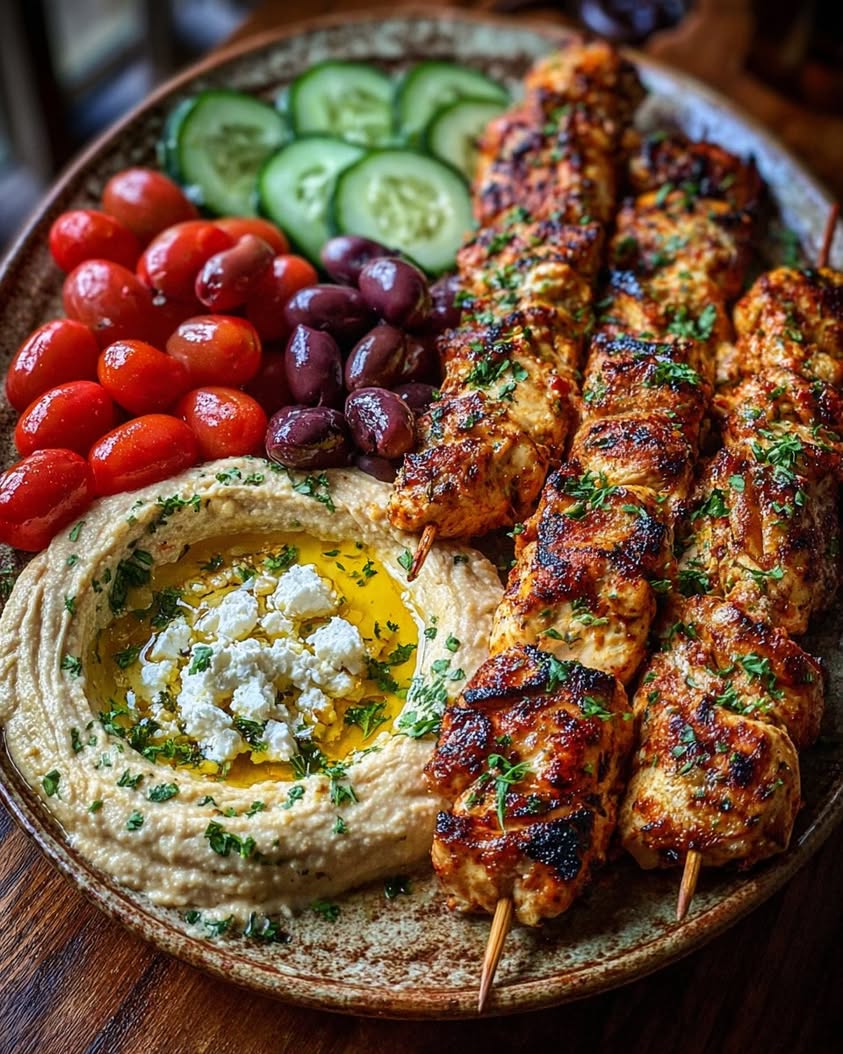
Grilled Mediterranean Chicken Skewers with Creamy Homemade Hummus: Your Ultimate Summer Feast
Imagine the sizzle of perfectly marinated chicken hitting a hot grill, the aroma of lemon and oregano filling the air, and the promise of a creamy, garlicky hummus waiting to be swiped with every tender bite. This recipe for Grilled Mediterranean Chicken Skewers with Creamy Homemade Hummus brings the vibrant, sun-drenched flavors of the Mediterranean coast straight to your backyard or kitchen. It is a celebration of simple, fresh ingredients transformed into a meal that feels both luxurious and utterly approachable. Furthermore, it captures the essence of al fresco dining, turning any weeknight into a special occasion with minimal effort and maximum flavor.
These Grilled Mediterranean Chicken Skewers are not just food; they are an experience. The chicken, marinated in a bright blend of olive oil, lemon, and herbs, becomes incredibly juicy and charred at the edges. Meanwhile, the homemade hummus provides a cool, creamy, and protein-rich base that complements the smoky chicken beautifully. This dish is a fantastic way to explore healthy, flavorful cooking without complicated techniques. Ultimately, it delivers a restaurant-quality meal that will have everyone asking for seconds and the recipe.
Quick Recipe Highlights
- Flavor Profile: These skewers offer a symphony of bright, herby, and smoky notes. The marinade infuses the chicken with tangy lemon, earthy oregano, and pungent garlic, which caramelizes wonderfully on the grill. Consequently, each bite is a perfect balance of savory char and zesty freshness.
- Texture: You get a fantastic contrast between the tender, succulent interior of the chicken and the slightly crisp, caramelized exterior from the grill. The hummus adds an irresistibly smooth and creamy element that coats each piece of chicken, creating a luxurious mouthfeel.
- Aroma: As the skewers cook, they release an intoxicating scent of grilling meat, smoky paprika, and fragrant herbs. The aroma of fresh lemon zest and garlic from the hummus completes the sensory journey, making your kitchen smell like a seaside taverna.
- Visual Appeal: The presentation is stunning, with golden-brown chicken pieces threaded onto skewers, often with pops of color from optional vegetables. Served over a swoosh of pale hummus and garnished with fresh parsley and a drizzle of olive oil, the dish is vibrant and inviting.
- Skill Level Needed: This is a beginner-friendly recipe. The primary skills involved are simple knife work for cubing chicken, mixing a marinade, and basic grilling or broiling. No advanced culinary techniques are required, making it perfect for cooks of all levels.
- Special Equipment: You will need wooden or metal skewers. If using wooden ones, soaking them in water for 30 minutes prevents burning. A grill (outdoor or indoor grill pan) or a standard oven broiler is essential for achieving the characteristic char. A food processor or high-powered blender is also necessary for the ultra-smooth hummus.
Recipe Overview
- Difficulty Level: We rate this recipe as easy because it breaks down into very manageable steps: marinating, skewering, and grilling. The hummus comes together in minutes in a food processor. There are no complex sauces or precise baking times to worry about. Even a first-time griller can achieve excellent results by following the simple visual cues for doneness.
- Category: This dish fits beautifully into several categories. It is a fantastic main course for dinner, a standout appetizer for parties, and even a great meal prep option for healthy lunches. The components are versatile enough to suit a casual family meal or a more elegant gathering with friends.
- Cuisine: This recipe is firmly rooted in the broad and vibrant culinary traditions of the Mediterranean basin. It draws inspiration specifically from Greek and Levantine cuisines, combining the Greek love for lemon-oregano marinades with the Levantine staple of hummus. The result is a fusion that honors both traditions deliciously.
- Cost: This is a very cost-effective meal. Chicken thighs are typically an affordable cut, and the marinade ingredients are pantry staples. Chickpeas, tahini, and lemon are inexpensive, especially when bought in bulk. You can easily feed a family of four a restaurant-quality meal for a fraction of the cost of dining out.
- Season: This recipe shines brightest in the spring and summer months. It is perfect for grilling outdoors and pairs wonderfully with fresh, seasonal salads. However, the bright flavors also make it a welcome antidote to the grays of winter when cooked on an indoor grill pan or under the broiler.
- Occasion: These skewers are incredibly versatile for entertaining. They are perfect for backyard barbecues, pool parties, and casual weeknight dinners. Additionally, they make excellent finger food for game day or a mezze-style spread. The recipe scales up effortlessly for a crowd.
Why You’ll Love This Recipe
First and foremost, the taste and texture are utterly irresistible. The marinade penetrates the chicken deeply, ensuring every morsel is packed with flavor, while the high heat of the grill creates a savory crust. Paired with the cool, creamy, and garlicky hummus, each bite is a perfect contrast. The combination of smoky, tangy, and rich elements satisfies cravings on multiple levels. Moreover, the flexibility to add vegetables like bell peppers or red onion to the skewers introduces extra sweetness and crunch, customizing the experience to your preference.
Convenience is another major win. The active hands-on time is surprisingly short. You can prepare the marinade and hummus in the time it takes your grill to preheat. The skewers cook quickly, making this a fantastic solution for busy evenings. Importantly, much of the work can be done ahead; you can marinate the chicken overnight and make the hummus a day in advance. This make-ahead strategy means you can have a spectacular meal on the table in just 15 minutes of cooking time.
Nutritionally, this meal is a powerhouse. Chicken thighs provide high-quality protein and essential B vitamins, while the olive oil in the marinade offers heart-healthy monounsaturated fats. The hummus, made from chickpeas and tahini, is a fantastic source of plant-based protein, fiber, and healthy fats that promote satiety and stable energy levels. This dish is a balanced plate that fuels your body without weighing you down, aligning perfectly with the principles of the celebrated Mediterranean diet.
For social gatherings, these Grilled Mediterranean Chicken Skewers are a guaranteed hit. They are interactive and fun to eat, encouraging a communal dining atmosphere. Serving them on a large platter over hummus creates a beautiful, shareable centerpiece. They are easy for guests to handle and pair wonderfully with a variety of sides, from simple pita bread to elaborate grain salads. This recipe takes the stress out of hosting by providing a crowd-pleasing main that feels special without being fussy.
Finally, the cost-effectiveness and accessibility of the ingredients make this a repeat-worthy recipe. You do not need expensive or hard-to-find items. The core components are available at any standard grocery store. By making your own hummus, you save money compared to store-bought versions and control the quality and flavor. This recipe demonstrates how everyday ingredients can be elevated into something extraordinary, proving that delicious, healthy eating does not have to be complicated or expensive.
Historical Background and Cultural Significance
The concept of skewering and grilling meat over an open flame is ancient, with roots tracing back across numerous cultures surrounding the Mediterranean Sea. In Greece, souvlaki—marinated meat grilled on a skewer—has been a staple since at least the 17th century, with some references in ancient texts suggesting even earlier origins. Similarly, in the Eastern Mediterranean and Middle East, the tradition of kebabs is deeply woven into the culinary fabric. Our recipe for Grilled Mediterranean Chicken Skewers draws directly from this timeless, cross-cultural practice of cooking marinated meat over fire, a method developed for both flavor and practicality long before modern kitchens existed.
Hummus, meaning “chickpea” in Arabic, has a rich and debated history. While its exact origin is claimed by several cultures across the Levant, its significance as a food of sustenance and community is universal in the region. Historically, hummus was a peasant food, a nutritious and affordable paste made from readily available chickpeas, sesame tahini, lemon, and garlic. It served as a vital source of protein and energy. Today, it has transcended its humble beginnings to become a global phenomenon, symbolizing shared meals and hospitality from Beirut to Brooklyn.
The evolution of pairing grilled meats with hummus is a natural and delicious progression. In modern Levantine and Greek restaurants, it is common to find grilled chicken or lamb served atop or alongside a generous portion of hummus. This combination leverages the textural contrast of hot, juicy meat against cool, creamy dip. Our recipe formalizes this popular restaurant pairing into a reliable home-cooked meal. It represents a fusion of Greek marinating techniques with a Levantine cornerstone, showcasing how Mediterranean culinary traditions beautifully complement one another.
Regional variations of this concept abound. In Turkey, you might find the chicken marinated with yogurt and spices, served with a hummus garnished with pastirma. In Armenia, a swirl of hummus might be topped with grilled meat and a sprinkle of sumac and pine nuts. Our version uses a classic Greek-inspired lemon-oregano marinade for universal appeal. This adaptability is a testament to the recipe’s solid foundation; it provides a perfect canvas for incorporating local ingredients and personal tastes, allowing everyone to create their own signature version of this Mediterranean classic.
Ingredient Deep Dive
Chicken Thighs: We recommend boneless, skinless chicken thighs for their superior flavor and juiciness. Thighs have a higher fat content than breasts, which protects them from drying out on the high heat of the grill, ensuring a moist and tender result every time. Culturally, chicken is a widely used protein across the Mediterranean, adaptable to countless herb and spice blends. When selecting thighs, look for pieces of even thickness for consistent cooking. You can substitute chicken breasts, but be vigilant, as they cook faster and can become dry if overcooked.
Chickpeas (Garbanzo Beans): The foundation of hummus, chickpeas are legumes packed with protein, fiber, and essential minerals like iron and folate. They have been cultivated in the Middle East for over 7,000 years. For the creamiest hummus, we strongly recommend using canned chickpeas for convenience, but don’t forget to rinse them thoroughly. A pro tip is to simmer canned chickpeas with a pinch of baking soda for 10 minutes; this softens them further and allows you to achieve an unbelievably smooth, silky texture in the food processor.
Tahini: This paste made from toasted, ground sesame seeds is non-negotiable for authentic hummus. It adds a deep, nutty richness and helps emulsify the mixture into a creamy paste. Tahini is a staple in Levantine cuisine, featured in dishes from baba ganoush to halva. Look for tahini made from 100% sesame seeds with no added oils. A good tahini should be pourable and have a uniform consistency. Store it in the refrigerator after opening to prevent the oils from going rancid, and stir well before use.
Extra Virgin Olive Oil: This is the lifeblood of Mediterranean cooking, used both in the chicken marinade and as a finishing garnish for the hummus. High-quality extra virgin olive oil contributes fruity, peppery notes and healthy fats. In the marinade, it acts as a carrier for the herbs and garlic while helping the chicken brown beautifully. For the best flavor, use a robust oil in the marinade and a finer, fruitier oil for drizzling on the finished dish. Always store olive oil in a cool, dark place to preserve its flavor and health benefits.
Fresh Lemon Juice & Garlic: This dynamic duo provides the essential bright and pungent backbone to both components of the dish. The acidity in lemon juice tenderizes the chicken and balances the richness of the olive oil and tahini. Garlic, used in both the marinade and hummus, offers a sharp, aromatic punch that mellows when cooked. Always use fresh lemon juice, not bottled, for the brightest flavor. For the hummus, a fresh garlic clove is key, though you can roast it first for a sweeter, more subtle taste if raw garlic is too strong for you.
Common Mistakes to Avoid
- Not Soaking Wooden Skewers: Forgetting to soak wooden skewers in water for at least 30 minutes before grilling is a common error. Consequently, the exposed ends will catch fire and burn, potentially causing the skewers to break and creating a safety hazard. Always plan ahead for this simple but crucial step.
- Overcrowding the Skewers: Threading the chicken pieces too tightly together on the skewer prevents even cooking. The heat needs to circulate around each piece to create proper caramelization. Leave a small space between each cube to ensure all sides get direct heat and cook uniformly.
- Using Cold Chicken on the Grill: Placing ice-cold, marinated chicken directly from the fridge onto the hot grill shocks the meat and leads to uneven cooking. The exterior may burn before the interior is done. Let the skewers sit at room temperature for about 15-20 minutes before grilling to promote even cooking from edge to center.
- Neglecting the Hummus Texture: Under-processing the hummus is a frequent mistake. Blending for only a minute or two results in a grainy texture. You must process the hummus for a full 3-5 minutes, scraping down the sides as needed, to achieve the signature creamy, silky-smooth consistency that makes homemade hummus exceptional.
- Skipping the Taste Test: Not seasoning the hummus to taste after blending is a missed opportunity. The flavors of tahini and lemon can vary by brand. Always taste your hummus and adjust the salt, lemon juice, or even a pinch of cumin until it perfectly suits your palate. Remember, you are the chef.
- Moving Skewers Too Often on the Grill: A common grilling mistake is constantly flipping and moving the skewers. To get a good sear and those appealing grill marks, you need to let the chicken cook undisturbed for a few minutes per side. Place them on the grill and resist the urge to move them until they release easily.
- Using Dried Herbs in the Hummus: While dried oregano is fine for the chicken marinade, using dried herbs in the hummus itself will result in a gritty texture and muted flavor. The hummus should rely on fresh lemon juice and garlic for its primary zest. Save fresh herbs like parsley or dill for garnish after blending.
- Not Letting the Chicken Rest: Cutting into the chicken skewers immediately after grilling causes all the precious juices to run out onto the plate, leaving the meat dry. Let the skewers rest for 5 minutes after cooking. This allows the juices to redistribute throughout the meat, ensuring every bite is succulent.
Essential Techniques
Cubing Chicken Evenly: Cutting your chicken thighs into uniform, one-inch cubes is critical for even cooking. Irregular pieces mean some will be overcooked and dry while others remain undercooked. Use a sharp knife and trim any excess fat or connective tissue. Consistent size ensures every piece spends the same amount of time on the grill, resulting in uniformly juicy and perfectly cooked chicken throughout every skewer.
Creating a Flavorful Marinade: A marinade is not just a sauce; it is a flavor infusion and tenderizing agent. The key is to thoroughly combine the oil, acid (lemon juice), and seasonings before adding the chicken. Ensure each piece is well-coated. While a 30-minute marinade works, for deeper flavor, marinate for up to 4 hours or even overnight in the refrigerator. The acid gently breaks down proteins, while the oil and herbs adhere to the surface, creating a flavorful crust when grilled.
Skewering for Success: Proper skewering technique affects both cooking and presentation. Thread the chicken cubes onto the skewer through the center of each piece, not too tightly packed. If adding vegetables, consider using separate skewers for them, as their cooking times may differ. For stability and even heat exposure, aim to have the meat occupy about two-thirds of the skewer’s length, leaving a handle for easy turning.
Grilling for the Perfect Char: Preheat your grill to medium-high heat and clean the grates well to prevent sticking. Oil the grates lightly just before adding the skewers. Place the skewers on the grill and do not move them for 3-4 minutes. When they release easily, give them a quarter turn to create cross-hatch marks, then flip after another few minutes. This technique builds a complex, smoky flavor and attractive appearance.
Blending Ultra-Smooth Hummus: The secret to restaurant-quality hummus is patience and proper liquid addition. Start by processing the tahini and lemon juice alone for a minute—this “whips” the tahini, making it light and creamy. Then add the other ingredients. Stream in the ice water slowly while the processor runs; the cold water helps create a fluffy, airy texture. Process for a full 3-5 minutes until completely smooth, not just combined.
Pro Tips for Perfect Grilled Mediterranean Chicken Skewers
First, for the juiciest chicken, do not discard the marinade after removing the chicken. Instead, bring it to a rapid boil in a small saucepan for at least one minute to kill any bacteria. Then, you can use this boiled marinade as a flavorful basting sauce during the last few minutes of grilling, adding an extra layer of gloss and flavor.
Second, if you are using an outdoor grill, create two heat zones: a direct high-heat zone for searing and a cooler indirect zone. Start the skewers over direct heat to get a good sear and grill marks, then move them to the indirect side to finish cooking through without burning the exterior. This method gives you maximum control.
Third, add a secret ingredient to your hummus for next-level creaminess: a single ice cube. Adding it while the food processor is running helps aerate the hummus, making it incredibly light and fluffy. The cold temperature also helps emulsify the oils and creates a stunningly smooth texture that holds its shape beautifully on the plate.
Fourth, consider double-skewering for stability, especially if you are using softer vegetables or larger chunks of meat. Threading two parallel skewers through the ingredients prevents them from spinning when you try to turn them on the grill. This makes flipping much easier and more efficient, leading to better overall cooking.
Fifth, let your hummus rest before serving. After blending, transfer it to a serving bowl, cover it, and let it sit at room temperature for about 30 minutes. This allows the flavors to meld and deepen. The garlic will mellow slightly, and the tahini’s nuttiness will become more pronounced, resulting in a more harmonious and complex flavor profile.
Sixth, for easy cleanup and to prevent sticking, lightly brush or spray the skewers themselves with oil before threading the chicken. This creates a non-stick barrier between the wooden or metal skewer and the chicken, ensuring the cooked meat slides off effortlessly when it’s time to eat. It is a simple trick that makes serving much smoother.
Variations and Adaptations
For regional variations, explore different marinades. A Turkish version might use yogurt, paprika, and cumin. A North African twist could feature harissa paste and preserved lemon. For the hummus, top it with ground lamb cooked with pine nuts and spices for a Lebanese “hummus bil lahme,” or add a swirl of zhoug (a spicy cilantro sauce) for a Yemeni-inspired kick. The basic framework welcomes global influences.
Seasonal adaptations are simple and rewarding. In summer, thread cherry tomatoes, zucchini, or eggplant onto the skewers alongside the chicken. For a fall version, use a marinade with warmer spices like cinnamon and allspice and serve the hummus topped with roasted squash or pomegranate seeds. In winter, cook the skewers under the broiler and serve the hummus warm, topped with sautéed mushrooms.
Dietary modifications are straightforward. For a gluten-free meal, ensure your spices are certified GF and serve with gluten-free pita or vegetable crudités. To make it dairy-free, the recipe is naturally compliant—just check your tahini label. For a lower-carb or keto adaptation, serve the chicken skewers over a bed of cauliflower hummus instead of chickpea hummus, and increase the healthy fat by drizzling with more olive oil.
Flavor variations can keep this recipe exciting. Add a tablespoon of sun-dried tomato paste or pesto to the chicken marinade. Mix roasted red peppers or a handful of fresh basil into the hummus. For a smoky flavor, add a teaspoon of smoked paprika to the hummus or use chipotle powder in the marinade. A spoonful of Greek yogurt in the hummus makes it even tangier and creamier.
Texture modifications cater to personal preference. If you enjoy chunkier hummus, pulse the ingredients instead of processing continuously. For added crunch on the final dish, garnish with toasted pine nuts, chopped walnuts, or crispy chickpeas. You can also chop the grilled chicken off the skewers and mix it into the hummus for a deconstructed, scoopable dip.
Presentation alternatives offer creative freedom. Instead of long skewers, use small appetizer skewers for party food. Serve the hummus in individual small bowls with a single mini skewer resting across the top. For a family-style platter, spread the hummus on a large plate, place the grilled chicken (removed from skewers) in the center, and surround it with grilled vegetables and warm pita triangles.
Serving and Presentation Guide
Plating is key to the “wow” factor. Use a large, shallow platter or individual plates. First, spread a generous, swooping layer of hummus across the surface with the back of a spoon, creating swirls that will catch the olive oil and garnishes. Then, carefully slide the grilled chicken off the skewers and arrange the pieces artfully over the hummus. Alternatively, lay the whole skewers directly on top for a more rustic, interactive presentation.
Garnishing adds color, texture, and flavor. A classic finish is a drizzle of high-quality extra virgin olive oil, a sprinkle of smoked or sweet paprika, and a handful of chopped fresh parsley or mint. For more complexity, add a squeeze of fresh lemon juice, a scattering of sumac for tartness, or a few Kalamata olives and pepperoncini on the side. These final touches elevate the dish visually and gastronomically.
Traditional accompaniments complete the Mediterranean experience. Warm pita bread, either torn or cut into wedges, is essential for scooping. A simple Greek salad of tomato, cucumber, red onion, and feta provides a refreshing counterpoint. For a heartier meal, serve with lemon-herb rice pilaf, couscous, or a warm lentil salad. These sides turn the skewers and hummus into a satisfying, well-rounded feast.
Modern serving suggestions can streamline the meal for different settings. For a party, set up a “skewer and dip” station where guests can build their own plates. For meal prep, portion the hummus into containers and top with the sliced grilled chicken and some raw veggies for a ready-to-go lunch. For a light dinner, serve smaller skewers alongside a large, shareable mezze platter with dolmas, tabbouleh, and baba ganoush.
Temperature considerations are important for the best experience. The hummus is best served at cool room temperature, not ice-cold from the fridge, as this allows its flavors to shine. The chicken skewers should be served hot off the grill. This contrast between the cool, creamy dip and the hot, smoky chicken is a fundamental part of the dish’s appeal. Plan your timing so both components are at their ideal temperature when served.
Portion control is easy with this dish. A standard serving is typically two skewers per person over about a half-cup of hummus. When serving as part of a larger mezze spread with multiple small dishes, one skewer per person is sufficient. The hummus is rich and filling, so a little goes a long way. Remember, you can always serve extra pita and salad on the side to fill out the meal if needed.
Wine and Beverage Pairing
Wine pairings should complement the dish’s bright acidity and herbal notes. A crisp, dry white wine like a Greek Assyrtiko or a Sauvignon Blanc works beautifully, as their citrusy profiles echo the lemon in the marinade. For red wine lovers, a light-bodied, low-tannin red like a Beaujolais or a Greek Xinomavro rosé won’t overpower the chicken and can handle the garlic in the hummus. Ultimately, the goal is a refreshing wine that cleanses the palate between bites.
Non-alcoholic alternatives can be just as sophisticated. A sparkling lemonade or limeade mirrors the citrus elements. Iced mint tea is a traditional and refreshing choice that complements the herbal notes. For something more unique, try a pomegranate spritzer or a cucumber-mint infused water. These drinks provide a refreshing counterpoint to the rich hummus and smoky chicken without competing with the flavors.
While not typical pairings for this meal, coffee and tea could follow as a digestif after a leisurely dinner. A strong, sweet Greek coffee or a pot of mint tea would be authentic choices to end a Mediterranean-inspired meal. Their bold flavors stand up well after the garlic and tahini, offering a cleansing, palate-resetting finish to the dining experience.
Temperature considerations for beverages are straightforward. All drinks should be served well-chilled. White wines and rosés should be at a cool 45-50°F. Non-alcoholic spritzers and teas are best over ice. The contrast of a cold drink with the warm, grilled food is incredibly satisfying, especially on a hot day. Always have plenty of cold beverages on hand, as the hummus and seasoned chicken can stimulate thirst.
Serving suggestions for beverages focus on simplicity and accessibility. For a casual gathering, set out a large dispenser of infused water or iced tea so guests can help themselves. For a more formal setting, pre-pour wines or have a dedicated serving station. Regardless of the occasion, offering a choice between alcoholic and non-alcoholic options ensures all your guests have a delicious drink to enjoy with their Grilled Mediterranean Chicken Skewers.
Storage and Shelf Life
Proper storage methods are essential for food safety and quality. Store leftover chicken and hummus separately in airtight containers. The chicken will keep in the refrigerator for 3-4 days. The hummus, due to its lemon juice content which acts as a natural preservative, will stay fresh for up to 5 days when stored correctly. Always use clean utensils to scoop out hummus to prevent introducing bacteria that could cause spoilage.
Temperature requirements are non-negotiable. Both components must be refrigerated at or below 40°F within two hours of cooking. If the temperature outside is above 90°F, that window shrinks to one hour. Do not leave the platter of skewers and hummus sitting out for extended periods during a party. Instead, keep the hummus chilled on a bed of ice and grill chicken in batches to ensure safety and optimal taste.
Container recommendations can impact shelf life. For the hummus, a glass or BPA-free plastic container with a tight-fitting lid is best. Press a piece of plastic wrap directly onto the surface of the hummus before sealing the lid; this prevents a dry, crusty layer from forming on top. For the chicken, shallow containers allow for rapid cooling. You can store the chicken still on the skewers or remove it to save space.
Recognizing signs of spoilage is crucial. For the chicken, look for any off odors, a slimy texture, or a change in color. Spoiled hummus may develop an sour smell beyond the tang of lemon, visible mold (often blue or green), or an excessively watery separation that doesn’t reincorporate when stirred. When in doubt, follow the golden rule: if you suspect it’s bad, throw it out.
Reheating instructions for the chicken are important for preserving moisture. The best method is to reheat it gently in a skillet over medium-low heat with a splash of water or broth, covered, until warmed through. You can also use the microwave at 50% power in short bursts. Avoid reheating in a high-heat oven or toaster oven, as this will further dry out the already-cooked chicken. The hummus is best served cold or at room temperature and does not need reheating.
Freezing guidelines allow for longer-term storage. The grilled chicken freezes well for up to 3 months. Let it cool completely, then freeze the pieces in a single layer on a baking sheet before transferring to a freezer bag to prevent clumping. Hummus can be frozen, but the texture may become slightly grainy upon thawing due to the emulsion breaking. If you freeze it, thaw in the refrigerator and re-blend with a little fresh lemon juice and olive oil to restore creaminess.
Make Ahead Strategies
A strategic prep timeline can turn this into a virtually instant meal. The night before, cube and marinate the chicken in the refrigerator. Also, prepare the hummus and store it in an airtight container. The next day, all you need to do is thread the chicken, preheat the grill, and cook. This approach is perfect for dinner parties or stressful weeknights, as the bulk of the work is done while you are relaxed.
Storage between steps is simple. Keep the marinating chicken in a sealed container or zip-top bag on the bottom shelf of your fridge to prevent cross-contamination. The hummus can be stored in its serving bowl covered with plastic wrap. If preparing more than a day ahead, note that the raw garlic flavor in the hummus will intensify over time, which some people prefer. You can mitigate this by using roasted garlic instead.
Assessing the quality impact of make-ahead steps is reassuring. Marinating the chicken for up to 24 hours only improves its flavor and tenderness. The hummus’s flavors also meld and improve overnight. The only potential downside is the chicken may release some liquid into the marinade, but this is normal. Simply discard the excess liquid before skewering; the flavor will already be infused into the meat.
Assembly tips for efficiency are key. If you plan to serve the skewers immediately after grilling, thread them just before cooking. If you need to thread them ahead of time for a party, you can do so and keep them on a tray, covered, in the fridge for a few hours. Bring them to room temperature for 15-20 minutes before grilling to ensure even cooking. This streamlines the process during the busy moments when guests arrive.
Reheating guidelines for make-ahead components are straightforward. The chicken is best grilled fresh. If you must grill ahead, slightly undercook it, then reheat gently just before serving to avoid dryness. The hummus should never be reheated; serve it cool. If you made it days ahead and a lot of liquid has separated, simply stir it back in or pour a little off if it’s excessive. The consistency will be fine.
Adding fresh elements just before serving revitalizes the dish. Even if you made the hummus ahead, give it a final stir and drizzle with fresh olive oil. Garnish with freshly chopped herbs and a final sprinkle of paprika or sumac. Squeeze a little extra lemon juice over the hot chicken skewers as they come off the grill. These last-minute touches add a burst of freshness that makes the dish taste newly made.
Scaling Instructions
Halving the recipe is simple for smaller households. Use one can of chickpeas (about 1.5 cups) for the hummus and halve all other hummus ingredients precisely. For the chicken, one pound of thighs will make about 8 small skewers, perfect for two people. Halve the marinade ingredients, but consider keeping the garlic at one clove for robust flavor. Cooking time will remain roughly the same, but keep a closer eye as smaller batches can cook slightly faster.
Doubling or tripling the recipe for a crowd requires minor adjustments. For the marinade, you can multiply the ingredients directly. For large batches of hummus, you may need to process it in two batches in your food processor to ensure even blending. When grilling a large number of skewers, do not overcrowd the grill; cook in batches to maintain proper heat and avoid steaming the meat. Keep cooked skewers warm on a sheet pan in a low oven (200°F) while you finish the rest.
Equipment adjustments are necessary when scaling. For a big party, you might need multiple grill baskets or several sets of skewers. If your food processor is small, make the hummus in sequential batches and combine them in a large bowl for final seasoning. For serving, use a very large platter or multiple platters. Consider setting up a dedicated grilling station if one person is managing the cooking, to keep the workflow organized.
Timing modifications are minimal when scaling up. The marinating time remains the same. The hummus will take longer to blend if done in batches. The major time increase will be in the grilling itself. Plan for about 15-20 minutes of active grilling time per batch. To manage timing for a party, you can grill the chicken about 30 minutes before serving and hold it warm, as it retains heat well and still tastes excellent.
Storage considerations for scaled-up recipes are important. If you have massive leftovers, remember that the hummus has a 5-day fridge life. You can freeze portions of the grilled chicken for future quick meals. When doubling, also double your storage containers. Label everything with the date so you can easily track freshness. Scaling successfully means planning not just for cooking, but for the enjoyable leftovers as well.
Nutritional Deep Dive
A macro breakdown of a typical serving reveals a balanced meal. The chicken provides high-quality protein essential for muscle repair and satiety. The olive oil and tahini contribute healthy monounsaturated and polyunsaturated fats, which support Print
Mediterranean Chicken Skewers with Hummus Spread
- Total Time: 45 minutes
- Yield: 4
Description
Tender, marinated chicken skewers grilled to perfection and served with a creamy homemade hummus spread, perfect for a light and flavorful meal.
Ingredients
- 1.5 lbs boneless, skinless chicken breast, cut into 1-inch cubes
- 1/4 cup olive oil
- 3 cloves garlic, minced
- 1 lemon, juiced and zested
- 1 tsp dried oregano
- 1 tsp ground cumin
- 1/2 tsp smoked paprika
- Salt and black pepper to taste
- 1 can (15 oz) chickpeas, drained and rinsed
- 2 tbsp tahini
- 2 tbsp extra virgin olive oil
- 1/4 cup water
- Wooden or metal skewers (if wooden, soaked in water for 30 minutes)
Instructions
- In a bowl, whisk together olive oil, minced garlic, lemon juice, lemon zest, oregano, cumin, paprika, salt, and pepper. Add chicken cubes, toss to coat, and marinate for at least 30 minutes in the refrigerator.
- While chicken marinates, prepare the hummus: In a food processor, combine chickpeas, tahini, extra virgin olive oil, and water. Blend until smooth, adding more water if needed for desired consistency. Season with salt to taste.
- Thread marinated chicken cubes onto skewers. Preheat grill or grill pan to medium-high heat. Grill skewers for 10-12 minutes, turning occasionally, until chicken is cooked through and slightly charred.
- Serve chicken skewers hot with the hummus spread on the side, garnished with fresh parsley or a drizzle of olive oil if desired.
Notes
You can customize the seasonings to taste.
- Prep Time: 15 minutes
- Cook Time: 30 minutes
- Method: Main
- Cuisine: Mediterranean