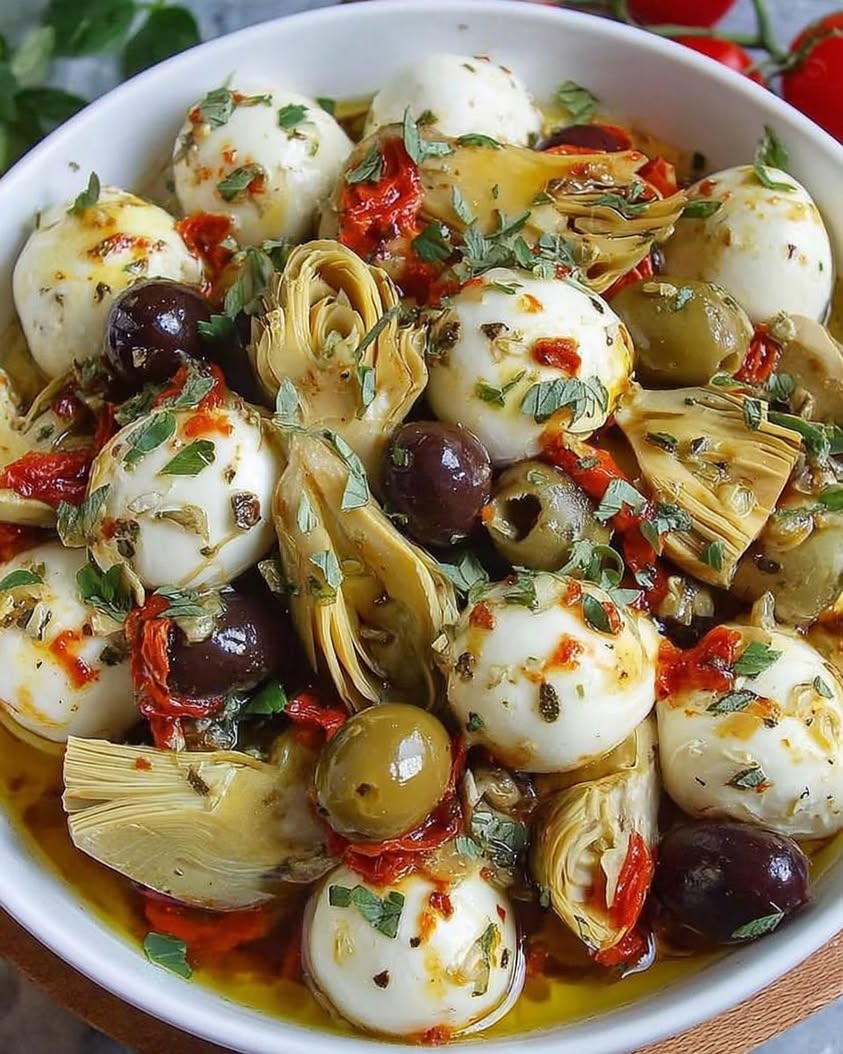
Zesty Marinated Mozzarella Balls with Artichokes and Olives: An Effortless Antipasto
Imagine opening your refrigerator to find a jar of pure sunshine. That is exactly what you get with this recipe for Zesty Marinated Mozzarella Balls with Artichokes and Olives. This dish transforms simple ingredients into a vibrant, flavor-packed appetizer that feels both rustic and elegant. Ultimately, it is the perfect make-ahead solution for busy hosts who want to impress without stress.
The beauty of this marinated mozzarella balls recipe lies in its simplicity and depth. Creamy bocconcini, tangy artichoke hearts, and briny olives bathe in a garlicky, herb-infused olive oil. Consequently, every bite delivers a delightful contrast of textures and a burst of Mediterranean flavor. This antipasto is not just food; it is an experience that transports your taste buds straight to a coastal Italian kitchen.
Furthermore, this recipe is incredibly versatile. You can serve it straight from the jar with crusty bread, toss it into a pasta salad, or use it to top grilled chicken or fish. The marinating process is where the magic happens, as the olive oil gently permeates each ingredient, creating a harmonious and complex flavor profile. Indeed, this Zesty Marinated Mozzarella Balls with Artichokes and Olives is a culinary staple you will return to again and again.
Quick Recipe Highlights
- Flavor Profile: This dish offers a bright, savory, and herbaceous taste. The garlic and red pepper flakes provide a gentle kick, while the lemon zest adds a crucial citrus note that lifts all the other flavors.
- Texture: You will enjoy a wonderful mix of creamy, tender, and firm textures. The mozzarella balls are soft and pillowy, the artichokes are meaty yet tender, and the olives provide a satisfying, briny bite.
- Aroma: The aroma is distinctly Mediterranean, featuring the grassy scent of extra virgin olive oil, the pungency of fresh garlic, and the earthy fragrance of dried oregano and thyme.
- Visual Appeal: This antipasto is a feast for the eyes with its contrasting colors. The white mozzarella, green artichokes and olives, and red pepper flakes create a beautiful, rustic presentation in the jar.
- Skill Level Needed: This recipe requires absolutely zero cooking skills. It is a simple assembly job, making it perfect for beginners or anyone needing a last-minute, impressive dish.
- Special Equipment: You only need a large mixing bowl, a jar or airtight container for marinating, and a microplane or zester for the lemon. No fancy kitchen gadgets are required.
Recipe Overview
- Difficulty Level: We rate this recipe as “Easy” because it involves no cooking, just assembly. The most complex task is mincing garlic. Therefore, it is accessible to cooks of all levels, from total novices to seasoned chefs looking for a quick, flavorful side.
- Category: This dish falls squarely into the appetizer or antipasto category. Additionally, it can function as a salad component, a sandwich topping, or a part of a festive grazing board.
- Cuisine: The flavor profile is unmistakably Italian-Mediterranean. It draws inspiration from classic Italian antipasti and the sun-drenched flavors of coastal regions where olive oil, garlic, and herbs are foundational.
- Cost: This is a very cost-effective recipe, especially if you use high-quality store-brand ingredients. Marinated mozzarella balls from a gourmet shop can be expensive, but making them at home saves money and allows for customization.
- Season: This dish is perfect year-round. It is light and refreshing for summer gatherings, yet the robust flavors also complement heavier winter meals. It truly has no off-season.
- Occasion: It is ideal for casual weeknight dinners, elegant dinner parties, potlucks, picnics, and holiday spreads. Essentially, it suits any occasion where good food and good company are the goals.
Why You’ll Love This Recipe
First and foremost, the taste and texture combination is utterly irresistible. Each component brings something unique to the table. The creamy mozzarella balls absorb the zesty marinade beautifully, becoming little flavor bombs. Meanwhile, the artichokes offer a tangy, meaty contrast, and the olives contribute their signature salty brine. Every forkful is a balanced, exciting journey for your palate. The lemon zest is the secret weapon, cutting through the richness and making the entire dish taste incredibly fresh and vibrant.
Secondly, the convenience factor is through the roof. This Zesty Marinated Mozzarella Balls with Artichokes and Olives recipe requires mere minutes of active prep time. There is no stove or oven required. You simply chop, zest, mix, and pour. After that, the refrigerator does all the work. This makes it the ultimate make-ahead appetizer. You can prepare it a day or two in advance, freeing up valuable time when you are entertaining. When guests arrive, you just pull the beautiful jar from the fridge and serve.
From a nutritional standpoint, this dish offers several benefits. Olive oil is a source of heart-healthy monounsaturated fats. Artichokes are rich in fiber and antioxidants. Mozzarella provides protein and calcium. Of course, it is important to enjoy this in moderation due to the sodium from the olives and the fat content. However, as part of a balanced diet, it is a flavorful way to incorporate beneficial Mediterranean diet principles.
The social and entertaining value of this dish cannot be overstated. It creates an immediate sense of abundance and hospitality when placed on a table. Served with a basket of crusty bread for dipping into the flavorful oil, it encourages sharing and conversation. It is a communal food that breaks the ice and gets people interacting. For a host, serving something this beautiful that you made yourself is always a proud moment.
Finally, it is incredibly cost-effective and accessible. The ingredients are common and easy to find at any standard grocery store. By making your own marinated mozzarella balls, you avoid the premium price tag of pre-made versions from specialty stores. You also control the quality of every ingredient, ensuring there are no unwanted preservatives or additives. This recipe proves that impressive, gourmet-tasting food does not have to be complicated or expensive.
Historical Background and Cultural Significance
The tradition of preserving foods in oil is ancient and spans many cultures around the Mediterranean basin. In Italy, the practice of “sott’olio” (under oil) was a practical method to extend the shelf life of seasonal vegetables, cheeses, and mushrooms before modern refrigeration. This Zesty Marinated Mozzarella Balls with Artichokes and Olives recipe is a direct descendant of that thrifty, flavorful tradition. Italian nonnas would create these preserves to capture summer’s bounty, ensuring delicious additions to meals throughout the leaner months.
Culturally, this dish is a cornerstone of “antipasto,” which literally means “before the meal.” The antipasto course is designed to stimulate the appetite and set the tone for the dining experience. It is a showcase of regional, preserved flavors. A jar of marinated ingredients like this represents hospitality and generosity. It tells guests that care and forethought went into the meal. In many Italian households, you will find a version of this in the fridge, ready to enhance a simple plate of pasta or to welcome unexpected visitors.
The recipe has evolved with global trade and ingredient availability. Originally, it might have featured local olives, wild herbs, and whatever cheese was on hand. Today, we have access to consistent, high-quality bocconcini (small mozzarella balls) and jarred artichoke hearts, which streamline the process. The core principle, however, remains unchanged: combining simple, quality ingredients with good oil and time to create something greater than the sum of its parts. This evolution makes authentic Italian flavor accessible to home cooks worldwide.
Regional variations are abundant. In Sicily, you might find capers and sun-dried tomatoes added to the mix. In the north, perhaps a sprig of rosemary. Some versions use vinegar in the marinade for extra tang, while others, like this one, rely on the brightness of lemon zest. The specific choice of olive—Castelvetrano for buttery mildness, Kalamata for robust saltiness—can also define the character of the dish. This recipe is a wonderful template that invites you to explore and create your own personal or regional signature.
Ingredient Deep Dive
Let us start with the star: Mozzarella Balls (Bocconcini). This fresh cheese, with origins in southern Italy, is traditionally made from water buffalo or cow’s milk. Its name comes from “mozzare,” meaning “to cut off,” referring to the hand-stretching and cutting process. Nutritionally, it provides a good source of protein and calcium. When selecting bocconcini for marinating, choose those packed in water for the freshest taste and creamiest texture. For storage before use, keep them refrigerated in their whey or water and use by the date on the package. If you cannot find bocconcini, you can substitute with fresh mozzarella torn into bite-sized pieces.
Artichoke Hearts are the tangy, meaty backbone of this dish. The globe artichoke is actually a thistle flower bud, cultivated for centuries in the Mediterranean. They are rich in fiber, folate, vitamin C, and antioxidants like cynarin. For this recipe, use high-quality marinated artichoke hearts packed in oil or brine; just be sure to drain them well. Quartered hearts work perfectly. If using fresh artichokes, you will need to cook and clean them first, which is more labor-intensive. As a substitute, consider roasted red peppers or grilled eggplant for a different but equally delicious twist.
Olives are essential for that briny, salty depth. They are one of the oldest cultivated foods in the world, symbolizing peace and wisdom. They offer healthy fats and vitamin E. For this Zesty Marinated Mozzarella Balls with Artichokes and Olives, a mix of green and black olives is visually appealing and offers a range of flavors. Castelvetrano olives are mild and buttery, while Kalamatas are stronger. Always choose pitted olives for ease of eating. Store opened olives in their brine in the refrigerator. If you are not an olive fan, try substituting with pepperoncini or caper berries for a different kind of briny bite.
Extra Virgin Olive Oil (EVOO) is not just a medium; it is a key flavor ingredient. The term “extra virgin” means it is from the first cold pressing, retaining the most flavor and nutrients. It contains heart-healthy monounsaturated fats and antioxidants. For a recipe where the oil’s flavor shines, invest in a good-quality, fruity EVOO. Store it in a cool, dark place to prevent rancidity. Do not substitute with lighter olive oils or neutral oils like canola, as you will lose the characteristic Mediterranean flavor that defines this dish.
The Aromatics—garlic, dried oregano, and thyme—build the flavor foundation. Garlic, with its pungent, spicy notes, mellows beautifully as it marinates. Oregano and thyme are classic Italian herbs that provide earthy, aromatic warmth. Always use fresh garlic, not pre-minced, for the best flavor. For the herbs, dried are actually preferable here as they infuse the oil more effectively over time. However, you can add a sprig of fresh rosemary or basil for a different herbal profile. The red pepper flakes offer a customizable heat; adjust to your preference or omit for a mild version.
Common Mistakes to Avoid
- Using Low-Quality Olive Oil: Since the oil is a primary flavor carrier, a bland or rancid oil will ruin the dish. Always use a fresh, good-quality extra virgin olive oil you enjoy tasting on its own.
- Not Draining Ingredients Properly: Excess water from the mozzarella balls or artichoke hearts will dilute the marinade, making it bland and preventing proper preservation. Pat everything dry with a paper towel before combining.
- Skipping the Lemon Zest: The zest is crucial for brightness. The juice can make the cheese tough and the marinade cloudy, but the zest adds pure citrus aroma without the acidity that can curdle the dairy.
- Overcrowding the Jar: Ingredients need room to swim in the oil to marinate evenly. If packed too tightly, some pieces will remain under-seasoned. Use a jar that gives everything a little space.
- Not Marinating Long Enough: While you can eat it immediately, the magic happens with time. For best flavor, let it marinate for at least 4 hours, preferably overnight. Patience is key.
- Using Pre-Shredded or Pre-Minced Garlic: These products often contain preservatives and lack the potent, fresh flavor of a newly minced garlic clove. The extra minute of chopping makes a world of difference.
- Storing at Room Temperature: Due to the dairy and fresh garlic, this dish must be refrigerated. The oil will solidify slightly, but it will return to liquid at room temperature before serving. Do not leave it out for extended periods.
- Forgetting to Bring to Room Temperature Before Serving: Serving it ice-cold mutes all the flavors. Take the jar out of the fridge 30 minutes before serving to allow the oil to liquefy and the flavors to wake up.
Essential Techniques
Proper Draining and Drying is the first critical technique. After draining the mozzarella balls and artichokes from their liquid, spread them on a layer of paper towels and gently pat them dry. This step is non-negotiable. Any residual water will not mix with the oil, creating a separate layer and watering down the intensity of your marinade. Consequently, your Zesty Marinated Mozzarella Balls with Artichokes and Olives will taste diluted and lack the concentrated flavor you desire. The visual cue for success is that the ingredients look matte, not shiny with water.
Infusing the Oil is the core technique of this no-cook recipe. You are not just mixing ingredients; you are creating a flavored oil that will permeate every component. Combine the minced garlic, herbs, red pepper flakes, salt, and lemon zest in your bowl first. Then, whisk in the olive oil vigorously. This helps to start the infusion process by slightly bruising the herbs and garlic, releasing their essential oils into the fat. The success of this technique is evident after marinating—the oil itself should be deeply flavorful and aromatic, something you would want to sop up with bread.
Layering in the Jar is a simple but effective technique for even marination. Place the heavier, denser ingredients like artichokes and olives at the bottom. Then add the mozzarella balls. Finally, pour the infused oil mixture over the top, making sure it seeps down and covers everything. Gently tap the jar on the counter to release any air bubbles. This method ensures all ingredients are exposed to the flavorful oil. A common pitfall is dumping everything in haphazardly, which can leave pockets of unmarinated food.
Pro Tips for Perfect Zesty Marinated Mozzarella Balls
For the most vibrant flavor, use a microplane to zest the lemon. This tool creates fine, fluffy zest without the bitter white pith. Additionally, zest the lemon directly over the bowl so the citrus oils fall right into your mixture.
Let the infused oil mixture sit for 10 minutes before adding the other ingredients. This brief rest allows the garlic and herbs to begin blooming in the oil, creating a more potent base for your marinade.
Always taste your olives before adding them. Different brands and varieties have varying saltiness. If your olives are very salty, you may want to reduce or even omit the added salt in the marinade to balance the dish.
Use a clean, dry spoon every time you serve from the jar. Introducing a wet or used utensil can introduce bacteria and moisture, shortening the shelf life of your marinated creation.
If the olive oil solidifies in the fridge, do not worry. This is a natural characteristic of good extra virgin olive oil at cold temperatures. Simply let the jar sit on the counter for 20-30 minutes before serving, and it will return to its liquid state.
For an extra layer of flavor, add a strip of lemon peel (just the yellow part) to the jar along with the zest. It will continue to infuse the oil as it marinates.
If you love heat, consider adding a whole, small dried chili pepper to the jar instead of just flakes. It will impart a slow, building warmth that is incredibly delicious.
Variations and Adaptations
For regional variations, take inspiration from different parts of Italy. A Sicilian version might include chopped sun-dried tomatoes, capers, and a pinch of saffron. A Tuscan adaptation could feature cannellini beans and fresh rosemary. For a Greek twist, swap the Italian herbs for dried oregano, add some crumbled feta cheese at the end, and use Kalamata olives exclusively. These simple swaps can transport the basic recipe across the Mediterranean with authentic results.
Seasonal adaptations are easy and fun. In summer, add fresh cherry tomatoes and basil leaves just before serving. In autumn, incorporate roasted cubes of butternut squash and sage. For a winter holiday version, use cranberries instead of olives and add orange zest with a cinnamon stick to the marinade for a festive feel. Spring calls for fresh peas and mint. Let the produce guide you.
Dietary modifications are straightforward. For a vegan version, omit the mozzarella and use marinated tofu cubes or white beans. Ensure all other ingredients are vegan-friendly. For a keto or low-carb diet, this recipe is already perfect—just watch your portion size due to the carb content in artichokes. To make it gluten-free, simply serve with gluten-free bread or crackers for dipping.
Flavor variations are endless. Love spice? Add sliced fresh chili or more red pepper flakes. Prefer sweetness? Include roasted red peppers or a teaspoon of honey in the marinade. For an umami bomb, add a few anchovy fillets minced into the oil. Want an herbal focus? Use a bouquet of fresh herbs like basil, parsley, and chives. The basic formula is a canvas for your personal taste preferences.
Serving and Presentation Guide
Plating techniques can elevate this simple dish. For a rustic look, serve it straight from a beautiful mason jar or a ceramic crock with a spoon. For a more elegant presentation, use a shallow bowl or plate. Arrange the components artfully with a slotted spoon, then drizzle some of the marinating oil over the top. Always include a stack of small plates or napkins for guests.
Garnishing is the final touch. Right before serving, sprinkle with freshly chopped parsley, basil, or chives for a pop of color and fresh flavor. A final grating of lemon zest over the top makes the aromas sing. You can also add a light flake of sea salt or a crack of black pepper for visual texture and a last-minute flavor boost.
Traditional accompaniments are simple and effective. A crusty baguette, sliced and lightly toasted, is mandatory for soaking up the glorious oil. Grilled ciabatta or focaccia points are also excellent. For a fuller antipasto spread, add slices of prosciutto, soppressata, roasted nuts, and fresh fruit like grapes or figs. This creates a balanced and abundant grazing board.
Modern serving suggestions think outside the bread bowl. Use the marinated mozzarella balls and veggies to top a simple green salad. Toss them with hot pasta for a quick, cold pasta salad. Skewer them with other antipasto items for easy-to-eat appetizer sticks. Or, use them as a topping for grilled chicken, fish, or even pizza after it comes out of the oven. The flavorful oil makes a fantastic salad dressing or bread dip on its own.
Wine and Beverage Pairing
Wine pairings should complement the dish’s bright, salty, and herbal notes. A crisp, high-acid white wine like Pinot Grigio or Sauvignon Blanc cuts through the richness of the oil and cheese beautifully. For a more interesting choice, try a Vermentino or a Greco di Tufo, which have the mineral backbone to stand up to the artichokes and olives. If you prefer red, opt for a light, chilled red like a Bardolino or a Frappato—avoid heavy, tannic reds that will clash with the acidity and salt.
Non-alcoholic alternatives are just as important. Sparkling water with a twist of lemon or lime is a classic, cleansing choice. For something more special, try a homemade rosemary-lemon spritzer or a tart pomegranate juice spritzer. Iced herbal teas, like mint or basil tea, can mirror the herbal notes in the dish. The goal is a beverage that refreshes the palate between bites.
Temperature considerations are key for both alcoholic and non-alcoholic drinks. White wines and spritzers should be well-chilled. If serving a light red, chill it slightly (about 30 minutes in the fridge). Iced beverages should be cold but not so icy that they numb the taste buds. Serving drinks at the proper temperature ensures they perform their role in the dining experience perfectly.
Storage and Shelf Life
Proper storage methods are crucial for food safety and quality. Always store your Zesty Marinated Mozzarella Balls with Artichokes and Olives in a clean, airtight glass jar or container in the refrigerator. The oil will act as a partial preservative, but the dairy content means it cannot be stored at room temperature like some oil-preserved vegetables. Ensure all ingredients are fully submerged in the oil to prevent spoilage.
The shelf life is generally 4-5 days when stored correctly in the fridge. The flavors will actually peak around the 24-hour mark and remain excellent for several days. Signs of spoilage include an off or sour smell, visible mold (look for fuzzy spots), or a slimy texture on any of the ingredients. If the oil becomes cloudy or develops bubbles, it is best to discard the entire batch. When in doubt, throw it out.
Reheating is not applicable for this cold dish. However, if you have used it as a pasta topping and have leftovers mixed with pasta, store that separately and consume within 2 days. Freezing is not recommended. Freezing will drastically alter the texture of the mozzarella, making it rubbery and grainy, and can cause the oil to separate in unpleasant ways upon thawing. This is a fresh recipe best enjoyed within a week of making.
Make Ahead Strategies
The prep timeline for this dish is its greatest asset. You can complete the entire assembly up to 3 days before you plan to serve it. In fact, making it ahead is encouraged, as it gives the flavors maximum time to meld. The day before your event is the ideal time to prepare it. This strategy turns entertaining from a frantic last-minute chore into a relaxed affair.
Storage between steps is simple because there are no steps—it is a one-bowl wonder. However, if you want to prep components separately, you can mince the garlic and mix the dry herbs and spices a day ahead. Store them in a small container. Zest the lemon and store the zest in the fridge, wrapped tightly. Then, on the day of assembly, simply combine everything. This can shave off precious minutes during a busy day.
The quality impact of making it ahead is overwhelmingly positive. Unlike many dishes that degrade, this one improves with time. The garlic mellows, the herbs infuse more deeply, and the mozzarella balls become little sponges of flavor. The one caution is that the colors of the herbs may darken slightly over a few days, which is purely cosmetic and does not affect taste. For the absolute brightest presentation, you can add a fresh herb garnish right before serving.
Scaling Instructions
Halving the recipe is easy for smaller households. Simply divide all ingredient quantities by two. Use a smaller jar for marinating. The marinating time remains the same. This is a great way to test the recipe or ensure you do not have too many leftovers. All the techniques and principles apply identically to the smaller batch.
Doubling or tripling the recipe for a crowd is equally straightforward. Multiply all ingredients consistently. The key here is to use a very large bowl for mixing and multiple jars or one very large container for marinating. Do not try to marinate a triple batch in a single, overcrowded jar—the ingredients will not marinate evenly. Instead, divide the mixture between two or three jars. This ensures every bite is perfectly seasoned.
Equipment adjustments may be needed when scaling. For a large batch, a whisk might not be sufficient to emulsify the oil and seasonings. Consider using a small food processor or immersion blender to quickly combine the oil, garlic, and herbs before pouring it over the bulk ingredients. Timing modifications are not necessary, as there is no cooking involved. However, give a large batch a gentle stir or shake once during the marinating process to redistribute the oil and flavors.
Nutritional Deep Dive
A macro breakdown for a typical serving reveals a balance of fats, proteins, and some carbohydrates. The primary macronutrient is fat from the olive oil, mozzarella, and olives, which are mostly healthy monounsaturated fats. The mozzarella provides a moderate amount of protein. The artichokes contribute fiber and complex carbohydrates. This makes the dish satisfying and energy-dense, so portion awareness is helpful, especially if you are enjoying the delicious oil-soaked bread alongside it.
The micronutrient analysis is quite positive. Artichokes are a powerhouse, offering folate, vitamin C, vitamin K, and magnesium. Olives provide vitamin E and iron. Extra virgin olive oil is rich in antioxidants like polyphenols. Mozzarella contributes calcium and phosphorus for bone health. Together, they offer a spectrum of vitamins and minerals that support overall wellness, aligning with the much-celebrated Mediterranean diet pattern.
Health benefits are linked to its core ingredients. The monounsaturated fats in olive oil can support heart health by improving cholesterol levels. The antioxidants combat oxidative stress and inflammation. The fiber from artichokes aids digestion. Of course, the sodium content from the olives and added salt means those on sodium-restricted diets should enjoy smaller portions or use low-sodium olives and reduce added salt.
Dietary Adaptations
For a gluten-free adaptation, this recipe is naturally gluten-free. The only concern is cross-contamination from processed ingredients, so always check labels on jarred artichokes and olives to ensure they are processed in a gluten-free facility. Serve with certified gluten-free bread or crackers.
A dairy-free or vegan version is simple. Omit the mozzarella balls. In their place, use marinated, firm tofu cubes (pressed and dried) or cooked cannellini beans. Ensure the artichokes and olives are packed in oil without dairy-derived additives. The marinade remains the same. You will still get a flavorful, protein-rich antipasto that everyone can enjoy.
For a keto or low-carb diet, this recipe is an excellent fit. Mozzarella is low in carbs, as are olives. Artichokes do contain some net carbs, so monitor your portion size to fit your daily macros. The olive oil is a fantastic source of healthy keto-friendly fats. Simply avoid serving it with bread and instead enjoy it with sliced cucumbers, bell peppers, or cheese crisps for dipping.
Troubleshooting Guide
If you encounter texture issues, such as tough mozzarella, it is likely due to the acid in lemon juice. Remember, this recipe uses only zest. If you accidentally added juice, the cheese can become rubbery. Unfortunately, this cannot be reversed. For future batches, stick to zest. If the artichokes are too firm, they may have been under-marinated. Give them more time, or next time, chop them into smaller pieces for better oil penetration.
Flavor balance problems are common. If the dish tastes bland, it often means under-salting or not marinating long enough. You can rescue it by adding a bit more salt and letting it sit longer. If it is too salty, likely from very briny olives, you can dilute it by adding more plain, drained mozzarella balls or artichoke hearts to the jar. For excessive garlic heat, remember that garlic mellows over time. If it is too sharp right after making, refrigerate it for a day before judging.
If the oil has solidified in the fridge, do not panic. This is a natural and good sign of quality extra virgin olive oil. It does not mean it has spoiled. Simply take the jar out 30-60 minutes before you plan to serve. The oil will gradually return to its liquid state. You can also place the jar in a bowl of lukewarm (not hot) water for a few minutes to speed up the process gently.
Recipe Success Stories
Community feedback on this Zesty Marinated Mozzarella Balls recipe has been overwhelmingly positive. Many readers report it becoming their “go-to” potluck dish, always earning compliments and requests for the recipe. One home cook shared that she now makes a double batch every Sunday—one for the week’s lunches and one to give to a neighbor or friend as a simple, thoughtful gift. It is consistently praised for its simplicity and impressive results.
Variation successes are fun to hear about. A reader from California added avocado chunks just before serving for extra creaminess. Another used it as a pizza topping after the pizza baked, calling it a “game-changer.” A family with kids omitted the red pepper flakes and added sweet corn, which the children loved. These adaptations show the recipe’s fantastic flexibility and how it can be tailored to any taste or occasion.
Photography tips from successful makers often highlight natural light. They suggest photographing the dish in the clear glass jar, perhaps on a wooden cutting board with a loaf of bread and a wine glass in the background. The key is to get a shot that shows the colorful layers of ingredients submerged in the golden oil. A macro shot of a fork spearing a mozzarella ball, an artichoke, and an olive together is also a winner, showcasing the perfect bite.
Frequently Asked Questions
Can I use fresh mozzarella instead of bocconcini? Absolutely. Tear a large ball of fresh mozzarella into bite-sized, rustic pieces. The texture is slightly softer, but it will absorb the marinade wonderfully. Just be gentle when stirring.
How long does it need to marinate? For good flavor, at least 4 hours. For optimal, deep flavor, let it marinate overnight (8-12 hours). It continues to improve for up to 2-3 days in the refrigerator.
Can I add fresh herbs? Yes, but add them at the end, just before serving. Dried herbs are better for the marinade itself as they infuse the oil without spoiling. Fresh herbs like basil or parsley will wilt and discolor if marinated for days.
What kind of olives are best? A mix is lovely for visual and flavor contrast. We recommend buttery Castelvetrano (green) and robust Kalamata (black). Use any olives you enjoy, just ensure they are pitted.
Is it safe to can this recipe for shelf-stable storage? No. This is a fresh, refrigerated recipe. Canning dairy and oil-based recipes requires specific, tested procedures to prevent botulism. Always store this in the fridge.
Can I use the leftover marinade oil? Yes! It is incredibly flavorful. Use it as a salad dressing, a bread dip, or to sauté vegetables. Just be aware it contains small particles of garlic and herbs.
My oil turned solid in the fridge. Is that okay? Perfectly okay. High-quality extra virgin olive oil solidifies at cold temperatures. It will liquefy again when brought to room temperature. This is a sign of good, unrefined oil.
Can I make this vegan? Yes. Substitute the mozzarella with marinated tofu cubes, white beans, or even hearts of palm. The rest of the recipe remains the same for a delicious plant-based antipasto.
What can I serve with this besides bread? Try sliced cucumbers, bell pepper strips, endive leaves, or crackers. You can also toss it into salads, grain bowls, or pasta for a quick meal.
Why can’t I use lemon juice? The acid in lemon juice can “cook” and toughen the delicate mozzarella cheese, giving it a rubbery texture. The zest provides all the bright citrus flavor without the problematic acid.
Additional Resources
For related recipes, consider exploring other make-ahead appetizers like a classic Caprese skewer, roasted red pepper dip, or a simple white bean bruschetta. If you love the marinating concept, try marinating feta cheese or mushrooms using a similar oil and herb technique. These dishes all share the same spirit of easy, flavorful entertaining.
Technique guides that will help you master this and similar recipes include learning how to properly zest citrus, how to select a high-quality extra virgin olive oil, and the basics of building a balanced antipasto platter. Understanding these fundamentals will boost your confidence in the kitchen far beyond this single recipe.
For deeper ingredient information, research the different types of olives and their flavor profiles, or the health benefits of artichokes. Learning about the origin of your food adds another layer of appreciation to the cooking and eating experience. Knowing what to look for when buying these ingredients ensures you get the best quality every time.
PrintMarinated Mozzarella Balls, Artichokes, and Olives
- Total Time: 2 hours 15 minutes (includes marinating)
- Yield: 6
Description
A vibrant and flavorful antipasto featuring marinated mozzarella balls, tender artichokes, and briny olives, perfect for entertaining or as a light appetizer.
Ingredients
- 1 pound fresh mozzarella balls (ciliegine)
- 1 (14-ounce) jar marinated artichoke hearts, drained
- 1 cup mixed olives (such as Kalamata and Castelvetrano)
- 1/2 cup extra-virgin olive oil
- 3 cloves garlic, thinly sliced
- 1 teaspoon dried oregano
- 1/2 teaspoon red pepper flakes
- Zest and juice of 1 lemon
- 1/4 cup fresh parsley, chopped
- Salt and freshly ground black pepper to taste
Instructions
- In a large mixing bowl, combine the mozzarella balls, drained artichoke hearts, and mixed olives.
- In a separate small bowl, whisk together the olive oil, garlic slices, oregano, red pepper flakes, lemon zest, and lemon juice until well blended.
- Pour the marinade over the mozzarella mixture and gently toss to coat all ingredients evenly.
- Season with salt and pepper to taste, then stir in the chopped parsley.
- Cover the bowl and refrigerate for at least 2 hours, or overnight for deeper flavor, stirring occasionally.
- Serve chilled or at room temperature with crusty bread or as part of an antipasto platter.
Notes
You can customize the seasonings to taste.
- Prep Time: 15 minutes
- Cook Time: 0 minutes
- Method: Appetizer
- Cuisine: Italian