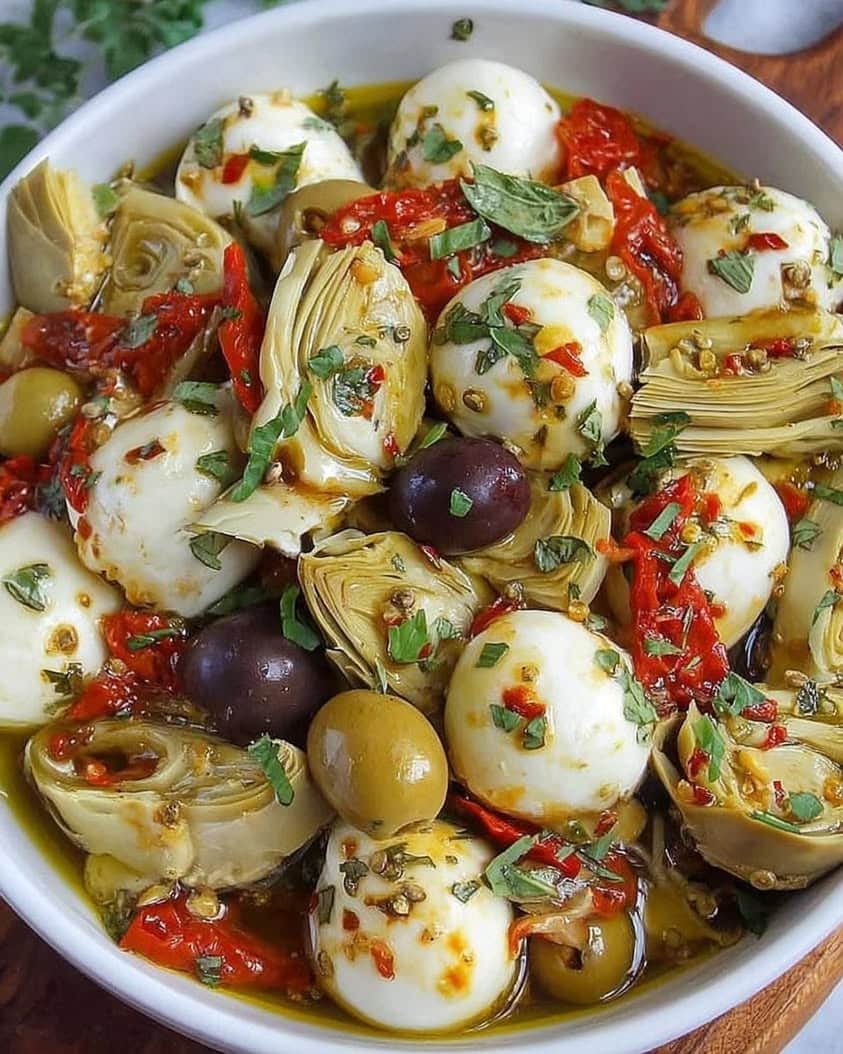
Zesty Marinated Mozzarella Balls with Artichokes and Olives: A Vibrant Antipasto for Any Occasion
Imagine opening your refrigerator to find a jar of pure sunshine. That is exactly what this Zesty Marinated Mozzarella Balls with Artichokes and Olives recipe delivers. This vibrant, no-cook appetizer is a celebration of Mediterranean flavors, combining creamy cheese, tangy artichokes, and briny olives in a fragrant herb-infused oil. Consequently, it is the perfect solution for effortless entertaining or a flavorful addition to your weekly meal prep.
The beauty of this marinated mozzarella balls recipe lies in its simplicity and adaptability. You simply combine high-quality ingredients and let time work its magic. As the components mingle, the mozzarella pearls become infused with garlic, herbs, and citrus, transforming from simple cheese into a complex, savory treat. Ultimately, this dish is as much a pleasure to look at as it is to eat, with its colorful mix of green artichokes, black olives, and white cheese suspended in golden oil.
Furthermore, this antipasto is incredibly versatile. Serve it straight from the jar with crusty bread for a stunning starter, or use it to elevate salads, pasta dishes, and sandwiches. The marinated mozzarella balls with artichokes and olives also make a thoughtful homemade gift. Regardless of how you use it, this recipe promises a burst of flavor that will transport your taste buds straight to the Italian coast.
Quick Recipe Highlights
- Flavor Profile: This dish offers a harmonious balance of creamy, tangy, and briny notes. The rich mozzarella mellows the sharpness of the artichokes, while the olives provide a salty depth. Meanwhile, the garlic and herb oil ties everything together with aromatic warmth.
- Texture: You will enjoy a delightful contrast between the soft, yielding mozzarella balls and the firmer, meaty texture of the artichoke hearts. The olives add a pleasant bite, creating a satisfying mouthfeel that is far from monotonous.
- Aroma: As soon as you open the container, the scent of fresh garlic, fragrant oregano, and bright lemon zest will fill the air. This aromatic bouquet is inviting and unmistakably Mediterranean, signaling the fresh flavors within.
- Visual Appeal: The presentation is rustic and beautiful. The white bocconcini, green artichokes, and dark olives create a striking color palette in the clear, herb-speckled oil. It looks both homemade and professionally crafted.
- Skill Level Needed: Absolutely no cooking skills are required. This is a beginner-friendly recipe that relies on assembly and patience. The only real skill is using a good knife to mince garlic and zest a lemon.
- Special Equipment: You only need a sharp knife, a cutting board, a citrus zester or grater, a mixing bowl, and a clean, airtight jar or container for storage. A glass jar is ideal for showcasing the colorful layers.
Recipe Overview
- Difficulty Level: We classify this marinated mozzarella balls recipe as “Easy” because it involves zero cooking techniques. The process is purely about assembly and measuring. There is no risk of overcooking, and the steps are straightforward enough for anyone to follow successfully on their first try.
- Category: This dish falls squarely into the appetizer or antipasto category. It is a classic starter for an Italian-inspired meal. Additionally, it functions wonderfully as part of a grazing board, a picnic item, or a flavorful condiment to enhance other dishes like grilled chicken or salads.
- Cuisine: The recipe is rooted in Italian culinary tradition, specifically the practice of preserving and flavoring foods in oil. Antipasti like this are staples in Southern Italy. The use of oregano, garlic, and olive oil is quintessentially Mediterranean, celebrating simple, high-quality ingredients.
- Cost: This is a very cost-effective appetizer, especially when compared to buying a similar pre-made product at a gourmet store. The main costs are the mozzarella pearls and marinated artichokes. By making it yourself, you control the quality and quantity, often at a fraction of the price.
- Season: This Zesty Marinated Mozzarella Balls with Artichokes and Olives is perfect for spring and summer entertaining. Its bright, fresh flavors complement al fresco dining. However, it is truly a year-round recipe, bringing a taste of sunshine to holiday parties and winter gatherings alike.
- Occasion: It is ideal for casual get-togethers, potlucks, holiday appetizer spreads, or as a make-ahead snack. Because it improves with time, it takes the stress out of last-minute party prep. It also makes an impressive edible gift during the holiday season.
Why You’ll Love This Recipe
First and foremost, the taste and texture are utterly irresistible. Each component brings something unique to the table. The mozzarella balls become little flavor bombs, absorbing the garlicky, herby oil. The artichokes offer a tangy counterpoint, and the olives provide that essential salty punch. Together, they create a symphony in your mouth that is both refreshing and satisfying. You will find yourself reaching for just one more bite, again and again, especially when paired with a piece of warm, crusty bread to soak up the exquisite marinade.
From a convenience standpoint, this recipe is a true lifesaver. There is no cooking involved, which means no heating up the kitchen. You can assemble the entire dish in about fifteen minutes. The real magic happens in the refrigerator while you do other things. This make-ahead nature makes it the ultimate stress-free appetizer for hosting. Simply pull it from the fridge and serve when your guests arrive, presenting a dish that tastes like you spent hours crafting it.
Nutritionally, this marinated mozzarella balls recipe offers some definite advantages. Olive oil is a source of healthy monounsaturated fats. Mozzarella provides protein and calcium. Artichokes are rich in fiber and antioxidants. Of course, this is an appetizer meant to be enjoyed in moderation, but it is made from real, whole-food ingredients without any artificial preservatives or additives. You know exactly what is going into your body.
The social and entertaining value of this dish is incredibly high. It encourages sharing and conversation, placed in the center of the table with a basket of bread. Its vibrant appearance immediately makes a party feel more special and considered. Guests are always impressed by homemade marinated items, and this one is a guaranteed crowd-pleaser. It caters to a variety of tastes and is a safe option for many dietary preferences when served alongside other items.
Finally, it is remarkably cost-effective and accessible. The ingredients are easy to find in any standard grocery store. By making a large batch yourself, you save significantly compared to buying a small jar at a specialty shop. This accessibility means you can enjoy gourmet flavors anytime you want, without the gourmet price tag. It democratizes delicious food, proving that impressive dishes do not require complicated techniques or rare ingredients.
Historical Background and Cultural Significance
The tradition of preserving foods in oil, known as “sott’olio” in Italian, has deep roots in Mediterranean culinary history. Before modern refrigeration, this method was essential for extending the shelf life of seasonal vegetables, cheeses, and meats. Farmers and home cooks would pack their harvests in jars covered with olive oil, creating a barrier against air and spoilage. Consequently, dishes like our Zesty Marinated Mozzarella Balls with Artichokes and Olives are direct descendants of these practical, flavorful preservation techniques. They represent a beautiful intersection of necessity and taste.
Within Italian culture, antipasto holds a place of honor. Translating to “before the meal,” it is designed to stimulate the appetite and set the tone for the courses to come. A spread of marinated vegetables, cheeses, and cured meats is a classic start to a festive gathering. This particular combination reflects the “cucina povera” or “poor kitchen” philosophy, which creatively uses humble, readily available ingredients. Artichokes and olives are abundant in regions like Sicily and Puglia, while fresh cheese is a staple, making this a logical and delicious pairing born from local resources.
The evolution of this recipe mirrors the globalization of Italian cuisine. While the core concept is ancient, the specific use of small mozzarella balls, or “bocconcini,” is a more modern convenience. Originally, larger pieces of cheese or fresh curds might have been used. The addition of lemon zest and dried oregano speaks to the flavor profiles of Southern Italy. As Italian immigrants brought their food traditions abroad, these recipes adapted to new ingredients and tastes, leading to the familiar, beloved versions we enjoy today in homes and restaurants worldwide.
Regional variations of this concept are plentiful. In Northern Italy, you might find mushrooms or truffles preserved in oil. Coastal areas add anchovies or tuna. The specific herbs can vary from oregano to rosemary to thyme based on local preference. Some versions include spicy chili flakes for heat, while others use sweet roasted peppers for a different flavor profile. Our recipe with artichokes and olives is a classic, widely loved version that captures the essential spirit of Italian antipasto: simple, communal, and bursting with the flavors of the sun-drenched Mediterranean.
Ingredient Deep Dive
Mozzarella Balls (Bocconcini): Fresh mozzarella, originating in Southern Italy, is a pasta filata cheese, meaning it is stretched and kneaded in hot water. This process gives it its characteristic soft, moist texture. Bocconcini are simply small, bite-sized balls of this cheese. Nutritionally, they are a good source of protein and calcium. When selecting them, look for pearls packed in water or whey for the freshest taste and texture. Avoid any that look dry or discolored. For storage before marinating, keep them refrigerated in their liquid. If you cannot find pearls, you can substitute with a larger ball of fresh mozzarella cut into one-inch cubes.
Marinated Artichoke Hearts: Artichokes have been cultivated in the Mediterranean for millennia, prized by ancient Romans and Greeks. The part we eat is the immature flower bud. Marinated artichoke hearts are typically cooked and then preserved in an oil and vinegar brine with herbs. They offer fiber, vitamin C, and folate. When buying them for this recipe, choose jarred artichokes marinated in oil rather than canned in water for better flavor and texture. You can use quartered or whole hearts. After opening, store any leftovers in their brine in the refrigerator. For a substitute, try roasted red peppers or sun-dried tomatoes for a different tangy element.
Kalamata Olives: These dark purple, almond-shaped olives hail from Greece, specifically the region of Messenia. They are known for their rich, fruity, and slightly wine-like flavor. They are typically cured in brine or vinegar. Kalamatas contain healthy monounsaturated fats and antioxidants. Purchase them pitted for convenience in this recipe. Look for olives stored in brine at the grocery store olive bar or in jars. Avoid canned black olives, as they have a much milder, metallic flavor that won’t provide the same depth. Store opened olives in their liquid in the fridge. Green Castelvetrano olives make a delicious, buttery alternative.
Extra Virgin Olive Oil: This is the cornerstone of the marinade and should be the best quality you can reasonably afford. Extra virgin means the oil is from the first cold pressing of the olives, retaining the most flavor and nutrients. It is rich in antioxidants and anti-inflammatory compounds. For a marinade where the oil’s flavor is front and center, a fruity, medium-intensity oil works beautifully. Store olive oil in a cool, dark place away from the stove to prevent it from becoming rancid. Do not substitute with refined vegetable oils, as they lack flavor. The oil not only flavors the ingredients but also acts as a preservative.
Fresh Garlic, Oregano, and Lemon Zest: This aromatic trifecta defines the marinade’s character. Garlic has been used for both culinary and medicinal purposes for thousands of years. Fresh garlic provides a pungent, spicy kick that mellows as it marinates. Dried oregano, a classic Mediterranean herb, offers earthy, slightly bitter notes. Always rub dried herbs between your palms before adding to release their essential oils. Lemon zest provides the crucial “zesty” element, adding bright, citrusy top notes without the acidity of juice, which could curdle the cheese. Together, they create a complex flavor base that infuses every component of the dish.
Common Mistakes to Avoid
- Using Low-Quality Olive Oil: The oil is the carrier of all flavor. A bland or rancid oil will result in a bland marinade. Always use a good extra virgin olive oil that you enjoy the taste of on its own.
- Adding Fresh Lemon Juice: This is a common error. The acidity in lemon juice can actually “cook” or curdle the delicate mozzarella over time, giving it a grainy texture. Use only the fragrant zest for that citrus pop.
- Not Draining Ingredients Properly: If the mozzarella pearls, artichokes, and olives are wet, they will dilute the marinade with water, preventing the oil from properly coating and flavoring them. Pat components dry with a paper towel if necessary.
- Skimping on Marinating Time: Impatience is the enemy of flavor here. Serving it immediately means the ingredients won’t have exchanged flavors. For best results, let it marinate for at least 4 hours, though overnight is ideal.
- Using Pre-Shredded or Low-Moisture Mozzarella: The dry, rubbery texture of pre-shredded cheese will not absorb the marinade well. You need the soft, porous texture of fresh mozzarella packed in water for the best result.
- Storing in a Reactive Container: Marinating in a metal bowl can impart off-flavors. Always use a glass jar, ceramic dish, or food-safe plastic container for both marinating and storage.
- Forgetting to Bring to Room Temperature Before Serving: Serving this dish ice-cold mutes all the flavors and hardens the olive oil. Let it sit out for 15-20 minutes before serving to allow the aromas to bloom and the oil to liquefy.
- Overcrowding the Jar: Packing the ingredients too tightly prevents the marinade from circulating. Ensure everything is submerged, but there should be enough oil to move freely between the pieces.
Essential Techniques
Zesting a Lemon: This technique is crucial for getting the bright citrus flavor without the curdling risk of juice. Use a fine microplane or the small holes on a box grater. Gently rub the lemon against the grater, rotating it to get only the outer, yellow zest. Avoid the bitter white pith underneath. The zest contains aromatic oils that will infuse the oil beautifully. For maximum flavor, zest the lemon directly over the bowl so the oils fall right into your mixture.
Creating an Infused Oil: While not heated, this is a cold-infusion process. The goal is to evenly distribute the garlic, herbs, and zest throughout the oil so it can permeate the other ingredients. Whisk these aromatics into the oil vigorously before combining with the cheese and vegetables. This step ensures every part of the marinade is flavorful, rather than having clumps of herb in one spot.
Proper Layering and Submersion: When combining everything in the jar, gently fold the ingredients to distribute them evenly. Then, press down lightly to remove air pockets. Finally, pour the infused oil over the top slowly, allowing it to seep down and cover everything completely. Ensuring all pieces are submerged is the key to even marinating and preservation. If something floats, use a clean spoon to press it down.
Pro Tips for Perfect Zesty Marinated Mozzarella Balls
For an extra flavor dimension, add a pinch of red pepper flakes to the oil mixture. This introduces a subtle heat that builds with each bite.
Always taste your olive oil before using it. If it does not taste good on a piece of bread, it will not taste good in your marinade.
Use a vegetable peeler to create long, elegant ribbons of lemon zest instead of grating it. These look beautiful in the finished jar.
If your dried oregano has been in the pantry for over a year, it has likely lost most of its potency. Consider replacing it with a fresh bottle for the best aroma.
For a more elegant presentation, skewer one mozzarella ball, one artichoke piece, and one olive on small appetizer picks before arranging them on a platter.
Add a fresh herb sprig like rosemary or thyme to the jar just before sealing. It looks gorgeous and adds another layer of fragrance.
If the oil solidifies in the fridge, do not worry. This is natural for extra virgin olive oil. Simply let the jar sit at room temperature until the oil clears again.
Reserve the leftover marinade oil after the ingredients are eaten. It is fantastic for drizzling on roasted vegetables, brushing on bread for garlic bread, or using as a base for salad dressing.
Variations and Adaptations
Regional Variations: For a Greek twist, swap the oregano for dried dill and use feta cheese cubes instead of mozzarella. A Spanish version could include manchego cheese, roasted piquillo peppers, and smoked paprika in the oil. In Provence, herbes de Provence and niçoise olives would be characteristic.
Seasonal Adaptations: In summer, add fresh cherry tomatoes and basil leaves. For fall, incorporate roasted cubes of butternut squash and sage. Winter calls for the addition of roasted garlic cloves and rosemary. Spring is perfect with fresh asparagus tips and tarragon.
Dietary Modifications: For a vegan version, use marinated tofu cubes or vegan mozzarella-style cheese. A dairy-free option can focus on marinating just the artichokes, olives, and other vegetables like mushrooms and cauliflower florets.
Flavor Variations: Introduce heat with sliced fresh chili or Calabrian chili paste. For sweetness, add strips of sun-dried tomatoes. Umami depth can come from a few chopped anchovy fillets mashed into the oil or a teaspoon of white miso paste.
Texture Modifications: For more crunch, add toasted pine nuts or slivered almonds just before serving. Include creamy elements like small balls of burrata or avocado chunks (add these at serving time as they don’t marinate well).
Presentation Alternatives: Instead of a jar, serve in a shallow dish drizzled with balsamic glaze. Layer the ingredients in individual small glasses for a catered look. Or, pile everything onto a large platter as part of an epic charcuterie and cheese board.
Serving and Presentation Guide
Plating Techniques: For a casual family-style presentation, simply place the open jar on a board or plate surrounded by bread. For a more composed look, use a slotted spoon to lift the marinated components out of the oil and arrange them in a shallow bowl or on a platter. Drizzle a little of the marinade oil over the top for gloss and flavor.
Garnishing Ideas: A final flourish makes the dish pop. Just before serving, sprinkle with flaky sea salt, freshly cracked black pepper, or a handful of chopped fresh parsley or basil. A light grating of lemon zest over the top refreshes the citrus notes. Edible flowers also make a stunning, elegant garnish for special occasions.
Traditional Accompaniments: Crusty bread is non-negotiable for soaking up the flavorful oil. Offer a sliced baguette, ciabatta, or focaccia. Grilled bread (bruschetta) provides a wonderful smoky contrast. Breadsticks and plain, sturdy crackers are also excellent vehicles.
Modern Serving Suggestions: Think beyond the bread bowl. Toss the marinated mozzarella balls and vegetables into a green salad for an instant main course. Use them as a topping for pizza after it comes out of the oven. Fold them into warm pasta, or use them to stuff chicken breasts or fish fillets before baking.
Temperature Considerations: As emphasized, never serve this straight from the fridge. The cold temperature numbs the taste buds and solidifies the oil. Allowing it to come to a cool room temperature for 15-20 minutes before serving is essential for the full flavor and aroma to be appreciated.
Portion Control Tips: As part of an appetizer spread, plan for about 1/3 to 1/2 cup per person. If serving as part of a larger antipasto platter with meats and other items, a smaller portion is sufficient. Remember, it is rich, so a little goes a long way in terms of satisfaction.
Wine and Beverage Pairing
Wine Pairings: The bright, acidic, and salty flavors of this dish call for wines with good acidity. A crisp Italian white like Pinot Grigio, Vermentino, or Greco di Tufo is a classic match. A dry Rosé from Provence also complements the herbal and briny notes beautifully. For red wine lovers, a light, low-tannin red like a Bardolino or a Frappato won’t overwhelm the delicate cheese.
Non-Alcoholic Alternatives: Sparkling water with a twist of lemon or lime cleanses the palate between bites. For a more crafted option, a virgin Mediterranean spritz with blood orange soda, a splash of herbal tonic, and fresh rosemary is delightful. Iced herbal tea, like lemon verbena or mint, also pairs well.
Coffee/Tea Pairings: While not a typical pairing for this appetizer, if serving as part of a larger brunch, a medium-roast coffee can work. The coffee’s bitterness can contrast the richness. A cup of mild green tea after the meal can be a refreshing, palate-cleansing finish.
Temperature Considerations: Serve white and rosé wines well chilled, around 45-50°F. Light reds should be served slightly cool, at about 55°F. Non-alcoholic sparkling drinks should be ice-cold to provide a refreshing counterpoint to the rich, oily marinade.
Serving Suggestions: Offer wine in stemless glasses for casual outdoor entertaining. For non-alcoholic options, use tall glasses with plenty of ice and attractive garnishes like citrus wheels or herb sprigs. Presentation of the drinks should match the effortless yet stylish vibe of the food itself.
Storage and Shelf Life
Storage Methods: Always store your marinated mozzarella balls in an airtight container in the refrigerator. A glass jar with a tight-sealing lid is ideal. Ensure all ingredients are completely submerged under the oil layer to create an anaerobic environment that slows spoilage.
Temperature Requirements: Consistent refrigeration at or below 40°F is mandatory. Never leave the dish at room temperature for more than two hours total (including serving time) to prevent bacterial growth. The oil will solidify when cold, which is normal and not a sign of spoilage.
Container Recommendations: Glass is best as it is non-reactive and doesn’t absorb odors. Canning jars, swing-top bottles, or any clean glass food storage container with a lid work perfectly. Avoid using reactive metals like aluminum or uncoated iron.
Signs of Spoilage: Before eating, always check for off-odors (sour, rancid), mold growth (fuzzy spots on the surface), or significant changes in texture (the mozzarella becoming slimy or disintegrating). If the oil smells off or the ingredients look questionable, err on the side of caution and discard the batch.
Reheating Instructions: This dish is not meant to be reheated. It is served cold or at room temperature. Applying heat will melt the cheese and ruin the texture of the other components.
Freezing Guidelines: Freezing is not recommended. The freezing process will cause the mozzarella to become grainy and watery when thawed, and the vegetables will turn mushy. The oil may also separate. This recipe is best enjoyed fresh within its refrigerated shelf life.
Make Ahead Strategies
Prep Timeline: This recipe is the ultimate make-ahead dish. You can assemble it completely up to 4 days in advance. In fact, making it at least one day ahead is encouraged, as the flavors deepen and meld beautifully over 24-48 hours.
Storage Between Steps: There are no intermediate steps; it is a single assembly process. However, you can prep the components ahead. You can mince the garlic, zest the lemon, and measure the dried herbs a day before. Store the garlic in a small covered container in the fridge and keep the zest and herbs at room temperature.
Quality Impact Assessment: Marinating improves the dish significantly for the first 2-3 days. The mozzarella soaks up the flavors, and the garlic mellows. After 4 days, the textures begin to soften slightly, but it remains delicious. The olives and artichokes hold up very well over time.
Assembly Tips: For the best make-ahead result, assemble the recipe in its final serving container. This minimizes transfer and keeps everything neatly packed. Gently invert or shake the jar once a day to redistribute the marinade if the oil has settled.
Reheating Guidelines: As noted, no reheating is needed. Simply pull the jar from the refrigerator and let it temper on the counter for 15-20 minutes before serving to allow the oil to liquefy and the flavors to wake up.
Fresh Element Additions: If you want to add a pop of freshness just before serving, stir in some chopped fresh basil, parsley, or arugula. You can also add a final sprinkle of flaky salt or a fresh grating of lemon zest at the last minute to brighten the pre-made dish.
Scaling Instructions
Halving the Recipe: Halving is straightforward for smaller gatherings. Simply divide all ingredient quantities by two. Use a smaller jar or container. The marinating time remains the same. This is perfect for a romantic appetizer for two or a small family snack.
Doubling or Tripling: This recipe scales up beautifully for parties. Double or triple all ingredients proportionally. You may need to use multiple jars or one very large container. Ensure you have enough oil to completely cover all the ingredients in the larger vessel. Stir or shake gently to distribute the marinade evenly throughout the batch.
Equipment Adjustments: When scaling up, your main consideration is having a container large enough to hold everything while still allowing the oil to circulate. A large glass bowl covered tightly with plastic wrap can work for a big batch, though jars are more picturesque for serving.
Timing Modifications: The prep time will increase slightly with larger batches due to more measuring and chopping, but the process remains the same. The marinating time required for full flavor infusion does not change with scale.
Storage Considerations: A larger batch will last the same amount of time in the fridge—about 4-5 days. Ensure your refrigerator has enough space for a large container. If giving as gifts, divide the finished product into smaller, sterilized jars soon after assembling.
Nutritional Deep Dive
Macro Breakdown: This dish is primarily a source of fats from the olive oil, cheese, and olives. The mozzarella provides protein, while the artichokes contribute a small amount of carbohydrates and fiber. It is not a low-calorie food due to the energy-dense oil and cheese, so portion awareness is key when enjoying it as part of a balanced diet.
Micronutrient Analysis: You will benefit from calcium and phosphorus from the cheese. Olive oil provides vitamin E and K. Artichokes offer folate, vitamin C, and magnesium. Kalamata olives contain iron and copper. The garlic contributes trace amounts of manganese and vitamin B6.
Health Benefits: The monounsaturated fats in olive oil are heart-healthy. The antioxidants in artichokes, olives, and olive oil combat oxidative stress. Garlic has been studied for its potential immune-boosting and cardiovascular benefits. This dish is made from whole, minimally processed ingredients.
Dietary Considerations: This recipe is naturally gluten-free and low-carb. It is vegetarian but not vegan due to the cheese. Those on a low-sodium diet should be mindful, as the olives, artichokes, and cheese contain salt. The fat content may be a consideration for specific medical diets.
Portion Analysis: A reasonable serving is about 1/3 to 1/2 cup of the marinated mixture, which includes a few mozzarella balls, several pieces of artichoke and olive, and a tablespoon or two of the oil. This portion provides a satisfying taste without excessive calorie intake.
Weight Management Tips: To enjoy this as part of a weight-conscious plan, focus on using it as a flavorful accent rather than the main event. Load your plate with a large green salad first, then add a small spoonful of this mixture on top for bursts of flavor. Use the oil sparingly.
Dietary Adaptations
Gluten-free: This recipe is naturally gluten-free as written. Just ensure that any bread or crackers served alongside are certified gluten-free. Always check labels on pre-packaged artichokes, as some brines may contain gluten, though this is rare.
Dairy-free: Omit the mozzarella balls. Increase the quantity of artichokes and olives, and add other marinated vegetables like roasted peppers, mushrooms, or cauliflower florets. The flavorful oil will beautifully coat the vegetables for a delicious dairy-free antipasto.
Vegan: Follow the dairy-free adaptation above. For a “cheesy” element, you can add marinated, firm tofu cubes or a store-bought vegan mozzarella alternative. Be aware that some vegan cheeses may not marinate or hold their texture as well as tofu.
Low-carb & Keto: This recipe is excellent for low-carb and keto diets. The net carbs are very low, coming primarily from the artichokes. You can slightly reduce the artichoke amount if you are strictly limiting carbs. Enjoy it with keto-friendly bread alternatives or simply with a fork.
Paleo: For a Paleo version, omit the cheese (dairy is excluded). Focus on the olives, artichokes, and other Paleo-friendly vegetables like sun-dried tomatoes, roasted carrots, or zucchini marinated in the herb and garlic oil. Serve with vegetable crudités for dipping.
Low-FODMAP: Garlic is high in FODMAPs. Substitute the fresh garlic with a garlic-infused olive oil (where the garlic is strained out). Use only the green part of spring onions (scallions) for a subtle onion flavor. Ensure the artichoke hearts are well-drained, as they can be moderate in FODMAPs in larger servings.
Troubleshooting Guide
Texture Issues (Mushy Mozzarella): If the mozzarella becomes unpleasantly soft or mushy, it may have been marinated too long (beyond 5 days) or exposed to an acidic element like lemon juice. Unfortunately, this cannot be reversed. Next time, ensure you use only zest and adhere to the recommended storage time.
Flavor Balance (Too Bland): If the dish lacks flavor, the oil quality was likely poor, or you did not marinate it long enough. As a quick fix, you can drain some of the existing oil, create a new, more potent infusion with fresh garlic and herbs, and pour it over the ingredients. Let it sit for a few more hours.
Temperature Problems (Solidified Oil): This is not a problem but a natural characteristic of quality extra virgin olive oil in the cold. Simply let the jar sit on the counter until the oil becomes clear and liquid again, about 15-20 minutes. Do not microwave it, as this can heat the cheese unevenly.
Equipment Challenges: If you don’t have a jar, any non-reactive, airtight container works. A glass food storage container, a ceramic bowl tightly covered with plastic wrap, or even a clean, large mason jar are all suitable alternatives. The key is an airtight seal to keep flavors in and contaminants out.
Ingredient Substitutions: Ran out of something? No problem. Use green olives instead of Kalamata. Substitute marinated mushrooms for artichokes. If you have no lemon, use a small strip of orange zest for a different citrus note. The recipe is very forgiving, so use what you have on hand.
Timing Concerns: If you need to serve it but only marinated for an hour, all is not lost. The flavors will be milder but still present. To boost them quickly, let the jar sit in a bowl of warm (not hot) water for 10 minutes to slightly warm the oil and accelerate infusion, then give it a good shake.
Recipe Success Stories
Community feedback on this Zesty Marinated Mozzarella Balls recipe has been overwhelmingly positive. Many home cooks report it becoming their “secret weapon” for potlucks, with guests constantly asking for the recipe. One reader mentioned bringing it to a neighborhood party where it was the first appetizer to disappear Print
Marinated Mozzarella Balls, Artichokes, and Olives
- Total Time: 2 hours 15 minutes
- Yield: 4
Description
A vibrant and flavorful antipasto featuring creamy mozzarella balls, tender artichokes, and briny olives, all marinated in a zesty herb-infused olive oil.
Ingredients
- 1 cup small mozzarella balls (ciliegine)
- 1 cup marinated artichoke hearts, drained and halved
- 1 cup mixed olives (such as Kalamata and Castelvetrano)
- 1/2 cup extra virgin olive oil
- 2 cloves garlic, thinly sliced
- 1 teaspoon dried oregano
- 1/2 teaspoon red pepper flakes
- 1 tablespoon fresh lemon juice
- 2 tablespoons chopped fresh parsley
- Salt and black pepper to taste
Instructions
- In a large bowl, combine the mozzarella balls, artichoke hearts, and olives.
- In a separate small bowl, whisk together the olive oil, garlic, oregano, red pepper flakes, lemon juice, parsley, salt, and pepper.
- Pour the marinade over the mozzarella mixture and gently toss to coat everything evenly.
- Cover the bowl and refrigerate for at least 2 hours, or overnight for best flavor, stirring occasionally.
- Serve chilled or at room temperature as an appetizer with crusty bread or as part of a charcuterie board.
Notes
You can customize the seasonings to taste.
- Prep Time: 15 minutes
- Cook Time: 0 minutes
- Method: Appetizer
- Cuisine: Italian