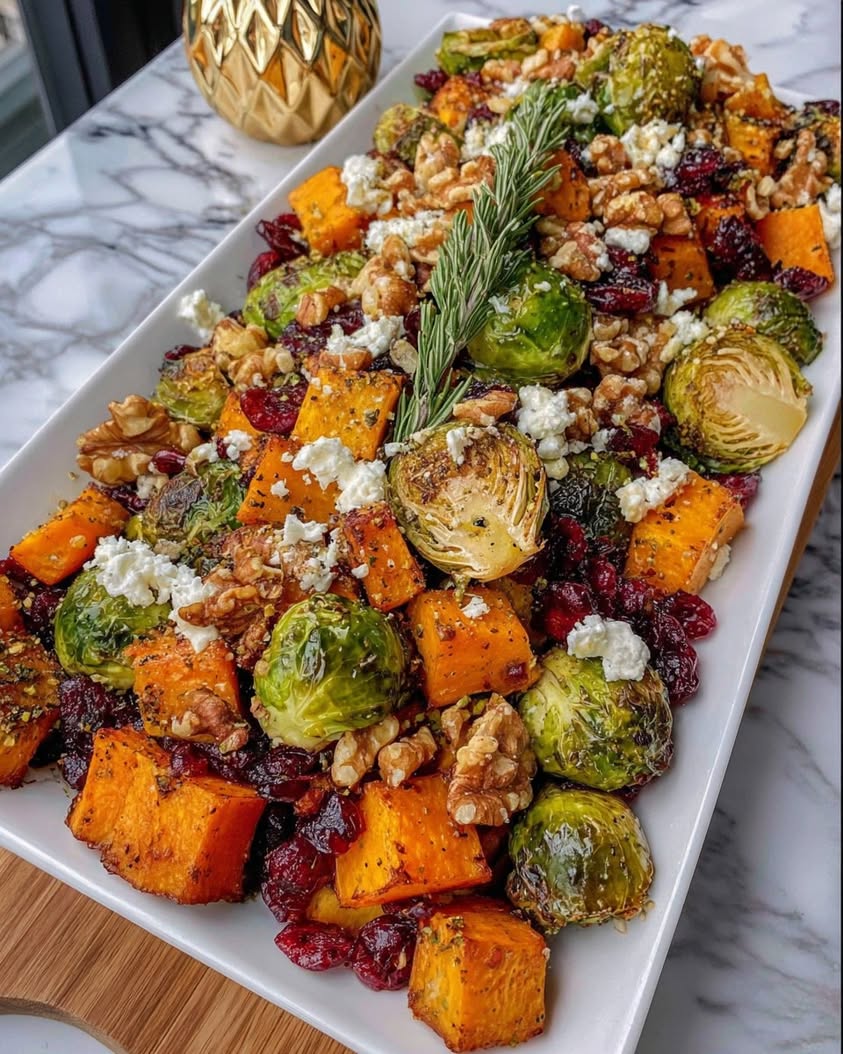
Maple-Balsamic Roasted Winter Vegetables with Cranberries, Walnuts & Feta: A Vibrant Sheet Pan Feast
This Maple-Balsamic Roasted Winter Vegetables with Cranberries, Walnuts & Feta recipe transforms humble seasonal produce into a stunning, flavor-packed centerpiece. Imagine a sheet pan brimming with caramelized sweet potatoes, tender Brussels sprouts, and earthy beets, all glazed with a sticky-sweet maple-balsamic dressing. The final flourish of tart cranberries, crunchy walnuts, and creamy feta creates a symphony of textures and tastes that will make you forget all about the cold weather outside. This dish is not just a side; it’s a vibrant celebration of winter’s bounty, perfect for a cozy family dinner or an impressive holiday spread.
Moreover, the beauty of this Maple-Balsamic Roasted Winter Vegetables with Cranberries, Walnuts & Feta lies in its effortless elegance. You simply chop, toss, and roast, allowing the oven to do most of the work. Consequently, you are free to relax or prepare the rest of your meal. The resulting medley is a feast for the senses, with deep, roasted flavors balanced by bright, fresh accents. Ultimately, this recipe proves that healthy, vegetable-forward food can be the most exciting part of the meal.
Furthermore, this recipe is incredibly versatile. You can serve it warm as a hearty vegetarian main course over quinoa or farro. Alternatively, it shines as a spectacular side dish alongside roasted chicken or a holiday ham. The combination of sweet, savory, tangy, and crunchy elements ensures every bite is interesting and satisfying. This Maple-Balsamic Roasted Winter Vegetables with Cranberries, Walnuts & Feta is guaranteed to become a cold-weather staple in your kitchen.
Quick Recipe Highlights
- Flavor Profile: This dish masterfully balances sweet, savory, tangy, and earthy notes. The maple syrup caramelizes the vegetables, creating a deep sweetness that is perfectly cut by the sharp balsamic vinegar. Meanwhile, the salty feta and bitter walnuts add sophisticated layers that prevent the dish from being cloying.
- Texture: You get a wonderful contrast in every forkful. The roasted vegetables become tender with crisp, caramelized edges. Subsequently, the walnuts provide a satisfying crunch, and the dried cranberries offer a pleasant chew. Finally, the crumbled feta adds a soft, creamy element that brings it all together.
- Aroma: As the Maple-Balsamic Roasted Winter Vegetables cook, your kitchen will fill with the warm, comforting scent of roasting root vegetables and sweet maple. The balsamic vinegar reduces into a slightly tangy, caramel-like fragrance that is utterly irresistible.
- Visual Appeal: This sheet pan is a rainbow on a plate. You see deep orange sweet potatoes, ruby-red beets, emerald-green Brussels sprouts, and vibrant red cranberries. The snowy white feta and toasted brown walnuts scattered on top create a picture-perfect presentation that looks as good as it tastes.
- Skill Level Needed: This is a beginner-friendly recipe that requires only basic knife skills for chopping. The technique is straightforward: coat vegetables in oil and seasoning, then roast. Therefore, even novice cooks can achieve restaurant-quality results with minimal effort.
- Special Equipment: You only need a large sheet pan, a sharp knife, and a cutting board. A good pair of oven mitts is helpful for handling the hot pan. Parchment paper or a silicone baking mat is recommended for easy cleanup and to prevent sticking.
Recipe Overview
- Difficulty Level: We rate this Maple-Balsamic Roasted Winter Vegetables recipe as “Easy” because it involves fundamental cooking techniques like chopping and roasting. There is no fussy sauce-making or precise timing required beyond checking for doneness. The process is forgiving, and the vegetables can roast a few minutes longer if needed without ruining the dish.
- Category: This dish beautifully straddles multiple categories. It is a hearty vegetarian main dish, a stunning holiday side, and a fantastic meal prep component. You can also serve it at room temperature in a salad. Its flexibility makes it a valuable addition to any cook’s repertoire.
- Cuisine: While not tied to one specific tradition, this recipe draws inspiration from modern American and Mediterranean cuisines. The use of olive oil, balsamic vinegar, and feta cheese nods to Mediterranean flavors. Meanwhile, the maple syrup and cranberries are classic North American ingredients, creating a delicious fusion.
- Cost: This is a very cost-effective recipe, especially in the winter when root vegetables are at their peak and most affordable. Ingredients like sweet potatoes, carrots, and onions are pantry staples. The walnuts, feta, and cranberries are used as accents, so a little goes a long way, keeping the overall price per serving low.
- Season: This recipe is designed for the colder months, from late fall through early spring. During this time, winter squash and root vegetables are at their sweetest and most flavorful after a frost. Using seasonal produce ensures the best taste and value for your money.
- Occasion: It is perfect for a busy weeknight dinner due to its simplicity. Simultaneously, it is elegant enough for Thanksgiving, Christmas, or a festive dinner party. You can easily double or triple the recipe to feed a crowd, making it a reliable choice for entertaining.
Why You’ll Love This Recipe
First and foremost, the taste and texture appeal of this Maple-Balsamic Roasted Winter Vegetables with Cranberries, Walnuts & Feta is off the charts. Each component brings something unique to the table. The roasted vegetables become deeply caramelized and sweet, while the balsamic vinegar adds a tangy punch that cuts through the richness. Then, you get bursts of tartness from the cranberries, a buttery crunch from the walnuts, and a salty creaminess from the feta. This combination creates a complex flavor profile that is far more exciting than a simple tray of roasted veggies. Every bite is a delightful adventure.
Secondly, the convenience factor is a major win. This is a true one-pan wonder. You do all your prep on a cutting board, toss everything on a single sheet pan, and let the oven work its magic. Consequently, cleanup is a breeze, especially if you use parchment paper. There is no need to babysit a stovetop or juggle multiple pots and pans. This makes it an ideal recipe for busy nights, meal prep Sundays, or stressful holiday cooking when oven space and time are at a premium.
From a nutritional standpoint, this dish is a powerhouse. Winter vegetables like sweet potatoes and Brussels sprouts are loaded with vitamins A, C, and K, as well as fiber and antioxidants. Olive oil provides heart-healthy fats, and walnuts add omega-3 fatty acids. Using maple syrup as a natural sweetener is a better alternative to refined sugars. Altogether, you have a meal that is as nourishing as it is delicious, supporting your health during the winter season.
Furthermore, this Maple-Balsamic Roasted Winter Vegetables recipe has incredible social and entertaining value. It is a visually stunning dish that looks like you spent hours on it, yet it requires minimal hands-on effort. Guests will be impressed by the beautiful colors and sophisticated flavor combinations. It is also a fantastic option for mixed-diet gatherings, as it is naturally vegetarian and can be easily adapted to be vegan or gluten-free. It serves as a reliable, crowd-pleasing centerpiece.
Finally, it is remarkably cost-effective and accessible. The base of the dish is made from inexpensive, readily available root vegetables. The more costly accent ingredients—walnuts, feta, cranberries—are used sparingly, so they stretch far. You can also adapt the recipe based on what is on sale or in your fridge. For instance, swap butternut squash for sweet potato or use pecans instead of walnuts. This flexibility makes it a budget-friendly staple that never gets boring.
Historical Background and Cultural Significance
The practice of roasting vegetables is ancient, dating back to when humans first mastered fire. However, the specific combination of maple and balsamic with winter vegetables is a relatively modern innovation that reflects contemporary culinary trends. This Maple-Balsamic Roasted Winter Vegetables recipe sits at the intersection of several food traditions. The use of maple syrup is deeply rooted in North American, particularly Canadian and Northeastern U.S., indigenous and colonial history. Native Americans were the first to tap maple trees and boil down sap, a knowledge they shared with European settlers.
Balsamic vinegar, by contrast, hails from the Modena and Reggio Emilia regions of Italy, with a history stretching back to the Middle Ages. Originally a prized medicinal elixir and a luxury item for nobility, it evolved into a cornerstone of Italian cuisine. The fusion of these two distinct condiments—New World maple and Old World balsamic—exemplifies the global nature of modern cooking. It showcases how contemporary chefs and home cooks creatively blend flavors from different cultures to create something new and exciting.
The evolution of the sheet pan dinner itself is a cultural phenomenon tied to changing lifestyles. As home cooks sought faster, simpler, and cleaner ways to get dinner on the table, the one-pan meal surged in popularity. The “sheet pan supper” became a genre of recipe celebrated for its efficiency. This Maple-Balsamic Roasted Winter Vegetables dish is a direct product of that movement, offering maximum flavor with minimal cleanup. It represents a shift towards practical, healthy, and visually appealing home cooking in the 21st century.
Regional variations of roasted vegetable dishes are endless. In the American South, you might find roasted sweet potatoes with pecans and a bourbon glaze. In the Mediterranean, roasted vegetables are typically dressed with olive oil, lemon, and herbs like oregano and thyme. This recipe borrows from these traditions but creates its own identity. The addition of cranberries nods to New England’s fall harvest, while the feta adds a Greek island touch. Ultimately, this dish is a celebration of seasonal, fusion cooking that respects its ingredients’ origins while combining them in a novel, delicious way.
Ingredient Deep Dive
Sweet Potatoes: Cultivated for thousands of years in Central and South America, sweet potatoes were a staple for ancient civilizations. They are not related to white potatoes but are instead part of the morning glory family. Nutritionally, they are a superstar, packed with beta-carotene (which converts to vitamin A), vitamin C, manganese, and fiber. Their natural sweetness intensifies beautifully when roasted. Choose firm sweet potatoes with smooth, unblemished skin. Store them in a cool, dark, well-ventilated place—not the refrigerator, as cold temperatures can alter their texture and flavor.
Brussels Sprouts: These miniature cabbages have a history dating back to ancient Rome, but they were perfected in Brussels, Belgium, during the 16th century, hence their name. They are part of the nutrient-dense cruciferous vegetable family, offering vitamins K and C, folate, and antioxidants like kaempferol. Select small, firm, bright green sprouts with tightly packed leaves. Avoid yellowing or loose leaves. For the best texture and to minimize bitterness, roast them until they are caramelized and tender-crisp. Store them unwashed in an open bag in your refrigerator’s crisper drawer.
Beets: Beets have been consumed since prehistoric times, with both the root and greens being used. They were initially cultivated for their leafy tops; the root itself wasn’t widely consumed until Roman times. They are an excellent source of folate, manganese, potassium, and dietary nitrates, which can support blood flow and exercise performance. When selecting beets, look for smooth, firm globes with vibrant greens still attached if possible—a sign of freshness. To prevent staining your hands, you can peel them after roasting when the skin slips off easily. Store beets separately from their greens in the fridge.
Pure Maple Syrup: This is the boiled-down sap of the sugar maple tree, a process invented by Indigenous peoples of North America. It takes about 40 gallons of sap to make one gallon of syrup. Unlike pancake syrup, which is corn syrup with flavoring, pure maple syrup contains minerals like manganese, zinc, and antioxidants. Always opt for “pure maple syrup” for the best flavor and health benefits. Grade A Amber Color is ideal for this recipe, offering a robust maple flavor. Store it in the pantry before opening and in the refrigerator after opening to prevent mold.
Balsamic Vinegar: Authentic Traditional Balsamic Vinegar (Aceto Balsamico Tradizionale) is a protected, aged product from Italy, but for cooking, a good-quality “Balsamic Vinegar of Modena” is perfect. It adds a complex sweet-tart flavor. The acetic acid in the vinegar helps balance the sweetness of the maple and vegetables. A thicker, aged balsamic will coat the vegetables more richly. Avoid “balsamic glaze” for the roasting step, as it may burn. Store balsamic vinegar in a cool, dark place. It does not need refrigeration.
Feta Cheese: Feta is a brined curd cheese with a history dating back to ancient Greece. By EU law, only cheese made in Greece from sheep’s milk (or a sheep/goat blend) can be called “feta.” It is crumbly, tangy, and salty, providing a perfect creamy contrast to the sweet vegetables. Feta is a good source of calcium and protein. For the best flavor, buy feta packed in brine. If you need a dairy-free version, a firm tofu crumbled with salt and a splash of lemon juice or a vegan feta alternative can work well.
Common Mistakes to Avoid
- Overcrowding the Pan: This is the most common error. If the vegetables are piled on top of each other, they will steam instead of roast. Consequently, you will get soggy, pale vegetables instead of caramelized, crisp-edged ones. Always use a large enough pan and spread the veggies in a single layer, even if it means using two pans.
- Not Preheating the Oven: Putting vegetables into a cold oven drastically changes the cooking process. They will start to steam and release water before the roasting begins, leading to a mushy texture. Always ensure your oven is fully preheated to the specified temperature before adding your sheet pan.
- Using the Wrong Oil: Extra virgin olive oil has a low smoke point and can burn at high roasting temperatures, creating a bitter taste. For roasting, use a light olive oil, avocado oil, or another high-heat oil. You can finish the dish with a drizzle of extra virgin olive oil for flavor after cooking.
- Cutting Vegetables Inconsistently: If your vegetable pieces are different sizes, they will cook unevenly. Smaller pieces will burn before larger pieces are tender. Take the time to cut everything into roughly uniform, bite-sized chunks for even roasting and perfect texture throughout.
- Adding Delicate Ingredients Too Early: Ingredients like walnuts, cranberries, and feta should be added after roasting. If you put them on the sheet pan at the start, the nuts will burn, the cranberries will become bitter and hard, and the feta will melt into a greasy mess. Add these accents at the end for perfect texture and flavor.
- Neglecting to Season in Layers: Do not just rely on the maple-balsamic glaze for seasoning. Always toss the raw vegetables with salt and pepper before roasting. This foundational seasoning penetrates the vegetables as they cook, ensuring they are flavorful from the inside out, not just coated on the surface.
- Not Tossing Halfway Through: Roasting without turning or tossing the vegetables results in uneven cooking. The bottoms may burn while the tops remain pale. About halfway through the cooking time, use a spatula to flip and stir the vegetables. This promotes all-over caramelization and prevents sticking.
- Skipping the Parchment Paper: While not strictly a mistake for the flavor, skipping parchment paper or a silicone mat makes cleanup difficult. The maple-balsamic glaze can create a stubborn, sticky mess on your sheet pan. Lining the pan is a simple step that saves significant scrubbing time later.
Essential Techniques
Uniform Chopping: This technique is critical for even cooking. The goal is to cut all vegetables to a similar size and shape, typically 1-inch cubes or halves for Brussels sprouts. Consistent pieces ensure they roast at the same rate, so you do not end up with some burnt and some undercooked veggies. Use a sharp chef’s knife for control and safety. A visual cue for success is a sheet pan where the vegetable pieces look like a cohesive mix, not a jumble of random shapes.
High-Heat Roasting: Roasting at a high temperature (400°F to 425°F) is essential for caramelization. This process, called the Maillard reaction, occurs when the natural sugars in the vegetables brown and develop complex, savory-sweet flavors. The high heat also drives off moisture quickly, creating a desirable crisp exterior. The common pitfall is roasting at too low a temperature, which steams the vegetables. You will know it is working when you hear a gentle sizzle from the oven and smell the rich, toasty aromas.
Creating the Glaze: The maple-balsamic glaze is more than just a dressing; it is a flavor catalyst. Whisking the oil, maple syrup, and balsamic vinegar together emulsifies them, creating a cohesive mixture that coats every vegetable evenly. The acid in the vinegar also helps tenderize the vegetables slightly. The key is to toss the vegetables thoroughly so each piece gets a glossy coat. A common mistake is not whisking vigorously enough, leading to a separated glaze that does not distribute well.
Pro Tips for Perfect Maple-Balsamic Roasted Winter Vegetables
First, for extra-crispy vegetables, make sure they are completely dry after washing. Pat them thoroughly with a clean kitchen towel before tossing them with oil. Any excess water will create steam and hinder browning.
Second, preheat your sheet pan in the oven for 5-10 minutes before adding the vegetables. A hot pan gives the veggies an instant sear, promoting better caramelization from the moment they hit the surface.
Third, use two sheet pans if your single pan looks crowded. It is better to roast in batches or on multiple racks (rotating pans halfway) than to compromise on texture by overcrowding.
Fourth, reserve a little of the maple-balsamic mixture to drizzle over the finished dish. This adds a fresh, bright hit of flavor that complements the deeper, cooked notes from the glaze that caramelized in the oven.
Fifth, let the roasted vegetables rest for 5 minutes on the pan after taking them out of the oven. This allows them to reabsorb some of their own steam and firm up slightly, making them less likely to turn to mush when tossed with the add-ins.
Sixth, toast the walnuts separately in a dry skillet for a few minutes before adding them. This simple step deepens their nutty flavor and makes them extra crunchy, adding another dimension of texture to the final dish.
Variations and Adaptations
Regional Variations: You can easily tailor this dish to different culinary traditions. For a Mediterranean twist, omit the maple and use lemon juice and oregano in the glaze, finishing with kalamata olives and fresh herbs. For a Southern-inspired version, use pecans instead of walnuts and a touch of smoked paprika in the oil.
Seasonal Adaptations: While designed for winter, this recipe is adaptable. In spring, use asparagus, radishes, and new potatoes. In summer, try zucchini, bell peppers, and eggplant. In fall, swap in different squash like acorn or delicata. The maple-balsamic base works beautifully with almost any vegetable combination.
Dietary Modifications: For a vegan version, simply omit the feta or use a plant-based alternative. To make it gluten-free, ensure your maple syrup and balsamic vinegar are certified gluten-free (most are). For a nut-free dish, substitute the walnuts with roasted pumpkin seeds (pepitas) for a similar crunch.
Flavor Variations: Experiment with different infused oils or vinegars. A rosemary-infused olive oil or a pomegranate balsamic vinegar can create a whole new profile. You can also add spices to the oil mixture, such as cumin, coriander, or a pinch of cayenne for heat.
Texture Modifications: If you prefer softer vegetables, cover the sheet pan with foil for the first half of cooking, then uncover to caramelize. For maximum crispiness, use the convection roast setting on your oven if available, which circulates hot air for more even browning.
Presentation Alternatives: Instead of mixing everything on the sheet pan, arrange the roasted vegetables neatly on a large platter. Then, artfully scatter the cranberries, walnuts, and feta over the top. Drizzle with any remaining glaze and garnish with fresh thyme or parsley sprigs for a restaurant-worthy presentation.
Serving and Presentation Guide
Plating Techniques: For a family-style meal, serve the Maple-Balsamic Roasted Winter Vegetables directly from the sheet pan for a rustic, inviting look. For individual plates, use a slotted spoon or tongs to create a generous mound in the center of each plate, ensuring you get a bit of every component in each serving.
Garnishing Ideas: Fresh herbs are the perfect final touch. Chopped fresh parsley, thyme, or rosemary add color and a burst of fresh aroma. A final drizzle of high-quality extra virgin olive oil or a reduced balsamic glaze in a zigzag pattern elevates the visual appeal instantly.
Traditional Accompaniments: This dish pairs classically with simply roasted or grilled proteins like chicken, pork chops, or salmon. It is also a fantastic side for holiday mains like turkey or ham. For a vegetarian feast, serve it alongside a hearty grain salad or a creamy lentil dish.
Modern Serving Suggestions: Transform leftovers into a fantastic warm grain bowl. Serve the vegetables over a bed of quinoa, farro, or couscous, and add a dollop of hummus or tzatziki. You can also chop the leftovers smaller and fold them into scrambled eggs or an omelet for a luxurious breakfast.
Temperature Considerations: This dish is most delicious served warm, when the feta is just slightly softened. However, it is also excellent at room temperature, making it ideal for potlucks or buffet tables. Avoid serving it cold from the refrigerator, as the fats in the oil and cheese will solidify.
Portion Control Tips: As a main dish, plan for about 1.5 to 2 cups per person. As a side dish, ¾ to 1 cup is sufficient. Remember that the walnuts and feta are calorie-dense, so a little goes a long way in terms of flavor and satisfaction.
Wine and Beverage Pairing
Wine Pairings: The sweet and savory profile of these Maple-Balsamic Roasted Winter Vegetables calls for a wine with good acidity and some fruitiness. A dry Riesling or Gewürztraminer complements the sweetness without overpowering it. For red wine lovers, a light-bodied Pinot Noir with its earthy notes pairs beautifully with the roasted beets and mushrooms. If serving with a rich meat, a medium-bodied Syrah/Shiraz can stand up to the bold flavors.
Non-Alcoholic Alternatives: Sparkling apple cider is a festive and perfect match, mirroring the autumn flavors. For a more sophisticated option, try a tart cranberry spritzer made with unsweetened cranberry juice, sparkling water, and a twist of orange. A warm mug of spiced apple tea also harmonizes wonderfully with the dish’s cozy, wintery vibe.
Coffee/Tea Pairings: After a meal featuring this dish, a cup of coffee with notes of maple or nutty undertones would be a delightful echo. Alternatively, a herbal tea like cinnamon-orange or a rooibos tea with its natural sweetness would provide a warm, soothing finish without competing with the meal’s flavors.
Temperature Considerations: Serve white wines and sparkling beverages well-chilled. Red wines should be served slightly below room temperature, around 60-65°F. Non-alcoholic spritzers should be icy cold to provide a refreshing contrast to the warm, roasted vegetables.
Serving Suggestions: Always offer water on the table to cleanse the palate between bites, especially given the dish’s bold sweet and tangy elements. If serving wine, pour a small taste first to allow guests to see how it interacts with the food before filling the glass.
Storage and Shelf Life
Storage Methods: Allow the Maple-Balsamic Roasted Winter Vegetables to cool completely to room temperature before storing. Transfer them to an airtight container, but store the walnuts and feta separately if possible to maintain their texture. The vegetable base can be refrigerated for up to 4 days.
Temperature Requirements: This dish must be stored in the refrigerator at 40°F or below. Do not leave it at room temperature for more than two hours after cooking, as the moist, starchy vegetables can become a breeding ground for bacteria.
Container Recommendations: Glass containers with tight-sealing lids are ideal as they do not absorb odors or stains from the balsamic vinegar. If using plastic, ensure it is BPA-free and designed for food storage. For the walnuts, a small zip-top bag or jar is perfect.
Signs of Spoilage: Discard the vegetables if you notice an off or sour smell, significant sliminess on the surface, or any visible mold. The vegetables will soften over time, but they should not develop a fermented odor or mushy, disintegrated texture.
Reheating Instructions: For best results, reheat in a 350°F oven or toaster oven for 10-15 minutes until warmed through. This helps re-crisp the edges. You can also use a skillet over medium heat. Avoid the microwave if possible, as it will make the vegetables very soft and steamy.
Freezing Guidelines: Freezing is not recommended for this specific recipe. The high water content in the vegetables causes them to become very mushy and watery upon thawing. The texture of the walnuts and feta will also suffer greatly. It is best enjoyed fresh or refrigerated for a few days.
Make Ahead Strategies
Prep Timeline: You can prep this dish up to 24 hours in advance. Wash and chop all the vegetables, then store them in a large zip-top bag or container in the refrigerator. Whisk the maple-balsamic glaze and store it separately in a jar. Toast the walnuts and store them at room temperature.
Storage Between Steps: Keep the chopped vegetables chilled until you are ready to roast. The acid in the balsamic vinegar can start to “cook” or discolor the vegetables if tossed too far in advance, so only combine the veggies and glaze right before they go into the oven.
Quality Impact Assessment: Pre-chopping vegetables may cause minimal moisture loss but will not significantly affect the final roasted product. The flavor will be identical. The main advantage is saving 15 minutes of active prep time right before dinner, making weeknight execution seamless.
Assembly Tips: On the day of cooking, simply pull your pre-chopped veggies from the fridge, toss them with the pre-made glaze and oil on the sheet pan, season, and roast. Add the stored walnuts, cranberries, and fresh feta after roasting as per the original instructions.
Reheating Guidelines: If you fully cook the vegetable base ahead, reheat as instructed above. Add the fresh garnishes (walnuts, cranberries, feta) only after reheating to preserve their distinct textures and prevent the feta from melting into a greasy film.
Fresh Element Additions: The cranberries, walnuts, and feta are non-negotiable fresh additions. Do not add them before storing the cooked vegetables. Their contrasting textures and bright flavors are designed to lift the dish and would be lost if subjected to storage and reheating.
Scaling Instructions
Halving the Recipe: To make a smaller batch, simply divide all ingredient quantities by two. Use a standard quarter sheet pan or a smaller baking dish. The cook time may be reduced by 5-10 minutes, so start checking for doneness at the 25-minute mark. All other techniques remain the same.
Doubling or Tripling: For a crowd, multiply the ingredients accordingly. The key is to use multiple sheet pans. Do not pile double the veggies on one pan. Roast on two racks in the oven, swapping their positions and rotating the pans front-to-back halfway through cooking to ensure even browning.
Equipment Adjustments: When scaling up, you may need additional mixing bowls for tossing the vegetables. Invest in a set of half-sheet pans (18″x13″), which are the standard professional size and provide ample surface area. Ensure your oven can accommodate multiple pans with enough space for air circulation.
Timing Modifications: When using multiple pans, the total cook time may increase slightly due to the added volume of food in the oven lowering the ambient temperature. Add an extra 5-10 minutes and rely on the visual cue of tender, caramelized vegetables rather than the timer alone.
Storage Considerations: Scaling up often means more leftovers. Plan your storage containers in advance. Remember that a large bulk of hot food will take a long time to cool, which is a food safety risk. Spread the roasted vegetables out on a clean sheet pan or in shallow containers to cool quickly before refrigerating.
Nutritional Deep Dive
Macro Breakdown: This dish provides a balanced mix of macronutrients. The complex carbohydrates from the vegetables offer sustained energy. The olive oil and walnuts contribute healthy monounsaturated and polyunsaturated fats, including omega-3s. The feta cheese adds a modest amount of protein and fat. The maple syrup contributes simple sugars, but its impact is balanced by the fiber in the vegetables.
Micronutrient Analysis: This Maple-Balsamic Roasted Winter Vegetables recipe is a micronutrient powerhouse. Sweet potatoes and carrots are rich in beta-carotene (vitamin A). Brussels sprouts provide vitamins C and K. Beets offer folate and manganese. Walnuts add vitamin E and magnesium. Together, they support immune function, vision, bone health, and inflammation reduction.
Health Benefits: The high fiber content promotes digestive health and satiety. The antioxidants in the colorful vegetables combat oxidative stress. The healthy fats support heart and brain health. The nitrate content in beets may help lower blood pressure and improve exercise performance. It is a truly nourishing, whole-foods meal.
Dietary Considerations: This dish is naturally vegetarian and gluten-free. It can be adapted for vegan (omit feta) and dairy-free diets. For those watching sugars, the maple syrup can be reduced slightly, though the vegetables provide most of the sweetness. The dish is not suitable for a strict keto diet due to the high carb content from the root vegetables.
Portion Analysis: A standard serving (about 1.5 cups as a main) is satisfying and nutrient-dense without being excessively high in calories. The combination of fiber, fat, and protein helps regulate blood sugar and keeps you full for hours. It is a perfect example of volume eating—a large, satisfying portion for a reasonable caloric cost.
Weight Management Tips: To make this dish even more weight-conscious, you can reduce the oil by 1 tablespoon and spray the vegetables lightly instead. You can also slightly reduce the amount of maple syrup and walnuts. Increasing the proportion of non-starchy vegetables like Brussels sprouts and adding more onions can bulk up the volume without adding many calories.
Dietary Adaptations
Gluten-Free: This recipe is naturally gluten-free as written. Simply double-check that your maple syrup and balsamic vinegar are certified gluten-free, as cross-contamination is rare but possible. All other core ingredients—vegetables, oil, nuts, cheese—are inherently gluten-free.
Dairy-Free/Vegan: Omit the feta cheese. For a creamy, tangy element, make a drizzle from blended cashews, lemon juice, nutritional yeast, and water. Alternatively, sprinkle with nutritional yeast or a store-bought vegan feta. Ensure the maple syrup is vegan (most are, but some processing methods may use animal-derived filters).
Low-Carb/Keto: This recipe is not ideal for strict keto due to the sweet potatoes, carrots, and maple syrup. For a keto version, use low-carb vegetables like cauliflower, broccoli, radishes, and zucchini. Replace the maple syrup with a sugar-free maple-flavored syrup or a small amount of monk fruit sweetener, and increase the healthy fat with more olive oil or avocado.
Paleo: Omit the feta cheese, as dairy is not Paleo. Ensure your maple syrup is 100% pure. All other ingredients—vegetables, olive oil, nuts, vinegar—are Paleo-compliant. You could add diced avocado or olives after roasting for added fat and flavor in place of the cheese.
Low-FODMAP: This requires careful modification. Omit the sweet potato and use carrots only in a ½ cup serving per person. Replace the onion with the green tops of green onions (scallions). Use maple syrup in moderation (a 1 tbsp serving is low FODMAP). Omit the walnuts if sensitive. Feta cheese is low FODMAP in 1 oz servings.
Nut-Free: Replace the walnuts with seeds. Toasted pumpkin seeds (pep Print
Maple-Balsamic Roasted Winter Vegetables with Cranberries, Walnuts & Feta
- Total Time: 45 minutes
- Yield: 4
Description
A vibrant, sweet-and-savory sheet pan dish featuring roasted winter vegetables tossed in a maple-balsamic glaze, topped with tangy cranberries, crunchy walnuts, and creamy feta.
Ingredients
- 1 large sweet potato, peeled and cubed
- 2 medium carrots, sliced into 1-inch pieces
- 1 small butternut squash, peeled and cubed
- 1 red onion, cut into wedges
- 3 tablespoons olive oil
- 2 tablespoons maple syrup
- 1 tablespoon balsamic vinegar
- 1 teaspoon dried thyme
- 1/2 teaspoon garlic powder
- Salt and black pepper to taste
- 1/3 cup dried cranberries
- 1/4 cup chopped walnuts
- 1/4 cup crumbled feta cheese
- Fresh parsley for garnish (optional)
Instructions
- Preheat oven to 400°F (200°C). Line a large baking sheet with parchment paper.
- In a large bowl, combine sweet potato, carrots, butternut squash, and red onion. Drizzle with olive oil, maple syrup, balsamic vinegar, thyme, garlic powder, salt, and pepper. Toss until evenly coated.
- Spread vegetables in a single layer on the prepared baking sheet. Roast for 25-30 minutes, stirring halfway, until tender and caramelized.
- Remove from oven and sprinkle with dried cranberries and walnuts. Return to oven for 5 minutes to warm the toppings.
- Transfer to a serving dish, top with crumbled feta and fresh parsley if using. Serve warm.
Notes
You can customize the seasonings to taste.
- Prep Time: 15 minutes
- Cook Time: 30 minutes
- Method: Main
- Cuisine: American