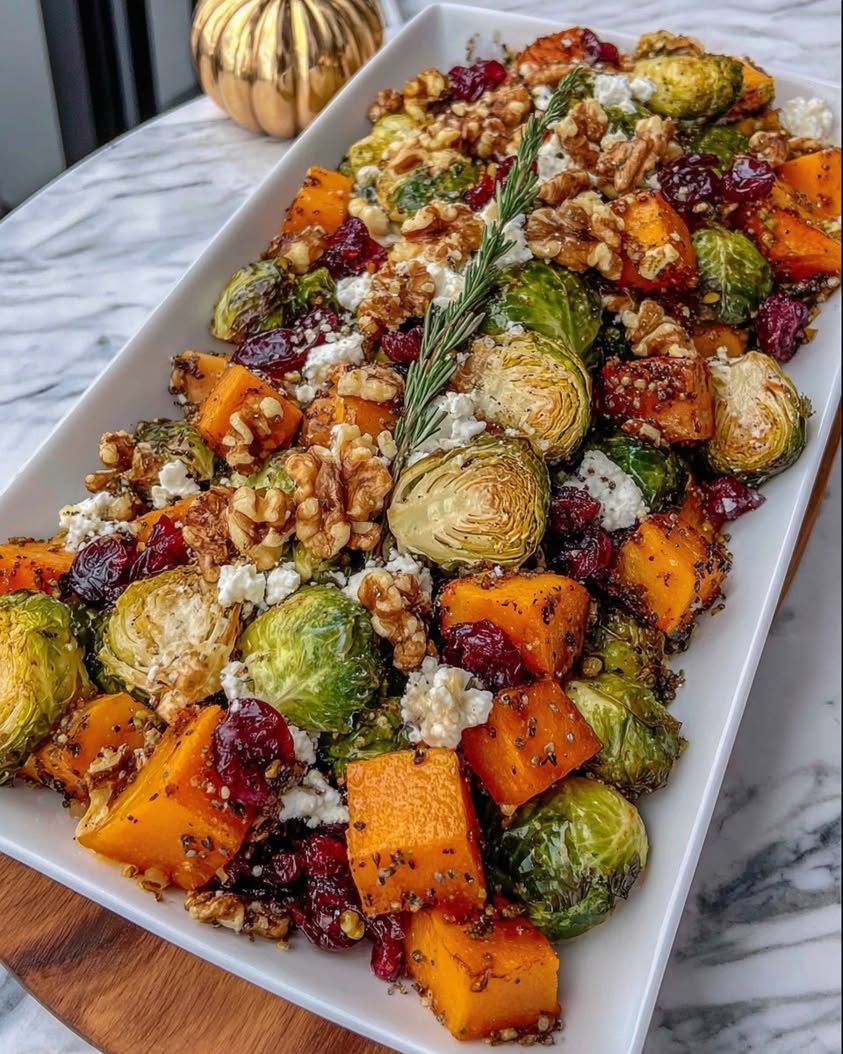
Maple-Balsamic Roasted Winter Vegetables with Cranberries, Walnuts & Feta: A Vibrant Holiday Side Dish
This Maple-Balsamic Roasted Winter Vegetables with Cranberries, Walnuts & Feta recipe is the ultimate celebration of the season. Imagine a sheet pan brimming with colorful, caramelized root vegetables, all tossed in a sweet and tangy glaze. The result is a stunning side dish that brings warmth and elegance to any table. Furthermore, it transforms humble ingredients into a symphony of flavors and textures that will impress your guests. Ultimately, this dish proves that healthy eating can be incredibly delicious and visually spectacular.
Creating this Maple-Balsamic Roasted Winter Vegetables with Cranberries, Walnuts & Feta is remarkably simple. The hands-on time is minimal, because the oven does most of the work. You simply chop, toss, and roast. Meanwhile, the magic happens as the vegetables caramelize and the maple-balsamic glaze reduces into a sticky, flavorful coating. The final additions of tart cranberries, crunchy walnuts, and creamy feta create a perfect balance. Consequently, every bite delivers a delightful contrast that keeps you coming back for more.
This recipe is incredibly versatile. Serve it as a show-stopping holiday side, a hearty vegetarian main course over grains, or even as a flavorful meal prep component. The combination of sweet, savory, tangy, and crunchy elements is universally appealing. Moreover, it makes your kitchen smell absolutely heavenly. The aroma of roasting vegetables with maple and balsamic will draw everyone to the dinner table. In short, this dish is a guaranteed crowd-pleaser that looks as good as it tastes.
Quick Recipe Highlights
- Flavor Profile: This dish masterfully balances sweet maple syrup with tangy balsamic vinegar, creating a complex glaze. Earthy roasted vegetables provide a savory base, while salty feta and tart cranberries add bright, contrasting notes. The overall taste is sophisticated yet comforting, with each component playing a crucial role.
- Texture: You get a wonderful variety of textures in every forkful. The roasted vegetables become tender with crispy, caramelized edges. Meanwhile, the walnuts add a satisfying crunch, and the dried cranberries offer a pleasant chew. Finally, the crumbled feta provides creamy, soft pockets that melt in your mouth.
- Aroma: As it roasts, the kitchen fills with an irresistible scent. The sweet, woody aroma of maple syrup blends with the sharp, fruity tang of balsamic vinegar. Additionally, the earthy scent of roasting root vegetables and the toasty smell of walnuts create a warm, inviting fragrance that signals a delicious meal is ready.
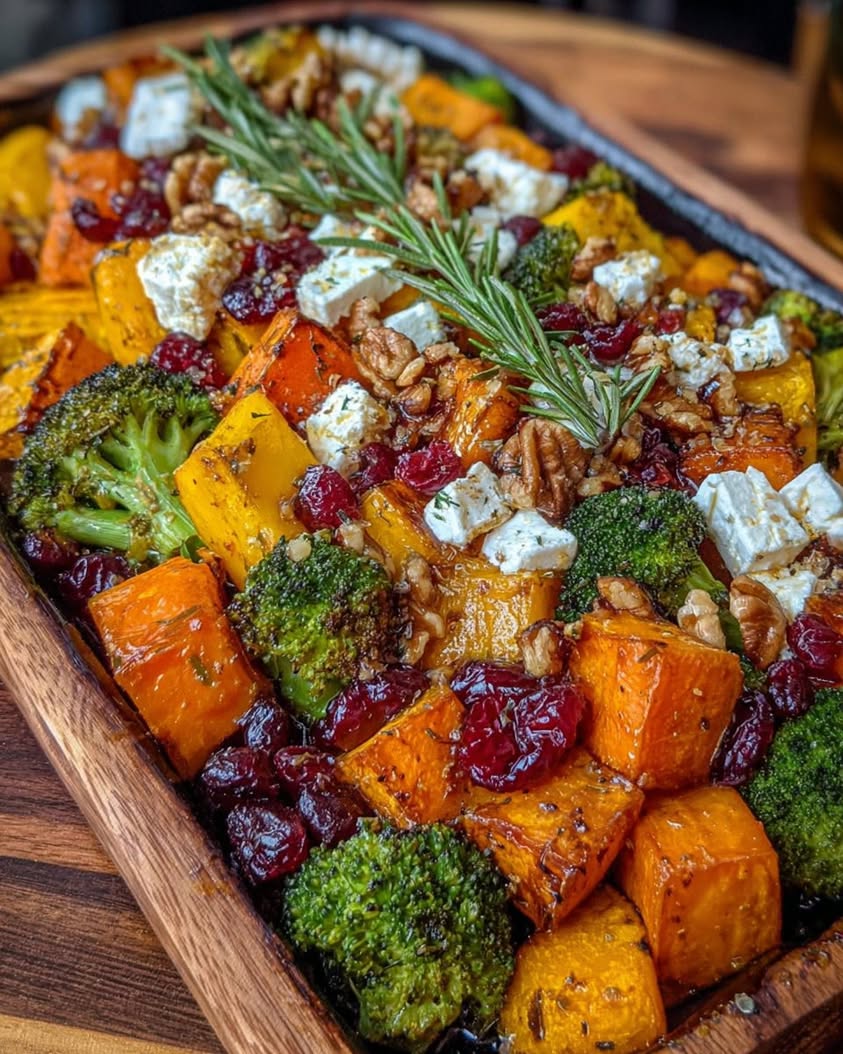
- Visual Appeal: This dish is a feast for the eyes with its vibrant color palette. Deep orange sweet potatoes, purple-red onions, and green Brussels sprouts create a beautiful mosaic. The ruby red cranberries, golden walnuts, and white feta crumbles add the perfect finishing touches, making it ideal for holiday spreads.
- Skill Level Needed: This is a beginner-friendly recipe requiring only basic knife skills for chopping. The technique is straightforward: coat vegetables in oil and glaze, then roast on a single pan. No fancy equipment or advanced culinary knowledge is necessary, making it accessible for cooks of all levels.
- Special Equipment: You only need a large, rimmed baking sheet (a half-sheet pan is ideal) to ensure even roasting and prevent spills. Parchment paper or a silicone baking mat is highly recommended for easy cleanup. Other than that, a good chef’s knife, cutting board, and a large mixing bowl are all you require.
Recipe Overview
- Difficulty Level: We rate this Maple-Balsamic Roasted Winter Vegetables recipe as “Easy” because it involves simple, sequential steps. The most complex task is evenly chopping the vegetables, which is a fundamental skill. There is no intricate timing or delicate techniques involved. The oven handles the cooking, so the risk of error is very low, guaranteeing great results for everyone.
- Category: This versatile dish fits multiple categories beautifully. Primarily, it serves as an exceptional vegetable side dish for holiday meals or Sunday dinners. Alternatively, it can be a satisfying vegetarian main when served atop quinoa, farro, or couscous. It also works wonderfully as part of a festive buffet or potluck spread.
- Cuisine: While not tied to one specific tradition, this recipe draws inspiration from modern American and Mediterranean cuisines. The use of olive oil, balsamic vinegar, and feta cheese nods to Mediterranean flavors. Meanwhile, the maple syrup and cranberries are staples of North American fall and winter cooking, creating a delicious fusion.
- Cost: This is a cost-effective recipe, especially when using in-season winter vegetables which are typically affordable. Sweet potatoes, carrots, and onions are budget-friendly staples. Ingredients like maple syrup, walnuts, and feta are pantry investments that stretch across many recipes. Overall, you create a restaurant-quality dish for a fraction of the price.
- Season: This recipe is perfect for late fall through winter, which is peak season for its core ingredients. Root vegetables and Brussels sprouts are at their sweetest and most abundant during the colder months. The warm, hearty nature of the dish is ideal for comforting meals when the weather turns chilly.
- Occasion: It’s a flawless choice for Thanksgiving, Christmas, or any festive holiday gathering where a stunning side is required. Beyond holidays, it elevates a simple weeknight dinner or a special weekend meal. It’s also an excellent option for potlucks because it travels well and appeals to a wide range of tastes.
Why You’ll Love This Recipe
First and foremost, the taste and texture combination is absolutely irresistible. The natural sugars in the vegetables caramelize in the oven, creating a deep, savory sweetness. Then, the maple-balsamic glaze adds a glossy, sticky coating that’s both sweet and tangy. The pop of tartness from the cranberries cuts through the richness, while the walnuts provide essential crunch. Finally, the creamy, salty feta brings everything together, ensuring each bite is a perfect harmony of flavors and mouthfeels. You will find it incredibly hard to stop eating this vibrant mix straight from the pan.
Secondly, the convenience factor is a major win. This Maple-Balsamic Roasted Winter Vegetables recipe is a quintessential sheet pan meal, meaning minimal cleanup. You do your chopping, toss everything on one pan, and let the oven work its magic. This frees you up to prepare the rest of your meal or simply relax. Moreover, the recipe is forgiving; you can swap vegetables based on what you have. The hands-off cooking time makes it ideal for entertaining, as you can socialize with guests instead of being stuck at the stove.
From a nutritional standpoint, this dish is a powerhouse. Winter vegetables like sweet potatoes and Brussels sprouts are loaded with vitamins A, C, and K, as well as fiber. Walnuts contribute healthy omega-3 fats and protein. Using olive oil as the fat base adds heart-healthy monounsaturated fats. This combination makes for a side dish that is not only delicious but also genuinely nourishing. You can feel good about serving it to your family, knowing it’s packed with nutrients that support overall health.
For social gatherings, this recipe offers tremendous value. Its stunning visual appeal makes it a centerpiece on any buffet table, guaranteed to receive compliments. The flavors are sophisticated enough for a dinner party yet familiar enough for picky eaters. Because it’s vegetarian, it accommodates many dietary preferences when planning a menu. It also pairs beautifully with a wide variety of mains, from roasted turkey to baked ham to a simple lentil loaf. It’s a reliable dish that will become a requested favorite at your gatherings.
Finally, it is remarkably cost-effective and accessible. The ingredients are common and can be found at any grocery store. Buying root vegetables in bulk during the winter season is very economical. You can easily scale the recipe up or down depending on your guest count without complicating the process. Compared to pre-made or restaurant sides, making this Maple-Balsamic Roasted Winter Vegetables at home saves a significant amount of money. You create a gourmet-quality dish with simple, wholesome ingredients, proving that eating well doesn’t have to be expensive.
Historical Background and Cultural Significance
The practice of roasting vegetables is ancient, rooted in cooking over open fires. However, the specific combination in this Maple-Balsamic Roasted Winter Vegetables recipe is a modern invention of fusion cuisine. It reflects a contemporary culinary trend that prioritizes bold flavor combinations, vibrant colors, and healthy ingredients. The use of maple syrup as a glaze connects to North American indigenous traditions of tapping maple trees, while balsamic vinegar hails from the Modena region of Italy. This dish is a beautiful example of how global ingredients can come together to create something new and exciting on the dinner table.
Culturally, this dish speaks to the modern emphasis on “eating the rainbow” for health and the celebration of seasonal produce. The focus on winter vegetables honors the tradition of root cellaring and preserving the harvest to eat through colder months. In many cultures, hearty roasted vegetable dishes are central to winter and holiday feasts, providing sustenance and comfort. The addition of festive elements like cranberries and walnuts directly ties it to North American holiday traditions, particularly Thanksgiving and Christmas. It represents a shift towards vegetable-centric meals that are both celebratory and nourishing.
The recipe has evolved from simple roasted roots to a more complex medley. Initially, roasted vegetables might have been seasoned with just salt, pepper, and perhaps herbs. The introduction of sweet glazes like maple syrup and the acidity of balsamic vinegar is a more recent development in home cooking, influenced by restaurant trends. The final flourish of adding nuts, dried fruit, and cheese after roasting is a technique that maximizes texture contrast. This evolution shows how home cooks have embraced layering flavors and textures to elevate everyday ingredients into special occasion fare.
Regional variations of this concept are endless. In the Mediterranean, similar roasted vegetable dishes might use honey instead of maple and top with olives and goat cheese. In the Middle East, pomegranate molasses could replace the balsamic, with pistachios and mint as garnishes. The core concept—roasting seasonal vegetables with a sweet-tart glaze and crunchy, creamy toppings—is adaptable worldwide. This adaptability is a testament to the universal appeal of combining sweet, savory, and textural elements. Our Maple-Balsamic Roasted Winter Vegetables with Cranberries, Walnuts & Feta sits comfortably within this global tradition of celebrating local produce with global flavors.
Ingredient Deep Dive
Sweet Potatoes: A staple in the Americas for thousands of years, sweet potatoes are nutritionally dense. They are an excellent source of beta-carotene (which converts to vitamin A), vitamin C, manganese, and fiber. Their natural sweetness intensifies when roasted. Choose firm potatoes with smooth, unblemished skin. Store them in a cool, dark, well-ventilated place—not the refrigerator. For a variation, try using cubed butternut squash or even parsnips.
Brussels Sprouts: These miniature cabbages have gained immense popularity after decades of being misunderstood. They are rich in vitamins K and C, folate, and antioxidants. When roasted, their outer leaves become deliciously crispy while the interiors turn tender and sweet. Select small, firm, bright green sprouts. Store them in a plastic bag in the refrigerator’s crisper drawer. Broccoli or cauliflower florets can be used as a substitute if needed.
Red Onion: Onions have been cultivated since ancient times and are foundational to countless cuisines. Red onions add a pop of color and a milder, slightly sweet flavor when roasted. They contain quercetin, a flavonoid with antioxidant properties. Choose onions that are firm with dry, papery skins and no soft spots. Store in a cool, dark, dry place. Yellow onion can be substituted, though it has a stronger flavor.
Maple Syrup: This natural sweetener is made from the sap of sugar maple trees, a process pioneered by Indigenous peoples of North America. It contains minerals like manganese and zinc and has a lower glycemic index than refined sugar. Always opt for pure maple syrup, not pancake syrup which is corn syrup-based. It adds a distinct, woody sweetness. Store it in the pantry or refrigerator after opening. For a vegan alternative, agave nectar can work, though the flavor profile will change.
Balsamic Vinegar: Authentic Traditional Balsamic Vinegar is a protected product from Modena, Italy, aged for years in wooden barrels. The supermarket variety is a more affordable, younger vinegar perfect for glazes. It adds a complex acidity that balances the maple’s sweetness. Look for “Aceto Balsamico di Modena” on the label. Store in a cool, dark cupboard. A substitute could be a mix of red wine vinegar and a small amount of sugar or honey.
Dried Cranberries: These tart berries are a modern invention, created as a shelf-stable version of the fresh fruit. They add a chewy texture and a burst of tangy fruitiness. Be mindful that many dried cranberries are sweetened with added sugar. Look for unsweetened or fruit-juice-sweetened varieties if you prefer. Store them in an airtight container in your pantry. Dried cherries or chopped dried apricots make excellent alternatives.
Walnuts: One of the oldest tree foods, walnuts are prized for their brain-like shape and high omega-3 fatty acid content. They provide essential crunch and a rich, slightly bitter flavor that contrasts with the sweet vegetables. Toasting them enhances their flavor dramatically. Store walnuts in an airtight container in the refrigerator or freezer to prevent their oils from going rancid. Pecans or almonds can be used as a substitute.
Feta Cheese: This brined curd cheese has origins in Greece and is made from sheep’s milk or a sheep-goat milk blend. It adds a creamy, salty, tangy element that is irreplaceable in this dish. Feta is a good source of calcium and protein. For the best flavor and texture, buy feta in a block stored in brine. Store it in its brine in the refrigerator. For a dairy-free version, omit it or use a firm, salty vegan cheese alternative.
Common Mistakes to Avoid
- Crowding the Pan: Overfilling your sheet pan is the top mistake. If the vegetables are piled on top of each other, they will steam instead of roast. Consequently, you miss out on the essential caramelized, crispy edges. Always use a large enough pan and spread the vegetables in a single, even layer, possibly using two pans if necessary.
- Uneven Vegetable Sizes: Chopping your vegetables into different sizes leads to uneven cooking. Smaller pieces will burn before larger ones are tender. To ensure everything is done at the same time, take care to cut all vegetables into uniform, bite-sized pieces. This guarantees consistent texture and flavor throughout the dish.
- Neglecting to Preheat the Oven: Starting with a cold oven drastically changes the cooking process. The vegetables will start to steam as the oven slowly heats, resulting in a soggy texture. Always preheat your oven fully before adding the pan. This ensures the vegetables immediately begin to sear and caramelize upon entry.
- Skipping the Parchment Paper: While not a flavor mistake, skipping parchment paper or a silicone mat is a cleanup nightmare. The maple-balsamic glaze can caramelize and stick fiercely to the pan, creating a difficult scrubbing job. Lining your pan is a simple step that saves significant time and effort after dinner.
- Adding Delicate Toppings Too Early: Putting the walnuts, cranberries, and feta on before roasting is a critical error. The nuts will burn, the cranberries can become bitter, and the feta will melt into an unappealing mess. These ingredients are meant as fresh garnishes added after roasting to preserve their texture and flavor.
- Using Old or Weak Balsamic Vinegar: A flat, flavorless balsamic vinegar will not provide the necessary tangy punch to balance the maple syrup. Invest in a decent-quality balsamic vinegar labeled “Aceto Balsamico di Modena” for the best flavor. A good vinegar makes a noticeable difference in the depth of the glaze.
- Not Tossing Halfway Through: Failing to stir or toss the vegetables at the midway point leads to uneven browning. The pieces on the edge of the pan may burn while those in the center remain pale. A quick stir ensures all sides get exposure to the hot pan surface, promoting even caramelization.
- Underseasoning: Relying solely on the glaze for seasoning is not enough. Vegetables need a good foundation of salt and pepper before roasting. Season the vegetables generously with salt and black pepper when you toss them with oil. This builds layers of flavor from the inside out.
Essential Techniques
Uniform Chopping: Mastering uniform chopping is crucial for even cooking. Aim for 1-inch pieces for dense vegetables like sweet potatoes and carrots, and halve or quarter Brussels sprouts to a similar size. Consistent size ensures that every piece roasts at the same rate, preventing some from being undercooked while others burn. Use a sharp chef’s knife and take your time at this prep stage for the best results.
Dry Vegetable Surfaces: Before tossing with oil, ensure your chopped vegetables are as dry as possible. Pat them thoroughly with a clean kitchen towel or paper towels. Excess water on the surface will create steam in the oven, which inhibits the Maillard reaction (caramelization). Dry vegetables will achieve those desirable crispy, browned edges that are key to flavor and texture.
Creating the Glaze: The maple-balsamic glaze is a simple emulsion. Whisk the olive oil, maple syrup, and balsamic vinegar together vigorously until the mixture looks homogenous and slightly thickened. This ensures the oil doesn’t separate and that every vegetable piece gets an even coating of both sweetness and acidity. A good whisking integrates the flavors perfectly before they hit the heat.
High-Heat Roasting: Roasting at a high temperature (400°F or above) is non-negotiable. High heat quickly evaporates surface moisture and promotes browning and caramelization. It’s the difference between soft, steamed vegetables and flavorful, crispy-edged roasted vegetables. Trust the temperature and avoid the temptation to open the oven door frequently, as this causes heat loss and slows the process.
Pro Tips for Perfect Maple-Balsamic Roasted Winter Vegetables
First, toast your walnuts separately in a dry skillet for 3-5 minutes before adding them as a garnish. This deepens their nutty flavor and makes them extra crunchy, adding another layer of texture to the finished dish.
For maximum caramelization, give the vegetables space. If your sheet pan looks crowded, divide the mixture between two pans. Overcrowding leads to steaming, which is the enemy of crispy roasted edges.
Let the roasted vegetables rest for 5 minutes on the pan after taking them out of the oven. This allows the glaze to set slightly and makes them easier to transfer to a serving platter without falling apart.
Use flaky sea salt, like Maldon, for finishing instead of regular table salt. The delicate flakes provide little bursts of salinity that contrast beautifully with the sweet vegetables and creamy feta.
If you have time, let the chopped vegetables sit tossed in the glaze for 15-20 minutes before roasting. This allows them to absorb some of the flavors, resulting in a more deeply seasoned final product.
For a more complex flavor, add a teaspoon of Dijon mustard or a pinch of smoked paprika to the maple-balsamic glaze mixture before tossing it with the vegetables.
Always taste a vegetable piece straight from the oven before adding the final garnishes. This is your last chance to adjust seasoning with an extra pinch of salt or a drizzle of balsamic if needed.
Variations and Adaptations
Regional Variations: For a Mediterranean twist, substitute honey for maple syrup and use Kalamata olives and crumbled goat cheese instead of cranberries and feta. Add a sprinkle of dried oregano to the glaze. For a Middle Eastern flair, use pomegranate molasses instead of balsamic, and garnish with pomegranate arils, chopped pistachios, and fresh mint.
Seasonal Adaptations: In spring, use asparagus, radishes, and baby carrots. In summer, try zucchini, bell peppers, and cherry tomatoes (add these in the last 10 minutes). The maple-balsamic base is versatile enough to complement almost any seasonal vegetable combination you can imagine.
Dietary Modifications: For a vegan version, simply omit the feta cheese or use a vegan feta alternative. Ensure your maple syrup is certified vegan. For a nut-free dish, replace walnuts with roasted pumpkin seeds (pepitas) or sunflower seeds for a similar crunch.
Flavor Variations: Infuse the olive oil with a sprig of rosemary or thyme before making the glaze for an herbal note. Add a minced garlic clove or a pinch of red pepper flakes to the glaze for a spicy kick. A dash of orange zest in the glaze can brighten the entire dish.
Texture Modifications: If you prefer softer vegetables, cover the pan with foil for the first 20 minutes of roasting, then uncover to caramelize. For extra crispiness, use the convection setting on your oven if available, or place the oven rack in the top third of the oven.
Presentation Alternatives: Serve the roasted vegetables in a large, shallow bowl instead of on a platter for a more rustic feel. Alternatively, serve them individually in small cast iron skillets for a charming, restaurant-style presentation at a dinner party.
Serving and Presentation Guide
For beautiful plating, choose a large, white or neutral-colored platter to let the vibrant colors of the Maple-Balsamic Roasted Winter Vegetables shine. Transfer the warm vegetables using a slotted spoon to avoid pooling excess glaze on the platter. Arrange them intentionally rather than dumping them, creating little pockets and height for visual interest.
Garnishing is key to the final look. Sprinkle the toasted walnuts, dried cranberries, and crumbled feta evenly over the top. Then, add a final flourish of fresh herbs. A scattering of chopped fresh parsley, thyme leaves, or microgreens adds a touch of green that makes the dish look fresh and professionally finished.
This dish pairs traditionally with holiday mains like roasted turkey, baked ham, or prime rib. For a vegetarian feast, serve it alongside a wild rice pilaf, lentil loaf, or stuffed acorn squash. It also makes a fantastic topping for a bed of creamy polenta or couscous for a complete meatless meal.
For modern serving, consider it a warm “winter salad.” Serve it atop a layer of baby arugula or massaged kale—the warm vegetables will slightly wilt the greens. Drizzle with a little extra balsamic reduction for a restaurant-worthy presentation. It can also be served at room temperature as part of a buffet, making it very versatile.
Temperature is important. Serve these vegetables warm or at room temperature, but not piping hot straight from the oven, as this allows the feta to maintain its shape. If preparing ahead, you can re-warm the base vegetables gently before adding the cold garnishes to restore the perfect textural contrast.
For portion control, a standard serving is about 1 to 1.5 cups per person as a side dish. As a main course over grains, aim for 2 cups per person. Remember that the nuts, cheese, and cranberries add richness and satiety, so a little goes a long way in terms of flavor and satisfaction.
Wine and Beverage Pairing
The sweet and tangy profile of these Maple-Balsamic Roasted Winter Vegetables pairs wonderfully with wines that have good acidity and a touch of sweetness. A dry Riesling or Gewürztraminer is an excellent choice, as their bright acidity cuts through the richness and their fruit notes complement the maple and cranberry. A light-bodied Pinot Noir with its red fruit flavors and low tannins also works beautifully, especially if you’re serving the dish with a meat main course.
For non-alcoholic alternatives, consider a sparkling apple cider or a ginger beer. The effervescence cleanses the palate, while the apple or ginger flavors harmonize with the autumn spices often associated with the dish. A tart cherry or pomegranate spritzer (sparkling water with a splash of juice) mirrors the cranberry notes in the recipe perfectly.
While not a classic pairing for vegetables, a warm beverage like spiced chai tea or mulled cider can be a lovely accompaniment on a cold evening. The warm spices in the drink—cinnamon, clove, cardamom—echo the warm, comforting flavors of the roasted vegetables, creating a cohesive and cozy dining experience from start to finish.
Serve white wines slightly chilled, around 45-50°F, and red wines at a cool room temperature, around 55-60°F. For non-alcoholic sparkling drinks, serve them well-chilled to maximize refreshment. The contrast between the warm, savory-sweet vegetables and a cool, crisp beverage is part of what makes the pairing so enjoyable.
When serving, offer a variety of beverages to cater to all guests. Have a bottle of dry Riesling and a Pinot Noir on the table, alongside a pitcher of sparkling water with citrus slices and a carafe of spiced cider. This allows everyone to choose their perfect pairing and enhances the overall festive meal experience.
Storage and Shelf Life
Store leftover Maple-Balsamic Roasted Winter Vegetables in an airtight container in the refrigerator for up to 4 days. It’s best to store the base vegetables separately from the delicate garnishes (walnuts, cranberries, feta) to maintain their texture. If already mixed, the walnuts will soften, and the feta will dissolve into the vegetables upon reheating, though the flavor will still be good.
The ideal storage temperature is below 40°F in the main body of your refrigerator. Glass containers with tight-sealing lids are preferred as they don’t absorb odors and allow you to see the contents. If using plastic, ensure it is BPA-free and designed for food storage.
Signs of spoilage include an off or sour smell, visible mold (often fuzzy white or green spots), or an excessively slimy texture on the vegetables. If you observe any of these signs, discard the entire portion immediately. The high sugar content from the maple syrup can sometimes cause faster fermentation.
To reheat, spread the vegetables on a baking sheet and warm in a 350°F oven for 10-15 minutes until heated through. This method helps restore some crispiness. Avoid microwaving if possible, as it will make the vegetables soggy. If you must microwave, do so in short bursts and stir in between.
This dish can be frozen, but with caveats. Freeze only the base roasted vegetables (without garnishes) in a single layer on a pan before transferring to a freezer bag. They will keep for 2-3 months. Expect a softer texture upon thawing and reheating, as the cell structure of the vegetables breaks down. Reheat from frozen in the oven for best results.
Make Ahead Strategies
You can prep this dish extensively in advance to streamline holiday cooking. Up to 24 hours ahead, chop all the vegetables (sweet potatoes, Brussels sprouts, carrots, onion) and store them in separate airtight containers or resealable bags in the refrigerator. This is the most time-consuming step, so doing it ahead is a huge time-saver on the day of your event.
The maple-balsamic glaze can be mixed and stored in a jar or airtight container at room temperature for up to 3 days. Simply shake or whisk it again before using. You can also toast the walnuts up to 5 days in advance; store them in an airtight container at room temperature.
Assessing quality impact: Pre-chopped vegetables may release a tiny bit of moisture but this is negligible. The glaze holds perfectly. The only elements that must be done day-of are the actual roasting and the final assembly with the fresh garnishes to ensure optimal texture and presentation.
For assembly, on the day of serving, simply toss your pre-chopped vegetables with the pre-made glaze and roast as directed. This reduces active kitchen time to just the roasting period. You can even roast the vegetables 1-2 hours before your meal and hold them, loosely covered with foil, in a warm oven (around 200°F).
Reheating guidelines for make-ahead: If you roast fully ahead and refrigerate, reheat on a sheet pan in a 375°F oven until warm. Do not add the feta, cranberries, or walnuts until after reheating. For the freshest taste and texture, the window from oven to table should be under 2 hours.
Fresh element additions are non-negotiable for the best dish. Always add the toasted walnuts, dried cranberries, and crumbled feta cheese just before serving. This preserves the crunch of the nuts, the chew of the fruit, and the distinct creamy-salty bite of the feta, which are defining characteristics of the recipe.
Scaling Instructions
To halve the recipe for a smaller household, simply divide all ingredient quantities by two. Use a standard quarter-sheet pan or a smaller baking dish to maintain the proper single-layer spacing. The cook time may be slightly reduced by 5-7 minutes, so start checking for doneness around the 25-minute mark. This is a perfect way to enjoy this dish without excessive leftovers.
Doubling or tripling the recipe for a large crowd is straightforward. Multiply all ingredients accordingly. The key is to use multiple sheet pans and rotate them between oven racks halfway through cooking to ensure even browning. Do not pile the vegetables higher on a single pan; overcrowding is the enemy of good roasting. You may need to roast in batches if oven space is limited.
Equipment adjustments are necessary when scaling. For a double batch, you will need two large half-sheet pans. For a triple batch, have three pans ready. Ensure you have a mixing bowl large enough to toss the increased volume of vegetables with the glaze. A very large stainless steel bowl or even a clean dishpan can work for massive batches.
Timing modifications are minimal when scaling up, as long as you use multiple pans. The roasting time should remain roughly the same (30-35 minutes) because the vegetable layer depth per pan hasn’t changed. The only added time is the extra few minutes needed to toss the larger quantity of vegetables in the glaze before dividing them among the pans.
Storage considerations for scaled-up recipes: If making a large batch for meal prep, store portions in individual containers for easy grab-and-go lunches. For a party, you can roast the vegetables up to 2 hours ahead and keep them warm in a low oven. Store any massive quantity of leftovers in several smaller containers to cool more quickly and safely in the refrigerator.
Nutritional Deep Dive
This dish provides a well-rounded macronutrient profile. The complex carbohydrates from the sweet potatoes, carrots, and onions offer sustained energy and dietary fiber. Healthy fats come from the olive oil and walnuts, providing monounsaturated and omega-3 fatty acids. The feta cheese contributes a modest amount of protein and fat. While not a high-protein meal on its own, it becomes one when paired with a lean protein source or served over a protein-rich grain like quinoa.
The micronutrient content is impressive. Sweet potatoes and carrots are loaded with beta-carotene (vitamin A), essential for vision and immune health. Brussels sprouts and red onions provide vitamin C and antioxidants like quercetin. Walnuts are a top source of manganese and copper. Together, these ingredients create a nutrient-dense side dish that supports overall wellness, particularly during the winter months when immune support is crucial.
Specific health benefits include improved digestive health from the high fiber content, anti-inflammatory effects from the omega-3s in walnuts and antioxidants in the vegetables, and support for heart health from the monounsaturated fats in olive oil. The combination of fiber, healthy fats, and protein also promotes satiety, helping to regulate appetite and blood sugar levels after the meal.
For dietary considerations, this recipe is naturally gluten-free and vegetarian. It can be adapted to be vegan and dairy-free by omitting the feta. Those on a low-carb or keto diet may need to reduce the portion size due to the natural sugars in the root vegetables and maple syrup. For low-FODMAP diets, omit the onion and garlic, and ensure the maple syrup is 100% pure.
A standard serving (approximately 1.5 cups) provides a satisfying portion of vegetables, contributing significantly to the recommended daily intake. The addition of nuts and cheese increases the calorie density, so portion awareness is helpful for weight management. However, the nutrient quality is high, making those calories work for your body by providing essential vitamins, minerals, and healthy fats.
For weight management, this dish is an excellent choice because it is high in volume and fiber, which promotes fullness. To make it even more weight-conscious, you can slightly reduce the amount of olive oil and maple syrup (though this affects texture and caramelization). Focusing on the vegetable base and using the nuts and feta as measured garnishes rather than heavy additions helps keep the dish balanced and satisfying without excess calories.
PrintMaple-Balsamic Roasted Winter Vegetables with Cranberries, Walnuts & Feta
- Total Time: 45 minutes
- Yield: 4
Description
A vibrant, sweet-and-savory sheet pan dish featuring roasted winter vegetables tossed in a maple-balsamic glaze, topped with tart cranberries, crunchy walnuts, and creamy feta.
Ingredients
- 1 lb butternut squash, peeled and cubed
- 1 lb Brussels sprouts, trimmed and halved
- 2 large carrots, peeled and sliced into coins
- 1 red onion, cut into wedges
- 3 tbsp olive oil
- 2 tbsp maple syrup
- 1 tbsp balsamic vinegar
- 2 cloves garlic, minced
- 1 tsp dried thyme
- Salt and black pepper to taste
- 1/2 cup dried cranberries
- 1/2 cup walnuts, roughly chopped
- 1/2 cup crumbled feta cheese
- Fresh parsley for garnish (optional)
Instructions
- Preheat oven to 400°F (200°C). Line a large sheet pan with parchment paper.
- In a large bowl, combine butternut squash, Brussels sprouts, carrots, and red onion. Drizzle with olive oil, maple syrup, balsamic vinegar, minced garlic, thyme, salt, and pepper. Toss until evenly coated.
- Spread vegetables in a single layer on the prepared sheet pan. Roast for 25-30 minutes, stirring halfway, until tender and caramelized.
- Remove from oven and sprinkle with dried cranberries and walnuts. Return to oven for 5 minutes to warm through.
- Transfer to a serving dish, top with crumbled feta and fresh parsley if using. Serve warm.
Notes
You can customize the seasonings to taste.
- Prep Time: 15 minutes
- Cook Time: 30 minutes
- Method: Main
- Cuisine: American