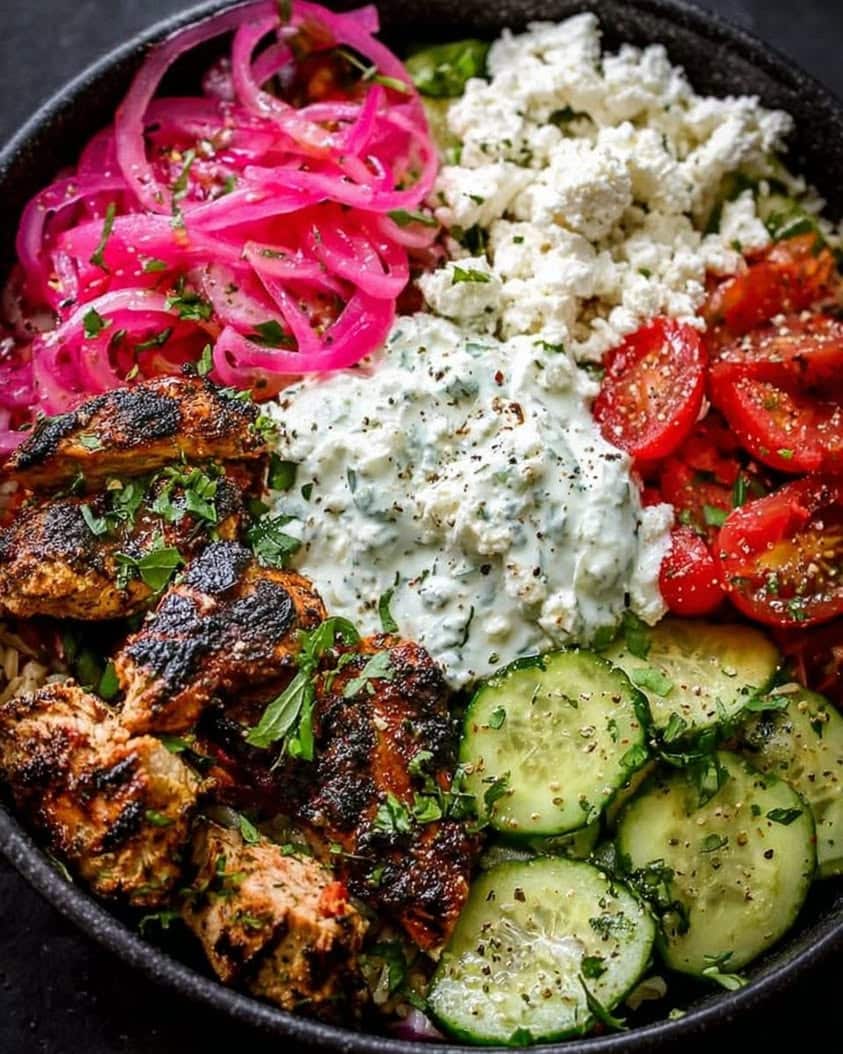
Loaded Mediterranean Chicken Power Bowl Recipe with Tzatziki & Feta: A Vibrant, Protein-Packed Feast
Imagine a meal that is as beautiful as it is nourishing, bursting with the sun-drenched flavors of the Mediterranean. This Loaded Mediterranean Chicken Power Bowl Recipe with Tzatziki & Feta is exactly that. It is a vibrant, customizable dish that brings together tender, herb-marinated chicken, crisp vegetables, creamy tzatziki, and briny feta cheese. Consequently, it delivers a perfect balance of lean protein, healthy fats, and complex carbohydrates in every single bite. Ultimately, this recipe is your ticket to a restaurant-quality dinner that is surprisingly simple to make at home.
The magic of this Loaded Mediterranean Chicken Power Bowl Recipe with Tzatziki & Feta lies in its layers of flavor and texture. You get juicy chicken infused with garlic and oregano, paired with crunchy cucumbers and bell peppers. Additionally, you have the creamy coolness of homemade tzatziki sauce and the salty punch of crumbled feta. This combination creates a truly satisfying meal that is both light and deeply fulfilling. Moreover, it is a fantastic way to enjoy a rainbow of vegetables, making it a favorite for meal prep and healthy weeknight dinners alike.
Quick Recipe Highlights
- Flavor Profile: This bowl features bright, herby notes from the marinated chicken, balanced by the tangy, garlicky tzatziki and the salty, creamy feta. The fresh vegetables add a clean, crisp counterpoint.
- Texture: Expect a delightful contrast between the tender, grilled chicken, the crisp crunch of fresh veggies, the creamy smoothness of the tzatziki, and the soft crumble of feta cheese.
- Aroma: As you cook, the kitchen fills with the irresistible scent of garlic, lemon, and dried oregano from the marinating chicken, creating an authentic Mediterranean atmosphere.
- Visual Appeal: This bowl is a feast for the eyes with its vibrant colors: the green cucumbers, red onions, bright peppers, golden chicken, and white feta create a stunning, Instagram-worthy presentation.
- Skill Level Needed: This is a beginner-friendly recipe. The techniques involve simple chopping, basic marinating, and either grilling or pan-searing chicken. No advanced culinary skills are required.
- Special Equipment: You only need basic kitchen tools: a sharp knife, cutting board, mixing bowls, and a grill pan or regular skillet. A box grater for the cucumber in the tzatziki is helpful but not mandatory.
Recipe Overview
- Difficulty Level: We rate this Loaded Mediterranean Chicken Power Bowl Recipe with Tzatziki & Feta as “Easy.” The steps are straightforward and sequential. Furthermore, most components can be prepared ahead of time. The cooking process is simple, making it accessible for cooks of all levels.
- Category: This dish falls perfectly into the categories of healthy dinner, high-protein lunch, and excellent meal prep. It is a complete, balanced meal in one bowl, ideal for those seeking nutritious and delicious options.
- Cuisine: This recipe is inspired by the broader Mediterranean culinary tradition, drawing specifically from Greek flavors with the tzatziki and feta. It celebrates the region’s focus on fresh produce, lean proteins, and healthy fats.
- Cost: The cost is moderate and flexible. Chicken breast, vegetables, and pantry spices form the base. Meanwhile, ingredients like feta and Greek yogurt are affordable staples. You can easily adjust based on what is seasonal or on sale.
- Season: This bowl is fantastic year-round. It is particularly refreshing in spring and summer with its cool, crisp elements. However, the warm, savory chicken makes it comforting enough for fall and winter evenings as well.
- Occasion: It is perfect for casual weeknight dinners, impressive yet easy lunches for guests, and reliable weekly meal prep. Additionally, it is a great post-workout meal due to its high protein and nutrient density.
Why You’ll Love This Recipe
First and foremost, the taste and texture appeal of this Loaded Mediterranean Chicken Power Bowl Recipe with Tzatziki & Feta is undeniable. Each forkful delivers a symphony of sensations. You experience the savory, herbaceous chicken, followed by the cool, garlicky tzatziki. Then, you get the salty burst of feta and the fresh crunch of vegetables. This combination is incredibly satisfying and never boring. Consequently, it feels like a treat while still being incredibly good for you, making healthy eating an absolute pleasure.
Next, consider the convenience and preparation benefits. This recipe is designed for efficiency. You can marinate the chicken in advance, chop the veggies ahead of time, and whip up the tzatziki sauce in minutes. Therefore, when dinner time arrives, assembly is a breeze. Moreover, the components store beautifully separately, making this an ideal candidate for meal prep. You can build fresh bowls all week long without any loss of quality or flavor, saving you precious time on busy days.
Furthermore, the nutritional advantages are significant. This Loaded Mediterranean Chicken Power Bowl Recipe with Tzatziki & Feta is packed with lean protein from the chicken and Greek yogurt. It is full of fiber and vitamins from the colorful array of vegetables. Additionally, the healthy fats from olive oil and feta support satiety and nutrient absorption. This balance helps regulate energy levels, supports muscle repair, and promotes overall wellness, aligning perfectly with a balanced, wholesome diet.
From a social perspective, this bowl has tremendous entertaining value. It is visually stunning and feels special, yet it is not overly complicated to prepare for a group. You can easily set up a “power bowl bar” with all the components laid out, allowing guests to customize their own creations. This interactive element makes for a fun, relaxed, and memorable dining experience. Ultimately, it is a meal that impresses without causing the host stress.
Finally, the cost-effectiveness and accessibility of this recipe are major wins. It utilizes affordable, whole-food ingredients that are easy to find at any standard grocery store. You can adapt it based on what is in season or on sale. For instance, swap bell peppers for cherry tomatoes or use a different grain base. This flexibility means you can enjoy a gourmet-tasting, healthy meal without stretching your food budget, proving that eating well does not have to be expensive.
Historical Background and Cultural Significance
The concept of the “power bowl” or grain bowl is a modern culinary trend, but its inspiration is deeply rooted in ancient food traditions. Specifically, the Loaded Mediterranean Chicken Power Bowl Recipe with Tzatziki & Feta draws from the time-honored eating patterns of the Mediterranean region. For centuries, people in countries like Greece, Italy, and Lebanon have built meals around simple, fresh components: grilled meats, local vegetables, yogurt-based sauces, cheese, and grains. This bowl is a contemporary, compartmentalized homage to that style of eating.
Culturally, the Mediterranean diet is celebrated not just as a way of eating, but as a lifestyle. It emphasizes community, leisurely meals, and seasonal ingredients. The inclusion of tzatziki and feta directly connects this recipe to Greek cuisine. Tzatziki, a sauce of yogurt, cucumber, garlic, and herbs, has been a staple for generations, used as a condiment, dip, and cooling element. Similarly, feta cheese, a brined curd cheese made from sheep’s milk or a blend, is a protected designation of origin product in Greece, central to its culinary identity.
The evolution of this recipe reflects global fusion and modern health consciousness. Traditionally, these ingredients might be served as part of a mezze platter or alongside flatbread. The modern “bowl” format organizes them into a single, portable, and nutritionally balanced meal. This evolution caters to contemporary desires for convenience, macro-counting, and visually appealing food. Therefore, while the flavors are ancient, the presentation is thoroughly modern, bridging the gap between traditional home cooking and current food trends.
Regional variations of this concept are endless. In the Eastern Mediterranean, you might find a similar bowl with grilled lamb instead of chicken and a tahini-based sauce. A Lebanese version could include tabbouleh and hummus. An Italian-inspired bowl might feature pesto, mozzarella, and roasted tomatoes. The adaptability of the Loaded Mediterranean Chicken Power Bowl Recipe with Tzatziki & Feta framework allows it to be a canvas for countless cultural interpretations, each honoring the core principle of combining fresh, flavorful, and wholesome ingredients in one satisfying dish.
Ingredient Deep Dive
Let us start with the star: chicken breast. This lean protein is a blank canvas for the vibrant Mediterranean marinade. Culturally, poultry has been a staple in the region for millennia. Nutritionally, it is an excellent source of complete protein, essential for muscle maintenance and satiety. For the best results, select plump, evenly-sized breasts. To ensure tenderness, do not skip the marinating step. For storage, keep raw chicken refrigerated and use within 1-2 days. If you need a substitution, chicken thighs offer more flavor and moisture, or you can use firm tofu or chickpeas for a plant-based version.
Greek yogurt is the foundation of the iconic tzatziki sauce. Historically, yogurt fermentation was a crucial preservation method. Greek yogurt, strained to remove whey, is exceptionally thick and protein-rich. It provides probiotics for gut health, calcium, and protein. Always choose plain, full-fat or 2% Greek yogurt for the creamiest texture and best flavor. It stores well in the refrigerator for weeks. If you cannot find Greek yogurt, you can strain regular plain yogurt through cheesecloth. For a dairy-free tzatziki, coconut yogurt is a viable, though flavor-distinct, alternative.
Feta cheese brings the essential salty, tangy element. As a PDO product, authentic Greek feta is made from at least 70% sheep’s milk. Its crumbly texture and briny flavor are irreplaceable. It adds healthy fats, calcium, and a signature punch. For selection, opt for feta blocks packed in brine over pre-crumbled varieties for superior flavor and texture. Store it submerged in its brine in the refrigerator. If you need a substitute, ricotta salata or a firm goat cheese can work, though the flavor profile will shift. For a dairy-free option, salty, crumbled tofu marinated in lemon juice and salt can mimic the role.
Extra virgin olive oil is the heart of Mediterranean cooking and this marinade. It has been produced in the region for over 6,000 years. It is rich in monounsaturated fats and antioxidants, linked to heart health. Use a good-quality, fruity EVOO for the marinade and dressing. Store it in a cool, dark place to prevent rancidity. There is no true substitute for its flavor, but a neutral oil like avocado oil can be used in the marinade if necessary. However, for drizzling at the end, the olive oil is non-negotiable for authentic taste.
Fresh vegetables like cucumber, bell pepper, and red onion provide crunch, color, and vital nutrients. Cucumbers, central to tzatziki, are hydrating and contain antioxidants. English or Persian cucumbers have fewer seeds and thinner skin. Bell peppers, especially red and yellow, are high in Vitamin C. A crisp, firm pepper is best. Red onions offer a sharp bite and flavonoids; soaking them in cold water briefly tames their intensity. Store all vegetables in the crisper drawer. You can freely substitute based on seasonality: try tomatoes, kalamata olives, or roasted zucchini.
Common Mistakes to Avoid
- Overcooking the Chicken: This leads to dry, tough meat. Chicken breast cooks quickly. Use a meat thermometer and remove it from heat at 165°F, as carryover cooking will raise the temperature further.
- Using Watery Tzatziki: If you do not drain the grated cucumber, your sauce will be runny. Always salt the grated cucumber and let it sit in a colander to release excess water before mixing.
- Skipping the Marinade Time: The marinade infuses flavor and tenderizes. Rushing this step (less than 30 minutes) means bland chicken. Ideally, marinate for at least 2 hours or overnight for maximum impact.
- Not Seasoning Layers: Remember to season each component lightly. Season the chicken, season the vegetables with a pinch of salt, and taste your tzatziki. Layered seasoning creates a depth of flavor.
- Using Pre-Crumbled Feta: These are often drier and coated with anti-caking agents. A block of feta in brine is far superior in flavor and texture. Crumble it yourself just before serving.
- Warm Tzatziki: The sauce should be cold and refreshing to contrast the warm chicken and grain. Make it ahead and chill it thoroughly. Do not leave it sitting out.
- Soggy Meal Prep: To avoid soggy bowls, store components separately. Keep the tzatziki, dressed veggies, and grains in their own containers. Assemble just before eating.
- Overcrowding the Pan: When cooking the chicken, give each piece space. Overcrowding steams the meat instead of creating a beautiful, flavorful sear or grill marks.
- Forgetting Acid: The bright flavor comes from lemon juice in the marinade and tzatziki. Use fresh lemon juice, not bottled, for the best, brightest flavor profile.
- Using Low-Fat Yogurt: Non-fat Greek yogurt can make the tzatziki taste tart and thin. The fat in 2% or full-fat yogurt carries flavors better and creates a luxurious, creamy texture.
Essential Techniques
Mastering the marinade is your first essential technique. A marinade has three jobs: flavor, tenderize, and moisten. The acid (lemon juice) helps break down surface proteins, allowing the herbs and garlic to penetrate. The oil coats the chicken to prevent sticking and retain moisture. To do it right, combine all marinade ingredients thoroughly in a zip-top bag or shallow dish. Ensure each piece of chicken is fully coated. Then, let time work its magic in the refrigerator. Do not marinate at room temperature, as this promotes bacterial growth. The visual cue for success is chicken that has absorbed the color and aroma of the herbs.
Properly draining cucumber for tzatziki is a non-negotiable step. After grating the cucumber, toss it with a pinch of salt. The salt draws out the water via osmosis. Let it sit in a fine-mesh strainer or colander for at least 10-15 minutes. Afterwards, use your hands to squeeze out as much liquid as possible. This step is crucial because excess water will dilute the yogurt, resulting in a sad, runny sauce. The success cue is dry, compact handfuls of grated cucumber that will integrate into the yogurt without weeping.
Cooking chicken breast to perfect doneness requires attention. Whether pan-searing or grilling, start with a hot cooking surface. Pat the chicken dry before adding it to the pan to ensure a good sear. Then, cook undisturbed for several minutes to develop color. Avoid constantly flipping or pressing down. The most reliable method is using an instant-read thermometer. Insert it into the thickest part; 165°F is the safe temperature. Remember, the chicken will continue to cook slightly after removal. The visual cue is firm yet springy flesh and clear juices. Finally, always let it rest for 5 minutes before slicing to redistribute juices.
Pro Tips for Perfect Loaded Mediterranean Chicken Power Bowl
First, pound your chicken breasts to an even thickness before marinating. This ensures they cook uniformly, preventing the thinner ends from drying out while the center cooks through.
For the most flavorful tzatziki, make it a day ahead. The garlic and herb flavors meld and deepen overnight in the refrigerator, creating a more complex sauce.
If using quinoa or rice as a base, cook it in chicken or vegetable broth instead of water. This simple swap infuses the grain with extra savory flavor from the inside out.
Add a final flourish of freshness. Right before serving, sprinkle with chopped fresh dill or parsley and a drizzle of high-quality extra virgin olive oil.
For meal prep, keep your crunchy vegetables like cucumbers and peppers separate from your grain base until assembly. This preserves their crisp texture all week long.
Warm your pita bread or flatbread in a dry skillet for 30 seconds per side. This revives it, making it pliable and perfect for scooping up the bowl’s contents.
If you love a smoky flavor, add a pinch of smoked paprika to the chicken marinade or use a grill pan to cook the chicken for authentic-looking grill marks.
To quickly mellow raw red onion, soak the sliced onions in a bowl of ice water with a splash of vinegar for 10 minutes. Then, drain and pat dry before adding to your bowl.
Variations and Adaptations
For regional variations, explore beyond Greece. Create a Lebanese bowl with grilled chicken shawarma spices, tabbouleh, and a garlic toum sauce. Alternatively, try an Italian version with pesto-marinated chicken, sun-dried tomatoes, fresh mozzarella, and a balsamic glaze. A Turkish twist might include sumac-seasoned chicken, a dollop of haydari (a thicker yogurt dip), and pickled red cabbage. Each variation respects the core bowl architecture while showcasing different flavor palettes from the Mediterranean basin.
Seasonal adaptations keep this recipe exciting year-round. In summer, use fresh cherry tomatoes, zucchini, and sweet corn. For autumn, incorporate roasted sweet potatoes, Brussels sprouts, and a sprinkle of pomegranate seeds. Winter bowls can feature roasted cauliflower and a warm lemon-herb vinaigrette. In spring, celebrate with asparagus, peas, and fresh mint. The Loaded Mediterranean Chicken Power Bowl Recipe with Tzatziki & Feta is a flexible template that welcomes whatever produce is at its peak.
Dietary modifications are straightforward. For gluten-free, ensure your grain base is certified GF (like quinoa or rice) and skip the pita. For dairy-free, use a coconut yogurt tzatziki and omit the feta or use a vegan alternative. For a vegan bowl, replace chicken with marinated and baked chickpeas or crispy tofu. For a keto or low-carb version, use a base of cauliflower rice and increase the portion of healthy fats from avocado and olives.
Flavor and texture modifications cater to personal preference. Add heat with sliced jalapeños or a sprinkle of crushed red pepper flakes in the marinade. For extra creaminess, include sliced avocado or a spoonful of hummus. For more crunch, top with toasted pine nuts or slivered almonds. If you prefer a warmer sauce, a harissa drizzle or a spicy red pepper sauce can replace or accompany the cool tzatziki.
Serving and Presentation Guide
Plating is key to the experience. Start with a wide, shallow bowl to showcase all the beautiful components. First, create a base layer with your grain of choice. Then, artfully arrange sliced chicken and groups of vegetables in distinct sections around the bowl. This method keeps flavors distinct and allows for customizable bites. Avoid piling everything in a haphazard mound; instead, think of it as creating a colorful mosaic on your plate.
Garnishing adds the final professional touch. A generous dollop of tzatziki should be placed centrally or in a visible spot. Crumble the feta cheese over the top, allowing some to land on each section. Then, finish with a sprinkle of fresh chopped herbs like dill, parsley, or mint. A final drizzle of extra virgin olive oil and a wedge of lemon on the side completes the presentation. These elements add freshness, color, and an invitation to interact with the dish.
Consider traditional and modern accompaniments. Traditionally, warm pita bread is essential for scooping. For a modern twist, offer baked pita chips or seasoned lavash crackers on the side. A simple side salad of bitter greens like arugula with a lemon vinaigrette complements the bowl perfectly. For a beverage, iced herbal tea or sparkling water with lemon enhances the fresh flavors without overpowering them.
Wine and Beverage Pairing
Wine pairings should complement the dish’s bright and savory notes. A crisp, dry white wine like a Greek Assyrtiko or a Sauvignon Blanc works beautifully. Their high acidity cuts through the richness of the tzatziki and feta. Alternatively, a light-bodied, fruity red like a Beaujolais or a Greek Xinomavro can pair well with the herbed chicken, especially if served slightly chilled. The key is to avoid overly oaky or tannic wines that would clash with the fresh vegetables and yogurt sauce.
For non-alcoholic alternatives, consider options that mirror the wine’s refreshing qualities. Sparkling water with a squeeze of lemon or lime is a classic choice. A homemade mint iced tea or a cucumber-infused water enhances the Mediterranean vibe. For something more substantial, a tart pomegranate juice spritzer (mixed with soda water) offers sweetness and acidity that mirrors the dish’s flavor profile perfectly.
If you prefer coffee or tea, enjoy them after the meal. A strong Greek coffee or a Turkish coffee makes for a traditional and robust finish. For tea, opt for a herbal mint tea or a light, floral green tea. These digestifs cleanse the palate and provide a soothing end to the meal without competing with the complex flavors of the Loaded Mediterranean Chicken Power Bowl Recipe with Tzatziki & Feta.
Storage and Shelf Life
Proper storage is crucial for maintaining quality and safety. Store all components separately in airtight containers in the refrigerator. Cooked chicken will last for 3-4 days. The tzatziki sauce is best within 3-4 days as well, as the garlic flavor intensifies and the cucumber may continue to release water. Chopped vegetables (except dressed onions) will stay crisp for 4-5 days. Cooked grains like quinoa or rice are safe for up to 5 days. Never leave the assembled bowl at room temperature for more than 2 hours.
For reheating, only reheat the chicken and grains. Gently warm the chicken in a skillet over medium-low heat with a splash of water or broth to prevent drying out. Alternatively, use the microwave at a reduced power setting. The vegetables and tzatziki should always be served cold. Assembling the bowl just before eating ensures the cold elements stay refreshing and the warm elements are properly heated, preserving the intended texture contrast.
Freezing is not recommended for the complete bowl or most components. The yogurt in the tzatziki will separate and become grainy upon thawing. Fresh vegetables will lose their crisp texture and become mushy. However, you can freeze the marinated, uncooked chicken in its marinade for up to 2 months. Thaw it in the refrigerator before cooking. Cooked chicken can also be frozen for 2-3 months, though it may be slightly drier upon reheating.
Make Ahead Strategies
A smart prep timeline turns this into a 10-minute assembly job. Two days ahead, make the tzatziki sauce and let it chill. One day ahead, chop all your vegetables (store cucumbers and peppers in separate containers) and cook your grain base. Also, marinate the chicken overnight. On the day of serving, all you need to do is cook the chicken, which takes 15-20 minutes, and then assemble the bowls. This strategy distributes the work and makes weeknight dinners effortless.
Understand the quality impact of prepping ahead. The tzatziki benefits greatly from make-ahead time, as flavors meld. Chopped vegetables are fine, though onions may intensify in flavor. Cooked grains reheat well. The marinated chicken becomes more flavorful the longer it sits. The only element that must be absolutely fresh is the final assembly and any last-minute garnishes like fresh herbs. Therefore, prepping ahead enhances most components without any negative trade-offs.
For assembly, use a systematic approach. Start with the reheated or room-temperature grain at the bottom of the bowl. Then, add the warm sliced chicken. Arrange the cold, crisp vegetables around the edges. Finally, add the cold tzatziki and crumble the feta on top. Add garnishes. This order ensures the warm components don’t prematurely wilt the cold vegetables and that the tzatziki stays visually appealing on top.
Scaling Instructions
Halving the recipe for one or two people is simple. Precisely halve all ingredient quantities. Use a smaller skillet for cooking the chicken. The prep and cook times will remain roughly the same. Be mindful that a smaller batch of tzatziki might be consumed quickly, so it is still worth making a full batch if you enjoy it as a dip.
Doubling or tripling for a crowd requires slight adjustments. Use multiple pans or cook the chicken in batches to avoid overcrowding. You may need to extend the total cook time slightly for multiple batches. For the marinade, mix it in a large bowl before adding all the chicken. Consider setting up a buffet-style “bowl bar” for easy serving, with each component in its own dish.
Equipment adjustments are minimal. For larger batches, ensure you have a large enough mixing bowl for the marinade and a sheet pan if you choose to bake the chicken instead of pan-searing. Storage considerations become more important; have enough airtight containers ready for all the prepped components. Label them clearly if making several days in advance.
Nutritional Deep Dive
This bowl offers an excellent macro breakdown. A typical serving provides approximately 35-40 grams of high-quality protein from the chicken and Greek yogurt, supporting muscle synthesis and satiety. It contains complex carbohydrates (30-40g) from the grain and vegetables, offering sustained energy release. The healthy fats (15-20g) from olive oil and feta aid in nutrient absorption and provide essential fatty acids. This balance makes it an ideal meal for fitness enthusiasts and anyone managing energy levels.
The micronutrient profile is impressively diverse. You get a significant dose of Vitamin C from bell peppers, calcium from yogurt and feta, and iron from the chicken and quinoa. Cucumbers provide hydration and silica. Red onions offer quercetin, an antioxidant. The herbs contribute various phytonutrients. Together, these support immune function, bone health, and overall cellular protection, making the Loaded Mediterranean Chicken Power Bowl Recipe with Tzatziki & Feta a true nutrient powerhouse.
For weight management, this bowl is a superb choice. The high protein and fiber content promote feelings of fullness, helping to control overall calorie intake. The balance of macros prevents blood sugar spikes that can lead to cravings. Portion control is built-in when you follow the recipe servings. To adjust, you can slightly increase the vegetable volume for more bulk without many calories or reduce the grain portion if following a lower-carb plan.
Dietary Adaptations
For a gluten-free adaptation, simply ensure your grain base is a certified gluten-free option like quinoa, brown rice, or millet. Double-check that your spices and other packaged ingredients are GF. Serve with gluten-free flatbread or omit the bread entirely. This adaptation is simple and does not compromise flavor or satisfaction.
A dairy-free version requires two swaps. For the tzatziki, use a thick, plain coconut yogurt. The flavor will be different but still tasty and creamy. Omit the feta cheese or use a store-bought vegan feta alternative made from tofu or almonds. Ensure the chicken marinade uses oil and lemon without butter. The result is still a flavorful, fresh bowl suitable for those avoiding dairy.
Creating a vegan Loaded Mediterranean Power Bowl is easy and delicious. Replace the chicken with a can of drained, marinated, and roasted chickpeas or cubes of pressed, baked tofu. Use the dairy-free tzatziki and feta substitutions mentioned above. You can also add more substantial vegetables like roasted eggplant or artichoke hearts. The protein will come from the legumes, tofu, and grains, making it a complete and satisfying plant-based meal.
For low-carb or keto adaptations, replace the grain base with cauliflower rice or a bed of leafy greens like spinach or arugula. Increase the portions of healthy fats by adding avocado slices, more olive oil, and a few kalamata olives. Ensure the tzatziki is made with full-fat yogurt and check that any pre-made seasonings do not contain hidden sugars. This transforms the bowl into a high-fat, moderate-protein, very low-carb meal.
Troubleshooting Guide
If your chicken is dry, it was likely overcooked. Next time, use a thermometer and pull it at 165°F. For now, drizzle the sliced chicken with a little extra olive oil or a spoonful of tzatziki to add moisture back. For future prevention, consider brining the chicken breasts in a saltwater solution for 30 minutes before marinating to increase their water-holding capacity.
If your tzatziki is too runny, you cannot fix it after mixing, but you can prevent it next time. Remember to drain the grated cucumber thoroughly. For the current batch, you can try straining the whole mixture through cheesecloth for an hour to remove excess liquid, though some flavor may be lost. Alternatively, use it as a dressing for a salad.
If the bowl tastes bland, you likely under-seasoned. Seasoning in layers is critical. Taste each component separately. You can often rescue it by adding a pinch of flaky sea salt and a squeeze of fresh lemon juice over the assembled bowl. A drizzle of good olive oil can also carry flavors. Next time, season the chicken generously, salt the vegetables lightly, and ensure your tzatziki has enough garlic and salt.
If your meal prep gets soggy, you stored the components together. Unfortunately, you cannot reverse sogginess. For future meals, invest in a meal prep container with separate compartments or use multiple small containers. Keep the grain, chicken, vegetables, and sauce completely separate until you are ready to eat. This is the single most important tip for successful power bowl meal prep.
Recipe Success Stories
Community feedback on this Loaded Mediterranean Chicken Power Bowl Recipe with Tzatziki & Feta has been overwhelmingly positive. Many readers report it has become a weekly staple in their homes. One common theme is how family members who are typically picky eaters enjoy customizing their own bowls, leading to less dinnertime stress. Others love its reliability for meal prep, noting that the components stay fresh and distinct throughout the week, unlike many other prepped meals that become mushy.
Variation successes are fun to hear about. One reader created a “Mediterranean BBQ” version by adding a spoonful of harissa to the tzatziki and using smoked paprika on the chicken. Another successfully made it for a large baby shower, setting up a beautiful bowl bar that was a huge hit. Several fitness enthusiasts have shared that they double the chicken portion for post-workout meals and use it as their go-to high-protein lunch to fuel their training.
Reader suggestions have also improved the recipe. A great tip from a follower is to add a teaspoon of dried mint to the tzatziki for an authentic Greek touch. Another suggested roasting the bell peppers and red onion for a deeper, sweeter flavor profile, which works wonderfully in the fall and winter months. These community-driven adaptations show the recipe’s versatility and how it inspires creativity in the kitchen.
Frequently Asked Questions
Can I use chicken thighs instead of breasts? Absolutely. Chicken thighs are more forgiving and flavorful due to their higher fat content. Adjust cooking time slightly, as they may take a few minutes longer. Ensure they reach an internal temperature of 165°F.
How long does the tzatziki sauce last in the fridge? Homemade tzatziki is best consumed within 3-4 days. The garlic flavor will intensify over time, and the cucumber may continue to release water, so give it a stir before serving.
What’s the best grain to use for the base? Quinoa, brown rice, couscous, or farro all work beautifully. Quinoa offers a complete protein and fluffy texture. For a lower-carb option, use cauliflower rice or a bed of leafy greens.
Can I make this recipe vegetarian? Yes, easily. Replace the chicken with chickpeas (toss them in the marinade and roast), falafel, or baked tofu. The rest of the bowl components are already vegetarian-friendly.
Do I have to grill the chicken? No. A grill pan, regular skillet, or even baking in a 400°F oven for 20-25 minutes all work perfectly. The goal is cooked, flavorful chicken with some color.
My tzatziki is too garlicky. What can I do? The garlic mellows over time, so make it a day ahead next time. For now, you can try adding a bit more yogurt or a squeeze of lemon to balance it. Remember, raw garlic potency varies by clove.
Is this recipe good for meal prep? It is excellent for meal prep. The key is to store all components separately and assemble just before eating. This keeps the vegetables crisp and prevents the grain from getting soggy.
Can I freeze the assembled bowls? We do not recommend freezing assembled bowls or the tzatziki. The textures of the yogurt, vegetables, and sauce will degrade significantly. You can freeze the cooked, sliced chicken separately for up to 3 months.
What can I use if I don’t have fresh dill? Dried dill can be used in a pinch (use about one-third the amount). Alternatively, fresh mint or parsley makes a lovely, if different, herbal substitute in the tzatziki and as a garnish.
How can I add more protein? Add an extra half-breast of chicken per serving, include a hard-boiled egg on the side, or sprinkle the bowl with a handful of toasted chickpeas or lentils for a plant-based boost.
Loaded Mediterranean Chicken Power Bowl with Tzatziki & Feta
- Total Time: 45 minutes
- Yield: 4
Description
A vibrant, protein-packed bowl featuring marinated grilled chicken, fresh vegetables, quinoa, and creamy tzatziki, topped with tangy feta cheese for a healthy and satisfying meal.
Ingredients
- 1 lb boneless, skinless chicken breasts, sliced into strips
- 2 tbsp olive oil
- 1 tsp dried oregano
- 1 tsp garlic powder
- 1/2 tsp smoked paprika
- Salt and black pepper to taste
- 1 cup quinoa, rinsed
- 2 cups water or chicken broth
- 1 cucumber, diced
- 1 cup cherry tomatoes, halved
- 1/2 red onion, thinly sliced
- 1/2 cup Kalamata olives, pitted
- 1/2 cup tzatziki sauce
- 1/2 cup crumbled feta cheese
- Fresh parsley or dill for garnish
Instructions
- Marinate the chicken: In a bowl, combine chicken strips with olive oil, oregano, garlic powder, smoked paprika, salt, and pepper. Let sit for at least 15 minutes.
- Cook the quinoa: In a saucepan, bring quinoa and water or broth to a boil. Reduce heat, cover, and simmer for 15 minutes or until liquid is absorbed. Fluff with a fork.
- Grill the chicken: Heat a grill or skillet over medium-high heat. Cook chicken for 5-7 minutes per side until fully cooked and slightly charred. Let rest before slicing.
- Assemble the bowls: Divide cooked quinoa among four bowls. Top with sliced chicken, cucumber, cherry tomatoes, red onion, and olives.
- Finish and serve: Drizzle each bowl with tzatziki sauce, sprinkle with feta cheese, and garnish with fresh herbs. Serve immediately.
Notes
You can customize the seasonings to taste.
- Prep Time: 15 minutes
- Cook Time: 30 minutes
- Method: Main
- Cuisine: Mediterranean