One-Pan Ground Beef and Spinach Skillet with Creamy Feta: Your New Weeknight Hero
Imagine a meal that delivers incredible flavor without creating a mountain of dishes. This One-Pan Ground Beef and Spinach Skillet with Creamy Feta is exactly that kind of magic. It combines savory, well-seasoned beef with vibrant, earthy spinach and a tangy, creamy feta sauce that ties everything together beautifully. Ultimately, it is a complete, satisfying dinner that comes together in one skillet in about thirty minutes.
The aroma that fills your kitchen while cooking this dish is absolutely irresistible. First, you will smell the savory onions and garlic sizzling. Then, the rich scent of browning beef takes over. Finally, the fresh spinach wilts down and the creamy, briny feta melts into a luscious sauce. Every bite offers a perfect harmony of textures and tastes, from the hearty ground beef to the tender spinach and the creamy, salty cheese.
This recipe is more than just convenient; it is a flavor powerhouse that will become a regular in your dinner rotation. Whether you are feeding a busy family or just want a delicious meal for yourself, this skillet delivers. It is hearty, nutritious, and endlessly adaptable. Let us dive into why this One-Pan Ground Beef and Spinach Skillet with Creamy Feta deserves a permanent spot in your recipe collection.
Quick Recipe Highlights
- Flavor Profile: This dish features a robust, savory base from the ground beef and aromatics, perfectly balanced by the tangy, salty punch of creamy feta cheese. The tomatoes add a subtle sweetness and acidity that brightens the entire skillet.
- Texture: You get a wonderful contrast between the crumbly, hearty texture of the browned beef and the soft, silky wilted spinach. Meanwhile, the creamy feta sauce coats everything in a luxurious, velvety finish.
- Aroma: Cooking starts with the foundational scent of sautéed onion and garlic, followed by the rich, meaty fragrance of browning beef. Finally, the fresh, green aroma of wilting spinach and the distinctive tang of feta create an inviting kitchen perfume.
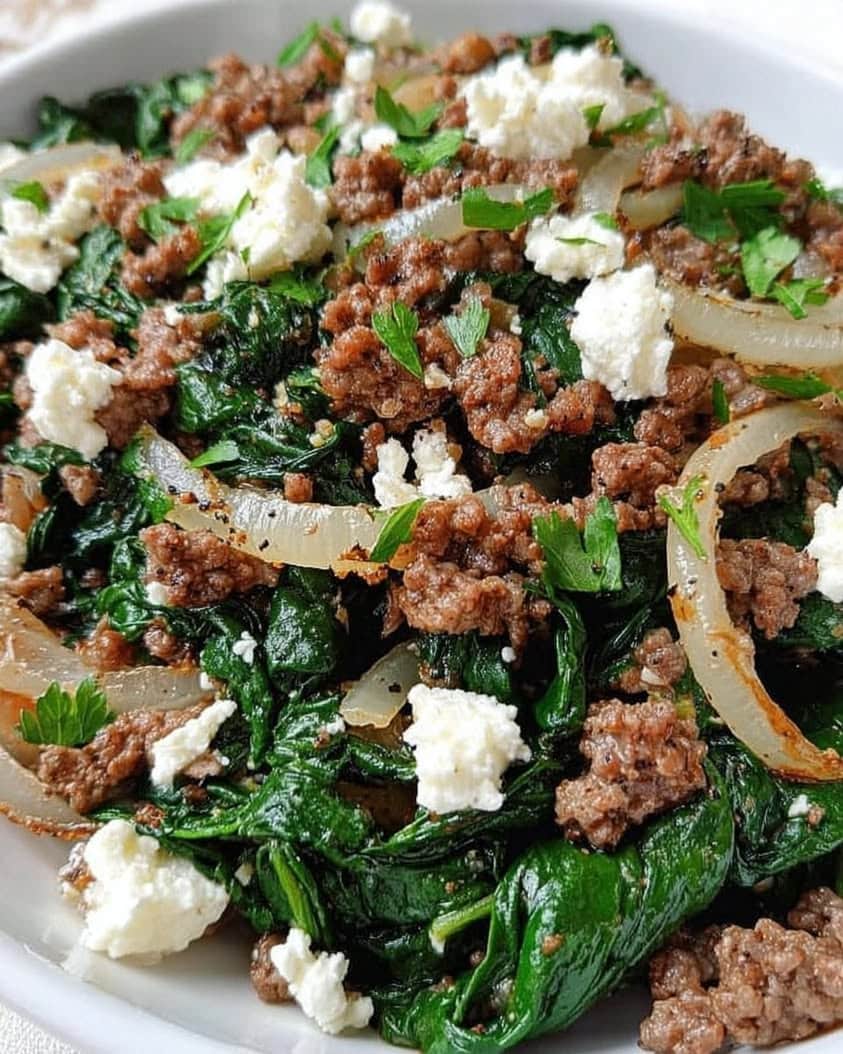
- Visual Appeal: The skillet presents a beautiful mix of colors: deep brown beef, vibrant green spinach, and bright red tomatoes, all swirled together with creamy white feta. It is a rustic, hearty, and visually appealing meal.
- Skill Level Needed: This is a beginner-friendly recipe requiring only basic cooking skills like chopping, browning meat, and stirring. No advanced techniques are necessary, making it perfect for novice cooks or anyone seeking a stress-free dinner.
- Special Equipment: You only need one large, oven-safe skillet or frying pan. A sturdy wooden spoon or spatula for stirring is essential. No other special tools are required, emphasizing the recipe’s simplicity.
Recipe Overview
- Difficulty Level: We rate this recipe as “Easy” because it involves straightforward, sequential steps. You simply brown the meat, cook the aromatics, and combine everything with the sauce ingredients. There is no complicated timing or precision required, making it nearly foolproof for cooks of any level.
- Category: This dish falls perfectly into the categories of quick dinner recipes, healthy family meals, and one-pan wonders. It is a complete main course that provides protein, vegetables, and sauce in a single dish, eliminating the need for complicated sides.
- Cuisine: While not strictly authentic to one region, this skillet draws inspiration from Mediterranean and Greek cooking traditions. The use of spinach, tomato, garlic, and feta cheese is classic in Greek cuisine, though the preparation as a quick, one-pan meal is a modern, global adaptation.
- Cost: This is a very budget-friendly meal. Ground beef is typically affordable, and spinach and canned tomatoes are inexpensive, especially when using frozen spinach. Feta cheese is the potential splurge, but a little goes a long way in flavor. Overall, it is a cost-effective way to feed a family.
- Season: This recipe is truly excellent year-round. It is comforting and hearty enough for fall and winter, yet the fresh spinach and tomatoes keep it feeling light and appropriate for spring and summer. You can easily find all ingredients in any season.
- Occasion: It is ideal for busy weeknights, casual weekend dinners, or meal prep for lunches. Furthermore, it is impressive enough to serve to guests in a relaxed setting. It is versatile for almost any informal dining occasion.
Why You’ll Love This One-Pan Ground Beef and Spinach Skillet with Creamy Feta
First and foremost, the taste and texture combination is utterly addictive. The savory, umami-rich ground beef forms a hearty foundation. Then, the spinach adds a fresh, slightly earthy note that cuts through the richness. However, the real star is the feta. It does not just sit on top; it melts into the warm ingredients, creating a creamy, tangy sauce that coats every bite. Each forkful delivers a perfect balance of salty, savory, and creamy elements that will have everyone asking for seconds.
Convenience is another massive win for this recipe. Since everything cooks in a single skillet, you minimize both prep time and cleanup. You can go from hungry to eating in thirty minutes with minimal effort. Additionally, the process is simple: brown, sauté, and simmer. There is no need to juggle multiple pots or worry about complex timing. This makes the One-Pan Ground Beef and Spinach Skillet with Creamy Feta a lifesaver on those evenings when time and energy are in short supply.
From a nutritional standpoint, this dish packs a powerful punch. Ground beef provides high-quality protein and essential nutrients like iron and B vitamins. Spinach is a superstar vegetable, loaded with vitamins A, C, and K, along with iron and fiber. Tomatoes contribute vitamin C and lycopene. When you combine these ingredients, you create a meal that is not only delicious but also genuinely nourishing and balanced for your body.
This skillet also boasts fantastic social and entertaining value. It is a complete meal in a pan, which means you can spend less time in the kitchen and more time with your family or guests. You can easily double the recipe to feed a crowd. Simply serve it straight from the skillet for a rustic, family-style presentation that encourages sharing and conversation. It is an unfussy yet impressive dish that makes hosting feel effortless.
Finally, the cost-effectiveness and accessibility of this recipe are unbeatable. The ingredients are common, affordable, and available at any standard grocery store. You can make substitutions based on what you have on hand without sacrificing the core identity of the dish. Consequently, this One-Pan Ground Beef and Spinach Skillet with Creamy Feta is a smart choice for your wallet and your pantry, proving that eating well does not require expensive or hard-to-find items.
Historical Background and Cultural Significance
The concept of cooking meat and greens together in a single pot is ancient and spans countless cultures. Specifically, the combination of spinach and meat has roots in various Mediterranean and Middle Eastern cuisines. Dishes like Greek “spanakorizo” (spinach rice) often include meat, and the use of feta cheese is a hallmark of Greek culinary tradition. This modern skillet recipe is a streamlined descendant of those hearty, peasant-style meals designed to make the most of available, nourishing ingredients.
Culturally, one-pan meals hold significant importance as practical, resourceful cooking methods. They represent efficiency and comfort, often associated with home cooking and family nourishment. The integration of spinach, a nutrient-dense green, with protein-rich meat reflects a historical understanding of balanced eating, even if not formally recognized as such. Feta cheese, with its briny tang and preservative qualities, originates from sheep and goat herding traditions, adding a layer of pastoral history to the dish.
The evolution of this recipe into a quick “skillet” meal is a distinctly modern phenomenon, driven by contemporary needs for speed and simplicity. Traditional versions might have simmered for hours or been baked in a oven. The current adaptation leverages efficient stovetop cooking and pre-chopped or frozen ingredients to fit into a busy lifestyle. It is a beautiful example of how classic flavor combinations can be preserved and adapted to meet the pace of modern life without losing their soul.
Regional variations of this concept are plentiful. In Italy, one might find a similar dish with ricotta or mozzarella. In Turkey, spices like cumin and mint could be added, and the cheese might be a fresh white cheese like beyaz peynir. The American version often includes canned tomatoes for added moisture and flavor. This global tapestry of similar dishes underscores the universal appeal of combining savory meat, healthy greens, and a creamy, salty dairy element into one satisfying, convenient meal.
Ingredient Deep Dive
Ground Beef (90/10 lean-to-fat ratio): This recipe benefits from a moderately lean ground beef. The 90/10 ratio provides enough fat to keep the meat juicy and flavorful during cooking without making the final dish overly greasy. Historically, ground meat has been a way to utilize less tender cuts, making it an economical protein source across cultures. Nutritionally, it is an excellent source of complete protein, iron, zinc, and B vitamins, particularly B12. For the best flavor, look for bright red, freshly ground beef. You can store it in the coldest part of your refrigerator for 1-2 days or freeze it for several months. For a substitution, ground turkey, chicken, or lamb would work well, though cooking times and fat content may vary slightly.
Fresh Spinach: Spinach has a rich history, originating in ancient Persia and spreading via trade routes to China and later Europe. It gained modern popularity partly due to the Popeye cartoon. Nutritionally, it is a powerhouse, packed with vitamins A, C, and K, iron, folate, and antioxidants. When selecting spinach, choose bunches with vibrant, deep green leaves that show no signs of yellowing or wilting. Store it loosely in a plastic bag in the refrigerator crisper. For this recipe, you can substitute an equal amount of thawed and thoroughly drained frozen chopped spinach. Baby kale or Swiss chard would also make suitable, flavorful alternatives.
Feta Cheese: Authentic feta is a Greek treasure, a brined curd cheese traditionally made from sheep’s milk or a sheep-goat milk blend. Its name is protected by EU law. This cheese adds a distinctive tangy, salty flavor and creamy texture when warmed. It provides calcium and protein. Look for feta packed in brine for the best flavor and texture; it will be creamier and less crumbly than pre-crumbled dry feta. Store leftover feta in its brine in the refrigerator. For substitutions, crumbled goat cheese (chèvre) offers a similar tang, or for a milder option, try fresh ricotta salata. Avoid using hard, dry fetas as they will not melt into a sauce as effectively.
Canned Diced Tomatoes: Tomatoes are native to the Americas but became a cornerstone of Mediterranean cuisine after their introduction. Canned tomatoes are often more flavorful than off-season fresh ones because they are processed at peak ripeness. They provide vitamin C, lycopene, and liquid for the sauce. Choose cans labeled “no salt added” if you are monitoring sodium, and look for “fire-roasted” varieties for a deeper, smoky flavor. Store unused tomatoes in a non-reactive container in the fridge for up to a week. You can substitute fresh, ripe diced tomatoes when in season, though you may need to add a splash of broth or water. Crushed tomatoes or tomato sauce would also work but will create a thicker, smoother sauce base.
Common Mistakes to Avoid
- Overcrowding the Skillet with Beef: Adding all the ground beef at once can cause it to steam rather than brown. For proper browning, which develops deep flavor, cook the beef in batches if your skillet is not large enough. A single, uncrowded layer allows moisture to evaporate and the meat to sear properly.
- Not Draining Excess Fat: After browning 90/10 beef, there will be some fat. Leaving too much can make the final dish greasy. However, do not drain it all; leave about a tablespoon to cook the onions and garlic. This residual fat carries flavor and helps sauté the vegetables.
- Adding Garlic Too Early: Garlic burns quickly and becomes bitter. Always add minced garlic after the onions have softened and only cook it for about 30 seconds until fragrant. Adding it with the onions at the start is a common error that can ruin the sauce’s flavor base.
- Using Pre-Crumbled, Dry Feta: Pre-crumbled feta is often coated in anti-caking agents and is much drier. It will not melt into a creamy sauce as beautifully as a block of feta stored in brine. For the best creamy texture, always buy a block and crumble it yourself just before adding.
- Overcooking the Spinach: Fresh spinach wilts down incredibly fast. If you cook it for more than a minute or two, it can become slimy and lose its vibrant color and nutritional value. Stir it in just until it is wilted and then immediately proceed to the next step.
- Neglecting to Season in Layers: Seasoning only at the end results in a bland dish. Season the beef while browning, then check and adjust seasoning again after adding the tomatoes and finally after incorporating the feta. Building layers of seasoning ensures every component is flavorful.
- Using a Skillet That is Too Small: A crowded skillet makes browning difficult and can lead to messy spills when stirring in the voluminous fresh spinach. Use a large, deep skillet (12-inch is ideal) to give all ingredients ample space to cook evenly.
- Skipping the Resting Time: Letting the skillet sit off the heat for 2-3 minutes before serving is crucial. This allows the flavors to meld together and the creamy feta sauce to thicken slightly. Serving it immediately can result in a runnier consistency.
Essential Techniques
Browning the Ground Beef (The Maillard Reaction): This is the most important technique for building flavor. Browning, scientifically known as the Maillard reaction, creates hundreds of new flavor compounds. To master it, ensure your skillet is hot before adding the beef. Break the beef into small crumbles but avoid constantly stirring; let it sit for a minute to develop a brown crust before breaking it up further. The visual cue for success is the beef turning from pink to a deep, rich brown with crispy bits, not just turning gray and steaming in its juices.
Sweating Aromatics (Onion & Garlic): Sweating means cooking vegetables in fat over medium heat until they become soft and translucent without taking on color. This process gently releases their natural sugars and flavors, forming the aromatic base of the sauce. The common pitfall is cranking the heat to rush, which leads to burning. To master it, cook the onions in the reserved beef fat until they are soft and fragrant, about 3-4 minutes. Then add the garlic and cook just until its pungent aroma hits your nose, about 30 seconds.
Wilting Leafy Greens: Wilting spinach requires high heat and quick action. The technique is simple: add the massive pile of leaves to the hot skillet and use tongs or a spoon to constantly fold and stir. The heat and moisture will cause the leaves to collapse dramatically in seconds. The key is to stop as soon as the spinach is uniformly wilted and bright green. Over-wilting leads to a loss of texture, color, and nutrients. The visual cue is the transformation from stiff, leafy greens to a soft, dark green mass.
Creating a Creamy Feta Sauce: This technique relies on residual heat rather than direct cooking. After removing the skillet from the heat, you stir in the crumbled feta. The warmth from the beef, tomatoes, and spinach gently melts the cheese, allowing its creamy elements to blend with the tomato juices and create a cohesive sauce. Do not return the skillet to high heat after adding the feta, as this can cause the cheese to separate and become oily. The cue for success is a velvety, lightly creamy sauce that coats the back of a spoon.
Pro Tips for Perfect One-Pan Ground Beef and Spinach Skillet with Creamy Feta
Use an oven-safe skillet if you have one. After adding the feta, you can place the skillet under a broiler for 2-3 minutes to lightly brown and bubble the top for a more dramatic presentation. This adds a lovely textural contrast.
For a deeper flavor, deglaze the pan after browning the beef. Add a splash of red wine or beef broth and use a wooden spoon to scrape up all the flavorful browned bits (fond) from the bottom of the pan before adding the onion.
Let your block of feta come to room temperature for 15-20 minutes before crumbling. Room-temperature feta will incorporate into the sauce more smoothly and creamily than cheese straight from the refrigerator.
If using frozen spinach, ensure it is completely thawed and then squeezed in a clean kitchen towel or cheesecloth to remove every bit of excess water. Excess moisture will make your skillet sauce watery.
Toast your dried oregano in the hot fat for about 15 seconds before adding the liquid ingredients. This quick blooming step awakens the essential oils in the dried herb, releasing a much more potent and authentic flavor.
For a richer sauce, stir in a quarter cup of heavy cream or full-fat Greek yogurt along with the feta. This creates an even more luxurious, cohesive cream sauce that is incredibly indulgent.
Reserve a small handful of fresh spinach and a sprinkle of feta. After the dish is plated, add the fresh spinach on top for a pop of color and texture, and finish with the extra feta for a fresh, salty bite.
Always taste and adjust the final seasoning with salt and black pepper after the feta has melted. Feta is salty, so you may need less additional salt than you think, but a final grind of fresh pepper is often essential.
Variations and Adaptations
Regional Variations: Give this skillet a Greek twist by adding a teaspoon of dried oregano and a pinch of cinnamon with the onions. For an Italian flair, use a blend of dried basil and oregano, substitute mozzarella or Parmesan for the feta, and finish with fresh basil. A Turkish-inspired version could include a pinch of cumin and dried mint, using a cheese like beyaz peynir.
Seasonal Adaptations: In summer, use fresh, ripe cherry tomatoes halved instead of canned. Add fresh corn kernels or diced zucchini with the onions. In fall, incorporate diced sweet potato or butternut squash (roast it first for best texture) and swap the spinach for kale. For winter, add mushrooms for an extra umami boost.
Dietary Modifications: For a gluten-free version, ensure your beef broth (if used) is certified GF. To make it dairy-free, omit the feta and use a dollop of dairy-free yogurt or a sprinkle of nutritional yeast at the end for creaminess. For a lower-carb or keto adaptation, simply serve the skillet on its own or over cauliflower rice.
Flavor Variations: Add a tablespoon of tomato paste with the onions for a richer, more concentrated tomato flavor. Incorporate a pinch of red pepper flakes for heat. Stir in a tablespoon of Worcestershire sauce or balsamic glaze with the tomatoes for a sweet and savory depth. A splash of lemon juice at the end can brighten all the flavors beautifully.
Texture Modifications: For a heartier, more stew-like consistency, add a can of drained and rinsed white beans (like cannellini) with the tomatoes. To make it more substantial, stir in a cup of cooked quinoa, rice, or small pasta like orzo during the last few minutes of cooking to absorb the sauce.
Presentation Alternatives: Instead of serving family-style from the skillet, spoon the mixture into hollowed-out bell peppers or portobello mushroom caps and bake until tender. You can also use it as a flavorful filling for stuffed baked potatoes or as a topping for a crisp, green salad.
Serving and Presentation Guide
Plating this dish is wonderfully simple due to its rustic charm. For individual servings, use a shallow bowl or deep plate. Spoon a generous portion into the center. If you have served it over a base like rice or pasta, ensure the creamy sauce visibly coats the base. Garnish with a final sprinkle of fresh crumbled feta, a few leaves of reserved fresh spinach for color contrast, and a light drizzle of good quality extra virgin olive oil. A final grind of black pepper adds visual specks and flavor.
Traditional accompaniments include crusty bread for soaking up the delicious sauce, a simple side salad with a lemony vinaigrette to cut the richness, or roasted vegetables like asparagus or broccoli. For a more complete Mediterranean meal, serve with a side of tzatziki sauce and kalamata olives. These sides complement the flavors without competing with the main event.
Modern serving suggestions focus on ease and customization. Set up a “skillet bar” where guests can build their own bowls. Provide options like cooked couscous, quinoa, or cauliflower rice as bases. Offer additional toppings like sliced avocado, pickled red onions, chopped fresh herbs (dill, parsley, mint), or toasted pine nuts. This interactive approach makes the meal fun and adaptable to different preferences.
Temperature considerations are key. This dish is best served piping hot, immediately after the feta has melted and the flavors have had a minute to meld. The creamy sauce will thicken slightly as it cools. If you need to hold it, keep it covered over very low heat, but be aware the spinach will continue to cook and may darken. For leftovers, reheating gently on the stovetop with a splash of water or broth is best to restore the saucy consistency.
Wine and Beverage Pairing
Wine pairings for this skillet should complement its savory, tangy, and creamy profile. A medium-bodied red wine with good acidity is ideal. A Greek Agiorgitiko or a Xinomavro would be authentic choices. Alternatively, an Italian Chianti or a Spanish Garnacha (Grenache) works beautifully, as their bright acidity cuts through the richness of the beef and feta. For white wine lovers, a crisp, unoaked Greek Assyrtiko or a Sauvignon Blanc can handle the dish’s tangy and herbal notes surprisingly well.
Non-alcoholic alternatives are just as important. A sparkling water with a squeeze of lemon or lime provides a clean, palate-cleansing effervescence. For something more complex, try a tart cherry juice spritzer or a ginger beer. Iced herbal teas, like mint or lemon verbena, are also excellent choices that won’t compete with the dish’s robust flavors. These beverages refresh the palate between bites.
While not a classic pairing for this dish, a light roast coffee or a mint tea served after the meal can be a delightful finish. The bitterness of coffee contrasts with the savory meal, while mint tea aids digestion and echoes any herbal notes used in the recipe. Serve coffee black or with a touch of cream, and offer honey for the tea.
Temperature is crucial for beverages. Serve red wines slightly below room temperature (around 60-65°F). White wines and sparkling waters should be well-chilled. Non-alcoholic spritzers are best over ice. Properly chilled beverages provide a refreshing counterpoint to the warm, hearty skillet, enhancing the overall dining experience.
Storage and Shelf Life
Proper storage is essential for maintaining quality and safety. Allow the skillet to cool completely to room temperature before storing, but do not leave it out for more than two hours. Transfer the leftovers to an airtight container. You can store it in the refrigerator for up to 3-4 days. The flavors often meld and improve on the second day, making excellent leftovers.
For freezing, this dish freezes reasonably well. Portion it into freezer-safe containers or heavy-duty zip-top bags, leaving a little space for expansion. It will keep for up to 2-3 months. Note that the texture of the spinach may become softer upon thawing and reheating. The dairy in the feta sauce may separate slightly but will generally reincorporate when stirred during reheating.
Signs of spoilage include an off or sour smell, visible mold (often fuzzy spots in white, green, or black), or a significant change in texture to an unpleasantly slimy consistency. If you see any of these signs, discard the food immediately. When in doubt, it is always safer to throw it out.
Reheating instructions are simple. For best results, reheat on the stovetop over medium-low heat in a saucepan, adding a tablespoon or two of water, broth, or milk to loosen the sauce and prevent drying out. Stir frequently until heated through. You can also reheat in the microwave in a microwave-safe dish, covered, stirring every 60 seconds until hot. Always ensure the internal temperature reaches 165°F when reheating.
Make Ahead Strategies
You can successfully prepare components of this dish ahead of time to streamline your week. Brown the ground beef and cook the onions and garlic. Let this mixture cool completely, then store it in an airtight container in the refrigerator for up to 2 days. When ready to cook, simply reheat this base in your skillet, then proceed with adding the tomatoes, spinach, and feta. This cuts your active cooking time in half on a busy night.
For full meal prep, you can cook the entire recipe and portion it into containers. However, for the best texture, consider keeping the feta separate. Add the cold feta crumbles to the top of each portion just before reheating, allowing it to melt as the dish warms. This prevents the cheese from becoming overly incorporated and potentially grainy during storage and reheating.
Assessing the quality impact is important. The flavors of the beef and tomato base often deepen and improve when made a day ahead. The primary trade-off is the texture of the spinach, which will soften further. If you prioritize texture, add fresh spinach when you reheat the pre-made base. Simply stir it in during the last minute of warming until it wilts.
For optimal assembly, have all your prepped ingredients measured and ready. If using frozen spinach, thaw and squeeze it dry the night before. Crumble your feta cheese and store it in a small container. Having everything at your fingertips turns the final cooking process into a quick, 10-minute assembly rather than a full cooking session, making dinner effortless.
Scaling Instructions
Halving the recipe is straightforward for a smaller household. Simply divide all ingredient quantities by two. Use a medium (10-inch) skillet to ensure proper browning and evaporation. Cooking times will remain roughly the same, though you may need to reduce the simmering time by a minute or two since there is less volume to heat through. This is a perfect way to enjoy the dish without excessive leftovers.
Doubling or tripling the recipe for a crowd requires some adjustments. Use the largest Dutch oven or stockpot you have to accommodate the increased volume. You will likely need to brown the beef in multiple batches to avoid steaming; do not skip this step. The simmering time may increase by 5-10 minutes to ensure everything is heated through and the flavors have melded. Taste and adjust seasoning carefully at the end, as scaling spices can be tricky.
Equipment adjustments are critical when scaling. A standard 12-inch skillet may not hold a doubled recipe. Switching to a wide, heavy-bottomed pot or a large braiser is advisable. Ensure your stirring utensil is large and sturdy enough to handle the greater volume. If baking or broiling the top, ensure your cookware is oven-safe for the larger quantity.
Timing modifications are minimal but present. While prep time increases with more chopping and batching, the active cook time does not double. Expect the total time to increase by about 50% when doubling. Plan accordingly, especially if serving for an event. Allow the finished dish to rest for a few extra minutes before serving to let the flavors settle.
Nutritional Deep Dive
This One-Pan Ground Beef and Spinach Skillet with Creamy Feta offers a balanced macronutrient profile. A typical serving provides a substantial amount of high-quality protein from the ground beef and feta, essential for muscle repair and satiety. The fat content comes from the beef and cheese, offering both saturated fats and, if using grass-fed beef, beneficial omega-3s. The carbohydrates are primarily from the tomatoes and spinach, making it a relatively low-carb meal, especially if served without a starchy base.
The micronutrient analysis is impressive. Spinach delivers a massive dose of Vitamin K for bone health, Vitamin A for vision and immunity, and folate. Tomatoes contribute Vitamin C and the antioxidant lycopene. Ground beef is an excellent source of heme iron, which is easily absorbed, and Vitamin B12, crucial for nerve function. Feta cheese adds calcium for bone strength. Together, they create a nutrient-dense meal.
Specific health benefits include supporting muscle maintenance from the protein, promoting heart health through the potassium in spinach and tomatoes, and aiding digestion with the fiber from the vegetables. The iron content helps prevent anemia, and the array of antioxidants combats oxidative stress. This dish is a functional food that tastes great while fueling your body effectively.
For weight management, this skillet is an excellent choice. The high protein and moderate fat content promote feelings of fullness and satisfaction, which can help prevent overeating. To make it even more weight-conscious, use 93% lean ground beef and reduce the amount of feta slightly. Portion control is easy; a serving is roughly one-quarter of the skillet. Pair it with a large side salad to increase volume and fiber without significantly adding calories.
Dietary Adaptations
Gluten-Free: This recipe is naturally gluten-free as written. The only potential hidden source of gluten could be in canned tomatoes or broth if thickeners are used. Always check labels to ensure they are certified gluten-free. Serve with gluten-free grains like quinoa or rice.
Dairy-Free: Omit the feta cheese. To replicate the creamy, tangy element, stir in a quarter cup of unsweetened, plain dairy-free yogurt (like coconut or almond-based) or a tablespoon of nutritional yeast at the end. A squeeze of lemon juice can help mimic the tang.
Vegan: Substitute the ground beef with one to two cups of cooked brown lentils or a plant-based ground “meat” crumble. Use the dairy-free adaptation for the cheese. Ensure you season the lentils well, as they will absorb the flavors of the sauce beautifully.
Low-Carb/Keto: This dish is already excellent for low-carb diets. Simply enjoy it on its own or serve it over cauliflower rice. Ensure the canned tomatoes do not have added sugar, and be mindful of the carb count in onions; you can reduce the onion quantity slightly if needed.
Paleo: Omit the dairy (feta). Use ghee or avocado oil for cooking instead of residual beef fat if desired. Ensure any broth used is compliant. The core of meat and vegetables makes this a great Paleo option when the cheese is removed.
Low-FODMAP: This requires specific modifications. Use garlic-infused oil instead of fresh garlic to impart flavor without the fructans. Replace the onion with the green tops of spring onions (scallions). Ensure the feta is well-tolerated, as some lactose-sensitive individuals can handle it in small amounts.
Troubleshooting Guide
Issue: The sauce is too watery. This often happens if frozen spinach wasn’t thoroughly drained or if canned tomatoes with a lot of liquid were used. Solution: Continue to simmer the skillet uncovered over medium heat, stirring occasionally, until excess liquid evaporates and the sauce thickens to your liking. You can also create a quick slurry with a teaspoon of cornstarch and a tablespoon of water, stir it in, and simmer for one more minute.
Issue: The dish tastes bland. This is usually a seasoning issue. Solution: Remember to season in layers. If it’s bland at the end, add salt in small increments, tasting as you go. Acid can also brighten flavors; try a squeeze of fresh lemon juice or a teaspoon of red wine vinegar. A pinch of red pepper flakes can add dimension.
Issue: The feta turned oily and didn’t make a creamy sauce. This happens if the skillet was too hot when the feta was added or if it was cooked over high heat afterward. Solution: Always remove the skillet from the heat before stirring in the feta. The residual heat is sufficient to melt it gently. If it has already separated, try stirring in a tablespoon of yogurt or cream to help re-emulsify the sauce.
Issue: The beef is tough or chewy. This can occur if the beef is overcooked or if a very lean grind (like 96/4) was used without enough fat. Solution: For future attempts, use 90/10 or 85/15 beef and avoid overcooking; once it’s browned and no longer pink, it’s done. For the current dish, you can add a splash of broth and simmer for a few extra minutes to help tenderize it slightly.
Issue: The spinach is slimy and dark. This is a clear sign of overcooking. Solution: Unfortunately, you cannot reverse this. For next time, add the spinach last and wilt it just until it collapses. It will continue to cook from residual heat. If the current dish is unappealing, you can try stirring in a handful of fresh spinach at the very end to add some texture and color.
PrintGround Beef and Spinach Skillet with Feta
- Total Time: 45 minutes
- Yield: 4
Description
A quick and flavorful one-pan meal featuring seasoned ground beef, fresh spinach, and tangy feta cheese, perfect for a busy weeknight dinner.
Ingredients
- 1 lb ground beef (85% lean)
- 1 medium onion, diced
- 2 cloves garlic, minced
- 6 cups fresh spinach
- 1 cup cherry tomatoes, halved
- 1/2 cup crumbled feta cheese
- 2 tbsp olive oil
- 1 tsp dried oregano
- 1/2 tsp salt
- 1/4 tsp black pepper
Instructions
- Heat olive oil in a large skillet over medium-high heat. Add diced onion and cook until softened, about 3-4 minutes.
- Add ground beef to the skillet, breaking it up with a spoon. Cook until browned, about 5-7 minutes. Stir in minced garlic, oregano, salt, and pepper.
- Add cherry tomatoes and fresh spinach to the skillet. Cook until spinach wilts, about 2-3 minutes, stirring occasionally.
- Remove skillet from heat. Sprinkle crumbled feta cheese over the top and let it melt slightly before serving.
Notes
You can customize the seasonings to taste.
- Prep Time: 15 minutes
- Cook Time: 30 minutes
- Method: Main
- Cuisine: American