Grilled Flank Steak with a Balsamic Caprese Twist: A Summer Showstopper
Imagine the perfect summer evening. The grill is hot, friends are gathered, and the air is filled with the irresistible aroma of searing beef. Now, picture elevating that classic cookout experience with a vibrant, Italian-inspired topping that transforms a simple steak into a culinary masterpiece. This Grilled Flank Steak with a Balsamic Caprese Twist does exactly that. It marries the robust, savory char of perfectly grilled steak with the fresh, bright flavors of a classic Caprese salad, all brought together with a sweet and tangy balsamic glaze.
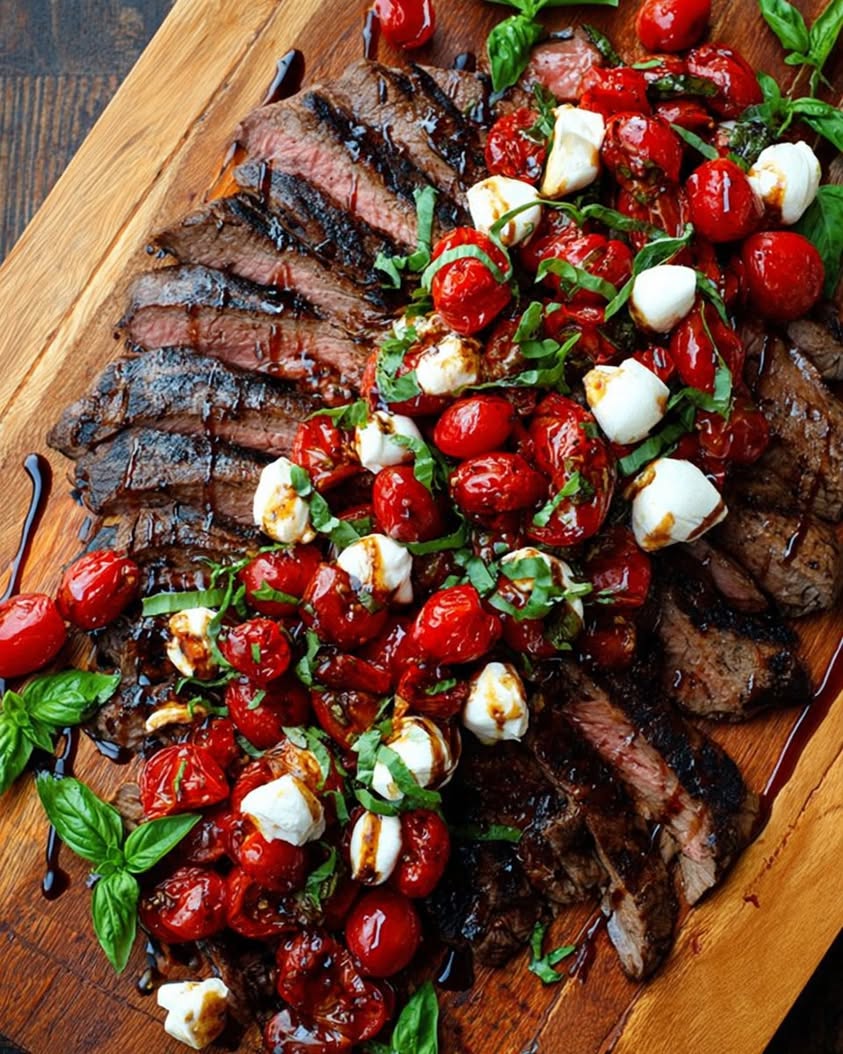
This recipe is a celebration of contrasts. You get the tender, juicy interior of a medium-rare flank steak against its beautifully caramelized crust. Then, a cool, creamy layer of fresh mozzarella melts slightly from the steak’s heat. Next, ripe tomato slices and fragrant basil add a garden-fresh pop. Finally, a drizzle of reduced balsamic vinegar adds a complex sweetness that ties every element together. The result is a dish that looks stunning on the plate and delivers an unforgettable symphony of flavors and textures with every single bite.
Best of all, this impressive meal comes together in about 25 minutes. The flank steak is a quick-cooking cut, and the Caprese topping requires minimal prep. Consequently, you can spend less time in the kitchen and more time enjoying your company. Whether you’re hosting a backyard barbecue, planning a special weeknight dinner, or simply craving a restaurant-quality meal at home, this Grilled Flank Steak with a Balsamic Caprese Twist is your ultimate solution. It’s sophisticated yet approachable, making it a guaranteed crowd-pleaser.
Quick Recipe Highlights
- Flavor Profile: This dish offers a masterful balance. The savory, umami-rich grilled steak forms the base. Meanwhile, the sweet acidity of ripe tomatoes and the rich, creamy mozzarella create a classic pairing. Ultimately, the reduced balsamic glaze adds a deep, caramelized sweetness that elevates the entire plate.
- Texture: Expect a delightful contrast. The flank steak provides a satisfying chew with a tender interior and a slightly crisp exterior. In contrast, the fresh mozzarella is soft and yielding. Simultaneously, the tomato adds a juicy burst, and the basil contributes a delicate, leafy crispness.
- Aroma: The scent is intoxicating. First, you’ll smell the smoky, savory notes from the grill. Then, the herbal fragrance of fresh basil cuts through. Finally, the sweet, tangy aroma of the reducing balsamic vinegar fills the air, promising the complex flavors to come.
- Visual Appeal: This dish is a feast for the eyes. The deep brown sear on the steak makes a beautiful canvas. Subsequently, the white mozzarella, red tomatoes, and green basil create the iconic Italian flag colors. The glossy, dark balsamic drizzle adds the final artistic touch.
- Skill Level Needed: This is an accessible recipe for most home cooks. Grilling a flank steak requires basic knowledge of heat management and doneness. Meanwhile, assembling the Caprese topping is straightforward. Therefore, with a little attention to timing, anyone can achieve fantastic results.
- Special Equipment: You will need a reliable grill or grill pan to achieve the proper char. Additionally, a small saucepan is necessary for reducing the balsamic glaze. A sharp knife for slicing the steak against the grain is also crucial for tenderness.
Recipe Overview
- Difficulty Level: We rate this recipe as “Easy.” The steps are simple and sequential. Grilling the steak is the primary technique, and flank steak is forgiving due to its quick cook time. The topping assembly requires no cooking, just slicing and arranging. Consequently, even novice cooks can execute this dish with confidence.
- Category: This is a versatile main course. It fits perfectly into summer grilling menus, weeknight dinner rotations, and special occasion feasts. It’s substantial enough to stand alone but also pairs wonderfully with a variety of sides, from a simple green salad to grilled vegetables or crusty bread.
- Cuisine: The recipe is a fusion of American grilling traditions and Italian culinary artistry. The grilled steak is a classic American technique. However, the Caprese topping—mozzarella, tomato, basil—is quintessentially Italian. The balsamic reduction adds a modern, gourmet touch that bridges both styles beautifully.
- Cost: This is a moderately priced meal that delivers high-end flavor. Flank steak is typically more affordable than other premium cuts like filet mignon. Fresh mozzarella, ripe tomatoes, basil, and balsamic vinegar are pantry-friendly items. Overall, you get incredible value and a restaurant-quality experience for a fraction of the cost.
- Season: This recipe shines brightest in the summer. This is when tomatoes and basil are at their peak flavor and most affordable. Additionally, grilling season is in full swing. Nevertheless, you can make it year-round using a grill pan indoors and seeking out the best available tomatoes.
- Occasion: It’s ideal for casual outdoor gatherings, date nights at home, or festive holiday cookouts like Memorial Day or the Fourth of July. Its impressive presentation makes it special, while its simplicity keeps the host relaxed. It’s a guaranteed conversation starter at any table.
Why You’ll Love This Recipe
First and foremost, the taste and texture combination is absolutely unbeatable. Each component plays a specific role. The savory, charred steak satisfies the craving for something hearty. Meanwhile, the cool, creamy mozzarella provides a rich counterpoint. The juicy tomato and aromatic basil cut through the richness with freshness. Finally, the syrupy balsamic glaze adds a touch of gourmet sweetness that makes every bite complex and exciting. You experience smoky, savory, creamy, fresh, and sweet notes in perfect harmony.
Furthermore, the convenience factor is a major win. From start to finish, this meal takes about 25 minutes. The active prep time is minimal—just seasoning the steak and slicing the toppings. While the steak rests, you quickly reduce the balsamic vinegar. Then, you simply assemble and serve. It’s the perfect solution for busy nights when you want something spectacular without spending hours in the kitchen. The grill does most of the work, leaving you free to prepare sides or enjoy a moment with your guests.
From a nutritional perspective, this dish offers a well-rounded profile. Flank steak is an excellent source of high-quality protein and essential nutrients like iron and B vitamins. Tomatoes provide vitamin C, potassium, and the antioxidant lycopene. Fresh basil contributes vitamins A and K, along with anti-inflammatory compounds. Using a high-quality balsamic reduction adds flavor without excessive fat or sodium. When enjoyed with a side of vegetables, it becomes a balanced and satisfying meal that fuels your body deliciously.
For entertaining, this Grilled Flank Steak with a Balsamic Caprese Twist is a true superstar. Its visual appeal is immediate and impressive, making guests feel special. It’s easy to scale up for a crowd—simply grill multiple steaks and prepare a larger batch of toppings. The recipe is also naturally gluten-free and can be adapted for other dietary needs with ease. Serving a dish that looks and tastes this good creates a memorable dining experience and establishes you as a host who knows how to deliver.
Finally, it’s incredibly cost-effective. You achieve a steakhouse-quality meal at a fraction of the restaurant price. Flank steak is a flavorful and affordable cut. The other ingredients are simple, fresh, and reusable in other dishes. Investing in a good bottle of balsamic vinegar for the glaze is worthwhile, as a little goes a long way and it can be used in countless other recipes, from salads to desserts. This recipe proves that eating well doesn’t require a lavish budget, just smart, flavorful combinations.
Historical Background and Cultural Significance
The story of this dish is a tale of two culinary traditions meeting. The Caprese salad, originating from the island of Capri in Italy, is a relatively modern invention, gaining popularity in the 1950s as a showcase for the region’s superb buffalo mozzarella, tomatoes, and basil. Its colors deliberately mirror the Italian flag, representing national pride. Conversely, grilling beef over an open flame is one of humanity’s oldest cooking methods, with American barbecue culture elevating it to an art form. This recipe represents a delicious fusion, applying the fresh, simple ethos of Italian *cucina povera* to a beloved American grilling staple.
Culturally, the Caprese salad embodies the Italian philosophy of letting exceptional, seasonal ingredients speak for themselves. It requires no dressing beyond good olive oil, representing purity and respect for the land. Grilling, especially in American backyards, symbolizes community, leisure, and celebration. Combining them creates a dish that honors both the thoughtful simplicity of Italian cooking and the joyful, communal spirit of an American cookout. It’s a bridge between two food-centric cultures, resulting in something greater than the sum of its parts.
The evolution of this specific recipe is a testament to modern gourmet home cooking. As balsamic vinegar from Modena became more widely available and appreciated globally, cooks began using its reduced form as a glaze. This practice added a new layer of sweet-and-sour complexity to both savory and sweet dishes. Applying this glaze to a grilled steak topped with Caprese ingredients was a natural, innovative step. It elevated a simple salad topping into a cohesive sauce that binds the hearty steak and fresh toppings together, creating a unified and sophisticated plate.
Regional variations of this concept abound, demonstrating its adaptability. In some interpretations, the mozzarella is melted over the steak under a broiler for a more decadent effect. Others might incorporate different herbs like oregano or thyme, or use a variety of heirloom tomatoes for visual and flavor complexity. Some cooks add a sprinkle of flaky sea salt or a crack of black pepper just before serving. The core idea remains constant: the marriage of charred protein with the fresh, creamy, and acidic elements of a Caprese, enhanced by the rich sweetness of balsamic. This flexibility is key to its enduring popularity.
Ingredient Deep Dive
Flank Steak: This long, flat cut comes from the cow’s abdominal muscles, making it lean and flavorful with a distinct grain. Historically, it was a less expensive, working-class cut, but its great flavor when cooked properly has boosted its popularity. It’s packed with protein, iron, zinc, and B vitamins. For the best results, look for a steak with bright red color and minimal silverskin. Always slice it thinly against the grain after cooking to ensure tenderness. If unavailable, skirt steak or hanger steak are excellent substitutes, though cooking times may vary slightly.
Fresh Mozzarella: Unlike its low-moisture, shredded cousin, fresh mozzarella is soft, moist, and milky. Traditionally made from buffalo or cow’s milk, it’s a staple of Southern Italian cuisine. It provides protein and calcium with a milder flavor and softer texture that melts beautifully from the steak’s residual heat. Seek out balls packed in water (mozzarella di bufala or fior di latte) for the best quality and creaminess. Drain it well and pat dry before slicing to prevent a watery plate. For a dairy-free version, high-quality vegan mozzarella-style cheese can work, though the melting properties will differ.
Ripe Tomatoes: The tomato’s journey from the Americas to Europe transformed Italian cuisine. Vine-ripened tomatoes are essential here for their sweet acidity and juicy texture. They are a fantastic source of vitamins C and K, potassium, and the antioxidant lycopene. Choose tomatoes that feel heavy for their size and have a fragrant smell at the stem. Heirloom varieties add stunning color and complex flavor. Off-season, campari or on-the-vine tomatoes are often better choices than bland beefsteaks. Store them at room temperature until use to preserve flavor and texture.
Fresh Basil: This aromatic herb is central to Mediterranean cooking and is revered in many cultures for its purported medicinal properties. It adds a distinctive, sweet-peppery fragrance that is irreplaceable in a Caprese. Basil contains vitamins A and K, along with essential oils like eugenol, which have anti-inflammatory benefits. Use whole leaves for the best presentation and flavor. Look for vibrant green bunches without black spots. To store, treat it like a bouquet of flowers: trim the stems and place in a glass of water on the counter. For a different herbal note, try fresh oregano or arugula.
Balsamic Vinegar: Authentic Traditional Balsamic Vinegar (Aceto Balsamico Tradizionale) from Modena or Reggio Emilia is aged for years and used sparingly as a condiment. For cooking and glazing, a good quality “Balsamic Vinegar of Modena” (IGP) is perfect. When reduced, its natural sugars caramelize, creating a thick, sweet-tart syrup. It contains antioxidants from the grapes. Avoid “balsamic glaze” products with added thickeners and sugar; reducing your own is simple and superior. A decent substitute for the glaze is a mixture of regular balsamic vinegar with a teaspoon of honey or maple syrup simmered until slightly thickened.
Common Mistakes to Avoid
- Not Slicing Against the Grain: This is the single most important step for tender flank steak. The grain refers to the long muscle fibers running through the meat. If you slice with the grain, you’ll be serving long, tough strands. Always identify the direction of the fibers after cooking and slice perpendicularly across them to shorten the fibers, ensuring each piece is easy to chew.
- Skipping the Resting Time: Pulling the steak off the grill and immediately slicing it is a recipe for dry meat. When heat is applied, the juices rush to the center. Resting for 5-10 minutes allows those juices to redistribute evenly throughout the entire steak. If you cut too soon, all those flavorful juices will simply run out onto your cutting board.
- Using Low-Quality Balsamic Vinegar: The glaze is a key flavor component. Using a very cheap, overly acidic balsamic will result in a harsh, unpleasant reduction. Invest in a moderately priced bottle labeled “Balsamic Vinegar of Modena IGP.” The flavor will be richer, more complex, and will reduce to a beautifully sweet and tangy syrup that truly enhances the dish.
- Overcooking the Steak: Flank steak is best served medium-rare to medium. Because it is a lean cut, overcooking it past medium will make it tough, dry, and chewy. Use a meat thermometer for accuracy—aim for an internal temperature of 130-135°F (54-57°C) for medium-rare. Remember, the temperature will rise a few degrees during the crucial resting period.
- Not Patting the Steak Dry: Before seasoning, always use paper towels to thoroughly dry the surface of the flank steak. A wet surface steams instead of sears, preventing the formation of that delicious, caramelized crust that is essential for flavor and texture. A dry steak guarantees a better sear and more attractive grill marks.
- Using Wet Mozzarella: Fresh mozzarella packed in water must be drained and patted dry. Placing wet cheese on the hot steak will create a pool of milky water on the plate, diluting the balsamic glaze and making the presentation soggy. Take a moment to drain the cheese and gently blot it with paper towels for the best results.
- Cutting Tomatoes and Basil Too Early: Prepare your tomato slices and basil leaves as close to serving time as possible. Tomatoes can start to lose their structure and leak juice if sliced too far ahead. Basil leaves can wilt and darken. For optimal freshness and vibrant color, do this final prep while the steak is resting or grilling.
- Neglecting to Season the Steak Adequately: Flank steak is a large, relatively thin cut that needs a generous amount of seasoning. Don’t be shy with the salt and pepper. Season both sides liberally, as some seasoning will be lost during grilling. Proper seasoning from the outside is what builds layers of flavor in every bite.
Essential Techniques
Grilling for the Perfect Sear: Achieving a great sear is crucial for flavor development. First, ensure your grill grates are clean, oiled, and screaming hot—around 450-500°F. This high heat triggers the Maillard reaction, creating hundreds of new flavor compounds and that desirable brown crust. Place the dried, seasoned steak on the grill and resist the urge to move it. Let it cook undisturbed for 4-5 minutes to develop grill marks and a proper sear before flipping. A common pitfall is flipping too often, which prevents proper browning and can lower the cooking temperature.
Reducing Balsamic Vinegar: This technique transforms acidic vinegar into a sweet, syrupy glaze. Pour the vinegar into a small saucepan over medium heat. Bring it to a simmer, then reduce the heat to maintain a gentle bubble. Stir occasionally. The vinegar will reduce in volume by about half and thicken enough to coat the back of a spoon. Watch it closely during the final minutes, as it can go from perfect to burnt quickly. The visual cue for success is a syrup that slowly drips from your spoon, not runs. Let it cool slightly before drizzling, as it will thicken further.
Slicing Against the Grain: This is the non-negotiable technique for tender flank steak. After the steak has rested, examine its surface to see the direction of the long, parallel muscle fibers—this is the “grain.” Position your sharp knife so the blade is perpendicular (at a 90-degree angle) to those fibers. Slice thinly, about 1/4 to 1/2-inch thick. By cutting across the fibers, you shorten them, making the meat much easier to chew. If you slice with the grain, you’ll be chewing on long, tough strands, no matter how perfectly the steak was cooked.
Pro Tips for Perfect Grilled Flank Steak with a Balsamic Caprese Twist
Bring the steak to room temperature for 20-30 minutes before grilling. This promotes even cooking, preventing a cold center and an overcooked exterior.
After grilling, tent the steak loosely with foil during the rest. This keeps it warm without trapping steam, which could soften your hard-earned crust.
Use a meat thermometer for foolproof doneness. For medium-rare, pull the steak at 130-135°F, as carryover cooking will bring it to the perfect 135-140°F.
For extra flavor, add a smashed garlic clove and a sprig of rosemary to the balsamic vinegar as it reduces. Remove them before the glaze cools.
If your fresh mozzarella is very soft, pop it in the freezer for 10-15 minutes before slicing. This firms it up and allows for cleaner, neater slices.
Drizzle the balsamic glaze in a zig-zag pattern over the assembled steak for a professional, restaurant-style presentation.
Add a final flourish of flaky sea salt (like Maldon) over the tomatoes and mozzarella just before serving. It adds a delightful crunch and bursts of salinity.
Variations and Adaptations
For regional variations, consider a Greek twist by substituting the mozzarella with crumbled feta, the basil with oregano, and adding a few kalamata olives. Alternatively, a Mexican-inspired version could use cotija cheese, cilantro, and a drizzle of crema mixed with lime zest instead of balsamic.
Seasonal adaptations are easy. In winter, use slow-roasted cherry tomatoes for concentrated sweetness. For autumn, top the steak with a fig and balsamic compote alongside the mozzarella. Spring might call for adding lightly grilled asparagus spears to the topping arrangement.
Dietary modifications are straightforward. For a dairy-free version, use a high-quality vegan mozzarella or simply double down on the tomatoes and basil with an extra drizzle of good olive oil. To make it Whole30 or Paleo, ensure your balsamic vinegar is compliant (no added sugar) and omit the cheese.
Flavor variations can keep the recipe exciting. Mix minced garlic and lemon zest into the salt before seasoning the steak. Add a pinch of red pepper flakes to the balsamic reduction for a spicy kick. Or, brush the steak with a light coat of pesto during the last minute of grilling.
For texture modifications, try using burrata cheese instead of mozzarella for an ultra-creamy, decadent center. You could also add a sprinkle of toasted pine nuts or breadcrumbs over the top for a contrasting crunch against the tender steak and soft toppings.
Presentation alternatives include serving the sliced steak on a large platter and arranging the Caprese toppings in an attractive pattern over the top for family-style dining. For individual plates, fan out the steak slices and artfully stack the tomato, mozzarella, and basil on one side.
Serving and Presentation Guide
Plating techniques matter. For individual servings, fan the sliced steak slightly overlapping on the plate. Then, artfully drape or stack the slices of tomato and mozzarella over the top, tucking whole basil leaves in between. This creates height and visual interest. Alternatively, for a rustic family-style presentation, arrange the whole sliced steak on a large wooden board or platter and scatter the Caprese toppings over the top, allowing guests to serve themselves.
Garnishing ideas extend beyond basil. A final drizzle of high-quality extra virgin olive oil adds sheen and fruitiness. A sprinkle of flaky sea salt or freshly cracked black pepper enhances flavors. For color, add a few microgreens or edible flowers. A light grating of lemon zest over the finished plate can add a surprising bright note.
Traditional accompaniments keep the meal light and Italian-focused. A simple arugula salad with a lemon vinaigrette complements the richness. Grilled or roasted vegetables like zucchini, asparagus, or bell peppers are excellent. Crusty bread is essential for soaking up the delicious juices and balsamic glaze left on the plate.
Modern serving suggestions might include serving the steak over a bed of creamy polenta or a lemony quinoa salad for a heartier meal. For a low-carb option, pair it with cauliflower mash or a large, colorful salad packed with other fresh vegetables.
Temperature considerations are key. The steak should be served warm, not piping hot, after its rest. The mozzarella and tomatoes should be at cool room temperature. This contrast between the warm steak and the cool, fresh toppings is part of the magic. Avoid using cold, straight-from-the-fridge toppings, as they can dull the steak’s warmth too quickly.
Portion control is simple with flank steak. A standard 1.5 to 2-pound steak comfortably serves 4 people when sliced and paired with substantial sides. The richness of the cheese and the satisfaction of the protein mean people are often content with 4-6 ounces of meat per serving. Always consider the appetites of your guests and the number of side dishes when planning.
Wine and Beverage Pairing
Wine pairings should complement both the savory char of the steak and the bright acidity of the Caprese topping. A medium-bodied Italian red like Chianti Classico or Barbera is a classic choice, as their cherry notes and good acidity cut through the richness. A fruity, low-tannin Beaujolais (Gamay) is another fantastic match. For white wine lovers, a fuller-bodied white like an oak-aged Chardonnay or a Viognier can stand up to the steak while complementing the creamy mozzarella.
Non-alcoholic alternatives can be just as sophisticated. A tart cherry or pomegranate spritzer mimics the acidity and fruitiness of red wine. Sparkling water with a squeeze of lemon and a few muddled basil leaves makes a refreshing herbal pairing. A high-quality, non-alcoholic ginger beer also works well, as its spice complements the savory notes and cleanses the palate.
While not a traditional pairing for steak, a lightly sweetened iced tea with lemon can be delightful, especially for a summer lunch. The tannins in the tea can mirror the structure of red wine. For a coffee pairing, consider a cold brew with low acidity; its smooth, slightly bitter notes can be a surprising and pleasant contrast to the sweet balsamic glaze after the meal.
Temperature considerations are vital. Serve red wines slightly below room temperature, around 60-65°F, to keep them refreshing. White wines and sparkling waters should be well-chilled. For non-alcoholic spritzers, use plenty of ice to keep them cold without excessive dilution, as the meal is best enjoyed with cool, refreshing drinks alongside the warm food.
Serving suggestions include offering a variety of options if you’re hosting a group. Having both a red wine and a sparkling water option covers most preferences. Always ensure water is plentiful on the table. If serving iced tea or cold brew, consider offering simple syrup or sweetener on the side so guests can adjust the sweetness to their taste.
Storage and Shelf Life
Storage methods differ for components. Store leftover cooked flank steak, sliced or unsliced, in an airtight container in the refrigerator for up to 3-4 days. Keep the Caprese toppings (tomato, mozzarella, basil) separate in their own containers. The balsamic glaze can be stored at room temperature in a sealed jar for several weeks. Never store the assembled dish, as the tomatoes will make everything soggy and the basil will wilt.
Temperature requirements are standard refrigerator temperature, below 40°F, for all perishable components. The balsamic reduction is shelf-stable due to its sugar content and acidity. If you’ve added garlic or herbs to your reduction, refrigerate it and use within a week.
Container recommendations include shallow airtight containers for the steak to cool quickly and evenly. Use containers with a dry paper towel for the mozzarella to absorb any excess moisture. Store tomato slices in a single layer if possible. A small glass jar is perfect for the balsamic glaze.
Signs of spoilage for the steak include a sour or off smell, a slimy texture, or a significant color change to gray or green. Mold on mozzarella or tomatoes is an obvious discard signal. If the basil is black and slimy, it’s past its prime. The balsamic glaze is very stable, but if you see mold, discard it immediately.
Reheating instructions for the steak are important for quality. Gently reheat slices in a skillet over medium-low heat with a splash of broth or water to keep them moist. Avoid the microwave, as it will make the steak tough and rubbery. The toppings should be added fresh after reheating. The mozzarella and tomato should not be reheated.
Freezing guidelines apply primarily to the cooked flank steak. Wrap it tightly in plastic wrap and then foil, or place in a heavy-duty freezer bag, removing as much air as possible. It can be frozen for 2-3 months. Thaw overnight in the refrigerator before reheating. The fresh toppings and balsamic glaze do not freeze well and should be made fresh.
Make Ahead Strategies
Prep timeline can significantly ease dinner stress. The day before, you can make the balsamic glaze and store it at room temperature. You can also slice the tomatoes, store them layered with paper towels in a container in the fridge, and wash and dry the basil leaves. Season the flank steak and leave it, uncovered, on a rack in the fridge overnight; this dry-brines the meat, enhancing flavor and promoting a better crust.
Storage between steps is simple. Keep the pre-sliced tomatoes in the fridge with a paper towel to absorb moisture. Store the washed basil in a container with a slightly damp paper towel. Keep the dry-brined steak on its rack in the fridge until 30 minutes before grilling. Have the balsamic glaze ready in its jar.
Quality impact assessment is positive for most make-ahead steps. The dry-brine improves the steak. The balsamic glaze’s flavor deepens as it sits. The tomatoes may lose a tiny amount of texture but are still excellent. The key is to keep the basil fresh and add it at the very last moment to preserve its vibrant color and aroma.
Assembly tips for a make-ahead meal are straightforward. Grill the steak as planned and let it rest. While it rests, arrange your pre-sliced tomatoes and mozzarella on a platter. Slice the rested steak against the grain. Arrange the slices on the platter, then quickly top with the pre-arranged tomatoes and mozzarella. Tuck in the fresh basil leaves, drizzle everything with the pre-made glaze, and serve immediately.
Reheating guidelines only apply if you’ve cooked the steak ahead. It’s best served fresh, but if necessary, follow the gentle skillet method mentioned in storage. Always add the fresh, cold toppings after reheating to restore the intended temperature contrast and texture.
Fresh element additions are non-negotiable. The basil must be added at the last second. If you pre-slice the mozzarella, it’s fine, but don’t assemble it on the steak until serving time to prevent sogginess. A final drizzle of fresh extra virgin olive oil just before serving can also brighten up pre-prepped components.
Scaling Instructions
Halving the recipe is simple for smaller households. Use a 3/4 to 1-pound flank steak. Halve all other ingredient quantities proportionally. Cooking time will be slightly less—check for doneness a minute or two early. The balsamic reduction can still be made with the full 1/2 cup of vinegar; you’ll just have extra glaze for another use, which is never a bad thing.
Doubling or tripling for a crowd requires some planning. You may need to grill the steaks in batches to avoid overcrowding the grill and steaming the meat. Keep cooked steaks tented with foil in a warm oven (200°F) while finishing the others. Multiply all topping ingredients accordingly. Make a larger batch of balsamic glaze in a wider saucepan to allow for faster, more even reduction.
Equipment adjustments may be necessary when scaling. For a large group, consider using a large sheet pan to bring multiple steaks to and from the grill. Have multiple cutting boards ready for slicing. Use a large, attractive platter for family-style serving. If your grill space is limited, plan your cooking timeline to have sides ready while you focus on the steak in batches.
Timing modifications are minimal when scaling up. The actual grill time per steak remains the same. The bottleneck is usually grill space. Factor in the time to grill in batches plus a few extra minutes for final slicing and assembly. Prep all toppings before you start grilling the first steak to ensure a smooth workflow.
Storage considerations for leftovers are more relevant when cooking for a crowd. It’s better to have a little extra than not enough. Any leftover cooked steak stores well for lunches. Store components separately as described earlier. Encourage guests to take leftovers home, as this dish makes excellent next-day salads or sandwiches.
Nutritional Deep Dive
Macro breakdown for a serving (approximately 1/4 of a 1.5lb steak with toppings) is favorable. You get a high amount of complete protein from the steak and mozzarella, essential for muscle repair and satiety. The fat content comes primarily from the marbling in the steak and the mozzarella, providing energy and aiding in the absorption of fat-soluble vitamins. Carbohydrates are minimal, coming mostly from the tomatoes and the natural sugars in the balsamic reduction, making this a naturally lower-carb meal option.
Micronutrient analysis reveals a wealth of vitamins and minerals. Flank steak is an excellent source of heme iron, which is easily absorbed, and B vitamins like B12 and niacin, crucial for energy metabolism. Tomatoes contribute vitamin C, potassium, and the antioxidant lycopene. Basil provides vitamin K for bone health, along with antioxidants like beta-carotene. Mozzarella adds calcium and phosphorus for strong bones and teeth.
Health benefits are multifaceted. The high protein content promotes fullness and supports a healthy metabolism. The iron helps prevent anemia. Lycopene from tomatoes is linked to reduced risk of certain cancers and heart disease. The herbs and spices offer anti-inflammatory compounds. When paired with vegetable sides, this meal supports a balanced, nutrient-dense diet that fuels an active lifestyle.
Dietary considerations are easily addressed. The recipe is naturally gluten-free. For those monitoring sodium, you can control the amount of salt used in seasoning. For heart-healthy diets, the lean cut of flank steak and the use of fresh ingredients align well with recommendations. The dish fits into Mediterranean, Paleo (without cheese), and low-carb dietary patterns with little to no modification.
Portion analysis shows that a standard serving provides a satisfying amount of food without being overly heavy. The protein and fat provide lasting energy, while the fresh toppings add volume and nutrients without many calories. This balance helps prevent overeating later. It’s a meal that satisfies both physically and mentally, reducing the desire for post-dinner snacking.
Weight management tips include being mindful of the balsamic glaze portion, as it is concentrated in sugars. A little goes a long way. Pairing this dish with a large side of non-starchy vegetables like a big green salad or grilled asparagus increases fiber and volume, promoting fullness for fewer overall calories. The high protein content is also a key ally in maintaining muscle mass while managing weight.
Dietary Adaptations
Gluten-free: This recipe is naturally gluten-free as written. Always double-check your balsamic vinegar label, as very rare, low-quality brands might use caramel color derived from wheat, but this is exceedingly uncommon. All other ingredients—steak, cheese, tomatoes, basil, oil, salt, pepper—are inherently gluten-free. Serve with gluten-free sides like roasted potatoes or a quinoa salad.
Dairy-free: Omit the mozzarella cheese entirely. The dish will still be delicious with the steak, tomatoes, basil, and balsamic. For a creamy element, you could add a drizzle Print
Grilled Flank Steak with Balsamic Caprese Twist
- Total Time: 45 minutes
- Yield: 4
Description
A savory grilled flank steak topped with a fresh caprese-inspired salad and a tangy balsamic reduction, blending classic Italian flavors with hearty beef.
Ingredients
- 1.5 lbs flank steak
- 2 tbsp olive oil
- 2 cloves garlic, minced
- 1 tsp salt
- 1/2 tsp black pepper
- 1 cup cherry tomatoes, halved
- 8 oz fresh mozzarella balls (ciliegine)
- 1/4 cup fresh basil leaves, chopped
- 1/2 cup balsamic vinegar
- 1 tbsp honey
Instructions
- Season the flank steak with olive oil, minced garlic, salt, and pepper. Let it marinate at room temperature for 15 minutes.
- While the steak marinates, simmer balsamic vinegar and honey in a small saucepan over medium heat until reduced by half, about 10 minutes. Set aside to cool.
- Preheat a grill or grill pan to medium-high heat. Grill the steak for 5-7 minutes per side for medium-rare, or until desired doneness. Let it rest for 10 minutes before slicing thinly against the grain.
- In a bowl, combine cherry tomatoes, mozzarella balls, and chopped basil. Drizzle with a tablespoon of the balsamic reduction and toss gently.
- Arrange sliced steak on a platter, top with the caprese salad, and drizzle with the remaining balsamic reduction. Serve immediately.
Notes
You can customize the seasonings to taste.
- Prep Time: 15 minutes
- Cook Time: 30 minutes
- Method: Main
- Cuisine: American