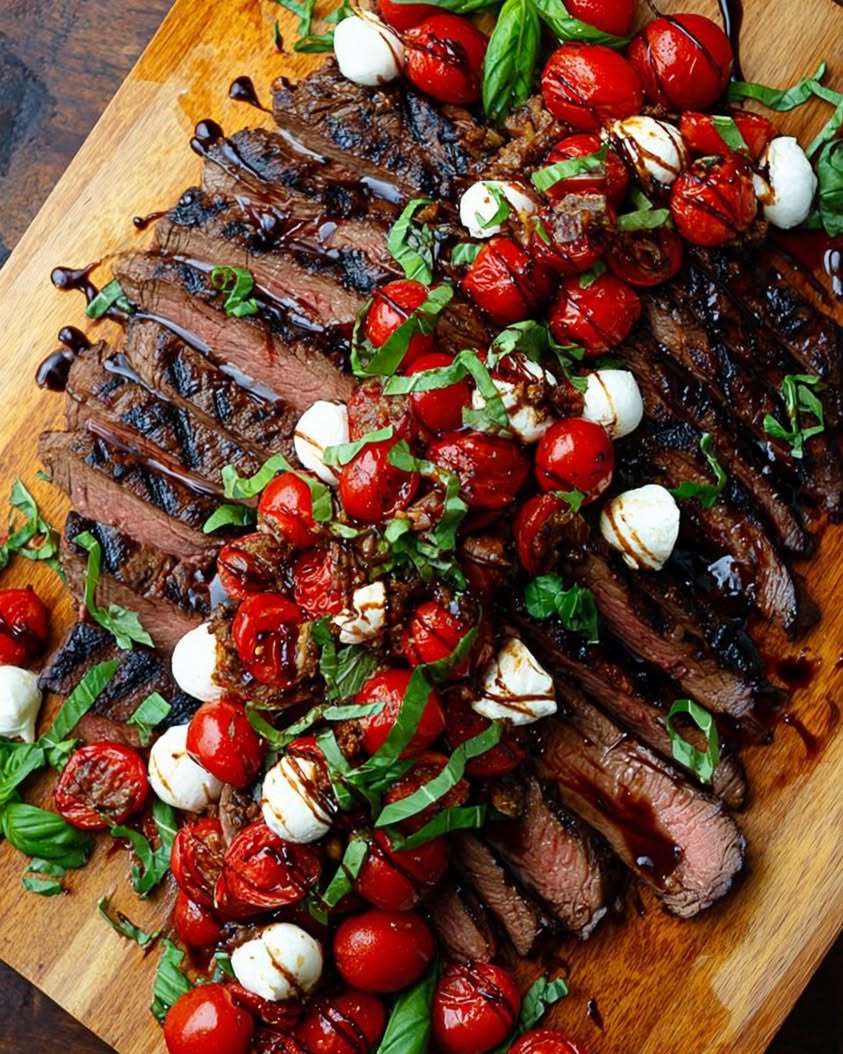
Grilled Flank Steak with a Balsamic Caprese Twist: A Summer Showstopper
Imagine the perfect summer evening. The grill is hot, the air is warm, and you are about to serve a meal that looks and tastes like it came from a fine Italian trattoria. This Grilled Flank Steak with a Balsamic Caprese Twist is that meal. It masterfully combines the robust, savory char of perfectly grilled beef with the fresh, vibrant flavors of a classic Caprese salad. Ultimately, you get a dish that is both impressively elegant and surprisingly simple to prepare.
The magic of this recipe lies in its beautiful contrasts. You start with a lean, flavorful flank steak, marinated simply to enhance its natural beefy goodness. Then, you top it with a stunning salad of ripe tomatoes, creamy fresh mozzarella, and fragrant basil. Finally, a drizzle of reduced balsamic vinegar adds a sweet-tart punch that ties everything together. Consequently, every bite delivers a symphony of textures and tastes, from the juicy steak to the cool, creamy cheese and the bright, acidic finish.
This Grilled Flank Steak with a Balsamic Caprese Twist is more than just dinner, it is an experience. It is perfect for a special weeknight treat or for wowing guests at your next backyard barbecue. Because the components are so straightforward, you can focus on execution and presentation, resulting in a restaurant-quality dish right from your own grill. Let us dive into how to make this unforgettable meal.
Quick Recipe Highlights
- Flavor Profile: This dish features a bold, savory foundation from the grilled flank steak, beautifully contrasted by the sweet acidity of balsamic reduction and the fresh, milky notes of mozzarella. The ripe tomatoes and basil add garden-fresh brightness that cuts through the richness.
- Texture: Expect a wonderful interplay of textures: the tender, slightly chewy grain of the thinly sliced flank steak against the juicy burst of tomato, the soft, yielding fresh mozzarella, and the delicate leaf of basil. The reduced balsamic adds a subtle, syrupy body.
- Aroma: The scent is intoxicating. First, you will smell the smoky char of the steak on the grill, followed by the sweet, tangy aroma of reducing balsamic vinegar. Finally, the fresh, peppery scent of torn basil completes the aromatic profile as you assemble the dish.
- Visual Appeal: This recipe is a feast for the eyes. The deep brown, cross-hatched steak serves as a dramatic base for the vibrant red tomatoes, white mozzarella, and green basil. A glossy drizzle of dark balsamic glaze creates stunning visual contrast on the plate.
- Skill Level Needed: This is an accessible recipe for most home cooks. The primary skills required are managing a grill or grill pan to achieve a good sear and mastering the simple technique of reducing balsamic vinegar. Slicing the steak against the grain is a crucial but easy-to-learn step.
- Special Equipment: A grill (charcoal, gas, or indoor grill pan) is essential. You will also need a small saucepan for the balsamic reduction and a sharp chef’s knife for slicing the tomatoes, mozzarella, and most importantly, the cooked flank steak.
Recipe Overview
- Difficulty Level: We rate this Grilled Flank Steak with a Balsamic Caprese Twist as “Easy.” While it feels and looks gourmet, the steps are straightforward and forgiving. The marinade is simple, the grilling time is short, and the “salad” topping requires no cooking. The most technical aspect is ensuring you do not overcook the lean flank steak and that you slice it correctly against the grain for maximum tenderness.
- Category: This recipe perfectly straddles multiple categories. It is a hearty main course protein, a fantastic grilled dish ideal for summer, and a stunning example of fusion cuisine that combines American grilling techniques with Italian salad flavors. It works for casual family dinners and upscale entertaining alike.
- Cuisine: The inspiration is firmly Italian-American, pulling the iconic flavors of Insalata Caprese—tomato, mozzarella, basil, and balsamic—and pairing them with a classic American cut of grilled beef. The result is a celebratory fusion dish that honors both culinary traditions in a new and exciting way.
- Cost: This is a moderately priced meal. Flank steak is typically more affordable than premium steaks like filet mignon or ribeye. Fresh mozzarella (especially the ciliegine or bocconcini small balls) and good-quality balsamic vinegar are the other primary costs. Seasonal, ripe tomatoes from a farmer’s market can elevate the dish without breaking the bank.
- Season: This recipe sings in the summer and early fall. This is when tomatoes and basil are at their peak of flavor and abundance. Grilling outdoors is also most enjoyable during these warmer months. However, with quality greenhouse tomatoes and year-round basil availability, you can confidently make this dish any time you crave a taste of summer.
- Occasion: Its versatility is a major strength. Serve it for a fast and impressive weeknight dinner to break the monotony. Alternatively, it is a guaranteed showstopper for weekend cookouts, dinner parties, Father’s Day, or date night at home. The presentation is elegant enough for celebrations but simple enough for casual gatherings.
Why You’ll Love This Recipe
First and foremost, the taste and texture combination is utterly irresistible. The savory, umami-rich flavor of the grilled flank steak provides a deeply satisfying base. Meanwhile, the cool Caprese topping offers a refreshing counterpoint. Each component plays a role: the sweet tomatoes, the creamy mozzarella, the aromatic basil, and the tangy-sweet balsamic glaze. Together, they create a balanced and complex flavor profile in every single bite. You get the hearty satisfaction of steak without it feeling heavy, thanks to the bright, salad-like finish.
From a convenience standpoint, this Grilled Flank Steak with a Balsamic Caprese Twist is a dream. The active cooking time is remarkably short, often under 10 minutes on the grill. You can prepare the balsamic reduction and the Caprese salad components while the steak marinates or rests. Consequently, you can get an elegant, company-worthy meal on the table in well under 30 minutes. The cleanup is minimal, especially if you use an outdoor grill, making it a perfect choice for low-stress entertaining.
Nutritionally, this dish offers a great balance. Flank steak is a lean source of high-quality protein and essential nutrients like iron, zinc, and B vitamins. Tomatoes provide vitamin C, potassium, and the antioxidant lycopene. Fresh mozzarella offers calcium and protein, while basil contains beneficial antioxidants. By using a lean cut and a vegetable-heavy topping, you create a meal that is both indulgent and nourishing. It fits well into various balanced eating plans.
The social and entertaining value of this recipe is incredibly high. It is visually dramatic, prompting “oohs” and “aahs” when you bring it to the table. Slicing and serving the steak family-style encourages sharing and conversation. Furthermore, it feels special and celebratory, turning an ordinary meal into an event. It is a fantastic way to showcase summer produce for guests and makes everyone feel like they are dining at a much fancier establishment.
Finally, this dish is cost-effective and accessible. As mentioned, flank steak is a budget-friendly beef option compared to other steaks. The remaining ingredients are simple pantry staples or fresh produce. You do not need any exotic or hard-to-find items. The technique is simple enough for a beginner but yields results that taste professional. This combination of affordability, simplicity, and impressive outcome makes the Grilled Flank Steak with a Balsamic Caprese Twist a recipe you will return to again and again.
Historical Background and Cultural Significance
The story of this dish is a tale of two classic culinary traditions meeting. The Caprese salad, or Insalata Caprese, originates from the island of Capri, Italy. Its creation is relatively modern, likely dating to the early 20th century, and it was designed to showcase the colors of the Italian flag: red (tomato), white (mozzarella), and green (basil). Initially a simple peasant dish, it gained international fame as a symbol of fresh, minimalist Italian cooking. The addition of balsamic vinegar, a product of Modena, Italy, is a more recent and somewhat controversial twist, but one widely embraced outside of Italy for its sweet-tart complexity.
On the other side is the flank steak, a cut beloved in American grilling culture. Historically, flank steak was considered a lesser cut due to its toughness, but its bold flavor was always appreciated. American cooks and barbecue enthusiasts mastered techniques like marinating and, crucially, slicing against the grain to transform it into a tender, flavorful, and affordable steak option. Grilling became the preferred method, imparting a smoky char that complements the meat’s robust character. This cut represents the ingenuity of American home cooking.
The fusion of these two elements is a beautiful example of modern global cuisine. It takes the Italian ideal of fresh, high-quality ingredients combined simply and pairs it with the American love for hearty, grilled meats. This Grilled Flank Steak with a Balsamic Caprese Twist is not a traditional dish from any one region, but rather a contemporary creation that respectfully borrows from both worlds. It reflects how home cooks today feel free to mix and match flavors and techniques from different cultures to create something new and delicious.
Regional variations of this concept abound. In Argentina, one might find a similar steak served with chimichurri, a vibrant herb sauce. In other parts of the US, the Caprese topping might be served on a chicken breast or a pork chop. The specific combination of grilled flank steak with the classic Caprese trio, however, has become a standout favorite. Its popularity speaks to a universal desire for meals that are both substantial and refreshing, rustic and elegant, simple yet deeply flavorful.
Ingredient Deep Dive
Let us start with the star: the flank steak. This cut comes from the cow’s abdominal muscles, a well-exercised area which gives it great flavor but requires proper treatment. It is long, flat, and has a prominent grain running through it. Nutritionally, it is a lean protein powerhouse, rich in iron, zinc, and B-vitamins like B12 and niacin. When selecting flank steak, look for a piece with bright red color and minimal silverskin (the tough connective tissue). It should be relatively uniform in thickness for even cooking. Store it in the coldest part of your refrigerator for up to 3 days, or freeze for several months. For a substitution, skirt steak is the closest alternative, though it is thinner and cooks even faster.
Fresh mozzarella is the heart of the Caprese element. Unlike low-moisture, aged mozzarella, fresh mozzarella is stored in water or whey to maintain its soft, milky texture. Traditionally made from buffalo milk (mozzarella di bufala) or cow’s milk (fior di latte), it is a staple of Southern Italian cuisine. It is a good source of calcium and protein. Seek out balls packed in water (ciliegine or bocconcini are perfect small sizes) for the best flavor and texture. Avoid the pre-shredded variety. Store it in its liquid in the refrigerator and use within a few days of opening. For a dairy-free version, consider a high-quality vegan mozzarella-style cheese made from cashews or coconut.
Ripe, in-season tomatoes are non-negotiable. They provide the necessary sweetness and acidity. Heirloom varieties like Brandywine or Cherokee Purple offer incredible flavor, while Roma (plum) tomatoes are less juicy and hold their shape well. Tomatoes are rich in vitamin C, potassium, and the antioxidant lycopene, which is more bioavailable when cooked but still present in raw tomatoes. Choose tomatoes that feel heavy for their size and have a fragrant smell at the stem end. Never refrigerate ripe tomatoes, as cold temperatures degrade their texture and flavor. Keep them at room temperature until ready to use. In a pinch, high-quality cherry tomatoes, halved, can be a great year-round substitute.
Fresh basil brings the essential aromatic note. A member of the mint family, basil is central to Mediterranean and Southeast Asian cuisines. It contains antioxidants and essential oils like eugenol, which have anti-inflammatory properties. Look for vibrant green leaves without black spots. The best way to store basil is like a bouquet of flowers: trim the stems and place them in a glass of water at room temperature, loosely covering the leaves with a plastic bag. For this recipe, tearing the leaves by hand is preferable to cutting, as it prevents bruising and releases more aroma. In winter, a good-quality pesto can be dabbed on as a substitute, though the flavor profile will shift.
The balsamic glaze is the flavor conductor. Authentic Traditional Balsamic Vinegar (Aceto Balsamico Tradizionale) is aged for years and is incredibly expensive. For cooking and reducing, a good-quality “Balsamic Vinegar of Modena” is perfect. The reduction process concentrates its natural sugars, creating a thick, syrupy glaze that clings to the steak and salad. Balsamic vinegar contains antioxidants and may have prebiotic benefits. When reducing, use a stainless steel or enameled pot, as reactive metals like aluminum can impart a metallic taste. If you are short on time, you can purchase pre-made balsamic glaze, but making it yourself allows you to control the sweetness and thickness.
Common Mistakes to Avoid
- Overcooking the Steak: Flank steak is best served medium-rare to medium. Because it is a lean cut, overcooking will make it tough and chewy. Use a meat thermometer and pull it off the grill at 130-135°F for medium-rare, as the temperature will continue to rise during resting.
- Slicing With the Grain: This is the most common error that leads to a tough eating experience. Always identify the direction of the long muscle fibers (the grain) on the raw steak. After cooking and resting, you must slice perpendicularly (across) those fibers. This cuts the long muscle strands into short pieces, making the meat much more tender.
- Using Unripe Tomatoes: Pale, hard, out-of-season tomatoes will lack sweetness and juiciness, leaving your Caprese topping bland and watery. Insist on the ripest, most fragrant tomatoes you can find, even if it means using cherry tomatoes in the off-season.
- Skipping the Resting Time: Cutting into the steak immediately after grilling causes all the precious juices to run out onto the cutting board, leaving the meat dry. Always let your grilled flank steak rest, tented loosely with foil, for at least 5-10 minutes. This allows the juices to redistribute throughout the meat.
- Over-Reducing the Balsamic: If you cook the balsamic vinegar for too long, it can become overly thick, sticky, and bitter. The goal is a syrup that coats the back of a spoon but is still pourable. It will continue to thicken slightly as it cools.
- Cutting the Basil with a Knife: Slicing basil can bruise the leaves and cause them to blacken quickly. For the best flavor and appearance, gently tear the basil leaves with your hands just before assembling the dish.
- Not Patting the Steak Dry: Before placing the steak on the grill, pat it thoroughly dry with paper towels. A wet surface steams instead of sears, preventing you from getting that beautiful, flavorful crust.
- Using Low-Heat on the Grill: Flank steak needs a very hot grill to sear quickly and develop a crust without overcooking the interior. Make sure your grill grates are screaming hot before you add the meat.
- Marinating with Acid for Too Long: While a simple marinade enhances flavor, avoid highly acidic marinades (like those with lots of vinegar or citrus) for more than a few hours on flank steak. The acid can begin to “cook” the surface proteins, leading to a mushy texture.
- Forgetting to Season Liberally: Beef and tomatoes both need generous seasoning. Do not be shy with kosher salt and freshly ground black pepper on the steak before grilling and on the Caprese components before assembling.
Essential Techniques
Slicing Against the Grain is the single most important technique for ensuring your Grilled Flank Steak is tender. The “grain” refers to the long, parallel muscle fibers visible on the surface of the raw meat. When you chew a piece of meat sliced with the grain, you are trying to bite through these long, tough fibers. Slicing across them, however, shortens the fibers, making them much easier to chew. To master it, identify the grain direction on the raw steak. After cooking and resting, use a very sharp knife to cut thin slices perpendicular to that direction. The visual cue for success is seeing short, distinct muscle strands on the face of each slice, not long, stringy lines.
Creating a Hot Grill Sear is crucial for flavor development. The Maillard reaction—a chemical process between amino acids and sugars—occurs at high heat, creating hundreds of complex flavor compounds and that desirable brown crust. To achieve this, preheat your grill with the lid closed for at least 10-15 minutes until it is very hot. For gas grills, this means all burners on high. For charcoal, wait until the coals are covered with white ash. A common pitfall is adding the steak to a cool grill, which causes it to stew in its own juices rather than sear. The success cue is a audible sizzle upon contact and the meat releasing easily from the grates when a proper crust has formed, usually after 4-5 minutes.
Reducing Balsamic Vinegar concentrates its flavors and creates a luxurious glaze. The process involves simmering the vinegar to evaporate water, leaving behind a thicker, sweeter syrup. Use a small, heavy-bottomed saucepan and bring the vinegar to a gentle simmer over medium heat. Stir occasionally. Watch it closely, as it can go from perfect to burnt quickly. The key is to reduce it by about half; it should coat the back of a spoon and leave a clear trail when you run your finger through it. A common mistake is boiling it too rapidly or for too long, which can create a bitter, overly thick, or even crystallized glaze. Let it cool slightly before drizzling, as it will continue to thicken.
Pro Tips for Perfect Grilled Flank Steak with a Balsamic Caprese Twist
Bring the steak to room temperature for 20-30 minutes before grilling. This promotes more even cooking from edge to center, helping you avoid an overcooked exterior and a cold, raw interior.
Score the fat cap lightly. If your flank steak has a noticeable fat cap on one side, use a sharp knife to make shallow, diagonal cuts through it (scoring). This prevents the steak from curling up dramatically as the fat renders and contracts on the grill.
Use the “hand test” for doneness if you do not have a thermometer. Gently press the center of the steak. It should feel like the fleshy part of your palm when your thumb and middle finger are touching—firm but with some give for medium-rare.
Let the balsamic reduction cool until just warm. A piping hot reduction will melt the fresh mozzarella on contact. Allowing it to cool for 5-10 minutes ensures it adds flavor and gloss without compromising the cheese’s texture.
Assemble the Caprese topping just before serving. To prevent the tomatoes from making the plate watery and the basil from wilting, combine the tomato, mozzarella, and basil in a bowl only when you are ready to slice and plate the steak.
Drizzle the reduction with intention. Instead of pouring it all over, use a spoon to create artistic drizzles or dots around the plate. This gives you control over the flavor in each bite and keeps the presentation clean.
Warm your serving platter. Placing hot steak on a cold plate can cause it to cool down too quickly. A quick warm-up in a low oven or by running hot water over it and drying it makes a difference.
Use leftover steak creatively. Thinly sliced leftover Grilled Flank Steak makes incredible sandwiches, salads, or fajita fillings the next day. The Caprese flavors pair wonderfully with all of these applications.
Variations and Adaptations
For regional variations, consider swapping the Italian-inspired topping for other global flavors. A Mexican twist could feature a topping of pico de gallo, avocado, and crumbled queso fresco with a lime crema drizzle. An Asian-inspired version might use a topping of sliced cucumbers, pickled ginger, and scallions with a soy-sesame glaze instead of balsamic. A French bistro take could involve a topping of sautéed mushrooms and shallots with a dollop of herb compound butter melting over the hot steak.
Seasonal adaptations are easy and encouraged. In peak summer, use a mix of heirloom tomato varieties in different colors. In fall, consider a topping of roasted cherry tomatoes and caramelized onions for a deeper, sweeter flavor. For a winter version, a warm Caprese-inspired topping made by quickly broiling the tomatoes and mozzarella until just melted can be incredibly comforting. Spring might invite the addition of fresh asparagus spears grilled alongside the steak and chopped into the topping.
Dietary modifications are straightforward. For a gluten-free meal, this recipe is naturally compliant—just ensure your balsamic vinegar is gluten-free (most are). For dairy-free diets, use a high-quality vegan mozzarella alternative or simply omit the cheese and add extra ripe tomatoes and a sprinkle of nutritional yeast for a cheesy flavor note. For a lower-carb or keto approach, the recipe is excellent as-is; just be mindful of the sugar content in the balsamic reduction and use it sparingly or opt for a sugar-free balsamic glaze.
Flavor variations can keep this recipe exciting. Add a pinch of red pepper flakes to the balsamic reduction for a spicy kick. Incorporate chopped, oil-packed sun-dried tomatoes into the fresh tomato mix for an intense flavor boost. Infuse the balsamic reduction with a sprig of fresh rosemary or thyme while it simmers. For a richer finish, whisk a tablespoon of cold butter into the warm balsamic reduction after taking it off the heat to create a luxurious, glossy sauce.
Serving and Presentation Guide
Plating is key to maximizing the visual impact of this dish. Slice the rested flank steak against the grain into thin, uniform slices. Then, fan the slices out slightly on a large, clean platter or individual plates. This showcases the beautiful interior color of the meat. Next, spoon the Caprese salad mixture (tomatoes, mozzarella, and torn basil) generously over the center of the fanned steak. The goal is to let some of the steak remain visible around the edges for contrast.
Garnishing should be simple and functional. A final scattering of whole small basil leaves or small basil sprigs adds a fresh, green accent. You can also add a light flurry of flaky sea salt, like Maldon, over the entire platter just before serving for a final burst of salinity and texture. A drizzle of high-quality extra virgin olive oil over the Caprese topping adds sheen and richness.
For traditional accompaniments, keep things simple to let the main dish shine. A crusty baguette or grilled ciabatta is perfect for soaking up the meat juices and balsamic glaze. A light, crisp side salad with a lemon vinaigrette provides a refreshing counterpoint. Alternatively, grilled or roasted vegetables like asparagus, zucchini, or bell peppers complement the smoky flavors beautifully without competing.
Consider modern serving suggestions for a fun twist. Slice the steak and serve it on a large board with the Caprese components in separate bowls, allowing guests to build their own bites. For a salad version, slice the leftover cold steak and toss it with the Caprese ingredients and some arugula for a hearty main-course salad. You can also serve the sliced steak in warm tortillas with the Caprese topping for fusion steak tacos.
Wine and Beverage Pairing
Choosing the right wine enhances the Grilled Flank Steak with a Balsamic Caprese Twist experience. The savory, charred meat calls for a red with good acidity to cut through the richness, while the sweet-tart balsamic and fresh tomatoes need a wine that will not clash. A medium-bodied Italian red like Chianti Classico or Barbera is a classic and perfect choice. Their bright cherry acidity and subtle earthy notes complement both the steak and the Italian-inspired toppings. Alternatively, a California Zinfandel with its ripe berry flavors and peppery notes can stand up to the bold flavors beautifully.
For white wine lovers, do not feel left out. A fuller-bodied white with enough structure can work wonderfully. Consider an oak-aged Chardonnay from California or Australia; its creamy texture and notes of citrus and vanilla can harmonize with the mozzarella and balance the balsamic’s acidity. A dry Rosé, particularly from Provence or a Spanish Garnacha Rosado, is another brilliant option. Its red fruit flavors, crisp acidity, and pale color are refreshing alongside the grilled elements and summer flavors.
Non-alcoholic alternatives should be just as thoughtful. A sparkling water with a squeeze of lemon or lime and a few basil leaves is refreshing and thematic. For a more complex option, a tart cherry juice spritzer (mixed with club soda) mirrors the sweet-tart notes of the balsamic. Iced hibiscus tea (agua de jamaica) offers a beautiful ruby color and a cranberry-like tartness that pairs excellently with the dish. Avoid overly sweet sodas, as they will overwhelm the nuanced flavors.
Storage and Shelf Life
Proper storage is essential for food safety and quality. Store leftover grilled flank steak and Caprese components separately. Place the cooled steak in an airtight container in the refrigerator; it will keep for 3-4 days. The Caprese mixture (tomatoes, mozzarella, basil) is best stored in a separate container and consumed within 1-2 days, as the tomatoes will release water and the basil will wilt. Any leftover balsamic reduction can be stored in a small sealed jar or container at room temperature for several weeks; it may thicken over time but can be gently warmed to restore pourability.
Reheating the steak requires care to prevent it from becoming tough and dry. The best method is to reheat slices gently in a skillet over low heat with a splash of beef broth or water to create steam. You can also use the microwave at 50% power in short bursts, but this risks overcooking. For the best texture, consider enjoying leftover steak cold in salads or sandwiches. The Caprese components should not be reheated; enjoy them cold.
Freezing is possible but with caveats. You can freeze the cooked, sliced flank steak in a freezer-safe bag or container for up to 2-3 months. However, be aware that freezing can slightly alter the texture of the already-cooked meat, making it a bit drier. The tomatoes, fresh mozzarella, and basil do not freeze well and should not be frozen. Thaw frozen steak overnight in the refrigerator before using it in cooked applications like soups, stews, or casseroles where the slight texture change is less noticeable.
Make Ahead Strategies
You can significantly streamline your dinner preparation with smart make-ahead steps. The balsamic reduction can be made up to two weeks in advance. Simply prepare it, let it cool, and store it in a sealed jar at room temperature. The flank steak can be marinated in the refrigerator for up to 12 hours (or even just 30 minutes at room temperature) before you plan to grill. This allows the flavors to penetrate the meat, saving you active prep time right before cooking.
For the Caprese components, prep them separately but do not combine until serving. You can slice the tomatoes and the fresh mozzarella balls a few hours ahead. Store them in separate containers in the refrigerator. Take them out about 30 minutes before serving to take the chill off. Wash and dry the basil leaves, but do not tear or chop them until the very last moment to prevent browning.
On the day of serving, your workflow becomes incredibly efficient. Pull the marinated steak from the fridge to come to room temperature. Gently warm the balsamic reduction if it has thickened too much. Preheat the grill. Combine the tomatoes and mozzarella in a bowl. Then, grill the steak, let it rest, slice it, assemble the topping, tear the basil, and drizzle with glaze. By breaking the tasks into “long-lead” and “last-minute” categories, you ensure every element is fresh and perfect without last-minute stress.
Scaling Instructions
This recipe scales beautifully for different group sizes. For halving the recipe, use a 3/4 to 1-pound flank steak and simply halve all other ingredient quantities. Cooking time will remain roughly the same, as the steak thickness is unchanged. For doubling or tripling, you may need to cook the steaks in batches unless you have a very large grill surface. Avoid overcrowding the grill, as this lowers the temperature and causes steaming. You may need to prepare a larger batch of balsamic reduction in a wider saucepan to allow for proper evaporation.
Consider equipment adjustments when scaling up. If cooking multiple steaks, have a large, clean platter or a baking sheet lined with foil ready to hold them while they rest. You may also need a larger serving platter for presentation. When making a larger quantity of the Caprese topping, use a very large, shallow bowl to gently combine the ingredients without crushing the tomatoes or mozzarella.
Timing remains consistent for the steak itself, as each piece will cook in the same 4-5 minutes per side. The main timing modification comes with the batch cooking. If cooking in batches, keep the cooked, resting steaks tented with foil in a warm spot (like the top of a turned-off oven). The total active cooking time will simply be the number of batches multiplied by 10 minutes. Plan your side dishes accordingly to be ready when the last steak comes off the grill.
Nutritional Deep Dive
A serving of this Grilled Flank Steak with a Balsamic Caprese Twist provides a robust nutritional profile. The flank steak is an excellent source of complete protein, essential for muscle repair and satiety. It is also rich in heme iron, which is highly absorbable and crucial for oxygen transport in the blood, as well as zinc for immune function and B-vitamins for energy metabolism. Because it is a lean cut, it provides this nutrient density with a moderate amount of saturated fat compared to fattier steaks.
The tomato and basil components add important micronutrients and phytonutrients. Tomatoes contribute vitamin C, potassium, and the antioxidant lycopene, which has been studied for its potential heart health and cancer-preventive properties. Basil provides vitamin K, essential for blood clotting, along with antioxidants like beta-carotene and essential oils with anti-inflammatory potential. Fresh mozzarella adds calcium for bone health and additional protein, though it also contributes saturated fat and sodium, so portion awareness is key.
For those managing their diet, this dish can be part of a balanced plan. The high protein content promotes fullness, which can aid in weight management. To make it lower in sodium, be mindful of the salt added during seasoning and look for lower-sodium fresh mozzarella. The balsamic reduction does contain natural sugars from the grapes, so individuals monitoring sugar intake, such as those with diabetes, should use the glaze sparingly. Overall, it is a meal that combines macronutrient balance with a wide array of beneficial micronutrients from whole, fresh ingredients.
Dietary Adaptations
For a gluten-free version, this recipe is naturally compliant. Simply double-check that your balsamic vinegar is labeled gluten-free, as some cheaper brands may use additives with gluten. All other core ingredients—steak, tomatoes, mozzarella, basil, oil—are inherently gluten-free.
Creating a dairy-free or vegan adaptation requires replacing the fresh mozzarella. Opt for a high-quality vegan mozzarella-style cheese made from cashews, coconut, or almonds. Many brands now offer “fresh” style balls in water that mimic the texture well. Alternatively, you can omit the cheese entirely and boost the dish with other elements like creamy avocado slices, a sprinkle of toasted pine nuts for richness, or a drizzle of vegan pesto.
For a Paleo or Whole30 approach, omit the cheese and ensure your balsamic vinegar contains no added sulfites or sugar (check labels carefully, as many commercial balsamics have added caramel color or sweeteners). The dish then becomes a simple combination of high-quality protein (the steak) with vegetables (tomatoes, basil) and a compliant dressing (olive oil, herbs). It fits perfectly into these frameworks.
Low-carb and keto dieters can enjoy this recipe with minor adjustments. Flank steak, tomatoes, basil, and olive oil are all keto-friendly. The primary consideration is the balsamic reduction, which contains natural sugars. Use it very sparingly as a garnish, or make a keto-friendly glaze by reducing sugar-free balsamic vinegar (available at some specialty stores) or by creating a glaze with beef broth, a splash of vinegar, and a keto-friendly sweetener like erythritol or allulose, thickened with xanthan gum.
PrintGrilled Flank Steak with Balsamic Caprese Twist
- Total Time: 45 minutes
- Yield: 4
Description
A juicy grilled flank steak topped with a fresh Caprese-inspired salad and a tangy balsamic glaze, combining savory and bright flavors.
Ingredients
- 1.5 lbs flank steak
- 2 tbsp olive oil
- 2 cloves garlic, minced
- 1 tsp salt
- 1/2 tsp black pepper
- 1 cup cherry tomatoes, halved
- 8 oz fresh mozzarella balls (ciliegine)
- 1/4 cup fresh basil leaves, torn
- 2 tbsp balsamic glaze
- 1 tbsp balsamic vinegar
Instructions
- Season the flank steak with olive oil, minced garlic, salt, and black pepper. Let it marinate at room temperature for 15 minutes.
- Preheat grill to medium-high heat. Grill the steak for 5-7 minutes per side for medium-rare, or until desired doneness. Let rest for 10 minutes before slicing thinly against the grain.
- In a bowl, combine cherry tomatoes, mozzarella balls, and torn basil. Drizzle with balsamic vinegar and toss gently.
- Arrange sliced steak on a platter, top with the Caprese salad, and drizzle with balsamic glaze before serving.
Notes
You can customize the seasonings to taste.
- Prep Time: 15 minutes
- Cook Time: 30 minutes
- Method: Main
- Cuisine: American