Authentic Greek Salad Recipe: Traditional Horiatiki Made Easy
Imagine a dish that captures the essence of a sun-drenched Greek island in every single bite. This authentic Greek salad recipe, known as Horiatiki, does exactly that. Moreover, it transports your taste buds straight to a seaside taverna with its vibrant colors and robust flavors. Consequently, this is not your average chopped salad; it’s a celebration of peak-season produce and simple, honest ingredients. Ultimately, the magic lies in the harmony of juicy tomatoes, crisp cucumber, briny olives, and creamy feta cheese, all brought together with the finest extra virgin olive oil.
This traditional Horiatiki recipe stands apart from imitations for a very important reason. Specifically, it follows the time-honored methods of Greek village cooking, which prioritize quality over complexity. For instance, you will find no lettuce here, as the authentic version relies on the substantial textures of its core components. Additionally, the dressing is not a separate vinaigrette but a beautiful emulsion created by simply tossing the ingredients with oil and oregano. Therefore, mastering this authentic Greek salad recipe means embracing a minimalist philosophy where each ingredient shines.
Preparing this salad is a sensory delight. As you chop the vegetables, the aroma of fresh oregano and ripe tomatoes fills your kitchen. Meanwhile, the vibrant reds, greens, and whites create a stunning visual mosaic on your platter. Finally, the first forkful delivers a perfect balance of salty, tangy, and fresh flavors that is utterly refreshing and satisfying. This authentic Greek salad recipe is more than just a side dish; it’s a centerpiece that brings a taste of the Mediterranean to your table with incredible ease.
Quick Recipe Highlights
- Flavor Profile: This authentic Greek salad recipe delivers a bold and balanced taste. Expect the sweet acidity of ripe tomatoes, the salty punch of feta and olives, and the herbal notes of fresh oregano. Ultimately, the rich extra virgin olive oil ties all these vibrant flavors together seamlessly.
- Texture: The experience is wonderfully varied and satisfying. You get the juicy burst of tomatoes, the satisfying crunch of cucumber and bell pepper, and the creamy, crumbly texture of the feta cheese. Consequently, every mouthful offers a delightful contrast that keeps you coming back for more.
- Aroma: The scent is unmistakably Mediterranean. Fresh oregano provides a pungent, earthy base note, while the ripe tomatoes and cucumber contribute a clean, garden-fresh fragrance. Additionally, the briny scent of Kalamata olives adds a complex layer that promises depth of flavor.
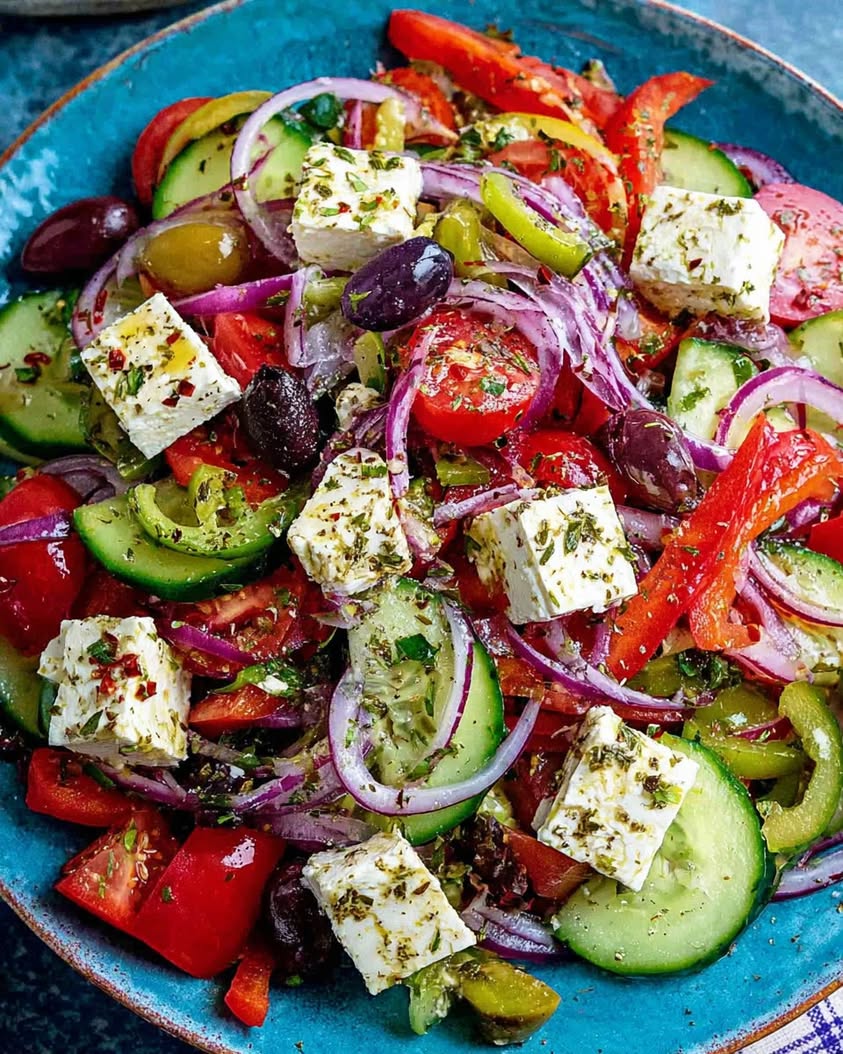
- Visual Appeal: This salad is a feast for the eyes with its brilliant, sun-drenched colors. The deep red of tomatoes, bright green of peppers, purple onions, black olives, and white feta create a stunning, rustic presentation. Therefore, it looks as incredible on your table as it tastes on your palate.
- Skill Level Needed: Absolutely anyone can make this salad with confidence. It requires no cooking, just simple chopping and assembling. The only real skill is in selecting the best, ripest ingredients you can find, as their quality directly defines the final dish.
- Special Equipment: You need nothing fancy at all. A good chef’s knife and a large cutting board are your primary tools. A wide, shallow serving bowl or platter is ideal for presentation, allowing you to arrange the ingredients beautifully without crowding them.
Recipe Overview
- Difficulty Level: This authentic Greek salad recipe is proudly beginner-friendly. It involves no complex techniques, no heat application, and no precise baking times. The process is straightforward assembly, making it a perfect recipe for new cooks or a stress-free dish for entertaining. Your main focus should simply be on sourcing fresh, high-quality components.
- Category: This dish is incredibly versatile across meal categories. It functions perfectly as a substantial vegetarian main course for a light lunch. Alternatively, it serves as a stunning and shareable side dish alongside grilled meats or fish. It also fits beautifully into a mezze spread with other small plates.
- Cuisine: This is a cornerstone of Greek cuisine, specifically the rustic “Horiatiki” or village-style salad. Its roots are deeply embedded in the agricultural traditions of Greece, showcasing the country’s iconic produce. The recipe is a direct reflection of the Mediterranean diet’s principles: simple, fresh, and healthful.
- Cost: The cost is generally moderate and depends heavily on ingredient quality. Investing in a good block of Greek feta, authentic Kalamata olives, and high-end extra virgin olive oil will increase the price but pay off in flavor. Fortunately, the vegetable components are typically affordable, especially in summer.
- Season: This salad is truly a celebration of high summer. It tastes best when tomatoes and cucumbers are at their peak ripeness, bursting with flavor from the sun. While you can make it year-round, the depth and sweetness of in-season, locally-grown produce make an irreplaceable difference.
- Occasion: It’s suitable for almost any gathering. Serve it at casual weeknight dinners, elegant dinner parties, or large potlucks and barbecues. Its bright, refreshing nature makes it ideal for hot weather meals, and its stunning appearance always impresses guests.
Why You’ll Love This Recipe
First and foremost, the taste and texture of this authentic Greek salad recipe are utterly irresistible. Each component contributes a unique note, creating a symphony of flavors that is both refreshing and deeply satisfying. The juicy tomatoes provide a sweet base, while the salty feta and olives offer a savory counterpoint. Furthermore, the crisp vegetables add a refreshing crunch, and the olive oil and oregano weave everything together with rich, herbal warmth. Consequently, every bite is a perfect, balanced mouthful that never gets boring.
Beyond its incredible flavor, this salad offers unmatched convenience. Since there is no cooking involved, you can prepare it in just about twenty minutes with minimal cleanup. It’s the ideal solution for busy weeknights when you need a healthy meal fast, or for last-minute guests when you want to serve something impressive without stress. Additionally, the ingredients are simple to find at most grocery stores, making this a practical go-to recipe. Therefore, you get a gourmet-tasting dish with beginner-level effort.
Nutritionally, this authentic Greek salad recipe is a powerhouse. It is packed with vitamins, antioxidants, and healthy fats from the extra virgin olive oil. The vegetables provide essential fiber and hydration, while the feta cheese offers a good source of calcium and protein. This dish is a perfect example of the celebrated Mediterranean diet, which is linked to heart health and longevity. Moreover, it’s naturally vegetarian and can be easily adapted to be gluten-free, accommodating various dietary needs without sacrificing flavor.
The social and entertaining value of this dish is incredibly high. It is meant to be shared from a large platter, encouraging a communal and interactive dining experience. Its vibrant, colorful presentation is guaranteed to draw compliments and become a centerpiece on your table. Whether you’re hosting a formal dinner or a casual backyard barbecue, this salad elevates the meal. Ultimately, it creates a feeling of abundance and celebration, turning a simple salad into a special occasion.
Finally, this recipe is remarkably cost-effective and accessible. While premium ingredients like imported feta and olive oil are worthwhile investments, the core of the dish is made from affordable vegetables. You can adjust the quality based on your budget without compromising the basic integrity of the salad. Furthermore, it teaches you how to make a restaurant-quality dish at home for a fraction of the price. This accessibility ensures that you can enjoy a taste of the Mediterranean anytime you crave it.
Historical Background and Cultural Significance
The origin story of the authentic Greek salad recipe, or Horiatiki, is deeply rooted in the rural farming villages of Greece. “Horiatiki” literally translates to “village” or “peasant” salad, indicating its humble beginnings. Farmers and shepherds would take simple, durable ingredients from their gardens and storerooms to the fields for their midday meal. These ingredients—tomatoes, cucumbers, onions, olives, and cheese—were non-perishable enough to last without refrigeration. Consequently, this practical combination evolved into a national icon, representing the resourcefulness and connection to the land inherent in Greek culture.
This dish holds immense cultural importance as a symbol of Greek summer and the Mediterranean way of life. It is a staple in every taverna and household across the country, especially during the hot months. The salad embodies the Greek philosophy of “philoxenia,” or hospitality, as it is almost always offered to guests as a welcoming gesture. Moreover, it represents the core tenets of the Greek diet: freshness, simplicity, and seasonality. Eating Horiatiki is not just consuming a meal; it’s participating in a centuries-old culinary tradition that celebrates local bounty.
The evolution of the recipe is a story of staying true to its roots. While many international versions add lettuce, peppers, or even pasta, the traditional village salad remains proudly unchanged in its homeland. The key evolution has been in the wider availability of its ingredients year-round, though purists insist it should only be made with summer-ripe produce. The basic formula of tomatoes, cucumber, onion, feta, olives, oregano, and olive oil is considered sacred. Therefore, this authentic Greek salad recipe you make today is virtually identical to what a Greek farmer would have eaten a hundred years ago.
Regional variations within Greece do exist, though they are subtle. On some islands, you might find capers added for an extra briny kick. In other regions, the type of olive may change, or a local, barrel-aged feta might be used. The one universal rule is the absence of lettuce, which is considered a filler that dilutes the potency of the primary ingredients. These minor adaptations highlight the local pride and micro-seasonality found across Greece’s diverse landscapes. Understanding this history enriches the experience of making and eating this timeless dish.
Ingredient Deep Dive
Tomatoes are the undisputed star of this authentic Greek salad recipe. In Greece, they use large, beefy, ridged tomatoes that are incredibly juicy and flavorful. The tomato’s acidity and sweetness form the foundational “sauce” of the salad when mixed with the olive oil. Nutritionally, they are rich in lycopene, vitamin C, and potassium. For the best results, always choose ripe, in-season tomatoes that are heavy for their size and fragrant at the stem. If you must substitute off-season, try using cherry or grape tomatoes, which often have more concentrated flavor than out-of-season beefsteaks.
Cucumber provides the essential crisp, refreshing crunch. English or Persian cucumbers are ideal because they have fewer seeds and thinner, less bitter skins. Their high water content is crucial for balancing the salad’s richness. They offer hydration, vitamin K, and antioxidants. Select cucumbers that are firm and bright green, without any soft spots. You do not need to peel them if they are the seedless varieties; simply wash well. The cucumber’s cool texture is a perfect contrast to the salty feta and olives, making it an irreplaceable component of the texture profile.
Feta Cheese is the crown jewel, and using authentic Greek feta made from sheep’s milk (or a sheep/goat blend) is non-negotiable for the true flavor. It’s briny, tangy, and crumbly, adding a creamy saltiness that permeates the entire dish. Feta is a good source of calcium, protein, and beneficial fatty acids. Always buy a block stored in brine, not pre-crumbled cheese, which contains anti-caking agents and lacks moisture. For storage, keep it submerged in its brine in the refrigerator. If you need a dairy-free version, a firm, marinated tofu can provide a similar texture, though the flavor profile will differ.
Kalamata Olives bring a deep, fruity, and wine-like bitterness that is essential for complexity. These protected designation of origin (PDO) olives from Greece are distinct from common black olives. They are preserved in a vinegar brine, which adds another layer of acidity. They are rich in heart-healthy monounsaturated fats and antioxidants. Look for olives sold in jars or from an olive bar with their pits intact, as they retain more flavor. You can pit them yourself by gently crushing them with the flat side of a knife. Their bold flavor means a little goes a long way in defining the salad’s character.
Extra Virgin Olive Oil is not just a dressing; it’s a main ingredient that creates the luxurious emulsion with the tomato juices. A robust, fruity Greek olive oil is the best choice, as it can stand up to the other strong flavors. This high-quality fat carries fat-soluble flavors, enhances mouthfeel, and contributes numerous anti-inflammatory benefits. Never use “light” olive oil or vegetable oil. Store your oil in a cool, dark place to prevent rancidity. The quality of your oil will be directly noticeable in the final dish, so it’s worth using the best you can afford.
Common Mistakes to Avoid
- Using Low-Quality Olive Oil: This is the most common pitfall. A bland or rancid oil will make your entire salad taste flat. Always use a robust, fresh extra virgin olive oil, as it is a primary flavor carrier, not just a dressing.
- Choosing Pre-Crumbled Feta: Pre-crumbled feta is coated in anti-caking agents and is often dry and lacking in flavor. For a creamy, tangy result, you must buy a solid block of feta stored in brine and crumble it yourself just before serving.
- Adding Lettuce or Other Greens: Traditional Horiatiki never includes lettuce. Greens wilt quickly and water down the potent juices from the tomatoes and olive oil. Stick to the classic, sturdy vegetables that hold their texture.
- Dicing the Vegetables Too Small: This salad is meant to be rustic and chunky. Cutting the tomatoes and cucumber into large, bite-sized pieces ensures they retain their juicy texture and don’t turn into a mushy salsa.
- Mixing the Salad Too Early: If you add the salt and toss the salad long before serving, the salt will draw too much water out of the tomatoes and cucumbers, creating a pool of liquid at the bottom of the bowl. Assemble and season just before eating.
- Using Dried Oregano Exclusively: While dried Greek oregano is traditional and delicious, adding a little fresh oregano leaves as a garnish provides an incredible aromatic lift. If you only have dried, rub it between your palms to awaken its oils before sprinkling.
- Forgetting to Season the Tomatoes: Tomatoes need salt to shine. Don’t just rely on the saltiness of the feta and olives. Season the tomato chunks directly with a pinch of sea salt to enhance their natural sweetness.
- Skipping the Red Onion Soak: Raw red onion can be overpowering. Soaking the slices in cold water for 10 minutes tames their sharp bite and leaves you with a pleasant, crisp onion flavor without the harsh aftertaste.
- Neglecting Presentation: Dumping everything in a bowl misses the point. Arrange the ingredients thoughtfully on a platter, with the feta block proudly placed on top. We eat with our eyes first, and this salad is a visual masterpiece.
- Stirring in the Feta: Instead of mixing the crumbled feta into the salad, place the whole block on top or add large crumbles at the end. This prevents it from dissolving and maintains its distinct creamy texture.
Essential Techniques
Chopping for Texture is the first critical technique. The goal is large, rustic pieces that you can spear with a fork. Cut tomatoes into irregular wedges or large chunks, not perfect dice. Slice the cucumber into thick half-moons or chunks. This size ensures each vegetable retains its individual juiciness and crunch, and prevents the salad from becoming watery too quickly. The imperfect, hand-cut look is part of the salad’s authentic charm and functional design.
Seasoning in Layers is a pro move that builds depth. Don’t just add all the salt at the end. Instead, season the tomato chunks lightly with sea salt as you place them in the bowl. This draws out their juices to mingle with the oil. Then, season the cucumber and peppers lightly. Finally, remember the feta and olives are already salty. This layered approach ensures every component is properly seasoned from within, creating a harmonious final flavor rather than a salty surface taste.
Creating the Emulsion is the magic that happens without a whisk. Once all your vegetables are in the bowl and seasoned, you add the generous pour of extra virgin olive oil and a sprinkle of dried oregano. Then, you toss everything gently but thoroughly. The action of tossing combines the tomato juices, salt, and olive oil into a simple, glossy, flavorful dressing that coats every piece. This emulsion is the soul of the salad, and it happens naturally when you use quality ingredients and the right technique.
Soaking the Red Onion is a simple but transformative step. Thinly slice your red onion and submerge the slices in a bowl of cold water for about 10 minutes. This process mellows the pungent sulfur compounds that cause a sharp, burning taste. The result is a crisp, sweet, and pleasantly onion-flavored component that won’t overpower the other ingredients. Drain and pat them dry before adding to the salad. It’s a minute of prep that makes a world of difference in achieving a balanced flavor profile.
Pro Tips for Perfect Authentic Greek Salad
First, take your vegetables out of the refrigerator about 30 minutes before assembling. Serving this salad at room temperature is crucial, as cold tomatoes and cucumbers have muted flavors. Allowing them to warm up slightly unlocks their full sweetness and aroma, making the salad taste infinitely more vibrant and fresh.
Always use a wide, shallow serving dish instead of a deep bowl. This allows you to arrange the ingredients in a single layer, which is both beautiful and practical. It prevents the bottom pieces from getting crushed and soggy, ensuring every serving has perfect texture and presentation.
Invest in a bottle of high-quality Greek extra virgin olive oil specifically for finishing dishes like this. The flavor difference between a generic oil and a robust, fruity Koroneiki olive oil is dramatic. This one ingredient elevates the entire salad from good to transcendent.
If you have time, salt your tomato chunks and let them sit in a colander for 10-15 minutes before assembling. This draws out excess water, concentrating their flavor and preventing a watery salad base. Pat them dry lightly before adding them to the other ingredients.
Add a teaspoon of good red wine vinegar or a squeeze of fresh lemon juice only if your tomatoes lack acidity. Traditionally, the salad relies on the tomatoes’ natural tang, but sometimes store-bought tomatoes need a little help. Taste first, then adjust sparingly.
For an extra touch of authenticity, include a few capers or a caper berry or two. While not universal, they are a common addition in some Greek islands and add a wonderful pop of briny, floral complexity that complements the olives beautifully.
Never toss the salad with the feta mixed in. Place the whole block on top or add large crumbles after tossing the vegetables. This keeps the feta distinct, creamy, and visually appealing, rather than dissolving into the dressing and turning everything pink.
Finish the platter with a final, generous drizzle of your best olive oil and a last sprinkle of oregano just before bringing it to the table. This adds a fresh sheen and aroma that immediately signals quality and care to your guests.
Variations and Adaptations
Regional variations within Greece offer delightful twists. In Crete, you might find barley rusks (dakos) underneath the salad ingredients, which soak up the glorious juices. Some island versions include a handful of wild capers or purslane, a lemony, succulent green. In the Peloponnese, green bell peppers might be swapped for the sweeter red ones. Exploring these small changes can be a fun way to travel through Greek cuisine with your fork, all while staying true to the spirit of the authentic Greek salad recipe.
Seasonal adaptations are straightforward. In peak summer, use heirloom tomatoes of different colors for a stunning effect. In cooler months, when tomatoes are less flavorful, increase the ratio of cucumber and bell pepper, and consider adding roasted red peppers for sweetness. You could also add hearty elements like chickpeas or white beans to make it more substantial for a winter meal, though this moves it away from tradition.
For dietary modifications, this salad is naturally gluten-free. To make it vegan, omit the feta cheese or use a high-quality vegan feta alternative made from almonds or tofu. Be sure to adjust seasoning with a bit more salt. For a lower-fat version, simply reduce the amount of olive oil slightly, though this will impact the luxurious mouthfeel. The core vegetable base accommodates almost any dietary need with minimal adjustment.
Flavor variations can come from your herb and spice choices. While dried oregano is classic, try adding a pinch of dried mint or thyme for a different aromatic profile. A light sprinkle of sumac adds a tangy, lemony note. For a spicy kick, add a very small amount of crushed red pepper flakes to the oil before drizzling. These small tweaks let you personalize the salad while keeping its fundamental character intact.
Texture modifications can cater to different preferences. If you enjoy more crunch, add thinly sliced radishes or celery. For a creamier element without more cheese, add slices of ripe avocado (a non-traditional but delicious addition). To make it more of a fork-and-knife salad, cut all the vegetables into even larger, steak-like slices. The basic framework is wonderfully adaptable to the textures you love most.
Presentation alternatives can refresh the familiar. Instead of one large platter, assemble individual portions in wide, shallow bowls. For a party, create a Greek salad “board” with all the components separated for guests to build their own. You can also skewer large chunks of tomato, cucumber, pepper, olive, and feta onto sticks for a handheld, mess-free horiatiki kebab. These ideas keep the flavors traditional while updating the serving style.
Serving and Presentation Guide
Plating techniques are key for this salad’s visual drama. Use a large, white or neutral-colored platter to make the colors pop. Arrange the tomato and cucumber chunks in a loose, abundant layer. Scatter the pepper strips and onion slices over the top. Place the Kalamata olives in small clusters. Finally, crown the salad with the whole block of feta or large, hand-crumbled pieces. Drizzle the olive oil over everything, letting it pool enticingly around the vegetables.
Garnishing ideas should be simple and functional. A final flourish of dried oregano sprinkled over the feta and vegetables is essential. You can also add a few sprigs of fresh oregano or flat-leaf parsley for a green accent. A light grating of lemon zest over the top adds a fantastic bright aroma. Avoid wet garnishes like whole lemon wedges on the platter, as they can make the salad soggy; serve them on the side instead.
Traditional accompaniments are straightforward and perfect. This salad is almost always served with a basket of crusty bread, preferably a rustic sourdough or grilled pita. The bread is not just a side; it’s a tool for “mopping up” the incredible tomato-olive oil juice left at the bottom of the platter, which Greeks call “papara.” It’s considered the best part of the meal.
Modern serving suggestions might include pairing it with other mezze like hummus, tzatziki, and dolmades for a full spread. For a main course, serve it alongside simply grilled fish like branzino, lamb chops, or chicken souvlaki. The salad’s acidity and freshness cut through the richness of grilled meats perfectly, creating a balanced and satisfying plate.
Temperature considerations are non-negotiable. This salad must be served at room temperature. Cold ingredients suppress flavor and cause the olive oil to congeal slightly. Always assemble it just before serving and let it sit out for a few minutes after adding the oil. Never serve it chilled straight from the fridge, as you’ll miss out on its full aromatic and taste potential.
Portion control tips are simple due to the salad’s healthfulness. As a main course, plan for about one large tomato and a quarter of a cucumber per person. As a side dish, you can stretch it to serve more. Because the ingredients are so satisfying, people often eat less than they might of a leaf-based salad. Its richness from the oil and cheese provides a feeling of satiety quickly.
Wine and Beverage Pairing
Wine pairings for this vibrant salad should complement its acidity and saltiness without overpowering it. A crisp, dry white wine is the classic choice. Look for a Greek Assyrtiko from Santorini, which has high acidity and mineral notes that mirror the salad’s briny elements. Alternatively, a Sauvignon Blanc or a dry Rosé with good acidity works beautifully. The wine should act as a refreshing palate cleanser between bites of the rich feta and olives, enhancing the overall dining experience.
For red wine lovers, a light-bodied, low-tannin red is the way to go. A Greek Xinomavro rosé or a chilled Beaujolais (Gamay) can be delightful. Avoid heavy, oaky, or high-tannin reds like Cabernet Sauvignon, as the tannins will clash unpleasantly with the acidity of the tomatoes and the saltiness of the cheese. The goal is harmony, not competition, on your palate.
Non-alcoholic alternatives are just as important. Sparkling water with a squeeze of lemon or lime is always perfect. For something more special, try a homemade rosemary-lemon infused sparkling water. Iced herbal teas, like mint or chamomile, are also excellent, refreshing choices that won’t fight the salad’s flavors. These options ensure everyone at the table can enjoy a perfectly paired beverage.
While not traditional, certain light beers can pair surprisingly well. A crisp, clean pilsner or a helles lager can be very refreshing. The carbonation helps cut through the oil, and the mild hop profile doesn’t dominate. Avoid heavily hopped IPAs or dark, malty beers, as their bitterness or sweetness will conflict with the salad’s balanced profile.
Serving suggestions for beverages are simple: keep them cold and ready. White wines and rosés should be well-chilled. Have plenty of ice and citrus garnishes available for non-alcoholic drinks. The beverage should feel like an extension of the salad’s refreshing quality, providing a cooling counterpoint to the bold Mediterranean flavors, especially during a warm-weather meal.
Storage and Shelf Life
Storage methods for leftovers require careful handling. This salad is best enjoyed immediately, but if you must store it, place any leftovers in an airtight container in the refrigerator. Crucially, store the vegetable mixture and the feta separately if possible. The feta will become rubbery and the vegetables will become excessively watery if stored together for too long. Aim to consume any leftovers within 24 hours for the best texture and flavor.
Understanding the signs of spoilage is important since this is a fresh dish. Discard the salad if the vegetables become slimy, the feta develops an off smell (beyond its normal tang), or if you see any signs of mold. The olive oil may solidify in the fridge, which is normal; it will liquefy again at room temperature. However, a rancid, crayon-like smell from the oil means the salad should be thrown out.
Reheating instructions are not applicable, as this is a cold dish. Never microwave leftover Greek salad, as it will cook the vegetables and melt the feta into an unappetizing mess. The only way to “revive” leftovers is to let them come to room temperature, give them a gentle stir, and perhaps add a fresh drizzle of olive oil and a pinch of oregano. The texture, however, will be softer than when first made.
Freezing guidelines are straightforward: do not freeze this salad. Freezing will completely destroy the cellular structure of the tomatoes and cucumbers, turning them into a mushy, watery pulp upon thawing. The feta will also crumble into grainy pieces and lose all its creamy texture. This is a dish that celebrates freshness and must be made and eaten fresh.
Make Ahead Strategies
Your prep timeline can save you time without sacrificing quality. The day before, you can wash and dry all your vegetables. You can slice the cucumbers and bell peppers, storing them in separate airtight containers in the fridge. You can also slice and soak the red onion, then drain and store it. However, do not chop the tomatoes or assemble the salad until you are ready to serve. This prevents premature juicing and sogginess.
Storage between steps is all about keeping components crisp. Keep pre-cut cucumbers and peppers in containers lined with a paper towel to absorb excess moisture. Keep your block of feta in its brine until the moment you need it. Have your olive oil, oregano, and salt measured and ready. This “mise en place” approach means when it’s time to eat, you can assemble the stunning authentic Greek salad recipe in just five minutes.
Assessing the quality impact of make-ahead steps is crucial. Pre-cutting vegetables will cause some loss of crispness over 24 hours, but it’s acceptable for convenience. The flavor of the onions will mellow further, which is often a benefit. The key is protecting the tomatoes and the final assembly. By guarding these two elements, you preserve the soul of the dish while gaining practical time management.
Final assembly tips for make-ahead prep are simple. When ready to serve, chop your room-temperature tomatoes, season them lightly in the bowl, then add your pre-prepped cucumbers, peppers, and onions. Toss with oil and oregano, then top with the feta and olives. This method gives you 90% of the convenience of a fully made-ahead salad with 100% of the fresh texture and flavor.
Scaling Instructions
Halving the recipe is simple for a smaller household. Use one large tomato, half a cucumber, a quarter of a bell pepper, a few slices of onion, a small handful of olives, and about 2-3 ounces of feta. Adjust the olive oil to about 2 tablespoons and seasoning accordingly. The assembly process and timing remain exactly the same. This is a perfect way to enjoy a fresh, authentic Greek salad recipe without having days of leftovers.
Doubling or tripling the recipe for a crowd requires a slight shift in technique. Instead of one giant bowl, consider mixing the vegetable base in two separate large bowls to ensure even seasoning and coating. You can then combine them on an extra-large platter or in a serving bowl. Keep the feta in separate blocks or crumble it over the top of the combined vegetables just before serving to maintain its texture.
Equipment adjustments for scaling up are minimal. You’ll need a very large, wide serving vessel or multiple platters. Ensure you have a big enough mixing bowl to toss the vegetables without making a mess. Your knife work will take longer, so factor that into your prep time. The beauty of this salad is that it scales linearly without any complex cooking adjustments.
Timing modifications are mostly about prep time. Chopping double or triple the vegetables will obviously take longer. To manage this, you can enlist help or use a vegetable chopper for consistent, quick cuts on the cucumbers and peppers (though tomatoes are still best cut by hand). The actual assembly and “cook” time remains zero, making it an ideal scalable dish for parties.
Nutritional Deep Dive
The macro breakdown of this salad is favorable for a balanced diet. It provides healthy monounsaturated fats from the olive oil and olives, a moderate amount of protein from the feta cheese, and complex carbohydrates and fiber from the vegetables. It is relatively low in saturated fat and sugars, assuming you use a reasonable amount of feta. The olive oil is calorie-dense, so portion awareness is key, but these are nutrient-rich calories that promote satiety and heart health.
Micronutrient analysis reveals a wealth of vitamins and minerals. Tomatoes and bell peppers are excellent sources of Vitamin C and antioxidants like lycopene. Cucumbers provide Vitamin K and potassium. Red onions offer quercetin, an anti-inflammatory compound. Feta cheese is rich in calcium, phosphorus, and B vitamins. Together, they create a dish that supports immune function, bone health, and cellular protection.
The health benefits are aligned with the renowned Mediterranean diet. Regular consumption of dishes like this is associated with reduced risk of heart disease, improved cholesterol levels, and better weight management. The combination of fiber, healthy fats, and antioxidants supports digestive health, reduces inflammation, and may contribute to longevity. This isn’t just a tasty salad; it’s a functional food that nourishes your body comprehensively.
For weight management, this salad is a powerful tool. Its high water and fiber content promote fullness, helping to control overall calorie intake. The healthy fats slow digestion, providing sustained energy. To make it even more weight-conscious, you can slightly reduce the amount of olive oil and feta, though doing so will impact the traditional flavor and mouthfeel. As part of a balanced diet, it’s a satisfying and nutritious choice.
Dietary Adaptations
For a gluten-free diet, this authentic Greek salad recipe is naturally perfect. None of the traditional ingredients contain gluten. Simply ensure that any bread you serve on the side is a certified gluten-free variety. Always check labels on pre-packaged olives or capers for any hidden gluten in additives or vinegar sources, though this is rare.
Creating a dairy-free or vegan version requires omitting the feta cheese. You can leave it out entirely and boost the olives and capers for saltiness. For a creamy element, add slices of avocado or a sprinkle of nutritional yeast. Several brands make convincing vegan “feta” from almonds, tofu, or coconut oil that can be crumbled on top. The salad will be different but still delicious and refreshing.
For low-carb or keto diets, this salad is quite friendly. The primary carbohydrates come from the tomatoes, onions, and bell peppers. You can reduce these slightly and increase the ratio of olives, feta, and olive oil to fit your macros. Cucumber is very low in net carbs. Avoid adding any sweet elements or carrots. The salad’s foundation fits well within a low-carb lifestyle, especially when portioned appropriately.
For a Paleo adaptation, omit the cheese, as dairy is not Paleo-compliant. Increase the olives and add avocado for healthy fat and creaminess. Ensure your olive oil is high-quality and that all vegetables are fresh. The resulting dish is a vibrant, nutrient-dense plate that aligns perfectly with Paleo Print
Greek Salad (Traditional Horiatiki Recipe)
- Total Time: 15 minutes
- Yield: 4
Description
A classic Greek village salad featuring fresh vegetables, tangy feta cheese, and a simple olive oil dressing.
Ingredients
- 4 large ripe tomatoes, cut into wedges
- 1 cucumber, sliced into thick half-moons
- 1 green bell pepper, sliced into rings
- 1 red onion, thinly sliced
- 200g block of feta cheese
- 1/2 cup Kalamata olives
- 2 tbsp extra virgin olive oil
- 1 tsp dried oregano
- Salt to taste
Instructions
- Wash and chop all vegetables as specified, placing them in a large salad bowl.
- Add the Kalamata olives to the bowl and gently toss the ingredients together.
- Place the block of feta cheese on top of the salad, drizzle with olive oil, sprinkle with oregano and salt, and serve immediately.
Notes
You can customize the seasonings to taste.
- Prep Time: 15 minutes
- Cook Time: 0 minutes
- Method: Main
- Cuisine: Greek