Authentic Greek Potato Salad Recipe with Feta and Lemon Dressing: A Vibrant Mediterranean Classic
Forget the heavy, mayonnaise-laden potato salads of summer picnics past. This Authentic Greek Potato Salad Recipe with Feta and Lemon Dressing offers a refreshingly different experience. Imagine tender, herb-infused potatoes tossed in a vibrant lemon and olive oil dressing, then generously studded with briny Kalamata olives, crisp cucumbers, and creamy chunks of feta cheese. This dish is a celebration of Mediterranean flavors that feels both rustic and elegant.
Furthermore, this Greek potato salad is incredibly versatile. It can serve as a stunning side dish for grilled meats, a satisfying vegetarian main course, or a standout contribution to any potluck. The combination of textures and bright, tangy flavors is truly unforgettable. Ultimately, this recipe captures the essence of Greek cuisine: simple, fresh ingredients combined in a way that is far greater than the sum of its parts.
Moreover, preparing this salad is a joyful process. The aroma of fresh dill and oregano mingling with lemon zest is enough to transport your kitchen to a sun-drenched taverna by the Aegean Sea. This Authentic Greek Potato Salad Recipe with Feta and Lemon Dressing is more than just food; it is a delicious escape and a guaranteed crowd-pleaser.
Quick Recipe Highlights
- Flavor Profile: This Greek potato salad bursts with tangy, savory, and herbal notes. The bright acidity of fresh lemon juice perfectly balances the richness of extra virgin olive oil and the salty punch of feta cheese. Additionally, fresh herbs like dill and oregano provide a fragrant, earthy backbone.
- Texture: You will enjoy a delightful contrast of textures. The potatoes are soft and creamy, while the cucumbers and red onion offer a satisfying crunch. Meanwhile, the Kalamata olives add a chewy element, and the feta provides creamy, crumbly bites.
- Aroma: The scent is unmistakably Mediterranean. Fresh lemon zest and juice create an immediate citrusy top note. Subsequently, the aroma of chopped fresh dill and oregano comes through, followed by the subtle, fruity fragrance of high-quality olive oil.
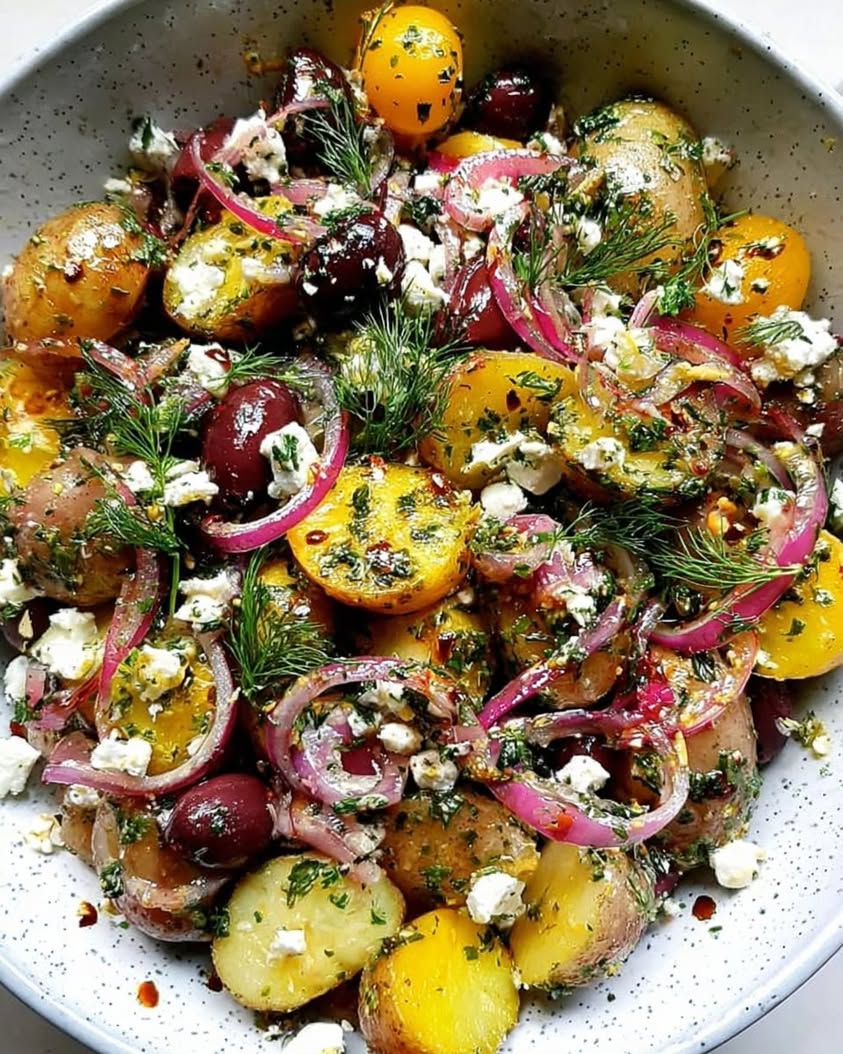
- Visual Appeal: This salad is a feast for the eyes with its vibrant colors. The white and yellow potatoes provide a beautiful base, punctuated by the deep purple of Kalamata olives, the green of cucumbers and herbs, the red of onion, and the stark white of feta cheese.
- Skill Level Needed: This is a beginner-friendly recipe. The techniques involve simple chopping, boiling, and whisking. Consequently, even novice cooks can achieve fantastic results by following the straightforward steps.
- Special Equipment: No special tools are required. You only need a large pot for boiling potatoes, a good knife, a cutting board, a mixing bowl, and a whisk for the dressing. Therefore, this recipe is accessible to everyone.
Recipe Overview
- Difficulty Level: This Authentic Greek Potato Salad Recipe with Feta and Lemon Dressing is rated easy. The steps are simple and sequential. You simply boil potatoes, chop vegetables, whisk a dressing, and combine. There are no complex techniques or precision baking required, making it perfect for any skill level.
- Category: This dish fits multiple categories beautifully. It is primarily a side dish, ideal for barbecues and family dinners. However, it can also serve as a light main course for a vegetarian lunch. Furthermore, it is a fantastic potluck or picnic salad because it travels well and tastes great at room temperature.
- Cuisine: This is a classic example of Greek and broader Mediterranean cuisine. It emphasizes fresh vegetables, high-quality olive oil, lemon, herbs, and cheese. The flavors are clean, bright, and designed to complement rather than overwhelm. This salad embodies the healthy, flavorful principles of the Mediterranean diet.
- Cost: This recipe is very cost-effective. Potatoes, onions, and cucumbers are inexpensive staples. While good feta cheese and Kalamata olives may cost a bit more, a little goes a long way in providing big flavor. Overall, you can make an impressive, restaurant-quality salad for a fraction of the price.
- Season: This Greek potato salad is perfect for spring and summer. It uses fresh, seasonal produce and is served cool or at room temperature, making it ideal for warm weather. Conversely, its bright flavors can also provide a welcome contrast to heavier winter meals.
- Occasion: It is suitable for countless occasions. Serve it at casual weeknight dinners, weekend barbecues, holiday gatherings like Easter or Fourth of July, potlucks, picnics, or as part of a mezze platter. It is universally appealing and always a hit.
Why You’ll Love This Recipe
First and foremost, the taste and texture of this Authentic Greek Potato Salad Recipe with Feta and Lemon Dressing are utterly captivating. Each forkful delivers a symphony of flavors: the creamy potato, the sharp tang of lemon, the salty feta, the herbal freshness, and the briny pop of olive. The contrast between soft potatoes and crisp vegetables keeps every bite interesting. This is a salad you will crave long after the bowl is empty.
Secondly, the convenience factor is a major win. Unlike many potato salads that require precise timing or fussy techniques, this version is wonderfully straightforward. You can boil the potatoes ahead of time. The dressing comes together in minutes. Finally, assembly is just a matter of gentle tossing. This makes it an ideal choice for busy cooks who want to serve something impressive without stress.
From a nutritional standpoint, this Greek potato salad is a healthier alternative to traditional versions. It uses a light, olive oil-based dressing instead of heavy mayonnaise, providing heart-healthy monounsaturated fats. The vegetables add fiber and vitamins. Additionally, the recipe is naturally gluten-free. You can feel good about serving this delicious and nourishing dish to your family and friends.
Furthermore, this salad has tremendous social and entertaining value. Its vibrant appearance makes it a centerpiece on any table. It pairs wonderfully with a huge variety of main dishes, from grilled chicken and lamb burgers to fish and vegetarian fare. When you bring this to a gathering, people will ask for the recipe every single time. It is a guaranteed conversation starter.
Finally, the cost-effectiveness and accessibility of the ingredients make this recipe a kitchen staple. You can find everything you need at a standard grocery store. The recipe is also forgiving; you can adjust herb quantities or add extra vegetables based on what you have available. This Authentic Greek Potato Salad Recipe with Feta and Lemon Dressing delivers gourmet flavor on a practical, everyday budget.
Historical Background and Cultural Significance
The origins of potato salad in Greece are intertwined with the introduction of the potato itself to the region. Potatoes arrived in Greece relatively late, around the 19th century. However, Greek cooks quickly adopted the versatile tuber and incorporated it into their culinary tradition, applying classic Mediterranean flavor principles. This salad is not an ancient dish but a modern classic that perfectly reflects the Greek ethos of combining simple, fresh ingredients.
Culturally, this dish represents the heart of Greek home cooking and taverna culture. It is a staple on the table during large family gatherings, religious festivals like Easter, and long, leisurely summer meals. The emphasis on olive oil, lemon, and oregano connects it directly to the land and climate of Greece. This salad is more than sustenance; it is a symbol of hospitality, community, and the joy of sharing a meal.
The evolution of the recipe is a story of adaptation. While the core of potatoes, olive oil, and lemon is constant, family variations abound. Some regions or families might add capers for extra brine, or use mint instead of dill. The type of potato can vary based on local availability. This flexibility is key to its enduring popularity, allowing it to be personalized while maintaining its essential character.
Regarding regional variations, you will find subtle differences across Greece and the Mediterranean. In some areas, red wine vinegar might supplement the lemon. In Crete, they might use their legendary olive oil and wild herbs. A Cypriot version might include a sprinkle of sumac. This Authentic Greek Potato Salad Recipe with Feta and Lemon Dressing serves as a delicious blueprint from which you can explore a whole world of Mediterranean flavors.
Ingredient Deep Dive
Potatoes are the foundation. For this Greek potato salad, waxy varieties like Yukon Gold or red potatoes are ideal because they hold their shape after boiling. They provide a creamy texture that soaks up the dressing beautifully. Potatoes are a good source of vitamin C, potassium, and fiber. Store them in a cool, dark, well-ventilated place, not in the refrigerator. Do not substitute with starchy baking potatoes, as they will become mushy.
Extra Virgin Olive Oil is the soul of the dressing. It provides rich, fruity flavor and healthy fats. Historically, olive oil has been central to Mediterranean life for millennia. Look for a bottle labeled “extra virgin” for the best flavor and quality. Store it in a cool, dark cupboard away from heat and light. For a substitution in a pinch, a regular olive oil can be used, but the flavor profile will be less vibrant.
Fresh Lemon Juice and Zest deliver the essential bright, tangy note. The zest contains potent aromatic oils that intensify the citrus flavor. Lemons are rich in vitamin C and antioxidants. Always zest your lemon before juicing it for easier handling. For the best flavor, use freshly squeezed juice, not bottled. In an absolute emergency, you could use a high-quality white wine vinegar, but the fresh lemon character will be lost.
Feta Cheese adds a creamy, salty, tangy dimension. Authentic Greek feta is made from at least 70% sheep’s milk, sometimes blended with goat’s milk. It is a protected designation of origin (PDO) product. Feta is a good source of calcium and protein. Store it in its brine in the refrigerator to maintain moisture. If you cannot find Greek feta, other crumbly white cheeses like Bulgarian sirene or French feta can work, but the flavor will differ.
Kalamata Olives provide a deep, briny, umami punch. These dark purple olives are named after the city of Kalamata in southern Greece and are another PDO product. They are typically preserved in wine vinegar or olive oil. They are rich in healthy monounsaturated fats. Purchase them with pits for better flavor and texture, then pit them yourself. In a pinch, other black olives can be used, but they lack the distinctive fruity, wine-like flavor of true Kalamatas.
Common Mistakes to Avoid
- Overcooking the Potatoes: This is the most critical error. Mushy potatoes will ruin the salad’s texture. Cook them just until a knife slides in easily with slight resistance. They will continue to soften slightly as they cool and absorb the dressing.
- Using the Wrong Potato Type: Starchy potatoes like Russets will fall apart. Always choose waxy or all-purpose varieties like Yukon Gold, red potatoes, or fingerlings for a salad that holds its shape.
- Skipping the Lemon Zest: The zest contains intense citrus oils. Adding only the juice misses a layer of fragrant, potent flavor that makes the dressing truly special.
- Dressing the Potatoes While They Are Hot: Pouring dressing on hot potatoes will cause them to absorb it too quickly and become soggy. Let them cool slightly so they are warm, not hot, which helps them absorb flavor without breaking down.
- Using Pre-Crumbled Feta: These crumbs are often dry and coated with anti-caking agents. For superior creaminess and flavor, always buy a block of feta in brine and crumble it yourself just before adding.
- Chopping Vegetables Too Small: The cucumbers, onions, and olives should be in hearty pieces that provide distinct texture and bursts of flavor. Finely dicing them will make the salad seem muddy.
- Not Seasoning the Dressing Adequately: The dressing should be boldly flavored on its own, as it will season the entire salad. Taste it and adjust salt, pepper, and lemon before tossing.
- Over-Mixing the Salad: Once combined, gently fold the ingredients. Aggressive stirring will break the potatoes and turn the feta into a paste, compromising the beautiful texture.
- Forgetting to Let it Rest: This Greek potato salad benefits from 30 minutes to an hour of rest before serving. This allows the flavors to meld and develop depth.
- Using Stale Herbs: Wilted, brown dill or oregano will impart a bitter, off flavor. Always use the freshest, brightest herbs you can find for the best aromatic result.
Essential Techniques
Boiling Potatoes to the Perfect Doneness is crucial. Start by cutting the potatoes into uniform pieces so they cook evenly. Place them in cold, well-salted water—this seasons them from the inside. Bring to a boil, then reduce to a simmer. Test frequently near the end of the cook time. The perfect potato is tender when pierced with a knife but still offers slight resistance; it should not be falling apart. Immediately drain and let them steam dry in the colander for a minute to remove excess moisture.
Creating an Emulsified Dressing is key for cohesion. In a bowl, whisk the lemon juice, zest, minced garlic, oregano, salt, and pepper vigorously. Then, while continuously whisking, slowly drizzle in the extra virgin olive oil. This process, called emulsification, encourages the oil and acid to combine into a smooth, slightly thickened dressing that coats the ingredients evenly instead of separating and pooling at the bottom of the bowl.
Properly Combining the Salad ensures ideal texture. Add the warm (not hot) potatoes to your large mixing bowl. Pour about three-quarters of the dressing over them and toss very gently with a large spoon or rubber spatula. Let this sit for 10 minutes so the potatoes absorb the flavor. Then, add the crunchy vegetables, olives, and herbs. Pour the remaining dressing over and fold gently. Finally, add the feta cheese last with a final gentle fold to keep those creamy crumbles intact.
Pro Tips for Perfect Greek Potato Salad
Salt your potato boiling water generously, like seawater. This is your only chance to season the potatoes from within, making them flavorful throughout.
Use a microplane zester for the lemon. It creates fine, fluffy zest without the bitter white pith, distributing citrus oil perfectly throughout the dressing.
Let the dressed potatoes rest before adding crunchy veggies. This allows the warm potatoes to soak up the dressing without making the cucumbers and onion soggy.
If your red onion is very sharp, soak the slices in ice water for 10 minutes after chopping. This tames the pungency while keeping the crunch.
For an extra flavor boost, add a teaspoon of dried oregano to the boiling water with the potatoes. It infuses them with a subtle herbal essence.
Use kitchen shears to quickly chop fresh dill. It is faster than a knife and prevents bruising the delicate herbs.
Always taste and adjust the seasoning right before serving. Chilling can mute flavors, so you may need an extra pinch of salt or a squeeze of lemon.
For the best presentation, reserve a small amount of feta, herbs, and olives to sprinkle on top of the finished salad just before serving.
Variations and Adaptations
For regional variations, explore different Greek influences. A Cretan version might include chopped wild greens like purslane. A Cypriot adaptation could feature a sprinkle of dried mint and sumac. In some coastal areas, a handful of capers is a common addition for extra brine. These small tweaks honor the local pantry while staying true to the spirit of the dish.
Seasonal adaptations are easy and rewarding. In spring, add thinly sliced radishes or fresh peas. Summer invites sweet cherry tomatoes or grilled corn kernels. For a fall twist, incorporate roasted cubes of butternut squash or pumpkin. In winter, add roasted bell peppers from a jar for a touch of sweetness and color. The basic formula is wonderfully adaptable to the produce at its peak.
Dietary modifications are straightforward. For a vegan Greek potato salad, simply omit the feta cheese or use a high-quality vegan feta alternative. Ensure all other ingredients, like the olives, are vegan-friendly. The salad is naturally gluten-free. To reduce the fat content slightly, you can decrease the olive oil by a tablespoon or two, though this will impact the luxurious mouthfeel.
Flavor variations can personalize the dish. Add a minced anchovy fillet or a teaspoon of anchovy paste to the dressing for a deep umami layer. A pinch of red pepper flakes will introduce a subtle heat. For a creamier texture, stir a tablespoon of Greek yogurt into the dressing. A teaspoon of honey or maple syrup can balance excessive acidity if your lemons are very sharp.
Texture modifications can cater to preference. For a smoother potato base, gently mash a few of the cooked potato pieces before adding the dressing. For extra crunch, include toasted pine nuts or slivered almonds. If you prefer a more integrated salad, you can chop all the vegetables more finely, creating a more uniform, salsa-like consistency that is perfect for scooping with pita chips.
Presentation alternatives can elevate the dish. Instead of mixing everything, create a composed salad by arranging potato slices on a platter, then artfully scattering the other ingredients on top and drizzling with dressing. Serve individual portions in small bowls or on lettuce leaves. Skewer components like potato, olive, and feta on toothpicks for a fun, bite-sized appetizer version.
Serving and Presentation Guide
Plating techniques matter for visual impact. For a family-style meal, serve this Greek potato salad in a wide, shallow bowl or on a large platter. This allows the colorful ingredients to be visible. Use a large spoon to gently mound the salad, creating height and dimension. Avoid packing it down, which can make it look heavy and compressed.
Garnishing adds the final touch. A generous sprinkle of fresh dill fronds or oregano leaves is classic. A light drizzle of extra virgin olive oil over the top just before serving adds a beautiful sheen. A few whole Kalamata olives and lemon wedges arranged around the edge of the platter are both decorative and functional, allowing guests to adjust flavors.
Traditional accompaniments are simple and complementary. This salad is a perfect partner for grilled meats like souvlaki (skewered pork or chicken), lamb chops, or whole fish. It also pairs wonderfully with other mezze dishes like tzatziki, hummus, dolmades (stuffed grape leaves), and warm pita bread. A simple plate of feta, olives, and this salad is a complete and satisfying meal.
Modern serving suggestions expand its versatility. Serve it alongside gourmet burgers or sandwiches for a flavorful upgrade. Use it as a hearty bed for grilled shrimp or salmon. Pack it for a sophisticated office lunch. It even works as a brunch item alongside quiche or frittata. Its flexibility is one of its greatest strengths.
Temperature considerations are important. This Authentic Greek Potato Salad Recipe with Feta and Lemon Dressing is best served at cool room temperature. If refrigerated, take it out about 20-30 minutes before serving to allow the olive oil in the dressing to loosen up and the flavors to become more pronounced. Serving it ice-cold mutes all the beautiful flavors you worked to develop.
Portion control tips are helpful for planning. As a side dish, plan for about 1 to 1.5 cups per person. As a main course for a light lunch, 2 to 2.5 cups is appropriate. Remember that the salad is satisfying but not overly heavy, so people often enjoy second helpings. It is always better to make a little extra, as leftovers are excellent.
Wine and Beverage Pairing
Wine pairings should complement the salad’s bright acidity and herbal notes. A crisp, dry white wine is ideal. Look for a Greek Assyrtiko from Santorini, which has bracing acidity and mineral notes that mirror the lemon and salt. A Sauvignon Blanc from New Zealand or a Vermentino from Italy also work beautifully. For a red option, choose a light, chilled red like a Greek Xinomavro or a Beaujolais that won’t overpower the dish.
Non-alcoholic alternatives can be just as thoughtful. Sparkling water with a squeeze of lemon or lime is refreshing and enhances the citrus notes. A homemade lemonade or mint lemonade provides a sweet-tart counterpoint. Iced herbal teas, like mint or chamomile, are light and complementary. Even a simple glass of cold, still water is perfect, as the salad itself is so flavorful and hydrating.
Coffee or tea pairings are relevant if serving the salad at a brunch or lunch. After the meal, a medium-roast coffee with low acidity would be a pleasant finish. Alternatively, a cup of herbal tea like lemon verbena or peppermint can cleanse the palate. The goal is to choose a beverage that does not clash with the lingering flavors of lemon, olive oil, and herbs.
Temperature considerations for beverages are straightforward. All drinks should be served well-chilled. White wines should be at a cool 45-50°F. Non-alcoholic sparklers and lemonades are best over ice. The contrast between the cool, crisp beverage and the room-temperature salad is part of the enjoyable sensory experience, especially on a warm day.
Serving suggestions for beverages are simple. Offer a pitcher of water on the table with lemon slices. Have wine bottles opened and ready to pour. For non-alcoholic options, consider a self-serve station with a carafe of iced tea and lemonade. Ultimately, providing choices allows every guest to find their perfect pairing for this vibrant Greek potato salad.
Storage and Shelf Life
Storage methods are simple but important. Transfer any leftover Greek potato salad to an airtight container. Glass containers are excellent because they do not retain odors. Press a piece of plastic wrap directly onto the surface of the salad before sealing the lid; this minimizes air exposure and helps prevent the potatoes from discoloring and the herbs from wilting excessively.
Temperature requirements are non-negotiable. This salad must be stored in the refrigerator at 40°F or below. Do not leave it at room temperature for more than two hours total, including serving time. Bacteria can grow rapidly on the starchy potatoes in the “danger zone” between 40°F and 140°F. Always err on the side of caution and refrigerate promptly.
Container recommendations focus on preservation. A shallow container is better than a deep one, as it allows the salad to chill more quickly and evenly. If you only have a deep container, consider dividing the salad into two portions. Ensure the lid seals tightly to prevent the transfer of other refrigerator odors, which the potatoes can easily absorb.
Signs of spoilage are usually obvious. Discard the salad if you notice an off or sour smell, significant discoloration (beyond slight darkening of the potatoes), or a slimy texture on the vegetables. If the dressing has separated into an oily pool with solid bits at the bottom and cannot be reincorporated with stirring, it is likely past its prime. When in doubt, throw it out.
Reheating instructions are generally not applicable, as this salad is meant to be served cool. However, if you must take the chill off, let it sit at room temperature for 20-30 minutes. Do not microwave it, as this will cook the cucumbers and ruin all the textures. The goal is to bring it to a cool, palatable temperature, not to warm it up.
Freezing guidelines are not recommended. Freezing will completely destroy the texture of the potatoes, cucumbers, and herbs, turning them into a watery, mushy mess upon thawing. The olive oil in the dressing will also separate. This Authentic Greek Potato Salad Recipe with Feta and Lemon Dressing is best enjoyed fresh or stored in the refrigerator for a few days.
Make Ahead Strategies
A prep timeline makes entertaining effortless. You can boil the potatoes up to one day in advance. Store them, drained and uncovered, in the refrigerator. Chop the cucumbers, onion, and herbs, storing them separately in airtight containers in the fridge. Make the dressing and store it in a jar in the refrigerator. One hour before serving, combine the potatoes (let them come to room temp for 30 mins first) with most of the dressing, then add the rest of the ingredients.
Storage between steps is key to maintaining quality. Keep the chopped vegetables crisp by wrapping them in a damp paper towel inside their container. Store the dressing in a sealed jar; shake it vigorously before using to re-emulsify. Keep the feta cheese block whole in its brine until the moment you are ready to crumble it, preventing it from drying out.
Quality impact assessment is important. Potatoes may firm up slightly when refrigerated overnight, which is actually beneficial for texture. Herbs may wilt a little, so reserve a few fresh sprigs for final garnish. The dressing flavors will meld and improve overnight. Overall, making components ahead saves time and can slightly improve flavor integration without sacrificing quality.
Assembly tips for make-ahead success. When ready to assemble, if the potatoes are cold from the fridge, let them sit out for 20-30 minutes. Toss them with the dressing while still slightly cool, not ice-cold. Add the crunchy vegetables and herbs last to preserve their texture. Finally, fold in the feta cheese gently to avoid turning the salad pink from the onion juices.
Reheating guidelines do not apply, but “tempering” does. The salad should not be served straight from the refrigerator. The cold temperature numbs the taste buds and hardens the olive oil. Always allow the assembled salad to sit at room temperature for 15-20 minutes before serving. This allows the flavors to bloom and the texture to become perfect.
Fresh element additions are the final flourish. Even if you pre-chopped herbs, adding a small handful of freshly chopped dill or oregano right before serving will boost the aroma dramatically. A final drizzle of olive oil and a squeeze of lemon juice over the top of the plated salad will make it taste freshly made and vibrant.
Scaling Instructions
Halving the recipe is simple for smaller households. Simply divide all ingredient quantities by two. Use a medium pot for boiling the potatoes. The dressing will be a smaller volume, so whisk it in a small bowl or jar. All cooking times remain the same; only the quantity changes. This yields a perfect amount for 2-3 people as a main or 4 as a side.
Doubling or tripling the recipe is easy for crowds. Multiply all ingredients accordingly. Use a very large pot or boil the potatoes in two batches to ensure they cook evenly. You may need to make the dressing in two separate batches in a large bowl, or use a blender for efficiency. When mixing, use an extra-large bowl or mix directly in a clean, food-safe storage container to save on dishes.
Equipment adjustments for scaling are minor. For larger batches, ensure your mixing bowl is big enough to allow for gentle folding without spilling. A pair of silicone-tipped tongs or large serving spoons can be easier than a spatula for mixing a big batch. If doubling, consider using two sheet pans to cool the potatoes spread out in a single layer, which speeds up the process.
Timing modifications are minimal. The potato boiling time does not change significantly with quantity if the pieces are uniform and the pot is not overcrowded. However, the time to chop the increased volume of vegetables will be longer. Factor in an extra 10-15 minutes of prep time when doubling the recipe. The resting time before serving remains the same (30-60 minutes).
Storage considerations for large batches are important. If making a huge quantity for a party, consider storing the dressed potatoes and the chopped vegetables/herbs/cheese separately until just before serving. This prevents sogginess if the salad will sit out for a while. Combine them in the final serving bowl an hour before guests arrive for the best possible texture and presentation.
Nutritional Deep Dive
A macro breakdown reveals a balanced profile. This Greek potato salad provides complex carbohydrates from the potatoes for sustained energy. The olive oil and feta contribute healthy fats, primarily monounsaturated, which are beneficial for heart health. The feta and, to a lesser extent, the vegetables provide a modest amount of protein. It is not a high-protein meal but a excellent side that complements protein mains.
The micronutrient analysis is impressive. Potatoes are a good source of vitamin C and potassium. Olive oil is rich in vitamin E and antioxidants. The fresh lemon juice provides a significant boost of vitamin C. Cucumbers offer hydration and vitamin K. Red onions contain quercetin, an antioxidant. Together, these ingredients create a nutrient-dense dish that supports overall health.
Health benefits are aligned with the Mediterranean diet. Regular consumption of dishes like this is associated with reduced risk of heart disease, improved cholesterol levels, and better weight management. The healthy fats aid in the absorption of fat-soluble vitamins from the vegetables. The fiber from the potatoes and veggies supports digestive health. This is food that truly nourishes the body.
Dietary considerations are mostly positive. The recipe is naturally gluten-free and vegetarian. For those monitoring sodium, you can reduce the salt in the dressing and use fewer olives or a low-sodium feta. For diabetics, the glycemic impact can be moderated by using a smaller portion of potato and increasing the non-starchy vegetables. Always consult with a healthcare provider for personalized advice.
Portion analysis helps with mindful eating. A standard serving (about 1.5 cups) is satisfying without being excessive. It provides enough volume and fiber to promote satiety. Because the dressing is oil-based rather than mayonnaise-based, it avoids the saturated fat and added sugars found in many commercial dressings. This makes it a healthier choice you can enjoy generously.
Weight management tips involve simple adjustments. To lower the calorie density slightly, you can reduce the olive oil by a tablespoon or two and add a splash of vegetable broth to the dressing. Increasing the ratio of cucumbers and red onion to potatoes adds volume and nutrients with fewer calories. Remember, the fats present are healthy and promote fullness, which can help prevent overeating later.
Dietary Adaptations
For a gluten-free diet, this Authentic Greek Potato Salad Recipe with Feta and Lemon Dressing is already perfect. All ingredients are naturally gluten-free. Simply ensure that any pre-packaged items like olives or capers are certified gluten-free, as cross-contamination is possible in processing facilities. This salad is a safe and delicious option for those with celiac disease or gluten sensitivity.
A dairy-free or vegan adaptation is straightforward. Omit the feta cheese entirely. For a creamy, tangy element, you can add a handful of dairy-free feta alternative, or use chopped, marinated artichoke hearts. Ensure the rest of your ingredients are vegan (some jarred olives may contain lactic acid from dairy, so check labels). The salad will still be bursting with flavor from the lemon-herb dressing and vegetables.
For a low-carb or keto diet, significant modification is needed. Replace the potatoes with cauliflower florets that have been boiled or steamed until just tender. This drastically reduces the carbohydrate count while maintaining a similar texture that soaks up the dressing. Keep the olive oil, feta, olives, and herbs. The result is a flavorful, keto-friendly “potato” salad that fits your macros.
A Paleo adaptation also requires a potato swap. Use diced and roasted sweet potatoes or turnips as the base. Omit the cheese to comply with strict Paleo guidelines. Ensure your olive oil is high-quality and your olives are free of non-Paleo preservatives. The dish becomes a hearty, vegetable-based salad full of healthy fats and nutrients aligned with Paleo principles.
For a Low-FODMAP diet, careful selection is key. Potatoes are low-FODMAP in moderate servings. Use only the green tops of spring onions (scallions) instead of red onion, as the white bulb is high in FODMAPs. Omit the garlic from the dressing or use a garlic-infused olive oil (where the fructans are not soluble in the oil). Limit the portion size to stay within recommended Monash University guidelines.
Troubleshooting Guide
If the salad is too watery, you likely added the dressing to hot potatoes or overcooked them. Solution: Drain the potatoes well and let them steam dry. If already assembled, you can carefully drain off any excess liquid from the bottom of the bowl. Next time, ensure potatoes are just tender and cool slightly before dressing. Also, salt the cucumbers and let them drain in a colander for 10 minutes before adding.
If the flavors are bland, the dressing was under-seasoned or the potatoes were not salted during cooking. Solution: Whisk together an extra tablespoon of lemon juice, a pinch of salt, and a drizzle of olive oil. Gently toss this through the salad. Let it sit for 15 minutes before tasting again. Always season the boiling water generously and taste the dressing before adding it; it should be bold.
If the potatoes are falling apart, they were overcooked or the wrong type was used. Solution: Handle the salad very gently from now on. Unfortunately, you cannot fix mushy potatoes. For future attempts, use waxy potatoes and check for doneness earlier. A potato should be pierced easily but still hold its shape firmly. Start checking a few minutes before the suggested cook time ends.
If the dressing has separated and looks oily, it was not properly emulsified or the salad was stored for too long. Solution: Whisk the separated dressing vigorously in a small bowl or shake it in Print
Greek Potato Salad
- Total Time: 45 minutes
- Yield: 4
Description
A zesty and refreshing potato salad with Mediterranean flavors, featuring tender potatoes, crisp vegetables, and a tangy lemon-herb dressing.
Ingredients
- 2 pounds baby potatoes, halved
- 1/2 cup Kalamata olives, pitted and sliced
- 1 cup cherry tomatoes, halved
- 1/2 red onion, thinly sliced
- 1 cucumber, diced
- 1/2 cup crumbled feta cheese
- 1/4 cup fresh dill, chopped
- 1/4 cup fresh parsley, chopped
- 1/4 cup extra virgin olive oil
- 3 tablespoons fresh lemon juice
- 2 cloves garlic, minced
- 1 teaspoon dried oregano
- Salt and black pepper to taste
Instructions
- Place the halved baby potatoes in a large pot of salted water. Bring to a boil and cook for 12-15 minutes until tender but firm. Drain and let cool slightly.
- In a large bowl, combine the cooked potatoes, Kalamata olives, cherry tomatoes, red onion, cucumber, feta cheese, dill, and parsley.
- In a small bowl, whisk together the olive oil, lemon juice, minced garlic, dried oregano, salt, and black pepper until well combined.
- Pour the dressing over the potato mixture and gently toss to coat all ingredients evenly.
- Refrigerate for at least 30 minutes to allow flavors to meld before serving.
Notes
You can customize the seasonings to taste.
- Prep Time: 15 minutes
- Cook Time: 30 minutes
- Method: Side
- Cuisine: Greek