Authentic Greek Horiatiki Salad: A Traditional Village Recipe
Imagine the sun-drenched terraces of a Greek island taverna. You are sitting at a simple wooden table, the scent of the sea mingling with oregano in the air. A rustic bowl arrives, brimming with the vibrant colors of the Mediterranean. This is the true Greek Horiatiki salad, a dish that captures the very soul of Greek summer in every bite. Unlike its westernized counterparts, this traditional village salad is a masterpiece of simplicity, celebrating peak-season produce with minimal interference.
Consequently, the authentic Greek Horiatiki salad recipe requires no lettuce. Instead, it builds its foundation on thick slabs of juicy tomato and crisp cucumber. Chunky green pepper and sharp red onion add complexity, while briny Kalamata olives and a slab of creamy feta cheese provide the signature salty punch. Ultimately, everything comes together with a generous drizzle of extra virgin olive oil and a sprinkle of dried oregano. The result is a refreshing, satisfying dish that is simultaneously a side and a main, a testament to the Greek philosophy of philoxenia, or love for strangers, through honest, generous food.
Quick Recipe Highlights
- Flavor Profile: This salad delivers a bright, harmonious balance. You get the sweet acidity of ripe tomatoes, the fresh crunch of cucumber, the sharp bite of onion, and the salty richness of feta and olives. Finally, the oregano and olive oil tie all these flavors together with earthy, fruity notes.
- Texture: The texture experience is wonderfully varied. Expect the juicy give of tomatoes, the solid crunch of cucumber and pepper, the creamy resistance of feta, and the meaty chew of olives. This combination makes every forkful interesting and satisfying.
- Aroma: The aroma is distinctly Mediterranean. First, you notice the herbal, slightly piney scent of dried oregano. Then, the fruity, grassy notes of high-quality extra virgin olive oil rise up. Underneath, the fresh, green scent of the vegetables completes the olfactory picture.
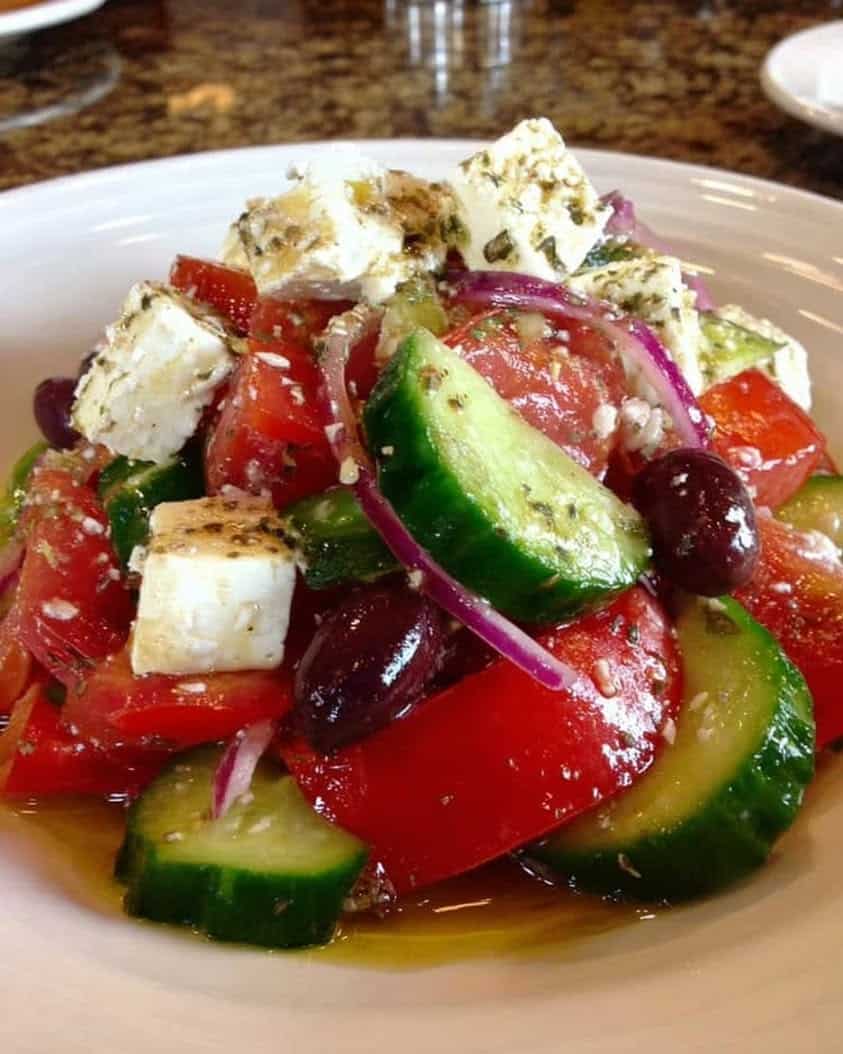
- Visual Appeal: The presentation is a vibrant mosaic. Deep red tomatoes contrast with the green cucumber and pepper, purple-red onion, black olives, and stark white feta. Drizzled with golden-green oil, it is a feast for the eyes that promises a feast for the palate.
- Skill Level Needed: Absolutely no advanced culinary skill is required. This recipe is about assembly, not technique. The only crucial skill is selecting the best, ripest ingredients you can find. Therefore, it is perfect for beginners and seasoned cooks alike.
- Special Equipment: You need only a sharp knife for chopping, a cutting board, and a large serving bowl. A vegetable peeler is optional for the cucumber. No fancy gadgets or appliances are necessary, keeping the preparation true to its rustic village origins.
Recipe Overview
- Difficulty Level: This recipe is categorically easy. There is no cooking involved, merely chopping and assembling. The challenge, if any, lies not in technique but in sourcing quality ingredients. For this reason, it is an accessible dish for anyone to prepare successfully on their first try.
- Category: Primarily, it serves as a classic side dish or appetizer (meze). However, with a larger portion and some crusty bread for dipping, it easily becomes a light, vegetarian main course. It fits perfectly into lunch or dinner menus.
- Cuisine: This dish is the heart of Greek cuisine and a pillar of the broader Mediterranean diet. It reflects the region’s reliance on fresh, sun-ripened vegetables, high-quality fats like olive oil, and preserved elements like olives and cheese. Its simplicity is its greatest cultural signature.
- Cost: The cost is moderate and depends heavily on ingredient quality. Investing in authentic Greek feta, Kalamata olives, and premium olive oil will increase the price but dramatically improve the result. Seasonal, local tomatoes and cucumbers help keep costs down during summer months.
- Season: This is unequivocally a summer dish. It is designed for when tomatoes and cucumbers are at their flavorful peak. Making a traditional Greek Horiatiki salad with bland, off-season produce misses the entire point of the recipe. Therefore, enjoy it from late spring through early autumn.
- Occasion: It is incredibly versatile for occasions. Serve it at casual weeknight dinners, elaborate weekend barbecues, or festive potlucks. It is a staple on Greek Easter tables and a perfect, refreshing meal on a hot day. Ultimately, it suits any gathering that calls for fresh, shareable food.
Why You’ll Love This Recipe
First and foremost, you will adore the explosion of fresh flavors. Each ingredient in this Greek Horiatiki salad sings with its own distinct note, yet they create a perfect chord together. The ripe tomato offers sweet acidity, while the cucumber provides a clean, cooling contrast. Meanwhile, the sharp red onion and briny olives cut through the richness, and the creamy, salty feta brings everything into balance. Every bite is a little different, keeping your taste buds engaged from start to finish. Furthermore, the textures—from juicy to crunchy to creamy—make eating it a truly satisfying experience.
Secondly, the convenience is unmatched. You can prepare a stunning, impressive dish in about fifteen minutes with zero cooking. This makes it an ideal last-minute solution for unexpected guests or a quick, healthy lunch. Moreover, it requires minimal cleanup. You only need a knife, a cutting board, and a bowl. For busy individuals and families, this simplicity is a gift. It proves that eating well does not require hours in the kitchen, just a few minutes of thoughtful assembly with great ingredients.
From a nutritional standpoint, this salad is a powerhouse. It is packed with vitamins, antioxidants, and healthy fats. Tomatoes provide lycopene, cucumbers offer hydration and silica, and onions contain quercetin. Importantly, the extra virgin olive oil is a cornerstone of the heart-healthy Mediterranean diet, full of monounsaturated fats and antioxidants. The feta cheese adds protein and calcium. Consequently, this dish supports overall wellness, aids digestion, and provides sustained energy without heaviness.
For entertaining, this salad is a social superstar. It is meant to be shared from a large, communal bowl, encouraging conversation and connection. Its vibrant colors make it a beautiful centerpiece on any table. Additionally, it pairs wonderfully with a variety of grilled meats, seafood, and wines, making it a flexible anchor for a larger meal. It feels both rustic and elegant, setting a relaxed, welcoming tone for your gathering. Your guests will appreciate its authentic, homemade quality.
Finally, it is remarkably cost-effective and accessible. While premium ingredients elevate it, you can make a delicious version with standard supermarket finds. The recipe is inherently forgiving and adaptable. You can easily scale it up for a crowd or down for a solo meal. Ultimately, the Authentic Greek Horiatiki salad delivers incredible value—maximal flavor, health benefits, and visual appeal for minimal effort and expense. It is a recipe you will return to for years.
Historical Background and Cultural Significance
The Greek Horiatiki salad, whose name literally translates to “village salad,” has humble, rustic origins. It was not created in a restaurant kitchen but born from the daily life of Greek farmers and villagers. Historically, it was a practical lunch for workers in the fields, utilizing what was readily available in their gardens and pantries: tomatoes, cucumbers, onions, olives from their trees, and homemade cheese. The olive oil and oregano were staple condiments. This combination provided a nourishing, hydrating, and energy-sustaining meal under the hot Greek sun without requiring any fire or elaborate preparation.
Culturally, this salad is a symbol of Greek meraki—putting soul, creativity, and love into one’s work. It represents a deep connection to the land and sea. Each component tells a story of Greek agriculture and tradition. The feta, protected by EU designation of origin, is a source of national pride. The Kalamata olive is another iconic product. Serving this salad is an act of sharing Greek heritage and hospitality. It is a dish that says “you are welcome at our table,” embodying the core Greek value of philoxenia.
Over time, the recipe has evolved very little, which is a testament to its perfection. The main evolution has been its journey from a humble field meal to a celebrated restaurant dish worldwide. However, the core formula remains untouched. Interestingly, the addition of lettuce or other leafy greens is a foreign adaptation, often referred to as “Greek salad” internationally. The true traditional Greek Horiatiki salad steadfastly excludes lettuce, maintaining its chunky, substantial character. This purity is guarded by Greeks and purists everywhere.
Regional variations within Greece do exist, showcasing local specialties. For instance, on islands like Crete, you might find a slab of paximadi (rusk) underneath to soak up the juices. In some regions, capers are added for an extra briny kick. The type of oregano can vary, with wild Greek oregano being the most prized. The size of the vegetable chunks can differ from village to village. Nevertheless, the spirit of the dish—freshness, simplicity, and reliance on quality local produce—remains constant across all variations, uniting the country through a shared culinary language.
Ingredient Deep Dive
Tomatoes: The tomato is the non-negotiable foundation of the salad. In Greece, they use intensely flavorful, meaty varieties like beefsteak or heirloom tomatoes that are ripe to the point of softening. These tomatoes provide the essential sweet-acidic juice that mixes with the olive oil to form the dressing. Nutritionally, they are rich in vitamin C, potassium, and the antioxidant lycopene. Always choose tomatoes that are heavy for their size, deeply colored, and fragrant at the stem end. Store them at room temperature until perfectly ripe, then use promptly. Do not refrigerate, as this destroys their texture and flavor. If you must substitute, use the best vine-ripened tomatoes you can find.
Cucumber: The cucumber adds crucial crunch and a cooling, fresh flavor. The preferred type is the long, slender European or English cucumber with thin skin and minimal seeds. This variety is less watery and bitter than standard American cucumbers. It is a good source of hydration, vitamin K, and silica for skin health. Select firm, deeply green cucumbers without soft spots. You can peel it in stripes or fully, but leaving some skin on adds color and nutrients. Store it in the refrigerator’s crisper drawer. For a substitute, Persian cucumbers work well. Avoid large, seedy cucumbers that will waterlog the salad.
Green Bell Pepper: This pepper provides a vegetal, slightly bitter crunch that contrasts the sweet tomatoes. It contributes vitamin C and additional texture. Choose a pepper that is firm, glossy, and heavy with thick, crisp walls. The color should be a vibrant green. Store it in the vegetable crisper. While green pepper is traditional, you can use a lighter-colored pepper for a sweeter note. However, do not use spicy peppers like jalapeños, as they would deviate from the authentic flavor profile.
Red Onion: Red onion offers a sharp, pungent bite and a stunning purple color. Its sulfur compounds have antioxidant properties. To mellow its harshness for the salad, slice it thinly and soak the slices in cold water for 10 minutes before adding. This step removes some of the pungent bite while retaining the flavor and crunch. Choose onions that are firm with tight, shiny skin. Store in a cool, dark, dry place. A possible substitute is sweet white onion, but red onion’s color and specific flavor are ideal for the authentic Greek Horiatiki salad.
Kalamata Olives: These olives are a hallmark of Greek cuisine. Grown in the Kalamata region, they are dark purple, almond-shaped, and have a rich, fruity, wine-like flavor. They provide a meaty texture and a deep, briny saltiness. Look for olives sold in brine, not canned in water. The ones with pits often have better flavor. They are a source of healthy monounsaturated fats. Store them in their brine in the refrigerator. Do not substitute with canned black olives, as they lack the complexity and will compromise the salad’s character.
Feta Cheese: Authentic Greek feta is made from at least 70% sheep’s milk, often blended with goat’s milk. It is brined, giving it a tangy, salty flavor and crumbly yet creamy texture. It is a protected designation of origin (PDO) product. Nutritionally, it provides protein, calcium, and probiotics. Always buy feta in a block submerged in brine, not pre-crumbled. The block allows you to cut the traditional thick slab. Store it in its brine in the refrigerator. For substitutes, other brined white cheeses like Bulgarian sirene or French feta can work, but true Greek feta is irreplaceable for the authentic taste.
Extra Virgin Olive Oil: This is the liquid gold of the salad, serving as the primary dressing. High-quality Greek extra virgin olive oil has a fruity, peppery flavor that ties all ingredients together. It carries the fat-soluble flavors of the oregano and vegetables. It is rich in heart-healthy monounsaturated fats and antioxidants. Choose a bottle labeled “extra virgin,” “cold-pressed,” and preferably from a specific Greek region like Crete or Kalamata. Store it in a cool, dark place. Never substitute with refined or “light” olive oil, as they lack the necessary flavor and health benefits.
Dried Oregano: This herb is the defining aromatic. Greek oregano (rigani) is particularly flavorful, with a robust, slightly peppery taste. It is sprinkled on top, where its essential oils meld with the olive oil. It has anti-inflammatory properties. For the best flavor, buy whole dried oregano leaves and crush them between your fingers as you sprinkle. Avoid pre-ground powder. Store dried oregano in an airtight container away from light and heat. Fresh oregano is not a direct substitute, as it offers a different, milder flavor profile.
Common Mistakes to Avoid
- Using Unripe Tomatoes: This is the cardinal sin. Hard, pale, flavorless tomatoes will result in a bland, disappointing salad. The tomatoes must be ripe, juicy, and sweet to provide the necessary base flavor and liquid for the dressing. Always taste your tomato before adding it.
- Adding Lettuce: Authentic Greek Horiatiki salad contains no leafy greens. Lettuce waters down the flavors, wilts quickly in the dressing, and is not part of the traditional village recipe. Stick to the chunky vegetable foundation for the right texture and authenticity.
- Dicing Vegetables Too Small: The salad should feel rustic and substantial. Chopping everything into tiny pieces makes it resemble a salsa and causes it to become mushy. Cut tomatoes and cucumber into large, hearty chunks to maintain their individual integrity.
- Using Pre-Crumbled Feta: Pre-crumbled feta is often coated in anti-caking agents and lacks the fresh, creamy texture of a block. It also disintegrates into the salad. Always buy a block in brine and cut it into a slab or large chunks to place on top.
- Skimping on Olive Oil: The olive oil is not just a dressing; it’s a main ingredient. Using a meager amount leaves the salad dry and ununified. Be generous. The vegetables should glisten, and there should be a delicious pool of oil and tomato juice at the bottom of the bowl for bread-dipping.
- Adding Vinegar or Lemon Juice: Traditional recipes do not include acidic liquids. The acidity comes solely from the ripe tomatoes. Adding vinegar or lemon overpowers the subtle balance and is an unnecessary addition that veers from authenticity.
- Mixing the Feta In: The feta slab is traditionally placed whole on top of the assembled vegetables. This allows guests to break off their desired piece. Tossing crumbled feta throughout the salad makes it disappear and become overly salty.
- Using Stale Oregano: Old, dusty oregano that has lost its scent will add nothing. Always use fragrant, recently purchased dried oregano. Crush it between your fingers as you add it to release its essential oils for maximum aroma and flavor.
- Preparing It Too Far in Advance: This salad is best served immediately after assembly. Letting it sit for hours causes the vegetables to release too much water and become soggy, and the onions to overpower. Prepare it just before serving.
- Not Seasoning: While the feta and olives are salty, the vegetables still need a light seasoning. A small pinch of sea salt over the tomatoes and cucumbers before adding the oil helps draw out their flavors. However, taste before adding extra salt at the end due to the briny components.
Essential Techniques
Choosing and Preparing Ripe Tomatoes: This is the most critical technique for success. Look for tomatoes that yield slightly to gentle pressure and smell fragrant at the stem end. To prepare, cut out the core and then slice into irregular, wedgy chunks, about 1 to 1.5 inches in size. Cutting them over the serving bowl ensures you capture all the precious juices that will form the dressing base. The goal is pieces substantial enough to spear with a fork without falling apart.
Soaking the Red Onion: This simple step transforms the onion from harsh and overpowering to crisp and pleasantly sharp. After slicing the onion into thin half-moons or slivers, submerge them in a bowl of cold water for 5-10 minutes. Consequently, this water bath mellows the sulfur compounds responsible for the intense bite. Drain and pat them dry before adding to the salad. The result is onion that adds flavor and color without dominating the entire dish.
Cutting the Feta: The presentation of the feta is iconic. Remove the block from its brine and pat it dry. Using a sharp knife, cut a thick slab, typically about ½ to ¾ inch thick. Place this slab whole on top of the assembled vegetables. Alternatively, you can break it into two or three large chunks. This method preserves its creamy texture and allows each person to take a piece, ensuring the feta doesn’t dissolve into the salad prematurely.
Emulsifying the Dressing in the Bowl: The dressing happens directly in the serving bowl. After adding the vegetables, sprinkle them with a little salt and the dried oregano. Then, pour the extra virgin olive oil generously over everything. Do not stir yet. The salt will begin drawing moisture from the tomatoes. Just before serving, give the salad one or two gentle tosses. This action combines the tomato juice, olive oil, and oregano into a simple, flavorful emulsion that coats the vegetables.
Pro Tips for Perfect Greek Horiatiki Salad
First, always serve the salad at room temperature. Taking the tomatoes, cucumber, and feta out of the refrigerator 30 minutes before assembling allows their full flavors to shine. Cold ingredients suppress taste and can cause condensation that waters down the dressing.
Second, use the best extra virgin olive oil you can afford. Since it’s a primary flavor component, a high-quality, fruity, peppery oil will elevate the entire dish. Taste your olive oil on a piece of bread first; if it tastes good alone, it will be magnificent in the salad.
Third, add the olives with their pits. Pitted olives are convenient, but they often become mushy and lose flavor during the pitting process. Olives with pits retain a firmer texture and a more intense, fruity taste. Simply remind your guests they are there.
Fourth, consider adding a pinch of dried mint along with the oregano. While not universal, this is a common addition in some Greek regions. It adds a lovely, subtle layer of freshness that complements the other herbs beautifully.
Fifth, have a loaf of crusty bread like horiatiko psomi or a baguette on the table. The best part of eating a traditional Greek Horiatiki salad is sopping up the incredible mixture of tomato juice and olive oil left at the bottom of the bowl. This is non-negotiable for the full experience.
Sixth, if you must prepare components ahead, chop the vegetables and store them separately in airtight containers in the fridge. Combine them in the bowl and add the oil, oregano, and feta just moments before you are ready to serve to maintain perfect texture.
Variations and Adaptations
Regional Variations: Across Greece, you’ll find delightful local twists. In Crete, a barley rusk (paximadi) is often placed at the bottom of the bowl to soak up the juices, becoming deliciously soft. In the Cyclades, capers are a frequent addition, bringing a pop of salty, floral brine. Some islands add a few leaves of wild purslane for a lemony, succulent crunch. Exploring these variations is a delicious way to taste the diversity within Greek cuisine while honoring the core principles of the dish.
Seasonal Adaptations: The classic recipe is strictly a summer dish. However, in cooler months, you can create a heartier version. Consider adding roasted bell peppers or artichoke hearts. You could include beans like giant butter beans (gigantes). While it won’t be the true Authentic Greek Horiatiki salad, it can be a seasonal vegetable plate inspired by its flavors. The key is to maintain the balance of fresh, salty, and herbal notes.
Dietary Modifications: For a vegan version, omit the feta or use a high-quality vegan feta alternative made from almonds or tofu. Ensure your olives are vegan-friendly. For a lower-sodium version, rinse the olives and feta briefly under cold water to remove some surface brine, and be cautious with added salt. The salad is naturally gluten-free. These modifications allow more people to enjoy the essence of the dish.
Flavor Variations: While purists may object, you can play with additional flavors. A few thin slices of spicy pepper can add heat. Fresh herbs like dill or parsley can be sprinkled on top for a different green note. A very light drizzle of high-quality balsamic glaze (sparingly) can add a sweet contrast, though this is a definite departure from tradition.
Texture Modifications: For a different textural experience, try grating the cucumber instead of chopping it for a more integrated feel. You can also thinly slice all the vegetables for a more refined, less rustic presentation. Adding toasted pine nuts or slivered almonds introduces a crunchy, nutty element not found in the original.
Presentation Alternatives: For individual servings, layer the ingredients in a glass jar or on a plate like a composed salad. For a party, create a large, beautiful platter with the vegetables arranged in sections and the feta slab in the center, allowing guests to build their own bites. These presentations maintain the ingredients’ integrity while offering visual novelty.
Serving and Presentation Guide
Plating Techniques: The traditional and best method is to serve the Greek Horiatiki salad in one large, shallow, rustic bowl. This encourages communal sharing. Start by adding the tomato and cucumber chunks first. Then, scatter the pepper and drained onion over them. Arrange the olives around the edges. Finally, place the slab of feta prominently on top. Drizzle the olive oil over everything, aiming to hit the feta and tomatoes directly. Sprinkle the oregano last. Present it at the table without tossing, allowing the vibrant colors to shine.
Garnishing Ideas: The oregano is the primary garnish. For special occasions, add a few whole oregano sprigs for decoration. A light dusting of dried mint or a single fresh mint leaf on the feta adds color. Sometimes, a single whole pepperoncini pepper placed on the side nods to taverna style. Avoid garnishes that add conflicting flavors or make the dish look fussy; simplicity is key.
Traditional Accompaniments: In Greece, this salad is rarely a standalone meal. It is typically part of a spread of mezedes (small plates). Traditional accompaniments include grilled octopus or squid, fried zucchini or eggplant, meatballs (keftedes), grilled halloumi, and of course, plenty of bread. It also pairs perfectly with simply grilled fish or chicken souvlaki. A glass of chilled Assyrtiko white wine or a cold beer completes the picture.
Modern Serving Suggestions: For a modern twist, serve it alongside grain bowls, quinoa, or farro for a hearty lunch. It makes an excellent topping for grilled chicken or fish, turning a simple protein into a meal. You can also chop the leftovers more finely the next day and use them as a bruschetta topping or a filling for a wrap with some hummus.
Temperature Considerations: As emphasized, all ingredients should be at cool room temperature. The bowl itself should not be chilled. If the day is extremely hot, you can briefly chill the assembled salad for 5-10 minutes before serving, but no longer. The goal is to refresh, not to make the vegetables cold and flavorless.
Portion Control Tips: As a side dish, plan for about one large tomato and a quarter of a cucumber per person. As a main course, double those amounts. The olives, onion, and feta quantities can be adjusted to taste. Remember, the salad is rich due to the olive oil and cheese, so portions can be satisfying without being enormous. Leftovers, while best fresh, can be refrigerated and consumed within a day.
Wine and Beverage Pairing
Wine Pairings: The bright acidity and salty components of the salad call for a wine with good acidity and mineral character. A classic Greek pairing is a crisp, dry white wine like Assyrtiko from Santorini. Its citrus notes and steely minerality cut through the richness of the oil and feta beautifully. Alternatively, a Sauvignon Blanc or a dry Rosé also works well. For red wine lovers, a light-bodied, low-tannin red like a chilled Beaujolais or a Greek Xinomavro rosé can be surprising and delightful matches.
Non-Alcoholic Alternatives: For a refreshing non-alcoholic pairing, consider sparkling water with a squeeze of lemon or a slice of cucumber. Iced herbal teas, like mint or lemon verbena, complement the herbal notes in the salad. A tart cherry juice or a pomegranate spritzer (juice mixed with soda water) can mirror the fruity acidity of the tomatoes. These options provide refreshment without competing with the salad’s clean flavors.
Coffee/Tea Pairings: This salad is not typically paired with coffee or tea, as it is a lunch or dinner dish. However, after a meal featuring the salad, a traditional Greek coffee would be a fitting end. Its strong, unfiltered character and slight bitterness provide a bold contrast to the meal’s freshness. A cup of mint tea would also be a soothing, digestif option.
Temperature Considerations: All beverages should be served well-chilled. White and rosé wines should be at a cool 45-50°F (7-10°C). Even light reds can benefit from a slight chill. Non-alcoholic spritzers and waters should be ice-cold. The contrast between the cool drink and the room-temperature salad is part of the sensory pleasure, especially on a warm day.
Serving Suggestions: Serve wine in appropriate stemware to appreciate its aroma. Water should be readily available in large pitchers. If serving multiple beverages, offer them simultaneously so guests can choose their preferred pairing. Remember, the star is the salad, so keep beverage service simple and unfussy to maintain the rustic, relaxed atmosphere the dish inspires.
Storage and Shelf Life
Storage Methods: The Greek Horiatiki salad is best eaten immediately. If you must store leftovers, place them in an airtight container in the refrigerator. Crucially, store the vegetables and the feta separately if possible, as the feta will begin to break down and make the vegetables mushy. The oil will solidify when chilled. Try to consume any leftovers within 24 hours for the best quality.
Temperature Requirements: Store leftovers at a consistent refrigerator temperature, below 40°F (4°C). Do not leave the assembled salad at room temperature for more than two hours, as the combination of moist vegetables and dairy can become a breeding ground for bacteria. When ready to eat leftovers, let them sit out for 10-15 minutes to take the chill off.
Container Recommendations: Use glass containers with tight-fitting lids. Glass is non-porous and won’t absorb the strong odors of onion and olive oil. If storing components separately, use smaller containers for the feta and olives. Avoid storing in metal bowls, as the acid from the tomatoes can react with the metal and impart an off-flavor.
Signs of Spoilage: Discard the salad if you notice an off or sour smell, significant wilting and sogginess beyond normal, or any signs of mold, especially on the feta. If the vegetables have become slimy or the juices appear excessively cloudy, it is time to throw it away. When in doubt, err on the side of caution.
Reheating Instructions: This is a cold salad and should never be reheated. Attempting to warm it will ruin the texture of the crisp vegetables and melt the feta into an unappealing mess. Enjoy leftovers cold, straight from the fridge, or briefly tempered to room temperature.
Freezing Guidelines: Freezing is not recommended for this salad. The high water content in the tomatoes and cucumbers will cause them to become completely watery and collapse upon thawing. The texture will be irreparably damaged. The feta will also become grainy and crumbly. This is a fresh dish meant to be enjoyed immediately.
Make Ahead Strategies
Prep Timeline: You can prep all components up to 24 hours in advance to streamline assembly. Wash and dry the tomatoes, cucumber, and pepper. Chop the vegetables and store them separately in airtight containers in the refrigerator. Slice and soak the red onion; after soaking, drain and store it in a container with a little water to keep it crisp. Keep the feta in its brine until the last moment.
Storage Between Steps: The key to successful make-ahead is keeping ingredients isolated. Moisture is the enemy. Place a paper towel at the bottom of the containers holding the chopped tomatoes and cucumbers to absorb any excess liquid they release. This prevents sogginess. Store the pepper in its own dry container. Keep the olives in their brine.
Quality Impact Assessment: Pre-chopping will cause a minor loss of freshness and a slight release of water, but it is acceptable for convenience. The onion may lose a bit of its sharpness, which some prefer. The overall flavor will still be excellent if you use high-quality ingredients. The biggest impact is on texture, which is why the final assembly should happen as close to serving as possible.
Assembly Tips: When ready to serve, take all components out of the fridge 20-30 minutes ahead. Drain any accumulated liquid from the vegetable containers. Combine the tomatoes, cucumber, pepper, and onion in your serving bowl. Add olives. Then, cut your feta from the block and place it on top. Now, add the olive oil and oregano. This last-minute assembly preserves the ideal texture and presentation.
Fresh Element Additions: The dried oregano and olive oil must always be added fresh at the end. Do not mix them with the vegetables ahead of time. If using any fresh herbs like mint or parsley, chop and add them at the last minute as well. This ensures their vibrant color and aroma are at their peak when the dish hits the table.
Scaling Instructions
Halving the Recipe: Halving the recipe for two people is straightforward. Use one large tomato, half a cucumber, half a bell pepper, a quarter of a red onion, a handful of olives, and a 2-3 ounce slab of feta. Adjust the olive oil to about 2 tablespoons and oregano to ½ teaspoon. Use a medium-sized bowl. The prep time remains the same, but you’ll have less chopping. This is perfect for a romantic dinner or a light lunch for two.
Doubling or Tripling: For a crowd, scaling up is easy. Simply multiply all ingredients by your desired factor. The key is to use a very large, wide serving platter or bowl to prevent overcrowding and allow for even distribution of flavors. You may need to mix the vegetables in batches in a large mixing bowl before transferring to your serving vessel. Consider presenting the feta as multiple slabs scattered across the top. Prep time will increase linearly with the volume of chopping.
Equipment Adjustments: When scaling up, ensure you have a knife sharp enough for the increased chopping and a cutting board with ample space. A very large mixing bowl is essential for tossing. For a party, consider setting up multiple smaller bowls of salad around the table instead of one gigantic one for easier access. This also keeps the salad fresher, as people won’t be digging into a single bowl for as long.
Timing Modifications: The active prep time will increase with the quantity. For a double batch, allot 25 minutes; for a triple, allot 35-40 minutes. The “cook time” remains zero. To manage time for a large event, prep all vegetables the day before and store them separately as outlined in the make-a Print
Greek Horiatiki (Village Salad) Traditional Greek Salad (Horiatiki)
- Total Time: 15 minutes
- Yield: 4
Description
A classic, refreshing Greek village salad featuring ripe tomatoes, crisp cucumber, red onion, Kalamata olives, and creamy feta cheese, all dressed simply with extra virgin olive oil and oregano.
Ingredients
- 4 large ripe tomatoes, cut into wedges
- 1 large cucumber, sliced into half-moons
- 1 small red onion, thinly sliced
- 1 green bell pepper, sliced
- 200g block of feta cheese
- 1/2 cup Kalamata olives
- 2 tablespoons extra virgin olive oil
- 1 teaspoon dried oregano
- Salt to taste
Instructions
- Wash and chop all vegetables as described in the ingredients.
- In a large salad bowl, combine tomatoes, cucumber, red onion, and bell pepper.
- Place the block of feta cheese on top of the vegetables and scatter the Kalamata olives around it.
- Drizzle with extra virgin olive oil and sprinkle with dried oregano and salt.
- Gently toss just before serving to keep the feta intact.
Notes
You can customize the seasonings to taste.
- Prep Time: 15 minutes
- Cook Time: 0 minutes
- Method: Side
- Cuisine: Greek