Craft a Stunning Greek Feta Salad Tower Recipe for Elegant Dining
Imagine transforming the classic, rustic flavors of a Greek salad into a breathtaking centerpiece. This Greek Feta Salad Tower recipe does exactly that. Consequently, it elevates simple, fresh ingredients into a sophisticated presentation perfect for a dinner party or special occasion. Each layer bursts with the vibrant tastes of the Mediterranean. Moreover, the visual appeal is undeniable, turning a familiar side dish into the star of your table.
This recipe celebrates the essence of Greek cuisine: quality ingredients, bold flavors, and a sense of shared joy. The process of building the tower is surprisingly simple, yet the final result looks impressively complex. You will combine crisp cucumbers, juicy tomatoes, briny Kalamata olives, and creamy feta cheese. Ultimately, you bind them together with a bright, herby dressing and a touch of creamy avocado. The key to success lies in the careful preparation and layering of each component.
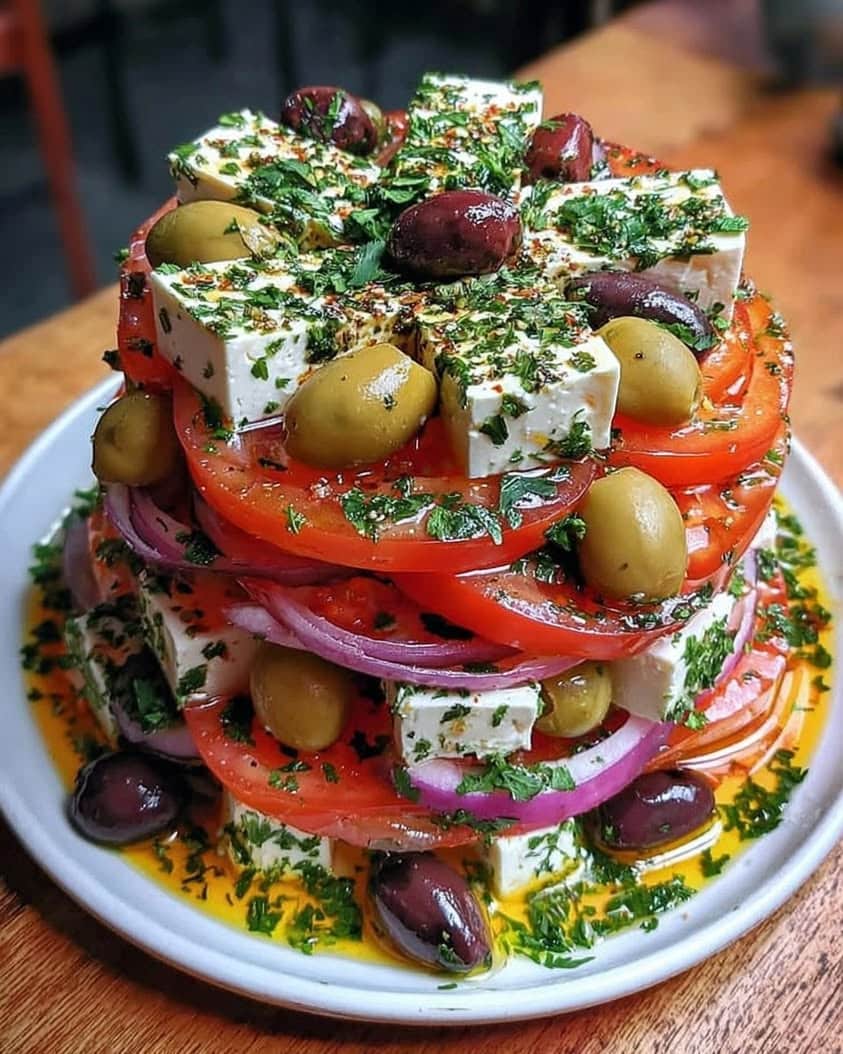
Furthermore, this Greek Feta Salad Tower is a celebration of texture and color. The red of the tomatoes, the green of the cucumbers and herbs, the purple of the onions, and the white of the feta create a stunning palette. When you unmold the tower onto a plate, it stands tall and proud. Guests will marvel at its beauty before diving into the delicious, harmonious flavors. This dish proves that healthy, fresh food can be both elegant and incredibly satisfying.
Quick Recipe Highlights
- Flavor Profile: This tower delivers a perfect balance of tangy, salty, and fresh. The feta and olives provide a savory saltiness, while the tomatoes and cucumber offer a sweet, juicy contrast. Additionally, the lemon-oregano dressing adds a bright, herbaceous acidity that ties everything together beautifully.
- Texture: Expect a wonderful crunch from the diced cucumbers and red onion, contrasted by the creamy, crumbly texture of the feta cheese. The avocado layer introduces a luxurious, smooth mouthfeel, while the tomatoes burst with juiciness in every bite.
- Aroma: The moment you prepare this dish, the fresh scents of chopped dill and oregano will fill your kitchen. Combined with the sharp aroma of red wine vinegar and the earthy note of extra virgin olive oil, it smells like a sun-drenched Greek island.
- Visual Appeal: The layered presentation in a ring mold creates a striking vertical salad. The distinct bands of color—red, green, white, and purple—make it a true showstopper. Finally, a garnish of whole olives and a drizzle of dressing completes the elegant look.
- Skill Level Needed: This is an accessible recipe for all skill levels. Importantly, it requires no cooking, just careful knife work for dicing and a steady hand for layering. The most advanced technique is simply using a mold to create the tower structure.
- Special Equipment: You will need a 4-inch diameter ring mold or a clean, empty can with both ends removed to form the tower. Alternatively, you can use a small bowl lined with plastic wrap, though a metal ring mold yields the cleanest, most professional result.
Recipe Overview
- Difficulty Level: We rate this Greek Feta Salad Tower recipe as “Easy.” Primarily, it involves chopping, mixing, and assembling—no complex cooking techniques are required. The challenge, if any, lies in the patient, compact layering within the mold. However, with clear instructions, anyone can achieve a beautiful, stable tower on their first try.
- Category: This dish fits wonderfully into multiple categories. It serves as an impressive appetizer or starter for a multi-course meal. Alternatively, it can be a light main course for lunch, especially when paired with some crusty bread. It also belongs firmly in the realm of healthy salads and vegetarian dishes.
- Cuisine: This recipe is firmly rooted in Greek and broader Mediterranean cuisine. It draws directly from the classic Horiatiki salad, celebrating its core ingredients and flavors. The use of oregano, lemon, and olive oil in the dressing is quintessentially Greek. Meanwhile, the architectural presentation adds a modern, global twist to the traditional form.
- Cost: Preparing this Greek Feta Salad Tower is remarkably cost-effective. Most ingredients, like cucumber, tomato, and onion, are inexpensive staples. The primary cost drivers are the block feta cheese and Kalamata olives, but a little goes a long way. Overall, you can create this elegant dish for a fraction of the cost of a restaurant appetizer.
- Season: This salad shines brightest in the summer when tomatoes and cucumbers are at their peak sweetness and crispness. Nevertheless, thanks to greenhouse produce and reliable imports, you can successfully make it year-round. For the best flavor, always seek out the ripest, in-season vegetables you can find.
- Occasion: This tower is perfect for occasions where you want to impress. It’s ideal for dinner parties, bridal or baby showers, holiday gatherings, or a romantic date night at home. Conversely, it also makes a special treat for a weekday lunch when you want to elevate an ordinary meal.
Why You’ll Love This Recipe
First and foremost, you will adore the symphony of tastes and textures in every bite of this Greek Feta Salad Tower. The cool, crisp cucumber contrasts with the soft, creamy avocado. Simultaneously, the salty tang of the feta cheese plays against the sweet acidity of the tomato. Each layer offers a distinct sensation, yet they harmonize perfectly under the blanket of the lemony herb dressing. Ultimately, it is a far more exciting experience than a standard tossed salad.
From a practical standpoint, the convenience of this recipe is a major win. You can prepare every component ahead of time. Therefore, when your guests arrive, you simply need to layer and plate. There is no last-minute cooking or stress. Additionally, the assembly is almost foolproof with the ring mold, guaranteeing a professional-looking presentation every single time. This makes entertaining feel effortless and enjoyable.
Nutritionally, this tower is a powerhouse of good-for-you ingredients. It is packed with vitamins from the fresh vegetables, healthy fats from the olive oil and avocado, and protein from the feta cheese. The dish is naturally vegetarian and can be adapted to be gluten-free with ease. Choosing this salad means you are serving a meal that is as nourishing as it is beautiful, without any compromise on flavor.
The social and entertaining value of this dish cannot be overstated. It is a guaranteed conversation starter. Guests are always delighted and intrigued by the elegant presentation. Serving individual towers makes everyone feel special and considered. Furthermore, it demonstrates care and effort, setting a tone of celebration and hospitality for your entire meal.
Finally, the cost-effectiveness and accessibility of the ingredients make this a recipe you can turn to again and again. You do not need rare or expensive items. Instead, you build something extraordinary from simple, wholesome components found at any grocery store. This Greek Feta Salad Tower proves that gourmet-style dining is absolutely achievable in your own kitchen, on any budget.
Historical Background and Cultural Significance
The story of this dish begins with the classic Greek salad, known in Greece as “Horiatiki,” which translates to “village” or “peasant” salad. Traditionally, this was a farmer’s meal, prepared with whatever sun-ripened vegetables were on hand. Consequently, it embodied simplicity and resourcefulness. The core ingredients—tomato, cucumber, onion, olives, and feta—were staples of the Greek diet, dressed only with olive oil and oregano. This salad was not a starter but a main event, often accompanied by hearty bread.
Culturally, the Greek salad is a symbol of the Mediterranean diet, which UNESCO recognizes as an intangible cultural heritage of humanity. This diet emphasizes fresh produce, healthy fats, and communal eating. The salad represents a way of life centered on seasonal eating, leisurely meals, and sharing food with family and friends. It is more than a recipe; it is a reflection of Greek hospitality, or “philoxenia.”
The evolution from a rustic, tossed salad to an architectural tower is a modern twist. Chefs in contemporary restaurants began deconstructing and reassembling classic dishes to create new visual and textural experiences. This “towering” technique applied to salads gained popularity in the late 20th century. It allows each ingredient to be appreciated individually while still creating a unified flavor profile. Our Greek Feta Salad Tower recipe honors the traditional flavors while embracing this modern, elegant presentation style.
Regional variations of the base salad exist throughout Greece and the Mediterranean. For instance, on some islands, you might find capers added. In other regions, green peppers are a common inclusion. The type of olive can vary, though Kalamata are most famous. The key constant is the slab of feta cheese resting on top, not crumbled into the mix. Our tower recipe stays true to this by featuring a distinct, creamy layer of feta, paying homage to the ingredient’s starring role in the original dish.
Ingredient Deep Dive
Feta Cheese: Authentic Greek feta is a protected designation of origin (PDO) product, meaning it must be made in Greece from at least 70% sheep’s milk, often blended with goat’s milk. This process gives it a tangy, salty, and crumbly character unlike any other cheese. Nutritionally, it provides protein, calcium, and beneficial fats. When selecting feta, look for blocks stored in brine for the best flavor and texture. Avoid pre-crumbled feta, which often contains anti-caking agents and lacks moisture. Store leftover feta submerged in its brine or in a saltwater solution in the refrigerator.
Cucumber: We use English or Persian cucumbers for their thin skin, minimal seeds, and crisp texture. They have been cultivated for over 3,000 years and originated in India. Cucumbers are incredibly hydrating, composed of about 95% water, and provide vitamins K and C. Choose firm, dark green cucumbers without soft spots. For the tower, it is crucial to seed and dice them uniformly to ensure even layers and prevent a watery base. Store whole cucumbers in the refrigerator crisper drawer.
Tomatoes: Vine-ripened tomatoes are essential for their sweet, robust flavor. Tomatoes are native to South America and were introduced to Europe in the 16th century. They are rich in lycopene, a powerful antioxidant linked to heart health. For the tower, use Roma (plum) tomatoes or another meaty variety; they have less watery pulp, which helps the structure hold. Always core and seed them before dicing. Never refrigerate tomatoes, as cold temperatures degrade their texture and flavor; keep them at room temperature until use.
Kalamata Olives: These iconic, almond-shaped olives are named after the city of Kalamata in southern Greece. They are dark purple, meaty, and have a rich, fruity, and slightly smoky flavor. They are typically preserved in wine vinegar or olive oil. Kalamatas are a good source of monounsaturated fats and vitamin E. Purchase them with pits for superior flavor and pit them yourself. The brine they come in is excellent for adding to dressings or marinades. Store opened olives in their liquid in the fridge.
Extra Virgin Olive Oil: This is the highest grade of olive oil, extracted mechanically without heat or chemicals. It forms the base of the dressing and contributes a fruity, peppery backbone. Greek olive oil, particularly from the Koroneiki variety, is renowned for its quality. It is central to the Mediterranean diet and is packed with heart-healthy monounsaturated fats and antioxidants. Use a oil you enjoy tasting, as its flavor will shine. Store it in a cool, dark place to prevent rancidity.
Common Mistakes to Avoid
- Using Watery Vegetables: Failing to properly seed the tomatoes and cucumbers is a critical error. The excess liquid will pool at the bottom of the mold, making the tower soggy and unstable when unmolded. Always take the time to remove the seeds and gelatinous pulp.
- Not Draining Ingredients: After dicing the vegetables, especially the salted cucumbers, you must drain them well. Similarly, feta crumbled from a block can be moist. Pat ingredients dry with a paper towel if necessary to ensure clean, distinct layers.
- Overfilling or Under-packing the Mold: Gently pressing each layer is key to a tower that holds its shape. However, pressing too hard will crush the vegetables and squeeze out juices. Conversely, not packing enough will result in a loose, collapsing tower. Aim for firm, even pressure.
- Using the Wrong Mold Size: A mold that is too wide will make a short, wide tower that lacks visual impact. A mold that is too narrow makes layering difficult. A 4-inch diameter mold is ideal for creating a tall, impressive individual portion.
- Skipping the Chilling Step: After assembling the towers, chilling them for 10-15 minutes is not optional. This step allows the flavors to meld and, more importantly, lets the structure set firmly, making unmolding much cleaner and easier.
- Unmolding Too Hastily: When removing the ring mold, lift it straight up in one smooth motion. Do not twist or wiggle it, as this can disturb the layers and cause the sides to bulge. If it sticks, gently run a thin knife around the inner edge first.
- Dressing the Tower Too Early: Only drizzle the final dressing garnish around the base of the plated tower, not over the top, until ready to serve. Adding dressing on top too soon will make it run down the sides and soften the beautiful layers.
- Using Low-Quality Feta: The flavor of the entire dish hinges on the feta. Pre-crumbled feta in a bag is often dry, bland, and coated in starch. Always buy a block of feta in brine for the best creamy texture and authentic tangy saltiness.
Essential Techniques
Dicing Uniformly: Consistent, small dice is the most important technique for this Greek Feta Salad Tower. Uniform pieces pack together neatly, creating stable, even layers and ensuring every forkful contains a balanced mix of ingredients. Aim for a 1/4-inch dice for the cucumber, tomato, and onion. Use a sharp chef’s knife and practice the “claw grip” to keep your fingers safe. The visual cue for success is a pile of ingredients where all pieces are roughly the same size, which will interlock perfectly in the mold.
Layering and Compacting: This technique transforms chopped salad into architecture. Start each layer by scattering ingredients evenly across the base of the mold. Then, use the back of a spoon or your fingers to gently press down, just enough to eliminate large air pockets and create a flat surface for the next layer. The goal is cohesion, not compression. A common pitfall is pressing so hard that juices are expelled, which will weaken the structure. The layer should hold together when gently poked but still appear fresh and distinct.
Creating an Emulsified Dressing: A well-emulsified dressing coats ingredients evenly and clings to them. The technique involves slowly whisking the oil into the acid and seasonings to create a temporary suspension. For this recipe, whisk the lemon juice, vinegar, oregano, salt, and pepper together first. Then, while whisking constantly, slowly drizzle in the olive oil until the mixture thickens slightly and looks unified. If you simply dump and stir, the oil and vinegar will separate quickly. Mastering this ensures every layer of your tower is perfectly seasoned.
Pro Tips for Perfect Greek Feta Salad Tower
First, chill your ring mold in the freezer for 10 minutes before using. A cold mold helps the ingredients, especially the avocado and feta layers, firm up more quickly upon contact, aiding structural integrity from the very first layer.
For the cucumber layer, after dicing, toss the pieces with a pinch of salt and let them sit in a colander for 10 minutes. This process, called “sweating,” draws out excess water. Then, rinse and pat them thoroughly dry to prevent a soggy base.
When building the tower, place the mold directly on the serving plate where you intend to serve it. This avoids the risky transfer of a completed tower from a work surface to a plate, which can lead to collapse.
If your feta block is very moist, pat it dry with a paper towel before crumbling. Excess moisture from the brine can make the feta layer pasty instead of crumbly, and it can seep into other layers.
For a stunning visual effect, consider the color order of your layers. A classic sequence is: green cucumber, red tomato, white feta, then avocado. This creates high-contrast bands that are incredibly photogenic.
Have all your prepped ingredients in separate bowls before you start assembling. This “mise en place” setup makes the layering process smooth, fast, and enjoyable, allowing you to focus on building the perfect structure.
If you don’t have a ring mold, create one using a clean, empty tin can (like a 14-15 oz. can). Simply remove both ends with a can opener, wash thoroughly, and you have a perfect DIY mold.
Garnish with intention. A final sprinkle of fresh dill or oregano on top, a few whole Kalamata olives placed artistically around the base, and a deliberate drizzle of dressing elevate the presentation from homemade to restaurant-quality.
Variations and Adaptations
Regional Variations: To mimic different Greek islands, try adding a tablespoon of rinsed capers to the tomato layer for a taste of the Aegean. Alternatively, incorporate some finely diced green bell pepper for a Peloponnesian touch. For a Cypriot influence, add a pinch of dried mint to the dressing or include a few slices of grilled halloumi cheese on the plate beside the tower.
Seasonal Adaptations: In winter, use sweet cherry tomatoes halved instead of larger tomatoes, and consider adding segments of juicy orange or pomegranate arils for a festive, sweet burst. In spring, incorporate thinly sliced radishes or fresh peas. For autumn, roasted cubes of butternut squash or beets can replace the tomato layer for a deeper, earthier flavor profile.
Dietary Modifications: For a vegan Greek Feta Salad Tower, substitute the feta with a firm, marinated tofu crumble or a commercial vegan feta alternative. Ensure your dressing uses a vegan-friendly sweetener if needed. To make it gluten-free, this recipe is naturally compliant; just confirm any pre-made ingredients like olives are processed in a gluten-free facility.
Flavor Variations: Infuse your olive oil by gently warming it with a clove of garlic and a sprig of rosemary, then letting it cool. This creates a more complex dressing base. For a spicy kick, add a pinch of red pepper flakes to the dressing or a few slices of pickled pepperoni (peperoncini) within the layers.
Texture Modifications: For added crunch, include a layer of toasted pine nuts or chopped walnuts between the vegetables. For a creamier overall texture, you can mix a tablespoon of Greek yogurt or tzatziki into the avocado layer before packing it into the mold.
Presentation Alternatives: Instead of one large tower, create mini towers using a 2-inch ring mold for passed appetizers. For a family-style presentation, build a wide, low tower on a platter and slice it like a cake. You can also deconstruct the tower entirely and serve it as a layered salad in a clear glass trifle bowl.
Serving and Presentation Guide
Plating Techniques: The classic presentation is the single tower centered on a white or neutral-colored plate, which makes the vibrant colors pop. For a more dynamic look, place the tower slightly off-center. Smear a spoonful of Greek yogurt or a basil pesto across the plate before placing the tower on top. This adds color, flavor, and a professional chef’s touch to the presentation.
Garnishing Ideas: Beyond a drizzle of dressing, garnish with a sprig of fresh dill or oregano. Place three whole Kalamata olives in a small cluster beside the tower. A light dusting of sumac or smoked paprika over the top adds a beautiful color and a hint of extra flavor. A few edible flowers, like nasturtiums or borage, make the dish exceptionally elegant for special events.
Traditional Accompaniments: In Greece, a salad like this is almost always served with a basket of warm, crusty bread to soak up the delicious dressing and olive oil at the bottom of the plate. Consider serving grilled pita bread, either plain or lightly brushed with olive oil and grilled until crisp.
Modern Serving Suggestions: For a complete light meal, serve the tower alongside grilled shrimp, chicken souvlaki skewers, or a piece of simply prepared fish like branzino. You can also present it as part of a Mediterranean mezze platter with hummus, dolmades, and spanakopita.
Temperature Considerations: All components should be cold, but not ice-cold straight from the refrigerator, as extreme cold mutes flavors. Ideally, assemble the towers and chill them for 10-15 minutes to set, then let them sit at room temperature for 5 minutes before serving to allow the full aroma and taste to bloom.
Portion Control Tips: The 4-inch tower is a perfect appetizer or side portion. For a main course, consider making a slightly wider tower or serving it with substantial sides like a lentil salad or quinoa. You can also present a “deconstructed” version where the layers are arranged neatly on the plate without the mold for a lighter, more casual feel.
Wine and Beverage Pairing
Wine Pairings: The bright acidity and salty elements of this Greek Feta Salad Tower call for wines with good acidity and mineral character. A classic Greek Assyrtiko from Santorini is a perfect match, with its crisp citrus notes and saline quality that complements the feta and olives beautifully. Alternatively, a Sauvignon Blanc from New Zealand or a dry Rosé from Provence would also work wonderfully, cutting through the richness and refreshing the palate.
Non-Alcoholic Alternatives: A sparkling lemonade or limeade provides a sweet-tart counterpoint that mirrors the dressing’s citrus. For something more herbal, try a chilled mint or basil iced tea. A high-quality sparkling water with a squeeze of lemon or a cucumber ribbon garnish is always a refreshing and elegant choice that cleanses the palate between bites.
Coffee/Tea Pairings: While not a typical pairing for a salad course, if serving this tower for a brunch or lunch, a light, citrusy tea like Earl Grey or a Moroccan mint green tea would be lovely afterward. A smooth, medium-roast coffee would also be acceptable, though it’s better suited after a richer meal.
Temperature Considerations: All beverages should be served well-chilled. White wines and rosés should be at a cool 45-50°F (7-10°C). Non-alcoholic sparkling drinks and iced teas should be poured over plenty of ice. Proper chilling ensures the drinks refresh the palate rather than competing with the cool, crisp salad.
Serving Suggestions: Pour wine into appropriate stemware to enhance aroma. Serve iced teas and lemonades in tall glasses. Always offer a pitcher of cold water on the table as well. The goal is to have a beverage that acts as a palate cleanser, resetting your taste buds for the next delicious bite of the tower.
Storage and Shelf Life
Storage Methods: This Greek Feta Salad Tower is best enjoyed immediately after assembly. However, if you must store it, keep the unmolded tower in a single layer in an airtight container in the refrigerator. Do not stack towers, as the weight will crush the layers. It’s better to store the components separately and assemble just before serving.
Temperature Requirements: Always refrigerate any leftovers or prepped components. The ideal refrigerator temperature is 40°F (4°C) or below. Never leave the assembled tower at room temperature for more than two hours, as the dairy and fresh vegetables are susceptible to bacterial growth.
Container Recommendations: For prepped ingredients, use separate glass or BPA-free plastic containers with tight-fitting lids. For a fully assembled tower you need to store, use a container that is just slightly wider than the tower itself to minimize movement and shifting during storage.
Signs of Spoilage: Discard the salad if you notice any off odors, such as sourness or fermentation. Visible mold, excessive liquid (beyond normal juices), or a slimy texture on the vegetables are all clear indicators that the salad is no longer safe to eat.
Reheating Instructions: This is a cold salad and should never be reheated. The vegetables will become limp and unappetizing, and the feta may melt or become oily. If the tower has been refrigerated and is too cold, simply let it sit at room temperature for 5-10 minutes before serving to improve flavor.
Freezing Guidelines: Freezing is not recommended for this recipe. The high water content in the vegetables means they will become mushy and watery upon thawing. The structure of the tower will completely disintegrate. The dressing will also separate. Always prepare this dish fresh.
Make Ahead Strategies
Prep Timeline: You can prep almost every component 1 day in advance. Dice the cucumbers, tomatoes, and red onion. Store them separately in airtight containers in the refrigerator. Pit and halve the olives. Crumble the feta cheese and store it in a separate container. Prepare the dressing and keep it in a jar in the fridge. Only dice the avocado and assemble the towers within an hour of serving to prevent browning.
Storage Between Steps: Keep all pre-chopped vegetables in their own containers with a paper towel at the bottom to absorb any excess moisture. This keeps them crisp. The dressing may solidify slightly when cold; simply let it come to room temperature and shake vigorously before using. The feta can be kept in a small amount of milk or water to prevent drying out.
Quality Impact Assessment: Prepping vegetables a day ahead has minimal impact on quality if stored properly. The flavors may even meld slightly. The biggest risk is the vegetables losing some crispness, which is why the paper towel trick is crucial. The avocado is the only ingredient that suffers significantly from being pre-cut, so always leave that for last.
Assembly Tips: When ready to serve, have your chilled mold and serving plates ready. Follow the layering order, using your pre-prepped ingredients. Because everything is already chopped, assembly will take only 5 minutes per tower. This is the ultimate strategy for stress-free entertaining.
Reheating Guidelines: Not applicable, as this is a cold dish. If components are too cold, a brief rest at room temperature is all that’s needed.
Fresh Element Additions: The fresh herbs (dill, oregano) should be chopped just before assembly to maintain their bright color and potent aroma. Add them to the appropriate layers or use them solely as a final garnish. The avocado must be sliced and added at the last possible moment to maintain its color and texture.
Scaling Instructions
Halving the Recipe: To serve two, simply divide all ingredient quantities by two. The assembly process remains identical. You may still want to make the full batch of dressing and save half, as emulsifying very small amounts can be tricky. Use the same 4-inch ring mold for two impressive individual towers.
Doubling or Tripling: For a party of 8 or 12, multiply the ingredients accordingly. The most efficient method is to prepare each component in a large batch. When assembling multiple towers, set up a workstation with all your bowls of ingredients and several molds. Assemble them in an assembly-line fashion for speed and consistency.
Equipment Adjustments: If scaling up, ensure you have enough ring molds. If you don’t, you can assemble towers in stages, cleaning the mold between uses. For a large crowd, consider making one spectacular large-format tower on a platter using a wide cake ring or springform pan, then slicing it like a cake for serving.
Timing Modifications: Prepping time will increase linearly as you scale up. However, assembly time per tower will decrease slightly as you get into a rhythm. Factor in extra chilling time if your refrigerator is crowded; the towers need adequate air circulation to chill properly.
Storage Considerations: When making multiple towers ahead, store them (covered) on a baking sheet in the refrigerator. Do not stack them. If space is limited, store the layered components in large separate containers and assemble in batches closer to serving time.
Nutritional Deep Dive
Macro Breakdown: One serving of this Greek Feta Salad Tower provides a balanced mix of macronutrients. The healthy fats come predominantly from the olive oil, avocado, and feta cheese, offering primarily monounsaturated fats. The cucumbers and tomatoes contribute minimal carbohydrates, mostly in the form of natural sugars and fiber. The feta cheese provides a moderate amount of protein, making this salad more satiating than a vegetable-only version.
Micronutrient Analysis: This dish is a micronutrient powerhouse. Tomatoes are rich in vitamin C, potassium, and the antioxidant lycopene. Cucumbers provide vitamin K. Red onions offer quercetin, another antioxidant. Feta cheese is an excellent source of calcium and phosphorus. Olive oil contributes vitamin E. Together, they support bone health, heart health, and provide anti-inflammatory benefits.
Health Benefits: Following the principles of the Mediterranean diet, this salad promotes cardiovascular health through its healthy fat profile and antioxidants. The high fiber content from the vegetables aids digestion and promotes gut health. The combination of fiber, protein, and healthy fats also helps regulate blood sugar levels, providing sustained energy without a crash.
Dietary Considerations: This recipe is naturally vegetarian and gluten-free. It is high in sodium due to the feta and olives, so those on sodium-restricted diets should consume it in moderation or use low-sodium feta and rinse the olives. It contains dairy. The calorie content is moderate, making it a weight-conscious choice when portion is controlled.
Portion Analysis: One 4-inch tower is a satisfying appetizer or side portion. As a main course, you may want to add a protein source like grilled chicken or chickpeas to increase satiety. The portion size is visually generous due to the vertical presentation, which can help with mindful eating and satisfaction.
Weight Management Tips: This salad is an excellent choice for weight management. It is volume-rich—meaning it’s large in size but relatively moderate in calories—thanks to the high water and fiber content of the vegetables. The healthy fats and protein promote fullness. To reduce calories slightly, you can use a lighter hand with the olive oil in the dressing.
Dietary Adaptations
Gluten-free: This Greek Feta Salad Tower is naturally gluten-free as written. The only potential source of gluten would be cross-contamination in pre-packaged ingredients. Always check labels on items like olives or pre-crumbled feta to ensure they are processed in a gluten-free facility if you have celiac disease or a severe sensitivity.
Dairy-free/Vegan: To make a vegan Greek Feta Salad Tower, replace the feta cheese with a block of firm tofu that has been pressed, cubed, and marinated in lemon juice, nutritional yeast, and salt. Alternatively, use a commercial vegan feta made from almonds or tofu. Ensure the dressing is made with vegan-friendly ingredients (most are).
Low-carb/Keto: This salad is already relatively low in carbohydrates. To make it fully keto-friendly, reduce the amount of red onion slightly, as onions contain more carbs than other vegetables. Ensure you use the full amount of healthy fats from the avocado and olive oil, as these are encouraged on a ketogenic diet.
Paleo: The main non-paleo ingredient is the feta cheese (dairy). Omit the feta or substitute it with a layer of mashed, seasoned avocado mixed with chopped olives. Ensure the olives are free of any non-paleo preservatives. The rest of the ingredients are paleo-compliant.
Low-FODMAP: For a Low-FODMAP version, omit the red onion entirely, as it is high in fructans. Replace it with the green tops of scallions (green parts only). Use a firm, lactose-free feta cheese, as most aged cheeses are low in lactose. Limit the serving size to one tower, as large amounts of even low-FODMAP foods can be problematic.
Troubleshooting Guide
Tower Collapses When Unmolding: This usually means the layers were not packed firmly enough or the ingredients were too wet. Solution: Ensure each layer is pressed gently but firmly with the back of a spoon. Always seed and drain tomatoes and cucumbers thoroughly. Chill the assembled tower for a full 15 minutes to help it set before attempting to unmold.
Layers Look Muddy or Mixed: This happens if you press too hard during layering, crushing the vegetables and forcing juices between layers. Solution: Use a lighter touch when compacting. Think of it as “settling” the ingredients, not “squishing” them. Also, ensure each layer is completely level before adding the next.
Avocado Layer Turns Brown: Avocado oxidizes quickly when exposed to air. Solution: Assemble the tower as close Print
Greek Feta Salad Tower
- Total Time: 15 minutes
- Yield: 4
Description
A visually stunning and refreshing layered salad featuring classic Greek ingredients, perfect for a light lunch or elegant appetizer.
Ingredients
- 2 large cucumbers, peeled and diced
- 4 ripe tomatoes, diced
- 1 red onion, thinly sliced
- 1 green bell pepper, diced
- 1 cup Kalamata olives, pitted and halved
- 8 oz feta cheese, crumbled
- 1/4 cup fresh dill, chopped
- 1/4 cup fresh mint, chopped
- 1/4 cup extra virgin olive oil
- 2 tbsp red wine vinegar
- 1 tsp dried oregano
- Salt and black pepper to taste
Instructions
- In a large bowl, combine cucumbers, tomatoes, red onion, bell pepper, olives, feta, dill, and mint.
- In a small bowl, whisk together olive oil, red wine vinegar, oregano, salt, and pepper to make the dressing.
- Pour the dressing over the salad mixture and toss gently to combine.
- Using a ring mold or tall glass, layer the salad tightly into 4 individual towers on serving plates.
- Carefully remove the mold, garnish with extra herbs if desired, and serve immediately.
Notes
You can customize the seasonings to taste.
- Prep Time: 15 minutes
- Cook Time: 0 minutes
- Method: Appetizer
- Cuisine: Greek