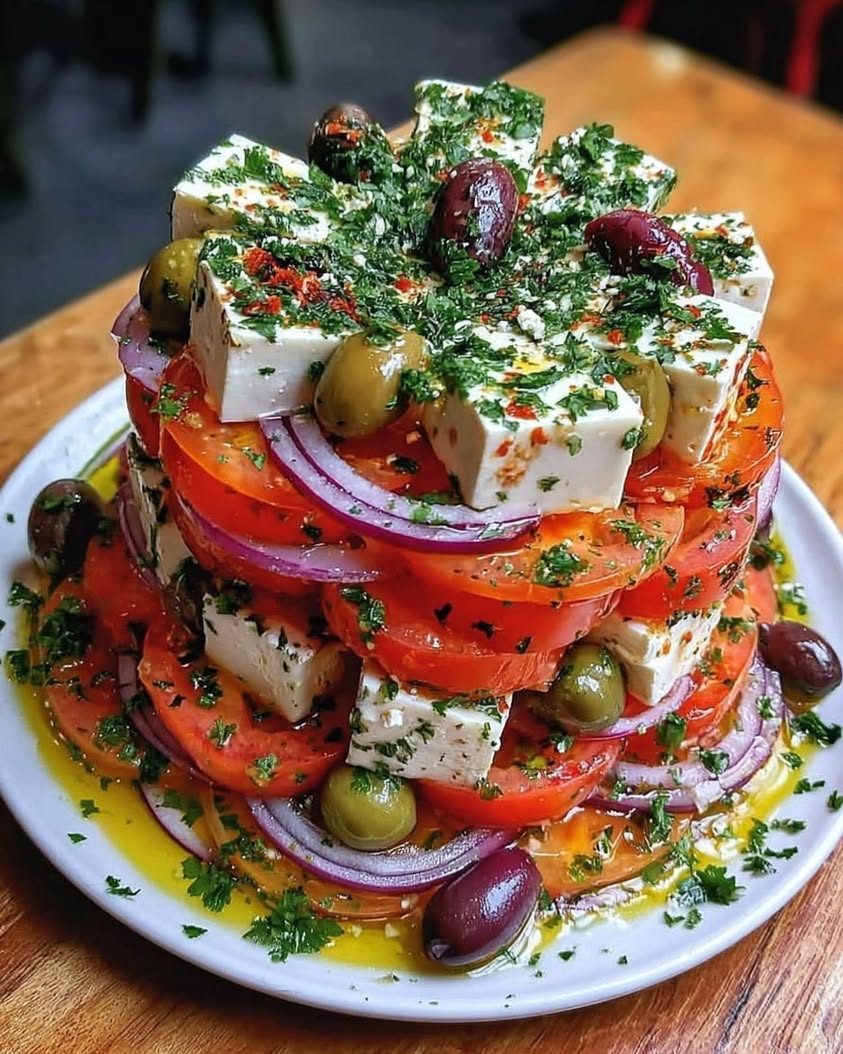
Greek Feta Salad Tower: An Elegant Appetizer for Any Occasion
Imagine transforming the vibrant, fresh flavors of a classic Greek salad into a stunning, architectural appetizer. This Greek Feta Salad Tower does exactly that. It layers crisp cucumbers, juicy tomatoes, briny Kalamata olives, and creamy feta cheese into a beautiful vertical presentation. Consequently, it turns a simple side dish into the star of your table. This recipe is perfect for anyone wanting to impress guests with minimal effort. Ultimately, it captures the essence of Mediterranean cuisine in every elegant bite.
The beauty of this Greek Feta Salad Tower lies in its simplicity and visual impact. You use a mold to stack the ingredients, creating a clean, restaurant-worthy look. Each layer offers a distinct texture and flavor, from the cool crunch of cucumber to the salty tang of the cheese. Moreover, a bright lemon-oregano vinaigrette ties everything together. This dish is incredibly versatile. For instance, you can serve it as a light lunch, a sophisticated starter, or a colorful component of a larger mezze platter. It is a guaranteed conversation starter.
Furthermore, this recipe celebrates fresh, high-quality ingredients. There is no cooking involved, just thoughtful assembly. The process is almost therapeutic, arranging the colorful components into a perfect tower. When you invert the mold onto a plate, the reveal is always satisfying. This Greek Feta Salad Tower proves that eating with your eyes first is a real pleasure. It brings a touch of gourmet elegance to your home kitchen without any stress. Let’s explore how to craft this stunning Greek Feta Salad Tower for your next gathering.
Quick Recipe Highlights
- Flavor Profile: This tower delivers a perfect balance of salty, tangy, and fresh notes. The briny feta and olives contrast beautifully with the sweet tomatoes and the sharp, herbal dressing. Every bite is a harmonious taste of the Mediterranean.
- Texture: Experience a wonderful crunch from the cucumbers and peppers against the creamy, crumbly feta cheese. The tomatoes add a juicy burst, creating a dynamic and satisfying mouthfeel that is never boring.
- Aroma: Fresh oregano and lemon zest provide an instantly recognizable, sunny fragrance. The aroma of extra virgin olive oil and the earthy scent of ripe vegetables complete the sensory experience before you even take a bite.
- Visual Appeal: The layered presentation is strikingly beautiful, showcasing vibrant reds, greens, and whites. It looks professional and artistic, making it ideal for photography and special occasions where presentation matters.
- Skill Level Needed: This recipe requires no advanced culinary skills. Basically, you need a steady hand for stacking and an eye for color arrangement. It is an excellent project for beginners wanting to practice plating techniques.
- Special Equipment: A round cookie cutter, pastry ring, or even a clean tin can with both ends removed works perfectly as a mold. You also need a sharp knife for precise chopping and a small bowl for whisking the simple dressing.
Recipe Overview
- Difficulty Level: This recipe is rated easy because it involves no cooking or complex techniques. The primary skill is careful assembly. However, achieving clean, distinct layers requires a bit of patience and a gentle touch when pressing the ingredients and removing the mold.
- Category: This dish fits multiple categories beautifully. It is a fantastic cold appetizer or starter. Alternatively, it serves as a light vegetarian main course or a standout side salad for grilled meats like lamb or chicken.
- Cuisine: This is a modern presentation of a classic Greek salad, or Horiatiki. It stays true to the core ingredients and flavors of authentic Mediterranean cuisine while adding a contemporary, elegant twist to the traditional family-style serving method.
- Cost: The cost is very reasonable, especially when tomatoes and cucumbers are in season. The most significant investment is in quality feta cheese and extra virgin olive oil. Overall, it is a cost-effective way to create a dish that looks luxurious.
- Season: This Greek Feta Salad Tower is best in late summer when tomatoes and peppers are at their peak sweetness and flavor. Nevertheless, you can make it year-round with good greenhouse vegetables, though the taste will be most vibrant in season.
- Occasion: It is perfect for dinner parties, bridal or baby showers, holiday appetizers, or a romantic date night at home. Its impressive look makes it suitable for any event where you want the food to make a statement.
Why You’ll Love This Recipe
First and foremost, the taste and texture are utterly delightful. This Greek Feta Salad Tower concentrates all the beloved flavors of a Greek salad into a compact, elegant package. You get the creamy saltiness of the feta, the juicy pop of tomato, the refreshing crunch of cucumber, and the rich, herbal notes of the dressing in every single forkful. Unlike a tossed salad where ingredients can separate, each bite from the tower is perfectly balanced. The experience is consistently delicious from the top layer to the bottom. It is a celebration of fresh, clean eating that feels both wholesome and indulgent.
Secondly, the convenience factor is a major win. There is zero cooking required, which means no heating up the kitchen. You can prepare all the components ahead of time and assemble the towers just before serving. This makes it an ideal recipe for entertaining, as you can spend time with your guests instead of being stuck at the stove. The assembly process itself is simple and even fun. It is a great recipe to make with family or friends, allowing everyone to customize their own tower with extra olives or a heavier sprinkle of oregano.
From a nutritional standpoint, this dish is a powerhouse. It is packed with vitamins from the fresh vegetables, healthy fats from the olive oil and olives, and a good amount of protein and calcium from the feta cheese. It is naturally gluten-free and vegetarian. The ingredients are whole and unprocessed, contributing to a feeling of wellness after eating. You are nourishing your body with real food that tastes incredible, which is always a winning combination.
Furthermore, the social and entertaining value of this Greek Feta Salad Tower cannot be overstated. It has a true “wow” factor that will have your guests reaching for their phones to take pictures. It demonstrates care and effort, showing your guests that you went the extra mile to create something special. It serves as a fantastic centerpiece for a appetizer spread or a beautiful starter to a Mediterranean-themed meal. It encourages conversation and sets a festive, sophisticated tone for the rest of the dining experience.
Finally, it is remarkably cost-effective and accessible. The ingredients are common and can be found at any grocery store. You do not need expensive or exotic items. By focusing on a few high-quality components like authentic Greek feta and a robust extra virgin olive oil, you elevate the entire dish without breaking the bank. This recipe proves that impressive, beautiful food does not have to be complicated or expensive. It is an accessible way to bring restaurant-style plating into your everyday cooking.
Historical Background and Cultural Significance
The origin of this dish is rooted in the classic Greek salad, known in Greece as “Horiatiki,” which translates to “village” or “peasant” salad. Traditionally, it was a farmer’s meal, prepared with whatever sun-ripened vegetables were readily available in the garden, combined with feta cheese and olives, and dressed simply with olive oil and oregano. This salad was a staple of the Mediterranean diet, reflecting a lifestyle centered on fresh, local, and seasonal ingredients. It was typically served family-style in a large bowl, meant to be shared communally with bread to soak up the flavorful juices.
The cultural importance of the Greek salad is profound. It is more than just a dish; it is a symbol of Greek hospitality, simplicity, and connection to the land. The ingredients represent the core of the country’s agricultural bounty: tomatoes, cucumbers, and olives grown under the bright Aegean sun. Sharing a Horiatiki is an act of fellowship. The evolution of this salad into a structured tower is a modern culinary interpretation. Chefs began deconstructing and reassembling classic dishes to create new visual and textural experiences, leading to presentations like this elegant Greek Feta Salad Tower.
Over time, as plating techniques became more emphasized in restaurants worldwide, the stacked salad gained popularity. It allowed chefs to control portion size and presentation meticulously while still honoring the original flavor profile. This evolution moved the dish from a rustic, shared plate to an individualized, gourmet appetizer. The tower format highlights each ingredient separately, allowing the eater to appreciate the distinct qualities of the cucumber, tomato, and feta before they combine in the mouth. It is a celebration of the salad’s components.
Regional variations of the base salad exist throughout Greece and the Mediterranean. For example, some islands add capers, while others might include green bell peppers more prominently. The key constant is the use of high-quality feta cheese, which is a Protected Designation of Origin (PDO) product in Greece. The modern tower adaptation welcomes these variations. You might see towers incorporating roasted red peppers, artichoke hearts, or even a layer of creamy hummus at the base. This flexibility keeps the concept fresh and adaptable to local tastes and ingredient availability while maintaining its Greek soul.
Ingredient Deep Dive
Feta Cheese is the heart of this dish. Authentic Greek feta is made from at least 70% sheep’s milk, often blended with goat’s milk, giving it a tangy, salty, and slightly earthy flavor with a crumbly yet creamy texture. Culturally, feta is intertwined with Greek history, with references to cheese-making techniques dating back to the Homeric era. Nutritionally, it is a good source of calcium, protein, and beneficial fats. When selecting feta, look for blocks stored in brine for the best flavor and texture. Avoid pre-crumbled feta, as it often contains anti-caking agents and dries out quickly. Store leftover feta submerged in its brine in the refrigerator. For a dairy-free version, a firm, marinated tofu can be used, though the flavor profile will change significantly.
Cucumbers provide the essential cool crunch. English or Persian cucumbers are ideal for this Greek Feta Salad Tower because they have fewer seeds, thinner skins, and a less watery flesh than standard slicing cucumbers. They are historically native to South Asia but have been cultivated in the Mediterranean region for thousands of years. They are incredibly hydrating, composed of about 95% water, and provide vitamin K and potassium. Choose firm, dark green cucumbers without soft spots. There is no need to peel Persian cucumbers, but you may choose to peel English cucumbers partially for visual stripes. For a variation, try using thinly sliced zucchini ribbons for a slightly different texture and color.
Tomatoes are the juicy, sweet element that balances the saltiness of the feta and olives. For the best results in your Greek Feta Salad Tower, use ripe, in-season Roma or vine-ripened tomatoes. They have a denser flesh and fewer seeds, which helps prevent the tower from becoming too watery. Tomatoes originated in South America but became a cornerstone of Mediterranean cuisine after their introduction to Europe. They are rich in lycopene, an antioxidant linked to many health benefits. Select tomatoes that are heavy for their size and fragrant at the stem end. If tomatoes are out of season, cherry tomatoes halved can be a sweeter, more reliable alternative. Always core and seed larger tomatoes to maintain the structure of your tower.
Kalamata Olives are the defining briny note. These dark purple, almond-shaped olives come from the Peloponnese region of Greece and are cured in a vinegar brine, giving them a rich, fruity, and wine-like flavor compared to other black olives. They are a staple of the Mediterranean diet, providing healthy monounsaturated fats and antioxidants. Purchase them with pits for superior flavor and texture, and pit them yourself just before using. The pitted olives in cans can be mushy. Store opened olives in their brine in the refrigerator. If you cannot find Kalamatas, other good quality black olives like Gaeta can be substituted, but the distinct Greek character will be slightly altered.
Common Mistakes to Avoid
- Using Watery Vegetables: Failing to seed tomatoes and peel cucumbers can introduce too much liquid. This excess moisture will pool at the bottom of the mold, making the tower soggy and difficult to unmold cleanly. Always take the time to prepare your vegetables properly.
- Over-packing the Mold: Pressing the ingredients too firmly into the mold is a common error. While gentle pressure is needed to hold the shape, compressing them too much will crush the tomatoes and cucumbers, releasing their water and creating a dense, unappealing brick instead of a light, layered tower.
- Choosing the Wrong Feta: Using pre-crumbled feta or a low-quality block will compromise flavor and texture. Pre-crumbled feta is often dry and coated in anti-caking agents. For the best Greek Feta Salad Tower, always buy a solid block of feta in brine and crumble it yourself just before assembly.
- Assembling Too Far in Advance: The towers should be assembled immediately before serving. If they sit for more than 15-20 minutes, the salt from the dressing and feta will draw out vegetable juices, breaking down the structure and causing the tower to slump or leak.
- Skipping the Mold: Trying to freehand stack the ingredients will result in a messy, unstable presentation. The mold is essential for creating the clean, vertical sides and distinct layers that give this dish its impressive “tower” appearance. Use a ring for professional results.
- Drowning in Dressing: Applying the dressing before assembly or pouring too much over the finished tower can overwhelm it. The correct method is to dress the tomato and cucumber layers lightly as you build, then finish with a final delicate drizzle on the plate after unmolding.
- Not Chilling Ingredients: Using room-temperature vegetables and cheese can make the tower feel less refreshing. For the best taste and texture, chill all your chopped ingredients in the refrigerator for at least 30 minutes before assembling your Greek Feta Salad Tower.
- Ignoring Ingredient Size: Chopping vegetables into uneven, large chunks will make stacking difficult and create an unstable structure. Aim for a small, uniform dice (about 1/4 to 1/2 inch) so the pieces nest together neatly within the circular mold.
Essential Techniques
Creating distinct, clean layers is the most important technique for this Greek Feta Salad Tower. The goal is to see separate bands of color and texture when you slice into it. To achieve this, you must chop all ingredients to a similar small dice. Then, add them to the mold in individual layers, gently spreading each one into an even stratum before adding the next. Use the back of a spoon to lightly tamp down each layer, but avoid pressing hard. This technique ensures the tower holds its shape when the mold is lifted while keeping the ingredients intact and not mashed.
Proper unmolding is the dramatic finale. After building your tower, place your serving plate upside-down on top of the mold. Then, in one confident motion, flip the entire assembly over so the plate is on the bottom. Gently lift the mold straight up. If the tower does not release easily, gently tap the sides of the mold or run a thin paring knife around the very edge to loosen it. The key is a steady, vertical lift. Practicing this technique ensures your beautiful creation transitions from mold to plate without collapsing, preserving those perfect layers you worked so hard to create.
Pro Tips for Perfect Greek Feta Salad Tower
Chill your serving plates beforehand. A cold plate helps keep the assembled tower crisp and refreshing for longer, especially important if you are serving it outdoors or in a warm room.
Use a small offset spatula or butter knife to help release the tower. Slide it gently between the mold and the ingredients after flipping to break any suction before lifting the ring off.
Drizzle the dressing around the base of the tower on the plate, not directly over the top. This adds flavor and a professional finish without making the top layer soggy or obscuring the beautiful layers.
For extra flavor, marinate the feta crumbles in a little of the dressing for 5-10 minutes before assembling. This infuses the cheese with the lemon and oregano notes throughout.
If your tomatoes are very juicy, after dicing them, place them in a fine-mesh strainer for a few minutes to let excess liquid drain away. This simple step prevents a watery tower.
Garnish with whole ingredients that mirror the interior. Place a single Kalamata olive and a small oregano sprig on top of the tower for a polished, finished look that hints at the flavors inside.
For a non-stick mold, lightly spray the inside of your ring with cooking spray or brush it with a tiny amount of olive oil before assembling. This guarantees a clean release every single time.
Variations and Adaptations
Regional variations can take your tower on a culinary tour. For an Italian twist, substitute fresh mozzarella for feta, add fresh basil, and use a balsamic glaze. For a Middle Eastern version, replace the feta with creamy labneh, add sumac to the dressing, and include some pomegranate seeds for a burst of sweetness and color. These adaptations keep the layered concept fresh while exploring different flavor profiles from neighboring cuisines.
Seasonal adaptations are easy and smart. In spring, incorporate thinly sliced radishes and fresh peas. For autumn, add roasted cubes of butternut squash and toasted pumpkin seeds. In winter, use roasted bell peppers and marinated artichoke hearts. The basic formula of a crunchy vegetable, a creamy element, and a bright dressing remains, but the ingredients shift with what is freshest and most flavorful at the market.
Dietary modifications are straightforward. For a vegan Greek Feta Salad Tower, use a firm, marinated tofu or a commercial vegan feta alternative. Ensure your dressing is made with vegan-friendly ingredients. For a lower-carb or keto version, increase the ratio of cucumbers and peppers to tomatoes, and be mindful of the carb content in any onion you choose to add. The recipe is naturally gluten-free, making it suitable for many dietary needs with little adjustment.
Serving and Presentation Guide
Plating is everything with this dish. Choose simple, white plates to make the vibrant colors of the Greek Feta Salad Tower truly pop. After unmolding the tower in the center of the plate, use a spoon to artfully drizzle the lemon-oregano vinaigrette in a circular motion around the base. You can also add a few small pools of dressing for dipping. Scatter a few extra Kalamata olives and cucumber slices around the plate for a rustic, abundant feel. The presentation should look elegant but not overly fussy.
Garnishing provides the final touch of freshness and flavor. A small sprig of fresh oregano or dill placed on top of the tower is classic. Alternatively, a light sprinkle of dried Greek oregano or a few shreds of lemon zest adds color and aroma. For a touch of luxury, a very light drizzle of high-quality extra virgin olive oil over the top just before serving enhances the flavor and gives a beautiful glossy sheen. Remember, garnishes should be edible and complement the dish.
Wine and Beverage Pairing
Wine pairings for this Greek Feta Salad Tower should complement its bright acidity and salty components. A crisp, dry white wine like Assyrtiko from Santorini is the perfect regional match, with its citrus notes and mineral edge cutting through the richness of the feta. A New Zealand Sauvignon Blanc with its grapefruit and herbaceous character also works beautifully. For a red option, choose a light-bodied, low-tannin wine like a Beaujolais or a Greek Xinomavro rosé, which will not overpower the salad’s delicate flavors.
Non-alcoholic alternatives can be just as sophisticated. A sparkling water with a squeeze of lemon and a sprig of rosemary offers a refreshing, herbal lift. For something more special, try a chilled herbal iced tea, such as mint or lemon verbena, lightly sweetened with honey. A virgin mojito, with its muddled mint and lime, mirrors the fresh, zesty profile of the salad perfectly. The goal is to choose a beverage that cleanses the palate and enhances the Mediterranean experience.
Storage and Shelf Life
This dish is best enjoyed immediately after assembly. However, you can prepare all components ahead of time. Store chopped vegetables, crumbled feta, and prepared dressing separately in airtight containers in the refrigerator for up to 24 hours. The vegetables may release some water, so drain any accumulated liquid before assembling. Do not assemble the towers more than 15-20 minutes before serving, as they will become soggy and lose their structural integrity.
Leftover assembled towers do not store well and are not recommended. If you have leftover components, they can be tossed together in a bowl for a delicious traditional Greek salad the next day. The dressing will keep in the refrigerator for up to a week. Always store feta submerged in its brine to prevent it from drying out. For optimal quality and food safety, consume all chopped fresh ingredients within two days.
Make Ahead Strategies
Successful make-ahead preparation is the key to stress-free entertaining with this recipe. The day before, you can wash and dry all your vegetables. You can also make the lemon-oregano vinaigrette and store it in a jar in the fridge. Crumble the feta and keep it in a separate container. On the day of serving, chop the vegetables and place them in individual bowls. Chill everything thoroughly. About 30 minutes before your guests arrive, set up your assembly station with the mold, plates, and ingredients. Then, quickly build each tower. This timeline ensures maximum freshness and a perfect, crisp texture in your Greek Feta Salad Tower.
Scaling Instructions
Scaling this recipe is simple because it is built in individual portions. To halve the recipe, simply use half the amount of each ingredient to make two towers instead of four. The assembly process and time remain exactly the same. To double or triple for a larger crowd, increase your ingredients proportionally. Prepare all your chopped vegetables in large batches. Set up an assembly line with multiple molds if you have them, or build towers sequentially. The key is to keep the pre-chopped ingredients chilled until the moment of assembly to maintain freshness. Remember, each tower is assembled to order right before serving for the best results.
Nutritional Deep Dive
This Greek Feta Salad Tower is a nutrient-dense choice. It provides a balanced mix of macronutrients: healthy fats from olive oil and olives, protein from feta cheese, and complex carbohydrates from the vegetables. The cucumbers and tomatoes are high in water content and fiber, aiding in digestion and hydration. Feta is an excellent source of calcium and phosphorus, crucial for bone health. The olive oil contributes heart-healthy monounsaturated fats and antioxidants. This dish is naturally low in sugar and processed carbohydrates, making it a smart choice for those monitoring their blood sugar. It is a satisfying meal that fuels the body with high-quality ingredients.
Dietary Adaptations
For a Vegan adaptation, replace the feta cheese with a block of extra-firm tofu that has been pressed, cubed, and marinated in lemon juice, nutritional yeast, and salt. Alternatively, use a store-bought vegan feta. Ensure the dressing is made without honey, using maple syrup or agave as a sweetener if needed. The result is a plant-based tower that still offers creamy, tangy, and fresh flavors.
For a Dairy-Free version, follow the vegan adaptation for the cheese component. All other ingredients in the standard Greek Feta Salad Tower are naturally dairy-free. Focus on creating a flavorful marinade for the tofu or use a high-quality commercial dairy-free cheese alternative that crumbles well. The olives, vegetables, and dressing will carry the familiar Mediterranean taste.
For a Low-Carb or Keto adaptation, reduce or omit the red onion, as it contains more carbs. You can increase the portion of cucumbers and bell peppers. Ensure the salad dressing is made without any added sugar or honey. The primary ingredients—feta, olives, olive oil, and non-starchy vegetables—are already keto-friendly, making this an excellent dish for those following a low-carbohydrate lifestyle.
Troubleshooting Guide
If your tower collapses when unmolding, the issue is usually insufficient layering pressure or overly wet ingredients. Next time, ensure each layer is gently but evenly pressed with the back of a spoon to help the ingredients cohere. Also, thoroughly seed the tomatoes and pat the diced cucumbers dry with a paper towel before assembling. If it still sticks, run a thin knife around the edge of the mold before lifting it off.
If the tower tastes bland, the culprit is often underseasoning or low-quality ingredients. Remember to season each vegetable layer lightly with a tiny pinch of salt as you build. The feta and olives provide saltiness, but the vegetables need their own seasoning. Additionally, always use ripe, in-season produce and a high-quality extra virgin olive oil for the dressing. The flavor difference is dramatic.
Recipe Success Stories
Readers love how this Greek Feta Salad Tower elevates their entertaining. Many report that it has become their go-to appetizer for dinner parties because it never fails to impress. One home cook shared that she made mini versions in small ring molds for her wedding shower, and they were a huge hit. Others have successfully adapted it for various diets, with one parent noting it was a fun way to get their kids to eat more vegetables because of the unique presentation. The common thread in all success stories is the joy of creating something beautiful and delicious with simple techniques.
Frequently Asked Questions
Can I make this without a ring mold? Yes, but the presentation will differ. You can layer the ingredients in a small glass or jar to create a parfait-style salad, or simply arrange them neatly on a plate without stacking. The mold is recommended for the classic “tower” shape.
What can I use if I don’t have fresh oregano? Dried oregano is a fine substitute. Use about one-third the amount of dried oregano as you would fresh, as dried herbs are more potent. Crush it between your fingers when adding it to the dressing to release its oils.
How do I prevent the tower from getting watery? The key is to seed your tomatoes thoroughly and use English or Persian cucumbers which are less watery. Also, assemble the towers at the last possible minute and avoid over-dressing the layers during assembly.
Can I add protein to make it a main course? Absolutely. Adding a layer of grilled chicken, shrimp, or chickpeas between the vegetables can transform this appetizer into a satisfying vegetarian or protein-packed main dish salad tower.
Is there a substitute for Kalamata olives? You can use other black olives like Gaeta or Niçoise. Green olives like Castelvetrano will offer a different, buttery flavor. The salad will still be delicious, though the authentic Greek taste will vary.
How far in advance can I chop the vegetables? You can chop them up to a day in advance. Store them in separate airtight containers in the refrigerator. Drain any accumulated liquid from the tomatoes and cucumbers before using them.
What’s the best way to crumble feta? Use your fingers for a rustic crumble or a fork for smaller pieces. For a neat, uniform crumble, you can also cube it first with a knife. Avoid using a food processor, as it can turn the feta into a paste.
Can I use a different type of vinegar? Red wine vinegar is the most traditional and authentic substitute for the lemon juice in the dressing. It provides a different kind of acidity but still pairs wonderfully with the Mediterranean flavors.
My feta is very salty. How can I balance it? You can soak the feta block in cold water or milk for 10-15 minutes before crumbling to draw out some excess salt. Be sure to pat it dry thoroughly afterward so it doesn’t waterlog your tower.
Can I prepare the dressing ahead of time? Yes, the dressing can be made up to a week in advance. Store it in a sealed jar in the refrigerator. Shake or whisk it vigorously before using, as the oil and acid may separate.
Additional Resources
If you enjoyed crafting this Greek Feta Salad Tower, you might love other Mediterranean-inspired recipes that focus on fresh ingredients and beautiful presentation. Consider trying a traditional Greek Mezze Platter, a Whipped Feta Dip with honey and herbs, or a classic Horiatiki salad served the traditional way. For more technique guides, look for resources on knife skills for perfect vegetable dicing or tutorials on making emulsified vinaigrettes. To deepen your knowledge of ingredients, explore the differences between various olive oils or the history of cheese-making in Greece. Investing in a good set of stainless steel ring molds in different sizes will open up a world of plating possibilities for many other dishes, from layered desserts to savory grain bowls.
PrintGreek Feta Salad Tower
- Total Time: 15 minutes
- Yield: 4
Description
A visually stunning and flavorful layered salad featuring classic Greek ingredients, perfect as a light lunch or elegant appetizer.
Ingredients
- 2 large cucumbers, peeled and diced
- 4 ripe tomatoes, diced
- 1 red onion, thinly sliced
- 1 green bell pepper, diced
- 200g feta cheese, crumbled
- 1/2 cup Kalamata olives, pitted and halved
- 1/4 cup fresh dill, chopped
- 1/4 cup extra virgin olive oil
- 2 tablespoons red wine vinegar
- 1 teaspoon dried oregano
- Salt and black pepper to taste
- 4 large lettuce leaves for serving
Instructions
- In a large bowl, combine cucumbers, tomatoes, red onion, bell pepper, olives, and dill.
- In a small bowl, whisk together olive oil, red wine vinegar, oregano, salt, and pepper to make the dressing.
- Pour the dressing over the vegetable mixture and toss gently to coat.
- On each serving plate, place a lettuce leaf as the base.
- Using a ring mold or a small bowl, layer the salad mixture and crumbled feta cheese in alternating layers to form a tower.
- Carefully remove the mold and garnish with extra dill if desired. Serve immediately.
Notes
You can customize the seasonings to taste.
- Prep Time: 15 minutes
- Cook Time: 0 minutes
- Method: Appetizer
- Cuisine: Greek