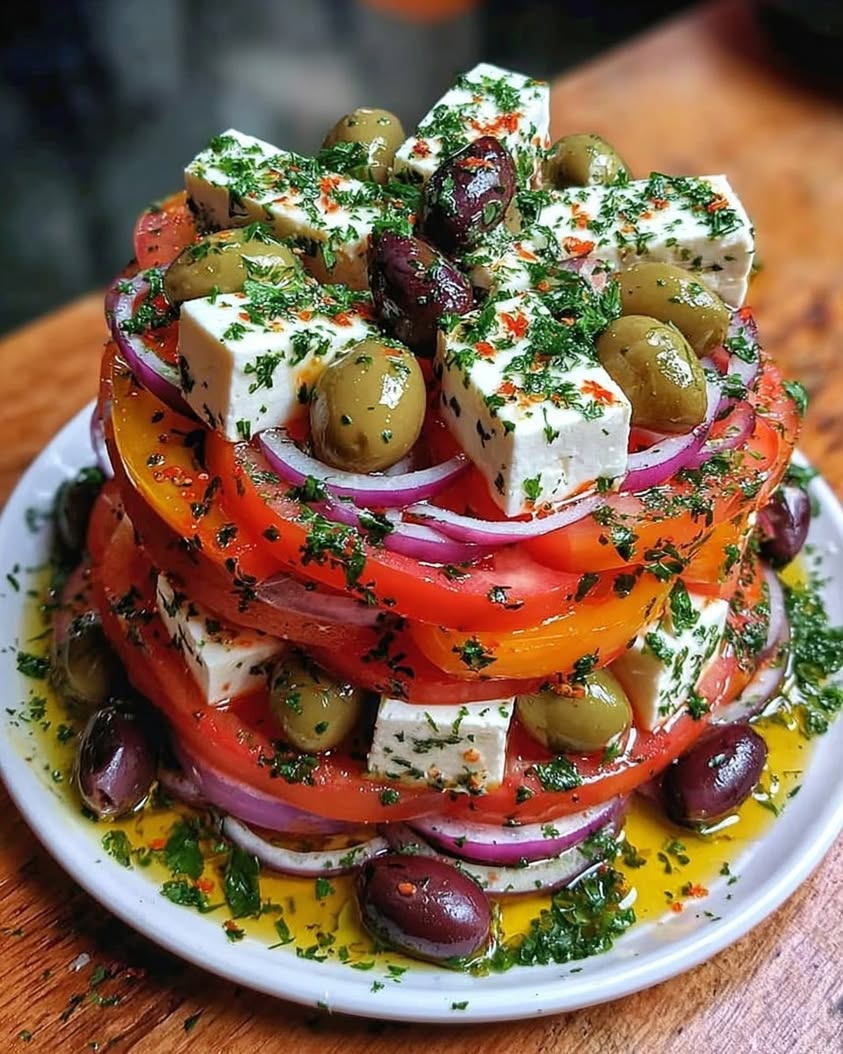
Greek Feta Salad Tower: An Elegant Mediterranean Appetizer
Imagine transforming the classic, rustic flavors of a Greek salad into a stunning, vertical presentation that will captivate your guests from the moment it hits the table. This Greek Feta Salad Tower does exactly that. It layers all the beloved components of a traditional Greek salad into an elegant, stackable masterpiece. Consequently, each bite delivers a perfect harmony of textures and tastes. This recipe is not just about eating; it is about creating an experience that delights the eyes as much as the palate.
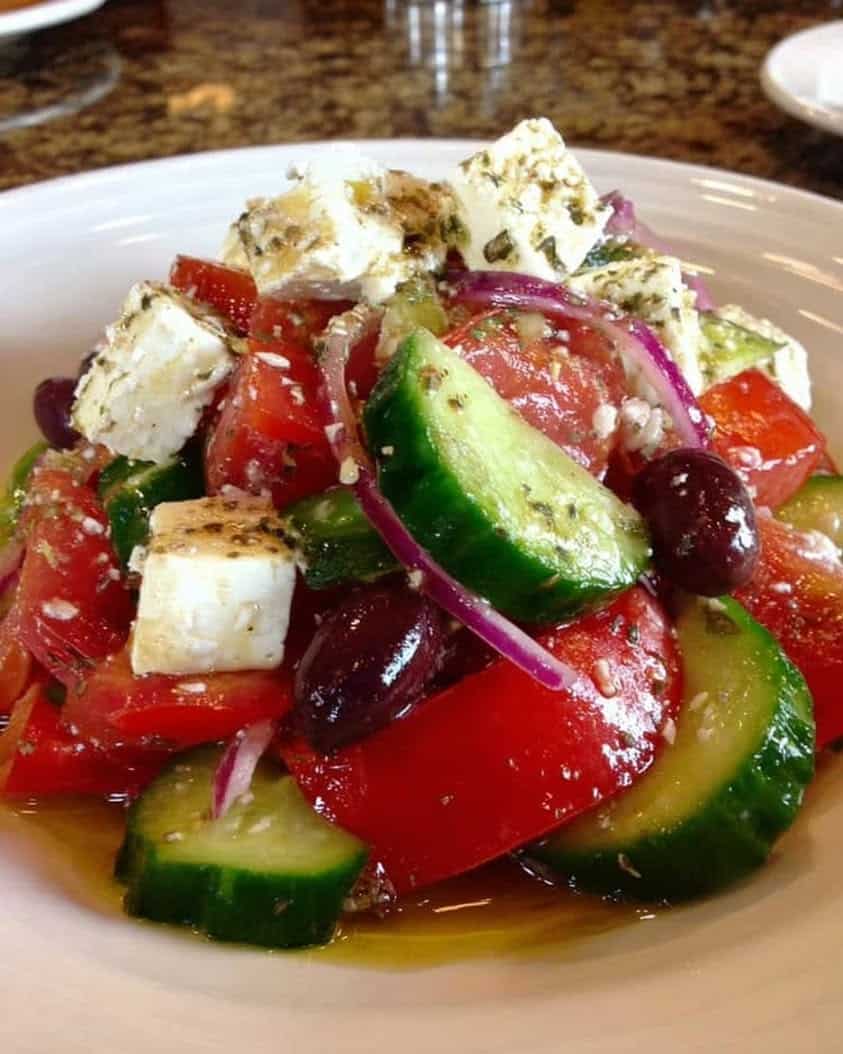
The beauty of this dish lies in its simplicity and its power to impress. You use fresh, vibrant ingredients like juicy tomatoes, crisp cucumbers, and briny Kalamata olives. Then, you anchor them with creamy, tangy feta cheese. A bright lemon-oregano vinaigrette ties everything together. Ultimately, this Greek Feta Salad Tower is the perfect answer for anyone seeking a show-stopping appetizer that requires no cooking. It is ideal for dinner parties, summer gatherings, or whenever you want to serve something truly special.
Moreover, this recipe celebrates the essence of Mediterranean cooking. It emphasizes fresh produce, bold flavors, and beautiful presentation. The process of building the tower is almost meditative. You carefully layer each ingredient, watching the colors and textures stack up. The final result is a testament to how a little creativity can elevate everyday ingredients into gourmet fare. Therefore, if you are ready to craft a stunning Greek Feta Salad Tower, you are in for a treat that is as fun to make as it is to eat.
Quick Recipe Highlights
- Flavor Profile: This tower bursts with the classic Mediterranean flavors of tangy feta, sweet tomato, and briny olives. Fresh herbs and a zesty lemon dressing create a bright, aromatic finish that is both refreshing and satisfying.
- Texture: Enjoy a delightful contrast between the creamy, crumbly feta, the juicy burst of tomatoes, the crisp crunch of cucumber, and the firm bite of bell pepper. The stacked layers ensure every forkful contains this perfect textural symphony.
- Aroma: The moment you prepare the dressing, the air fills with the fresh, citrusy scent of lemon and the earthy, pine-like fragrance of dried oregano. These aromas promise the vibrant, clean flavors to come.
- Visual Appeal: The tower is a vertical rainbow of red, green, black, and white. Its impressive height and neat layers make it a centerpiece, showcasing the freshness and quality of each individual ingredient beautifully.
- Skill Level Needed: This is a beginner-friendly recipe requiring no special culinary skills. The key tasks are simple chopping, whisking a dressing, and assembling layers with a mold. Attention to detail is more important than advanced technique.
- Special Equipment: You will need a ring mold, approximately 3 to 4 inches in diameter and 3 inches tall. Alternatively, you can use a clean, empty can with both ends removed or even a sturdy cylindrical glass as a guide for shaping.
Recipe Overview
- Difficulty Level: We rate this recipe as easy because it involves no cooking, only assembly. The techniques are fundamental: chopping vegetables, whisking a vinaigrette, and layering ingredients. Success depends more on careful preparation and using a good mold than on any complex skill. Anyone can achieve beautiful results with a little patience.
- Category: This dish fits perfectly into the appetizer or starter category. It is also an excellent side dish for grilled meats or fish. Furthermore, you can easily scale it down to serve as a chic individual salad for a light lunch.
- Cuisine: This is a modern, plated interpretation of a classic Greek salad, or Horiatiki. It stays true to the core ingredients and flavors of its rustic inspiration while presenting them in a contemporary, elegant format that highlights each component.
- Cost: The cost is moderate and depends largely on the quality of the feta and olive oil. Using in-season, local produce can lower the price. Overall, it is a cost-effective way to create a luxurious-looking dish for entertaining.
- Season: This recipe shines brightest in late summer when tomatoes and cucumbers are at their peak sweetness and flavor. However, it is a refreshing choice year-round, especially as a bright counterpoint to heavier winter meals.
- Occasion: It is ideal for dinner parties, bridal or baby showers, holiday appetizer spreads, or any gathering where you want to serve food that looks professionally crafted. It turns an ordinary meal into a special occasion.
Why You’ll Love This Recipe
First and foremost, the taste and texture are utterly irresistible. Each layer of the Greek Feta Salad Tower contributes its unique character. You get the acidic punch from the tomatoes, the cool crunch from the cucumber, the salty creaminess from the feta, and the rich, fruity depth from the olives. The lemon-oregano dressing amplifies all these flavors, tying them together into a cohesive and refreshing bite. Moreover, the vertical eating experience means you taste every component at once, creating a flavor explosion that is far more exciting than a tossed salad.
From a convenience standpoint, this recipe is a dream. Since there is zero cooking involved, you avoid heating up the kitchen. You can prepare all the components ahead of time. Then, assembly takes just minutes before serving. This makes it an incredibly stress-free option for hosting. You get to spend time with your guests instead of being stuck at the stove. Additionally, the ingredients are simple and easy to find at any grocery store.
Nutritionally, this tower is a powerhouse. It is packed with vitamins from the fresh vegetables, healthy fats from the olive oil and olives, and a good amount of protein and calcium from the feta cheese. It is a balanced, satisfying dish that feels indulgent but is genuinely wholesome. The fiber from the vegetables aids digestion and helps you feel full. Choosing a high-quality extra virgin olive oil also adds beneficial antioxidants to your diet.
The social and entertaining value of this dish cannot be overstated. When you bring a Greek Feta Salad Tower to the table, it creates an instant “wow” moment. It shows your guests that you care about presentation and have put thought into the meal. It sparks conversation and makes everyone feel special. This dish proves that impressive food does not have to be complicated or expensive. It is a surefire way to elevate any gathering.
Finally, it is remarkably cost-effective and accessible. You do not need rare or expensive ingredients. A block of good feta, some fresh vegetables, and pantry staples are all it takes. The special equipment needed is minimal and often improvised. This recipe democratizes gourmet presentation, allowing anyone to create a restaurant-quality appetizer at home. It maximizes flavor and visual impact while minimizing both cost and effort.
Historical Background and Cultural Significance
The inspiration for this tower comes directly from the Greek salad, known in Greece as “Horiatiki,” which translates to “village” or “peasant” salad. This dish originated in the rural villages of Greece, where farmers would combine ingredients readily available from their gardens and local production. Traditionally, it includes tomatoes, cucumbers, onions, olives, and a large slab of feta cheese, all dressed with olive oil and oregano. It was a practical, nutritious meal that required no cooking and celebrated the fresh bounty of the land.
Culturally, the Greek salad is more than just a dish; it is a symbol of the Mediterranean diet and way of life. It represents simplicity, freshness, and the communal enjoyment of food. In Greece, it is often served as a shared appetizer or side, not a pre-portioned individual salad. The act of breaking the feta and mixing the ingredients at the table is part of the experience. This communal aspect highlights the Greek philosophy of “philoxenia,” or friendship to strangers, where food is central to hospitality.
The evolution from the rustic, family-style Horiatiki to a plated Greek Feta Salad Tower reflects modern culinary trends towards composed salads and artistic presentation. Chefs began deconstructing and reassembling classic dishes to highlight individual ingredients and create new visual and textural experiences. This tower format takes the soul of the traditional salad but presents it in a way that is tailored for contemporary dining, especially in restaurant settings or for elegant home entertaining.
Regional variations of the base salad exist throughout Greece and the Mediterranean. For instance, some islands add capers, while others might include green peppers or different types of olives. The tower format is wonderfully adaptable to these variations. You can incorporate local produce or personal preferences while maintaining the structural concept. This flexibility ensures the Greek Feta Salad Tower can be both authentic to its roots and creatively personalized.
Ingredient Deep Dive
Feta Cheese: Authentic Greek feta is a Protected Designation of Origin (PDO) product, meaning it must be made in specific regions of Greece from at least 70% sheep’s milk, often blended with goat’s milk. This results in a tangy, crumbly, and slightly grainy texture that is far superior to generic “feta-style” cheeses. Nutritionally, it is a good source of calcium, protein, and probiotics. Always look for “Made in Greece” on the label and buy it in a block submerged in brine for the best flavor and texture. Store it in its brine in the refrigerator.
Tomatoes: Use the ripest, most flavorful tomatoes you can find. In summer, heirloom varieties or vine-ripened tomatoes are ideal. Their sweetness and acidity are the foundation of the salad’s flavor. Tomatoes are rich in lycopene, a powerful antioxidant, and vitamins C and K. For the tower, you need firm tomatoes that can be diced neatly and hold their shape when layered. Avoid refrigerating tomatoes, as cold temperatures degrade their texture and flavor. Keep them at room temperature until use.
English Cucumber: We recommend English or hothouse cucumbers for their thin skin, minimal seeds, and crisp, non-bitter flesh. Their high water content adds refreshing crunch and hydration. They provide vitamin K and potassium. You do not need to peel them, which saves time and adds a bit of green color to the layers. If using a standard cucumber, you may want to peel it and scoop out the watery seed core to prevent the tower from becoming soggy.
Kalamata Olives: These iconic, almond-shaped olives from Greece are dark purple, meaty, and have a rich, fruity, and slightly wine-like flavor. They are typically preserved in vinegar or olive oil. They are a source of healthy monounsaturated fats and antioxidants. For the best quality, buy them from an olive bar or in jars, avoiding canned versions. You can use them whole, halved, or chopped, depending on your preferred texture in the tower.
Extra Virgin Olive Oil: This is the soul of the dressing. A high-quality, fruity, and slightly peppery extra virgin olive oil will elevate the entire dish. It carries the flavors and adds a luxurious mouthfeel. Look for oil that is cold-pressed and stored in a dark glass bottle. It contains heart-healthy fats and anti-inflammatory compounds. Never substitute with refined or “light” olive oil, as they lack the necessary flavor profile.
Common Mistakes to Avoid
- Using Watery Vegetables: Do not forget to seed your tomatoes and cucumber if they are very watery. The excess moisture will pool at the bottom of the mold, making the tower collapse and diluting the dressing. Consequently, take a moment to prep your veggies properly.
- Overfilling the Mold: Resist the urge to pack the ingredients in too tightly. You should gently press each layer to compact it slightly, but forceful packing will crush the vegetables and make the tower dense and unappealing. A light touch is key.
- Dressing Too Early: Never dress the individual vegetable layers before assembly. The salt in the dressing will draw out moisture, creating a soggy mess. Instead, dress the assembled tower from the top after you remove the mold, or serve dressing on the side.
- Using a Flimsy Mold: A mold that is too thin or floppy will make assembly frustrating. Use a sturdy metal ring mold, a can with both ends removed, or a thick-walled cylindrical glass. Ensure your mold has a stable base for layering.
- Skipping the Chilling Step: After assembling, let the towers chill in the refrigerator for 10-15 minutes. This step helps the layers set and firm up, making the unmolding process much cleaner and more successful. Patience here pays off.
- Poor Feta Quality: Using pre-crumbled feta or a low-quality block will drastically affect flavor and texture. Pre-crumbled feta is often drier and contains anti-caking agents. Always buy a block of authentic Greek feta in brine and crumble it yourself.
- Uneven Chopping: Chop all your vegetables to a consistent, small dice. Large, uneven pieces will not stack neatly and can cause the tower to be lopsided or unstable. Take time with your knife work for a professional result.
- Neglecting the Plate: Before you start building, consider your final plate. Drizzle a little dressing or olive oil on the plate first. Then, place your mold on top. This adds visual flair and ensures the tower does not stick to a dry plate.
Essential Techniques
Dicing Vegetables Consistently: Consistent dicing is crucial for both aesthetics and structural integrity. Aim for a small, uniform dice (about 1/4 to 1/2 inch) for tomatoes, cucumber, and bell pepper. Use a sharp chef’s knife. First, slice the vegetable into even planks, then into sticks, and finally cross-cut into cubes. This “julienne then dice” method yields the most uniform pieces. The goal is pieces that are small enough to pack neatly but large enough to retain their individual texture.
Creating a Stable Emulsion for the Dressing: A well-emulsified vinaigrette will coat the ingredients evenly and won’t separate immediately. The key is to slowly whisk the oil into the acid and mustard. Start with lemon juice, vinegar, mustard, and seasonings in a bowl. Then, while whisking vigorously, add the olive oil in a very slow, thin stream. The mustard acts as an emulsifier, helping the oil and water-based ingredients bind. The dressing should thicken slightly and look homogenous.
Layering and Compacting in the Mold: This is the core technique for your Greek Feta Salad Tower. Start your mold on the serving plate. Add layers in a deliberate order, typically starting with a sturdier ingredient like cucumber. Use a spoon to gently spread each layer evenly. After adding a layer, use the back of the spoon or your fingers to press down lightly. You want to eliminate large air pockets and create adhesion between layers, but not so hard that you crush the vegetables. Repeat until the mold is full.
Unmolding Cleanly: The unmolding moment can be nerve-wracking, but a few tips ensure success. First, ensure the tower has chilled to set. Gently run a thin paring knife or offset spatula around the very inner edge of the mold to loosen any ingredients stuck to the side. Then, slowly and steadily lift the mold straight up. If it resists, gently twist it back and forth while lifting. Having a stable, non-slip plate underneath is essential during this process.
Pro Tips for Perfect Greek Feta Salad Tower
Chill your serving plates beforehand. A cold plate helps keep the assembled tower firm and refreshing, especially important if you are serving it in a warm environment.
For an extra flavor boost, marinate your crumbled feta in a tablespoon of the dressing for 10-15 minutes before assembling. This infuses the cheese with the lemon and oregano notes.
If your tomatoes are very juicy, after dicing them, place them in a fine-mesh strainer for a few minutes to drain excess liquid. This simple step prevents a watery base layer.
Add a very thin layer of finely diced red onion or shallot between other vegetable layers for an extra punch of flavor without overwhelming the tower.
Garnish with whole fresh oregano or dill sprigs instead of just sprinkling herbs. This adds height and a beautiful, professional finish to the presentation.
Use a small offset spatula or the back of a spoon to smooth the top layer of the tower flat before unmolding. This gives it a clean, finished look.
For larger crowds, prepare multiple towers on a large serving platter, spacing them evenly. Drizzle the dressing in an artistic pattern around them for a stunning buffet centerpiece.
If you are transporting the towers, assemble them in lidded containers or on plates covered tightly with plastic wrap. Keep them chilled in a cooler until ready to serve.
Variations and Adaptations
Regional Variations: Embrace different Mediterranean influences. For an Italian twist, use fresh mozzarella (bocconcini) instead of feta and add fresh basil. For a French Provençal version, incorporate niçoise olives and fresh thyme. A Middle Eastern adaptation could include sumac in the dressing and a sprinkle of za’atar on top.
Seasonal Adaptations: In winter, use roasted beets or cubed, roasted butternut squash as a sweet, sturdy base layer. For spring, incorporate blanched asparagus tips and fresh peas. The tower format is perfect for showcasing the best produce of any season.
Dietary Modifications: For a vegan tower, substitute the feta with a firm, marinated tofu crumble or a commercial vegan feta alternative. Ensure your dressing is honey-free (use maple syrup or agave). The core concept remains beautifully intact.
Flavor Variations: Add a teaspoon of finely grated lemon zest to the dressing for intensified citrus aroma. A pinch of red pepper flakes adds a subtle heat. For a creamier element, add a layer of whipped feta or tzatziki sauce in the middle of the tower.
Texture Modifications: For added crunch, include a thin layer of toasted pine nuts or chopped walnuts. For a smoother texture, you can puree some of the tomatoes and cucumber into a gazpacho-like layer, but be cautious of excess moisture.
Presentation Alternatives: Instead of one large tower, create mini towers in small ring molds for passed appetizers. Alternatively, deconstruct the tower into a modern “salad stack” on a long rectangular plate, or serve the components in a clear glass jar for a portable layered salad.
Serving and Presentation Guide
Plating Techniques: Start with a clean, white plate to make the colors pop. Before placing the mold, swirl a small pool of the dressing or high-quality olive oil on the plate. After unmolding, drizzle more dressing in a circular motion around the base of the tower. You can also use a squeeze bottle for more precise, decorative lines.
Garnishing Ideas: Beyond fresh herbs, consider garnishes like a single whole Kalamata olive perched on top, a twist of lemon peel, a sprinkle of flaky sea salt, or edible flowers like nasturtiums or borage. A final, light drizzle of a thick, aged balsamic glaze can add a sweet-tart note and visual contrast.
Traditional Accompaniments: Serve the Greek Feta Salad Tower with warm, grilled pita bread or pita chips for scooping. It also pairs wonderfully with other Mediterranean meze like dolmades (stuffed grape leaves), hummus, or spanakopita.
Modern Serving Suggestions: For a composed lunch, place one tower on a bed of baby arugula or mixed greens. For a brunch item, top it with a perfectly poached egg, letting the yolk become part of the dressing when pierced.
Temperature Considerations: All components should be cold, but not ice-cold straight from the back of the fridge, as extreme cold mutes flavor. Let the ingredients sit out for about 10 minutes after chopping before assembly to allow their natural tastes to shine.
Portion Control Tips: A 3-inch diameter tower is a perfect appetizer portion. For a light main course, use a 4-inch mold and consider adding a protein layer, such as flaked grilled chicken or chickpeas, to make it more substantial.
Wine and Beverage Pairing
Wine Pairings: The bright acidity and salty tang of the Greek Feta Salad Tower call for wines with good acidity and mineral character. A crisp, dry Greek Assyrtiko is the classic and perfect match. Alternatively, a Sauvignon Blanc, Pinot Grigio, or a dry Rosé from Provence will complement the flavors beautifully. Avoid heavily oaked or high-tannin wines, as they will clash with the salad’s freshness.
Non-Alcoholic Alternatives: Sparkling water with a squeeze of lemon or lime is always refreshing. For something more special, try a homemade lemonade infused with fresh mint or basil. A chilled, unsweetened hibiscus iced tea also offers a tart, floral note that pairs well.
Coffee/Tea Pairings: This is not a typical pairing for coffee. However, if serving as part of a brunch, a light, bright tea like Moroccan mint green tea or a citrus-infused herbal tea would be lovely after the meal.
Temperature Considerations: All beverages should be served well-chilled. The cold temperature enhances the refreshing quality of the salad and cleanses the palate between bites of the rich feta and olives.
Serving Suggestions: Serve wine in standard white wine glasses to allow the aromas to develop. For non-alcoholic options, use tall, elegant glasses with plenty of ice. Presentation of the drinks should match the effort put into the food.
Storage and Shelf Life
Storage Methods: Once assembled, the towers are best served immediately. If you must store them, cover the entire plate tightly with plastic wrap and refrigerate for no more than 2-3 hours. The vegetables will slowly release water, so the base may become slightly soggy over time.
Temperature Requirements: Always store in the refrigerator at or below 40°F (4°C). Never leave the assembled towers at room temperature for more than one hour, especially if containing dairy (feta).
Container Recommendations: For pre-chopped ingredients, store each component separately in airtight containers in the fridge. The dressing can be kept in a jar with a lid. This “mise en place” storage allows you to assemble fresh towers quickly up to a day in advance.
Signs of Spoilage: Discard the salad if the vegetables become excessively slimy, the feta develops an off smell (beyond its normal tang), or if there is any visible mold. When in doubt, throw it out.
Reheating Instructions: This is a cold dish and should never be reheated. The appeal is in its fresh, crisp texture.
Freezing Guidelines: Freezing is not recommended for the assembled tower or any of the fresh vegetable components. Freezing will completely destroy the cellular structure of the vegetables, turning them into a mushy, watery mess upon thawing. The dressing can potentially be frozen, but it’s so quick to make fresh that it’s unnecessary.
Make Ahead Strategies
Prep Timeline: You can fully prep this dish 4-6 hours in advance. Chop all vegetables and store them separately. Crumble the feta and keep it in a sealed container. Make the dressing and store it in a jar. This is the ideal make-ahead strategy to preserve texture and flavor.
Storage Between Steps: Keep the diced tomatoes and cucumbers in containers lined with a paper towel to absorb any excess moisture. Store the bell pepper and onion separately. This prevents cross-flavoring and keeps everything crisp.
Quality Impact Assessment: Assembling the towers more than 2-3 hours before serving will lead to a loss of structural integrity and crispness. The salt from the feta and dressing will slowly draw moisture from the vegetables. Therefore, component prep is the way to go, not full assembly.
Assembly Tips: When ready to serve, simply take your chilled components and build the towers. The process will take just 5 minutes per tower since all the knife work is done. This is the secret to stress-free entertaining.
Reheating Guidelines: Not applicable. Ensure your components are cold but not freezing when you assemble. If the feta or veggies are too cold, they can “sweat” on the plate.
Fresh Element Additions: Always add delicate fresh herbs like dill or parsley as a garnish right before serving, not during the make-ahead prep. This keeps them vibrant and prevents wilting.
Scaling Instructions
Halving the Recipe: Halving is straightforward for a smaller yield. Simply divide all ingredient quantities by two. The assembly technique remains identical. You may find a smaller mold (2-inch) useful for creating proportionate mini towers when halving.
Doubling or Tripling: For a crowd, doubling or tripling works perfectly. Use a large, rimmed baking sheet to organize your pre-chopped ingredients in batches. Set up an assembly line with multiple molds and plates. The dressing can be made in a larger jar by shaking all ingredients together.
Equipment Adjustments: When scaling up, ensure you have enough ring molds. If you don’t, assemble towers in batches, keeping the completed ones chilled while you work on the next set. You can also use different sized molds for visual interest on a buffet.
Timing Modifications: The prep time will increase linearly with the quantity. Chopping more vegetables takes longer. However, the assembly time per tower remains about the same. Factor in extra chilling space in your refrigerator for multiple plates.
Storage Considerations: Scaling up means more components to store. Use larger containers or multiple sets of containers. Label them if you are prepping for an event days in advance. Remember, the dressed towers themselves do not store well, so plan to assemble close to serving time.
Nutritional Deep Dive
Macro Breakdown: A typical tower is balanced in macronutrients. The healthy fats come primarily from the olive oil, olives, and feta cheese. These are largely monounsaturated fats, beneficial for heart health. The protein content is moderate, supplied by the feta. Carbohydrates are present in the form of fiber and natural sugars from the fresh vegetables, making it a low-glycemic option.
Micronutrient Analysis: This dish is a micronutrient powerhouse. Tomatoes provide lycopene and vitamin C. Cucumbers offer hydration and vitamin K. Bell peppers are exceptionally high in vitamin C. Feta cheese contributes calcium, phosphorus, and B vitamins. The olive oil and olives add vitamin E and various polyphenols with antioxidant properties.
Health Benefits: The combination of ingredients supports the principles of the Mediterranean diet, which is linked to reduced risk of heart disease, cognitive decline, and certain cancers. The high fiber content promotes digestive health and satiety. The healthy fats aid in the absorption of fat-soluble vitamins (A, D, E, K) present in the vegetables.
Dietary Considerations: The recipe is naturally gluten-free. It is vegetarian but not vegan due to the feta. It can be high in sodium because of the feta and olives, so those on sodium-restricted diets should consume it in moderation or use lower-sodium ingredients.
Portion Analysis: As an appetizer, one tower is a nutritionally sound choice that won’t ruin your appetite for the main course. It provides a serving of vegetables, healthy fats, and some protein, creating a feeling of satisfaction without heaviness.
Weight Management Tips: For a lighter version, you can reduce the amount of olive oil in the dressing slightly and increase the lemon juice. You can also use a smaller mold for portion control. The high water and fiber content of the vegetables helps promote fullness.
Dietary Adaptations
Gluten-free: This recipe is naturally gluten-free as written. Just ensure that any added garnishes or accompaniments (like pita bread) are also gluten-free. Use certified gluten-free oats if you incorporate them in a variation.
Dairy-free/Vegan: Omit the feta cheese. Substitute with a block of extra-firm tofu, pressed, crumbled, and marinated in lemon juice, nutritional yeast, and salt. Alternatively, use a commercial vegan feta made from almonds or tofu. Check that your dressing is honey-free.
Low-carb/Keto: This salad is already relatively low in net carbs. To make it fully keto-friendly, reduce or omit the red onion and bell pepper, as they have higher carb counts than cucumber and tomato. Focus on the feta, olives, and a generous amount of high-quality olive oil for fat.
Paleo: Omit the feta cheese and any legumes (if added in variations). The core of vegetables, olives, and olive oil is paleo-compliant. Use a dairy-free dressing option.
Low-FODMAP: This can be tricky due to onion and garlic. Omit the red onion entirely. Use only the green tops of scallions (green part only) for flavor. Ensure the dressing is made without garlic. Use a lactose-free feta if sensitive, though most aged feta is very low in lactose.
Nut-Free: The standard recipe is nut-free. Be cautious with vegan adaptations that use nut-based cheeses. Choose a soy or coconut-based vegan feta instead.
Troubleshooting Guide
Tower Collapses When Unmolding: This is usually due to excess moisture or insufficient compaction. Next time, ensure your diced tomatoes and cucumbers are well-drained. Chill the assembled tower for a full 15 minutes to help the layers set. Use a gentle, steady hand when lifting the mold straight up.
Salad Tastes Bland: The likely culprit is under-seasoning or low-quality ingredients. Always season each component lightly as you layer. Use ripe, in-season produce and authentic, tangy Greek feta. Do not forget to season your dressing adequately with salt and pepper.
Vegetables Become Soggy Too Quickly: You may have dressed the ingredients before layering or assembled too far in advance. Remember: dress from the top after unmolding, or serve dressing on the side. Assemble no more than 30 minutes before serving for optimal crispness.
Dressing Separates: A broken vinaigrette is often due to adding the oil too quickly or not using an emulsifier. Whisk in a small teaspoon of Dijon mustard with your acids before adding the oil. If it separates, simply re-whisk or shake it vigorously in a jar just before using.
Mold Sticks to Ingredients: To prevent sticking, you can very lightly oil the inside of your ring mold before you begin layering. Running a knife around the inner edge before lifting also helps release any suction.
Flavors Are Not Balanced: Taste as you go. If it’s too acidic, add a tiny pinch of sugar to the dressing or a bit more olive oil. If it’s too oily or rich, add more lemon juice. Balancing a vinaigrette is personal, so adjust to your preference.
Recipe Success Stories
We love hearing from our community about their experiences with this Greek Feta Salad Tower. One reader, Sarah, used it as the starter for her anniversary dinner and reported that her husband said it was “better than any restaurant appetizer.” She credited the chilling tip for giving her the confidence to unmold perfectly.
Another home cook, Miguel, adapted the recipe for a large office potluck. He made 20 mini towers in small tartlet tins and transported them on a large tray. He said they were the first dish to disappear, and several colleagues asked for the recipe. His variation included a sprinkle of za’atar on top for a Middle Eastern twist.
A reader named Lisa, who follows a vegan diet, successfully used our tofu-feta suggestion. She marinated the tofu crumbles overnight and said the flavor was “surprisingly authentic and delicious.” She served the towers to mixed-diet guests, and no one could tell the difference until she pointed it out.
Many have shared photography tips, noting that natural, indirect light is best for capturing the vibrant colors of the tower. Shooting from a slight side angle, rather than directly above, helps highlight the impressive layers and height. A simple, uncluttered background makes the food the star.
Frequently Asked Questions
Q: Can I make this without a ring mold?
A: Absolutely. You can use a clean, empty can with both ends removed (like a large tuna can). A sturdy, wide-mouth glass or even a cookie cutter placed on a plate can work in a pinch. The key is having a cylindrical guide with removable sides.
Q: How far in advance can I assemble the towers?
A: For the best texture, assemble them no more than 30 minutes before serving. However, you can prepare all components (chopped veggies, dressing, crumbled feta) up to a day in advance and store them separately in the fridge.
Print
Greek Feta Salad Tower
- Total Time: 15 minutes
- Yield: 4
Description
A visually stunning and refreshing layered salad featuring classic Greek ingredients, perfect as a light lunch or elegant appetizer.
Ingredients
- 2 large ripe tomatoes, diced
- 1 English cucumber, diced
- 1 red onion, thinly sliced
- 1 green bell pepper, diced
- 1 cup Kalamata olives, pitted
- 8 oz feta cheese, cubed
- 1/4 cup extra virgin olive oil
- 2 tbsp red wine vinegar
- 1 tsp dried oregano
- Salt and black pepper to taste
- Fresh dill for garnish
Instructions
- In a large bowl, combine tomatoes, cucumber, red onion, bell pepper, and olives.
- In a small bowl, whisk together olive oil, red wine vinegar, oregano, salt, and pepper to make the dressing.
- Pour the dressing over the vegetable mixture and toss gently to coat.
- Using a ring mold or a tall glass, layer the salad mixture alternately with feta cheese cubes to create a tower shape on each plate.
- Carefully remove the mold, garnish with fresh dill, and serve immediately.
Notes
You can customize the seasonings to taste.
- Prep Time: 15 minutes
- Cook Time: 0 minutes
- Method: Appetizer
- Cuisine: Greek