Easy Greek Feta & Cucumber Skewers: A Refreshing Appetizer Recipe
Searching for the perfect no-cook appetizer? These Easy Greek Feta & Cucumber Skewers deliver a burst of Mediterranean sunshine on a stick. Consequently, they are the ultimate solution for busy hosts who crave impressive flavor without the kitchen stress. This recipe transforms a handful of fresh ingredients into elegant, handheld bites that are as beautiful as they are delicious. Moreover, they capture the essence of a Greek meze platter in a single, convenient package.
Imagine the crisp, cool crunch of cucumber meeting the creamy, salty tang of feta cheese. Then, picture a briny Kalamata olive and a juicy tomato pop adding bursts of flavor. Ultimately, a drizzle of olive oil and a sprinkle of oregano tie everything together. These Easy Greek Feta & Cucumber Skewers are a celebration of simplicity and quality. They are perfect for summer parties, holiday gatherings, or a quick healthy snack. Furthermore, their vibrant colors and clean flavors will transport your taste buds straight to the Aegean coast.
Quick Recipe Highlights
- Flavor Profile: These skewers offer a bright, tangy, and savory taste. The salty feta perfectly balances the fresh cucumber and sweet tomato. Meanwhile, the olive adds a deep, briny note that anchors the flavor profile.
- Texture: You experience a wonderful contrast in every bite. The cucumber provides a satisfying crunch against the soft, crumbly feta. Additionally, the tomato offers a juicy burst that complements the firm olive.
- Aroma: Fresh oregano releases its earthy, slightly minty fragrance when sprinkled. The extra virgin olive oil contributes a fruity, grassy scent. Together, they create an unmistakably Mediterranean aroma.
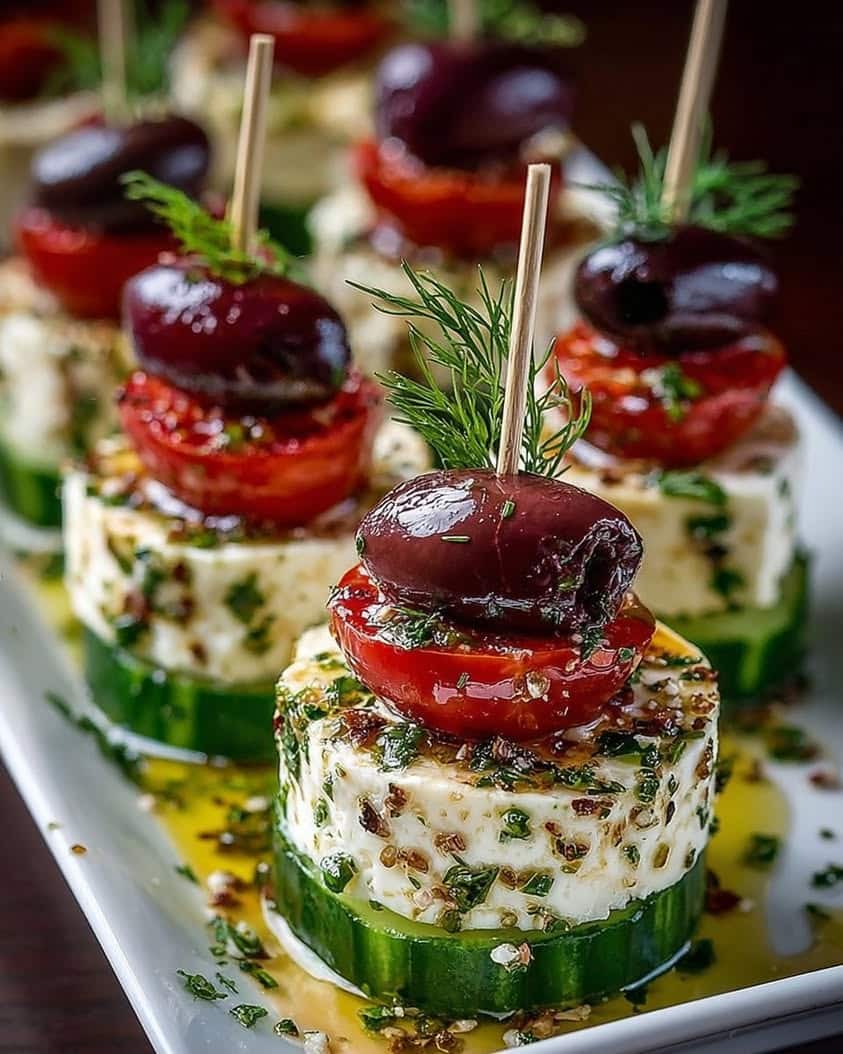
- Visual Appeal: The skewers are a feast for the eyes with their green, white, red, and purple colors. They look elegant and artisanal on any platter. Their simple assembly results in a very professional presentation.
- Skill Level Needed: Absolutely no cooking skills are required for this recipe. The process involves simple chopping and threading. Therefore, it is an ideal project for beginners or for getting kids involved in the kitchen.
- Special Equipment: You only need wooden or metal skewers. If using wooden skewers, soaking them in water for 10 minutes prevents burning. Otherwise, no special tools are necessary.
Recipe Overview
- Difficulty Level: We rate this recipe as “Easy” because it requires zero cooking and minimal knife work. The steps are purely assembly-based, with no complex techniques involved. Anyone can achieve perfect results on the first try. It is essentially foolproof entertaining.
- Category: This dish falls squarely into the appetizer and snack categories. It is perfect for finger food at parties or as a light starter. Additionally, it makes a fantastic healthy option for a packed lunch or afternoon pick-me-up.
- Cuisine: The recipe is firmly rooted in Greek and broader Mediterranean culinary traditions. It uses classic ingredients like feta, Kalamata olives, and oregano. These components are staples of the healthy and flavorful Mediterranean diet.
- Cost: This is a very budget-friendly recipe. Most ingredients are pantry staples or inexpensive fresh produce. A block of feta and a cucumber can yield many skewers, making it cost-effective for a crowd.
- Season: These skewers are ideal for spring and summer when cucumbers and tomatoes are at their peak. However, they work year-round because the core ingredients are always available. They are especially refreshing on hot days.
- Occasion: Perfect for picnics, potlucks, BBQs, holiday parties, or book club gatherings. They are also great for a quick, elegant appetizer before a weeknight dinner. Essentially, they suit any event that calls for easy, crowd-pleasing food.
Why You’ll Love This Recipe
First and foremost, the taste and texture combination is irresistibly satisfying. Each bite delivers a symphony of cool, crisp, creamy, and salty elements. The flavors are familiar yet exciting, offering a direct route to the heart of Mediterranean cooking. Moreover, the simplicity of the ingredients allows each one to shine. You will love how these Easy Greek Feta & Cucumber Skewers make healthy eating feel like a luxurious treat. They are far more interesting than a basic vegetable platter.
From a convenience standpoint, this recipe is a true lifesaver. You can assemble a large platter in under 15 minutes with no heat required. This makes it perfect for last-minute guests or when you are managing multiple dishes. Furthermore, the skewers can be partially prepped ahead of time. You can chop all components and store them separately, then thread them just before serving. Consequently, you minimize stress and maximize freshness.
Nutritionally, these skewers are a powerhouse of good-for-you ingredients. Cucumber provides hydration and fiber, while feta offers protein and calcium. Tomatoes contribute vitamin C and lycopene, and olives provide healthy monounsaturated fats. Altogether, they represent a balanced, nutrient-dense snack. Choosing this appetizer supports a wholesome approach to entertaining without sacrificing flavor.
The social and entertaining value of this dish is exceptionally high. The skewers are naturally portion-controlled and mess-free for guests. They encourage mingling because people can easily eat them while holding a drink. Additionally, their elegant appearance makes any table look thoughtfully curated. You will receive countless compliments for such a simple creation.
Finally, the cost-effectiveness and accessibility are major wins. You likely have olive oil and dried oregano in your pantry already. The remaining ingredients are affordable and available at any standard grocery store. You can easily double or triple the recipe to feed a large group without breaking the bank. Therefore, these Easy Greek Feta & Cucumber Skewers are a smart choice for both your wallet and your menu.
Historical Background and Cultural Significance
The concept of serving small, flavorful bites has deep roots in Greek culture, known as “meze.” Meze is more than just food; it is a social ritual centered around sharing, conversation, and leisurely dining. Traditionally, a variety of small dishes like olives, cheeses, dips, and grilled meats cover the table. Our Easy Greek Feta & Cucumber Skewers are a modern, portable interpretation of this ancient tradition. They capture the communal spirit of meze in a single, handheld form.
Each ingredient carries its own cultural significance. Feta cheese, protected by EU law as a Greek product, has been made for centuries from sheep’s or goat’s milk. Its salty, tangy profile is a defining flavor of the region. The cucumber, while not native, became a staple in Mediterranean salads and dips like tzatziki. Similarly, the Kalamata olive, named for the city in the Peloponnese, is prized worldwide for its meaty texture and rich flavor. Combining them is a natural celebration of Greek terroir.
The evolution of this specific recipe is a testament to global fusion and modern convenience. While the components are classic, threading them onto skewers is a contemporary presentation hack. This format likely gained popularity with the rise of finger-food catering and the desire for elegant, no-mess party apps. It streamlines the meze experience, making it accessible for fast-paced modern entertaining while honoring traditional flavors.
Regional variations of this idea abound throughout the Mediterranean. In Turkey, you might find skewers with halloumi and mint. In Italy, bocconcini (small mozzarella balls), cherry tomatoes, and basil create a Caprese skewer. The Greek version distinguishes itself with the bold saltiness of feta and the distinctive oregano. Exploring these variations is a delicious way to travel with your taste buds. Ultimately, our recipe stays true to a Hellenic identity through its iconic ingredient combination.
Ingredient Deep Dive
Feta Cheese: Authentic Greek feta is a brined curd cheese made from at least 70% sheep’s milk, often blended with goat’s milk. This composition gives it its characteristic tangy, salty flavor and crumbly yet creamy texture. Nutritionally, it is a good source of calcium, protein, and beneficial fats like CLA (conjugated linoleic acid). When selecting feta, look for blocks stored in brine for the best flavor and texture; pre-crumbled feta often contains anti-caking agents and can be drier. Store leftover feta submerged in its brine or in a saltwater solution in the refrigerator. For a substitution, try other brined cheeses like Bulgarian sirene or, for a milder taste, fresh goat cheese, though the flavor profile will change.
English Cucumber: We recommend English or “hot-house” cucumbers for their thin, tender skin and minimal seeds. Unlike standard cucumbers, they rarely require peeling or seeding, which saves time and reduces waste. They are primarily composed of water, making them incredibly hydrating and low in calories, while also providing a modest amount of vitamin K and potassium. Choose cucumbers that are firm, deeply green, and free of soft spots. Store them unwrapped in the crisper drawer of your refrigerator. For a variation, Persian cucumbers are an excellent smaller alternative. Avoid waxy, thick-skinned cucumbers as they can be bitter and tough.
Kalamata Olives: These iconic olives are harvested fully ripe, giving them a dark purple-black color and a distinct almond shape. They are typically slit and cured in a wine vinegar or lactic acid brine, which develops their deep, wine-like, and slightly fruity flavor. They are rich in heart-healthy monounsaturated fats and antioxidants like oleuropein. Purchase Kalamatas with pits for superior flavor and texture; pitting them is simple with a cherry pitter or the flat side of a knife. Store them in their brine in the refrigerator. If unavailable, other brine-cured black olives like Gaeta can work, but true Kalamatas have a unique taste that is difficult to replicate.
Cherry Tomatoes: These little bursts of sweetness balance the saltiness of the feta and olives. They are packed with nutrients, including vitamin C, potassium, and the antioxidant lycopene, which is more bioavailable when cooked but still present in raw tomatoes. Select tomatoes that are plump, smooth, and brightly colored with a firm feel; they should still be attached to their green stems if possible, indicating freshness. Store them at room temperature away from direct sunlight to preserve their flavor and texture. Grape tomatoes are a fine substitute due to their similar size and sweetness. Avoid refrigerating tomatoes, as cold temperatures degrade their texture and flavor.
Common Mistakes to Avoid
- Using Pre-Crumbled Feta: Pre-crumbled feta is often coated in anti-caking agents and lacks the creamy, moist texture of a block stored in brine. Always buy a block of feta in brine and cube it yourself for the best taste and mouthfeel. The difference in quality is immediately noticeable.
- Not Soaking Wooden Skewers: If you are using wooden skewers, soaking them in water for 10-15 minutes is crucial. This step prevents the wood from burning or splintering. It also keeps the skewers from absorbing moisture from your fresh ingredients.
- Cutting Ingredients Too Small or Too Large: Consistency in size is key for both appearance and ease of eating. Cubes that are too small will fall off the skewer, while pieces that are too large become awkward to eat. Aim for uniform, bite-sized pieces.
- Assembling Too Far in Advance: If assembled hours ahead, the salt from the feta and olives will draw moisture out of the cucumber and tomato, making them watery. For best results, assemble the skewers no more than 30-60 minutes before serving.
- Skipping the Fresh Oregano: While dried oregano works in a pinch, fresh oregano provides a brighter, more aromatic flavor that elevates the entire skewer. If you must use dried, use half the amount and rub it between your fingers to release its oils.
- Using Low-Quality Olive Oil: Since the olive oil is not cooked, its flavor is front and center. A low-quality or bland oil will make the dish taste flat. Invest in a good bottle of extra virgin olive oil for drizzling.
- Forgetting to Pat Ingredients Dry: Moisture is the enemy of presentation. Gently pat the cubed feta, cucumber, and olives with a paper towel before skewering. This helps the olive oil and herbs adhere better and keeps the platter neat.
- Overcrowding the Skewer: Threading the ingredients too tightly together looks messy and makes them difficult to eat. Leave a tiny bit of space between each item so the flavors remain distinct and the presentation is clean.
Essential Techniques
Choosing and Cubing Feta: Start with a firm block of feta that is submerged in brine. Remove it from the liquid and pat it dry gently with a paper towel. Use a sharp knife to cut the block into even, 3/4-inch cubes. A dull knife will crush the cheese rather than slicing it cleanly. If the feta is very soft and crumbly, you can briefly chill it in the freezer for 10-15 minutes to firm it up. The goal is neat cubes that hold their shape on the skewer without falling apart.
Preparing the Cucumber: Wash the English cucumber but there is no need to peel it. Trim off the ends. Slice it into rounds that are just slightly thicker than your feta cubes, about 1-inch thick. This provides a stable base and ensures a good cucumber-to-feta ratio in each bite. If using a standard cucumber with a thick, waxy skin and large seeds, you should peel it and cut it lengthwise to scoop out the seeds before slicing.
Threading the Skewer for Stability and Appeal: The order of ingredients affects both structure and visual appeal. Begin with a cucumber round as a sturdy anchor. Next, add a cube of feta, then a tomato, and finally, an olive. The olive, being the smallest and firmest, acts as a perfect end cap. Pierce each ingredient through its center to keep the skewer balanced. Apply gentle pressure; do not force the ingredients down the skewer, or they may split.
Pro Tips for Perfect Easy Greek Feta & Cucumber Skewers
For an extra flavor boost, marinate the cubed feta in a little olive oil, lemon zest, and chopped fresh herbs for 30 minutes before assembling. This infuses the cheese with even more Mediterranean character.
If serving outdoors on a warm day, place your serving platter on a larger tray filled with ice. This keeps the skewers refreshingly cool and crisp for the duration of your event.
Add a surprise element by occasionally substituting the Kalamata olive with a small, marinated artichoke heart or a pepperoncini pepper for a spicy kick.
Use a melon baller to create small, round scoops of feta for a more elegant and uniform look compared to cubed cheese.
For a stunning presentation, alternate between red and yellow cherry tomatoes on different skewers to create a more colorful platter.
Lightly brush the assembled skewers with the olive oil and oregano mixture rather than drizzling, ensuring each component gets an even, glossy coating.
If making these for a kids’ party, use cookie cutters to cut the cucumber into fun shapes like stars or hearts before skewering.
Variations and Adaptations
Regional Variations: Travel your taste buds by incorporating ingredients from neighboring cuisines. For an Italian twist, replace the feta with fresh mozzarella pearls (bocconcini), use basil instead of oregano, and add a balsamic glaze drizzle. For a Middle Eastern version, use halloumi cheese (briefly pan-fried for a golden exterior), fresh mint, and a sprinkle of za’atar seasoning alongside the olive oil.
Seasonal Adaptations: While perfect for summer, you can adapt these skewers for fall and winter. Replace the fresh tomato with a small cube of roasted butternut squash or a roasted beet cube. Swap the fresh oregano for a sprinkle of dried thyme or rosemary to match the heartier seasonal vibe.
Dietary Modifications: For a vegan version, substitute the feta with a firm, marinated tofu cube or a commercially available vegan feta alternative. Ensure the olives are vegan-friendly (most are). To make it lower in sodium, rinse the feta and olives briefly under cold water to remove some surface brine before cubing and skewering.
Flavor Variations: Infuse the olive oil with garlic or lemon juice before drizzling. Add a thin slice of red onion or a fresh basil leaf between the cucumber and feta. For a touch of sweetness, include a small cube of watermelon in the summer or a grape in the autumn.
Serving and Presentation Guide
Plating Techniques: Arrange the skewers in a sunburst pattern on a large, round platter or line them up neatly on a long, rectangular slate or wooden board. Place a small bowl of tzatziki or extra virgin olive oil for dipping in the center. For height and visual interest, layer the skewers over a bed of kale or butter lettuce leaves.
Garnishing Ideas: Do not just drizzle the oil and herbs over the skewers. Scatter a few extra whole Kalamata olives, oregano sprigs, and lemon wedges around the platter. A light dusting of sumac or smoked paprika over the finished platter adds a beautiful color contrast and a hint of complexity.
Traditional Accompaniments: Serve these skewers as part of a larger Greek meze spread. They pair wonderfully with hummus, dolmades (stuffed grape leaves), spanakopita, grilled octopus or lamb, and plenty of warm pita bread. This creates a complete and authentic tasting experience for your guests.
Wine and Beverage Pairing
Wine Pairings: The salty feta and briny olives call for wines with good acidity. A crisp, dry Greek white like Assyrtiko or Moschofilero is a perfect regional match. Alternatively, a New Zealand Sauvignon Blanc or a dry Provençal Rosé also complements the bright, fresh flavors beautifully. For red wine lovers, a light-bodied, low-tannin red like a Beaujolais or a Greek Xinomavro can work if served slightly chilled.
Non-Alcoholic Alternatives: Sparkling water with a squeeze of lemon or lime is a classic, refreshing choice. For something more special, try a homemade cucumber-mint cooler or a pomegranate spritzer. Iced herbal teas, like mint or lemon verbena, also pair wonderfully without competing with the appetizer’s flavors.
Storage and Shelf Life
Due to their fresh nature, assembled Easy Greek Feta & Cucumber Skewers are best enjoyed immediately. However, you can store components separately for up to 2 days. Keep cubed feta submerged in brine in an airtight container. Store sliced cucumber and tomatoes in separate containers lined with a paper towel to absorb moisture. Assemble within 30 minutes of serving. Do not freeze these skewers, as the texture of the cucumber and tomato will be destroyed upon thawing. Discard any skewers left at room temperature for more than 2 hours.
Make Ahead Strategies
You can achieve nearly all the prep work 1 day in advance. Cube the fata and store it in brine. Wash and slice the cucumber, storing it in a container with a damp paper towel on top. Wash the tomatoes and olives. Make your herbed olive oil dressing. On the day of your event, simply pat all components dry, thread them onto soaked skewers, drizzle, and garnish. This strategy ensures peak freshness and minimizes last-minute tasks.
Scaling Instructions
This recipe scales linearly with ease. To double or triple, simply multiply all ingredient quantities accordingly. The only adjustment needed is for the olive oil and oregano drizzle; you may not need to double it exactly, so add gradually to taste. When making a large batch, use multiple platters or tiered stands for serving to avoid overcrowding. Prep time will increase slightly with volume, but the assembly process remains just as simple.
Nutritional Deep Dive
Each skewer is a balanced bite offering a mix of macronutrients and micronutrients. The feta provides protein and fat for satiety, while the cucumber and tomato contribute fiber, vitamins, and hydration. The olives add more healthy fats and antioxidants. As part of a Mediterranean diet pattern, this appetizer supports heart health, provides anti-inflammatory benefits, and is a nutrient-dense alternative to processed snack foods. For weight management, it is a satisfying, low-calorie option that helps curb hunger.
Dietary Adaptations
Gluten-Free: This recipe is naturally gluten-free. Just ensure that any pre-packaged ingredients like olives do not contain gluten-based additives in their brine.
Dairy-Free/Vegan: Substitute the feta cheese with a firm block of extra-firm tofu, pressed and marinated in lemon juice, nutritional yeast, and salt. Alternatively, use a store-bought vegan feta made from almonds or tofu.
Low-Carb/Keto: This recipe is already excellent for low-carb and keto diets. The primary carbs come from the tomato and cucumber, which are low in net carbs. Just be mindful of portion sizes if you are on a very strict keto plan.
Paleo: Omit the cheese. Use a large, pitted olive as the base and thread it with cucumber, tomato, and a cube of grilled chicken or shrimp to maintain protein content.
Troubleshooting Guide
Skewers are Soggy: This happens from assembling too early or not patting ingredients dry. Solution: Disassemble the soggy skewers, pat all components thoroughly with paper towels, and re-thread fresh ones. Always assemble close to serving time.
Feta Crumbles When Skewering: Your feta may be too warm or soft. Solution: Chill the block of feta in the freezer for 10-15 minutes to firm it up before cubing. Use a very sharp knife for clean cuts.
Flavor is Too Salty: This can occur if the feta and olives are very salty. Solution: Briefly rinse the cubed feta and olives under cold water and pat them dry before assembling. You can also use a lighter hand when seasoning with additional salt.
Frequently Asked Questions
Can I make these skewers ahead of time? You can prep all ingredients 1-2 days ahead, but assemble the skewers within 30-60 minutes of serving to prevent sogginess. Store components separately in the fridge.
What can I use instead of wooden skewers? Metal skewers, toothpicks (for mini versions), or even decorative cocktail picks work perfectly. If using toothpicks, simply reduce the size of your ingredient cubes.
Is there a substitute for Kalamata olives? Yes, other brine-cured black olives like Gaeta or Niçoise olives will work. Green olives like Castelvetrano offer a buttery, milder alternative, though the flavor profile will change.
Can I grill these skewers? While not traditional for this fresh version, you can lightly grill them. Use halloumi instead of feta (as it holds its shape when heated) and brush vegetables with oil. Grill for just 1-2 minutes per side to get marks.
How do I transport these for a picnic? Assemble the skewers and lay them in a single layer in a shallow, airtight container. Place a damp paper towel over them and keep the container in a cooler with ice packs until ready to serve.
My feta is very watery. What should I do? Drain the brine and pat the block dry thoroughly. You can also let it sit on a few layers of paper towel for 10 minutes to absorb excess moisture before cubing.
Can I use dried oregano instead of fresh? Yes, but use only about half the amount (1/2 teaspoon for this recipe). Crush the dried oregano between your palms to release its oils before sprinkling.
Are these skewers healthy? Absolutely. They are made from whole, fresh ingredients providing hydration, fiber, healthy fats, protein, and vitamins. They are a much healthier choice than many fried or processed appetizers.
Additional Resources
If you love the flavors of these Easy Greek Feta & Cucumber Skewers, explore more Greek recipes like authentic tzatziki sauce, spanakopita, or a classic Greek salad. To master knife skills for even chopping, look up basic “brunoise” or “large dice” techniques online. For entertaining, consider pairing these skewers with other Mediterranean dips like hummus or melitzanosalata (eggplant dip). Finally, investing in a good quality extra virgin olive oil and a set of reusable metal skewers will elevate your cooking and presentation for many recipes to come.
PrintGreek Feta & Cucumber Bite Skewers
- Total Time: 15 minutes
- Yield: 4
Description
A refreshing and easy appetizer featuring crisp cucumber, tangy feta cheese, and briny olives, all drizzled with a lemon-herb dressing.
Ingredients
- 1 large English cucumber, cut into 1-inch cubes
- 8 oz block feta cheese, cut into 1-inch cubes
- 1 cup cherry tomatoes
- 1/2 cup Kalamata olives, pitted
- 2 tbsp extra virgin olive oil
- 1 tbsp fresh lemon juice
- 1 tsp dried oregano
- 1/4 tsp black pepper
- Wooden skewers (6-inch size)
Instructions
- Thread one cube of cucumber, one cube of feta, one cherry tomato, and one olive onto each wooden skewer, repeating until all ingredients are used.
- Arrange the skewers on a serving platter in a single layer.
- In a small bowl, whisk together the olive oil, lemon juice, oregano, and black pepper.
- Drizzle the dressing evenly over the skewers just before serving.
Notes
You can customize the seasonings to taste.
- Prep Time: 15 minutes
- Cook Time: 0 minutes
- Method: Appetizer
- Cuisine: Greek