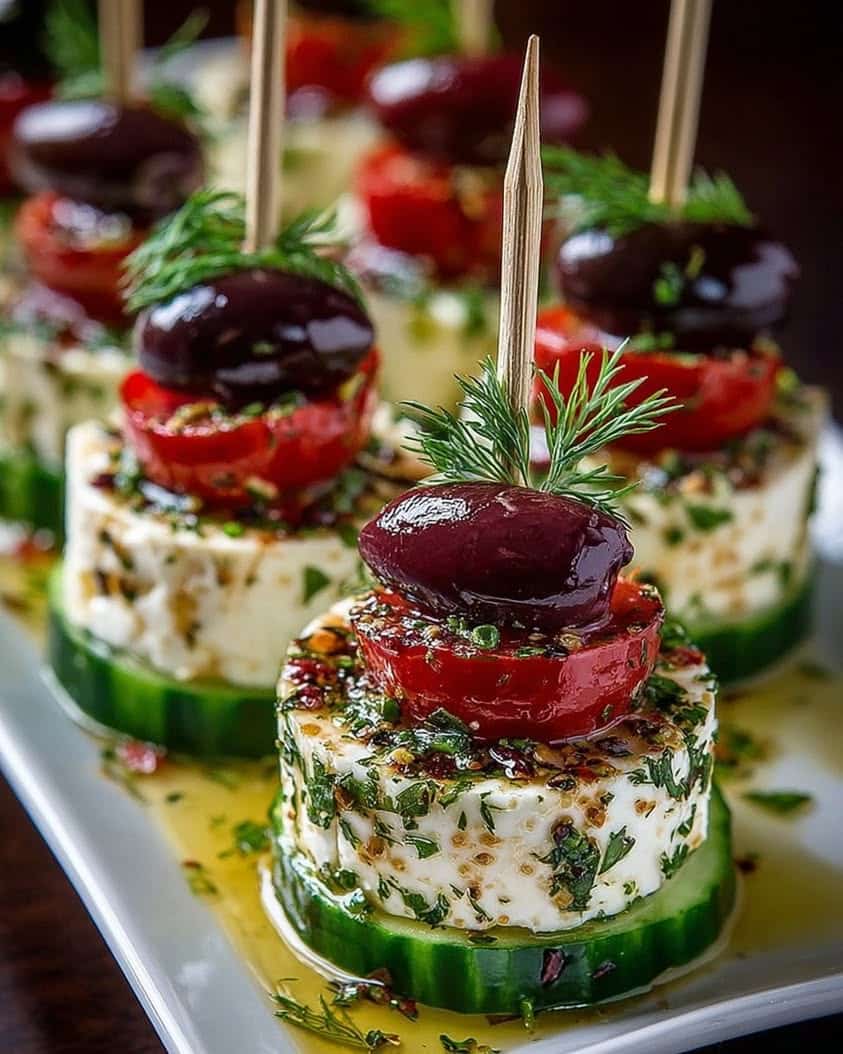
Easy Greek Feta & Cucumber Skewers: A Refreshing Appetizer Recipe
Imagine a perfect bite that captures the essence of a sunny Mediterranean coastline. These Easy Greek Feta & Cucumber Skewers deliver exactly that experience. They are a vibrant, no-cook appetizer that bursts with fresh flavors and requires minimal effort. Consequently, they are the ideal solution for busy hosts who want to impress their guests without spending hours in the kitchen. Moreover, each skewer offers a delightful combination of creamy, briny, and crisp textures that dance on your palate.
This recipe for Easy Greek Feta & Cucumber Skewers is more than just food; it is a celebration of simplicity and quality ingredients. The star, of course, is the tangy Greek feta cheese, which pairs beautifully with the cool, hydrating cucumber. Additionally, the addition of juicy cherry tomatoes and briny Kalamata olives creates a harmonious flavor profile. Ultimately, these skewers are a foolproof choice for any gathering, from casual barbecues to elegant cocktail parties. They promise to be the first platter to empty on your table.
Furthermore, the visual appeal of these skewers is undeniable. The bright red tomatoes, deep purple olives, creamy white feta, and green cucumber create a stunning color contrast that is as beautiful as it is delicious. Assembling them is a relaxing, almost meditative process. Therefore, you can easily involve family members or friends in the preparation. In essence, this recipe for Easy Greek Feta & Cucumber Skewers guarantees a delicious and visually stunning appetizer every single time.
Quick Recipe Highlights
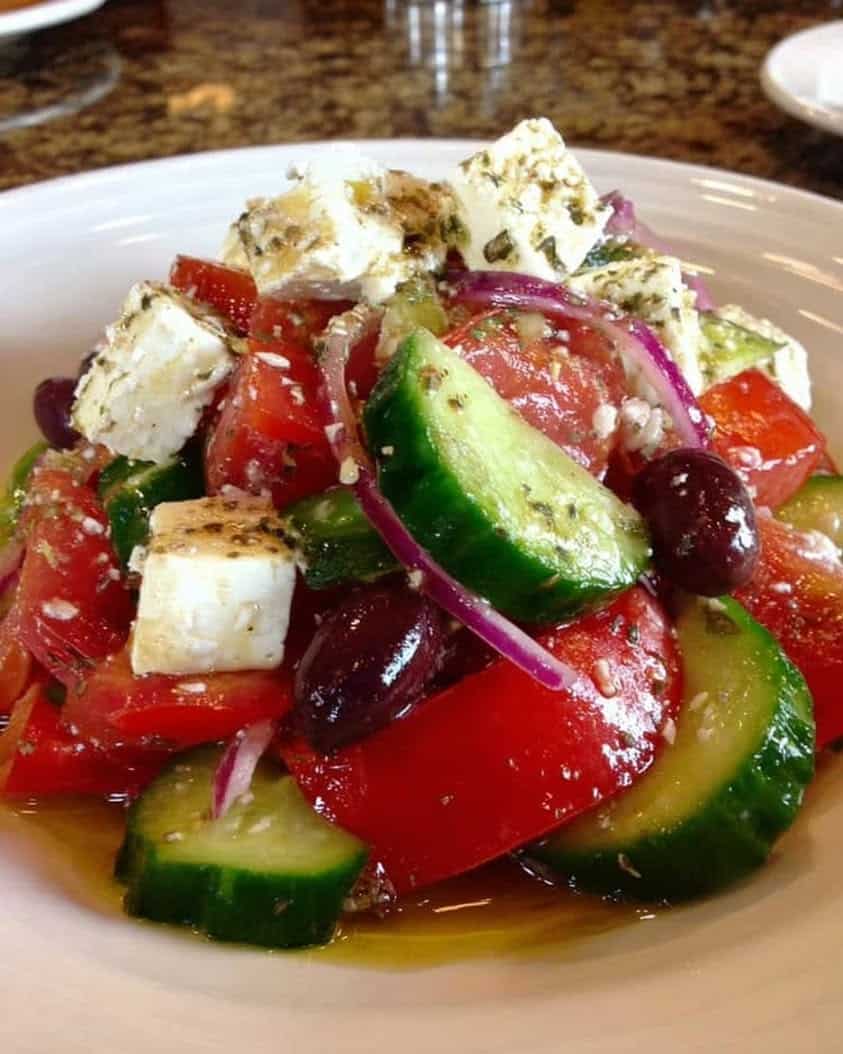
- Flavor Profile: These skewers offer a bright and balanced taste. The salty, tangy punch of the feta cheese contrasts wonderfully with the sweet acidity of the cherry tomatoes. Meanwhile, the Kalamata olives add a deep, savory umami note that ties everything together.
- Texture: You will experience a fantastic textural journey. The crisp, watery crunch of the cucumber gives way to the juicy pop of the tomato. Finally, the creamy, crumbly texture of the feta cheese provides a rich and satisfying finish.
- Aroma: The aroma is fresh and herbaceous, dominated by the bright scent of extra virgin olive oil and dried oregano. Additionally, the briny scent of the olives and the clean, green fragrance of the cucumber create an inviting olfactory preview.
- Visual Appeal: The skewers are a feast for the eyes with their vibrant, contrasting colors. The arrangement of red, white, green, and purple on a simple skewer looks both rustic and elegant. This makes them incredibly photogenic for social media or simply beautiful on a serving platter.
- Skill Level Needed: Absolutely no advanced culinary skills are required. This recipe is perfect for beginners, as it involves only simple assembly. The most challenging task is carefully cubing the feta cheese without crumbling it too much.
- Special Equipment: You only need standard kitchen tools. The primary requirement is a set of small wooden or bamboo skewers. Otherwise, a sharp knife and a cutting board are the only other essential items for prepping the ingredients.
Recipe Overview
- Difficulty Level: We rate this recipe as “Easy” because it involves zero cooking and only basic knife skills. The entire process is assembly-based, making it accessible to cooks of all experience levels. There is no heat management, complex techniques, or precise timing to worry about. Essentially, if you can thread ingredients onto a stick, you can master this dish.
- Category: This dish falls squarely into the appetizer and snack categories. It is perfect for starting a meal or serving as part of a larger mezze platter. Furthermore, it can also function as a light, healthy lunch option when served in a larger quantity. Its versatility is one of its greatest strengths.
- Cuisine: The recipe is firmly rooted in Greek and broader Mediterranean cuisine. It draws inspiration from classic Greek salads and mezze traditions, emphasizing fresh vegetables, high-quality cheese, olives, and olive oil. The flavor profile is unmistakably Hellenic, celebrating the simple, robust ingredients of the region.
- Cost: This is a very cost-effective appetizer. The main expenses are the block of feta cheese and the Kalamata olives. However, since you use only small amounts of each ingredient per skewer, the overall cost per serving remains low. You can easily feed a crowd without straining your budget.
- Season: These skewers are truly a summer superstar. They are best when tomatoes and cucumbers are at their peak sweetness and crispness during the warm months. Conversely, they also provide a refreshing counterpoint to heavy winter holiday meals, offering a bright burst of flavor year-round.
- Occasion: They are supremely versatile for entertaining. They are ideal for picnics, potlucks, baby showers, wedding appetizers, holiday parties, or casual game-day gatherings. Their make-ahead nature and elegant appearance make them suitable for both formal and informal events.
Why You’ll Love This Recipe
First and foremost, the taste and texture combination is utterly irresistible. Each bite delivers a symphony of flavors: the cool cucumber, the salty feta, the sweet tomato, and the savory olive. This balance ensures that your palate never grows bored. Moreover, the contrast between the creamy cheese and the crisp vegetables creates a satisfying mouthfeel that is both light and indulgent. You will find yourself reaching for just one more skewer every time.
From a convenience standpoint, this recipe is a true lifesaver. Since there is no cooking involved, you avoid heating up your kitchen, which is a major bonus during summer parties. Additionally, the prep work is minimal and can be done well in advance. You can assemble the skewers hours before your event and simply store them in the refrigerator. This frees up your time to focus on other dishes or simply enjoy your guests’ company.
Nutritionally, these Easy Greek Feta & Cucumber Skewers offer several advantages. Cucumbers are hydrating and low in calories, while tomatoes provide vitamin C and antioxidants. Feta cheese is a good source of calcium and protein, though it should be enjoyed in moderation due to its sodium content. Using a high-quality extra virgin olive oil adds heart-healthy monounsaturated fats. Therefore, this appetizer is a more wholesome choice compared to many fried or heavily processed party foods.
The social and entertaining value of this dish is exceptionally high. The skewers are finger food at its most elegant and mess-free, encouraging conversation and mingling. They are easy for guests to grab and eat while holding a drink. Furthermore, their stunning presentation immediately elevates the look of your appetizer table. They signal to your guests that you have put thought and care into the menu, even though the preparation was remarkably simple.
Finally, the cost-effectiveness and accessibility of the ingredients make this recipe a winner. You can find all the components at any standard grocery store. There is no need for exotic or expensive specialty items. Even if you splurge on premium Greek feta and imported olives, the cost per skewer remains reasonable. This accessibility means you can whip up a impressive appetizer without a special shopping trip or a big budget.
Historical Background and Cultural Significance
The origins of these skewers are deeply intertwined with the ancient tradition of mezze in Eastern Mediterranean and Middle Eastern cultures. Mezze refers to a selection of small dishes served as appetizers or a meal itself, meant for sharing. The concept of combining cheese, olives, and vegetables is centuries old. However, the specific presentation on a skewer is a modern, convenient adaptation of these classic flavor pairings. It takes the communal essence of mezze and packages it into a perfect individual portion.
Culturally, each ingredient holds significant meaning in Greek cuisine. Feta cheese, protected by EU law as a Greek product, is a cornerstone of the national diet. Cucumbers and tomatoes are ubiquitous in Greek salads, reflecting the country’s agricultural abundance. Kalamata olives, named after the city in the Peloponnese, are among the most prized olive varieties in the world. Therefore, assembling these elements on a skewer is like creating a edible tribute to Greek culinary heritage. It celebrates simplicity, freshness, and the vibrant flavors of the land.
The evolution of this recipe mirrors broader trends in global cooking. As entertaining styles have become more casual and interactive, finger foods have gained popularity. The skewer format answers the modern desire for portable, mess-free, and visually appealing appetizers. Chefs and home cooks alike have taken the foundational ingredients of a Greek salad and reimagined them for easy service at parties and events. This evolution demonstrates how traditional flavors can be adapted to contemporary lifestyles without losing their soul.
Regional variations of this concept abound throughout the Mediterranean. In Turkey, one might find skewers with halloumi cheese instead of feta. Italian versions could feature mozzarella balls (bocconcini) and basil leaves. Spanish pinchos might include Manchego cheese and marinated peppers. This global journey highlights the universal appeal of combining cheese, fresh produce, and olives. The specific Greek version, with its iconic feta and oregano, remains a beloved and distinct iteration of this widespread culinary idea.
Ingredient Deep Dive
Let us start with the star: Greek Feta Cheese. Authentic Greek feta is made from at least 70% sheep’s milk, often blended with goat’s milk, giving it a tangy, salty, and slightly earthy flavor. It has been produced in Greece for thousands of years and is a vital source of calcium and protein. When selecting feta, look for blocks stored in brine; this keeps it moist and flavorful. Avoid pre-crumbled feta, as it often contains anti-caking agents and lacks the creamy texture of a freshly cut block. For storage, keep the cheese submerged in its brine in an airtight container in the refrigerator. If you need a substitution, other brined cheeses like Bulgarian sirene or French feta can work, though the flavor profile will shift slightly.
Next, the English Cucumber provides the crucial crisp element. Unlike standard slicing cucumbers, English or “hothouse” varieties have thinner skins, fewer seeds, and a milder taste, eliminating any bitterness. They are over 95% water, making them incredibly hydrating and low in calories. Choose a cucumber that is firm, deeply green, and free of soft spots. There is no need to peel it, as the skin adds color, texture, and nutrients. Store it in the refrigerator’s crisper drawer. If you cannot find an English cucumber, you can use a regular one; just consider peeling it and scooping out the watery seed core for a better texture. Persian cucumbers are another excellent, albeit smaller, alternative.
The Cherry Tomatoes bring a burst of sweetness and acidity. These small tomatoes are typically sweeter and less acidic than their larger counterparts, making them perfect for eating raw. They are rich in lycopene, an antioxidant linked to numerous health benefits. Select tomatoes that are brightly colored, firm, and still attached to their vine if possible, as this often indicates better flavor and freshness. Store them at room temperature until they are fully ripe, then move them to the fridge to slow further ripening. For a variation, you could use yellow pear tomatoes for a color contrast or sun-dried tomatoes for a more intense, chewy flavor, though this would change the skewer’s fresh character.
Finally, the Kalamata Olives are the umami powerhouse. These dark purple, almond-shaped olives are native to Greece and are cured in a brine or wine vinegar, giving them a rich, fruity, and slightly smoky flavor. They are a good source of healthy monounsaturated fats. Look for olives sold in jars or at the deli counter in brine, avoiding canned varieties which can be mushy and metallic-tasting. Store them in their liquid in the refrigerator. If you need a substitute, other brine-cured black olives like Gaeta or Niçoise can be used, though the distinct Kalamata flavor is a key part of the authentic Greek experience in this recipe for Easy Greek Feta & Cucumber Skewers.
Common Mistakes to Avoid
- Using Pre-Crumbled Feta: This is perhaps the most common error. Pre-crumbled feta is dry, often coated in anti-caking agents, and lacks the creamy, moist texture of a block cut fresh from brine. Always buy a block of feta stored in liquid and cube it yourself just before assembling.
- Skipping the Draining Step: If you do not pat the cucumber and tomatoes dry after washing, and if you do not drain the olives and feta well, excess water will drip off the skewers. This water dilutes the olive oil dressing and makes the presentation look soggy. Take a moment to dry everything thoroughly.
- Cutting Ingredients Too Far in Advance: While you can prep components ahead, do not cube the feta or assemble the full skewers more than a few hours before serving. The feta can dry out, and the vegetables may start to wilt and release water, compromising the perfect texture.
- Choosing the Wrong Skewers: Using large, long skewers meant for kebabs makes for an awkward appetizer. Opt for short (4-6 inch) wooden or bamboo appetizer skewers. Remember to soak wooden skewers in water for 15-20 minutes before using to prevent them from burning if you are serving them on a grill platter (though no cooking is involved).
- Overcrowding the Skewer: The beauty of this appetizer is in its simplicity. Threading on too many pieces of each ingredient makes the skewer difficult to eat and visually cluttered. Stick to the pattern: cucumber, tomato, feta, olive. This ensures each flavor is distinct.
- Using Low-Quality Olive Oil: Since the dressing is just olive oil and oregano, the quality of the oil is paramount. A bland, processed olive oil will result in a bland skewer. Invest in a good bottle of extra virgin olive oil for finishing; its peppery, fruity notes will elevate the entire dish.
- Forgetting to Season: Even though feta and olives are salty, the fresh vegetables still need a touch of seasoning. A light sprinkle of flaky sea salt and cracked black pepper just before serving wakes up all the flavors. Do not skip this final touch.
- Storing Assembled Skewers Improperly: If you must store assembled skewers, lay them in a single layer on a baking sheet lined with parchment paper. Do not stack them or store them in a deep container where they will steam and become mushy. Cover loosely with plastic wrap.
Essential Techniques
The first essential technique is properly cubing the feta cheese. This is important because neat cubes hold their shape on the skewer and provide a satisfying bite. To master it, remove the feta from its brine and pat it dry gently with a paper towel. Use a sharp knife to cut the block into even, 3/4-inch cubes. A common pitfall is using a dull knife, which will mash and crumble the cheese instead of slicing it cleanly. The visual cue for success is firm, clean-edged cubes that are moist but not dripping with brine.
Another key technique is threading the skewer for structural integrity. The goal is to create a stable appetizer that does not fall apart when picked up. The important step is to pierce each ingredient through its sturdiest part. For the cucumber, skewer through the center of the flesh, avoiding the very edge. For the tomato, pierce through the core end (where the stem was) for the most secure hold. For the feta, go through the center of the cube. A common mistake is skewering the tomato through its side, which often causes it to split or slide off. The success cue is a skewer where all ingredients are held firmly and spaced slightly apart for visual appeal.
Pro Tips for Perfect Easy Greek Feta & Cucumber Skewers
For the creamiest texture, take your feta cheese out of the refrigerator about 15 minutes before cubing it. Slightly cooler than room temperature helps it hold its shape better than if it is stone-cold. This simple step makes the cubing process much cleaner and prevents excessive crumbling.
Create an herbed olive oil for drizzling by infusing your extra virgin olive oil ahead of time. Warm the oil slightly and add dried oregano, a pinch of red pepper flakes, and a smashed garlic clove. Let it steep for an hour, then strain. This infused oil adds a deeper, more complex flavor to your finished skewers.
If you are making a large batch, set up an assembly line. Arrange all your prepped ingredients in separate bowls in the order they go on the skewer: cucumber, tomato, feta, olive. This streamlines the process, ensures consistency, and makes it easy to enlist help from friends or family.
Add a surprise element by including a small fresh herb leaf on each skewer. Thread a single small leaf of fresh oregano, mint, or basil right after the tomato. This introduces a burst of fresh aroma and a pop of green color that enhances the overall presentation and taste.
For a stunning platter presentation, consider the base. Instead of a plain plate, serve your skewers on a bed of coarse sea salt, lemon slices, or fresh grape leaves. This elevates the visual drama and reinforces the Greek coastal theme of the dish.
Balance the saltiness by offering a sweet accompaniment. Serve the skewers with a small dish of high-quality honey or a drizzle of balsamic glaze on the side. The sweet contrast complements the salty feta and olives beautifully and allows guests to customize their bite.
Variations and Adaptations
For regional variations, explore different cheese and brine profiles. Swap the feta for halloumi; you can briefly grill the halloumi cubes before skewering for a warm, squeaky texture. An Italian version might use ciliegine mozzarella, fresh basil, and a sun-dried tomato. A Spanish pincho could feature Manchego cheese, marinated artichoke hearts, and a pickled guindilla pepper.
Seasonal adaptations are simple and effective. In spring, add blanched asparagus tips or fresh peas. For autumn, incorporate small cubes of roasted butternut squash or a slice of fig. Winter versions can include roasted beet cubes or a segment of citrus, like blood orange, for a bright, festive touch amidst heavier holiday foods.
Dietary modifications are straightforward. For a vegan version, use a firm, brined tofu or a commercial vegan feta alternative. Ensure the olives are vegan-friendly (some are packed with lactic acid). For a lower-sodium option, rinse the feta and olives briefly under cold water to remove some surface brine, and use a low-sodium feta if available.
Flavor variations can take your skewers around the world. Add a Middle Eastern twist with a sprinkle of za’atar and a drizzle of pomegranate molasses. Create a Mexican-inspired version with cotija cheese, lime juice, and a slice of jalapeño. An Asian fusion approach could use a sesame-ginger dressing and maybe a small piece of pickled ginger.
Serving and Presentation Guide
Plating techniques can transform your appetizer table. Instead of piling skewers haphazardly, arrange them in a sunburst pattern on a large round platter. Alternatively, line them up neatly in rows on a long rectangular slate or wooden board. For height, insert the skewers into a halved head of cabbage or a foam block covered in kale leaves, creating a dramatic “skewer bouquet” centerpiece.
Garnishing ideas extend beyond the skewer itself. Scatter whole Kalamata olives, caper berries, and lemon wedges around the platter. Sprinkle extra dried oregano or fresh chopped dill over the arranged skewers. A final dusting of finely crumbled feta or a few cracks of colorful rainbow peppercorns adds texture and visual interest just before serving.
Traditional accompaniments include other Greek mezze. Serve your Easy Greek Feta & Cucumber Skewers alongside a bowl of tzatziki for dipping, dolmades (stuffed grape leaves), spanakopita triangles, and warm pita bread wedges. This creates a complete and authentic Mediterranean tasting experience for your guests.
Modern serving suggestions might involve deconstruction. Set up a “build-your-own-skewer” station with all the components in separate bowls and a jar of dressed skewers. This interactive approach is fantastic for casual parties. Alternatively, serve the skewers perched on the rim of individual glasses of Greek white wine or a cucumber-infused cocktail.
Wine and Beverage Pairing
Wine pairings should complement the salty, tangy, and fresh flavors. A crisp, acidic Greek Assyrtiko is the classic and perfect choice, as its citrus and mineral notes cut through the richness of the feta. A New Zealand Sauvignon Blanc with its grassy, grapefruit character also works beautifully. For a red option, choose a light-bodied, low-tannin wine like a Beaujolais or a Greek Xinomavro rosé, which will not overpower the delicate appetizer.
Non-alcoholic alternatives can be just as sophisticated. Sparkling water with a squeeze of lemon or lime is always refreshing. For a crafted mocktail, try a cucumber-mint cooler or a pomegranate spritzer. Iced herbal teas, like mint or lemon verbena, also pair wonderfully, as their clean flavors cleanse the palate between bites of the savory skewers.
While not traditional, certain coffees and teas can work if serving these as part of a brunch. A light roast coffee with bright acidity can mirror the wine pairing principle. A cup of mint tea or an iced green tea would complement the herbal and fresh vegetable notes without clashing with the cheese’s saltiness.
Storage and Shelf Life
Storage methods are crucial for maintaining quality. The best practice is to store the prepped ingredients separately. Keep cubed feta in an airtight container with a splash of its brine. Store cut cucumber and tomatoes in separate containers lined with a paper towel to absorb moisture. Assemble skewers no more than 2-3 hours before serving for peak texture.
If you must store assembled skewers, temperature is key. They must be refrigerated. Lay them in a single, non-overlapping layer on a tray or plate, cover loosely with plastic wrap, and store for up to 4 hours. Do not leave them at room temperature for more than an hour, as the dairy and fresh vegetables are perishable.
Signs of spoilage are usually visual and olfactory. Discard skewers if the feta develops an off-color (yellow or pink tinges) or a sour smell beyond its normal tang. If the cucumber becomes slimy or the tomatoes become mushy and leaky, the skewers are past their prime. Always err on the side of caution with fresh, uncooked ingredients.
Make Ahead Strategies
Your prep timeline can be stretched over two days. Day 1: Purchase your ingredients. Day 2 (Morning of the event): Wash and thoroughly dry the cucumbers and tomatoes. Cube the feta and store it in brine. Pit the olives if necessary. Store everything separately in the fridge. 1-2 Hours Before Serving: Pat all components dry again, assemble the skewers, arrange on a platter, drizzle with oil and herbs, then refrigerate until ready to serve.
Storage between steps is simple with the right containers. Use shallow, airtight containers for the feta (with brine) and the vegetables (with paper towels). This prevents cross-flavors and maintains optimal texture. Do not mix the wet feta with the dry vegetables until assembly time.
Assembling tips for make-ahead success: If you must assemble early, wait to add the final drizzle of olive oil and sprinkle of oregano until just before serving. This prevents the oil from being absorbed and making the vegetables look soggy. You can also leave the platter of assembled, unoiled skewers covered in the fridge, then add the oil as you bring them to the table.
Scaling Instructions
Halving the recipe is straightforward for a small gathering. Simply divide all ingredient quantities by two. The assembly time will be faster, and you can use a smaller platter. No equipment adjustments are needed, though you may find you have leftover brine from a half-block of feta; store it to use in salad dressings or marinades.
Doubling or tripling the recipe for a crowd requires a bit more planning. Multiply your ingredient quantities carefully. The most significant adjustment is workspace; ensure you have enough room to set up multiple assembly stations or a very large platter. Timing remains the same per skewer, but the total assembly time will increase linearly. Consider enlisting help to keep the process efficient.
Nutritional Deep Dive
A macro breakdown for one skewer shows a balance of healthy fats, a small amount of protein, and minimal carbohydrates. The primary sources are the feta (fat and protein) and olive oil (fat). The cucumber and tomato contribute mostly water, fiber, and trace carbs. This makes each skewer a light but satisfying bite that fits into many dietary patterns without providing excessive calories.
The micronutrient analysis reveals a good profile. Cucumbers provide vitamin K and potassium. Tomatoes are excellent sources of vitamin C, potassium, and the antioxidant lycopene. Feta cheese contributes calcium, phosphorus, and vitamin B12. Olive oil adds vitamin E and beneficial phytonutrients. Together, they offer a range of vitamins and minerals that support bone health, hydration, and antioxidant defense.
Health benefits are linked to the Mediterranean diet principles this recipe embodies. The combination of vegetables, healthy fats from olive oil and olives, and fermented dairy (feta) is associated with heart health, reduced inflammation, and improved gut health. The high water and fiber content promotes satiety and digestive regularity, making these a smart choice for weight management when enjoyed in moderation as part of a balanced diet.
Dietary Adaptations
For a gluten-free adaptation, this recipe is naturally compliant. Simply ensure that the wooden skewers you purchase are certified gluten-free, as some processing facilities may handle wheat products. All the core ingredients—cucumber, tomato, feta, olives, olive oil, and herbs—are inherently gluten-free.
A dairy-free or vegan version requires a cheese substitute. Use a firm, brined vegan “feta” made from tofu, almonds, or coconut. Many commercial brands mimic the tangy, salty profile well. Ensure your olives are packed without dairy-based lactic acid (most are vegan, but check). The result will be a similar flavor and texture experience without any animal products.
For a low-carb or keto adaptation, this recipe is already an excellent fit. The net carbs per skewer are very low, coming primarily from the tomato and cucumber. To make it even more keto-friendly, you could slightly reduce the number of tomato pieces and increase the ratio of feta and olives to up the fat content, keeping you in ketosis while enjoying a flavorful appetizer.
Troubleshooting Guide
If your skewers become watery, the issue is likely excess moisture on the ingredients or assembly too far in advance. The solution is to pat every component bone-dry before threading. If already assembled, carefully blot the platter with paper towels and serve immediately. For next time, shorten the lead time between assembly and service.
If the flavors seem bland, you may have used low-quality olive oil or under-seasoned vegetables. The fix is to add a final flourish. Drizzle with a high-quality, peppery extra virgin olive oil and a generous sprinkle of flaky sea salt and cracked black pepper right before serving. Sometimes, the simple addition of acid—a quick spritz of lemon juice—can brighten all the flavors instantly.
If the feta keeps crumbling when you cube it, your knife might be dull, or the cheese could be too cold. Let the feta sit out for 10-15 minutes to take the chill off. Use a sharp chef’s knife or a thin-bladed paring knife, and employ a gentle sawing motion instead of pressing straight down. If it still crumbles, embrace it; slightly rustic, irregular cubes have their own charm.
Recipe Success Stories
Community feedback on this recipe for Easy Greek Feta & Cucumber Skewers consistently highlights their crowd-pleasing nature. Many readers report that these are the first appetizer to disappear at parties, with guests often asking for the recipe. Others love how children enjoy assembling them, making it a fun family cooking activity. The consistent theme is surprise at how such simple ingredients can create such an impressive and delicious result.
Variation successes from readers are inspiring. One home cook added a small ball of watermelon to each skewer for a sweet and salty summer twist. Another used marinated artichoke hearts instead of olives for a different briny note. A creative host even served them as a salad alternative by sliding the components off the skewer onto a bed of greens. These adaptations show the recipe’s fantastic flexibility.
Frequently Asked Questions
Q: Can I make these skewers the night before?
A: We do not recommend fully assembling them the night before. The vegetables will release water and the feta can dry out. However, you can prep all components: cube the feta (store in brine), wash and dry veggies, and pit olives. Store everything separately in the fridge, then assemble quickly 1-2 hours before your event.
Q: What can I use instead of wooden skewers?
A: If you do not have skewers, you can simply toss all the chopped ingredients in a bowl with the dressing for a deconstructed “skewer salad.” For a pick-up option, use decorative toothpicks, though they hold less. For a family-style platter, arrange the components in neat rows or piles for guests to serve themselves.
Q: Is there a way to make these less salty?
A: Yes. You can rinse the feta block and the olives briefly under cold water before cubing/pitting to remove some surface brine. Look for a “mild” or “less salty” feta variety. Also, be mindful of adding extra salt before serving; you may find the rinsed ingredients provide enough seasoning on their own.
Q: Can I add meat to these skewers?
A: Absolutely. For a heartier version, add a small folded slice of prosciutto or salami, or a cube of grilled chicken. If adding cured meats, be aware they will increase the saltiness, so you may want to reduce or omit the olive. Ensure any cooked meat is chilled before threading onto the skewer.
Q: How do I transport these to a potluck?
A: Transport the assembled skewers on a platter covered tightly with plastic wrap. Place the platter on a flat surface in your car. Bring the olive oil and oregano in a separate small jar. When you arrive, drizzle and sprinkle for the freshest presentation. Alternatively, bring components in separate containers and assemble on-site.
Q: My feta is very soft and won’t hold a cube shape. What can I do?
A> Some feta, especially fresh or high-moisture varieties, is softer. Pop the whole block in the freezer for 15-20 minutes to firm it up significantly, making it easier to cut clean cubes. Work quickly once you remove it. Alternatively, you can shape it into small balls or use a melon baller for a different, intentional look.
Additional Resources
For related recipes, explore other easy Mediterranean appetizers. Consider making homemade tzatziki, whipped feta dip, or marinated gigante beans. These all share the same fresh, vibrant flavor profile and can be served alongside your Easy Greek Feta & Cucumber Skewers to create a complete mezze spread that will transport your guests to the Aegean coast.
If you want to deepen your technique, research how to select the best extra virgin olive oil or the art of Greek cheese-making. Understanding the provenance of your core ingredients will enhance your appreciation for this simple dish. Additionally, learning basic knife skills for efficiently cubing cheese and vegetables will make your prep for this and countless other recipes faster and more enjoyable.
PrintGreek Feta & Cucumber Bite Skewers
- Total Time: 15 minutes
- Yield: 4
Description
These refreshing skewers combine creamy feta, crisp cucumber, and juicy tomatoes for a quick, healthy appetizer with a Mediterranean twist.
Ingredients
- 1 large cucumber, cut into 1-inch cubes
- 8 oz block feta cheese, cut into 1-inch cubes
- 1 cup cherry tomatoes
- 1/4 cup Kalamata olives, pitted
- 2 tbsp extra virgin olive oil
- 1 tsp dried oregano
- Salt and black pepper to taste
- Wooden skewers (6-inch size)
Instructions
- Thread one cucumber cube, one feta cube, one cherry tomato, and one olive onto each skewer in that order.
- Arrange the skewers on a serving platter.
- Drizzle with olive oil and sprinkle with oregano, salt, and pepper.
- Serve immediately or chill for up to 1 hour before serving.
Notes
You can customize the seasonings to taste.
- Prep Time: 15 minutes
- Cook Time: 0 minutes
- Method: Appetizer
- Cuisine: Greek