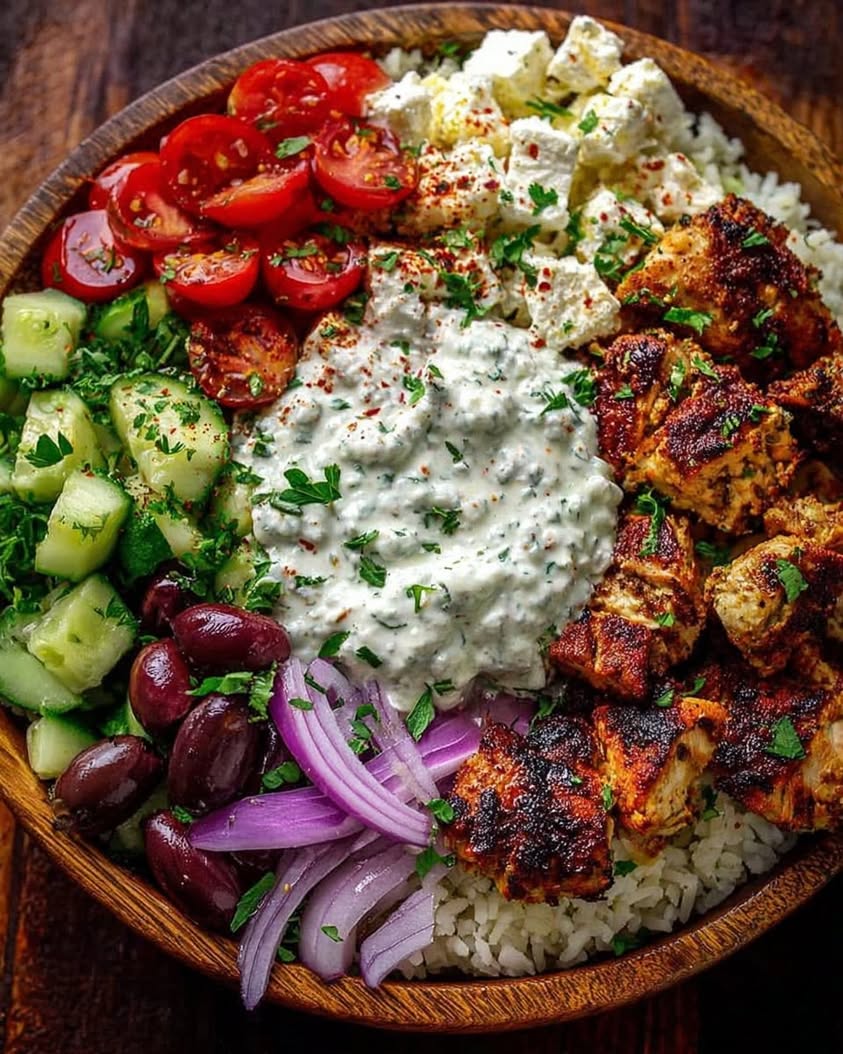
Greek Chicken Souvlaki Bowls with Creamy Garlic Sauce: A Flavorful Mediterranean Feast
Imagine the vibrant flavors of a Greek taverna, all assembled in one beautiful, nourishing bowl. These Greek Chicken Souvlaki Bowls with Creamy Garlic Sauce bring the sun-drenched essence of the Mediterranean straight to your dinner table. Furthermore, they combine tender, marinated chicken, crisp vegetables, and fluffy rice, all crowned with a tangy, irresistible garlic sauce. Ultimately, this recipe delivers a restaurant-quality experience with simple, wholesome ingredients.
The star of this dish is undoubtedly the garlic sauce, a creamy, dreamy condiment that ties every element together perfectly. Meanwhile, the chicken soaks in a bright marinade of lemon, oregano, and olive oil, ensuring every bite is juicy and packed with flavor. Consequently, each component builds upon the next, creating a symphony of textures and tastes. In short, this meal is a celebration of fresh, vibrant ingredients working in delicious harmony.
Preparing these Greek Chicken Souvlaki Bowls is surprisingly straightforward, making them perfect for a busy weeknight or a leisurely weekend feast. Additionally, the recipe is highly adaptable, allowing you to customize the bowls based on your preferences or what you have on hand. Whether you are craving a healthy lunch or a satisfying dinner, this dish consistently delivers. Truly, it is a versatile and foolproof way to enjoy the bold, comforting flavors of Greek cuisine at home.
Quick Recipe Highlights
- Flavor Profile: These bowls offer a perfect balance of bright, herby, and tangy notes. The lemon and oregano-marinated chicken provides a zesty foundation, while the creamy garlic sauce adds a rich, garlicky punch. Finally, briny kalamata olives and crisp cucumber contribute refreshing counterpoints.
- Texture: You will enjoy a wonderful contrast of textures in every bite. Expect tender, juicy chicken against fluffy rice, crisp lettuce, and crunchy cucumber. Moreover, the creamy sauce and creamy tzatziki add a smooth, cooling element that complements the other components beautifully.
- Aroma: As the chicken cooks, your kitchen will fill with the mouthwatering scent of garlic, lemon, and earthy oregano. Subsequently, the fresh dill from the tzatziki and the sharp scent of red onion add layers of fragrance that promise a flavorful meal.
- Visual Appeal: These bowls are a feast for the eyes with their vibrant colors. Think golden-brown chicken, white rice, red tomatoes, green lettuce, and black olives, all drizzled with white sauces. Consequently, the presentation is both rustic and Instagram-worthy.
- Skill Level Needed: This recipe is perfect for beginners and seasoned cooks alike. Basic skills like chopping, mixing, and grilling or pan-searing are all you need. Therefore, anyone can achieve fantastic results with minimal culinary experience.
- Special Equipment: You only need a grill pan, skillet, or outdoor grill for the chicken. Otherwise, standard kitchen tools like mixing bowls, a knife, and a cutting board will suffice. A blender or food processor can help make the garlic sauce extra smooth, but a whisk also works well.
Recipe Overview
- Difficulty Level: We classify this Greek Chicken Souvlaki Bowls recipe as easy because it involves simple techniques like marinating and grilling. The steps are sequential and forgiving, and most of the work is prep-based. Even if you are new to cooking, you can follow the clear instructions for a successful outcome. Essentially, it is a low-stress path to a high-reward meal.
- Category: This dish fits perfectly into the categories of healthy dinners, meal prep lunches, and high-protein meals. It is a complete, balanced bowl featuring protein, complex carbs, and plenty of vegetables. As a result, it satisfies as a standalone meal without needing additional sides.
- Cuisine: This recipe is firmly rooted in Greek and broader Mediterranean culinary traditions. It draws inspiration from classic souvlaki street food, adapting it into a convenient bowl format. The flavors honor traditional Greek seasonings like oregano, lemon, garlic, and olive oil. Ultimately, it is a modern homage to timeless Mediterranean cooking principles.
- Cost: Preparing these Greek Chicken Souvlaki Bowls is very cost-effective, especially compared to dining out. Chicken thighs or breasts, rice, and seasonal vegetables are budget-friendly staples. The marinade and sauce ingredients are pantry essentials with a long shelf life. Therefore, you can create a restaurant-quality meal for a fraction of the price.
- Season: This recipe shines brightest in the spring and summer when fresh tomatoes, cucumbers, and herbs are at their peak. However, it is truly a year-round dish because the core components are always available. The bright flavors can lift spirits during colder months, making it a versatile seasonal choice.
- Occasion: These bowls are ideal for casual weeknight dinners, healthy meal prep, or feeding a crowd. They are also excellent for potlucks or picnics if you pack components separately. Furthermore, the customizable nature makes them great for family meals where everyone can build their perfect bowl.
Why You’ll Love This Recipe
First and foremost, the taste and texture appeal of these Greek Chicken Souvlaki Bowls is undeniable. Each component is carefully selected to create a harmonious balance. You get the savory, charred flavor of the marinated chicken paired with the cool, crisp vegetables. Meanwhile, the creamy garlic sauce and tzatziki add layers of richness and tang that make every mouthful exciting. Ultimately, it is a satisfying meal that delights all your senses without feeling heavy or overly complicated.
Next, consider the convenience and preparation benefits. This recipe is designed for efficiency, with most of the active time spent on simple prep work. You can marinate the chicken ahead of time, and the sauces can be made in advance. Additionally, cooking the components is quick, especially if you use a hot grill or skillet. Consequently, you can have a stunning, healthy dinner on the table in under an hour, making it a practical choice for any day of the week.
From a nutritional standpoint, these bowls are a powerhouse. They provide a complete meal with lean protein from the chicken, complex carbohydrates from the rice, and a wealth of vitamins from the fresh vegetables. The olive oil in the marinade and sauces offers heart-healthy fats. Moreover, using Greek yogurt in the sauces adds protein and probiotics. Therefore, this dish supports a balanced diet while being incredibly flavorful and satisfying.
The social and entertaining value of this recipe is also a major plus. These bowls are visually impressive and perfect for interactive dining. You can set up a “souvlaki bowl bar” with all the components laid out, allowing guests or family members to customize their creations. This makes for a fun, engaging meal that caters to different tastes and dietary needs. It is a surefire way to impress at any gathering without requiring you to be stuck in the kitchen all night.
Finally, the cost-effectiveness and accessibility of the ingredients make this a winner. You do not need any rare or expensive items to create this Mediterranean feast. Most ingredients are readily available at any standard grocery store. By cooking at home, you save significantly compared to ordering similar dishes at a restaurant. In short, this recipe delivers maximum flavor, nutrition, and enjoyment for a minimal investment of time and money.
Historical Background and Cultural Significance
The origin story of souvlaki stretches back to ancient Greece. Historians have found references to meat cooked on skewers as far back as the Bronze Age. The word “souvlaki” itself comes from the Greek word “souvla,” meaning skewer. Originally, this method of cooking was a practical way to prepare meat over an open fire. Over centuries, it evolved into a beloved street food staple found in every corner of Greece, often served wrapped in pita with tomatoes, onion, and tzatziki.
Culturally, souvlaki holds immense importance in Greece. It is more than just food; it is a social experience deeply woven into daily life. You will find souvlaki shops, known as “souvlatzidika,” everywhere, serving as quick lunch spots and late-night havens. Eating souvlaki is often a communal, casual affair, enjoyed with friends and family. Consequently, it represents Greek hospitality, simplicity, and a focus on high-quality, fresh ingredients prepared with care.
The evolution of the recipe from street food to a composed bowl is a modern adaptation. While traditional souvlaki is served on a skewer or in a pita, the bowl format caters to contemporary preferences for deconstructed, grain-based meals. This adaptation makes the meal easier to eat and allows for greater customization. It also aligns with the global popularity of bowl meals, which emphasize balance, nutrition, and variety on a single plate. Thus, the Greek Chicken Souvlaki Bowl is a delicious fusion of ancient tradition and modern eating trends.
Regional variations of souvlaki exist throughout Greece. For instance, in Athens, you might find it primarily with pork, while in other regions, chicken or lamb is more common. The accompanying sauces and sides can also vary. Some areas might use a mustard-based sauce, while others swear by the classic tzatziki or a spicy red sauce. The bowl format allows you to explore these variations by swapping proteins, grains, or sauces. This flexibility honors the spirit of Greek cooking, which is adaptable and resourceful.
Ingredient Deep Dive
Starting with the chicken, it is the protein foundation of our Greek Chicken Souvlaki Bowls. We recommend using boneless, skinless chicken thighs for maximum juiciness and flavor, though breasts work for a leaner option. The marinade, featuring extra virgin olive oil, lemon juice, garlic, and dried oregano, is crucial. Olive oil helps carry flavors and keeps the meat moist, while lemon juice tenderizes it. Oregano, a quintessential Greek herb, provides that unmistakable earthy, aromatic note. For the best results, marinate the chicken for at least 30 minutes, or ideally up to 4 hours, in the refrigerator.
The creamy garlic sauce, or “tzatziki,” is a cornerstone of Greek cuisine. Traditionally, it is made with strained yogurt (like Greek yogurt), cucumber, garlic, olive oil, and fresh dill or mint. The yogurt offers a tangy base and probiotics, while the grated cucumber adds freshness and texture. Garlic provides the signature punch, and dill contributes a delicate, grassy flavor. For a smoother sauce, strain your yogurt further or use a thick, full-fat variety. Importantly, letting the sauce rest for an hour before serving allows the flavors to meld beautifully.
Fresh vegetables like tomato, cucumber, and red onion provide essential crunch and brightness. In Greece, these vegetables are often sun-ripened and incredibly flavorful. Tomatoes add sweetness and acidity, cucumber offers a cool, crisp contrast, and red onion brings a sharp, pungent bite. When selecting these, choose firm, ripe produce for the best texture and taste. For a milder onion flavor, you can soak the sliced red onion in cold water for 10 minutes before adding it to the bowl.
Kalamata olives and feta cheese are the salty, briny accents that define the flavor profile. Kalamata olives, named after the city in Greece, have a rich, fruity, and slightly wine-like taste compared to standard black olives. They are typically preserved in vinegar or brine. Feta cheese, a Protected Designation of Origin (PDO) product from Greece, is made from sheep’s milk or a sheep-goat milk blend. It is tangy, crumbly, and salty. Together, they add depth and complexity that elevate the entire dish. Look for authentic Greek feta and olives in brine for the best quality.
Common Mistakes to Avoid
- Over-marinating the Chicken: Marinating chicken in acidic lemon juice for too long (over 8 hours) can actually begin to “cook” the proteins, resulting in a mushy, dry texture. Aim for 30 minutes to 4 hours for optimal tenderness and flavor penetration.
- Using Non-Strained Yogurt for Tzatziki: If your yogurt is too watery, your garlic sauce will be runny and dilute the other bowl components. Always use thick, strained Greek yogurt. For an even thicker sauce, you can strain plain yogurt in a cheesecloth overnight in the fridge.
- Skipping the Rest Time for the Garlic Sauce: Blending the tzatziki and serving it immediately means the flavors won’t have time to develop. The garlic can taste harsh. Letting the sauce rest in the refrigerator for at least 30 minutes to an hour mellows the garlic and allows the herbs to infuse.
- Overcrowding the Pan When Cooking Chicken: To get a nice sear or char on your Greek chicken souvlaki, you need space. Overcrowding the pan steams the chicken instead of browning it. Cook in batches if necessary to ensure each piece has contact with the hot surface.
- Cutting the Chicken Too Small Before Marinating: Small pieces can overcook quickly and become dry on the grill or skillet. Cut your chicken into generous, bite-sized chunks or strips. This ensures they stay juicy inside while getting a nice color outside.
- Forgetting to Season the Rice: Plain, unseasoned rice can taste bland against the flavorful chicken and vegetables. Cook your rice in broth instead of water, or stir in a little lemon zest and chopped fresh dill after cooking to tie it into the Greek theme.
- Using Old, Stale Spices: Dried oregano loses its potency over time. If your spices are more than a year old, their flavor will be diminished. For the brightest taste in your marinade, use fresh, high-quality dried oregano or even fresh oregano if available.
- Not Draining the Cucumber for Tzatziki: Grated cucumber holds a lot of water. If you don’t squeeze it out thoroughly, it will water down your creamy garlic sauce. After grating, place the cucumber in a clean kitchen towel or paper towels and wring out as much liquid as possible.
Essential Techniques
Mastering the marinade is your first essential technique for perfect Greek Chicken Souvlaki Bowls. A good marinade does three things: adds flavor, tenderizes, and helps retain moisture. The acid (lemon juice) breaks down surface proteins, allowing the oil and herbs to penetrate. For success, use a zip-top bag or shallow dish to ensure all chicken pieces are coated evenly. Do not reuse the marinade that touched raw chicken. Instead, boil it for a few minutes if you wish to use it as a sauce. The visual cue for a well-marinated piece is a slight change in color on the surface and a fragrant, herbaceous smell.
Achieving a proper sear on the chicken is the next critical technique. This creates the Maillard reaction, which develops complex, savory flavors and an appealing color. First, ensure your pan or grill is very hot before adding the oil and chicken. Then, resist the urge to move the chicken constantly. Let it cook undisturbed for a few minutes to form a golden crust. Finally, you will know it is ready to flip when the edges look opaque and it releases easily from the cooking surface. This technique guarantees juicy interior meat with a flavorful exterior.
Preparing the tzatziki sauce correctly is what separates a good bowl from a great one. The key is managing moisture. After grating the cucumber, you must squeeze out all excess water thoroughly. This step prevents a watery sauce. Next, mince the garlic finely or even use a microplane to create a paste, which distributes flavor more evenly than large chunks. Whisk the ingredients together gently until just combined; over-mixing can sometimes thin the yogurt. A successful sauce will be thick, creamy, and coat the back of a spoon, with the garlic flavor present but not overpowering.
Pro Tips for Perfect Greek Chicken Souvlaki Bowls
For the most authentic flavor, seek out Greek extra virgin olive oil and dried oregano. These ingredients have distinct taste profiles that form the backbone of the marinade. Additionally, using a microplane to grate the garlic for both the marinade and sauce creates a fine paste that disperses flavor evenly without leaving harsh chunks.
Let your cooked chicken rest for 5 minutes after grilling or pan-searing. This allows the juices, which have been driven to the center by the heat, to redistribute throughout the meat. Consequently, when you slice or bite into it, the chicken will be exceptionally juicy and tender instead of dry.
If you have time, prepare the creamy garlic sauce (tzatziki) a day in advance. The flavors deepen and meld together beautifully overnight in the refrigerator. Just give it a good stir before serving. This advance prep also makes assembling your Greek Chicken Souvlaki Bowls incredibly quick on the day you plan to eat them.
Warm your pita bread if using it as a side. Briefly heat it in a dry skillet, over an open gas flame, or in the oven. Warm pita is more pliable, fragrant, and enjoyable to eat. You can also cut it into triangles and toast it for a crunchy element to add to your bowls.
Build your bowls in layers for the best structural integrity and temperature contrast. Start with a base of warm rice or greens. Then, add the warm chicken. Finally, arrange the cold, crisp vegetables (tomato, cucumber, onion) and cold sauces on top. This method keeps the vegetables fresh and prevents the warm ingredients from wilting the lettuce too quickly.
For meal prep, store all components separately in airtight containers. Keep the garlic sauce and tzatziki in their own small containers. Assemble your bowl just before eating to maintain optimal texture. The chicken and rice reheat well, while the vegetables and sauces stay fresh and crisp when kept cold.
Variations and Adaptations
For regional variations, consider switching the protein. Traditional Greek souvlaki is often made with pork. You could use pork tenderloin cut into cubes. Alternatively, try lamb for a richer, gamier flavor, or large shrimp for a seafood twist. The marinade works wonderfully with all these options. You could also explore different Greek sauces, like a spicy “ktipiti” (feta and pepper dip) or a simple ladolemono (lemon-olive oil sauce) in place of or in addition to the garlic sauce.
Seasonal adaptations are easy with this bowl format. In summer, use heirloom tomatoes, fresh sweet peppers, and zucchini ribbons. For autumn, incorporate roasted sweet potatoes or butternut squash and swap the tzatziki for a whipped feta sauce. In winter, use heartier greens like kale (massaged with lemon) and add roasted Brussels sprouts. Spring welcomes fresh peas, asparagus tips, and an abundance of fresh herbs like mint and parsley.
Dietary modifications are straightforward. For a gluten-free version, ensure your sauces are gluten-free and serve the bowl over rice, quinoa, or a bed of greens instead of pita. To make it dairy-free, omit the feta and create a dairy-free tzatziki using coconut yogurt or a vegan sour cream alternative. For a vegan bowl, replace the chicken with marinated chickpeas, grilled tofu, or seasoned lentils, and use vegan feta and yogurt.
Flavor variations can keep this recipe exciting. Add a spoonful of sun-dried tomato pesto to the marinade for a deeper tomato note. Incorporate a pinch of smoked paprika or cumin for a warm, smoky undertone. For a spicy kick, add crushed red pepper flakes to the chicken marinade or a chopped fresh jalapeño to the vegetable mix. A sprinkle of sumac over the finished bowl adds a tangy, lemony pop popular in other Mediterranean cuisines.
Serving and Presentation Guide
Plating techniques matter for turning your meal into an experience. Use wide, shallow bowls to showcase all the colorful components. Start by creating a base layer with rice or lettuce. Then, artfully arrange the chicken in a section, not just piled in the center. Subsequently, group the vegetables (tomatoes, cucumbers, onions) in small mounds around the bowl. This intentional placement makes the bowl visually appealing and ensures you get a bit of everything in each forkful.
Garnishing ideas add the final touch of freshness and color. A generous drizzle of the creamy garlic sauce and tzatziki is essential. Then, sprinkle with extra fresh dill or chopped parsley. Add a few whole Kalamata olives and crumbles of feta cheese. Finally, a light drizzle of high-quality extra virgin olive oil and a wedge of lemon on the side completes the presentation. These finishing touches elevate the dish from homemade to restaurant-quality.
Traditional accompaniments include warm, soft pita bread on the side for scooping. You could also serve with a simple Greek salad or a bowl of lemony roasted potatoes. For a more substantial spread, add other mezze like dolmades (stuffed grape leaves) or spanakopita (spinach pie). These sides turn your Greek Chicken Souvlaki Bowls into a full Mediterranean feast for sharing with friends and family.
Wine and Beverage Pairing
Wine pairings for these vibrant bowls should complement the herbal, tangy, and garlicky flavors without overpowering them. A crisp, dry white wine like Assyrtiko from Santorini is the classic Greek choice; its high acidity and mineral notes cut through the richness of the sauces perfectly. Alternatively, a Sauvignon Blanc or a dry Rosé with bright citrus notes also pairs beautifully. If you prefer red, opt for a light-bodied, low-tannin red like a Beaujolais or a Greek Xinomavro, served slightly chilled.
Non-alcoholic alternatives can be just as sophisticated. Sparkling water with a squeeze of fresh lemon or lime is always refreshing. For something more crafted, try a homemade mint lemonade or a cucumber-infused water to echo the cool flavors in the bowl. Iced herbal teas, like chamomile or a mint tea, are also excellent choices that won’t compete with the meal’s bold garlic and herb profile.
Serving suggestions for beverages are simple: keep them cold and refreshing. White and rosé wines should be served well-chilled, around 45-50°F. Non-alcoholic drinks are best over ice. Having plenty of beverages on hand is key, as the flavorful nature of the Greek Chicken Souvlaki Bowls with that creamy garlic sauce is wonderfully thirst-inducing and calls for a delicious drink alongside it.
Storage and Shelf Life
Storage methods are crucial for maintaining quality. Store all components of your Greek Chicken Souvlaki Bowls separately in airtight containers in the refrigerator. The cooked chicken and rice will keep for 3-4 days. The chopped vegetables (tomato, cucumber, onion) are best used within 2 days for optimal crispness. The creamy garlic sauce (tzatziki) will stay fresh for up to 4 days. Never store assembled bowls for more than a few hours, as the vegetables will wilt and the sauces will make the rice soggy.
Reheating instructions are simple for the warm components. Reheat the chicken and rice gently in the microwave with a splash of water to prevent drying out, or in a skillet over medium heat. The sauces and vegetables should always be served cold. If you freeze the cooked chicken, do so in a single layer first on a baking sheet before transferring to a freezer bag to prevent clumping. It can be frozen for up to 2 months. Thaw in the refrigerator overnight before reheating. Note that the texture of the cucumbers in the tzatziki may become watery after freezing, so it is not recommended.
Make Ahead Strategies
A smart prep timeline makes weeknight dinners effortless. You can marinate the chicken up to 24 hours in advance; this only deepens the flavor. The creamy garlic sauce can be made 2-3 days ahead. Cook the rice 1-2 days in advance. Chop the vegetables (except the tomato, which is best done day-of) 1 day ahead and store them in separate containers. This distributed workload means on the day you plan to eat, you only need to cook the chicken and assemble the bowls, which takes mere minutes.
Storage between steps is simple with a well-organized refrigerator. Keep the raw marinated chicken on a lower shelf to prevent cross-contamination. Store sauces and prepped vegetables on upper shelves. When assembling for meal prep, use divided containers or a set of small containers to keep everything separate until you are ready to eat. This strategy preserves the texture and prevents sogginess, ensuring your make-ahead Greek Chicken Souvlaki Bowls taste as fresh as possible.
Scaling Instructions
Halving the recipe for one or two people is straightforward. Simply divide all ingredient quantities by two. Use a smaller skillet for cooking the chicken to maintain proper heat distribution. The marinating and cooking times will remain roughly the same. Be mindful that making a very small batch of tzatziki sauce can be tricky; it is often easier to make the full batch of sauce as it keeps well and is delicious on other dishes.
Doubling or tripling the recipe for a crowd is easy, but requires some planning. Use a large bowl or multiple bags for marinating the increased volume of chicken. Cook the chicken in batches to avoid overcrowding the pan, which leads to steaming. You may need to cook multiple batches of rice or use a larger pot. For the sauces, simply multiply the ingredients and mix in a large bowl. Consider setting up a build-your-own-bowl station so guests can customize their plates, which simplifies serving for larger groups.
Nutritional Deep Dive
A macro breakdown of these Greek Chicken Souvlaki Bowls reveals a balanced meal. The chicken provides high-quality, lean protein essential for muscle repair and satiety. The rice offers complex carbohydrates for sustained energy. The olive oil and yogurt in the sauces contribute healthy fats. The vegetables add fiber, vitamins, and minerals with minimal calories. This combination supports stable blood sugar levels and keeps you feeling full and satisfied for hours after eating.
The micronutrient analysis is impressive. Tomatoes and red onions are rich in vitamin C and antioxidants. Cucumbers provide hydration and vitamin K. Olive oil is a source of vitamin E and monounsaturated fats. Greek yogurt offers calcium, vitamin B12, and probiotics. Oregano contains antioxidants. Together, these ingredients create a nutrient-dense meal that supports immune function, heart health, and digestive wellness. This makes the dish not just delicious, but genuinely nourishing.
Dietary Adaptations
For a gluten-free adaptation, the recipe is naturally compliant if you omit the pita bread or use a certified gluten-free pita. Ensure all your sauce ingredients, particularly the yogurt, are certified gluten-free, as some brands may include stabilizers derived from gluten. Serve the bowl over rice, quinoa, or a bed of greens for a safe and satisfying gluten-free meal that loses none of the classic Greek Chicken Souvlaki Bowl flavor.
Creating a dairy-free version involves two simple swaps. Omit the feta cheese or use a high-quality vegan feta alternative. For the creamy garlic sauce, replace the Greek yogurt with a thick, plain, unsweetened dairy-free yogurt made from coconut, almond, or soy. Be sure to strain it if it is watery. The marinade and other components are already dairy-free, so these changes will yield a delicious bowl suitable for those avoiding dairy.
A vegan adaptation requires replacing the chicken and dairy. Use extra-firm tofu, pressed and cubed, or canned chickpeas as the protein base. Marinate them just like the chicken. For the sauces, use vegan yogurt and vegan feta. Ensure the rice is cooked in vegetable broth. Load up on the vegetables and consider adding roasted eggplant or zucchini for more substance. This version captures all the vibrant Mediterranean flavors in a plant-based format.
Troubleshooting Guide
If your chicken turns out dry, the likely culprits are overcooking or using very lean breast meat without adequate marinating. To solve this, always use a meat thermometer and cook chicken to 165°F, then let it rest. Consider using chicken thighs for more forgiveness. If the chicken is bland, you may not have marinated it long enough, or your spices could be old. Next time, marinate for the full 4 hours and use fresh dried herbs.
If your garlic sauce is too runny, the yogurt likely had too much liquid or you did not drain the cucumber sufficiently. To fix it, you can strain the prepared sauce through a cheesecloth for 30 minutes. For future batches, use the thickest Greek yogurt you can find and wring the grated cucumber in a towel until no more water comes out. If the garlic flavor is too strong, use one clove less next time or let the sauce rest longer to mellow.
If your vegetables make the bowl soggy, you may have assembled it too far in advance or stored leftovers assembled. Always store components separately and assemble just before eating. If prepping for later, keep chopped tomatoes in a separate container from cucumbers and onions, as tomatoes release more juice. Placing a paper towel in the container with chopped vegetables can also help absorb excess moisture.
Recipe Success Stories
Community feedback on this Greek Chicken Souvlaki Bowls recipe has been overwhelmingly positive. Many home cooks report that it has become a weekly staple in their meal rotation. Families love the customizable aspect, allowing picky eaters to build their perfect bowl. Several readers have mentioned successfully doubling the recipe for easy entertaining, noting that the “souvlaki bowl bar” idea was a huge hit at their summer gatherings. The creamy garlic sauce, in particular, receives rave reviews, with many saying they now make a double batch to use on salads and sandwiches throughout the week.
Variation successes from readers are inspiring. One cook substituted the rice with a quinoa and farro blend for extra texture and nutrients. Another used the marinade on shrimp for a pescatarian version. Several have added roasted red peppers or artichoke hearts to their vegetable mix. A common adaptation is using the chicken and sauce in a wrap for a portable lunch. These stories highlight the recipe’s fantastic flexibility, proving that the core formula of flavorful chicken and signature sauce can adapt to many preferences while always delivering a delicious result.
Frequently Asked Questions
Can I use chicken breasts instead of thighs? Absolutely. Chicken breasts are a leaner option. To prevent dryness, do not overcook them—use a meat thermometer and pull them off the heat at 165°F. You may also want to pound them to an even thickness before cubing and marinating to ensure even cooking.
How long can I marinate the chicken? For optimal results, marinate for at least 30 minutes and up to 4 hours. Marinating longer than 8 hours, especially with the lemon juice, can start to break down the proteins too much, resulting in a mushy texture.
What can I use if I don’t have Greek yogurt for the sauce? You can strain regular plain yogurt through a cheesecloth or fine mesh strainer for several hours or overnight in the refrigerator. This will remove the excess whey and thicken it to a Greek yogurt consistency.
Is this recipe meal prep friendly? Yes, it is excellent for meal prep. Store all components separately in airtight containers in the fridge for up to 4 days. Assemble your bowl just before eating to keep the vegetables crisp and the rice from getting soggy.
Can I cook the chicken on an outdoor grill? Definitely. An outdoor grill will give the chicken fantastic smoky flavor and char. Thread the marinated chicken onto skewers (soak wooden skewers first) for authentic souvlaki, or use a grill basket for easy flipping.
What’s a good substitute for fresh dill in the tzatziki? Fresh mint is a traditional and delicious alternative. You could also use a smaller amount of dried dill (about 1 teaspoon), though the flavor will be less bright. In a pinch, a tablespoon of chopped fresh parsley can work, though the flavor profile will shift.
How can I make the garlic sauce thicker? Ensure you are using full-fat Greek yogurt and have thoroughly drained the cucumber. Letting the sauce sit in the fridge for an hour will also thicken it slightly as the salt draws out moisture from the cucumber which is then absorbed.
Can I make this recipe keto or low-carb? Yes. Omit the rice and serve the chicken, sauces, and vegetables over a bed of leafy greens or cauliflower rice. Be mindful of the carb count in the onions and tomatoes, and adjust quantities to fit your macros.
What other vegetables can I add? Grilled zucchini, bell peppers, or red onions are fantastic additions. Kalamata olives and pepperoncini are also classic Greek additions that add briny and tangy notes, respectively.
How do I reheat the chicken without drying it out? Reheat gently in a skillet over medium-low heat with a tiny splash of water or chicken broth, covered, until warmed through. Alternatively, microwave it in 30-second intervals with a damp paper towel over it.
Additional Resources
For related recipes, explore other Mediterranean bowl ideas like a Greek Quinoa Bowl with Lemon-Herb Dressing or a Mediterranean Lentil Bowl. If you love the garlic sauce, try making a batch of Greek Lemon Potatoes or using it as a dip for grilled vegetables. These dishes all share the vibrant, health-focused ethos of Mediterranean cooking and can help you build a repertoire of flavorful, wholesome meals.
For technique guides, consider learning more about how to properly grill chicken or how to make perfect fluffy rice every time. Understanding the principles of building a balanced bowl—protein, grain, vegetable, sauce—can empower you to create your own custom meals. Additionally, mastering a simple vinaigrette or learning to quick-pickle onions are skills that will elevate not just this recipe, but countless others in your kitchen.
PrintGreek Chicken Souvlaki Bowls with Garlic Sauce
- Total Time: 45 minutes
- Yield: 4
Description
A fresh and flavorful bowl featuring marinated grilled chicken, crisp vegetables, and creamy garlic sauce, inspired by Greek street food.
Ingredients
- 1.5 lbs boneless, skinless chicken thighs, cut into 1-inch cubes
- 1/4 cup olive oil
- 3 tbsp lemon juice
- 3 cloves garlic, minced
- 1 tsp dried oregano
- 1/2 tsp salt
- 1/4 tsp black pepper
- 4 cups cooked brown rice or quinoa
- 1 cucumber, diced
- 2 tomatoes, diced
- 1 red onion, thinly sliced
- 1/2 cup Kalamata olives, pitted
- 1 cup plain Greek yogurt
- 2 cloves garlic, grated
- 1 tbsp lemon juice
- 1 tbsp chopped fresh dill
- Salt to taste
Instructions
- In a bowl, whisk together olive oil, lemon juice, minced garlic, oregano, salt, and pepper. Add chicken cubes, toss to coat, and marinate for at least 30 minutes.
- Preheat grill or grill pan over medium-high heat. Thread chicken onto skewers if using, then grill for 8-10 minutes, turning occasionally, until cooked through.
- For the garlic sauce, mix Greek yogurt, grated garlic, lemon juice, dill, and salt in a small bowl. Refrigerate until ready to serve.
- Assemble bowls by dividing cooked rice or quinoa among four bowls. Top with grilled chicken, cucumber, tomatoes, red onion, and olives.
- Drizzle generously with garlic sauce and serve immediately.
Notes
You can customize the seasonings to taste.
- Prep Time: 15 minutes
- Cook Time: 30 minutes
- Method: Main
- Cuisine: Greek