French Onion Mushroom Pot Roast: An Easy, Flavorful Dinner
Imagine coming home to the irresistible aroma of caramelized onions, savory mushrooms, and tender beef simmering away in a rich, herb-infused broth. This French Onion Mushroom Pot Roast recipe transforms a classic comfort food into a deeply flavorful, one-pot masterpiece. It is the ultimate set-it-and-forget-it meal, perfect for busy weeknights or cozy weekend gatherings. Moreover, it fills your kitchen with a scent that promises a truly satisfying dinner.
This recipe masterfully combines the soul-warming elements of a traditional pot roast with the iconic flavors of French onion soup. The result is a fork-tender chuck roast braised in a luxurious gravy packed with sweet onions and earthy mushrooms. Ultimately, this dish delivers restaurant-quality taste with minimal hands-on effort. It is a guaranteed crowd-pleaser that will have everyone asking for seconds.
Quick Recipe Highlights
- Flavor Profile: This dish boasts a perfect balance of deep, savory umami from the beef and mushrooms, sweet caramelized onions, and aromatic herbs like thyme and rosemary. A splash of red wine and beef broth creates a rich, complex gravy that ties everything together beautifully.
- Texture: You will enjoy incredibly tender, pull-apart beef that melts in your mouth. The onions break down into a silky, sweet base, while the mushrooms retain a pleasant, meaty bite, adding wonderful textural contrast to the succulent pot roast.
- Aroma: As it cooks, your kitchen will fill with the heavenly scent of browning beef, sizzling garlic, and woody herbs. The signature sweet and savory perfume of caramelizing onions is unmistakable and utterly inviting.
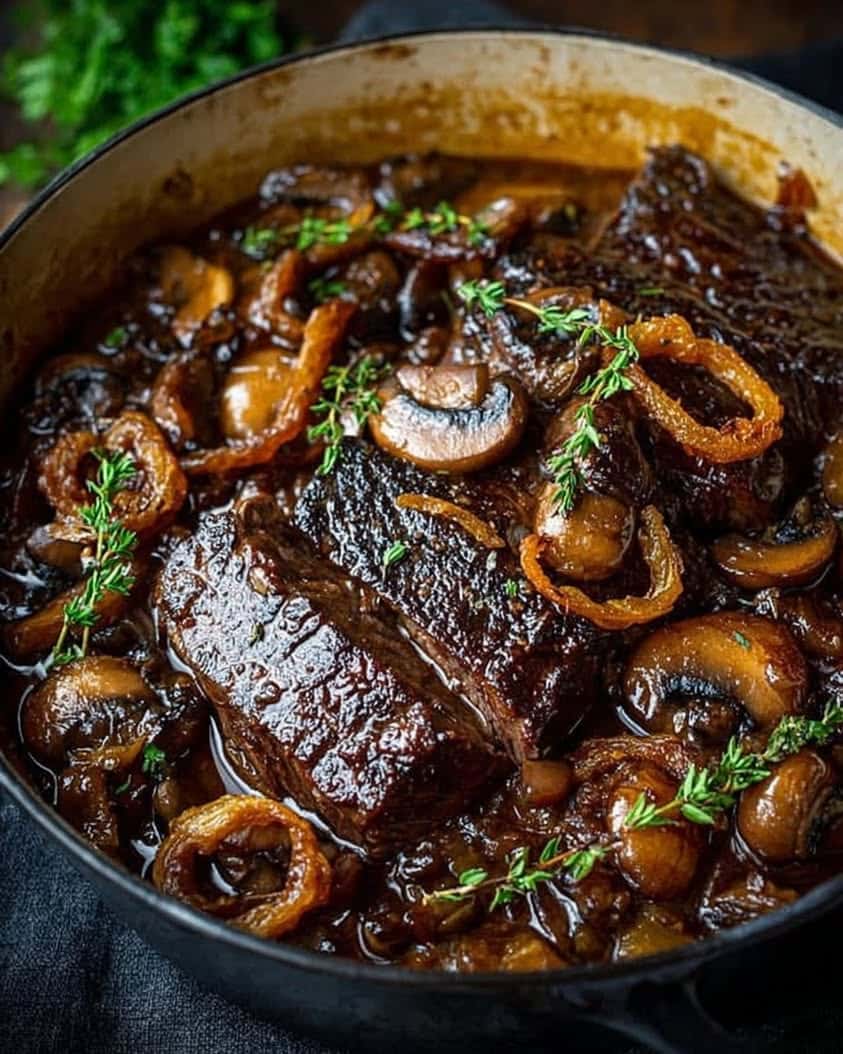
- Visual Appeal: Served straight from the Dutch oven, this pot roast presents a rustic, hearty beauty. The deep brown sear on the meat, the glossy gravy, and the pop of green from fresh herb garnish make it as pleasing to the eye as it is to the palate.
- Skill Level Needed: This is an accessible recipe for cooks of all levels. While it requires some patience for browning and slow cooking, the techniques are straightforward. Consequently, even a beginner can achieve impressive, delicious results with this forgiving one-pot meal.
- Special Equipment: A heavy-bottomed Dutch oven or oven-safe pot with a tight-fitting lid is essential for even browning and consistent, moist heat during the long braise. You will also need basic kitchen tools like a sharp knife, cutting board, and tongs.
Recipe Overview
- Difficulty Level: We rate this French Onion Mushroom Pot Roast as “Easy.” The process is simple: sear, sauté, and braise. Most of the cook time is hands-off while the oven works its magic. Therefore, the primary skill required is patience, not advanced technique, making it a fantastic recipe for building confidence in the kitchen.
- Category: This recipe falls squarely into the categories of comfort food, family dinner, and one-pot meals. It is a hearty main course designed to be the centerpiece of a satisfying meal. Additionally, it excels as a make-ahead dish, as its flavors deepen wonderfully overnight.
- Cuisine: The dish is a fusion of American home cooking and French bistro inspiration. It takes the American classic pot roast and infuses it with the quintessential flavors of French onion soup—slow-cooked onions, beef broth, and aromatic herbs. The result is a delicious cross-cultural comfort food.
- Cost: This is a cost-effective meal, especially when feeding a family or group. A chuck roast is an affordable, flavorful cut perfect for braising. Staples like onions, carrots, and mushrooms are inexpensive. Overall, you can create a restaurant-worthy meal for a fraction of the price of dining out.
- Season: This French Onion Mushroom Pot Roast is truly a year-round dish. It provides warmth and comfort during fall and winter. Conversely, it is also perfect for relaxed summer evenings when you want an impressive meal without hovering over a hot stove.
- Occasion: It is ideal for Sunday family dinners, casual holiday gatherings like Friendsgiving, or any time you need a dependable, delicious meal that serves a crowd. Furthermore, its make-ahead nature makes it a stress-free choice for entertaining.
Why You’ll Love This Recipe
First and foremost, the taste of this French Onion Mushroom Pot Roast is absolutely phenomenal. The slow braise allows every flavor to develop and meld into something greater than the sum of its parts. The beef becomes impossibly tender, soaking up the sweet onion and savory mushroom gravy. Each bite delivers a complex harmony of umami, sweetness, and herbaceous notes that is deeply comforting and incredibly satisfying. This is not your average pot roast; it is a flavor-packed experience that will become an instant family favorite.
From a practical standpoint, the convenience of this recipe is a major win. After the initial sear and sauté, the oven does nearly all the work. This hands-off approach frees you up to relax, prepare sides, or spend time with guests. Moreover, it is a one-pot wonder, meaning cleanup is a breeze. You can easily prepare it ahead of time and simply reheat it for an effortless, impressive dinner. Ultimately, it delivers maximum flavor with minimal fuss.
Nutritionally, this dish offers a good balance. It is a great source of high-quality protein from the beef, which supports muscle health. The onions and mushrooms provide valuable antioxidants, vitamins, and dietary fiber. Using a leaner chuck roast and loading the pot with vegetables boosts the nutritional profile. You can control the sodium by using low-sodium broth. Therefore, this hearty meal can be part of a balanced diet when enjoyed in moderation with healthy sides.
For social gatherings, this French Onion Mushroom Pot Roast is a superstar. It naturally serves a crowd and creates a warm, welcoming atmosphere. The act of serving a beautiful, steaming pot roast from the center of the table fosters a sense of community and sharing. It is a conversation starter and a dish that makes people feel cared for. Whether for a casual dinner party or a festive holiday, it guarantees happy, well-fed guests.
Finally, this recipe is remarkably cost-effective and accessible. Chuck roast is a budget-friendly cut that becomes luxurious through the braising process. The other ingredients are common pantry staples or inexpensive fresh produce. You do not need any fancy or hard-to-find items. This accessibility means anyone can recreate this restaurant-quality meal at home without breaking the bank. It is a fantastic way to eat well and impress without expense.
Historical Background and Cultural Significance
The pot roast has deep roots in American culinary history, originating as a practical method for tenderizing tougher, less expensive cuts of meat. Families would slow-cook a roast with whatever vegetables were available, often in a cast-iron pot over a hearth or stove. This technique of “braising” transformed economical cuts into tender, flavorful meals, making it a cornerstone of home cooking and Sunday dinners for generations. The method symbolized resourcefulness and the ability to create nourishment and comfort from simple ingredients.
French onion soup, conversely, boasts a rich history in French cuisine, with origins tracing back to Roman times. However, it gained iconic status in 18th-century Paris as a restorative, late-night meal for market workers. The process of slowly caramelizing onions to draw out their natural sugars is fundamental to its deep, complex flavor. This soup represents the elegance of French peasant cooking—transforming humble onions into something sublime. The combination of these two culinary traditions in one dish is a testament to the evolution of comfort food.
The fusion of these concepts into a French Onion Mushroom Pot Roast is a more modern innovation, reflecting contemporary home cooks’ desire for layered flavors and convenient one-pot meals. It takes the time-honored technique of braising and elevates it with the sophisticated flavor profile of a French classic. This evolution shows how recipes adapt and cross-pollinate over time, creating new family favorites that honor their origins while offering something fresh and exciting for today’s tables.
Regionally, variations of pot roast exist worldwide, from Germany’s sauerbraten to Italy’s stracotto. The addition of mushrooms is a common thread in many European braises, adding earthiness and depth. The specific “French onion” twist, however, is a uniquely popular adaptation in American home cooking. It showcases how immigrant food traditions influence and enrich the national cuisine, leading to beloved hybrid dishes that feel both familiar and novel.
Ingredient Deep Dive
Chuck Roast: This cut comes from the shoulder of the cow, a well-exercised area rich in connective tissue and fat. During the long, slow braise, this collagen breaks down into gelatin, resulting in that famously tender, melt-in-your-mouth texture. It is a budget-friendly choice packed with flavor. Look for a roast with good marbling (white flecks of fat within the muscle) for the best results. You can store it in the refrigerator for 2-3 days before cooking or freeze it for longer storage.
Yellow Onions: The star of the “French onion” component, yellow onions are chosen for their high sugar content and robust flavor that stands up to long cooking. As they caramelize, their natural sugars brown and develop a deep, sweet, complex taste that forms the flavor foundation of the gravy. They are rich in vitamin C, antioxidants, and prebiotic fiber. Choose firm, heavy onions with dry, papery skins. Store them in a cool, dark, well-ventilated place.
Cremini Mushrooms: These are simply mature white button mushrooms, offering a deeper, earthier flavor and a firmer texture. They add a meaty umami quality that complements the beef beautifully. Mushrooms are a good source of B vitamins, selenium, and antioxidants. Select mushrooms that are firm with closed caps. Avoid any that are slimy or wrinkled. Store them in a paper bag in the refrigerator to prevent moisture buildup.
Beef Broth: This liquid forms the braising medium and the base of your gravy. It contributes essential savory depth. Using a high-quality, low-sodium broth allows you to control the salt level of the final dish. For an even richer flavor, consider using a homemade stock or a fortified store-bought bone broth. The gelatin in a good broth will also help create a luscious, silky sauce.
Dry Red Wine: A splash of dry red wine, like Cabernet Sauvignon or Merlot, introduces acidity and fruitiness that balances the richness of the dish. The alcohol cooks off, leaving behind concentrated flavor compounds that enhance the overall taste. It helps deglaze the pot, lifting the flavorful browned bits (fond) from the bottom. If you prefer not to use wine, you can substitute with additional beef broth mixed with a teaspoon of red wine vinegar.
Common Mistakes to Avoid
- Not Searing the Meat Properly: Skipping or rushing the sear is a major error. A proper, dark brown crust on all sides of the chuck roast is non-negotiable. This Maillard reaction creates foundational flavor compounds that will infuse the entire dish. Pat the roast very dry with paper towels before searing to ensure a good crust, not a steam.
- Overcrowding the Pot When Sautéing: When cooking the onions and mushrooms, avoid adding too many at once. Overcrowding causes them to steam and sweat instead of properly browning. Cook in batches if necessary to get that desirable caramelization on the onions and a good sear on the mushrooms, which builds critical flavor.
- Using Boiling Liquid to Deglaze: After searing the meat and vegetables, always add your wine or broth when the pot is hot but the liquid is at room temperature or cool. Pouring cold liquid into a scorching hot pan creates a dramatic steam that helps lift the fond effectively. Using already-hot liquid is less efficient.
- Braising at Too High a Temperature: The magic of pot roast happens “low and slow.” Braising at too high an oven temperature will cause the meat to toughen and the liquid to evaporate too quickly, potentially leading to a dry roast. A gentle simmer, around 300°F to 325°F, is ideal for breaking down collagen without shrinking the muscle fibers excessively.
- Not Letting the Roast Rest: Immediately slicing into the pot roast after it comes out of the oven will cause all the precious juices to run out onto the cutting board. Always let it rest, tented with foil, for at least 15-20 minutes. This allows the fibers to relax and reabsorb the juices, ensuring every slice is moist.
- Neglecting to Adjust Sauce Consistency: The braising liquid will be delicious but often too thin straight from the oven. After removing the meat and vegetables, simmer the sauce on the stovetop to reduce and thicken it to a gravy-like consistency. Alternatively, you can make a simple slurry with cornstarch and water to thicken it quickly.
- Using Lean Cuts Like Sirloin: Do not substitute the chuck roast with a lean, tender cut like sirloin or tenderloin. These cuts lack the necessary collagen and fat for braising and will become dry and tough with long cooking. Stick with chuck, brisket, or bottom round for the best texture.
- Underseasoning at Each Stage: Seasoning is not a one-time event. Generously season the roast with salt and pepper before searing. Then, season the onions and mushrooms as they cook. Finally, taste and adjust the seasoning of the finished gravy. Building layers of seasoning is key to a well-balanced dish.
Essential Techniques
Braising: This is the core technique for this French Onion Mushroom Pot Roast. Braising involves first searing meat at a high temperature, then cooking it slowly in a covered pot with a small amount of liquid. The moist, gentle heat breaks down tough connective tissues into gelatin, resulting in fork-tender meat. The key is maintaining a low, steady oven temperature to ensure the meat cooks evenly without drying out. The visual cue for success is meat that easily pulls apart with a fork.
Caramelizing Onions: True caramelization is a slow, patient process of cooking sliced onions over medium-low heat until their natural sugars brown. This is not simply sautéing; it can take 30-45 minutes. Stir occasionally to prevent burning, but let them sit long enough to develop color. The onions will reduce significantly in volume and turn a deep, golden brown with a sweet, jam-like consistency. Rushing this step with high heat will burn the sugars and create a bitter taste.
Deglazing: After searing the meat and vegetables, flavorful browned bits (fond) stick to the bottom of the pot. Deglazing is the process of adding a liquid (wine, broth) to the hot pot and using a wooden spoon to scrape these bits loose. This dissolves the fond into the liquid, incorporating all that concentrated flavor into your sauce. The sizzle and steam when you add the liquid are your cues that it’s working. Always ensure you scrape thoroughly to capture every bit of flavor.
Reducing a Sauce: After braising, the cooking liquid will be flavorful but thin. Reducing it means simmering it uncovered over medium heat, allowing water to evaporate. This concentrates the flavors and thickens the sauce to a rich gravy consistency. Watch it carefully and stir occasionally as it reduces. It is done when it coats the back of a spoon and has reached your desired thickness. Be mindful not to over-reduce, as it can become too salty.
Pro Tips for Perfect French Onion Mushroom Pot Roast
For an even deeper flavor, season your chuck roast generously with salt and pepper the night before and let it rest uncovered on a rack in the refrigerator. This dry-brine helps season the meat throughout and promotes better browning.
Use a mix of mushrooms for more complex flavor. Combine cremini with some shiitake (stems removed) or oyster mushrooms. Their varied textures and tastes will add another dimension to your pot roast.
Do not discard the fat after searing the roast. Leave a tablespoon or two in the pot to cook your onions and mushrooms. That beef fat carries incredible flavor and will help the vegetables brown beautifully.
Add a tablespoon of tomato paste to the onions and mushrooms after they have softened. Cook it for a minute until it darkens slightly. This adds a subtle sweetness and umami depth that enhances the “French onion” character.
For a richer, glossier sauce, after reducing, whisk in a tablespoon of cold butter off the heat. This technique, called mounting with butter (monter au beurre), gives the gravy a luxurious, silky finish and a beautiful sheen.
If your onions are not caramelizing well, a tiny pinch of sugar can help kickstart the process. However, use this sparingly, as the onions have plenty of natural sugars that will emerge with patience.
Place fresh herb sprigs like thyme and rosemary under the trivet of carrots or directly on top of the roast before adding the lid. This allows their aromatic oils to steam and infuse the meat and sauce more evenly.
Variations and Adaptations
Regional Variations: For a German-inspired twist, add a cup of dark beer instead of red wine and include a few juniper berries and a bay leaf. For an Italian stracotto, use dry white wine, add a can of diced tomatoes, and use rosemary as the primary herb. A Mississippi-style version might include pepperoncini peppers and a packet of au jus mix for a tangy, savory kick.
Seasonal Adaptations: In spring, add fresh peas and asparagus tips during the last 10 minutes of cooking. For summer, use a lighter hand with the herbs and serve with a bright, acidic side salad to cut the richness. In fall, incorporate cubed sweet potatoes or parsnips alongside the carrots for a seasonal sweetness.
Dietary Modifications: For a gluten-free version, ensure your broth is certified GF and use cornstarch or a gluten-free flour blend to thicken the gravy. To make it dairy-free, simply omit the final butter mount or use a plant-based butter alternative. The core recipe is naturally dairy-free.
Flavor Variations: Add a tablespoon of Worcestershire sauce or a teaspoon of fish sauce to the braising liquid for an extra punch of umami. A spoonful of Dijon mustard stirred into the finished gravy adds brightness. For a smoky note, use smoked sea salt to season the roast or add a few drops of liquid smoke.
Texture Modifications: If you prefer a smoother gravy, after removing the meat and vegetables, use an immersion blender to puree the onions and mushrooms directly into the sauce. For a chunkier, more rustic texture, leave everything as is. You can also shred the entire roast for French dip-style sandwiches.
Presentation Alternatives: Serve the shredded meat and gravy over creamy mashed potatoes, buttered egg noodles, or soft polenta. For individual servings, present the sliced roast over a pool of sauce with the vegetables arranged neatly around it, garnished with finely chopped fresh chives or parsley.
Serving and Presentation Guide
For a classic family-style presentation, place the whole pot roast on a large, warm platter. Arrange the carrots and mushrooms around it. Then, ladle the rich gravy generously over everything. This rustic, abundant look is inviting and encourages sharing. Garnish with a few fresh thyme sprigs or a sprinkle of chopped flat-leaf parsley to add a touch of color and freshness that contrasts beautifully with the deep brown tones of the dish.
Consider the vessel itself. Serving the French Onion Mushroom Pot Roast directly from the beautiful Dutch oven it cooked in makes for a dramatic and practical tableside presentation. It keeps the food piping hot and adds to the cozy, homemade aesthetic. Place the pot on a trivet to protect your table. Provide a large serving spoon and fork for guests to help themselves.
Traditional accompaniments are key to balancing the rich, savory flavors. Creamy mashed potatoes are the ultimate partner, soaking up the glorious gravy. Buttered egg noodles, crusty bread for dipping, or a simple rice pilaf also work wonderfully. Always include a bright, acidic side to cut through the richness, such as a simple green salad with a vinaigrette, roasted Brussels sprouts with a balsamic glaze, or tangy braised red cabbage.
For modern serving, deconstruct the elements. Place a swoosh of smooth cauliflower puree on the plate, top with a slice of the tender roast, and artfully scatter the caramelized onions and mushrooms around. Drizzle the reduced sauce around the plate. This elevates the homey dish to fine-dining presentation while keeping all the familiar, comforting flavors intact.
Temperature is crucial. Ensure your serving platter or plates are warmed before assembling. Pot roast begins to congeal as it cools, so serving it very hot is essential for the best texture and mouthfeel. Keep the gravy in a warmed gravy boat for easy addition. If serving buffet-style, consider using a chafing dish or slow cooker on the “warm” setting to keep the meat and sauce hot.
Wine and Beverage Pairing
When selecting a wine, you want something that can stand up to the robust, savory flavors of the French Onion Mushroom Pot Roast. A medium to full-bodied red wine with good acidity is ideal. A classic Cabernet Sauvignon, with its notes of dark fruit and firm tannins, cuts through the richness beautifully. Alternatively, a Syrah/Shiraz offers peppery notes that complement the herbs and mushrooms. For a smoother option, a Merlot or a Malbec provides ripe fruit flavors that harmonize with the sweet caramelized onions.
If you prefer white wine, do not feel limited. Choose a full-bodied white with enough character to pair with the hearty dish. An oak-aged Chardonnay with its buttery notes can work surprisingly well. A dry Riesling or a Viognier, with their aromatic profiles and acidity, can also provide a delightful contrast to the savory, umami-rich flavors of the roast and gravy.
For non-alcoholic alternatives, consider beverages with depth and complexity. A rich, savory beef bone broth sipped on the side can enhance the meal. Sparkling water with a twist of lemon helps cleanse the palate. For a more crafted option, a non-alcoholic stout or dark ale can mimic the pairing qualities of a red wine, offering roasted, malty notes that complement the dish perfectly.
Coffee and tea can be excellent post-meal pairings. A dark roast coffee with low acidity echoes the roasted, deep flavors of the dish. A black tea like Earl Grey, with its bergamot citrus notes, can provide a refreshing finish. Serve these beverages after the meal rather than during, as their strong flavors might compete with the wine or the nuanced taste of the pot roast itself.
Storage and Shelf Life
Proper storage is key to enjoying your French Onion Mushroom Pot Roast as leftovers. First, allow the roast and gravy to cool to room temperature, but do not leave it out for more than two hours to prevent bacterial growth. Then, store the meat, vegetables, and gravy together in an airtight container in the refrigerator. Properly stored, it will keep for 3 to 4 days. The flavors often meld and improve after a day, making the leftovers exceptionally tasty.
For freezing, this dish is an excellent candidate. Portion the cooled pot roast and gravy into freezer-safe containers or heavy-duty zip-top bags, removing as much air as possible. Label with the date. It can be frozen for up to 3 months for best quality. Thaw overnight in the refrigerator before reheating. Note that vegetables like carrots may become slightly softer upon thawing and reheating, but the flavor will remain excellent.
Recognizing spoilage is important. Discard the pot roast if you notice an off or sour smell, a slimy texture on the meat or vegetables, or if mold is present. When in doubt, throw it out. Always reheat leftovers to an internal temperature of 165°F as measured by a food thermometer to ensure food safety.
Reheating requires care to prevent the meat from drying out. The best method is to reheat it gently on the stovetop in a saucepan over low heat, adding a splash of broth or water to the gravy to loosen it. You can also reheat individual portions in the microwave, covered, using 50% power in short intervals, stirring in between. Avoid boiling vigorously, as this can toughen the already-tender meat.
Make Ahead Strategies
This French Onion Mushroom Pot Roast is arguably better when made ahead. You can complete the entire recipe 1-2 days in advance. After cooking, let it cool completely, then store it covered in the refrigerator. The flavors have time to deepen and marry, creating an even more delicious dish. When ready to serve, gently reheat it on the stovetop or in a 300°F oven until warmed through. You may need to add a little broth when reheating if the sauce has thickened too much in the fridge.
For component prep, break the recipe into stages. The day before, you can chop all your vegetables—onions, carrots, mushrooms, garlic—and store them separately in containers in the refrigerator. You can also measure out your herbs, broth, and wine. This “mise en place” makes the actual cooking day much faster and more relaxed, reducing your active prep time to just searing and assembling.
Consider a hybrid approach: sear the roast and sauté the vegetables one day. Then, transfer everything to a slow cooker insert and refrigerate it overnight. The next morning, simply place the insert into the slow cooker base, add the liquids, and set it to cook on low for 8 hours. This spreads the work over two days with minimal effort on the day you plan to eat.
If making entirely ahead, wait to add any fresh herb garnishes until you reheat and serve. The vibrant color and fresh flavor of parsley or chives can diminish if added before storage. Stir them in just before serving to brighten up the dish. Similarly, if you plan to mount the sauce with butter for extra richness, do this final step during reheating, not before storing.
Scaling Instructions
Halving this recipe is straightforward for smaller households. Use a 2 to 2.5-pound chuck roast and simply halve all other ingredients. Use a smaller Dutch oven or heavy pot to ensure the braising liquid comes about halfway up the side of the meat. The cook time may be slightly reduced—start checking for tenderness around the 2.5 to 3-hour mark. The same principles of searing and low-temperature braising apply perfectly.
Doubling or tripling the recipe for a crowd is very feasible. You will need a very large Dutch oven or a heavy roasting pan that can be covered tightly with foil. Ensure the pieces of meat are not crammed in; they should fit in a single layer with a little space between them for even cooking. You may need to sear the roasts in batches to avoid steaming. Increase the braising time by about 30-45 minutes for a doubled recipe, but always rely on the fork-tender test rather than a strict timer.
When scaling up, pay special attention to the sauce volume. You may need to increase the braising liquid slightly, but be cautious—the vegetables will release their own moisture. It is better to start with the scaled amount of broth and wine and have extra on hand to add later if the sauce reduces too much. You will almost certainly need to reduce the finished sauce separately in a large saucepan to achieve the desired gravy consistency.
Nutritional Deep Dive
This French Onion Mushroom Pot Roast provides a substantial amount of high-quality protein from the beef, essential for muscle repair, immune function, and satiety. A typical serving offers a significant portion of the daily recommended intake. The dish also contains fats, primarily from the marbling in the chuck roast, which contribute to flavor and help absorb fat-soluble vitamins from the vegetables. Using a well-trimmed roast can moderate the saturated fat content.
The micronutrient profile is bolstered by the vegetables. Onions are rich in vitamin C, B vitamins, and potassium, and they contain the antioxidant quercetin. Mushrooms provide B vitamins, selenium, and copper. Carrots contribute beta-carotene (which the body converts to vitamin A), vitamin K, and fiber. The long cooking process does degrade some heat-sensitive vitamins like vitamin C, but minerals and many antioxidants remain.
From a dietary perspective, this dish is naturally gluten-free and dairy-free if you omit the optional butter finish. It is low in carbohydrates, with the primary carbs coming from the vegetables. For those on specific diets, it can fit into low-carb or keto plans when served without starchy sides. It is not suitable for vegetarians or vegans, but the rich mushroom and onion base could inspire a plant-based adaptation using a hearty vegetable like cauliflower or jackfruit.
For weight management, portion control is key. A serving size of 4-6 ounces of meat with a generous helping of vegetables and a controlled amount of gravy is a balanced approach. Pair it with a large side salad or non-starchy vegetables to increase volume and fiber without adding excessive calories. The high protein content promotes feelings of fullness, which can help prevent overeating.
Dietary Adaptations
Gluten-Free: This recipe is naturally gluten-free as written. The critical step is to ensure your beef broth is certified gluten-free, as some brands use wheat-based additives. To thicken the gravy, use cornstarch, arrowroot powder, or a gluten-free flour blend instead of all-purpose wheat flour. All other core ingredients—meat, vegetables, wine, herbs—are inherently gluten-free.
Dairy-Free: The standard recipe contains no dairy. Simply avoid the optional step of mounting the finished sauce with butter. If you desire a rich finish, use a high-quality olive oil or a plant-based butter alternative stirred in at the end. All other components, including the core braising process, are completely dairy-free.
Low-Carb/Keto: This dish is excellent for low-carb and keto diets. The primary carbohydrates come from the onions and carrots. To reduce carbs further, you can slightly decrease the amount of onions and substitute carrots with lower-carb vegetables like celery, radishes, or turnips. Thicken the sauce with a xanthan gum slurry (just a tiny pinch) instead of flour or cornstarch. Serve with cauliflower mash instead of potatoes.
Paleo: To make this Paleo-friendly, ensure you use a high-quality, sugar-free beef broth. Omit the red wine or substitute with additional broth mixed with a splash of red wine vinegar. Use ghee or avocado oil for searing instead of seed oils. Thicken the sauce by simply reducing it further or using arrowroot powder. Serve with mashed cauliflower or roasted vegetables.
Low-Sodium: Controlling sodium is easy. Use a no-salt-added or low-sodium beef broth. Season the roast and vegetables with herbs, garlic, and black pepper generously, but be sparing with added salt. You can always add a small amount of salt at the table if needed. The caramelized onions and mushrooms provide so much inherent flavor that you may not miss the extra salt.
Troubleshooting Guide
Tough, Dry Meat: This is usually caused by undercooking or cooking at too high a temperature. The collagen hasn’t had enough time or gentle heat to break down. Solution: Return the roast to the pot, add a bit more liquid if needed, cover, and continue braising at 300°F until fork-tender. Alternatively, the cut may have been too lean; always choose a well-marbled chuck roast.
Bland or Watery Gravy: This happens from underseasoning or insufficient reduction. Solution: After removing the meat and veggies, simmer the cooking liquid vigorously on the stovetop to reduce and concentrate it. Season generously with salt and pepper to taste. For a quick thicken, make a slurry with one tablespoon cornstarch and two tablespoons cold water, whisk it into the simmering liquid, and cook for a minute until thickened.
Burnt Fond or Bitterness: If the browned bits on the bottom of the pot scorch during searing, they can impart a bitter flavor. Solution: When deglazing, if the liquid turns very dark and smells acrid, it may be best to discard that liquid, wipe the pot clean, and use fresh broth. To prevent this, use medium-high (not screaming high) heat for searing and monitor closely.
Greasy Sauce: Too much fat left in the pot can make the sauce oily. Solution: After removing the cooked roast and vegetables, use a large spoon to skim excess fat off the surface of the liquid before reducing it. You can also chill the sauce quickly; the fat will solidify on top for easy removal before reheating and serving.
Vegetables Are Mushy: If the carrots and mushrooms disintegrate, they were likely cut too small or added too early. Solution: Cut vegetables into large, hearty chunks. For carrots, 2-inch pieces are ideal. You can also add the mushrooms halfway through the braising time to preserve their texture better.
Recipe Success Stories
We love hearing from our community about their experiences with this French Onion Mushroom Pot Roast. One reader, Sarah from Ohio, shared that this recipe earned a standing ovation from her in-laws during a holiday visit. She used a mix of wild mushrooms and served it over parsnip puree for a special twist. Her tip was to use a digital oven thermometer to ensure her oven was at the precise 325°F, which she believes made the meat exceptionally tender.
Another home cook, Mike from Texas, adapted the recipe for his smoker. He seared the roast in a cast iron skillet on the grill, then transferred it to a Dutch oven and placed it in his smoker at 275°F Print
French Onion Mushroom Pot Roast
- Total Time: 45 minutes
- Yield: 4
Description
A comforting, slow-cooked pot roast infused with rich French onion flavors and earthy mushrooms, perfect for a cozy dinner.
Ingredients
- 3 lbs beef chuck roast
- 2 large yellow onions, thinly sliced
- 8 oz cremini mushrooms, sliced
- 4 cloves garlic, minced
- 2 cups beef broth
- 1/2 cup dry red wine
- 2 tbsp Worcestershire sauce
- 2 tbsp olive oil
- 1 tsp dried thyme
- 1 tsp salt
- 1/2 tsp black pepper
- 2 bay leaves
Instructions
- Preheat oven to 325°F (165°C). Season beef roast generously with salt and pepper.
- Heat olive oil in a large Dutch oven over medium-high heat. Sear roast on all sides until browned, about 4-5 minutes per side. Remove and set aside.
- In the same pot, add sliced onions and cook until caramelized, about 10-12 minutes, stirring occasionally.
- Add mushrooms and garlic, cooking for another 5 minutes until mushrooms soften.
- Pour in beef broth, red wine, and Worcestershire sauce, scraping up any browned bits from the bottom.
- Return roast to pot, add thyme and bay leaves, and bring to a simmer. Cover and transfer to preheated oven.
- Cook for 3-3.5 hours until beef is tender. Remove bay leaves before serving.
Notes
You can customize the seasonings to taste.
- Prep Time: 15 minutes
- Cook Time: 30 minutes
- Method: Main
- Cuisine: American