French Onion Mushroom Pot Roast: An Easy, Flavorful Dinner
Imagine walking into a home filled with the deep, savory aroma of caramelized onions, earthy mushrooms, and tender beef. This French Onion Mushroom Pot Roast recipe delivers that exact experience. It transforms a simple chuck roast into a spectacular, company-worthy meal with minimal hands-on effort. The secret lies in the low and slow cooking process, which allows the flavors to meld into something truly extraordinary.
This dish is the ultimate comfort food, perfect for chilly evenings or Sunday family dinners. It combines the classic, beloved flavors of French onion soup with the hearty satisfaction of a traditional pot roast. The result is a meal that feels both familiar and excitingly new. Moreover, it fills your kitchen with an irresistible scent that promises a delicious reward for your patience.
Ultimately, this French Onion Mushroom Pot Roast is a foolproof way to create a memorable dinner. It requires just a bit of upfront searing before the oven does the majority of the work. Consequently, you get hours of your day back while creating a meal that tastes like you spent all day in the kitchen. It is a guaranteed crowd-pleaser that will have everyone asking for seconds.
Quick Recipe Highlights
- Flavor Profile: This French Onion Mushroom Pot Roast boasts a rich, umami-packed base. Sweet caramelized onions and savory beef broth create a deeply satisfying gravy, while fresh thyme and garlic add aromatic complexity. The combination is both robust and comforting.
- Texture: You get incredibly tender, fall-apart beef that shreds easily with a fork. The mushrooms retain a pleasant, meaty bite, and the onions melt into the luxurious gravy. Every component contributes to a perfectly balanced mouthfeel.
- Aroma: As it cooks, the scent of browning beef, sweet onions, and earthy herbs will fill your home. The fragrance is unmistakably hearty and inviting, signaling a classic comfort food meal is on its way.
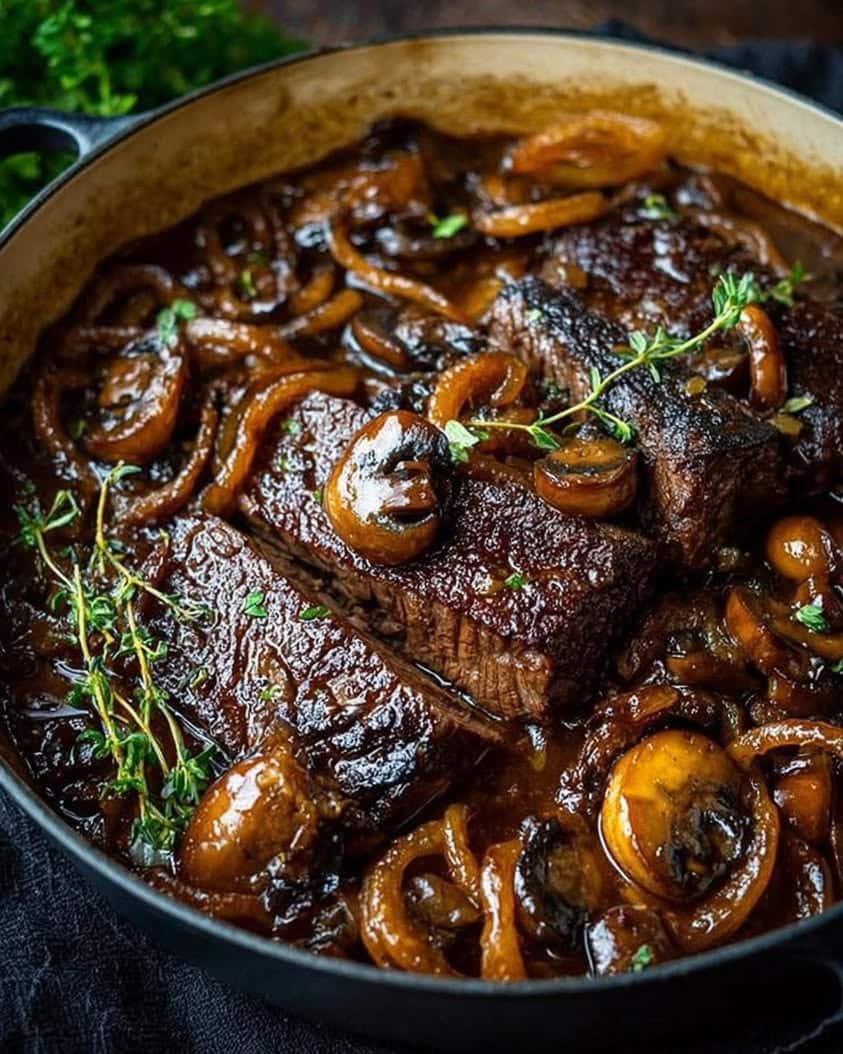
- Visual Appeal: The finished roast presents a beautiful, glossy mahogany color. It is surrounded by whole mushrooms and nestled in a dark, rich sauce, making for a rustic and appetizing presentation straight from the Dutch oven.
- Skill Level Needed: This is an accessible recipe for most home cooks. The techniques involve basic searing and braising. Therefore, even beginners can achieve fantastic results by following the simple steps.
- Special Equipment: A heavy-bottomed Dutch oven or oven-safe pot with a lid is essential for even cooking and braising. You will also need basic kitchen tools like a sharp knife, cutting board, and tongs for handling the roast.
Recipe Overview
- Difficulty Level: We rate this French Onion Mushroom Pot Roast as easy. The process is straightforward, involving searing meat and then slow-braising it. There are no complicated techniques or precision requirements, making it very forgiving for cooks of all levels.
- Category: This is a quintessential main dish, perfect for family dinners and special occasions. It falls squarely into the comfort food category, offering a hearty and satisfying meal that everyone loves.
- Cuisine: The recipe draws inspiration from classic American pot roast and French culinary traditions, specifically French onion soup. It is a fusion that highlights deep, caramelized flavors and slow-cooked tenderness.
- Cost: This is a cost-effective meal, especially when feeding a crowd. A chuck roast is an affordable cut, and the vegetables are inexpensive staples. You create a luxurious-tasting dish from very humble, accessible ingredients.
- Season: This recipe shines in the fall and winter months. Its warming, hearty nature is ideal for cold weather. However, it is truly a delicious year-round option for any comfort food craving.
- Occasion: It is perfect for cozy Sunday suppers, holiday gatherings, or meal prep for the week. This French Onion Mushroom Pot Roast is versatile enough for both casual family meals and entertaining guests.
Why You’ll Love This Recipe
First, the taste and texture are absolutely unbeatable. The beef becomes impossibly tender, soaking up the rich flavors of the onion and mushroom gravy. Each bite delivers a symphony of savory, sweet, and earthy notes. The depth of flavor achieved through slow braising is something you simply cannot rush. It is a deeply satisfying meal that comforts from the inside out.
Next, consider the sheer convenience. After the initial searing and sautéing, the oven takes over. This hands-off time means you can attend to other tasks, relax, or enjoy time with family. Despite the long cook time, the active work is minimal. Consequently, you achieve a complex, restaurant-quality dish with surprisingly little effort.
Furthermore, this French Onion Mushroom Pot Roast offers solid nutritional advantages. It is packed with protein from the beef and mushrooms. The onions provide antioxidants and prebiotic fiber. Using a whole, unprocessed cut of meat means you control the ingredients, avoiding the additives often found in pre-made meals.
From a social perspective, this dish is a fantastic centerpiece for entertaining. It is impressive and feeds a group easily. The one-pot nature also means less cleanup, so you can spend more time with your guests. It is a reliable recipe that consistently delivers excellent results, taking the stress out of hosting.
Finally, it is incredibly cost-effective and accessible. Chuck roast is a budget-friendly cut that becomes exquisite through slow cooking. The other ingredients are pantry staples. This recipe demonstrates how to create a luxurious meal without a luxurious grocery bill, making it a practical choice for any household.
Historical Background and Cultural Significance
The concept of pot roast has deep roots in many cultures as a method to tenderize tougher, less expensive cuts of meat. In America, it became a Sunday dinner staple, symbolizing home, family, and comfort. The technique of braising meat slowly in liquid with vegetables is centuries old, valued for its practicality and delicious results. This method allowed families to feed many people with affordable ingredients.
French onion soup, the other inspiration for this dish, has its own rich history in French cuisine. Traditionally, it was considered a humble food for workers, made from simple ingredients like onions, broth, and bread. Over time, it was refined and popularized in Parisian restaurants, often topped with a crust of cheese and served as a restorative late-night meal.
The evolution of this specific recipe is a modern fusion of these two classic traditions. Home cooks and chefs began experimenting with the flavors of French onion soup beyond the bowl. Incorporating those savory, sweet, and cheesy notes into a pot roast was a natural and brilliant progression. It elevates the humble pot roast with a layer of gourmet flavor.
Regional variations of this idea abound. Some might add a splash of red wine or brandy for depth. Others might use different mushroom varieties or herbs. The core concept, however, remains the same: combining the soul-warming goodness of braised beef with the iconic taste of caramelized onions and mushrooms. This French Onion Mushroom Pot Roast is a testament to how classic flavors can be reinvented into new family favorites.
Ingredient Deep Dive
Chuck Roast: This cut comes from the shoulder of the cow, a well-exercised area rich in connective tissue and fat. During the long, slow braise, that collagen breaks down into gelatin, resulting in the famously tender, fall-apart texture. It is the most forgiving and flavorful cut for pot roast. Look for a roast with good marbling for the best results. You can often find it labeled as “chuck roast,” “chuck eye roast,” or “shoulder pot roast.”
Yellow Onions: Onions are the star that gives this dish its “French onion” character. When sliced and cooked slowly, their natural sugars caramelize, creating a deep sweetness and complex flavor base. They are rich in antioxidants and vitamin C. Choose firm, heavy onions with dry, papery skins. Store them in a cool, dark, well-ventilated place—not in the refrigerator, where they can become soft.
Cremini Mushrooms: These are simply mature white button mushrooms, offering a deeper, earthier flavor and firmer texture. They hold up beautifully during braising. Mushrooms are a great source of B vitamins and umami. Select mushrooms that are firm with closed caps. Avoid any that are slimy or have dark, open gills. Store them in a paper bag in the refrigerator.
Beef Broth: This forms the braising liquid that becomes your gravy. Using a high-quality, low-sodium broth is crucial, as it reduces and concentrates. For maximum flavor, consider using a homemade broth or a reputable brand. The broth provides the savory backdrop that ties all the other ingredients together. You can substitute with beef stock or even a combination of broth and a splash of red wine.
Fresh Thyme: This herb provides an aromatic, slightly floral note that cuts through the richness of the beef and onions. Fresh thyme is preferred for its brighter flavor, but dried can be used in a pinch. It is a classic pairing with beef and onions in French cuisine. To store fresh thyme, wrap it loosely in a damp paper towel and place it in a plastic bag in the refrigerator.
Common Mistakes to Avoid
- Not Patting the Roast Dry: Skipping this step prevents a good sear. Moisture on the surface of the meat creates steam, which hinders the Maillard reaction that creates flavorful browning. Always use paper towels to dry the roast thoroughly before seasoning and searing.
- Crowding the Pot When Searing: If you add the roast to a pot that is not hot enough or overcrowd it, the meat will steam and boil in its own juices instead of searing. Sear in batches if necessary to ensure each piece has contact with the hot surface.
- Underseasoning: A large cut of meat and a pot full of vegetables need ample seasoning. Do not be shy with salt and pepper during the initial searing and when sautéing the onions. Season in layers for the best flavor throughout the dish.
- Rushing the Onions: Caramelizing onions properly takes time and patience. Cooking them over medium heat for a full 10-15 minutes allows their sugars to develop and deepen. Rushing this step means you miss out on the foundational sweet flavor.
- Using Boiling Liquid: Adding cold or room-temperature broth is better than adding boiling broth to your Dutch oven. A sudden temperature change can shock the meat and make it tough. Gently warming the liquid is sufficient.
- Peeking Too Often: Every time you lift the lid during braising, you release valuable heat and steam, which can extend the cooking time. Trust the process and only check occasionally after the first couple of hours.
- Not Letting it Rest: Slicing or shredding the roast immediately after cooking causes all the precious juices to run out onto the cutting board. Let the meat rest, covered loosely with foil, for at least 15-20 minutes to allow the juices to redistribute.
- Skipping the Gravy Thickening: After removing the roast and vegetables, you have a pot of incredibly flavorful but thin liquid. Simmering it uncovered for 10-15 minutes is a crucial step to reduce and concentrate it into a luxurious, spoon-coating gravy.
Essential Techniques
Searing the Meat: This technique is non-negotiable for building flavor. Searing creates a flavorful crust through the Maillard reaction, a chemical process that develops hundreds of new taste compounds. To master it, ensure your pot is very hot and the meat is dry. Do not move the roast for several minutes to allow a proper crust to form. The visual cue for success is a deep, golden-brown color on all sides.
Caramelizing Onions: This process slowly cooks the sliced onions until their natural sugars brown, creating a sweet, deep, complex flavor base. It is important because it defines the “French onion” character of the dish. Cook them over medium heat with a pinch of salt, stirring occasionally. They are done when they are uniformly soft, deeply golden, and sweet-smelling, which takes patience.
Braising: Braising is a two-step cooking method: searing followed by slow cooking in a covered pot with liquid. This technique is essential for transforming tough cuts into tender masterpieces. The moist, gentle heat breaks down connective tissue without drying out the meat. The key is a low oven temperature and enough liquid to come partway up the meat, not submerge it. Success is evident when the meat is fork-tender.
Reducing the Sauce: After braising, the cooking liquid is flavorful but often too thin. Reducing it by simmering uncovered concentrates the flavors and thickens the sauce to a gravy-like consistency. This step intensifies the taste and improves the dish’s presentation. Simmer until the sauce coats the back of a spoon, indicating it has reached the perfect richness.
Pro Tips for Perfect French Onion Mushroom Pot Roast
- For an even deeper flavor, sear the mushrooms in the pot after removing the onions. This step adds another layer of savory fond to the pot before deglazing.
- If you have time, season the chuck roast with salt and pepper up to 24 hours in advance and leave it uncovered in the fridge. This dry-brine helps season the meat deeply and promotes better browning.
- Add a tablespoon of tomato paste to the onions during the last minute of caramelizing. Cooking it for a minute with the onions removes any tinny taste and adds a rich, savory depth to the gravy.
- For a richer sauce, substitute one cup of the beef broth with a full-bodied red wine like Cabernet Sauvignon or a dark beer. The alcohol cooks off, leaving behind wonderful complexity.
- Place a piece of parchment paper over the pot before putting the lid on. This “cartouche” helps keep moisture from dripping onto the roast and can prevent the sauce from reducing too much during braising.
- Use an instant-read thermometer to check for doneness without guessing. The roast is perfectly tender when it reaches an internal temperature of around 200-205°F in the thickest part.
- If your gravy is not thickening enough after reducing, make a quick slurry. Mix one tablespoon of cornstarch with two tablespoons of cold water and whisk it into the simmering sauce until it thickens.
- Let the whole pot rest off the heat, covered, for 30 minutes after braising before shredding the meat. This allows the fibers to relax further, making the meat even more tender.
Variations and Adaptations
Regional Variations: For a Provençal twist, add herbes de Provence and a handful of Niçoise olives. A German-inspired version might include a splash of dark beer and serve the roast with spaetzle. In the American South, you might find it served over creamy stone-ground grits instead of mashed potatoes.
Seasonal Adaptations: In spring, add fresh peas and carrots during the last 30 minutes of cooking. For summer, use a lighter touch with herbs like tarragon and serve with a crisp salad. In autumn, incorporate roasted root vegetables like parsnips or turnips into the braise.
Dietary Modifications: For a gluten-free version, ensure your broth is certified gluten-free and thicken the gravy with cornstarch instead of flour. To make it dairy-free, simply omit the butter for searing and use oil, and skip any cheese garnish.
Flavor Variations: Add a tablespoon of Worcestershire sauce or a teaspoon of fish sauce to the braising liquid for an extra umami punch. A strip of orange zest or a few juniper berries can add a bright, aromatic note that cuts through the richness beautifully.
Texture Modifications: For a chunkier vegetable presence, use larger cuts of carrot and celery and add them halfway through braising so they do not turn to mush. For a smoother gravy, you can blend the cooked onions and mushrooms into the sauce after removing the meat.
Presentation Alternatives: Instead of shredding, slice the roast against the grain for a more elegant presentation. Serve individual portions in shallow bowls over a slice of toasted crusty bread, mimicking the presentation of French onion soup, and top with Gruyère cheese broiled until bubbly.
Serving and Presentation Guide
For a classic family-style presentation, place the whole tender French Onion Mushroom Pot Roast on a large, warm platter. Surround it with the braised mushrooms and onions, then spoon the rich gravy generously over the top. Scatter a handful of fresh thyme leaves over everything for a pop of color and fresh aroma. This approach is inviting and lets guests serve themselves.
Consider individual plating for a more refined look. Place a scoop of creamy mashed potatoes or soft polenta in the center of a wide, shallow bowl. Arrange slices or a portion of shredded beef on top, then ladle the mushrooms, onions, and gravy over everything. Finish with a sprinkle of chopped parsley or chives to add brightness against the dark sauce.
Traditional accompaniments are key. Creamy mashed potatoes are the ultimate partner for soaking up the gravy. Buttered egg noodles, crusty bread for dipping, or a simple roasted vegetable like green beans also work wonderfully. The goal is to have something on the plate that complements the rich, savory flavors of the roast.
Modern serving suggestions include using the leftovers in creative ways. The shredded meat and gravy make incredible French dip sandwiches. You can also use it as a filling for savory hand pies or as a topping for baked potatoes. This versatility makes the recipe a gift that keeps on giving.
Temperature is crucial. Serve the pot roast piping hot. Warm your serving platter or bowls beforehand to keep the food hot longer at the table. The fat in the gravy will start to congeal if it cools too much, so prompt serving ensures the best texture and eating experience.
For portion control, a good rule of thumb is about 6-8 ounces of raw meat per person, which cooks down. Since this dish is so rich, a little goes a long way when paired with hearty sides. Remember, it is always better to have leftovers with a dish like this than to run out.
Wine and Beverage Pairing
Wine pairings should complement the rich, savory, and slightly sweet notes of the French Onion Mushroom Pot Roast. A medium-bodied red wine with good acidity is ideal. A French Syrah from the Rhône Valley, with its peppery notes, cuts through the richness beautifully. A California Zinfandel or a Malbec with dark fruit flavors also stands up well to the robust gravy and tender beef.
For non-alcoholic alternatives, consider rich, flavorful options that mirror the dish’s depth. A sparkling apple cider provides a sweet contrast. A robust mushroom or beef broth-based sipping broth can be a lovely accompaniment. Even a tart cherry juice or a glass of iced tea with a hint of lemon can cleanse the palate between bites.
While not traditional, coffee and tea can be excellent pairings. A cup of strong, black coffee after the meal can be a delightful digestif, its bitterness contrasting the savory notes. A smoky Lapsang Souchong tea drunk alongside the meal can echo the earthy flavors of the mushrooms and create a unique tasting experience.
Temperature considerations are straightforward: serve red wines slightly below room temperature, around 60-65°F. Chilled non-alcoholic beverages should be cold but not ice-cold to avoid numbing the palate. The goal is for the drink to refresh and complement, not overwhelm, the complex flavors of the food.
For serving, always offer water on the table to cleanse the palate. If serving wine, pour a modest amount to start, allowing guests to experience how the pairing evolves with the food. Encourage sips between bites of different components—the beef, the mushroom, the gravy—to discover how the pairing changes.
Storage and Shelf Life
Proper storage methods are key to enjoying your French Onion Mushroom Pot Roast later. Allow the roast and gravy to cool completely to room temperature before storing. Do not leave it out for more than two hours to prevent bacterial growth. Store the meat, vegetables, and gravy together in an airtight container to keep everything moist and flavorful.
Temperature requirements are strict for food safety. The pot roast must be refrigerated at 40°F or below. In the refrigerator, it will keep well for 3 to 4 days. For longer storage, freezing is your best option. The low, slow cooking process means the dish freezes and reheats exceptionally well without sacrificing texture.
Container recommendations include glass or BPA-free plastic containers with tight-fitting lids. For freezing, use heavy-duty freezer bags or containers specifically designed for freezing. Portion the roast and gravy into meal-sized amounts before freezing for easier thawing and to avoid having to reheat the entire batch.
Signs of spoilage include an off or sour smell, a slimy texture on the meat or vegetables, or mold growth. If you see any of these signs, discard the food immediately. When in doubt, remember the old adage: when in doubt, throw it out. It is not worth the risk of foodborne illness.
Reheating instructions are simple for best results. Thaw frozen pot roast overnight in the refrigerator. Reheat gently on the stovetop over low heat, adding a splash of broth or water if the gravy has thickened too much. You can also reheat in the microwave, covered, using 50% power in short intervals, stirring in between to heat evenly.
Freezing guidelines are straightforward. The pot roast can be frozen for up to 3 months for optimal quality. To freeze, pack the cooled roast and gravy into your chosen container, leaving about an inch of headspace for expansion. Label with the date and contents. Thaw in the refrigerator overnight before reheating.
Make Ahead Strategies
You can easily break the prep timeline into stages. The day before, you can chop all your vegetables—onions, mushrooms, garlic—and store them separately in containers in the fridge. You can also measure out your broth and herbs. This “mise en place” makes the actual cooking day much faster and more relaxed.
For storage between steps, keep prepped ingredients in sealed containers. If you sear the roast ahead of time, let it cool, wrap it well, and refrigerate it. You can also fully caramelize the onions and store them. When ready to cook, you simply assemble the cold components in the pot and proceed with the recipe, adding a few extra minutes to the braising time to account for starting with cold ingredients.
The quality impact of making components ahead is minimal, especially for the onions and mushrooms. In fact, some cooks believe caramelized onions taste even better the next day. The seared meat will lose its crisp crust in the fridge, but the flavor foundation it built remains. The final braised result will be just as delicious.
Assembly tips for a make-ahead approach are simple. If you have pre-seared meat and pre-cooked onions, layer them in your Dutch oven with the mushrooms, garlic, and thyme. Pour the cold broth over everything. Cover and refrigerate the entire pot overnight. The next day, place the cold pot in a cold oven, then set the temperature to 325°F. This gradual heating is safe for enameled cast iron and ensures even cooking.
Reheating guidelines for a fully cooked make-ahead pot roast are the same as for leftovers. Reheat gently on the stovetop or in a 300°F oven until warmed through. If the gravy has separated or thickened too much, whisk in a little warm broth or water to bring it back to the right consistency.
Consider adding fresh elements after reheating to brighten the dish. A sprinkle of freshly chopped parsley, chives, or a few leaves of fresh thyme added just before serving can make a make-ahead meal taste freshly made. A final drizzle of good olive oil or a pinch of flaky sea salt can also revive the flavors.
Scaling Instructions
Halving the recipe is straightforward for smaller households. Use a 2-3 pound chuck roast and halve all other ingredients. Use a smaller Dutch oven or heavy pot to ensure the braising liquid comes up the sides of the meat appropriately. The cook time may be slightly reduced, so start checking for tenderness after about 2.5 hours.
Doubling or tripling the recipe is perfect for feeding a crowd or meal prepping. Use a very large Dutch oven or divide the ingredients between two pots. Ensure the roasts are not crammed in; they should fit comfortably with space around them for the heat to circulate. The braising time may increase by 30-60 minutes for a double batch, so use a meat thermometer to gauge doneness.
Equipment adjustments are necessary when scaling. A standard 5-7 quart Dutch oven is perfect for a single recipe. For a double batch, you will need an 8-10 quart pot or two separate pots. If using two pots, rotate their positions in the oven halfway through cooking for even heat distribution. Make sure your oven can accommodate the larger or multiple pots.
Timing modifications are minimal when scaling up or down. The active prep time scales linearly. The braising time is more dependent on the thickness of the roast than its weight. A thicker roast takes longer than two thinner roasts of the same total weight. Always rely on the fork-tender test or an internal temperature of 200-205°F rather than a strict timer.
Storage considerations change with scale. A double batch means more leftovers, so plan your storage containers accordingly. Portion the cooked roast into meal-sized amounts before refrigerating or freezing for maximum convenience. Remember, a larger volume of hot food will take longer to cool to a safe temperature before storing, so you may need to divide it into shallower containers.
Nutritional Deep Dive
The macro breakdown of this French Onion Mushroom Pot Roast is balanced for a satisfying meal. A serving provides a high amount of complete protein from the beef, essential for muscle repair and satiety. The fat content, primarily from the marbling in the chuck roast, provides energy and helps absorb fat-soluble vitamins from the vegetables. The carbohydrates are minimal and come mainly from the onions and mushrooms.
A micronutrient analysis reveals a wealth of vitamins and minerals. Beef is an excellent source of iron, zinc, and B vitamins, particularly B12. Onions provide vitamin C, folate, and antioxidants like quercetin. Mushrooms contribute B vitamins, selenium, and potassium. Together, they create a nutrient-dense meal that supports immune function, energy production, and overall health.
The health benefits extend beyond basic nutrition. The slow-cooking process may make the collagen in the meat more bioavailable, which is beneficial for joint and skin health. The onions and mushrooms contain prebiotic fibers that feed beneficial gut bacteria. The dish is made from whole, single-ingredient foods, avoiding processed additives and excessive sodium, especially if you use low-sodium broth.
For dietary considerations, this dish is naturally gluten-free and low in carbs, making it suitable for many eating plans. It is high in protein and fat, which can be very satiating. Those on strict low-fat diets may want to trim visible fat from the roast before cooking and skim fat from the cooled gravy.
Portion analysis is important due to the richness of the dish. A typical serving of 4-6 ounces of cooked beef with a generous portion of vegetables and gravy is very satisfying. Pairing it with a non-starchy vegetable side or a modest portion of complex carbs like mashed potatoes creates a complete, balanced plate without overdoing calories.
For weight management tips, focus on the vegetable-to-meat ratio. Load your plate with the mushrooms and onions from the pot, and take a sensible portion of the beef. The high protein and fat content promote fullness, which can help prevent overeating. Avoid going back for seconds on the meat first; have more vegetables or a side salad if you are still hungry.
Dietary Adaptations
Gluten-Free: This recipe is naturally gluten-free as written. The only potential source of gluten is in the beef broth or stock. Always check the label to ensure your broth is certified gluten-free. To thicken the gravy, use a cornstarch slurry instead of a flour-based roux.
Dairy-Free: Adapting this French Onion Mushroom Pot Roast for dairy-free diets is simple. Use a high-heat oil like avocado or grapeseed oil for searing instead of butter. Skip any butter-based finishing or cheese garnishes. The core recipe remains deeply flavorful without any dairy products.
Vegan/Vegetarian: For a plant-based version, replace the chuck roast with a large, meaty substitute like seitan, tempeh, or a whole portobello mushroom cap. Use a rich, umami-packed vegetable broth. Add lentils or chickpeas to the braise for protein and heartiness. The caramelized onion and mushroom base provides incredible flavor for the plant-based protein.
Low-Carb/Keto: This dish is an excellent fit for low-carb and keto diets. The beef, mushrooms, onions, and broth are all low in net carbs. Serve it over cauliflower mash, zucchini noodles, or simply in a bowl with extra gravy. Avoid starchy thickeners for the gravy; instead, reduce it naturally or use a xanthan gum slurry.
Paleo: To make it Paleo-compliant, ensure your broth is free of additives, sugar, and non-Paleo ingredients. Use ghee or avocado oil for searing instead of butter. Thicken the gravy by reduction alone or with arrowroot powder. Serve with roasted vegetables or mashed cauliflower.
Low-FODMAP: For a Low-FODMAP adaptation, use the green parts of leeks instead of onions for the caramelized base. Swap cremini mushrooms for oyster mushrooms, which are low-FODMAP in smaller servings. Use a garlic-infused oil for flavor instead of garlic cloves. Ensure the beef broth does not contain onion or garlic powder.
Troubleshooting Guide
Tough, Chewy Meat: This is the most common issue and means the meat did not cook long enough. The connective tissue needs time to break down. Solution: Return it to the pot, add a bit more liquid if needed, cover, and continue braising. Check every 30 minutes until it is fork-tender. Next time, do not rush the process; braising cannot be hurried.
Bland Flavor: If your French Onion Mushroom Pot Roast lacks depth, the seasoning was likely insufficient or the sear was weak. Solution: Boost the gravy by simmering it with an extra pinch of salt, a dash of Worcestershire sauce, or a teaspoon of red wine vinegar to brighten it. For the future, season the meat generously before searing and take the time to get a dark crust on the meat and fully caramelize the onions.
Dry Meat: While rare with braising, dry meat can happen if the liquid level gets too low during cooking or the oven temperature was too high. Solution: Shred the dry meat and mix it thoroughly with the plentiful gravy. The gravy will rehydrate it. To prevent this, ensure the liquid comes about halfway up the sides of the roast and maintain a low, steady oven temperature.
Greasy Gravy: Sometimes, especially with a well-marbled roast, the finished sauce can be oily. Solution: After removing the meat and vegetables, let the liquid settle for a few minutes. Use a spoon to skim the fat off the surface, or drag a piece of paper towel across the top to absorb it. For a clearer separation, chill the gravy quickly; the fat will solidify on top for easy removal.
Ingredient Substitution Issues: Substituting a leaner cut like sirloin for chuck roast will result in dry, tough meat, as it lacks the necessary collagen. If you must substitute, use another tough, marbled cut like brisket or bottom round. For mushrooms, white buttons work fine, but they will have a milder flavor. Do not substitute dried thyme for fresh at a 1:1 ratio; use one-third the amount of dried.
Timing Concerns for Guests: If the roast is not ready when guests arrive, do not panic. Braised meat actually benefits from resting in its juices. Turn off the oven and leave the covered pot inside. It will stay warm and continue to tenderize for up to an hour. This flexibility is one of the great advantages of braising.
PrintFrench Onion Mushroom Pot Roast
- Total Time: 45 minutes
- Yield: 4
Description
A rich and savory pot roast slow-cooked with caramelized onions, mushrooms, and a French onion soup-inspired broth, perfect for a cozy dinner.
Ingredients
- 3 lbs beef chuck roast
- 2 large yellow onions, thinly sliced
- 8 oz cremini mushrooms, sliced
- 4 cloves garlic, minced
- 2 cups beef broth
- 1 packet French onion soup mix
- 2 tbsp olive oil
- 1 tbsp Worcestershire sauce
- 2 sprigs fresh thyme
- Salt and black pepper to taste
Instructions
- Season the beef chuck roast generously with salt and pepper on all sides.
- Heat olive oil in a large Dutch oven over medium-high heat. Sear the roast until browned on all sides, about 4-5 minutes per side. Remove and set aside.
- In the same pot, add the sliced onions and cook until caramelized, about 10-15 minutes, stirring occasionally.
- Add the mushrooms and garlic to the pot, cooking for another 5 minutes until softened.
- Stir in the beef broth, French onion soup mix, and Worcestershire sauce, scraping up any browned bits from the bottom.
- Return the seared roast to the pot, add thyme sprigs, and bring to a simmer. Cover and cook on low heat for 3-4 hours, until the meat is tender and shreds easily.
- Serve the pot roast hot with the onions, mushrooms, and gravy spooned over the top.
Notes
You can customize the seasonings to taste.
- Prep Time: 15 minutes
- Cook Time: 30 minutes
- Method: Main
- Cuisine: American