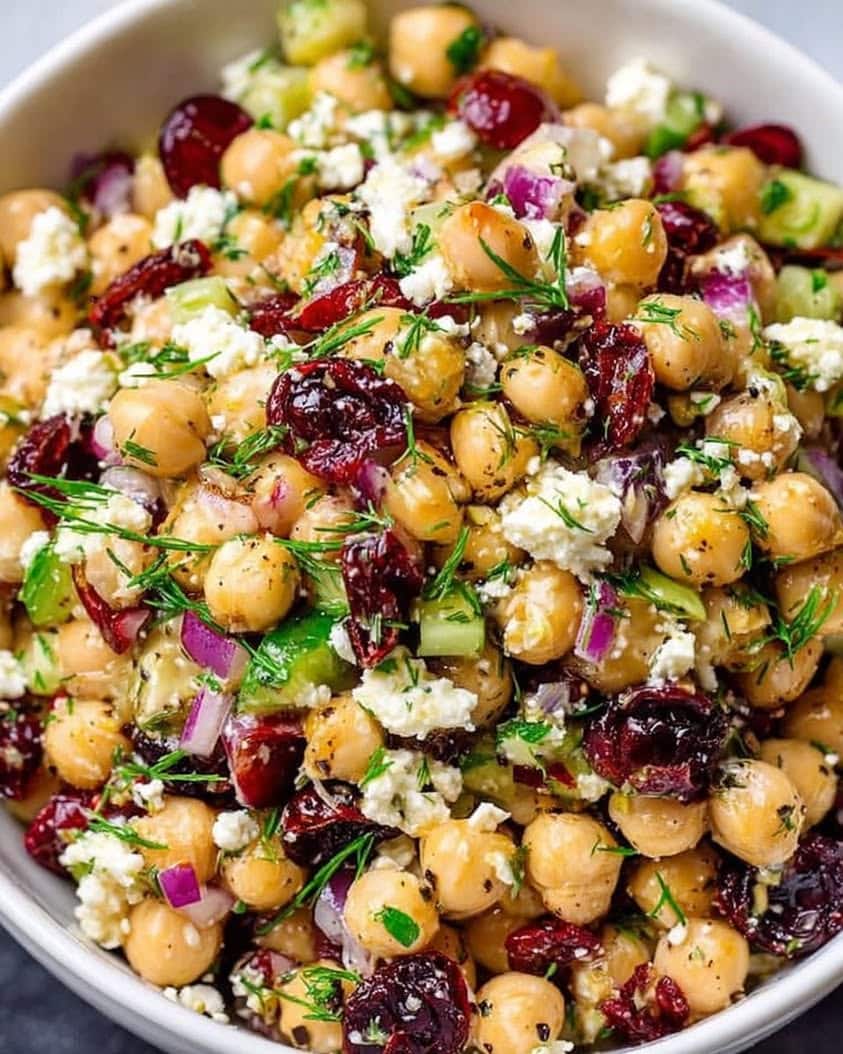
Feta and Cranberry Chickpea Salad with Lemon Vinaigrette: A Burst of Fresh Mediterranean Flavors
This vibrant Feta and Cranberry Chickpea Salad with Lemon Vinaigrette is a true celebration of fresh, wholesome ingredients. Consequently, it delivers a perfect harmony of textures and flavors in every single bite. Moreover, it combines creamy feta cheese, sweet-tart dried cranberries, and hearty chickpeas, all tossed in a bright, zesty lemon vinaigrette. Ultimately, this easy salad recipe is your new go-to for a quick lunch, a stunning side dish, or a satisfying plant-based meal.
Imagine a dish that is both incredibly nutritious and irresistibly delicious. This chickpea salad recipe achieves exactly that. Furthermore, it requires absolutely no cooking, making it a lifesaver on busy weeknights. Additionally, the lemon vinaigrette dressing is so simple yet transformative, elevating the humble chickpea into something truly special. Whether you are meal-prepping for the week or needing a last-minute potluck contribution, this salad is guaranteed to impress.
The beauty of this Feta and Cranberry Chickpea Salad lies in its versatility. For instance, you can customize it with your favorite fresh herbs or crunchy vegetables. Meanwhile, the protein-packed chickpeas keep you full and energized. Therefore, this salad is not just a side dish; it is a complete, balanced meal. Finally, get ready to fall in love with a recipe that is as beautiful to look at as it is delightful to eat.
Quick Recipe Highlights
- Flavor Profile: This salad masterfully balances tangy, salty, sweet, and fresh notes. The briny feta cheese contrasts beautifully with the sweet pop of dried cranberries. Meanwhile, the lemon vinaigrette adds a necessary acidic zing that ties everything together.
- Texture: You will enjoy a wonderful contrast of creamy, chewy, and tender-crisp elements. The chickpeas provide a satisfying, hearty bite. Simultaneously, the feta offers creaminess, and the cranberries add a delightful chewy texture.
- Aroma: The fresh aroma of lemon zest and juice is immediately inviting. Additionally, the scent of fresh parsley or mint adds a layer of garden-fresh fragrance. Ultimately, it smells clean, bright, and incredibly appetizing.
- Visual Appeal: This salad is a feast for the eyes with its vibrant colors. The red cranberries, white feta, and green herbs create a festive, colorful mosaic. Consequently, it looks stunning served in a large bowl or on individual plates.
- Skill Level Needed: This is a perfect recipe for absolute beginners. Essentially, it involves no cooking, just simple chopping and mixing. Therefore, anyone can achieve restaurant-quality results with minimal effort.
- Special Equipment: You need only basic kitchen tools. A sharp knife, a cutting board, a mixing bowl, and a whisk or jar for the dressing are sufficient. No fancy appliances are required at all.
Recipe Overview
- Difficulty Level: This recipe is classified as easy for very clear reasons. First, there is no heat application or complex techniques involved. Second, the steps are sequential and simple: chop, whisk, and toss. Finally, the margin for error is incredibly small, making it foolproof.
- Category: This dish fits wonderfully into multiple meal categories. It shines as a hearty main course salad for lunch. Alternatively, it serves as a standout side dish for grilled meats or fish. Moreover, it is a fantastic potluck or picnic offering.
- Cuisine: The flavor profile is inspired by Mediterranean and Middle Eastern culinary traditions. Chickpeas and lemon are staples in these regions. However, the addition of cranberries adds a modern, North American twist, creating a delicious fusion.
- Cost: This is an exceptionally budget-friendly recipe. Canned chickpeas and dried cranberries are pantry staples that are very affordable. Furthermore, a block of feta and fresh lemons offer high value for a relatively low cost per serving.
- Season: This salad is truly a year-round champion. It feels light and refreshing for spring and summer meals. Conversely, the hearty chickpeas and rich flavors also make it comforting during fall and winter. Therefore, it has no off-season.
- Occasion: It is perfect for casual weeknight dinners and elegant gatherings alike. It is quick enough for a solo lunch yet impressive enough for holiday tables. Consequently, it is one of the most versatile recipes in your repertoire.
Why You’ll Love This Recipe
You will adore the taste and texture appeal of this Feta and Cranberry Chickpea Salad. Every forkful delivers a complex symphony of flavors. The salty, creamy feta perfectly offsets the sugary tartness of the cranberries. Meanwhile, the chickpeas provide a neutral, protein-packed base that soaks up the vibrant lemon vinaigrette. Additionally, fresh herbs like parsley or mint introduce a burst of freshness that elevates the entire dish. Ultimately, it is a satisfying meal that never feels boring or bland. The contrast keeps your palate interested from the first bite to the last.
The convenience and preparation benefits are truly unmatched. This entire salad comes together in about fifteen minutes with zero cooking required. It is the ultimate “throw-together” meal when you are short on time or energy. Furthermore, it is an excellent meal-prep candidate, as the flavors meld and improve overnight in the fridge. You can easily double or triple the batch for a crowd without any stress. Therefore, it eliminates the dread of last-minute cooking before guests arrive. Simply put, it delivers maximum flavor with minimal effort and cleanup.
Nutritional advantages make this salad a smart choice for your health. Chickpeas are a fantastic source of plant-based protein and fiber, promoting satiety and digestive health. Feta cheese provides calcium and protein, while being lower in fat than many other cheeses. Dried cranberries, in moderation, offer antioxidants and a touch of natural sweetness. The olive oil in the vinaigrette is rich in heart-healthy monounsaturated fats. Consequently, this salad supports balanced energy levels and overall wellness. It is a nourishing choice that truly fuels your body.
The social and entertaining value of this dish is incredibly high. Its vibrant, colorful presentation is guaranteed to draw compliments at any potluck or barbecue. Moreover, it caters to diverse dietary preferences, being vegetarian and easily adaptable for vegans or those with gluten sensitivities. It pairs wonderfully with a wide array of main courses, from burgers to roasted chicken. Serving this salad shows thoughtfulness and culinary flair. Ultimately, it is a reliable recipe that will make you a sought-after contributor to any shared meal.
Cost-effectiveness and accessibility are key pillars of this recipe. The ingredients are common, affordable, and available at any standard grocery store. You likely have many of them in your pantry right now. There is no need for expensive, hard-to-find specialty items. This makes it a fantastic staple for students, families, or anyone on a budget. Despite its humble ingredients, the final result tastes gourmet. Therefore, you can eat well and impress your family without straining your wallet.
Historical Background and Cultural Significance
The origin story of chickpea salads is deeply rooted in the culinary traditions of the Mediterranean and Middle East. Chickpeas, or garbanzo beans, have been cultivated for over 7,000 years in these regions. They were a fundamental source of nutrition, especially in areas where meat was scarce or expensive. Simple salads combining chickpeas with lemon, herbs, and local cheeses were common peasant food. These dishes were designed to be filling, nutritious, and flavorful with preserved ingredients. Over time, these humble combinations traveled and evolved, laying the groundwork for modern recipes like this one.
The cultural importance of such salads cannot be overstated. In many cultures, they represent hospitality, resourcefulness, and the celebration of fresh, local produce. Sharing a bowl of chickpea salad is an act of community. Furthermore, the use of lemon and olive oil as a dressing base is a cornerstone of the Mediterranean diet, which is renowned for its health benefits. These dishes are often central to mezze platters or shared tables, encouraging conversation and connection. They are more than just food; they are a vehicle for cultural tradition and togetherness.
The evolution of the recipe to include ingredients like cranberries is a fascinating example of culinary fusion. Dried cranberries are a distinctly North American ingredient, native to the continent. As global trade expanded, these sweet-tart berries found their way into pantries worldwide. Innovative cooks began incorporating them into traditional savory dishes, discovering the perfect sweet contrast to salty feta and earthy chickpeas. This fusion represents the beautiful adaptability of traditional cooking. It shows how recipes can travel, absorb new influences, and become even more beloved in the process.
Regional variations of chickpea salad are endless, showcasing local tastes and ingredients. In Greece, you might find a similar salad with Kalamata olives and tomatoes. In the Middle East, sumac and pomegranate molasses might be used for tanginess. Indian versions could include chaat masala and tamarind chutney. The addition of cranberries and a simple lemon vinaigrette creates a version that particularly resonates in Western kitchens. This adaptability is the recipe’s greatest strength. It invites you to explore a world of flavors from the comfort of your own kitchen.
Ingredient Deep Dive
Chickpeas (Garbanzo Beans): Chickpeas boast a rich history spanning millennia and continents. They are a staple in diets from India to the Mediterranean, valued for their versatility and nutrition. Packed with plant-based protein and fiber, they promote heart health and stable blood sugar. For this salad, canned chickpeas are perfectly convenient; just be sure to rinse them thoroughly to remove excess sodium and the starchy canning liquid. If you have time, using dried chickpeas that you cook yourself yields a superior texture and flavor. Store dried chickpeas in a cool, dark pantry, and keep cooked or canned leftovers in the fridge for up to four days.
Feta Cheese: Authentic feta is a brined curd cheese from Greece, made traditionally from sheep’s milk or a sheep-goat blend. Its tangy, salty flavor and crumbly texture are iconic. Feta is a good source of calcium and protein, though it is higher in sodium. When selecting feta, opt for a block packed in brine rather than pre-crumbled varieties for the best flavor and moisture. For a dairy-free version, consider a firm tofu crumbled with nutritional yeast and lemon juice. Store leftover feta submerged in its brine in the refrigerator to maintain freshness.
Dried Cranberries: These are a modern, North American twist on traditional dried fruit in savory salads. They provide a chewy texture and a burst of sweet-tartness that cuts through the richness of the cheese and dressing. While sweetened dried cranberries are common, you can seek out unsweetened or fruit-juice-sweetened versions for a less sugary option. As a substitute, try chopped dried apricots, cherries, or raisins for a different flavor profile. Store dried cranberries in an airtight container in your pantry to keep them from hardening.
Lemon (for Juice and Zest): The lemon is the irreplaceable star of the vinaigrette, providing bright, clean acidity. The zest contains potent aromatic oils that intensify the citrus flavor without additional liquid. Nutritionally, lemons are an excellent source of vitamin C and antioxidants. Always choose firm, heavy lemons with vibrant yellow skin for the most juice. Before zesting, wash the lemon thoroughly. If you lack a fresh lemon, about two tablespoons of bottled lemon juice can work in a pinch, though you will miss the fresh zest. For storage, keep lemons at room temperature for a week or in the fridge for longer.
Extra Virgin Olive Oil: This is the foundation of a great vinaigrette, contributing fruity, peppery notes and a luxurious mouthfeel. High-quality extra virgin olive oil is rich in monounsaturated fats and antioxidants. It is worth using a good-tasting oil here, as it is a primary flavor component. For the best flavor, avoid cooking oils like vegetable or canola oil. If needed, a neutral avocado oil can substitute. Always store olive oil in a cool, dark place away from the stove to prevent it from becoming rancid.
Common Mistakes to Avoid
- Not Rinsing the Canned Chickpeas: Skipping this step leaves a starchy, sometimes metallic-tasting liquid on the beans. This can make your salad dressing muddy and dilute the bright flavors. Always drain and rinse chickpeas under cold water until the water runs clear.
- Using Pre-Crumbled Feta: Pre-crumbled feta is often drier, coated in anti-caking agents, and lacks the creamy texture of a block. For superior flavor and melt-in-your-mouth creaminess, always buy a block of feta in brine and crumble it yourself just before adding.
- Overlooking the Lemon Zest: The zest holds the most potent lemon oil and fragrance. Using only the juice results in a one-dimensional, sour dressing. For a truly vibrant lemon vinaigrette, you must incorporate the finely grated zest.
- Dressing the Salad Too Early: If you dress the salad hours in advance, the chickpeas can start to absorb too much liquid and become mushy. The herbs may also wilt. For optimal texture, toss the salad with the vinaigrette just before serving or up to 30 minutes prior.
- Using Stale or Low-Quality Olive Oil: Your vinaigrette is only as good as your oil. Old, rancid olive oil will impart bitter, off flavors. Invest in a decent bottle of extra virgin olive oil and taste it before using to ensure it is fresh and fruity.
- Forgetting to Season the Dressing: A vinaigrette needs salt and pepper to balance the acidity and fat. Always taste your dressing and adjust the seasoning before tossing it with the salad. Remember, the feta is salty, so season judiciously.
- Chopping Herbs Too Far in Advance: Fresh herbs like parsley and mint begin to oxidize and turn dark once chopped. For the brightest color and flavor, chop your herbs at the very last moment before assembling the salad.
- Not Tossing Thoroughly: A gentle mix is not enough to coat every chickpea and cranberry. You need to toss the salad vigorously to ensure every component is evenly dressed and the flavors are well distributed throughout the bowl.
Essential Techniques
Making an Emulsified Vinaigrette: This technique is crucial for a cohesive, non-separating dressing. Start by whisking your acid (lemon juice) with salt, pepper, and any mustard or zest. Then, slowly drizzle in the olive oil while whisking constantly. This slow incorporation allows the oil to break into tiny droplets suspended in the lemon juice, creating a temporary emulsion. The result is a smooth, slightly thickened dressing that clings to the salad ingredients. A common pitfall is adding the oil too quickly, which causes it to separate. For success, use a bowl with a non-slip bottom or a tightly sealed jar for shaking.
Properly Draining and Rinsing Canned Beans: This simple step dramatically improves the flavor and texture of your salad. First, pour the canned chickpeas into a colander in the sink. Then, run cool water over them, using your hands to gently agitate them. Continue rinsing until the water runs completely clear, not cloudy. This removes the starchy canning liquid, which can taste metallic and make your salad look unappealing. Finally, let them drain thoroughly for a few minutes; excess water will dilute your dressing. Shake the colander to remove as much water as possible before adding to your bowl.
Crumpling Feta Cheese: For the best texture, crumble feta with your fingers rather than cutting it with a knife. Start with a well-drained block. Then, use your fingertips to break it apart into irregular, rustic chunks. This creates more surface area for the dressing to cling to and provides a variety of creamy and crumbly textures in each bite. Avoid crushing it into a fine powder. The goal is to have distinct, flavorful pieces that stand out against the chickpeas and cranberries.
Pro Tips for Perfect Feta and Cranberry Chickpea Salad
For an extra flavor boost, toast your chickpeas. Simply pat them very dry, toss with a little olive oil and spices, and roast in a 400°F oven for 20-25 minutes until slightly crispy. Let them cool completely before adding to the salad.
If you have time, let the dressed salad sit for 15-30 minutes before serving. This allows the chickpeas to absorb some of the vinaigrette, deepening the flavors without compromising texture.
Add a teaspoon of Dijon mustard or a pinch of dried oregano to your lemon vinaigrette. The mustard helps emulsify the dressing, while oregano adds a subtle Greek-inspired earthiness.
For added crunch and nutrition, stir in a handful of toasted nuts or seeds just before serving. Sliced almonds, walnuts, or sunflower seeds work beautifully.
Use a microplane zester for the lemon zest. It creates fine, fluffy zest without any bitter white pith, distributing the lemon oil evenly throughout the dressing.
If using dried herbs instead of fresh, add them directly to the vinaigrette to allow their flavor to rehydrate and bloom in the acidic lemon juice.
To make this salad a complete meal, serve it over a bed of fresh baby spinach or arugula. The greens will wilt slightly from the dressing, creating a wonderful warm salad effect.
Always taste and adjust the seasoning after tossing the salad with the dressing. You may need an extra pinch of salt or a squeeze of lemon to achieve the perfect balance.
Variations and Adaptations
Regional Variations: Travel the world from your kitchen with simple swaps. For a Greek twist, add Kalamata olives, cucumber, and tomato, and use oregano in the dressing. For a Middle Eastern flair, incorporate chopped mint, a pinch of sumac, and swap cranberries for pomegranate arils. An Indian-inspired version could include chaat masala, chopped cilantro, and a drizzle of tamarind chutney.
Seasonal Adaptations: Make this salad shine in every season. In summer, add fresh sweet corn, diced peaches, or cherry tomatoes. For fall, incorporate roasted cubed butternut squash and swap cranberries for dried figs. In winter, add roasted Brussels sprout halves for a hearty, warm element. Spring calls for fresh peas, asparagus tips, and lots of tender herbs.
Dietary Modifications: This recipe is wonderfully adaptable. For a vegan version, omit the feta or use a plant-based feta alternative. To make it gluten-free, ensure all packaged ingredients like dried cranberries are certified GF—they usually are. For a lower-carb option, reduce the amount of chickpeas and cranberries, and add more non-starchy vegetables like bell peppers and zucchini.
Flavor Variations: Experiment with different acids and cheeses. Replace the lemon juice with red wine vinegar or apple cider vinegar. Swap feta for creamy goat cheese, salty halloumi (grilled), or tangy queso fresco. Add a tablespoon of capers or chopped pepperoncini for a briny, spicy kick.
Texture Modifications: Play with the mouthfeel. For more crunch, add diced celery, radishes, or jicama. For creaminess, include diced avocado (add just before serving) or a dollop of plain Greek yogurt in the dressing. For a warmer salad, briefly sauté the chickpeas in the dressing before tossing with the other ingredients.
Presentation Alternatives: Serve it differently. Pack it into a pita or wrap for a portable lunch. Spoon it into endive leaves or mini bell pepper halves for elegant appetizers. Layer it in a mason jar with greens at the bottom for a perfect grab-and-go meal prep lunch.
Serving and Presentation Guide
Plating Techniques: For a casual family meal, serve the salad in a large, wide, shallow bowl to showcase all the colorful ingredients. For individual servings, use a ring mold on a plate to create a neat, restaurant-style tower. Alternatively, for a rustic look, pile the salad high on a platter lined with kale or romaine leaves.
Garnishing Ideas: A final garnish adds visual appeal and a hint of extra flavor. Sprinkle with extra fresh herbs, a few whole dried cranberries, or additional feta crumbles. A light drizzle of high-quality olive oil or a twist of black pepper just before serving makes it look professionally finished.
Traditional Accompaniments: In a Mediterranean context, this salad would be part of a mezze spread. Serve it alongside hummus, baba ganoush, dolmas, warm pita bread, and olives. It also pairs perfectly with grilled lamb chops, chicken souvlaki, or simply grilled fish.
Modern Serving Suggestions: For a contemporary lunch, top the salad with a perfectly soft-boiled or poached egg. Serve it alongside a bowl of soup for a light dinner. Alternatively, use it as a hearty filling for stuffed sweet potatoes or as a topping for flatbread pizza.
Temperature Considerations: This salad is best served cold or at cool room temperature. If preparing ahead, let it sit out of the refrigerator for about 10 minutes before serving to take the chill off, which allows the flavors to be more pronounced.
Portion Control Tips: As a main course, plan for about 1.5 to 2 cups per person. As a side dish, ¾ to 1 cup is sufficient. Using a measuring cup to portion it out ensures everyone gets a fair share of the tasty chickpeas, cranberries, and feta.
Wine and Beverage Pairing
Wine Pairings: The bright acidity and salty-sweet profile of this salad call for wines with good acidity and minimal oak. A crisp, dry Sauvignon Blanc or Pinot Grigio mirrors the lemon notes beautifully. A Greek Assyrtiko is a fantastic regional pairing. For a rosé option, choose a dry Provençal style. If you prefer red, a light, chilled Beaujolais or Pinot Noir can work well, especially if the salad is served with grilled meats.
Non-Alcoholic Alternatives: Sparkling water with a squeeze of lemon or lime is a classic, refreshing choice. For more flavor, try an herbal iced tea like mint or lemon verbena. A tart cherry juice spritzer (mixed with soda water) complements the cranberry notes. Ginger beer also provides a spicy-sweet contrast that cleanses the palate.
Coffee/Tea Pairings: While not a typical pairing for salad, if serving this for a brunch or lunch, a light roast coffee with citrusy notes can be pleasant. For tea, a green tea like sencha or a floral white tea would not overpower the salad’s delicate flavors. Avoid heavy, bitter coffees or strongly tannic black teas.
Temperature Considerations: All beverages should be served well-chilled. White wines, rosés, and non-alcoholic spritzers benefit from being served between 45-55°F. This crisp temperature enhances their refreshing quality and provides a counterpoint to the salad’s textures.
Serving Suggestions: Offer a variety of beverages to cater to different preferences. Place a pitcher of infused water (cucumber-lemon or berry-herb) on the table alongside wine options. Always provide plenty of ice and fresh lemon wedges for guests to customize their drinks.
Storage and Shelf Life
Storage Methods: Store leftover salad in an airtight container in the refrigerator. Glass containers are ideal as they do not absorb odors. If possible, store the dressing separately and toss just before eating to maintain the best texture, though storing it combined is perfectly acceptable.
Temperature Requirements: This salad must be kept refrigerated at 40°F or below. Do not leave it at room temperature for more than two hours, especially if it contains dairy. If you are serving it outdoors on a warm day, keep the serving bowl nestled in a larger bowl of ice.
Container Recommendations: Use a container that is the right size for the amount of leftovers to minimize air exposure, which can wilt herbs and dry out the salad. A container with a tight-sealing lid is essential to prevent the salad from absorbing other flavors from your fridge.
Signs of Spoilage: Discard the salad if you notice an off or sour smell, significant discoloration (especially in the herbs), or if the texture becomes unpleasantly slimy. Mold growth is an obvious sign it must be thrown away immediately.
Reheating Instructions: This salad is intended to be served cold and is not typically reheated. However, if you wish to serve it warm, you can gently sauté the chickpea mixture in a pan over low heat just until warmed through. Add fresh herbs and cheese after warming.
Freezing Guidelines: Freezing is not recommended. The texture of the chickpeas can become mealy and the fresh ingredients like herbs will turn to mush upon thawing. The vinaigrette may also separate irreparably. This is a salad best enjoyed fresh or refrigerated for a few days.
Make Ahead Strategies
Prep Timeline: You can fully prepare this salad up to 24 hours in advance. The flavors will meld and intensify overnight. For optimal texture, consider a hybrid approach: prepare the chickpea base and dressing a day ahead, then add the fresh herbs and final crumble of feta just before serving.
Storage Between Steps: Store the drained and rinsed chickpeas in a container in the fridge. Make the lemon vinaigrette and store it in a separate jar in the refrigerator. Chop sturdy vegetables in advance, but wait to chop delicate herbs. Crumble the feta and store it covered in the fridge.
Quality Impact Assessment: Making it ahead generally improves the flavor as the chickpeas marinate. The primary risk is textural: herbs can wilt, and the salad can become slightly watery as the salt draws out moisture. This is why the hybrid method is often the best of both worlds.
Assembly Tips: When ready to serve, give the dressing a good shake or whisk. In a large bowl, combine the chickpeas, cranberries, and any pre-chopped vegetables. Pour most of the dressing over and toss. Then, fold in the fresh herbs and feta, adding a little more dressing if needed.
Reheating Guidelines: As a cold salad, no reheating is needed. If you stored components separately and want to bring the chickpeas to room temperature, you can let them sit out for 15-20 minutes before assembling. Do not microwave, as it will cook the herbs and melt the feta.
Fresh Element Additions: To revive a salad made a day ahead, give it a good stir and assess. You may need a fresh squeeze of lemon juice to brighten it up. Adding a handful of newly chopped herbs and a final sprinkle of feta just before serving will make it taste freshly made.
Scaling Instructions
Halving the Recipe: Halving is straightforward for small batches. Simply divide all ingredient quantities by two. Use a small bowl for mixing. The dressing may emulsify more easily in a small jar. The prep time remains similar, though you will have less to chop. This is perfect for a solo lunch or dinner for two.
Doubling or Tripling: For a crowd, doubling or tripling works perfectly. Use a very large mixing bowl or a clean stockpot for tossing. Make the dressing in a separate, large jar or whisk it directly in the bottom of the big bowl before adding ingredients. Taste carefully and adjust seasoning, as scaling up spices and salt is not always linear.
Equipment Adjustments: When scaling up, ensure you have a bowl large enough to toss everything without spilling. You may need to mix in batches. For the dressing, a large liquid measuring cup with a spout can make drizzling the oil easier when whisking a large volume.
Timing Modifications: Prep time will increase slightly when scaling up due to the volume of chopping and measuring. However, it is not a linear increase; chopping two onions doesn’t take twice as long as one. Allow an extra 5-10 minutes for a doubled recipe.
Storage Considerations: A large batch will take up significant fridge space. Plan ahead by clearing a shelf and having several large airtight containers ready. If serving buffet-style, consider keeping the dressing on the side so the salad doesn’t become soggy as it sits out.
Nutritional Deep Dive
Macro Breakdown: A serving of this Feta and Cranberry Chickpea Salad provides a balanced mix of macronutrients. The chickpeas are an excellent source of complex carbohydrates and plant-based protein, offering sustained energy. The olive oil and feta contribute healthy fats, crucial for nutrient absorption and satiety. The dried cranberries add simple carbohydrates for quick energy. This balance helps regulate blood sugar and keeps you feeling full for hours.
Micronutrient Analysis: This salad is a micronutrient powerhouse. Chickpeas are rich in iron, folate, and phosphorus. Feta cheese provides a significant amount of calcium and vitamin B12. Lemon juice is loaded with vitamin C, which can enhance iron absorption from the chickpeas. The herbs contribute small amounts of vitamins A and K. Together, they support bone health, immune function, and energy metabolism.
Health Benefits: Regularly consuming meals like this supports heart health due to the fiber from chickpeas and healthy fats from olive oil. The protein and fiber combination aids in weight management by promoting fullness. The antioxidants from cranberries, lemon, and olive oil combat inflammation. Furthermore, it is a gut-friendly dish, as the fiber acts as a prebiotic, feeding beneficial gut bacteria.
Dietary Considerations: This salad is naturally vegetarian and gluten-free (check cranberry labels). It can be modified for vegan (omit feta), dairy-free (omit feta), and lower-sodium diets (use low-sodium chickpeas and reduce added salt). It is not suitable for a strict keto diet due to the carb content from chickpeas and cranberries.
Portion Analysis: A standard serving (about 1.5 cups) is satisfying as a main course. As a side, a ¾ cup portion is appropriate. Visually, a main course portion should fill a standard dinner plate or a medium-sized bowl. Listen to your hunger cues; the high fiber and protein content means you likely will not need seconds.
Weight Management Tips: This salad is a weight-loss-friendly option. To reduce calories slightly, you can decrease the olive oil by a tablespoon and increase the lemon juice. Be mindful of the portion of dried cranberries, as they are calorie-dense. Loading up on extra non-starchy vegetables like spinach or peppers can increase volume without adding many calories.
Dietary Adaptations
Gluten-Free: This recipe is inherently gluten-free as it contains no wheat, barley, or rye. The only potential hidden source is in pre-packaged dried cranberries, which may use wheat-based anti-caking agents. Always check labels and purchase cranberries labeled “gluten-free” to be safe. All other ingredients are naturally safe for a gluten-free diet.
Dairy-Free: To make this salad dairy-free, simply omit the feta cheese. For a cheesy flavor and texture, substitute with a plant-based feta alternative made from almonds or tofu. Alternatively, add nutritional yeast to the dressing for a cheesy, umami flavor. Creamy avocado can also provide the missing richness and mouthfeel.
Vegan: Follow the dairy-free instructions above. Ensure your sweetened dried cranberries do not contain honey, which is an animal product (some brands do). Use maple syrup or agave in the dressing if a touch of sweetness is needed. The salad is otherwise vegan, packed with plant-based protein and fats.
Low-Carb/Keto: This salad is not ideal for strict keto due to chickpeas and cranberries. For a keto version, replace the chickpeas with roasted cauliflower florets or chopped hearts of palm. Use a small amount of fresh raspberries instead of dried cranberries. Increase the fat by adding more olive oil, avocado, and a full-fat cheese like goat cheese.
Paleo: Legumes are excluded on a paleo diet. Substitute the chickpeas with diced roasted sweet potato or butternut squash. Omit the dairy-based feta. Use nuts like macadamias for fat and crunch. Ensure the dried cranberries are unsweetened, as added sugar is not paleo-compliant.
Low-FODMAP: Chickpeas are high in FODMAPs. Use a ½ cup canned, well-rinsed chickpeas per serving (a low-FODMAP serving size is ¼ cup). Alternatively, replace them entirely with canned, drained lentils (½ cup per serving). Omit the garlic if used in the dressing. The feta and cranberries are generally low-FODMAP in moderate amounts.
Troubleshooting Guide
Texture Issues (Salad is Soggy): Sogginess usually results from dressing the salad too far in advance or not draining the chickpe Print
Feta and Cranberry Chickpea Salad with Lemon Vinaigrette
- Total Time: 45 minutes
- Yield: 4
Description
A vibrant and protein-packed salad featuring chickpeas, tangy feta, sweet cranberries, and a zesty lemon vinaigrette. Perfect for a light lunch or side dish.
Ingredients
- 2 cans (15 oz each) chickpeas, rinsed and drained
- 1 cup crumbled feta cheese
- 1/2 cup dried cranberries
- 1/4 cup finely chopped red onion
- 1/4 cup chopped fresh parsley
- 1/4 cup olive oil
- 3 tablespoons fresh lemon juice
- 1 teaspoon honey
- 1 clove garlic, minced
- Salt and black pepper to taste
Instructions
- In a large bowl, combine chickpeas, feta cheese, cranberries, red onion, and parsley.
- In a small bowl, whisk together olive oil, lemon juice, honey, garlic, salt, and pepper until well blended.
- Pour the vinaigrette over the chickpea mixture and toss gently to coat evenly.
- Refrigerate for at least 30 minutes before serving to allow flavors to meld.
Notes
You can customize the seasonings to taste.
- Prep Time: 15 minutes
- Cook Time: 0 minutes
- Method: Side
- Cuisine: Mediterranean