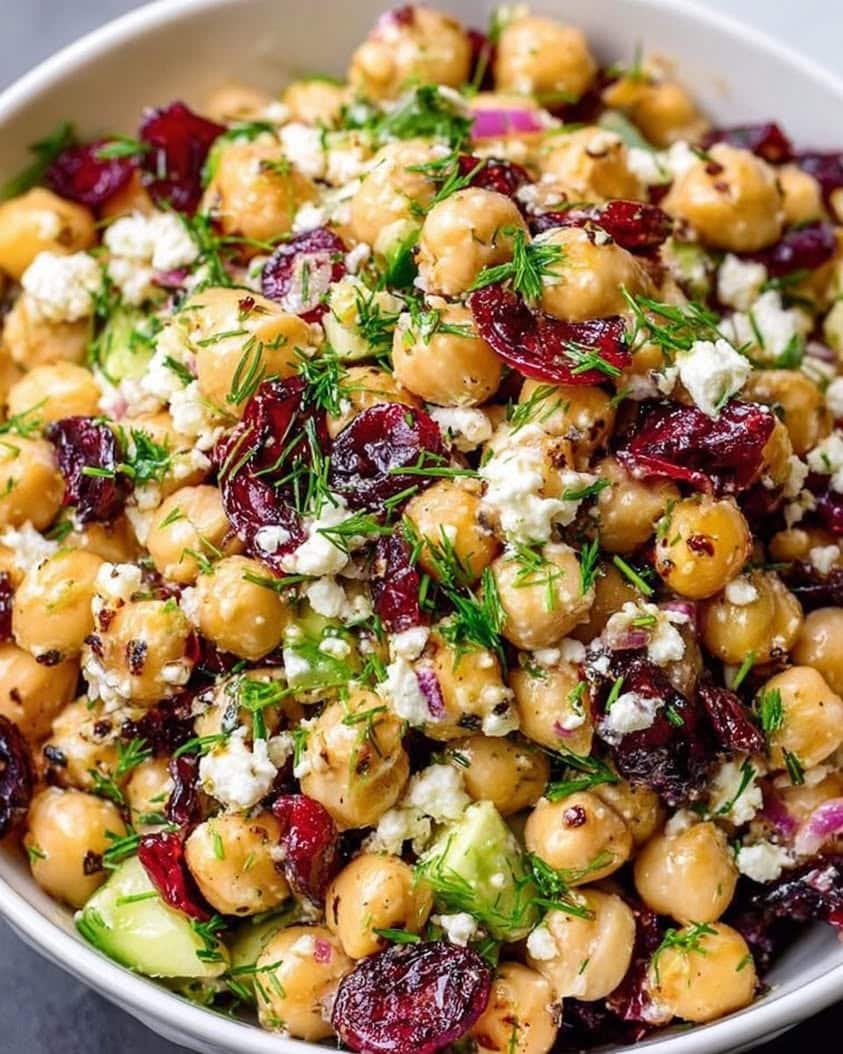
Bright Feta Cranberry Chickpea Salad with Zesty Lemon Vinaigrette: A Flavor-Packed Power Bowl
This vibrant Feta and Cranberry Chickpea Salad with Lemon Vinaigrette is a true celebration of fresh, bold flavors. It combines creamy, salty feta with sweet-tart dried cranberries and hearty chickpeas, all tossed in a bright, zesty lemon vinaigrette. The result is a dish that is not only incredibly delicious but also a feast for the eyes, featuring a beautiful mosaic of colors and textures in every single bite. Ultimately, this salad is the perfect answer for anyone seeking a quick, healthy, and satisfying meal.
Imagine a salad that delivers a perfect balance in every forkful. You get the creamy, crumbly texture of high-quality feta cheese, the satisfying chew of sweet cranberries, and the substantial, nutty bite of protein-packed chickpeas. Furthermore, the lemon vinaigrette ties everything together with its sharp, citrusy punch, cutting through the richness and elevating the entire dish. This Feta and Cranberry Chickpea Salad is incredibly versatile, serving beautifully as a light lunch, a substantial side dish, or a make-ahead meal prep superstar.
Beyond its fantastic taste, this salad is a nutritional powerhouse. Chickpeas provide a solid base of plant-based protein and fiber, keeping you full and energized. Meanwhile, the fresh herbs and lemon juice add a burst of vitamins and antioxidants. Consequently, this recipe is a brilliant example of how eating well can be an absolute delight for your taste buds. You will find yourself craving this bright, flavorful combination again and again.
Quick Recipe Highlights
- Flavor Profile: This salad masterfully balances salty, sweet, tangy, and fresh notes. The salty feta and the sweet dried cranberries create a classic contrast, while the lemon vinaigrette adds a necessary tangy brightness. Finally, fresh herbs like parsley or mint introduce a clean, aromatic finish that lifts the entire dish.
- Texture: Expect a wonderfully satisfying mix of creamy, chewy, and tender-crisp elements. The chickpeas offer a pleasantly firm and nutty bite, the feta is luxuriously creamy and crumbly, and the cranberries provide a delightful chew. Additionally, adding crunchy elements like cucumber or red onion introduces a refreshing crispness.
- Aroma: The primary aromatic notes come from the fresh lemon zest and juice in the vinaigrette, which is bright and invigorating. Furthermore, freshly chopped herbs like parsley or dill contribute a green, garden-fresh scent that makes the salad smell as good as it tastes.
- Visual Appeal: This salad is a colorful masterpiece with vibrant red cranberries, white feta, green herbs, and the golden hue of chickpeas. The presentation is naturally beautiful, making it an excellent choice for potlucks or entertaining where you want to impress with minimal effort.
- Skill Level Needed: This is a beginner-friendly recipe requiring no cooking, only simple assembly and whisking. The most advanced technique is making an emulsified vinaigrette, which is straightforward and foolproof. Therefore, it is perfect for novice cooks or anyone needing a guaranteed success.
- Special Equipment: You need only basic kitchen tools: a mixing bowl, a whisk or a jar with a tight lid for shaking the dressing, and a knife for chopping. A can opener is helpful for the chickpeas, but that is truly the extent of the required equipment.
Recipe Overview
- Difficulty Level: We rate this Feta and Cranberry Chickpea Salad as “Easy” because it involves zero cooking and uses simple, no-fuss techniques. The process is essentially chopping, draining, and whisking. There is no precision baking or complex sautéing involved, making it virtually impossible to mess up. It is the ideal recipe for a stress-free kitchen experience.
- Category: This dish fits perfectly into multiple meal categories. It is substantial enough to be a main course salad for lunch, thanks to the protein-rich chickpeas. Simultaneously, it works wonderfully as a vibrant side dish alongside grilled chicken, fish, or lamb. It also excels in the meal prep category, as it holds up well in the refrigerator.
- Cuisine: While not tied to one specific tradition, this salad draws inspiration from Mediterranean and Middle Eastern culinary styles. The use of chickpeas, lemon, and olive oil is classic to those regions. However, the inclusion of sweet cranberries adds a modern, fusion twist that makes it uniquely appealing to a wide audience.
- Cost: This is an exceptionally budget-friendly recipe. Canned chickpeas, dried cranberries, and block feta are all affordable, pantry-stable ingredients. The fresh herbs and lemon are low-cost produce items. As a result, you can create a large, impressive bowl of salad for just a few dollars per serving, making it fantastic for feeding a crowd.
- Season: This salad is truly a year-round champion. It feels light and refreshing for spring and summer picnics. Conversely, its hearty beans and rich cheese make it satisfying during fall and winter. The bright lemon vinaigrette is especially welcome in the darker months, bringing a much-needed splash of sunshine to the table.
- Occasion: Its versatility makes it suitable for countless occasions. Pack it for a work lunch, bring it to a potluck or barbecue, serve it at a casual dinner party, or enjoy it as a quick family dinner. It is particularly excellent for holiday gatherings where its red and white colors add a festive touch.
Why You’ll Love This Recipe
First and foremost, the taste and texture appeal of this Feta and Cranberry Chickpea Salad is undeniable. Each bite delivers a symphony of contrasting yet harmonious sensations. The creamy saltiness of the feta perfectly offsets the juicy sweetness of the cranberries. Meanwhile, the chickpeas provide a hearty, satisfying base that makes the salad feel like a complete meal. The lemon vinaigrette acts as the conductor, ensuring all these flavors sing together in bright, zesty harmony. You will find the combination so moreish that you will keep going back for just one more forkful.
From a convenience standpoint, this recipe is an absolute winner. It requires no cooking, which means you can have a gourmet-tasting salad ready in about fifteen minutes. This makes it a lifesaver on busy weeknights when you are too tired to cook. Additionally, it is a fantastic meal prep option. You can assemble a large batch on Sunday and have ready-to-go lunches for the entire workweek. The flavors actually improve as they meld in the refrigerator, so it is a rare salad that gets better with time.
Nutritionally, this dish is a powerhouse that makes healthy eating effortless and enjoyable. Chickpeas are loaded with plant-based protein and dietary fiber, which promote satiety and support digestive health. Feta cheese provides calcium and protein, while the olive oil in the vinaigrette is a source of heart-healthy monounsaturated fats. The lemon juice offers a dose of vitamin C, and the herbs contribute antioxidants. Consequently, this salad fuels your body with high-quality nutrients without any sense of deprivation.
For social and entertaining value, this salad is a guaranteed crowd-pleaser. Its vibrant, colorful presentation looks beautiful on a buffet table or picnic spread. It caters to various dietary preferences, being vegetarian and easily adaptable to be vegan or gluten-free. Because it is served cold and can be made ahead, it removes last-minute stress from hosting. You can confidently bring this Feta and Cranberry Chickpea Salad to any gathering, knowing it will be met with compliments and requests for the recipe.
Finally, the cost-effectiveness and accessibility of the ingredients make this a staple recipe. You can find every component at any standard grocery store, with no need for special trips or exotic items. Canned chickpeas, dried cranberries, and a block of feta are inexpensive and have a long shelf life. This means you can keep the basics on hand and whip up an impressive meal spontaneously. It is a brilliant way to eat well on a budget without sacrificing an ounce of flavor or satisfaction.
Historical Background and Cultural Significance
The story of this salad is a modern tale of culinary fusion, drawing from deep historical roots. Chickpeas, one of the oldest cultivated legumes, have been a staple in Middle Eastern, Mediterranean, and Indian cuisines for thousands of years. They were valued for their durability, nutrition, and versatility, forming the base for dishes like hummus and falafel. Feta cheese, with its origins in Greece, is a brined curd cheese with a history dating back to the Byzantine era. The practice of preserving cheese in brine was essential for storage in warm climates. Combining these two ancient ingredients creates a connection to timeless, rustic food traditions.
The cultural significance lies in the adaptation of these traditional staples into a contemporary, global salad. While chickpea salads exist in many cultures, the specific combination with sweet dried cranberries and a sharp lemon vinaigrette is a relatively new innovation. This reflects the modern Western culinary trend of creating “power bowls” or “meal salads” that are both nutritious and Instagram-worthy. The salad represents a fusion food movement, where accessible, globally-inspired ingredients are combined for convenience, health, and bold flavor contrasts appreciated by today’s palates.
The evolution of this recipe is a direct response to modern lifestyle needs. As home cooks sought faster, healthier meals that didn’t compromise on taste, no-cook salads using pantry staples became immensely popular. The addition of dried cranberries, a North American product, to a Mediterranean-style base is a perfect example of this evolution. It adds a sweet-tart dimension that appeals to a wide audience and introduces a festive color. The lemon vinaigrette, a classic French “sauce vinaigrette,” provides the simple, elegant acidity that ties the diverse elements together, showcasing how foundational techniques adapt to new ingredient pairings.
Regional variations of this concept are endless, demonstrating its adaptable nature. In the Eastern Mediterranean, a similar salad might feature olives, tomatoes, and cucumber with a oregano-lemon dressing. A North African twist could include harissa in the vinaigrette and preserved lemons. In Western kitchens, adding nuts like pecans or walnuts for crunch is common. The core formula—beans + cheese + fruit + herbaceous dressing—is a template that welcomes localization. This Feta and Cranberry Chickpea Salad sits within that global tradition, a specific iteration designed for maximum flavor impact and ease, embodying the way recipes travel and transform across cultures and time.
Ingredient Deep Dive
Chickpeas (Garbanzo Beans): Cultivated since 7500 BCE, chickpeas are a foundational food across the Middle East, India, and the Mediterranean. Nutritionally, they are a superstar, offering about 15 grams of protein and 13 grams of fiber per cooked cup, along with significant iron, folate, and manganese. For this salad, opt for low-sodium canned chickpeas for convenience; simply rinse and drain them thoroughly to remove the starchy canning liquid. If you have time, cooking dried chickpeas from scratch yields a superior, firmer texture. Store cooked or canned chickpeas in their liquid in the refrigerator for up to 4 days. For a substitution, white beans like cannellini or great northern beans work beautifully.
Feta Cheese: Authentic Greek feta is a Protected Designation of Origin (PDO) product, made from at least 70% sheep’s milk, often blended with goat’s milk. This gives it a tangy, salty, and slightly grassy flavor with a crumbly yet creamy texture. It is a good source of calcium, protein, and beneficial fatty acids. Always choose a block of feta packed in brine over pre-crumbled varieties, which contain anti-caking agents and lack flavor and moisture. Store leftover feta submerged in its brine in the refrigerator. For a dairy-free or vegan version, firm tofu crumbled and marinated in lemon juice and salt, or a commercial vegan feta alternative, can be used.
Dried Cranberries: Unlike fresh cranberries, dried cranberries are sweetened, creating the perfect sweet-tart counterpoint to salty feta. They are a source of antioxidants and dietary fiber. When selecting them, look for brands with no added artificial colors or excessive sugar; some are sweetened with apple juice for a cleaner ingredient list. For a chewier texture, you can plump them briefly in warm water or orange juice before adding to the salad. Store dried cranberries in a sealed container in a cool, dark pantry. Currants, chopped dried apricots, or dried cherries make excellent substitutes, each bringing a slightly different fruity note.
Lemon Vinaigrette: This simple emulsion of fresh lemon juice, extra virgin olive oil, Dijon mustard, garlic, salt, and pepper is the lifeblood of the salad. Freshly squeezed lemon juice is non-negotiable for its vibrant, clean acidity and aromatic oils. High-quality extra virgin olive oil contributes fruity, peppery notes and healthy fats. The Dijon mustard acts as an emulsifier, helping the oil and juice blend smoothly, and adds a subtle sharpness. Always taste and adjust the dressing before tossing; it should be bright and assertive. For storage, keep extra vinaigrette in a jar in the fridge for up to a week, shaking well before use.
Fresh Herbs (Parsley/Mint): Fresh herbs are not merely a garnish; they are essential aromatic ingredients that provide a burst of freshness. Flat-leaf (Italian) parsley has a clean, slightly peppery flavor, while mint offers a cool, sweet brightness. Both are rich in vitamins A, C, and K, and antioxidants. Always chop herbs just before adding to preserve their volatile oils and prevent wilting. Store bunches of herbs stem-down in a glass of water in the fridge, loosely covered with a bag. If you lack fresh herbs, a teaspoon of dried oregano or dill can be added to the dressing, though the flavor profile will shift.
Common Mistakes to Avoid
- Using Pre-Crumbled Feta: Pre-crumbled feta is often dry, bland, and coated in anti-caking agents. Always buy a block of feta stored in brine. Crumble it yourself just before adding to the salad for maximum creaminess and flavor. This simple step makes a dramatic difference in the texture and taste of your final dish.
- Not Rinsing the Canned Chickpeas: Skipping the rinse leaves a starchy, sometimes metallic-tasting liquid on the beans. This can muddy the flavors of your vinaigrette and make the salad seem sludgy. Always drain canned chickpeas in a colander and rinse thoroughly under cold water until the water runs clear. Pat them dry gently with a towel for the best dressing adherence.
- Overlooking the Dressing Balance: A flat-tasting salad often stems from an unbalanced vinaigrette. The dressing should be quite sharp on its own, as the ingredients will mellow it. Taste your vinaigrette before adding and ensure it has a strong, pleasing balance of acid, salt, and oil. Do not be afraid to add more lemon juice or a pinch of salt.
- Adding the Dressing Too Early for Meal Prep: If you plan to store the salad for more than a few hours, keep the dressing separate until ready to serve. The acid in the lemon juice will start to “cook” and soften the chickpeas and herbs, and the salad can become watery. Store components separately and combine for the freshest texture.
- Using Bottled Lemon Juice: The flavor of bottled lemon juice is flat, preservative-tinged, and lacks the bright, aromatic zest of fresh lemons. Freshly squeezed lemon juice is essential for the vibrant, clean acidity that defines this salad. The small amount of extra effort is absolutely worth it for the superior flavor outcome.
- Chopping Herbs in Advance: Chopping parsley or mint hours before using them causes them to wilt, darken, and lose their potent aromatic oils. Always chop your fresh herbs at the very last moment, just before folding them into the salad. This preserves their color, texture, and burst of fresh flavor.
- Underseasoning the Salad: Chickpeas and feta can handle and require generous seasoning. Do not rely solely on the salt in the feta. Season the drained chickpeas lightly with salt and pepper before adding other ingredients. Always taste the final mixture and adjust with more salt, pepper, or a squeeze of lemon as needed.
- Mincing Garlic Too Coarsely: A large chunk of raw garlic can be overpowering and leave a harsh aftertaste. Mince the garlic very finely, or better yet, crush it into a paste with a little salt using the side of your knife. This distributes the garlic flavor evenly and mellows its raw bite.
Essential Techniques
Making an Emulsified Vinaigrette: The goal is to create a stable, creamy mixture where the oil and lemon juice are fully combined, not separated. The key is to start with your acid (lemon juice), mustard, and seasonings in a bowl. Whisk constantly while slowly drizzling in the olive oil in a thin, steady stream. This slow incorporation allows the oil to break into tiny droplets suspended in the liquid. The Dijon mustard contains lecithin, which acts as an emulsifier to hold the mixture together. A common pitfall is adding the oil too quickly, which causes it to “break” or separate. For success, patience and a steady hand are your best tools.
Properly Draining and Prepping Canned Chickpeas: This technique ensures optimal texture and flavor absorption. First, pour the can into a colander and rinse under cold running water for at least 30 seconds, agitating with your hands. This removes the starchy aquafaba and any canning taste. Some cooks also recommend gently rubbing the chickpeas in a clean kitchen towel to loosen and remove the thin, translucent skins; this step is optional but results in a more tender bean and better dressing adherence. The visual cue for success is clean, plump chickpeas without any slimy residue.
Crumbling Feta Cheese: For the best texture, crumble feta with your fingers. Using a fork or knife can crush it into a pasty consistency. Take small pieces from the block and gently break them apart between your fingertips. This creates irregular, craggy pieces with more surface area to catch the dressing. Ensure the feta is cold from the fridge for easier handling. The technique preserves the cheese’s delightful crumbly-yet-creamy mouthfeel, which is a signature element of the salad.
Pro Tips for Perfect Feta and Cranberry Chickpea Salad
For an extra flavor dimension, toast your chickpeas. After rinsing and drying, toss them with a teaspoon of olive oil and a pinch of cumin or smoked paprika, then roast on a sheet pan at 400°F for 15-20 minutes until slightly crispy. Let them cool completely before adding to the salad.
If your dried cranberries seem very hard, plump them up. Soak them in a small bowl of warm water, orange juice, or even a bit of balsamic vinegar for 5-10 minutes before draining. This rehydrates them, making them juicier and more integrated into the salad.
Add a textural contrast with nuts. A handful of toasted walnuts, pecans, or slivered almonds sprinkled on top just before serving introduces a wonderful crunch and nutty flavor that complements the creamy and chewy elements beautifully.
Incorporate more fresh vegetables for volume and nutrition. Diced cucumber, halved cherry tomatoes, finely chopped red onion, or bell pepper strips blend seamlessly into this salad, adding color, crunch, and extra vitamins.
Let the dressed salad rest for 10-15 minutes before serving. This short marinating time allows the chickpeas to absorb some of the vinaigrette flavors, resulting in a more cohesive and deeply seasoned dish.
Use the salad as a versatile filling. Stuff it into pita pockets, spoon it over a bed of leafy greens, or use it as a topping for baked sweet potatoes. This transforms the basic salad into a completely new meal experience.
For the brightest flavor, add a teaspoon of finely grated lemon zest to the vinaigrette. The zest contains aromatic oils that intensify the citrus flavor without adding more acidity, giving the dressing a perfumed, vibrant quality.
If making for a crowd, present it beautifully. Serve the salad in a large, shallow bowl and garnish the top with a few extra whole cranberries, large feta crumbles, and a generous sprinkle of freshly chopped herbs for a professional, inviting presentation.
Variations and Adaptations
Regional Variations: Travel the Mediterranean with simple swaps. For a Greek twist, add Kalamata olives, diced cucumber, tomatoes, and fresh oregano. A Moroccan-inspired version could include chopped preserved lemon, a pinch of cinnamon in the dressing, and toasted almonds. An Italian take might feature sun-dried tomatoes, fresh basil, and a splash of balsamic vinegar alongside the lemon.
Seasonal Adaptations: Make the most of fresh produce. In summer, add fresh sweet corn kernels and diced peaches or nectarines. For fall, incorporate roasted cubed butternut squash and swap the cranberries for dried figs. In spring, fresh peas and chopped asparagus (blanched) bring a lovely green vibrancy.
Dietary Modifications: This salad is easily adaptable. For a vegan version, omit the feta or use a plant-based alternative, and ensure your dried cranberries are sweetened with juice, not honey. To make it gluten-free, simply confirm all packaged ingredients are certified GF—it is naturally compliant. For a lower-fat option, reduce the olive oil slightly and use a reduced-fat feta.
Flavor Variations: Experiment with the dressing base. Substitute the lemon juice with red wine vinegar or apple cider vinegar for a different acidic profile. Add a teaspoon of honey or maple syrup for a touch of sweetness. Incorporate bold flavors like harissa paste, za’atar seasoning, or sumac directly into the vinaigrette for a Middle Eastern kick.
Texture Modifications: Play with the mouthfeel. For more creaminess, add diced avocado or a dollop of plain Greek yogurt to the dressing. For increased crunch, include seeds like sunflower or pumpkin seeds, or crispy elements like homemade croutons or pita chips broken over the top just before serving.
Presentation Alternatives: Think beyond the bowl. Serve individual portions in hollowed-out bell peppers or tomatoes. Layer the salad in a clear glass trifle dish with greens for a stunning parfait effect. Or, skewer the components on toothpicks with a chickpea, a feta cube, and a cranberry for a fun, bite-sized appetizer.
Serving and Presentation Guide
Plating Techniques: For individual servings, use a ring mold to create a neat, restaurant-style tower in the center of the plate. For a family-style presentation, choose a wide, shallow bowl or platter rather than a deep bowl. This allows the colorful ingredients to be displayed beautifully and makes serving easier. Gently mound the salad, creating height and dimension rather than spreading it flat.
Garnishing Ideas: Garnishes should be edible and enhance flavor. A final drizzle of high-quality extra virgin olive oil over the top adds shine. Sprinkle with flaky sea salt, such as Maldon, for a burst of salinity. Add a few whole mint or parsley leaves, a twist of freshly cracked black pepper, or a light dusting of paprika or sumac for color contrast.
Traditional Accompaniments: In a Mediterranean context, this salad pairs naturally with warm, grilled flatbreads like pita or naan for scooping. It is also a classic side for grilled meats like lamb chops, chicken souvlaki, or kofta. A simple bowl of olives and some marinated artichoke hearts would complete a mezze-style spread.
Modern Serving Suggestions: For a contemporary lunch, serve the salad over a bed of massaged kale or arugula, which adds a peppery note. Use it as a hearty topping for a grain bowl with quinoa or farro. Alternatively, pack it into a whole-wheat wrap with a smear of hummus for a portable lunch on the go.
Temperature Considerations: This salad is best served cold or at cool room temperature. If made ahead and stored in the fridge, let it sit out for about 10-15 minutes before serving to take the chill off. This allows the olive oil in the dressing to loosen up and the flavors to become more pronounced. Never serve it warm, as the feta will become too soft.
Portion Control Tips: As a main course, a serving is roughly 1.5 to 2 cups per person. As a side dish, plan for about 3/4 to 1 cup per serving. To manage portions for a buffet, provide a large serving spoon and suggest guests start with a modest scoop, as the salad is quite filling. For meal prep, divide it evenly into four containers immediately after mixing for ready-to-go lunches.
Wine and Beverage Pairing
Wine Pairings: The salty feta and bright lemon vinaigrette call for wines with good acidity to match. A crisp, dry Greek Assyrtiko or a Sauvignon Blanc from New Zealand are excellent choices, as their citrus and mineral notes mirror the salad’s dressing. For a red option, a light, chilled Beaujolais or a Pinot Noir with low tannins won’t overpower the dish. Rosé, particularly a dry Provençal style, is a fantastic and versatile pairing that bridges all the salad’s flavors beautifully.
Non-Alcoholic Alternatives: Sparkling water with a squeeze of lemon or lime and a few fresh herb sprigs is a refreshing, palate-cleansing choice. For something sweeter, an iced herbal tea like mint or lemon verbena complements the herbal notes. A tart pomegranate juice spritzer (mixed with soda water) echoes the cranberry’s fruity tang without added sugar.
Coffee/Tea Pairings: While not a typical pairing for salad, if serving this for a brunch or lunch, a light roast coffee with bright, citrusy notes can work surprisingly well. For tea, consider a green tea like sencha, which has a vegetal, slightly astringent quality that can cut through the richness of the feta and cleanse the palate between bites.
Temperature Considerations: All beverages should be served well-chilled. White wines, rosés, and non-alcoholic spritzers benefit from being served at 45-50°F. Red wines, if chosen, should be lightly chilled to about 55°F. Iced teas and sparkling waters should be ice-cold to provide a refreshing contrast to the salad.
Serving Suggestions: Offer a variety of beverages to cater to different preferences. Place white wine and sparkling water in ice buckets to keep them cold on the table. For a casual gathering, a large dispenser of infused water with lemon slices, cucumber, and mint allows guests to help themselves throughout the meal.
Storage and Shelf Life
Storage Methods: Store the fully assembled salad in an airtight container in the refrigerator. For optimal freshness, press a piece of plastic wrap directly onto the surface of the salad before sealing the lid to limit air exposure. If you have added delicate greens or fresh herbs, it is best to store those separately and add them just before serving.
Temperature Requirements: This salad must be kept refrigerated at 40°F or below at all times. Do not leave it sitting out at room temperature for more than two hours (or one hour if the ambient temperature is above 90°F), as the dairy and moist environment can promote bacterial growth.
Container Recommendations: Glass containers with tight-sealing lids are ideal, as they do not absorb odors and allow you to see the contents. If using plastic, ensure it is BPA-free and designed for food storage. For meal prep, divide the salad into single-serving portions in smaller containers for grab-and-go convenience.
Signs of Spoilage: Discard the salad if you notice an off or sour smell, significant liquid separation that looks cloudy, or any signs of mold. The herbs will wilt over time, but if they become slimy or the chickpeas develop an unusually soft or mushy texture, it is time to throw it out.
Reheating Instructions: This salad is meant to be served cold and should not be reheated. If you have stored it in the fridge, simply take it out 10-15 minutes before serving to let it come to a cool, not ice-cold, temperature for the best flavor.
Freezing Guidelines: Freezing is not recommended for this salad. The texture of the chickpeas will become mealy and grainy upon thawing, the feta will disintegrate, and the fresh herbs and any vegetables will turn to mush. The high water content in the ingredients makes it unsuitable for freezing.
Make Ahead Strategies
Prep Timeline: You can fully prepare this salad up to 24 hours in advance. The flavors meld and improve over the first few hours. For the absolute best texture, prepare the components up to 2 days ahead but combine them no more than 4-6 hours before serving. The chickpeas can be rinsed and stored, the feta crumbled, the dressing whisked, and the herbs chopped, all kept in separate containers in the fridge.
Storage Between Steps: Store the drained chickpeas in a sealed container. Keep the crumbled feta in a small container, perhaps with a splash of water or milk to prevent drying out. The vinaigrette can be stored in a jar in the fridge; just shake vigorously to re-emulsify before using. Chop the herbs and store them wrapped in a damp paper towel inside a sealed bag.
Quality Impact Assessment: Making the salad a day ahead enhances the flavor as the chickpeas absorb the dressing. The primary trade-off is a slight softening of texture and some wilting of fresh herbs. The salad remains delicious but will be less crisp than freshly made. The feta may also bleed its color slightly into the dressing.
Assembly Tips: When ready to serve, combine the chickpeas, cranberries, and any sturdy vegetables (like onion) in a large bowl. Pour over most of the dressing and toss. Gently fold in the crumbled feta and fresh herbs. Taste and add more dressing or seasoning as needed. This sequential assembly prevents the feta from breaking down too much and the herbs from wilting prematurely.
Reheating Guidelines: As mentioned, do not reheat. If the salad is very cold from the fridge, let it sit on the counter for a short period to take the edge off the chill. This allows the olive oil to liquefy and the flavors to become more pronounced.
Fresh Element Additions: To revive a make-ahead salad, add a final squeeze of fresh lemon juice and a drizzle of new olive oil just before serving. You can also sprinkle on a handful of freshly chopped herbs or a crunchy element like toasted nuts or seeds to restore textural contrast and visual appeal.
Scaling Instructions
Halving the Recipe: Halving is straightforward for a smaller yield. Simply divide all ingredient quantities by two. Use a standard 15-ounce can of chickpeas and reserve half for another use. The dressing can be tricky to emulsify in very small quantities; consider making the full batch of dressing and storing half for another salad later in the week. No equipment adjustments are needed for halving.
Doubling or Tripling: For a crowd, doubling or tripling works perfectly. Use a very large mixing bowl or mix directly in a large, clean serving platter with raised edges. When making a large batch of vinaigrette, use a blender or a large jar for shaking to ensure proper emulsification. Taste carefully as you season, as you may need slightly less salt per volume when scaling up. The total prep time will increase slightly due to the volume of chopping and mixing.
Equipment Adjustments: When scaling up, your main mixing bowl must be large enough to toss everything without spilling. For tripling a recipe, you may need to mix in batches or use a very large stockpot as a mixing vessel. Ensure you have enough storage containers if preparing ahead.
Timing Modifications: The active prep time scales linearly: doubling the ingredients will roughly double your chopping and mixing time. However, there is no additional “cook” time. Allow a few extra minutes for thorough tossing to ensure the dressing evenly coats the larger quantity of ingredients.
Storage Considerations: A large batch will take up significant refrigerator space. Plan ahead by clearing a shelf. It is often better to store a doubled or tripled batch in multiple smaller containers rather than one enormous one, as this chills the food more quickly and safely and makes serving easier.
PrintFeta and Cranberry Chickpea Salad with Lemon Vinaigrette
- Total Time: 25 minutes
- Yield: 4
Description
A vibrant, protein-packed salad featuring creamy chickpeas, tangy feta, sweet cranberries, and a zesty lemon vinaigrette, perfect for a light lunch or side dish.
Ingredients
- 2 cans (15 oz each) chickpeas, rinsed and drained
- 1 cup crumbled feta cheese
- 1/2 cup dried cranberries
- 1/4 cup chopped fresh parsley
- 1/4 cup extra-virgin olive oil
- 3 tablespoons fresh lemon juice
- 1 teaspoon Dijon mustard
- 1 clove garlic, minced
- Salt and black pepper to taste
Instructions
- In a large bowl, combine chickpeas, feta cheese, cranberries, and parsley.
- In a small bowl, whisk together olive oil, lemon juice, Dijon mustard, minced garlic, salt, and pepper until emulsified.
- Pour the vinaigrette over the chickpea mixture and toss gently to coat evenly.
- Let the salad sit for 10 minutes to allow flavors to meld before serving.
Notes
You can customize the seasonings to taste.
- Prep Time: 15 minutes
- Cook Time: 0 minutes
- Method: Side
- Cuisine: Mediterranean