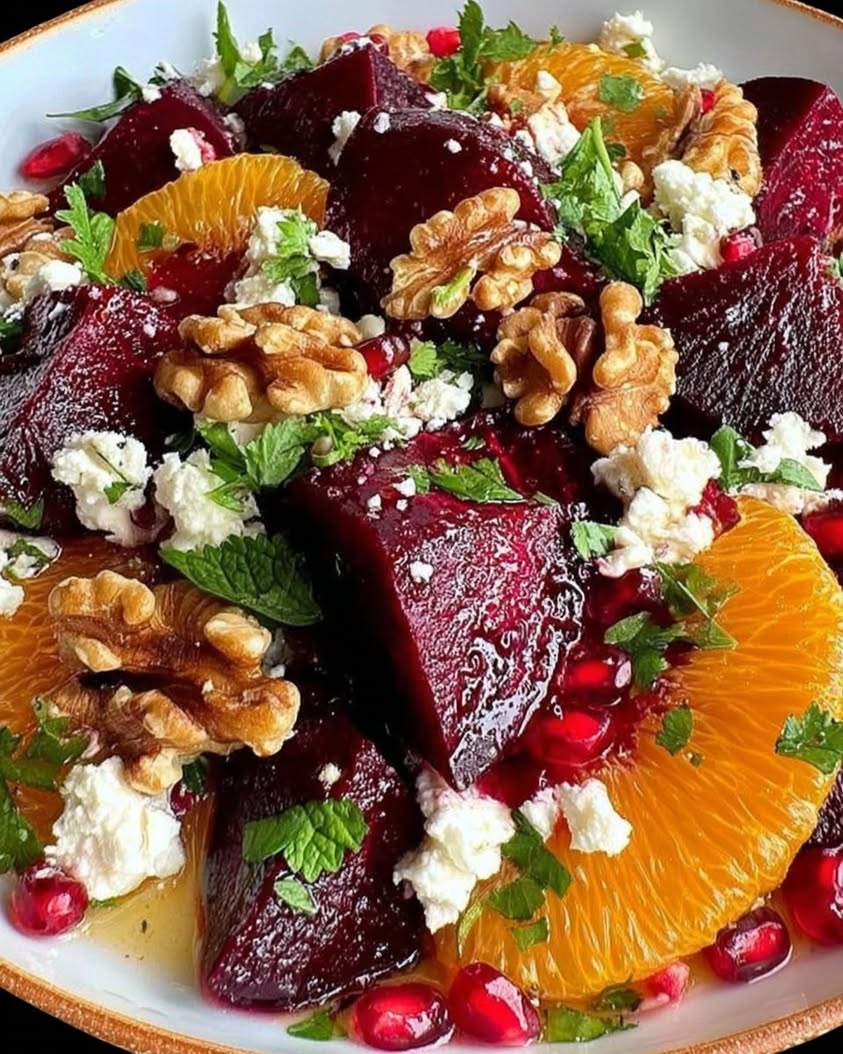
Winter Ruby Beet and Citrus Salad with Pomegranate and Feta: A Vibrant Feast for the Senses
When the winter months cast a gray pallor over the landscape, your plate deserves a burst of brilliant color and invigorating flavor. This Winter Ruby Beet and Citrus Salad with Pomegranate and Feta answers that call with stunning visual appeal and a symphony of tastes. Moreover, it transforms humble root vegetables and seasonal citrus into a show-stopping centerpiece that is as nutritious as it is beautiful. This recipe celebrates the best of cold-weather produce, proving that winter salads can be hearty, satisfying, and far from boring.
The magic of this Winter Ruby Beet and Citrus Salad lies in its perfect balance. Earthy, sweet roasted beets meet the bright, tangy punch of fresh citrus segments. Subsequently, crunchy toasted walnuts add a nutty depth, while salty, creamy feta cheese provides a rich counterpoint. Finally, a scattering of jewel-like pomegranate arils and a simple citrus vinaigrette tie everything together with bursts of juicy sweetness and a light, zesty finish. Every forkful is a delightful exploration of contrasting textures and complementary flavors.
This dish is more than just a salad; it’s a versatile culinary star. For instance, you can serve it as a stunning starter for a dinner party, a vibrant side dish alongside roasted chicken or fish, or even as a light main course with the addition of some protein like grilled shrimp or chickpeas. Ultimately, it brings a welcome splash of ruby red and sunshine yellow to your table, offering a delicious antidote to the winter blues.
Quick Recipe Highlights
- Flavor Profile: This salad masterfully balances earthy sweetness from roasted beets with sharp, tangy citrus and salty, creamy feta. The dressing enhances these flavors with a bright, acidic note, while toasted walnuts add a rich, nutty undertone.
- Texture: You will enjoy a fantastic contrast between the tender, dense roasted beets, the juicy burst of citrus and pomegranate, the creamy crumble of feta, and the satisfying crunch of toasted walnuts. Consequently, each bite is a complex and pleasurable experience.
- Aroma: The salad fills the air with the warm, earthy scent of roasted beets mingled with the fresh, zesty fragrance of orange and lemon. Toasting the walnuts adds a warm, nutty aroma that makes the dish incredibly inviting.
- Visual Appeal: This is a visually stunning dish with a dramatic palette of deep ruby red, bright orange and yellow, creamy white, and dark brown. The jewel-toned pomegranate seeds look like edible garnets scattered across the plate, making it perfect for special occasions.
- Skill Level Needed: This is an accessible recipe for cooks of all levels. The techniques involve simple roasting, basic knife work for segmenting citrus, and whisking a straightforward vinaigrette. Therefore, even a beginner can achieve impressive results with a little care.
- Special Equipment: You only need basic kitchen tools: a baking sheet for roasting the beets, a small skillet for toasting walnuts, and a mixing bowl. Aluminum foil is helpful for wrapping beets to roast, but parchment paper works as a good alternative.
Recipe Overview
- Difficulty Level: We rate this recipe as “Easy” because it relies on foundational cooking techniques rather than complex skills. Roasting beets is a hands-off process, and the assembly is simply about combining prepped ingredients. The most technical step, segmenting citrus, is easy to learn and becomes intuitive with practice.
- Category: This dish fits beautifully into multiple categories. Primarily, it is a vibrant winter salad or side dish. With added protein, it easily becomes a light main course. Furthermore, its stunning appearance makes it an ideal starter or part of a holiday or special occasion buffet spread.
- Cuisine: While not tied to one specific tradition, this salad draws inspiration from Mediterranean and Middle Eastern culinary principles. The combination of beets, citrus, nuts, and cheese is common in these regions, emphasizing fresh, bright flavors and wholesome ingredients. It’s a modern, fusion-style dish that celebrates global pantry staples.
- Cost: This is a moderately priced recipe, largely dependent on the season. Beets and citrus are typically affordable in winter. Pomegranates and pre-crumbled feta can add to the cost, but you can often find good deals. Toasted walnuts are a small but worthwhile investment for their flavor and texture impact.
- Season: This is unequivocally a winter recipe. Beets and citrus fruits like oranges and grapefruit are at their peak sweetness and availability during the colder months. Pomegranates are also a classic winter fruit. The recipe is designed to showcase the best produce this season has to offer.
- Occasion: This salad is incredibly versatile for events. It’s elegant enough for Thanksgiving, Christmas, or a New Year’s Eve dinner. Simultaneously, it’s simple enough for a cozy weekend lunch or a healthy weekday meal prep option. Its flexibility is one of its greatest strengths.
Why You’ll Love This Recipe
First and foremost, the taste and texture of this Winter Ruby Beet and Citrus Salad are utterly captivating. The natural sweetness of the roasted beets deepens and caramelizes in the oven, creating a rich base. This earthiness is brilliantly cut by the vibrant acidity of fresh citrus segments. Then, you get the creamy, salty punch of feta cheese, the crunchy texture of walnuts, and the juicy pop of pomegranate seeds. Every single component plays a crucial role, resulting in a dish that is far greater than the sum of its parts. You will find yourself going back for bite after bite, discovering new flavor combinations each time.
From a convenience standpoint, this recipe is a dream. A significant portion of the work is hands-off roasting time for the beets. You can prepare other components, like the dressing and toasted walnuts, while they cook. Additionally, you can roast the beets a day or two in advance, making assembly on the day you plan to serve incredibly quick and stress-free. This make-ahead flexibility is a huge benefit for busy hosts or anyone looking to streamline their meal preparation during a hectic week.
Nutritionally, this Winter Ruby Beet and Citrus Salad is a powerhouse. Beets are loaded with fiber, folate, and beneficial plant compounds that support heart health and exercise performance. Citrus fruits provide a massive dose of immune-boosting vitamin C, crucial during cold and flu season. Walnuts contribute healthy omega-3 fats and protein, while pomegranate seeds are packed with antioxidants. Feta cheese adds protein and calcium. Consequently, this salad is not just a treat for your taste buds but also a substantial boost for your overall well-being.
For social and entertaining value, this salad is unmatched. Its dramatic, colorful presentation is guaranteed to draw compliments and spark conversation at any gathering. It looks like you spent hours on a complicated dish, yet the process is straightforward. Guests with various dietary preferences can often enjoy it, especially with simple modifications. Serving a dish that is both beautiful and delicious enhances your reputation as a thoughtful and skilled cook, making any meal feel more special and celebratory.
Finally, this recipe is cost-effective and accessible. The ingredients are not exotic or prohibitively expensive. Beets, oranges, and lemons are winter workhorses found in every grocery store. You can often buy walnuts in bulk for better value. If pomegranates are out of season or pricey, dried cranberries make a fine, budget-friendly substitute. This accessibility means you can enjoy a restaurant-quality, gourmet-tasting salad without the gourmet price tag, anytime the winter mood strikes.
Historical Background and Cultural Significance
The story of this Winter Ruby Beet and Citrus Salad is a modern tale of seasonal cooking and global fusion. Individually, its components have deep and ancient roots. Beets, for instance, were first cultivated for their greens in the Mediterranean region thousands of years ago. The Romans later began cultivating the root itself. Citrus fruits like oranges and lemons have their origins in Southeast Asia, traveling along trade routes to the Middle East and Mediterranean, where they became culinary staples. Combining these elements is a contemporary celebration of winter’s bounty.
Culturally, the pairing of beets with tangy and creamy elements is classic in Eastern European cuisine, think of dishes like Russian salad vinegret. Meanwhile, the combination of citrus, nuts, and cheese is a hallmark of many Mediterranean and Middle Eastern meals. This recipe sits at a delicious crossroads, borrowing the best from these traditions. It reflects a modern cooking philosophy that prioritizes seasonal availability and bold, contrasting flavors over strict adherence to any single culinary canon, creating something new and exciting in the process.
The evolution of this recipe follows the broader trend of the “composed salad” in Western cuisine. Chefs and home cooks moved beyond simple green salads to create layered, ingredient-focused plates where each element is prepared separately and arranged with intention. The Winter Ruby Beet and Citrus Salad is a perfect example of this evolution. It treats each component—the roasted vegetable, the fresh fruit, the cheese, the nut—with care, allowing their individual qualities to shine before bringing them together in a harmonious final presentation.
Regional variations of this concept abound, showcasing its adaptability. In the American South, you might find a similar salad with pecans instead of walnuts and a goat cheese log rolled in herbs. In the Middle East, a version might include sumac in the dressing and mint as a garnish. A Nordic interpretation could feature pickled beets and a dill-infused crème fraîche. This versatility proves the core formula is sound and inspiring. It encourages cooks to use what is local and fresh, making the Winter Ruby Beet and Citrus Salad a template for endless delicious creativity.
Ingredient Deep Dive
Ruby Red Beets: Beets have a history dating back to ancient times, originally grown for their leafy tops. The vibrant red root we use today became popular later. Nutritionally, they are a fantastic source of fiber, folate, manganese, and nitrates, which can help lower blood pressure and improve athletic performance. When selecting beets, look for firm, smooth roots with vibrant greens still attached if possible, a sign of freshness. Store them unwashed in a plastic bag in the refrigerator for up to two weeks. For a substitution, golden beets offer a milder, less earthy flavor and won’t stain everything pink, while pre-cooked vacuum-packed beets are a major time-saver.
Citrus (Orange & Lemon): Citrus fruits symbolize wealth and good fortune in many cultures, often featured in holiday celebrations. They are vitamin C powerhouses, essential for immune function and collagen production. The zest contains potent aromatic oils packed with flavor. Choose fruits that feel heavy for their size with smooth, brightly colored skin; avoid any with soft spots. Store citrus at cool room temperature for short-term use or in the refrigerator crisper drawer for longer storage. For a variation, try using blood oranges for a dramatic color and berry-like flavor, or grapefruit segments for a more bitter, sophisticated note.
Pomegranate Arils: The pomegranate is one of the oldest known fruits, rich in mythology and often representing life, fertility, and abundance. The juicy arils (seeds) are loaded with antioxidants, particularly punicalagins, which have strong anti-inflammatory properties. Select a fruit that feels heavy with a firm, leathery skin. To easily extract arils, score the fruit and submerge it in a bowl of water, breaking it apart; the seeds will sink while the pith floats. If fresh pomegranates are unavailable, high-quality bottled arils (found in the refrigerated section) or even dried cranberries (soaked in orange juice to plump) make good substitutes.
Feta Cheese: Authentic Greek feta is a Protected Designation of Origin (PDO) product, made from at least 70% sheep’s milk, often blended with goat’s milk. It’s brined, giving it its characteristic salty tang and crumbly texture. It provides protein, calcium, and beneficial fats. For the best flavor, seek out a block of feta packed in brine rather than pre-crumbled dry versions. Store it submerged in its brine in the refrigerator. For a dairy-free or vegan adaptation, a firm, salty tofu crumble marinated in lemon juice and salt, or a plant-based “feta” alternative made from almonds or coconut, can work well.
Walnuts: Walnuts are among the oldest tree foods, with remnants found in prehistoric sites. They are uniquely high in alpha-linolenic acid (ALA), a plant-based omega-3 fatty acid crucial for heart and brain health. They also offer protein and magnesium. Always taste walnuts before using, as they can turn rancid. Store them in an airtight container in the freezer to maximize freshness. Toasting is non-negotiable for deepening their flavor. For substitutions, pecans offer a similar buttery crunch, while toasted hazelnuts or almonds would provide a different but equally delicious nutty profile.
Common Mistakes to Avoid
- Not Wearing Gloves When Handling Beets: Beet juice stains skin, clothing, and cutting boards a persistent pink. Always wear disposable gloves or immediately wash your hands with soap and lemon juice after handling. Protect your countertops with a dedicated cutting board you don’t mind staining.
- Overcooking or Undercooking the Beets: Beets should be tender enough to pierce easily with a knife or skewer, but not mushy. Undercooked beets are unpleasantly hard and difficult to slice. Test them a few minutes before the recommended roasting time ends to ensure perfect texture.
- Skipping the Toasting Step for Walnuts: Raw walnuts can taste somewhat bitter and lack depth. Toasting them in a dry pan for a few minutes until fragrant wakes up their natural oils and creates a richer, nuttier flavor that is essential to the salad’s complexity.
- Using Bottled Citrus Juice Instead of Fresh: The dressing and the salad itself rely on the bright, vibrant flavor of freshly squeezed lemon and orange juice. Bottled juice, which is often pasteurized and can have off-flavors, will result in a flat, less vibrant dressing that dulls the entire dish.
- Adding the Dressing Too Early: If you dress the salad components, especially the beets and greens if using, too far in advance, they will become soggy and the colors will bleed. Always dress the salad just before serving to maintain optimal texture and visual appeal.
- Not Segmenting the Citrus Properly: Simply slicing oranges leaves behind the bitter white pith and tough membrane. Taking the time to supreme the citrus—cutting out neat segments—ensures you get only the sweet, juicy flesh, dramatically improving the eating experience and presentation.
- Forgetting to Season the Dressing Adequately: A vinaigrette needs a balance of fat, acid, and seasoning. Taste your dressing and adjust it with a pinch more salt, a drizzle of honey if too sharp, or an extra squeeze of citrus if too oily. A well-seasoned dressing makes all the difference.
- Using Stale or Rancid Nuts: Nuts contain oils that can oxidize over time, leading to an unpleasant, bitter taste. Always smell and taste a walnut before adding it to the dish. Store nuts in the freezer to keep them fresh for months.
Essential Techniques
Roasting Beets to Perfection: Roasting is the best method for this salad as it concentrates the beets’ natural sugars, yielding a tender, sweet, and deeply flavored result. To master it, wrap cleaned, unpeeled beets individually in aluminum foil with a drizzle of oil and a pinch of salt. This creates a mini steam oven that cooks them evenly. Roast at 400°F (200°C) until a knife slides in with slight resistance. The key pitfall is under-roasting, leaving a hard center. A visual cue for success is the skin wrinkling slightly and the beets smelling sweet and earthy. Let them cool before peeling; the skin should slip off easily with your fingers or a paper towel.
Segmenting Citrus (Supreming): This technique removes the bitter pith and membrane, leaving only the perfect, juicy segments. First, slice off the top and bottom of the fruit so it sits flat. Then, using a sharp knife, cut away the peel and white pith in a downward motion, following the fruit’s curve. Finally, hold the fruit over a bowl to catch juice, and carefully slice along the membrane walls to release each segment. The importance lies in texture and flavor—you get pure, unadulterated citrus flesh. The common mistake is leaving too much pith attached. Success is evident when you have a pile of clean, glistening segments and a skeleton of empty membrane.
Toasting Nuts: Toasting nuts is a non-negotiable step that transforms their flavor from flat and sometimes bitter to rich, deep, and aromatic. Spread raw walnuts in a single layer in a dry skillet over medium heat. Shake the pan frequently for even cooking. The technique is important because heat triggers the Maillard reaction, developing complex flavors. The major pitfall is walking away, as they can burn in seconds. Listen for a faint sizzle and watch for them to become fragrant and slightly darker in color. Immediately transfer them to a plate to stop the cooking process. Properly toasted nuts should taste deeply nutty, not burnt.
Emulsifying a Simple Vinaigrette: An emulsified vinaigrette is a temporary suspension of oil and acid that coats ingredients evenly. Start by combining your acid (citrus juice), seasoning, and any aromatics (shallot, mustard) in a bowl. Whisk vigorously while slowly streaming in the extra virgin olive oil. The whisking action breaks the oil into tiny droplets that disperse throughout the acid. The importance is a cohesive, slightly thickened dressing that won’t immediately separate. The common mistake is adding the oil too quickly, which prevents emulsification. A successful vinaigrette will look slightly creamy and uniform. If it separates, simply re-whisk before using.
Pro Tips for Perfect Winter Ruby Beet and Citrus Salad
Roast different colored beets separately if using a mix, as their juices will bleed and stain lighter beets. Wrapping them individually in foil is the easiest way to manage this.
Use the citrus juice collected from segmenting the oranges in your vinaigrette. This maximizes flavor and ensures no part of the precious fruit goes to waste.
For an extra flavor dimension, toast the walnuts with a tiny pinch of salt and a light sprinkle of smoked paprika or ground cumin.
Chill your serving plates or platter before assembling the salad. A cool surface helps keep the ingredients fresh and crisp, especially if you are serving it in a warm room.
If preparing components ahead, store the dressed beets separately from the citrus, nuts, cheese, and pomegranate. Combine everything at the last minute for the best texture.
When crumbling the feta, use your hands or a fork for irregular, interesting pieces rather than uniform cubes. This creates better distribution and a more rustic, appealing look.
Add a handful of hearty winter greens like baby arugula, kale, or mizuna to the base of the platter for added volume, color, and nutrients.
For a stunning individual presentation, use a round cookie cutter or mold to create a neat tower of shredded or diced beets as the base, then artfully arrange the other components around it.
Variations and Adaptations
Regional Variations: Travel your taste buds by incorporating regional twists. For a Greek-inspired version, add Kalamata olives and fresh oregano to the dressing. A Middle Eastern spin could include a sprinkle of sumac and fresh mint leaves. For a Nordic touch, use pickled beets and swap the feta for a dollop of horseradish-spiked crème fraîche. An American Southern adaptation might feature candied pecans and a bourbon-orange vinaigrette. These small changes can transport the core recipe across continents, showcasing its incredible adaptability to different flavor palettes and ingredient traditions.
Seasonal Adaptations: While perfect for winter, this salad template shines year-round with simple swaps. In spring, use tender roasted baby beets and segments of cara cara or navel oranges. For summer, try grilled beet slices and use juicy peaches or nectarines instead of citrus. In autumn, incorporate roasted squash or sweet potatoes alongside the beets and use pears or apples. The dressing can also change with the seasons—a lighter champagne vinegar in summer, a richer sherry vinegar in fall. This ensures you can enjoy a version of this vibrant salad no matter what the calendar says.
Dietary Modifications: This salad is easily adaptable for various dietary needs. For a vegan version, omit the feta or use a plant-based alternative, and ensure your sweetener in the dressing is agave or maple syrup. To make it gluten-free, simply confirm all packaged ingredients like pre-crumbled cheese are certified GF—it’s naturally compliant. For a nut-free salad, replace walnuts with roasted pumpkin seeds (pepitas) or sunflower seeds for a similar crunch. A lower-carb or keto adaptation would focus on increasing the ratio of beets and nuts while slightly reducing the amount of higher-sugar citrus and pomegranate arils.
Flavor Variations: Don’t be afraid to play with the core flavor profile. Add warmth with a pinch of cinnamon or allspice to the roasted beets. Introduce herbal notes by mixing chopped fresh dill, tarragon, or chives into the salad. For a smoky element, use goat cheese that has been rolled in ash or add a drop of liquid smoke to the walnuts while toasting. A spicy kick can come from a finely minced jalapeño in the dressing or a dusting of chili powder on the finished plate. These experiments can help you tailor the Winter Ruby Beet and Citrus Salad to your personal preference or menu theme.
Serving and Presentation Guide
Plating Techniques: Presentation elevates this salad from simple to spectacular. For a family-style presentation, arrange the roasted beet slices or wedges on a large, shallow platter. Scatter the citrus segments, pomegranate arils, and crumbled feta over the top, then finish with the toasted walnuts. For individual plates, start with a base of greens if using, then create a composed stack or a colorful, scattered arrangement. The key is to ensure each serving gets a bit of every component. Avoid dumping everything in a bowl and tossing vigorously, as this can muddy the colors and crush the delicate citrus.
Garnishing Ideas: The final garnish adds a professional touch. Beyond the ingredients already in the salad, consider a final flourish of microgreens, such as pea shoots or radish sprouts, for a fresh, peppery note. Edible flowers like nasturtiums or pansies add incredible visual drama. A light drizzle of high-quality, fruity extra virgin olive oil or a balsamic glaze around the edge of the plate creates an elegant, restaurant-worthy look. A final sprinkle of flaky sea salt, like Maldon, just before serving enhances all the flavors and adds a subtle textural crunch.
Traditional Accompaniments: As a side dish, this salad pairs classically with simply prepared proteins that don’t compete with its vibrant flavors. Think of herb-roasted chicken, baked salmon or trout, pan-seared pork chops, or a simple lentil loaf for a vegetarian main. Its bright acidity cuts through the richness of dishes like creamy pasta or a hearty stew, making it an excellent palate cleanser. In a traditional mezze or buffet spread, it would sit beautifully alongside hummus, olives, stuffed grape leaves, and warm pita bread.
Modern Serving Suggestions: For a contemporary twist, serve this salad as part of a “bowl” meal. Place a scoop of quinoa or farro in a bowl, top with the salad components, and add a protein like grilled shrimp, chickpeas, or sliced grilled steak. Another modern idea is to serve it in endive leaves or little gem lettuce cups as a passed appetizer. You can also blend it into a grain salad by folding the ingredients into a base of cooked wheat berries or freekeh, making it even more substantial for a packed lunch.
Wine and Beverage Pairing
Wine Pairings: The sweet earthiness of beets and bright citrus acidity in this salad call for wines with good acidity and some fruitiness to complement, not fight, the flavors. A dry Rosé from Provence, with its notes of red berry and crisp minerality, is a fantastic all-around match. A Sauvignon Blanc, particularly from New Zealand, offers vibrant grapefruit and herbal notes that mirror the citrus in the dish. For red wine lovers, a light-bodied, low-tannin Pinot Noir with red fruit flavors can work well, especially if the salad is served with a protein like duck or chicken. Avoid heavily oaked wines, as they can clash with the salad’s freshness.
Non-Alcoholic Alternatives: Crafted non-alcoholic beverages can elevate this meal beautifully. A sparkling pomegranate juice or a tart cranberry spritzer (mixed with soda water) echoes the fruit elements in the salad. For a more sophisticated option, try a non-alcoholic “gin” and tonic made with a botanical, juniper-forward spirit alternative. Iced herbal teas are also excellent—a hibiscus tea is stunningly pink and has a tartness that pairs wonderfully, or a mint tea provides a refreshing, cleansing counterpoint to the rich cheese and nuts.
Coffee and Tea Pairings: If serving this salad for a brunch or lunch, consider beverage pairings beyond juice. A light roast coffee with citrusy or floral notes can be a surprising and pleasant companion. For tea, the options are expansive. A green tea like sencha offers a grassy, umami note that complements the earthiness of the beets. An Earl Grey tea, with its bergamot citrus essence, directly mirrors the orange and lemon flavors in the dish. Serve these beverages slightly cooled or at a moderate temperature to avoid wilting the fresh ingredients on the plate.
Storage and Shelf Life
Storage Methods: Proper storage is key to maintaining quality. Store leftover assembled salad in a single layer in a shallow, airtight container in the refrigerator. Placing a paper towel at the bottom can help absorb excess moisture. It is best, however, to store the components separately if you know you’ll have leftovers. Keep dressed beets in one container, citrus segments and pomegranate arils in another, and the nuts, cheese, and dressing in their own containers. This compartmentalized approach preserves textures far better than storing everything mixed together.
Shelf Life and Signs of Spoilage: A fully assembled and dressed Winter Ruby Beet and Citrus Salad is best consumed within 24 hours, as the beets will continue to bleed color and the greens (if used) will wilt. Component parts last longer: roasted beets last 3-4 days refrigerated; citrus segments 2-3 days; toasted walnuts up to a week at room temperature or longer in the freezer; and feta cheese, stored in brine, for weeks. Discard the salad if you notice an off smell, significant sliminess on the beets or citrus, or if the nuts taste stale or rancid.
Reheating and Freezing Guidelines: This is a cold salad meant to be served at room temperature or chilled, so reheating is not applicable. However, you should let it sit out for 10-15 minutes before serving if it has been in the fridge, to allow the flavors to wake up. Freezing is not recommended for the assembled salad or its main components. Freezing will utterly destroy the texture of the beets (making them mushy), the citrus segments (making them watery), and the nuts (making them soggy). The only part you could potentially freeze is the toasted walnuts in an airtight bag, but they are best fresh.
Make Ahead Strategies
Prep Timeline: This salad is a meal-prepper’s dream due to its component-based nature. Up to 3 days ahead, roast, peel, and slice or cube the beets. Store them in an airtight container in the fridge. You can toast the walnuts and make the citrus vinaigrette up to 5 days ahead; store nuts at room temperature and dressing in the fridge. One day ahead, segment the citrus and extract the pomegranate arils, storing them separately in the refrigerator. Crumble the feta on the day of serving to prevent it from drying out. This staged approach turns final assembly into a quick, 5-minute task.
Storage Between Steps and Quality Impact: Storing components correctly between prep and assembly is crucial for quality. Keep roasted beets in their own container, as their moisture and color can affect other ingredients. Citrus segments should be stored in a sealed container with any accumulated juice; this actually helps keep them moist. The dressing may solidify in the fridge; simply let it come to room temperature and shake or whisk vigorously before using. Toasted nuts lose their crunch if stored with moist ingredients, so keep them in a dry, sealed jar. Following these rules ensures each element tastes as fresh as the moment it was prepared.
Final Assembly and Fresh Element Additions: When ready to serve, bring all components to cool room temperature for the most vibrant flavors. If you stored the dressed beets separately, give them a gentle stir. On your platter or individual plates, start with the beets. Arrange the citrus segments and pomegranate arils over them. Just before serving, sprinkle the crumbled feta and toasted walnuts over the top. Finally, drizzle with the dressing. If you added greens, place them on the platter first. Adding the nuts and dressing at the very last second is the single most important step for preserving perfect texture and presentation.
Scaling Instructions
Halving the Recipe: Halving this salad for a smaller gathering is straightforward. Use one medium beet, one orange, a quarter cup of walnuts, two ounces of feta, and a quarter cup of pomegranate arils. The dressing can be halved precisely, but it’s often easier to make the full batch and use half, storing the rest for another salad later in the week. Cooking time for a single beet may be slightly less, so start checking for doneness at 35 minutes. No equipment adjustments are needed, making this a simple way to enjoy the salad without leftovers.
Doubling or Tripling for a Crowd: This recipe scales up beautifully for potlucks or large dinners. When doubling or tripling, the key is to use multiple baking sheets for the beets to ensure they roast evenly in a single layer; crowding will steam them. You may need to toast the walnuts in batches. For assembly, use a very large, wide serving bowl or multiple platters. Consider mixing the dressed beets, citrus, and half the pomegranate in a large bowl first, then transferring to a platter and topping with the remaining pomegranate, all the feta, and nuts for a more layered, voluminous look.
Timing and Storage Considerations for Large Batches: When scaling up, prep time increases linearly, but roasting time may need a slight extension if the oven is very full; rotate baking sheets halfway through. For large events, the make-ahead strategy is your best friend. Prep all components 1-2 days in advance. Store the dressed beets in a large container, citrus in another, etc. Assemble in a cool place no more than an hour before guests arrive. For a buffet that will be out for a while, keep the nuts and dressing on the side in small bowls with spoons, allowing guests to add them last to their portion to maintain crunch.
Nutritional Deep Dive
Macronutrient Breakdown: A serving of this Winter Ruby Beet and Citrus Salad provides a balanced mix of macronutrients. The healthy fats come primarily from the olive oil in the dressing, the walnuts (rich in polyunsaturated fats), and the feta cheese. Complex carbohydrates and fiber are supplied by the beets and the small amount of natural sugars in the citrus and pomegranate. Protein is present in moderate amounts from the walnuts and feta cheese. This balance makes the salad satiating without being heavy, providing sustained energy from the fiber and carbs alongside the satisfaction from fats and protein.
Micronutrient Analysis and Health Benefits: This dish is a micronutrient powerhouse. Beets are an excellent source of folate, essential for cell growth and metabolism, and manganese, important for bone health and enzyme function. Citrus fruits deliver a huge dose of vitamin C, critical for immune support and collagen synthesis. Pomegranate arils are loaded with antioxidants that combat oxidative stress. Walnuts provide plant-based omega-3s (ALA) for heart and brain health. Feta contributes calcium and phosphorus for strong bones. Together, these ingredients support cardiovascular health, reduce inflammation, boost immunity, and promote healthy digestion, making this salad a true functional food.
Dietary Adaptations
Vegan Adaptation: To create a vegan version of this salad, replace the feta cheese with a plant-based alternative. Many supermarkets now carry vegan “feta” made from almonds, tofu, or coconut oil that crumbles nicely. Alternatively, a marinated tofu crumble works well: press firm tofu, crumble it, and marinate it in lemon juice, nutritional yeast, salt, and a touch of white miso for a savory, tangy flavor. Ensure the dressing uses maple syrup or agave instead of honey. All other components—beets, citrus, nuts, pomegranate—are naturally vegan, making this a simple and satisfying swap.
Dairy-Free Adaptation: For a dairy-free salad that isn’t necessarily vegan, you can still omit the feta or use a vegan cheese substitute as mentioned above. Another delicious option is to use a creamy element like diced avocado or a dollop of dairy-free “yogurt” sauce made from coconut or almond yogurt mixed with lemon and herbs. The key is to replace the salty, tangy, creamy component that feta provides. The walnuts and dressing will still offer plenty of richness, so the salad will not feel lacking even without the cheese.
Low
Print A vibrant winter salad featuring roasted ruby beets, fresh citrus segments, pomegranate arils, creamy feta, and toasted walnuts, all tossed in a zesty citrus vinaigrette. You can customize the seasonings to taste.February Ruby Beet Salad
Description
Ingredients
Instructions
Notes