Delicious Eggplant Roll-Ups with Ricotta and Spinach Recipe: An Elegant Vegetarian Dinner
These Delicious Eggplant Roll-Ups with Ricotta and Spinach Recipe are the ultimate vegetarian comfort food. They transform simple ingredients into a stunning, restaurant-worthy meal. Imagine tender slices of roasted eggplant wrapped around a lusciously creamy, garlicky ricotta and spinach filling. Finally, the whole dish gets smothered in a vibrant, tangy marinara sauce and melted cheese for a bubbly, golden finish. This recipe is perfect for anyone looking to impress guests or simply elevate their weeknight dinner routine with something special.
Moreover, these eggplant roll-ups are incredibly satisfying. They offer a wonderful balance of textures and flavors that will please even the most dedicated meat-eaters. The process of making them is a rewarding kitchen project. Consequently, you will feel a real sense of accomplishment when you pull the bubbling dish from the oven. The aroma of roasted eggplant, herbs, and tomato sauce filling your kitchen is simply irresistible. Ultimately, this dish proves that vegetarian cooking can be hearty, elegant, and deeply flavorful.
Furthermore, this recipe is a fantastic way to enjoy seasonal produce. Eggplant is at its peak in late summer and early fall. Therefore, this dish becomes a celebration of those flavors. The creamy ricotta filling provides a rich counterpoint to the savory eggplant and bright tomato sauce. Additionally, the fresh spinach adds a pop of color and a nutritional boost. Every bite is a harmonious blend of creamy, tangy, and savory notes. This is a meal that feels indulgent yet is packed with wholesome ingredients.
Quick Recipe Highlights
- Flavor Profile: These roll-ups deliver a sophisticated blend of savory roasted eggplant, rich and creamy ricotta cheese, and the bright acidity of tomato sauce. Garlic, herbs, and a hint of nutmeg in the filling create a deeply aromatic and complex taste that is both comforting and elegant.
- Texture: The experience begins with the soft, almost silky texture of the roasted eggplant. Then, you encounter the lush, creamy ricotta and spinach filling. Finally, the melted mozzarella on top provides a delightful stringy, golden-brown crust that contrasts beautifully with the tender layers beneath.
- Aroma: As the dish bakes, your kitchen will fill with the warm, inviting scent of garlic and oregano mingling with the sweet notes of roasting tomato sauce. The nutty aroma of the baked cheese topping is the final, irresistible note that signals dinner is ready.
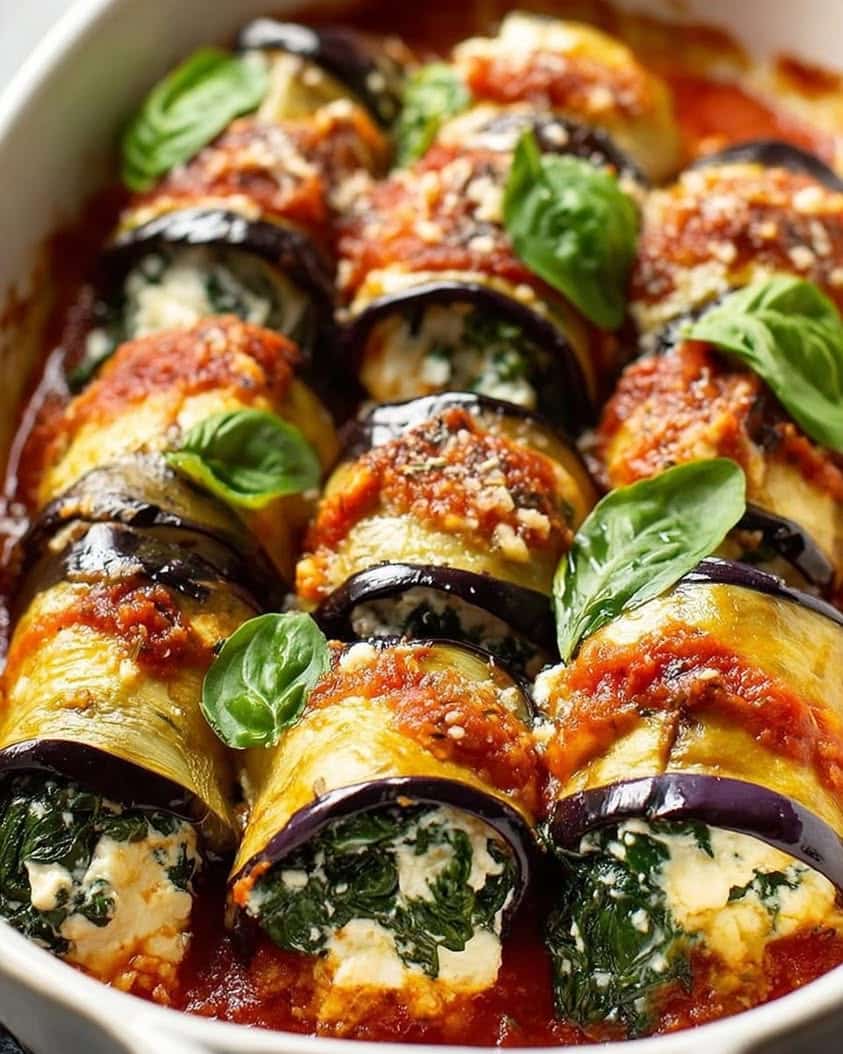
- Visual Appeal: The presentation is stunning. Neat, golden-brown rolls are nestled in a bed of red sauce, topped with a blanket of bubbly, browned cheese. The green flecks of spinach visible in the filling add a beautiful touch of color, making the dish as pretty as it is delicious.
- Skill Level Needed: This recipe is accessible to intermediate home cooks. It involves several straightforward techniques like slicing, salting, roasting, and assembling. While it has multiple steps, none are overly complicated, and the process is very forgiving, making it a great recipe to build confidence.
- Special Equipment: You will need a good sharp knife and a sturdy cutting board for slicing the eggplant evenly. Additionally, a few baking sheets, a mixing bowl, and a 9×13 inch baking dish are essential. A mandoline slicer can be helpful for perfectly uniform eggplant slices but is not required.
Recipe Overview
- Difficulty Level: We rate this recipe as medium difficulty. The individual steps are simple, but there is a sequence to follow: preparing the eggplant, making the filling, assembling the rolls, and baking. Managing these stages requires a bit of organization. However, the techniques are fundamental, and the recipe offers plenty of room for success even for those still building their kitchen skills.
- Category: This dish fits beautifully into several categories. It is a stellar vegetarian main course, a impressive dish for entertaining, and a fantastic make-ahead meal. It also works wonderfully as a hearty side dish for a larger Italian-inspired feast. Its versatility is one of its greatest strengths.
- Cuisine: These eggplant roll-ups are firmly rooted in Italian culinary tradition, specifically reminiscent of dishes from Southern Italy like “involtini.” They showcase classic Mediterranean ingredients: eggplant, tomato, ricotta, and herbs. The technique of rolling a filling in a vegetable slice is a timeless method in Italian home cooking, celebrating simplicity and flavor.
- Cost: This is a very cost-effective meal, especially when eggplant is in season. The primary ingredients—eggplant, ricotta, spinach, canned tomatoes, and basic cheeses—are all budget-friendly. You can easily feed a family of four a restaurant-quality meal for a fraction of the cost of dining out, making it an excellent value.
- Season: Late summer and early fall are the ideal seasons for this recipe. This is when eggplants are at their peak flavor, sweetness, and abundance. The dish is hearty enough for cooler evenings but still feels light and vegetable-forward. Of course, with year-round availability of ingredients, you can enjoy these roll-ups any time.
- Occasion: These roll-ups are perfect for a special weekend dinner, a dinner party where you want to impress vegetarian guests, or a holiday meal like Christmas Eve. They are also excellent for meal prep, as they reheat beautifully. Essentially, they suit any occasion that calls for a comforting, beautiful, and satisfying dish.
Why You’ll Love This Recipe
First and foremost, the taste and texture of these Delicious Eggplant Roll-Ups are utterly captivating. The roasted eggplant becomes tender and almost meaty, providing a substantial base that holds its shape beautifully. Meanwhile, the ricotta and spinach filling is luxuriously creamy, seasoned perfectly with garlic and herbs. When baked together under a layer of tomato sauce and cheese, every component melds into a harmonious bite. The contrast between the soft interior and the slightly crisp, cheesy top is a textural dream. Ultimately, this dish delivers a restaurant-quality eating experience that feels both familiar and special.
Another significant advantage is the convenience and preparation benefits. While the recipe has several steps, they can be broken down and managed ahead of time. For instance, you can roast the eggplant slices a day in advance. Similarly, you can prepare the filling and store it in the refrigerator. This makes final assembly on a busy weeknight incredibly quick. Furthermore, the dish bakes hands-off in the oven, giving you time to prepare a salad or set the table. The process is methodical and therapeutic, resulting in a meal that looks like you spent all day in the kitchen.
From a nutritional standpoint, these eggplant roll-ups offer substantial advantages. Eggplant is low in calories but high in fiber and antioxidants like nasunin. Spinach packs a powerful punch of iron, vitamins A, C, and K. Ricotta cheese provides a good source of protein and calcium. When you use part-skim ricotta, you keep the fat content in check without sacrificing creaminess. This combination creates a meal that is satisfying and nourishing. It is a fantastic way to eat more vegetables in a format that feels indulgent rather than obligatory.
The social and entertaining value of this dish cannot be overstated. It presents beautifully on the table, straight from the baking dish. The individual rolls make portioning easy and elegant for guests. Because it is a complete vegetarian main, it simplifies menu planning for mixed-diet gatherings. Serving this dish often sparks conversation and requests for the recipe. It demonstrates care and effort, making guests feel truly welcomed. It is a reliable showstopper that guarantees compliments and clean plates.
Finally, the cost-effectiveness and accessibility of the ingredients make this recipe a winner. Eggplant, ricotta, and frozen spinach are consistently affordable. Canned tomatoes and basic pantry spices form the foundation of the sauce. You do not need any expensive or hard-to-find items. This accessibility means you can create a gourmet-tasting meal on a modest grocery budget. It is a brilliant example of how simple, humble ingredients can be transformed into something extraordinary with a little time and love.
Historical Background and Cultural Significance
The concept of rolling fillings inside vegetables has deep roots in Mediterranean and Middle Eastern cuisines. In Italy, such dishes are often called “involtini,” which translates to “little rolls.” Eggplant, or “melanzane,” has been a staple in Southern Italian cooking for centuries. Originally introduced by Arab traders, eggplant was initially met with suspicion in Europe before becoming beloved. Italian cooks mastered techniques like salting to remove bitterness and roasting to develop sweetness. Consequently, eggplant became a versatile canvas for countless recipes, serving as a hearty, meatless centerpiece.
Culturally, dishes like these eggplant roll-ups embody the Italian principle of “cucina povera” or “poor kitchen.” This philosophy focuses on creating magnificent food from inexpensive, local ingredients. Using eggplant as the wrapper instead of pasta or meat was a resourceful solution. Ricotta, a byproduct of cheesemaking, and home-canned tomato sauce were pantry staples. Combining them into a baked casserole created a nourishing, family-style meal that wasted nothing. This dish represents ingenuity and a deep respect for ingredients, turning simplicity into a virtue.
The recipe has evolved significantly over time. Traditional versions might have included simpler fillings of just cheese and herbs. The addition of spinach is a more modern touch, reflecting increased interest in nutrition and color. The use of marinara sauce as a baking medium ensures the rolls stay moist and flavorful. Contemporary adaptations might include sun-dried tomatoes, pine nuts, or different cheeses like goat cheese or feta. However, the core technique remains unchanged. This evolution shows how classic recipes adapt to new tastes while retaining their soul.
Regional variations of eggplant roll-ups exist throughout Italy. In Sicily, you might find them with a filling containing raisins and pine nuts, reflecting Arab influences. In other regions, the rolls might be fried before baking or topped with béchamel sauce instead of tomato. Some versions are served without a sauce, simply drizzled with olive oil. This diversity highlights how a single great idea can travel and morph based on local ingredients and traditions. Our version with ricotta and spinach is a beloved, crowd-pleasing interpretation that honors the spirit of the original while being accessible to the modern home cook.
Ingredient Deep Dive
Eggplant: This versatile nightshade vegetable is the star of the dish. Culturally, it journeyed from Southeast Asia to the Mediterranean, where it became a cornerstone of cuisine. Nutritionally, eggplant is low in calories and a good source of dietary fiber, which aids digestion. It contains antioxidants like nasunin, found in its purple skin. When selecting eggplants, choose ones that are firm, heavy for their size, with smooth, glossy skin and a bright green stem. Avoid those with wrinkles or soft spots. Store them at cool room temperature for a day or two, or in the refrigerator’s crisper drawer for up to five days. For a substitution, large zucchini slices can be used, though they will have a higher water content.
Ricotta Cheese: Ricotta is a fresh, soft Italian cheese made from the whey leftover from producing other cheeses. Its name means “recooked.” It has a mild, slightly sweet flavor and a grainy, creamy texture that is perfect for fillings. Nutritionally, ricotta is an excellent source of protein and calcium, especially if made from whole milk. Part-skim versions offer a lighter option. For the best quality, seek out fresh ricotta from an Italian market or cheese counter. Store it tightly covered in the refrigerator and use within a week. If you need a substitute, cottage cheese (drained and blended smooth) or a soft goat cheese can work, though the flavor profile will change.
Fresh Spinach: Spinach adds vibrant color, earthy flavor, and a wealth of nutrients to the filling. It is packed with iron, vitamins A, C, and K, and folate. When cooked, it wilts dramatically, allowing a large volume to be incorporated into the cheese mixture. Always choose spinach with deep green, crisp leaves, avoiding any that are yellowed or slimy. Thorough washing is crucial to remove grit. For storage, keep it dry in a plastic bag in the crisper drawer. Frozen chopped spinach, thoroughly thawed and squeezed dry, is a fantastic and convenient alternative that works perfectly in this recipe.
Marinara Sauce: The sauce provides moisture, acidity, and a foundational flavor that ties the dish together. A good-quality jarred marinara saves time, but a simple homemade version of canned crushed tomatoes, garlic, onions, and herbs elevates the dish. The acidity of the tomatoes balances the richness of the cheese. When selecting a jarred sauce, look for one with a short ingredient list, without added sugars or excessive oil. You can easily adapt the sauce by adding red pepper flakes for heat or a splash of red wine for depth. The sauce also acts as a barrier, preventing the eggplant rolls from drying out during baking.
Common Mistakes to Avoid
- Skipping the Salting Step: Salting eggplant draws out excess moisture and bitter compounds. If you skip this, the slices may steam rather than roast in the oven, becoming soggy. They also might retain a slight bitterness. Always salt, let them sit for 20-30 minutes, then pat them thoroughly dry with paper towels.
- Cutting Slices Too Thick or Too Thin: Slices that are too thick will not roll easily and may remain tough in the center. Slices that are too thin will tear when you try to fill and roll them. Aim for uniform slices about 1/4-inch thick for the perfect balance of flexibility and structure.
- Not Drying the Spinach Enough: If using frozen spinach, squeezing out every bit of liquid is critical. Excess water will make the ricotta filling runny and can cause the rolls to be soggy. Use your hands or a clean kitchen towel to wring the spinach until it is as dry as possible.
- Overfilling the Rolls: It is tempting to add a heaping spoonful of filling, but too much will cause the rolls to burst open during baking. Use a moderate amount, about 1-2 tablespoons per slice, and spread it thinly, leaving a small border around the edges for clean rolling.
- Using a Cold Baking Dish: Placing assembled rolls into a cold dish and then into a hot oven can lead to uneven cooking. Always warm your baking dish by rinsing it with hot water or placing it in the warming oven for a minute before adding the sauce and rolls.
- Underseasoning the Filling: Ricotta and eggplant are mild canvases. The filling needs ample seasoning with salt, pepper, garlic, and herbs. Taste the filling mixture before assembling to ensure it is flavorful enough on its own. Remember, some seasoning will be diluted by the other components.
- Baking Without a Cover Initially: If you bake the dish uncovered the entire time, the exposed tops of the rolls and the cheese can brown too quickly, before the center is hot. Covering with foil for the first part of baking ensures gentle, even heating throughout.
- Not Letting it Rest Before Serving: Pulling the dish from the oven and serving immediately can lead to a messy presentation, as the filling will be very loose. Letting it rest for 5-10 minutes allows the cheeses to set slightly, making the rolls easier to portion and serve neatly.
Essential Techniques
Salting and Sweating Eggplant: This technique is crucial for success. Salting the eggplant slices draws out moisture via osmosis, which concentrates flavor and removes potential bitterness. More importantly, it collapses the sponge-like structure of the eggplant. This prevents it from absorbing excessive oil during roasting and helps it achieve a tender, rather than soggy, texture. To master it, generously salt both sides of the slices and let them rest on a rack for 20-30 minutes. You will see beads of moisture form. Then, pat them relentlessly dry with paper towels. The common pitfall is not drying them enough, leaving water on the surface that will steam the slices.
Roasting vs. Frying the Eggplant Slices: Roasting is the healthier, less messy method we use here. It caramelizes the natural sugars in the eggplant, adding a deep, sweet flavor. The key is to roast on parchment-lined sheets in a single layer without overcrowding. This allows hot air to circulate, ensuring even cooking and light browning. The visual cue for success is pliable, golden-brown slices that are tender but not mushy. They should easily bend without cracking. Frying, while traditional, adds significant oil and requires more attention. Roasting achieves a similar texture with a cleaner, more focused eggplant taste.
Creating a Dry, Flavorful Filling: The goal is a filling that holds its shape and packs a punch. Start by ensuring your ricotta is not overly watery; if it is, drain it in a fine-mesh strainer. The spinach must be squeezed completely dry. Mix the cheeses, spinach, and seasonings gently but thoroughly. Always do a taste test. A properly made filling should be thick enough to hold a spoon upright. If it seems loose, you can add a tablespoon of breadcrumbs or grated Parmesan to help bind it. This step ensures your rolls stay intact and every bite is flavorful.
The Rolling and Seaming Method: Proper assembly guarantees beautiful presentation. Place a roasted eggplant slice on a clean surface. Spoon the filling near one end. Using the back of the spoon, spread it into a thin, even layer, leaving a small border. Start rolling from the filled end, tucking gently but firmly. Do not roll too tightly, as the filling will expand slightly when heated. Place the roll seam-side down in the sauced baking dish. This natural weight seals it. The common mistake is rolling too tightly, which can cause the filling to squirt out the ends during baking.
Pro Tips for Perfect Delicious Eggplant Roll-Ups
- For the most flexible eggplant slices, roast them until they are very tender and just beginning to brown at the edges. They should have no resistance when you poke them with a fork. Slightly under-roasted slices are more likely to crack when rolled.
- Enhance the flavor of your ricotta filling by adding a pinch of freshly grated nutmeg. Nutmeg has a magical affinity with creamy spinach dishes and adds a warm, complex note that elevates the entire filling.
- Prevent sticking by lining your baking sheets with parchment paper for roasting the eggplant. This also makes cleanup a breeze and ensures the delicate slices release easily without tearing.
- If your marinara sauce is very thick, thin it with a couple of tablespoons of water or vegetable broth before spreading it in the dish. A sauce that is too thick can reduce too much in the oven and become pasty.
- For a gorgeous, evenly browned cheese topping, use a combination of shredded mozzarella for meltiness and grated Parmesan for flavor and browning. Sprinkle the cheeses all the way to the edges of the baking dish.
- Allow the baked roll-ups to rest for a full 10 minutes after removing them from the oven. This resting period allows the molten cheeses to set slightly, making it much easier to scoop out neat, intact portions.
- Add a fresh finish right before serving. A sprinkle of chopped fresh basil or parsley, a drizzle of high-quality extra virgin olive oil, or a few red pepper flakes adds brightness and contrasts the baked flavors beautifully.
Variations and Adaptations
Regional Variations: Explore global twists on the concept. For a Greek version, use a filling of feta cheese, spinach, and dill, and top with a lemony bechamel sauce. A Middle Eastern adaptation might include a filling with ground lamb, pine nuts, and warm spices like cinnamon and allspice. An Italian-American “parmigiana” style involves dipping the eggplant slices in egg and breadcrumbs before baking and using a heavier layer of mozzarella.
Seasonal Adaptations: Adapt the filling to what is fresh. In spring, use sautéed leeks and fresh peas with mint. In summer, incorporate roasted red peppers and fresh basil into the ricotta. For a fall version, mix in roasted mushrooms and a touch of sage. In winter, a hearty filling with kale and walnuts adds depth and texture.
Dietary Modifications: For a vegan version, use a firm tofu or cashew-based ricotta and vegan mozzarella shreds. A gluten-free adaptation is naturally achieved as the recipe contains no flour or breadcrumbs. For a keto or low-carb option, ensure your marinara sauce is sugar-free and consider adding more fat to the filling with cream cheese or extra Parmesan.
Flavor Variations: Infuse the ricotta with different flavors. Try adding sun-dried tomatoes and basil pesto. For a spicy kick, mix in chopped Calabrian chiles or a swirl of harissa. A smoky variation can include roasted garlic and a bit of smoked paprika in the filling or sauce.
Texture Modifications: Add texture to the filling with toasted pine nuts, chopped walnuts, or breadcrumbs for a bit of crunch. For a smoother, richer filling, blend the ricotta with an egg yolk before adding the spinach. This creates a firmer, more custard-like texture after baking.
Presentation Alternatives: Instead of a large baking dish, assemble individual portions in small ramekins or gratin dishes for a personalized touch. You can also layer the ingredients like a lasagna with sliced eggplant for a deconstructed, easier-to-serve “roll-up bake.” For an appetizer, use smaller Japanese eggplants to create bite-sized rolls.
Serving and Presentation Guide
Plating Techniques: For a family-style presentation, bring the bubbling baking dish directly to the table. Use a large, shallow serving spoon to lift out portions, ensuring you get some sauce from the bottom. For individual plating, carefully transfer one or two rolls to the center of a warm plate. Spoon extra sauce around and over them. Wipe the rim of the plate for a clean, professional look. The goal is to showcase the layers and the golden cheese topping.
Garnishing Ideas: Garnishes add freshness and color. A scattering of torn fresh basil or flat-leaf parsley is classic. A light dusting of grated Parmesan or Pecorino Romano adds a salty finish. A drizzle of a flavored oil, like basil-infused or chili oil, creates beautiful visual streaks. For texture, add a few toasted pine nuts or breadcrumbs on top just before serving.
Traditional Accompaniments: In Italian tradition, this rich dish is often served with a simple, crisp green salad dressed with a sharp vinaigrette to cut through the richness. A side of crusty, warm bread is essential for soaking up every last bit of sauce. For a more substantial meal, it pairs well with a side of roasted potatoes or a simple pasta like orzo.
Modern Serving Suggestions: For a lighter, contemporary meal, serve the roll-ups over a bed of zucchini noodles or a simple arugula salad. They also make an excellent component of a buffet or potluck spread. Consider serving them alongside other Italian favorites like grilled vegetables, marinated olives, and cured meats for a full antipasto experience.
Temperature Considerations: These eggplant roll-ups are best served hot from the oven, when the cheese is stretchy and the sauce is bubbling. However, they are also delicious at room temperature, making them excellent for picnics or packed lunches. If reheating, do so gently in the oven covered with foil to prevent the cheese from burning.
Portion Control Tips: One large eggplant typically yields 8-12 slices, serving 3-4 people as a main course. As a side dish or part of a larger spread, plan for 1-2 rolls per person. The dish is rich, so portions do not need to be huge. Accompanying with a large salad or vegetable side can help balance the plate and make the meal feel more complete.
Wine and Beverage Pairing
Wine Pairings: The rich, creamy, and tomato-based elements of this dish call for wines with good acidity to cleanse the palate. A medium-bodied Italian red like Chianti Classico or Barbera is a classic choice, as their bright cherry notes and acidity cut through the cheese. A fuller-bodied white, such as a wooded Chardonnay or a Vermentino, can also work beautifully, complementing the creaminess without overpowering the eggplant. For a lighter option, a dry Rosé from Provence offers refreshing berry and citrus notes that balance the dish’s richness.
Non-Alcoholic Alternatives: Sparkling water with a squeeze of lemon or lime is always a refreshing palate cleanser. For something more special, try a tart cherry or pomegranate spritzer. An herbal iced tea, like mint or basil, echoes the herbal notes in the dish. A rich, creamy tomato-based beverage like a Virgin Mary (non-alcoholic Bloody Mary) can be a fun and thematic pairing.
Coffee/Tea Pairings: After the meal, a cup of espresso is a traditional and perfect finish, its bitterness contrasting the residual sweetness of the tomato sauce. For tea, a black tea like Earl Grey, with its citrusy bergamot notes, can be lovely. Avoid overly sweet or milky beverages immediately after, as they can clash with the savory, cheesy flavors.
Temperature Considerations: Serve red wines slightly below room temperature, around 60-65°F. White wines and Rosé should be well-chilled, around 45-50°F. Non-alcoholic spritzers and iced teas are best served very cold. The contrast between the hot, baked dish and a cool, refreshing beverage is part of the dining pleasure.
Serving Suggestions: Always offer water on the table alongside any other beverages. When serving wine, consider decanting reds for 30 minutes before serving to allow them to open up. Present non-alcoholic options in a beautiful pitcher with ice and garnishes like citrus slices or herb sprigs to make them feel special.
Storage and Shelf Life
Storage Methods: Allow leftover eggplant roll-ups to cool completely to room temperature. Then, transfer them to an airtight container. You can store them in the baking dish if it has a lid, or portion them into individual containers for easy lunches. It is best to store the rolls with their accompanying sauce to keep them moist. Always refrigerate within two hours of cooking.
Temperature Requirements: This dish must be stored in the refrigerator at 40°F or below. Do not leave it at room temperature for extended periods, as the dairy and vegetable components are perishable. For longer storage, freezing is an excellent option.
Container Recommendations: Glass containers with tight-sealing lids are ideal, as they do not absorb odors or stains from the tomato sauce. If using the original baking dish, cover it tightly with plastic wrap and then aluminum foil to create an airtight seal.
Signs of Spoilage: Before consuming leftovers, check for any off odors, such as a sour or unpleasant smell. Visually inspect for mold, which may appear as fuzzy spots on the cheese or sauce. If the texture seems excessively slimy or the sauce has separated significantly, it is best to discard the dish.
Reheating Instructions: For best results, reheat in the oven. Preheat to 350°F, place the rolls in an oven-safe dish, cover with foil, and bake for 15-20 minutes until heated through. You can also reheat individual portions in the microwave on medium power for 1-2 minutes, though this may soften the texture slightly. Adding a splash of water or extra sauce before reheating can prevent drying out.
Freezing Guidelines: These roll-ups freeze remarkably well. Assemble and bake the dish completely, then let it cool. Do not add fresh garnishes. Wrap the entire dish (or portioned servings) tightly in plastic wrap and then in heavy-duty aluminum foil. Label with the date. Freeze for up to 3 months. Thaw overnight in the refrigerator before reheating as directed above.
Make Ahead Strategies
Prep Timeline: You can break this recipe down over two days. On Day 1, roast all the eggplant slices and let them cool. Prepare the ricotta and spinach filling. Store both components separately in airtight containers in the refrigerator. You can also make the marinara sauce. On Day 2, simply assemble the rolls in the baking dish, top with sauce and cheese, and bake. This cuts active prep time on serving day to just 15 minutes.
Storage Between Steps: Store roasted, cooled eggplant slices stacked between layers of parchment paper in a container. This prevents them from sticking together. Keep the filling in a sealed bowl. Both will keep well for up to 24 hours. Bringing the filling to near room temperature before assembling makes it easier to spread.
Quality Impact Assessment: Making components ahead often improves the dish. The flavors in the filling have time to meld and deepen. The eggplant firms up slightly, making it even easier to handle and roll. The final baked result is indistinguishable from, and often better than, a fully same-day preparation.
Assembly Tips: When assembling cold components, work quickly but carefully. If the eggplant seems stiff from the fridge, let it sit out for 10-15 minutes to become more pliable. Assemble the rolls directly in the baking dish you will bake them in to minimize handling.
Reheating Guidelines: If you assemble the entire dish ahead but do not bake it, cover it tightly and refrigerate for up to a day. When ready to bake, you may need to add 5-10 minutes to the covered baking time since you are starting from a cold dish. Check for bubbling around the edges to confirm it is hot throughout.
Fresh Element Additions: If making ahead, always add any fresh garnishes like basil or parsley after reheating, just before serving. This preserves their vibrant color and fresh flavor. You can also add an extra sprinkle of freshly grated Parmesan after reheating for a boost of flavor.
Scaling Instructions
Halving the Recipe: To serve two people, use one medium eggplant, halve all other filling and sauce ingredients, and bake in an 8×8 inch dish. Roasting time for the eggplant slices may be slightly reduced, so watch for doneness. Baking time for the assembled dish will also be shorter, likely 20-25 minutes covered and 10 uncovered. Check for internal temperature of 165°F.
Doubling or Tripling: For a crowd, simply multiply all ingredients. The key is to roast the eggplant in batches to avoid overcrowding the baking sheets, which leads to steaming. You may need to use multiple baking dishes or a very large lasagna pan. Increase the covered baking time by 10-15 minutes for a doubled recipe to ensure the center is hot. A triple recipe may require 40-45 minutes covered.
Equipment Adjustments: When scaling up, ensure you have enough baking sheets and a large enough oven-safe dish. If using a deeper dish than a 9×13, note that the cooking time will increase as heat penetrates more slowly. Consider using disposable aluminum pans for easy transport and cleanup for potlucks.
Timing Modifications: Prep time scales linearly, but roasting time does not if you are roasting in batches. Factor this in. Baking time increases slightly for larger volumes but not directly proportionally. Always rely on visual and temperature cues: bubbling sauce, melted cheese, and an internal temperature of 165°F at the center of the dish.
Storage Considerations: Leftovers from a scaled-up recipe will be abundant. Plan your storage containers in advance. Consider freezing half the baked dish immediately for a future meal. Clearly label everything with the date and contents.
Nutritional Deep Dive
Macro Breakdown: A serving of these eggplant roll-ups provides a balanced mix of macronutrients. The ricotta and mozzarella offer high-quality protein and fat, which promote satiety. The eggplant and spinach contribute complex carbohydrates and fiber, aiding in steady energy release. The olive oil used in roasting provides heart-healthy monounsaturated fats. Overall, it is a meal with moderate calories that feels indulgent due to its rich texture and flavor profile.
Micronutrient Analysis: This dish is a micronutrient powerhouse. Eggplant provides manganese, folate, and potassium. Spinach is loaded with iron, vitamin K, vitamin A, and folate. Ricotta and mozzarella are excellent sources of calcium and phosphorus, crucial for bone health. The tomato sauce contributes lycopene, a potent antioxidant especially bioavailable when cooked. Together, they create a meal that supports immune function, bone density, and overall cellular health.
Health Benefits: The combination of fiber from the vegetables and protein from the cheese supports digestive health and sustained energy. The antioxidants in eggplant (nasunin) and tomatoes (lycopene) have anti-inflammatory properties. Using part-skim ricotta and moderating cheese keeps saturated fat in check. This dish aligns with Mediterranean diet principles, which are associated with heart health, longevity, and reduced risk of chronic diseases.
Dietary Considerations: This recipe is naturally vegetarian and can be made gluten-free by ensuring no breadcrumbs are added and that any packaged sauce is certified GF. For those monitoring sodium, you can control salt by using low-sodium cheeses and sauce. The dish is not suitable for a strict vegan or dairy-free diet without significant modifications to the filling.
Portion Analysis: A standard serving of two roll-ups with sauce is satisfying without being overly heavy. It provides a substantial amount of vegetables, a serving of dairy, and healthy fats. Pairing it with a large side salad increases the volume of the meal with minimal added calories, promoting fullness and providing additional nutrients.
Weight Management Tips: For a lighter version, use part-skim ricotta, reduce the amount of mozzarella topping by half, and increase the proportion of spinach in the filling. Roasting the eggplant instead of frying significantly reduces fat content. Being mindful of portion size and accompanying Print
Eggplant Roll-Ups with Creamy Ricotta and Spinach
- Total Time: 45 minutes
- Yield: 4
Description
Thin slices of roasted eggplant rolled around a rich ricotta and spinach filling, baked in a simple tomato sauce until bubbly and golden.
Ingredients
- 2 medium eggplants, sliced lengthwise into 1/4-inch thick strips
- 1 tablespoon olive oil
- Salt and black pepper to taste
- 1 cup ricotta cheese
- 1 cup fresh spinach, chopped
- 1/2 cup grated Parmesan cheese
- 1 clove garlic, minced
- 1 large egg
- 2 cups marinara sauce
- 1/2 cup shredded mozzarella cheese
- Fresh basil for garnish
Instructions
- Preheat oven to 400°F (200°C). Arrange eggplant slices on baking sheets, brush with olive oil, and season with salt and pepper. Roast for 10-12 minutes until tender. Let cool.
- In a bowl, mix ricotta, spinach, Parmesan, garlic, egg, salt, and pepper until well combined.
- Spread a thin layer of marinara sauce in a baking dish. Place a spoonful of the ricotta mixture on each eggplant slice and roll up tightly. Arrange rolls seam-side down in the dish.
- Top with remaining marinara sauce and sprinkle with mozzarella cheese. Bake for 20-25 minutes until cheese is melted and sauce is bubbly.
- Garnish with fresh basil before serving.
Notes
You can customize the seasonings to taste.
- Prep Time: 15 minutes
- Cook Time: 30 minutes
- Method: Main
- Cuisine: Italian