Crispy Parmesan Artichoke Hearts: An Irresistible Appetizer Recipe
Imagine biting into a perfectly golden morsel that shatters with a delicate crunch, revealing a tender, savory heart. This recipe for Crispy Parmesan Artichoke Hearts delivers exactly that experience, transforming a simple canned ingredient into a gourmet-level appetizer. Furthermore, these little bites are incredibly addictive, making them the star of any party spread or a delightful snack for a cozy night in. Ultimately, they combine the earthy, slightly tangy flavor of artichokes with the rich, salty umami of Parmesan cheese in a crispy baked coating.
Consequently, you will find this recipe for Crispy Parmesan Artichoke Hearts to be a game-changer for your entertaining menu. They are surprisingly simple to prepare, requiring just a handful of pantry staples and minimal hands-on time. Moreover, they bake up beautifully in the oven, offering a healthier alternative to deep-fried appetizers without sacrificing any of the satisfying texture. Whether you serve them with a zesty lemon aioli or a classic marinara for dipping, they are guaranteed to disappear quickly from the plate.
Quick Recipe Highlights
- Flavor Profile: These Crispy Parmesan Artichoke Hearts boast a complex savory taste. The Parmesan cheese provides a salty, nutty depth that perfectly complements the artichoke’s mild, slightly sweet, and tangy flavor. Additionally, garlic and Italian herbs add aromatic layers that make each bite interesting.
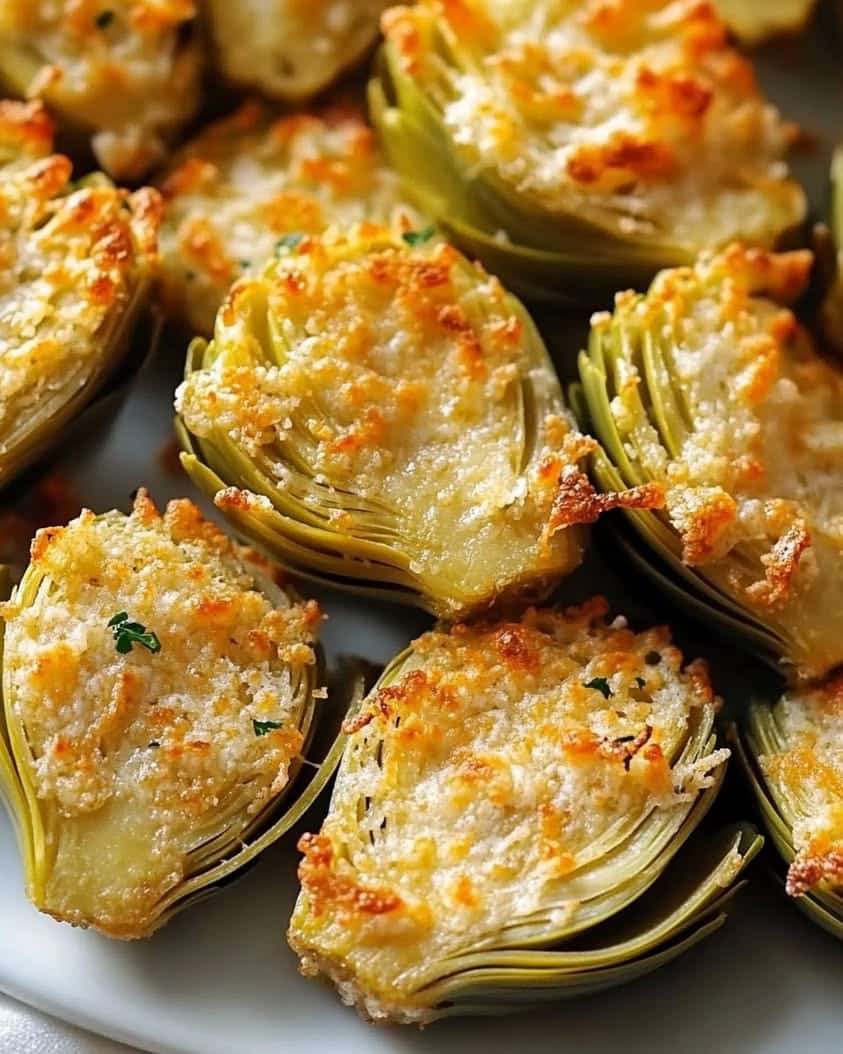
- Texture: The magic lies in the contrast of textures. A golden brown, crunchy panko and Parmesan crust gives way to a remarkably tender and moist artichoke heart center. This combination creates a satisfying mouthfeel that is both light and substantial.
- Aroma: As they bake, your kitchen will fill with an irresistible fragrance. The nutty scent of toasting Parmesan and breadcrumbs melds with the earthy aroma of artichokes and the warm notes of garlic and dried herbs, promising a delicious treat.
- Visual Appeal: These appetizers are as beautiful as they are tasty. They emerge from the oven with a uniformly golden, craggy exterior that looks professionally made. Served on a platter with a sprinkle of fresh parsley, they have an elegant, rustic charm.
- Skill Level Needed: This is a beginner-friendly recipe. The process involves simple steps like draining, coating, and baking. No advanced techniques are required, making it perfect for novice cooks or anyone looking for a stress-free, impressive dish.
- Special Equipment: You need only basic kitchen tools. A couple of mixing bowls, a baking sheet, and parchment paper are essential. A wire rack for cooling is helpful but not mandatory. No fancy appliances are necessary for success.
Recipe Overview
- Difficulty Level: We rate this recipe as “Easy” because it involves straightforward, sequential steps. The coating process is simple, and baking is hands-off. There is no intricate knife work or complex cooking methods. Even a first-time cook can achieve excellent results by following the clear instructions.
- Category: This dish falls squarely into the appetizer and snack category. It is ideal for parties, game days, or pre-dinner bites. Additionally, it can be served as a side dish alongside grilled meats or a hearty salad for a more complete meal.
- Cuisine: While artichokes are Mediterranean staples, this preparation has Italian-American influences. The use of Parmesan, garlic, and Italian seasoning nods to classic Italian flavors. However, the panko breadcrumb technique adds a modern, crispy twist that is universally appealing.
- Cost: This is a very budget-friendly recipe. Canned artichoke hearts are inexpensive and readily available. Parmesan and panko are pantry staples for many. Overall, you can create a generous platter of gourmet-tasting bites for a fraction of the cost of store-bought frozen appetizers.
- Season: These Crispy Parmesan Artichoke Hearts are truly a year-round recipe. They are light enough for spring and summer gatherings yet comforting for fall and winter events. Since they use canned ingredients, you are not dependent on fresh artichoke seasonality.
- Occasion: They are incredibly versatile for any occasion. Serve them at casual potlucks, elegant cocktail parties, holiday gatherings, or as a fun family snack. They are also perfect for book clubs, movie nights, or any time you want a special treat without much fuss.
Why You’ll Love This Recipe
First and foremost, the taste and texture are utterly irresistible. The crispy exterior provides an initial crunch that gives way to the soft, flavorful artichoke heart. Each bite delivers a savory punch from the Parmesan, balanced by the subtle tang of the artichoke. The seasoning blend ensures every component sings in harmony. Consequently, you get a sophisticated flavor profile that feels indulgent and gourmet. These little bites are impossible to eat just one of, making them the perfect crowd-pleaser.
Secondly, the convenience factor is a major win. This recipe uses canned artichoke hearts, eliminating the tedious work of trimming fresh artichokes. The preparation is quick and mess is minimal, especially if you use parchment paper. Moreover, the baking method is hands-off, allowing you to prepare other dishes or socialize with guests. You achieve a deep-fried texture without the hassle and grease of a fryer. Therefore, you get impressive results with minimal effort and cleanup.
Nutritionally, these Crispy Parmesan Artichoke Hearts offer some advantages over many fried appetizers. Baking significantly reduces the fat content compared to deep-frying. Artichokes themselves are a good source of fiber, vitamin C, and folate. While Parmesan adds some saturated fat, it also contributes protein and calcium. Using a moderate amount of oil and cheese creates a balanced treat. Ultimately, you can feel good about serving a slightly lighter option that doesn’t skimp on satisfaction.
For social gatherings, their value is immense. They are easy to eat with fingers or a small fork, making them ideal for standing and mingling. You can prepare a large batch ahead of time and simply reheat them before serving. Their elegant appearance elevates any snack table. Furthermore, they pair wonderfully with a variety of dips and drinks, pleasing diverse palates. They often become the conversation starter of the party, with guests asking for the recipe.
Finally, they are cost-effective and accessible. The ingredients are common and affordable at any standard grocery store. You likely have many of them in your pantry already. Compared to purchasing pre-made frozen appetizers, making these from scratch saves money and tastes far superior. You also control the quality of ingredients, avoiding unnecessary preservatives. This recipe proves that creating restaurant-quality food at home is both simple and economical.
Historical Background and Cultural Significance
The story of the artichoke is a long and storied one, dating back to ancient times. Originally native to the Mediterranean region, artichokes were cultivated by the Greeks and Romans who prized them for their delicate flavor and purported medicinal properties. Historically, they were considered a food of the nobility due to their labor-intensive preparation. The heart, the most tender and prized part of the vegetable, was often preserved in oil or brine. This preservation method eventually led to the canned artichoke hearts we commonly use today, making this once-luxury ingredient accessible to all.
Culturally, artichokes hold significant places in various cuisines. In Italy, they are celebrated in countless regional dishes, from Roman Jewish-style fried artichokes to stuffed artichokes in Sicilian cuisine. The pairing of artichokes with Parmesan cheese is a natural fusion of two iconic Italian ingredients. In the United States, particularly in California where most are grown, artichokes have their own festival in Castroville, the self-proclaimed “Artichoke Center of the World.” This recipe taps into that deep culinary heritage, modernizing a classic combination for today’s home cook.
The evolution of this specific recipe reflects broader cooking trends. The concept of coating and frying vegetables is ancient, but the use of panko breadcrumbs is a more recent innovation from Japanese cuisine, adopted globally for its superior crunch. Baking instead of frying aligns with modern desires for healthier preparation methods. The combination of these elements—convenient canned artichokes, Italian cheese, Japanese-style crumbs, and a health-conscious technique—creates a truly contemporary dish. It is a testament to how global food traditions can merge into something new and delicious.
Regional variations of crispy artichokes abound. In Spain, you might find them fried with a simple dusting of flour. In the Middle East, they could be paired with spices like cumin and coriander. Our version, with its Parmesan and Italian seasoning, is firmly rooted in an Italian-American sensibility. One could easily adapt it with different cheeses like Pecorino Romano or Manchego, or herbs like herbes de Provence. This adaptability is part of the recipe’s charm, allowing cooks to put their own spin on a timeless concept of making vegetables crispy, savory, and utterly irresistible.
Ingredient Deep Dive
Canned Artichoke Hearts: These are the star and the shortcut. Artichokes are actually the flower bud of a thistle, and the “heart” is the tender base of the bud. Canning preserves them in water or brine, making them available year-round and saving hours of prep work. Nutritionally, they are low in calories but high in fiber, vitamin C, folate, and minerals like magnesium and potassium. When selecting, look for quarters or whole hearts packed in water with minimal added salt. Always drain and pat them thoroughly dry; this is the single most important step for achieving maximum crispiness.
Parmesan Cheese: Authentic Parmigiano-Reggiano, aged for over 12 months, brings a complex, nutty, umami-rich flavor that pre-grated cheese can’t match. It contains natural glutamates that enhance the savory taste of the entire dish. Finely grating it yourself ensures it melts evenly into the coating and adheres well. As a nutritional bonus, it is a concentrated source of protein and calcium. For storage, keep a wedge wrapped in parchment and then foil in the refrigerator. If you must substitute, a high-quality Pecorino Romano offers a sharper, saltier alternative, while Asiago can provide a milder flavor.
Panko Breadcrumbs: These Japanese-style breadcrumbs are made from crustless white bread, resulting in larger, flakier, drier crumbs than traditional breadcrumbs. This structure creates a lighter, airier, and exceptionally crispy coating when baked. They brown beautifully and provide that sought-after crunch without becoming dense or soggy. For a gluten-free version, use certified gluten-free panko. You can find whole-wheat panko for added fiber. Stored in a cool, dry pantry, they have a long shelf life. Do not substitute with regular fine breadcrumbs, as the texture will be noticeably different and less crispy.
Seasoning Blend (Garlic Powder, Italian Seasoning, Salt & Pepper): This blend builds layers of flavor. Garlic powder distributes evenly and toasts gently in the oven, providing a sweet, mellow garlic note without the risk of burning that fresh garlic has. Italian seasoning is a convenient mix of dried herbs like oregano, basil, thyme, and rosemary, evoking the flavors of the Mediterranean. Salt enhances all other flavors, while black pepper adds a slight warmth. For the best aroma, ensure your dried herbs are not stale. You can customize this blend with smoked paprika, onion powder, or a pinch of red pepper flakes for heat.
Common Mistakes to Avoid
- Not Drying the Artichokes Enough: This is the most critical error. Excess moisture from the can will steam the artichokes and create a soggy coating. After draining, spread them on paper towels and press firmly with more towels to remove every bit of surface liquid. Take your time with this step.
- Using Pre-Grated Parmesan from a Canister: These products often contain anti-caking agents like cellulose, which can prevent proper melting and adhesion. The flavor is also less potent. Always grate a block of real Parmesan cheese yourself for the best flavor and texture in your crispy coating.
- Overcrowding the Baking Sheet: Placing the coated artichoke hearts too close together causes them to steam instead of bake. They need space for hot air to circulate and crisp up all sides. Use two baking sheets if necessary to ensure each piece has room.
- Skipping the Oil Toss: Lightly tossing the dried artichokes in oil before coating helps the breadcrumb mixture stick. It also promotes even browning and crisping in the oven. Without this step, the coating may be patchy and can fall off more easily.
- Forgetting to Preheat the Oven: A properly preheated oven is essential for immediate crisping. Putting the pan into a cold oven will cause the coating to absorb oil and become greasy before it has a chance to set and crisp. Always wait for the oven to reach the full temperature.
- Using a Cold Baking Sheet: Placing the coated pieces on a room-temperature baking sheet can also hinder crisping. For an extra-crispy bottom, you can preheat your baking sheet in the oven for 5 minutes before adding the artichokes, but handle it with care.
- Neglecting to Flip Halfway: Baking on one side only will give you a crispy top but a potentially soft bottom. Gently flipping each piece halfway through the baking time ensures all-around golden brown perfection and an even crunch.
- Underseasoning the Coating: The breadcrumb mixture seasons the entire bite. Taste a pinch of the dry mixture before you start coating. It should taste delicious on its own—salty, cheesy, and herby. Do not be shy with the seasoning.
Essential Techniques
Thorough Drying: This technique is non-negotiable for achieving crispiness. Moisture is the enemy of a crunchy coating. After draining the canned artichokes, lay them in a single layer on a thick stack of paper towels. Gently press another layer of towels on top, absorbing all the brine. Let them sit for a few minutes, then give them one final pat. Visually, they should look matte, not shiny with moisture. Some cooks even let them air-dry on the towels for 10-15 minutes. This step ensures the oil and breadcrumbs adhere to the vegetable itself, not to a layer of water.
The Breading Station Method: Setting up an efficient assembly line prevents a messy kitchen and ensures even coating. Use one shallow bowl for the flour, another for the beaten eggs, and a third for the panko-Parmesan mixture. Keep one hand for dry ingredients and one for wet to avoid clumpy fingers. Dredge an artichoke piece in flour, shaking off excess. Then dip it fully into the egg, letting excess drip off. Finally, press it firmly into the panko mix, ensuring all sides are coated. The pressing action is key—it helps the crumbs adhere so they don’t fall off during baking.
High-Heat Baking: Baking at 400°F (200°C) is crucial. This high temperature quickly sets the exterior, creating a seal that keeps the interior tender while driving off moisture to crisp the coating. It also promotes the Maillard reaction, the chemical process that creates complex, savory flavors and that beautiful golden-brown color. The oven rack should be positioned in the center for even heat. Avoid opening the oven door frequently, as this causes temperature fluctuations. The visual cue for success is a uniform, deep golden brown color on all sides of the artichoke hearts.
Pro Tips for Perfect Crispy Parmesan Artichoke Hearts
For an extra flavor boost, add a teaspoon of lemon zest to the panko and Parmesan mixture. The bright citrus notes cut through the richness and complement the artichoke flavor beautifully.
If you have time, let the coated artichoke hearts rest on the baking sheet for 10 minutes before baking. This helps the coating set and adhere better, reducing the chance of crumbs falling off.
Use a wire rack placed on top of your baking sheet. Baking the artichokes on the rack allows hot air to circulate underneath, preventing a soggy bottom and ensuring all-around crispiness.
For a deeper golden color, you can give them a very light spray with olive oil or cooking spray just before they go in the oven. This promotes even browning.
Fresh herbs make a world of difference for garnish. Chopped fresh parsley or basil added after baking adds a pop of color and a burst of fresh flavor that dried herbs can’t provide.
If your artichoke heart quarters are very large, consider cutting them in half again. Smaller, bite-sized pieces have a better coating-to-filling ratio and crisp up more efficiently.
Always taste your dipping sauce with a finished artichoke heart. Adjust the seasoning of your aioli or marinara to ensure it complements, rather than overpowers, the delicate flavors of the appetizer.
For a party, you can bread the artichokes up to 4 hours ahead. Arrange them on the baking sheet, cover loosely with plastic wrap, and refrigerate until you’re ready to bake. This spreads out the prep work.
Variations and Adaptations
Regional Variations: Travel your taste buds by altering the seasoning profile. For a Greek twist, use crumbled feta cheese and oregano in the coating, and serve with tzatziki. For a Spanish flair, mix smoked paprika into the breadcrumbs and pair with a romesco sauce. An Asian-inspired version could use sesame oil in the egg wash and mix grated ginger and white sesame seeds into panko, served with a sweet chili dipping sauce.
Seasonal Adaptations: While canned artichokes are always in season, you can adapt the accompaniments. In spring, serve with a lemony herb dip with fresh chives and dill. For summer, a cool, creamy avocado-cilantro lime crema is perfect. In fall, a roasted garlic aioli feels cozy. During the winter holidays, a cranberry-jalapeño dipping sauce adds a festive touch.
Dietary Modifications: For a gluten-free version, use certified gluten-free panko breadcrumbs and ensure your seasonings are gluten-free. For dairy-free or vegan Crispy Parmesan Artichoke Hearts, substitute the Parmesan with a half-cup of nutritional yeast mixed with a tablespoon of almond flour for richness, and use a flax egg or vegan mayo as the binder.
Flavor Variations: Experiment with different cheeses. Sharp white cheddar will give a tangy punch, while Gruyère offers a sweet, nutty complexity. For a spicy kick, add a quarter teaspoon of cayenne pepper or chipotle powder to the breadcrumb mix. Incorporating finely chopped sun-dried tomatoes or a tablespoon of pesto into the egg wash can also introduce wonderful new flavors.
Texture Modifications: For an even crunchier exterior, use a 50/50 blend of panko and finely crushed cornflakes or crispy rice cereal. Adding a tablespoon of ground almonds or pecans to the breading provides a toasty, nutty crunch. For a lighter, air-fryer version, cook at 375°F for 10-12 minutes, shaking the basket halfway through.
Presentation Alternatives: Skewer two or three smaller pieces on appetizer picks for easy serving. Stack them in a martini glass with dipping sauce at the bottom for a dramatic presentation. Alternatively, serve them over a simple arugula salad dressed with lemon vinaigrette, turning the appetizer into a light meal.
Serving and Presentation Guide
Plating is key to making these appetizers look as good as they taste. Choose a serving platter that contrasts with the golden brown color, such as a dark slate board, a white ceramic dish, or a rustic wooden board. Avoid overcrowding; arrange the Crispy Parmesan Artichoke Hearts in a single layer with a little space between them. This maintains their crispness and makes them easy to pick up. Place a small bowl of dipping sauce in the center of the platter, or provide two different sauces at opposite ends for variety.
Garnishing adds the final professional touch. A light sprinkle of flaky sea salt and freshly cracked black pepper right after baking enhances flavor and looks elegant. Scatter freshly chopped herbs like Italian parsley, chives, or basil over the platter. A microplane can be used to dust a little extra Parmesan over the top. For a colorful accent, add a few lemon wedges or twists around the edge of the platter, which also invites guests to add a fresh squeeze of juice.
Traditional accompaniments lean into Mediterranean flavors. A simple marinara sauce is a classic and always popular choice. A lemon aioli or garlic-herb yogurt dip provides a creamy, tangy contrast. For a more decadent option, a warm cheese fondue or beer cheese sauce makes for a memorable dipping experience. Do not forget to offer small plates, napkins, and cocktail forks for guests who prefer not to use their fingers.
Modern serving suggestions can integrate these bites into a larger spread. Create an “artichoke bar” with multiple dipping sauces: marinara, lemon dill aioli, spicy ranch, and a balsamic glaze. Alternatively, serve them atop a bed of mixed greens as a salad croûton. For a brunch twist, they make a fantastic accompaniment to eggs Benedict or a frittata. Their versatility is a major asset for creative presentation.
Temperature considerations are crucial. These are best served immediately after baking while the coating is at its peak crispness. If you must hold them, keep them in a single layer on a cooling rack set over a baking sheet in a 200°F oven for up to 20 minutes. Avoid covering them with foil, as the trapped steam will quickly soften the crust. Serve dipping sauces at room temperature or slightly chilled, depending on their composition.
Portion control is simple. This recipe yields about four servings as an appetizer, which typically means 5-6 pieces per person. For a larger party, you can easily double or triple the recipe. If serving as part of a larger buffet with many other items, estimate 2-3 pieces per guest. They are rich and flavorful, so a little goes a long way, especially when paired with other foods.
Wine and Beverage Pairing
Wine pairings should complement the savory, salty, and slightly tangy notes of the dish. A crisp, high-acid white wine like Sauvignon Blanc or Pinot Grigio cuts through the richness of the Parmesan and cleanses the palate. For a more complex option, an unoaked Chardonnay offers a nice weight and subtle fruitiness. If you prefer red wine, choose a light-bodied, low-tannin red such as a Beaujolais or a Pinot Noir, which won’t overpower the delicate artichoke flavor. Sparkling wines like Prosecco or Cava are always a celebratory and excellent pairing, their bubbles providing a refreshing contrast.
Non-alcoholic alternatives can be just as sophisticated. A sparkling water with a twist of lemon or lime mimics the cleansing effect of wine. For more flavor, try a craft lemonade infused with herbs like rosemary or thyme. Iced herbal teas, such as mint or hibiscus, offer a refreshing and slightly sweet counterpoint. A virgin Bloody Mary or a tomato-based shrub drink can also complement the savory elements beautifully.
Coffee and tea pairings are less common but can work in certain settings. If serving these as a late-morning brunch item, a bright, citrusy coffee or a light roast can be pleasant. For tea, consider a green tea with grassy notes or an herbal citrus tea. These are best reserved for casual, daytime gatherings rather than evening cocktail parties.
Temperature is paramount for beverages. White wines, sparkling wines, and non-alcoholic sparklers should be served well-chilled, between 45-50°F. Light reds should be slightly cool, around 55°F. Iced beverages should be cold but not diluted; use large ice cubes or frozen fruit to keep them cool without watering them down. Always have a cooler or ice bucket nearby to keep bottles chilled during service.
Serving suggestions include offering a variety. At a party, set up a small beverage station with a white wine, a red wine option, and a signature non-alcoholic drink. Clearly label each option. Provide appropriate glassware: stemmed glasses for wine, flutes for sparkling, and highball glasses for non-alcoholic mixes. This thoughtful touch elevates the entire experience and ensures all your guests have a perfect sip to go with their Crispy Parmesan Artichoke Hearts.
Storage and Shelf Life
Storage methods for leftovers are straightforward but time-sensitive. Allow any uneaten Crispy Parmesan Artichoke Hearts to cool completely on a wire rack. Do not store them while they are still warm, as condensation will form and make them soggy. Once cool, transfer them to a single layer in an airtight container. Placing a paper towel at the bottom and top of the container can help absorb any residual moisture. They are best stored in the refrigerator and consumed within 2 days.
Temperature requirements are specific. Always refrigerate leftovers promptly. The dairy and egg in the coating make them perishable. Do not leave them at room temperature for more than two hours. When ready to eat again, reheating is necessary to restore texture. Avoid freezing fully assembled and baked artichoke hearts, as the coating will become very soggy upon thawing and reheating.
Container recommendations focus on preserving air space. A shallow, wide container is better than a deep one, as it minimizes stacking and crushing. If you must stack them, place a sheet of parchment or wax paper between layers. Glass containers with locking lids are ideal. Avoid sealing them in plastic bags while still slightly warm, as this is a sure way to lose crispness.
Signs of spoilage are important to recognize. Discard any artichoke hearts that have developed an off smell, a slimy texture on the surface, or visible mold. The coating may soften in the fridge, but it should not become mushy. If in doubt, it is always safer to throw them out, especially given the short shelf life.
Reheating instructions are crucial for texture revival. The oven or toaster oven is your best friend. Preheat to 375°F and place the artichokes on a wire rack over a baking sheet. Heat for 5-10 minutes, until hot and re-crisped. The air fryer is also excellent for this, reheating at 350°F for 3-5 minutes. Avoid the microwave, as it will steam them and make the coating rubbery and soft.
Freezing guidelines apply only to prepped, unbaked artichoke hearts. After coating, arrange them in a single layer on a parchment-lined baking sheet and flash-freeze for 1-2 hours until solid. Then transfer the frozen pieces to a freezer-safe bag or container. They can be baked directly from frozen, adding 3-5 minutes to the cooking time. This is a fantastic make-ahead strategy for parties.
Make Ahead Strategies
An efficient prep timeline can turn this into a last-minute appetizer. You can drain and dry the artichoke hearts up to a day in advance. Store them, patted dry, in a covered container in the refrigerator. The breadcrumb mixture (panko, Parmesan, seasonings) can also be mixed and stored in an airtight container at room temperature a day ahead. The eggs can be beaten and kept covered in the fridge. This leaves only the assembly and baking for the day of your event.
Storage between steps is simple with proper planning. If you bread the artichokes several hours ahead, arrange them on the prepared baking sheet, cover the sheet loosely with plastic wrap, and refrigerate. Do not let them sit at room temperature for extended periods after coating, as the moisture from the artichoke can start to soften the breading. They can be refrigerated for up to 4 hours before baking without a significant quality loss.
Quality impact assessment is important. Breading ahead of time is generally safe and effective. The main risk is the coating absorbing moisture and becoming less crisp. To combat this, the initial drying step is even more critical. Baking from a cold state may require an extra minute or two in the oven. The flavor will be identical, and the convenience often outweighs the minimal textural difference.
Assembly tips for efficiency include setting up a streamlined station. Use rimmed baking sheets or pie plates for your flour, egg, and breadcrumb mixtures. Keep a clean workspace and use one hand for dry steps and one for wet to avoid clumping. Having all components measured and ready before you start makes the process quick and enjoyable.
Reheating guidelines for make-ahead batches are similar to storage. If you bake them completely ahead of time, let them cool, then store as directed. Reheat in a 375°F oven or toaster oven on a rack until hot and crispy. For the best quality, it is often preferable to do the final bake just before serving, even if the breading is done ahead.
Fresh element additions should always be saved for the end. Any fresh herb garnish, a final sprinkle of salt, or a drizzle of high-quality olive oil should be added after reheating or immediately after the initial bake. Lemon wedges should be served on the side. This ensures the brightest flavors and most appealing presentation when the dish hits the table.
Scaling Instructions
Halving the recipe is simple for smaller gatherings. Simply divide all ingredient quantities by two. Use one large egg, beaten, which will be more than enough for the coating. The baking time may reduce by 1-2 minutes since there are fewer items on the pan, so keep a close eye. All other techniques and temperatures remain the same. This is perfect for a snack for two or a small family.
Doubling or tripling the recipe for a crowd requires minor adjustments. Use multiple baking sheets and rotate them from top to bottom rack halfway through baking to ensure even cooking. You may need to work in batches if your oven cannot accommodate multiple sheets at once. Mix the breading ingredients in a large, wide bowl to make coating easier. Consider enlisting a helper to set up an assembly line for efficient breading.
Equipment adjustments are necessary when scaling up. Ensure you have enough mixing bowls and baking sheets. If doubling, you might need to use two separate bowls for the egg wash to prevent it from becoming too clumpy with flour. Using parchment paper on every sheet is highly recommended to prevent sticking and make cleanup manageable. A large wire cooling rack is invaluable for cooling big batches.
Timing modifications are minimal but important. The prep time will increase linearly with the quantity. However, the bake time may need a slight increase of 2-3 minutes for larger batches, as a crowded oven can lower the ambient temperature. Start checking for doneness at the original time, then add minutes as needed. The visual cue of golden brown perfection remains your best guide.
Storage considerations become more important with large batches. If making a huge quantity for a party, you can bake in successive batches. Keep finished batches warm in a 200°F oven on a wire rack set over a baking sheet. Do not stack them. For leftovers, cool completely before storing in shallow containers, as a large, dense pile will steam and soften quickly.
Nutritional Deep Dive
A macro breakdown for a serving reveals a balanced snack. Each serving provides a moderate amount of calories primarily from the healthy fats in olive oil and Parmesan, and complex carbohydrates from the artichokes and panko. The Parmesan and egg contribute a decent amount of protein, making these more satisfying than many carbohydrate-heavy appetizers. The exact numbers will vary, but the profile supports sustained energy rather than a simple sugar crash.
The micronutrient analysis is promising. Artichokes are a standout, offering a good dose of dietary fiber, which aids digestion and promotes satiety. They also provide vitamin C, vitamin K, folate, and minerals like magnesium and potassium. Parmesan cheese adds calcium and phosphorus, important for bone health. Using olive oil introduces heart-healthy monounsaturated fats. The herbs, while used in small amounts, contribute trace antioxidants.
Health benefits are tied to the whole-food ingredients. The fiber from artichokes can help support gut health and cholesterol management. The antioxidants in artichokes, such as cynarin, have been studied for liver health benefits. The calcium from cheese supports bone density. Choosing baking over deep-frying significantly reduces the intake of unhealthy trans and saturated fats often associated with fried foods, making this a smarter choice for cardiovascular health.
Dietary considerations are important for various needs. This recipe is naturally vegetarian. For those monitoring sodium, you can control the salt added and look for low-sodium canned artichokes. The carbohydrate content comes with fiber, which moderates blood sugar impact. For a lower-carb version, see the adaptations section. It is not suitable for a strict paleo diet due to the grains and dairy, but modifications can be made.
Portion analysis shows that a serving of 5-6 pieces is satisfying without being overly heavy. This portion size allows you to enjoy the indulgent taste and texture while keeping calorie intake in check for an appetizer. It is a perfect example of “mindful indulgence”—you can enjoy a flavorful, crispy treat without derailing your dietary goals, especially when balanced with other lighter foods at a gathering.
Weight management tips include being mindful of the dip. The artichoke hearts themselves are reasonably portioned, but dipping sauces can add significant calories. Opt for lighter options like a Greek yogurt-based aioli or simply a squeeze of lemon. Also, pairing them with raw vegetable crudités can help fill you up with fewer calories. Enjoying them as part of a meal, like on a salad, rather than as a standalone snack, can also help with portion control.
Dietary Adaptations
Gluten-Free: This is an easy adaptation. Simply replace the regular panko breadcrumbs with an equal amount of certified gluten-free panko. Also, ensure that the flour used for the initial dredge is a gluten-free all-purpose blend or cornstarch. Double-check that your baking powder (if used in a variation) and seasonings are certified gluten-free, as cross-contamination can occur.
Print Golden, crunchy artichoke hearts coated in a savory Parmesan and herb breading, baked until crispy for a delicious appetizer or snack. You can customize the seasonings to taste.Crispy Parmesan Artichoke Hearts
Description
Ingredients
Instructions
Notes