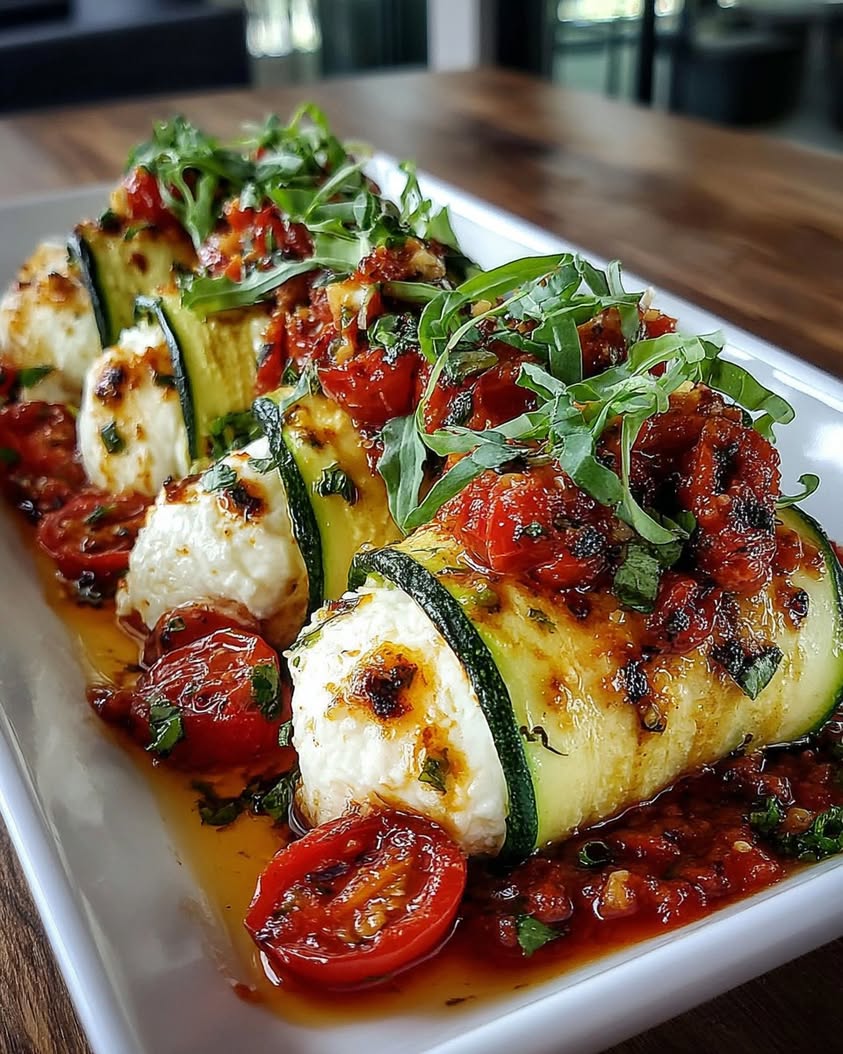
Creamy Burrata Zucchini Rolls with Tomato Glaze: An Elegant Appetizer
Imagine a dish that perfectly captures the essence of summer on a plate. These Creamy Burrata Zucchini Rolls with Tomato Glaze do exactly that. They transform simple, seasonal ingredients into an elegant appetizer that will impress any guest. The recipe features tender ribbons of zucchini wrapped around a luscious, creamy burrata filling, all draped in a sweet and tangy tomato glaze. Consequently, each bite offers a beautiful harmony of textures and flavors, making it a standout starter for any occasion.
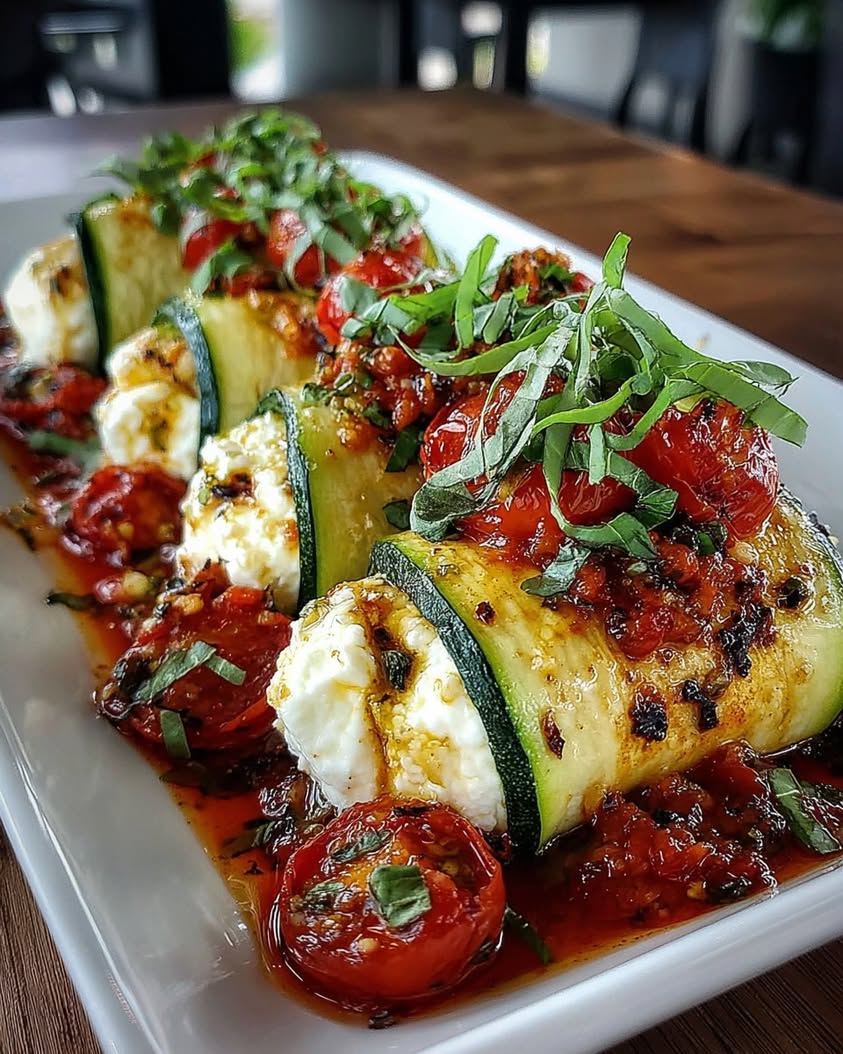
This dish is more than just food; it is an experience. The process of creating these rolls feels artistic, almost like crafting edible jewelry. You will slice zucchini into perfect sheets, whip up a fragrant herb and cheese filling, and reduce tomatoes into a glossy, rich sauce. Ultimately, the final presentation is stunning, with the vibrant green zucchini, white burrata, and deep red glaze creating a visually striking dish. This Creamy Burrata Zucchini Rolls with Tomato Glaze recipe elevates humble vegetables into gourmet territory.
Furthermore, this recipe is surprisingly versatile. You can serve it as a light lunch, a fancy dinner party appetizer, or even part of a festive brunch spread. The flavors are sophisticated yet familiar, appealing to both adventurous eaters and those with simpler tastes. Importantly, the recipe celebrates fresh produce, highlighting the natural sweetness of zucchini and tomatoes. Therefore, if you are looking for a show-stopping vegetarian dish that is both beautiful and delicious, these rolls are your answer.
Quick Recipe Highlights
- Flavor Profile: These Creamy Burrata Zucchini Rolls with Tomato Glaze deliver a complex taste experience. The sweet, concentrated tomato glaze beautifully balances the rich, milky burrata and the fresh, slightly earthy zucchini. Additionally, fresh herbs like basil add a bright, aromatic finish that ties everything together.
- Texture: The texture contrast is a key feature of this dish. You get the soft, yielding bite of the roasted zucchini ribbon wrapped around the decadently creamy and stretchy burrata filling. Meanwhile, the tomato glaze adds a smooth, velvety layer that coats each roll perfectly.
- Aroma: As these rolls bake, your kitchen will fill with an irresistible fragrance. The aroma of roasting zucchini and garlic mingles with the sweet scent of reducing tomatoes and the fresh, peppery notes of basil. Ultimately, it creates an olfactory preview of the delicious meal to come.
- Visual Appeal: This dish is a feast for the eyes. The vibrant green zucchini spirals, the stark white creamy filling peeking through, and the glossy deep red tomato glaze create a stunning color palette. Presentation is effortless yet elegant, making it perfect for photography or impressing guests.
- Skill Level Needed: This recipe is ideal for a confident home cook. It requires some knife skills for slicing the zucchini and a bit of patience for reducing the glaze. However, the steps are straightforward and well-explained, making it an achievable project for a weekend cook.
- Special Equipment: You will need a few key tools to execute this recipe perfectly. A mandoline or a very sharp knife and steady hand are essential for creating thin, even zucchini ribbons. Additionally, a good non-stick skillet is crucial for making the smooth tomato glaze without burning.
Recipe Overview
- Difficulty Level: We classify these Creamy Burrata Zucchini Rolls with Tomato Glaze as intermediate for a few specific reasons. First, achieving uniformly thin zucchini ribbons requires careful knife work or the use of a mandoline. Second, reducing the tomato glaze to the perfect consistency demands attention to prevent scorching. However, each step is simple when taken one at a time, and the rewarding result is well worth the focused effort.
- Category: This versatile dish fits into multiple meal categories beautifully. Primarily, it shines as an elegant appetizer or starter for a multi-course dinner. Alternatively, you can serve a larger portion as a light vegetarian main course, perhaps paired with a simple salad. It also works wonderfully as part of a lavish brunch or antipasti spread.
- Cuisine: The inspiration for these Creamy Burrata Zucchini Rolls with Tomato Glaze draws deeply from Italian culinary traditions. Burrata cheese originates from the Apulia region of Italy, and the use of fresh basil, garlic, and tomato is classically Italian. The technique of stuffing and rolling vegetables, however, gives it a modern, creative twist that feels contemporary and fresh.
- Cost: This recipe is moderately priced, with the cost largely dependent on the burrata. Zucchini and tomatoes are typically affordable, especially in season. Fresh herbs, garlic, and pantry staples like olive oil and balsamic vinegar are inexpensive. The star ingredient, fresh burrata cheese, is the main splurge, but its luxurious texture justifies the cost for a special dish.
- Season: Summer is the absolute peak season for making the best Creamy Burrata Zucchini Rolls with Tomato Glaze. This is when zucchini and tomatoes are at their most flavorful, sweet, and abundant. You can certainly make it year-round with grocery store produce, but the dish truly sings when made with sun-ripened, garden-fresh vegetables.
- Occasion: This dish is tailor-made for special occasions where presentation matters. Think dinner parties, holiday gatherings, anniversary dinners, or a romantic date night at home. It is also perfect for potlucks where you want to bring something visually impressive and universally appealing. Essentially, any event that calls for a “wow factor” starter is the right occasion.
Why You’ll Love This Recipe
First and foremost, the taste and texture of these Creamy Burrata Zucchini Rolls with Tomato Glaze are utterly divine. Each component plays a specific role. The zucchini provides a tender, neutral base that lets the filling shine. The burrata filling is an explosion of creamy, rich, and tangy flavors that melt in your mouth. Meanwhile, the tomato glaze adds a punch of umami and sweetness that cuts through the richness. Every bite is a perfectly balanced symphony of savory, sweet, and creamy notes that will have you reaching for seconds.
Beyond flavor, this recipe offers significant convenience and preparation benefits. You can prepare many elements ahead of time. For instance, you can slice the zucchini and make the glaze hours in advance. Consequently, final assembly before serving is quick and stress-free. The baking time is also relatively short, meaning you are not tied to the oven for hours. This make-ahead flexibility makes it an ideal choice for entertaining, as you can enjoy your own party instead of being stuck in the kitchen.
Additionally, these Creamy Burrata Zucchini Rolls with Tomato Glaze come with notable nutritional advantages. Zucchini is low in calories but high in fiber, vitamin C, and potassium. Tomatoes are packed with lycopene, a powerful antioxidant. Using fresh herbs boosts flavor without adding sodium or fat. While burrata is indulgent, a little goes a long way in providing richness and satisfaction. Therefore, you are enjoying a dish that feels decadent while still incorporating wholesome, vegetable-forward ingredients.
The social and entertaining value of this dish cannot be overstated. When you bring this platter to the table, it immediately becomes a conversation starter. Guests are always impressed by the elegant presentation and the thoughtful combination of flavors. It shows care and effort, making people feel special. Serving these rolls sets a tone of sophistication and celebration, elevating an ordinary meal into a memorable dining event. They are a guaranteed crowd-pleaser that will have your guests asking for the recipe.
Finally, this recipe is surprisingly cost-effective and accessible. The primary vegetables, zucchini and tomatoes, are budget-friendly, especially when in season. You likely already have staples like olive oil, garlic, and balsamic vinegar in your pantry. The only specialty item is the burrata, which is now widely available in most well-stocked grocery stores. For the impressive result you achieve, the cost per serving is quite reasonable. This accessibility means anyone can recreate a restaurant-quality appetizer at home without a chef’s budget.
Historical Background and Cultural Significance
The origin story of these Creamy Burrata Zucchini Rolls with Tomato Glaze is a modern tale of culinary fusion. While the individual components have deep roots, their combination is a contemporary innovation. Burrata cheese itself has a fascinating history, born in the early 20th century on the farms of Apulia, Italy. Cheesemakers created it as a way to use up the leftover stracciatella curds and cream, encasing them in a fresh mozzarella shell. This “buttered” cheese, which is what “burrata” means, was a resourceful and delicious invention.
Culturally, the dish honors the Italian principle of “cucina povera” or “poor kitchen,” which celebrates transforming simple, humble ingredients into extraordinary meals. Zucchini, a prolific summer squash, and tomatoes, a staple of the Mediterranean diet, are classic examples. Rolling and stuffing vegetables is a technique seen across Italian cuisine, from involtini to cannelloni. This recipe takes that timeless technique and applies it to a modern, visually stunning presentation, bridging traditional methods with current plating aesthetics.
The evolution of this specific recipe likely stems from the global rise of burrata’s popularity in the 21st century. As burrata became a darling of chefs and food enthusiasts worldwide, creative applications multiplied. The desire for beautiful, vegetable-forward, and gluten-free appetizers led naturally to using zucchini as a wrapper. The tomato glaze is a refined take on a simple tomato sauce, reduced to intensify flavor and create a luxurious, glossy finish. It represents an evolution from heavier, pasta-based dishes to lighter, produce-centric creations.
Regarding regional variations, the core idea is adaptable. In different parts of Italy, you might find similar rolls using different cheeses like ricotta or scamorza. The herb profile could shift from basil to oregano or mint depending on the region. Some versions might include a sprinkle of toasted breadcrumbs for texture or a drizzle of pesto instead of tomato glaze. The beauty of the concept is its flexibility; it provides a template that can be customized with local ingredients and flavors while maintaining its elegant structure.
Ingredient Deep Dive
Let us start with zucchini, the foundational wrapper for our rolls. This summer squash originated in the Americas but was integrated into Italian cuisine centuries ago, where it truly flourished. Nutritionally, zucchini is a powerhouse of hydration and fiber, being over 95% water. It provides a good amount of vitamin C, potassium, and antioxidants like lutein. When selecting zucchini for this Creamy Burrata Zucchini Rolls with Tomato Glaze recipe, choose firm, medium-sized vegetables with glossy, unblemished skin. Avoid overly large zucchinis, as they tend to have more seeds and a watery, less flavorful flesh. Store them unwashed in a plastic bag in the refrigerator’s crisper drawer for up to a week.
Next, we have the star: burrata cheese. This luxurious cheese from Puglia, Italy, consists of a delicate mozzarella pouch filled with stracciatella (soft cheese shreds) and cream. Its cultural significance lies in its artisanal, fresh nature; it is meant to be consumed within days of making. Burrata is rich in calcium and protein but also high in saturated fat, so moderation is key. For the best Creamy Burrata Zucchini Rolls with Tomato Glaze, seek out the freshest burrata possible, often found in specialty cheese sections or Italian markets. It should feel soft and supple in its packaging. Store it in its liquid in the refrigerator and use it by the date on the package. If unavailable, fresh mozzarella (bocconcini) mixed with a tablespoon of heavy cream can be a passable, though less creamy, substitute.
The tomato glaze builds the sauce that defines the dish. Tomatoes, native to South America, became central to Italian cooking after their introduction in the 16th century. They are famously rich in lycopene, a compound linked to reduced risk of certain cancers and heart disease. For a deeply flavorful glaze, use ripe, in-season Roma or plum tomatoes, which have less water and more flesh. Out of season, good-quality canned San Marzano tomatoes are an excellent alternative, as they are picked and packed at peak ripeness. Store fresh tomatoes at room temperature until ripe, then refrigerate if necessary. Do not core or chop them until ready to use to preserve their juices and flavor.
Fresh basil is the aromatic soul of this recipe. This herb is synonymous with Italian cuisine and summer cooking, symbolizing love and hospitality in some cultures. Basil contains antioxidants and anti-inflammatory compounds like eugenol. It also provides vitamins A and K. For the brightest flavor in your Creamy Burrata Zucchini Rolls with Tomato Glaze, choose bunches with vibrant green leaves, no black spots, and a strong, sweet aroma. Store basil like a bouquet of flowers: trim the stems and place them in a glass of water on the counter, loosely covered with a plastic bag. If you must substitute, fresh oregano or parsley can work, but the flavor profile will shift significantly.
Common Mistakes to Avoid
- Cutting Zucchini Too Thick: This is the most common error. Thick zucchini ribbons will not roll properly and will remain tough and crunchy even after baking. Always aim for slices about 1/8-inch thick using a mandoline or a very sharp knife. Test one piece by bending it; it should be pliable without snapping.
- Not Salting the Zucchini: Skipping the salting step leads to watery rolls. Salting draws out excess moisture from the zucchini, preventing a soggy final dish and concentrating its flavor. After salting, pat the ribbons thoroughly dry with paper towels before brushing with oil.
- Overfilling the Rolls: It is tempting to add a large scoop of filling, but overfilling causes the rolls to burst open during baking. Use about a teaspoon of filling per ribbon. Remember, the burrata is rich, so a little provides plenty of creamy impact.
- Underseasoning the Filling: Burrata is mild, so the filling relies on garlic, herbs, salt, and pepper for flavor. Taste the filling mixture before assembling. It should be well-seasoned on its own, as the zucchini wrapper is relatively neutral.
- Rushing the Tomato Glaze: The glaze needs time to reduce and concentrate. Cooking it over too high heat can cause it to scorch, while not cooking it long enough leaves it thin and watery. Simmer it gently until it thickly coats the back of a spoon.
- Using Cold Burrata: Adding cold, firm burrata straight from the fridge makes mixing difficult and can result in a lumpy filling. Let the burrata sit at room temperature for 20-30 minutes before mixing. This allows it to soften and become beautifully creamy.
- Overbaking the Rolls: The goal is to just warm the rolls through and melt the filling slightly. Overbaking makes the zucchini mushy and can cause the creamy filling to separate or leak out excessively. Bake just until the zucchini is tender and the rolls are heated.
- Skipping the Fresh Herb Garnish: The fresh basil or parsley added after baking is not just decoration. It provides a crucial burst of fresh aroma and bright flavor that cuts through the richness. Do not omit this final, vital touch.
Essential Techniques
Slicing Zucchini into Ribbons: This technique is fundamental for creating pliable wrappers. Using a mandoline ensures uniform, paper-thin slices, which is crucial for even cooking and easy rolling. If using a knife, hold the zucchini firmly and use a long, smooth, sawing motion. Always use the guard on a mandoline to protect your fingers. The visual cue for success is a translucent, bendable ribbon that you can wrap around your finger without breaking.
Salting and Sweating Vegetables: Salting the zucchini ribbons draws out excess water through osmosis. This step prevents a watery, soggy bake and intensifies the zucchini’s flavor. After sprinkling with salt, let the slices rest for 10-15 minutes. You will see beads of moisture form on the surface. The key is to then pat them completely dry with clean kitchen towels or paper towels. This ensures they roast rather than steam in the oven.
Reducing a Glaze: Reducing a sauce involves simmering it to evaporate water, concentrating the flavors and thickening the consistency. For the tomato glaze, a slow, steady simmer is best. Stir occasionally to prevent sticking. The success cue is when the glaze leaves a clear trail on the back of a spoon that does not immediately fill in. It should be thick enough to coat the rolls without running off completely.
Filling and Rolling: This technique requires a gentle touch. Place a small amount of filling at one end of a dried zucchini ribbon. Using your fingers, gently roll the zucchini around the filling, tucking it in snugly but not tightly. Place the roll seam-side down in the baking dish. The goal is a neat, compact cylinder that holds its shape. If the ribbon is too long, you can trim the end after rolling for a cleaner look.
Pro Tips for Perfect Creamy Burrata Zucchini Rolls with Tomato Glaze
First, invest in a mandoline slicer. It is the single best tool for achieving the perfectly thin, even zucchini ribbons essential for this dish. Consequently, you ensure uniform cooking and easy rolling every single time.
Second, do not discard the tomato seeds and pulp strained from the glaze. Instead, save them. You can add them to soups, stews, or pasta sauces for an extra boost of tomato flavor without waste.
Third, let the assembled rolls rest at room temperature for 10 minutes before baking. This allows the filling to settle and the zucchini to relax, which helps prevent unrolling or bursting in the oven’s initial heat.
Fourth, use a pastry brush to lightly oil the zucchini ribbons before roasting. This method uses far less oil than tossing them in a bowl, ensuring they are lightly coated and will become tender, not greasy.
Fifth, if your tomato glaze reduces too much and becomes too thick, simply whisk in a tablespoon of warm water at a time until it reaches a drizzle-able consistency again. The flavor will remain concentrated.
Sixth, for an extra flavor dimension, add a pinch of red pepper flakes or a teaspoon of finely chopped Calabrian chili to the burrata filling. This introduces a subtle heat that beautifully contrasts the creaminess.
Seventh, garnish with both microplaned lemon zest and fresh herbs. The lemon zest adds a surprising pop of citrus aroma that elevates the entire dish, cutting through the richness in a delightful way.
Eighth, use a small offset spatula or a butter knife to spread the filling onto the zucchini ribbons. This gives you more control than using a spoon and helps achieve an even, thin layer for perfect rolling.
Variations and Adaptations
For regional variations, explore different cheese and herb combinations. A Greek-inspired version could use a mixture of feta and mint inside the rolls, with a tomato-oregano glaze. A French twist might incorporate herbes de Provence into the filling and a tomato-tarragon reduction. The basic structure of the Creamy Burrata Zucchini Rolls with Tomato Glaze is a perfect canvas for global flavors.
Seasonal adaptations are simple and rewarding. In autumn, substitute roasted red pepper or a butternut squash puree for the tomato glaze. For a winter version, consider a rich mushroom duxelles filling inside the rolls. Spring might call for a filling of fresh peas, ricotta, and lemon zest. The zucchini wrapper remains a constant, but the interior and sauce can dance with the seasons.
Dietary modifications are straightforward. For a vegan adaptation, replace the burrata with a blend of firm silken tofu, nutritional yeast, lemon juice, and cashew cream to mimic the creamy texture. Use a high-quality vegan parmesan alternative. Ensure the tomato glaze is made with vegetable broth. The dish remains elegant and satisfying for all dietary preferences.
Flavor variations can personalize the dish immensely. Add sun-dried tomatoes or chopped artichoke hearts to the burrata filling. Infuse the olive oil for brushing the zucchini with rosemary or thyme before baking. Stir a teaspoon of pesto into the filling for a deeper basil flavor. A drizzle of aged balsamic reduction over the plated rolls adds a sweet-tart complexity.
Texture modifications can add exciting contrast. Sprinkle toasted pine nuts or chopped walnuts into the filling for a crunch. Before baking, top the rolls with a light sprinkle of panko breadcrumbs mixed with parmesan for a golden, crispy topping. These additions provide a pleasant contrast to the soft zucchini and creamy filling.
Presentation alternatives offer creative freedom. Instead of individual rolls, you can create a zucchini “lasagna” by layering the ribbons, filling, and glaze in a baking dish. Alternatively, serve the components deconstructed: a swoosh of tomato glaze on a plate, topped with a bundle of roasted zucchini ribbons and a dollop of the burrata filling in the center.
Serving and Presentation Guide
Plating techniques make all the difference. For individual servings, place two or three Creamy Burrata Zucchini Rolls with Tomato Glaze slightly offset on a white or neutral-colored plate. Use a spoon to drag a line of extra tomato glaze across the plate first, then place the rolls on top. This creates a professional, restaurant-style presentation. For a family-style platter, arrange the rolls in a circular pattern or in neat rows on a long rectangular dish, then drizzle the glaze over the top in a zigzag pattern.
Garnishing is the final, essential touch. Always add fresh, whole or torn basil leaves just before serving to preserve their vibrant color and aroma. A light sprinkle of flaky sea salt, such as Maldon, adds both texture and a burst of salinity. A few microgreens, edible flowers, or a dusting of finely grated lemon zest can elevate the visual appeal even further. Remember, garnish should complement, not overwhelm, the beautiful colors of the dish itself.
Traditional accompaniments keep the meal light and Italian-focused. A simple arugula salad dressed with lemon juice, olive oil, and shaved parmesan is a classic pairing. Crusty, grilled bread is perfect for soaking up any leftover tomato glaze on the plate. For a more substantial meal, serve alongside a portion of lemon-herb orzo or a farro salad.
Modern serving suggestions might include pairing these rolls with a chilled glass of Prosecco or a crisp white wine as part of a cocktail hour spread. They also work beautifully as part of a “small plates” or tapas-style dinner, alongside other bites like marinated olives, grilled shrimp, and cured meats. Their elegant appearance makes them suitable for passed appetizers at a standing reception, served on small napkins or spoons.
Temperature considerations are key. These Creamy Burrata Zucchini Rolls with Tomato Glaze are best served warm, not piping hot. Let them rest for 5 minutes after baking so the filling sets slightly. The tomato glaze can be at room temperature or slightly warm. Serving them tepid allows the delicate flavors of the burrata and herbs to shine through without being muted by intense heat.
Portion control is simple. As an appetizer, plan for 2-3 rolls per person. As a light main course, 4-5 rolls per person is appropriate, accompanied by a substantial salad or side dish. Since they are rich, a little goes a long way. When doubling the recipe for a crowd, remember that the assembly time increases linearly, so allow yourself plenty of time or enlist help in the kitchen.
Wine and Beverage Pairing
Wine pairings should complement the dish’s creamy richness and bright tomato acidity. A classic Italian pairing is a crisp, dry Pinot Grigio from the Alto Adige region. Its citrus notes and clean finish cut through the burrata beautifully. Alternatively, a lighter-style Chardonnay, such as an unoaked or lightly oaked version from Burgundy or California, works well with the creamy texture. For red wine lovers, a chilled, light-bodied red like a Bardolino or a Frappato offers berry flavors without overwhelming the delicate zucchini.
Non-alcoholic alternatives can be just as sophisticated. A sparkling elderflower cordial with soda water provides a floral, sweet note that contrasts the savory rolls. A high-quality tomato juice cocktail with a dash of Worcestershire sauce, lemon, and fresh basil (a deconstructed Virgin Mary) playfully echoes the dish’s flavors. Iced hibiscus tea, slightly tart and fragrant, is another refreshing and visually stunning option.
While not a classic pairing, certain coffees and teas can work if serving these rolls as part of a brunch. A bright, citrusy pour-over coffee or a lightly roasted single-origin bean would not clash. For tea, consider a green tea with lemongrass or a white tea with subtle floral notes. Avoid heavy, bitter, or overly smoky varieties that would compete with the food’s delicate balance.
Temperature considerations for beverages are straightforward. White wines and non-alcoholic sparklers should be well-chilled, around 45-50°F. Light reds should be slightly chilled, about 55°F. This coolness refreshes the palate between bites of the warm, rich rolls. Always serve water alongside, preferably still and with a slice of lemon or cucumber, to cleanse the palate.
Serving suggestions for beverages include presentation. Pour wines into appropriate glassware to enhance the experience. For non-alcoholic drinks, use elegant highball glasses or champagne flutes for sparkling options. Adding a garnish that mirrors the dish, like a small basil leaf in a spritzer, ties the entire meal together visually and aromatically.
Storage and Shelf Life
Storage methods for leftovers are important but limited due to the fresh nature of the ingredients. Store any leftover Creamy Burrata Zucchini Rolls with Tomato Glaze in a single layer in an airtight container in the refrigerator. Place parchment paper between layers if you must stack them. They are best consumed within 24 hours. The zucchini will release more water upon chilling, so the texture will be softer upon reheating.
Temperature requirements are strict. Never leave assembled rolls at room temperature for more than two hours due to the dairy content. Always refrigerate promptly. When reheating, do so gently. A toaster oven or conventional oven at 300°F is better than a microwave, which can make the zucchini rubbery and cause the filling to separate. Reheat just until warmed through.
Container recommendations include shallow glass or BPA-free plastic containers with tight-fitting lids. This prevents the rolls from being crushed and minimizes odor transfer in the fridge. You can store the tomato glaze separately in a small jar or container for up to 5 days. Reheat the glaze gently in a saucepan or microwave before serving.
Signs of spoilage are usually clear. Discard the rolls if the zucchini develops a slimy texture, if there is an off or sour smell (beyond the tang of tomato), or if any mold appears. The burrata filling, once baked and cooled, will not look as pristine and may weep liquid; this is normal separation, but if it smells fermented, it is time to throw it out.
Reheating instructions are simple for best results. Place the rolls on a parchment-lined baking sheet. Warm in a preheated 300°F oven for 8-12 minutes, or until heated through. You can also use an air fryer at 300°F for 4-5 minutes. Avoid high heat. If the glaze has thickened too much in the fridge, whisk in a teaspoon of warm water to loosen it before drizzling over the reheated rolls.
Freezing guidelines are not recommended for this specific dish. The high water content of the zucchini means it will become mushy and watery upon thawing. The creamy burrata filling will also separate and become grainy. The tomato glaze may freeze acceptably, but the complete Creamy Burrata Zucchini Rolls with Tomato Glaze are best enjoyed fresh.
Make Ahead Strategies
A smart prep timeline can turn this dish into a stress-free entertainer’s dream. The day before, you can make the tomato glaze and store it in the fridge. You can also slice the zucchini ribbons, salt them, pat them dry, and store them layered between paper towels in an airtight container in the fridge. Do not roast them ahead. On the day of serving, prepare the filling, roast the zucchini ribbons, assemble the rolls, and bake. This splits the work effectively.
Storage between steps is crucial for quality. Keep the pre-sliced, dried zucchini ribbons in the fridge. Store the tomato glaze in a separate jar. Keep the burrata filling components separate until just before assembly; you can mince the garlic and chop the herbs, but mix them with the cheese only an hour before assembling to prevent the herbs from wilting and discoloring.
Assessing the quality impact of make-ahead steps is important. The tomato glaze’s flavor often improves after a day in the fridge, as the flavors meld. Pre-slicing the zucchini has no negative impact if they are thoroughly dried and stored properly. However, assembling the rolls more than an hour before baking is not advised, as the zucchini can become soggy from the filling’s moisture.
Assembly tips for a make-ahead approach include having your mise en place ready. Lay out all your dried zucchini ribbons, filling, baking dish, and brush. Work on a clean surface and assemble in an assembly-line fashion for efficiency. If you need to pause, cover the assembled but unbaked rolls loosely with plastic wrap and refrigerate for up to an hour before baking.
Reheating guidelines for components are simple. If you made the glaze ahead, gently warm it in a small saucepan over low heat, adding a splash of water if it’s too thick. Do not microwave the assembled, unbaked rolls if they’ve been chilled; simply add 2-3 minutes to the baking time, checking for doneness. The goal is to heat them through without overcooking the zucchini.
Fresh element additions are what bring the dish to life after make-ahead prep. Always add the final garnish of fresh basil or parsley, a drizzle of high-quality olive oil, or a sprinkle of flaky salt after the rolls come out of the oven and just before serving. This ensures vibrant color, fresh aroma, and a textural contrast that pre-added garnishes would lose.
Scaling Instructions
Halving the recipe is simple for a smaller meal. Use one medium zucchini, half a ball of burrata (about 4 oz), and scale down the other ingredients proportionally. Use a smaller baking dish, like a bread loaf pan or small gratin dish. The cooking time may decrease by a few minutes, so start checking for doneness at the 15-minute mark. The tomato glaze can be halved, but reducing such a small quantity requires extra vigilance to prevent burning.
Doubling or tripling the recipe is perfect for a party. The main consideration is oven space and baking dishes. You will likely need to use two baking dishes and rotate them halfway through baking for even cooking. Mix the filling in a larger bowl. When slicing multiple zucchinis, work in batches to maintain focus and ensure consistent ribbon thickness. The tomato glaze can be made in a larger, wider pot to facilitate evaporation.
Equipment adjustments are necessary when scaling. For a double batch, a large rimmed baking sheet lined with parchment can work instead of multiple baking dishes, allowing the rolls to be spaced in a single layer. You may need a larger mixing bowl for the filling. When tripling the glaze, use a wide, heavy-bottomed Dutch oven to give the liquid more surface area for efficient reduction.
Timing modifications are minimal but important. When baking multiple dishes, the total oven time may increase slightly due to the added mass of food. Allow an extra 5-10 minutes and rely on the visual cue of tender zucchini and warmed filling. Assembly time will increase linearly; for a double batch, allocate roughly double the time for rolling.
Storage considerations for scaled-up recipes are similar but amplified. You will have more leftovers, so ensure you have enough appropriate containers. If serving at an event, plan to bake in batches to keep some rolls fresh and warm for guests arriving later. Keep the unbaked assembled rolls covered in the fridge, and pop a new tray in the oven as needed.
Nutritional Deep Dive
A macro breakdown for one serving (approximately 3 rolls) reveals a balanced profile. You get a moderate amount of protein from the burrata cheese, around 10-12 grams. Healthy fats, primarily from the olive oil and the cream in the burrata, account for 15-20 grams, much of it monounsaturated. Carbohydrates are present but relatively low, about 10-15 grams, coming mostly from the zucchini and tomatoes. The dish is not a significant source of fiber, but the zucchini contributes a few grams.
The micronutrient analysis highlights several benefits. Zucchini provides a good dose of vitamin C, essential for immune function, and potassium, which supports heart health. Tomatoes are famous for their lycopene content, an antioxidant linked to reduced risk of certain cancers. Basil offers vitamin K for bone health and blood clotting, along with antioxidants like beta-carotene. Garlic contributes allicin, a compound with potential antimicrobial properties.
Overall health benefits of this Creamy Burrata Zucchini Rolls with Tomato Glaze include supporting a diet rich in vegetables and healthy fats. The monounsaturated fats from olive oil are heart-healthy. The antioxidants from the colorful vegetables combat oxidative stress. The dish is naturally gluten-free and can be part of a low-carb eating pattern. It is also satiating due to the protein and fat content, which can help with portion control and prevent overeating.
Dietary considerations are generally favorable. The recipe is inherently gluten-free and vegetarian. For those on a low-carb or keto diet, this dish fits well, though they may want to reduce any added sweetener in the tomato glaze. For low-FODMAP diets, garlic can be an issue; use garlic-infused oil instead of fresh garlic. Those with lactose intolerance should note that burrata, while fresh, still contains lactose, though often in amounts more tolerable than aged cheeses.
Portion analysis shows that as an appetizer, this dish is a nutritionally sound choice. It provides satisfaction without excessive calories, leaving room for the rest of the meal. As a main course, consider pairing it with a protein-rich side like a lentil salad or a bean dish to create a more complete nutritional profile with additional fiber and protein.