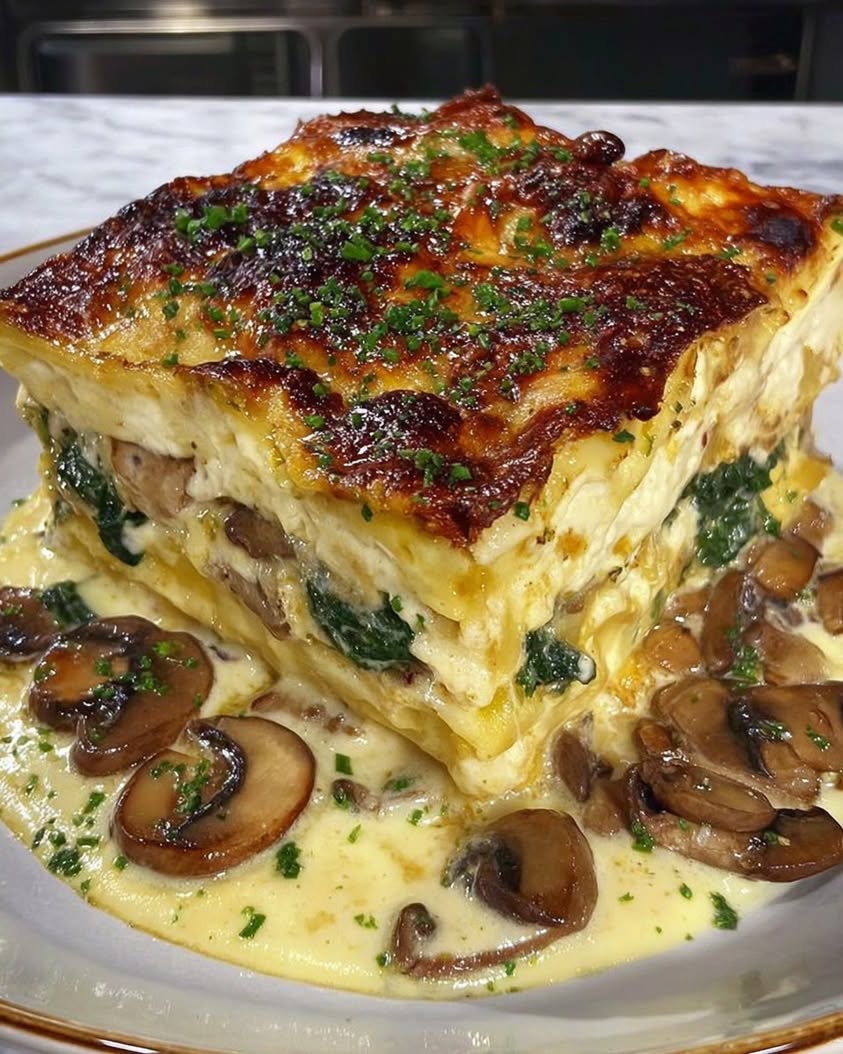
Creamy Cottage Cheese Lasagna with Mushrooms and Spinach: A Lighter Comfort Food Classic
This creamy cottage cheese lasagna with mushrooms and spinach reimagines a beloved family favorite. Moreover, it delivers all the comforting, cheesy layers you crave but with a surprisingly light and nutritious twist. The secret lies in a rich, protein-packed filling that replaces traditional ricotta. Consequently, you get a satisfying bake that feels indulgent yet wholesome.
Imagine pulling a bubbling dish from the oven, its surface golden and inviting. The aroma of garlic, herbs, and melted cheese fills your kitchen, promising a delicious meal. Each forkful combines tender lasagna noodles with a savory mushroom and spinach mixture, all held together by that remarkably creamy cottage cheese blend. Ultimately, this recipe proves that comfort food can be both incredibly flavorful and good for you.
Whether you are feeding a crowd on a weeknight or preparing a special Sunday dinner, this mushroom and spinach lasagna bake is a guaranteed hit. It is a complete meal in one dish, packed with vegetables and lean protein. Furthermore, it reheats beautifully, making it a fantastic option for meal prep. Let us dive into how to create this healthier, delicious twist on a classic.
Quick Recipe Highlights
- Flavor Profile: This dish features a deeply savory and earthy base from the sautéed mushrooms and garlic, balanced by the mild tang of cottage cheese and the richness of melted mozzarella. Fresh herbs like basil or parsley add a bright, finishing note that cuts through the creaminess perfectly.
- Texture: You will experience a wonderful contrast of textures: the firm bite of al dente lasagna noodles, the tender, meaty quality of the mushrooms, the slight wilt of spinach, and the luxuriously creamy, almost ricotta-like consistency of the cottage cheese filling. The bubbly, golden cheese topping provides a satisfying crunch.
- Aroma: As it bakes, the lasagna fills your kitchen with an irresistible scent. Key aromatic notes include the earthy, umami fragrance of browning mushrooms, the sweet pungency of sautéed garlic and onion, the warmth of dried Italian herbs, and the unmistakable, comforting smell of baking cheese and tomatoes.
- Visual Appeal: This bake is a feast for the eyes with its vibrant layers. You will see streaks of green spinach, chunks of golden-brown mushrooms, and white creamy cheese between the pasta sheets, all capped with a perfectly browned and bubbly mosaic of melted mozzarella. It presents beautifully straight from the baking dish.
- Skill Level Needed: This is a fantastic recipe for cooks of all levels. It involves fundamental techniques like sautéing vegetables and layering ingredients. No fancy knife skills or special equipment are required. If you can chop an onion and stir a pan, you can absolutely master this lasagna.
- Special Equipment: You only need basic kitchen tools: a large skillet for the veggies, a mixing bowl for the cheese filling, a 9×13 inch baking dish, and aluminum foil. A good chef’s knife and cutting board make prep easier, but a food processor is not necessary for this wholesome dish.
Recipe Overview
- Difficulty Level: We rate this creamy cottage cheese lasagna with mushrooms and spinach as “Easy.” The steps are straightforward and sequential: prepare the vegetables, mix the filling, and layer. There is no need for a finicky bechamel sauce or complicated techniques. Even a beginner cook can achieve excellent results by following the clear instructions.
- Category: This recipe falls squarely into the categories of Main Dish, Casserole, and Family Dinner. It is a hearty, all-in-one meal that requires only a simple side salad or some crusty bread to complete the feast. It also fits beautifully into the “Comfort Food” and “Healthy Dinner” categories.
- Cuisine: While lasagna is rooted in Italian cuisine, this particular version with cottage cheese and a focus on vegetables is a popular American home-cooking adaptation. It draws inspiration from Italian pasta bakes but uses accessible, everyday ingredients common in North American kitchens, creating a delicious fusion.
- Cost: This is a very cost-effective meal. Cottage cheese is typically less expensive than ricotta, and mushrooms and spinach are affordable vegetables, especially in bulk. Using no-boil lasagna noodles saves time and energy. Overall, you can feed a family of 8 for a fraction of the cost of restaurant pasta dishes.
- Season: This creamy cottage cheese lasagna is truly a year-round winner. It is perfect for chilly fall and winter nights when you crave a warm, oven-baked meal. Conversely, it is also excellent in spring and summer when served at room temperature for a picnic or potluck, making it incredibly versatile.
- Occasion: This dish is ideal for casual family dinners, weekly meal prep, potlucks, and feeding a crowd. It is substantial enough for a holiday gathering like Easter or Christmas Eve for those wanting a meatless option. It also travels well to new parents or friends in need of a ready-made meal.
Why You’ll Love This Recipe
First and foremost, the taste and texture of this creamy cottage cheese lasagna are utterly divine. The cottage cheese, when blended with egg and Parmesan, transforms into a luxuriously smooth and rich filling that rivals traditional ricotta. Paired with the savory, umami-packed mushrooms and the fresh pop of spinach, every bite is a harmonious blend of earthy, cheesy, and comforting flavors. The melted mozzarella on top adds that essential stretchy, gooey quality that makes lasagna so irresistible. Ultimately, it satisfies the deepest comfort food cravings without leaving you feeling overly heavy.
From a convenience standpoint, this mushroom and spinach lasagna bake is a weeknight hero. You can assemble it ahead of time and refrigerate it until ready to bake, or even freeze it for a future meal. Using no-boil lasagna noodles streamlines the process significantly, eliminating a pot and a step. Additionally, the cleanup is relatively simple, as most of the cooking happens in one skillet and one baking dish. This makes it an ideal choice for busy households where time and ease are paramount.
Nutritionally, this dish is a powerhouse compared to its traditional counterpart. Cottage cheese is an excellent source of high-quality protein and calcium, supporting muscle health and bone strength. Spinach contributes a wealth of vitamins A, C, and K, along with iron and fiber. Mushrooms add B vitamins and a satisfying, meaty texture without the saturated fat. Together, they create a lasagna that is not only delicious but also nourishing, allowing you to enjoy a classic favorite guilt-free.
For social and entertaining value, this lasagna is a guaranteed crowd-pleaser. It effortlessly serves a large group, looks impressive when brought to the table, and caters to vegetarians seamlessly. Its universal appeal means you will rarely have leftovers, but if you do, they are often fought over. Bringing this dish to a potluck or serving it at a dinner party positions you as a thoughtful and skilled cook who provides a meal that is both comforting and slightly inventive.
Finally, the cost-effectiveness and accessibility of this recipe cannot be overstated. The ingredients are humble, pantry-staple items found in any supermarket. Cottage cheese is often more budget-friendly than ricotta, and mushrooms and spinach are inexpensive vegetable additions. This allows you to create a restaurant-quality, feed-a-crowd meal on a very modest budget. Consequently, it is a recipe you can turn to again and again without straining your wallet, making delicious, home-cooked food accessible to everyone.
Historical Background and Cultural Significance
Lasagna’s origins are ancient and debated, with roots potentially tracing back to a Greek dish called “Laganon,” a flat dough sheet. However, the modern layered pasta bake we know today is firmly rooted in the Emilia-Romagna region of Italy, specifically the city of Bologna. Traditional Lasagna alla Bolognese features layers of fresh egg pasta (often green with spinach), a rich meat ragù, bechamel sauce, and Parmigiano-Reggiano. This classic preparation set the standard for what a luxurious, celebratory pasta bake should be.
The cultural significance of lasagna, especially in Italian-American households, is profound. It became a centerpiece for Sunday dinners, holidays, and large family gatherings. The act of layering the ingredients symbolizes care, abundance, and bringing family together. Over time, as Italian immigrants adapted to new ingredients in America, variations flourished. The use of ricotta cheese, for example, became prevalent in Neapolitan-American styles, differing from the bechamel-based northern Italian original.
The evolution to include cottage cheese is a distinctly American mid-20th century adaptation. During this period, cottage cheese was heavily promoted as a health food and a economical protein source. Home cooks, always innovative, found that blended cottage cheese could mimic the texture of ricotta at a lower cost and with perceived health benefits. This innovation made lasagna more accessible and allowed for countless vegetable additions, like mushrooms and spinach, aligning with growing nutritional awareness.
Regional variations of vegetable lasagna are now endless. In contemporary cooking, the mushroom and spinach lasagna bake represents a fusion of tradition and modern dietary preferences. It honors the layered, comforting structure of the classic while embracing a focus on vegetables and lighter proteins. This version sits proudly within the canon of “American comfort food,” a testament to how immigrant dishes adapt, evolve, and become new classics in their own right, loved by families across the country.
Ingredient Deep Dive
Cottage Cheese: Cultured for centuries, cottage cheese is a fresh cheese curd product with a mild flavor. Nutritionally, it is a superstar, offering a high amount of casein protein which digests slowly, keeping you full. It is also rich in calcium, B vitamins, and selenium. For this recipe, choose a small-curd, 4% milkfat variety for the creamiest texture and best flavor. Low-fat versions can work but may result in a slightly less rich filling. Store it in the coldest part of your fridge and use it by the date on the container. If you must substitute, full-fat ricotta is the closest alternative, though the nutritional profile will differ.
Mushrooms (Cremini or White Button): Fungi have been foraged and cultivated for thousands of years, valued for their earthy, savory umami flavor. They are low in calories but high in nutrients like B vitamins, selenium, potassium, and antioxidants. Cremini (baby bella) mushrooms have a slightly deeper flavor than white buttons, but both work perfectly. Select mushrooms that are firm, dry, and smooth, with closed caps. Avoid any that are slimy or shriveled. Store them in a paper bag in the refrigerator. For a more intense flavor, you can substitute with sliced portobello or shiitake mushrooms.
Fresh Spinach: Spinach has a history dating back to Persia and became popular in Europe during the Renaissance. It is a nutrient-dense leafy green, packed with iron, vitamins A, C, and K, magnesium, and folate. When cooked, it wilts dramatically, allowing you to incorporate a large volume into the lasagna. Look for vibrant, dark green leaves without yellowing or sliminess. Pre-washed bags are a great time-saver. Store it in the high-humidity drawer of your fridge. If substituting, kale or Swiss chard can be used, though they may require a slightly longer cooking time to tenderize.
No-Boil Lasagna Noodles: A modern kitchen convenience, these noodles are partially cooked and then dried. They absorb moisture from the sauces and fillings during baking, becoming perfectly tender. They eliminate the messy step of boiling and handling hot, sticky noodles, making assembly much cleaner and faster. Ensure your sauce and vegetable mixture is sufficiently juicy, and spread a thin layer of sauce on the bottom of the pan to prevent sticking. There is no need to substitute, but if using traditional noodles, you must boil them until al dente first.
Mozzarella Cheese: Originating in Italy, mozzarella is a soft, fresh cheese traditionally made from buffalo milk. Its high moisture and fat content create the iconic stretchy, mild melt we love on lasagna. It provides protein and calcium. For the best melt and flavor, buy a block of low-moisture, part-skim mozzarella and shred it yourself. Pre-shredded cheese contains anti-caking agents that can make the melt slightly grainy. Store it tightly wrapped in the fridge. For a different flavor profile, you could use a blend of mozzarella and provolone or fontina.
Common Mistakes to Avoid
- Not Draining the Cottage Cheese: Excess liquid from the cottage cheese can make your lasagna filling watery and prevent proper setting. Always drain it in a fine-mesh strainer for a few minutes, or gently press it with a paper towel to remove some moisture. This step ensures a thick, creamy layer.
- Undercooking the Vegetables: If you do not sauté the mushrooms, onions, and garlic until they have released their moisture and begun to brown, they will exude more water in the oven. This leads to a soggy lasagna. Cook them until they are fragrant and any liquid in the pan has evaporated.
- Forgetting to Season Each Layer: Lasagna is a layered dish, so seasoning only one component results in bland bites. Remember to season the vegetable sauté, the cottage cheese mixture, and even the tomato sauce (if using jarred) with salt, pepper, and herbs. This builds depth of flavor throughout.
- Using Too Much Sauce: While you need enough moisture to cook the no-boil noodles, an overly saucy lasagna will be soupy. Follow the recipe measurements for sauce or crushed tomatoes. The goal is to have visible, distinct layers, not a homogenous, wet casserole.
- Skimping on the Top Cheese Layer: The top layer of mozzarella is crucial for appearance, texture, and flavor. It forms the beautiful golden crust. Be generous here. Cover the final layer of noodles completely with sauce and then a thick, even blanket of shredded cheese for optimal results.
- Cutting the Lasagna Immediately After Baking: This is a critical error. The lasagna needs time to set, allowing the layers to firm up so they hold their shape when sliced. Let it rest on a cooling rack for at least 15-20 minutes after removing it from the oven. This patience guarantees perfect, clean slices.
- Not Covering with Foil During Initial Baking: The first portion of baking with foil covering the dish traps steam, which is essential for cooking the no-boil noodles through without drying out the top. Skipping this step can lead to hard, uncooked noodles underneath a prematurely browned cheese top.
- Overcrowding the Pan When Sautéing Mushrooms: If you dump all the mushrooms into the skillet at once, they will steam rather than brown. Cook them in batches if necessary, giving each piece contact with the hot pan. This develops a deeper, caramelized flavor that is key to the dish’s savoriness.
Essential Techniques
Sautéing Mushrooms to Perfection: This technique is vital for developing deep, umami flavor and removing excess water. Start with a hot pan and enough oil to coat the bottom. Add the mushrooms in a single layer, resisting the urge to stir immediately. Let them sit for a minute to brown on one side. Then, stir occasionally until they have shrunk significantly, released their liquid, and that liquid has evaporated. The mushrooms should be a rich golden-brown. The common pitfall is moving them too much, which prevents browning and leads to steaming.
Wilting Spinach Properly: Wilting spinach quickly reduces its volume and concentrates its flavor without leaching out all the nutrients. After the mushrooms are cooked, simply add the fresh spinach to the hot skillet. Use tongs to gently toss and turn the leaves. Within 1-2 minutes, the spinach will wilt dramatically from the heat and residual moisture. Immediately remove the pan from the heat to prevent overcooking. The visual cue for success is bright green, limp leaves that have reduced to about one-tenth of their original volume.
Layering for Structural Integrity: Proper layering ensures every bite has all components and that the lasagna holds together when served. Always start with a thin base of sauce to prevent sticking. Then, follow the order: noodles, cottage cheese mixture, vegetable mixture, sauce, repeat. Press each layer down gently with a spatula to eliminate air pockets. Finish with noodles, sauce, and a generous cheese topping. The key is even, consistent distribution of fillings, avoiding thick clumps in one spot and sparse areas in another.
The Covered/Uncovered Baking Method: This two-stage technique is essential for no-boil noodle success. First, bake the lasagna tightly covered with aluminum foil. This creates a steamy environment that hydrates and cooks the pasta thoroughly without the top drying out or burning. Then, remove the foil for the final segment of baking. This allows excess surface moisture to evaporate and the cheese topping to transform into a glorious, bubbly, golden-brown crust. Mastering this simple method guarantees perfectly cooked noodles and a professional-looking finish.
Pro Tips for Perfect Creamy Cottage Cheese Lasagna
For an extra flavor boost, add a pinch of red pepper flakes to the mushrooms as they sauté. This introduces a subtle warmth that complements the earthiness beautifully.
Let your cottage cheese mixture come to room temperature for about 15 minutes before assembling. This helps it spread more easily and evenly across the noodle layers.
If you have time, prepare the entire lasagna up to 24 hours in advance, cover, and refrigerate. Let it sit at room temperature for 30 minutes before baking. The flavors meld wonderfully, and it bakes up perfectly.
For a richer flavor, use a combination of grated Parmesan cheese in the cottage cheese filling and also sprinkled lightly between the other layers.
To prevent the foil from sticking to the melting cheese when you cover it, spray the underside of the foil with a little cooking spray or olive oil.
After the resting period, use a sharp chef’s knife to cut clean portions. Wipe the knife clean between cuts for the neatest presentation.
For a more “meaty” texture without meat, chop the mushrooms rather than slicing them. This creates smaller pieces that mimic the mouthfeel of ground meat in the layers.
If using fresh herbs like basil or parsley, stir half into the filling and reserve the other half for sprinkling on top after baking. This preserves their bright color and fresh flavor.
Variations and Adaptations
Regional Variations: For a Greek-inspired twist, substitute the cottage cheese mixture with a blend of ricotta, feta, spinach, and dill, and use a bechamel sauce instead of tomato. For a Mexican-style bake, use corn tortillas instead of noodles, layer with a cottage cheese and green chile mix, sautéed peppers and onions, and a red enchilada sauce, topping with Monterey Jack cheese.
Seasonal Adaptations: In summer, incorporate layers of thinly sliced zucchini or yellow squash and fresh basil. In autumn, swap mushrooms for roasted butternut squash cubes and add a touch of sage to the cheese filling. For spring, use asparagus tips and fresh peas for a lighter, brighter version.
Dietary Modifications: To make it gluten-free, use certified gluten-free no-boil lasagna noodles or thin slices of zucchini or eggplant. For a dairy-free version, use a firm, blended tofu mixed with nutritional yeast and lemon juice instead of cottage cheese, and a vegan mozzarella shred for the top.
Flavor Variations: Add sun-dried tomatoes (oil-packed and chopped) to the vegetable mix for a sweet, tangy punch. For a smoky note, stir a teaspoon of smoked paprika into the mushroom sauté. A tablespoon of pesto mixed into the cottage cheese filling introduces a wonderful herbal, garlicky depth.
Texture Modifications: For a chunkier, heartier texture, add a can of drained and rinsed white beans or lentils to the vegetable layer. For an ultra-creamy interior, blend the cottage cheese, egg, and Parmesan until completely smooth in a food processor before using.
Presentation Alternatives: Instead of a large baking dish, assemble individual portions in oven-safe ramekins or small baking dishes for a personalized touch. You can also create a “deconstructed” lasagna by baking the layers in a cast-iron skillet and serving it directly at the table.
Serving and Presentation Guide
Plating Techniques: For a family-style presentation, place the baking dish on a trivet in the center of the table. Use a sharp, flat spatula to lift out clean squares. For individual plates, slide the spatula under a portion, lift, and gently tilt it onto the plate to maintain its layered structure. Wipe the plate edges clean for a polished look.
Garnishing Ideas: Fresh herbs are the simplest and most effective garnish. A scattering of chopped fresh parsley, basil, or chives adds color and a burst of freshness. A light dusting of grated Parmesan or Pecorino Romano cheese adds savoriness. A drizzle of high-quality extra virgin olive oil or a balsamic glaze around the plate elevates the presentation.
Traditional Accompaniments: A crisp, simple green salad with a tangy vinaigrette is the classic pairing, cutting through the richness of the lasagna. Garlic bread or a crusty baguette is essential for soaking up any delicious sauce. For a vegetable side, roasted broccoli or asparagus spears complement the flavors well.
Modern Serving Suggestions: Serve a wedge of lasagna alongside a bowl of soup, like a minestrone or tomato basil, for a cozy bistro-style meal. For a brunch option, pair a smaller slice with a poached egg on top. You can also serve it at room temperature as part of an antipasto or picnic spread.
Temperature Considerations: This lasagna is best served warm, not piping hot, after its crucial resting period. This allows the flavors to settle and the structure to set. Leftovers are excellent cold straight from the fridge or reheated gently. Avoid microwaving on high power, which can make the noodles rubbery.
Portion Control Tips: A 9×13 inch pan typically yields 8 generous servings or 12 more moderate ones. Use a knife to score the top cheese layer into portions before baking for easier cutting later. For a lighter meal, serve a smaller piece alongside a larger portion of salad or vegetables.
Wine and Beverage Pairing
Wine Pairings: A medium-bodied Italian red like Chianti Classico or Barbera is a classic choice. Their bright acidity and cherry notes cut through the cheese’s richness and complement the tomato and herbs. Alternatively, a fuller-bodied white like an oak-aged Chardonnay or a Pinot Gris can stand up to the creamy texture and earthy mushrooms beautifully.
Non-Alcoholic Alternatives: Sparkling water with a squeeze of lemon or lime provides a clean, palate-cleansing effervescence. For something more flavorful, try a tart cherry juice spritzer or a ginger beer. An herbal iced tea, such as mint or basil, echoes the herbal notes in the lasagna and is incredibly refreshing.
Coffee/Tea Pairings: After the meal, a cup of espresso or a strong Italian roast coffee is a traditional and satisfying end. The bitterness balances the residual richness. For tea, a cup of Earl Grey with its bergamot citrus notes or a gentle chamomile tea makes for a soothing, digestif-style pairing.
Temperature Considerations: Serve red wines slightly below room temperature, around 60-65°F. White wines and sparkling waters should be well-chilled. Iced teas and non-alcoholic spritzers are best served over ice. Coffee, of course, should be hot and freshly brewed for the best post-meal experience.
Serving Suggestions: Always offer water on the table alongside any other beverages. When serving wine, allow it to breathe for a short while if possible. For a cohesive experience, you can even incorporate a splash of the same wine used in the pairing into the tomato sauce of the lasagna for a subtle flavor link.
Storage and Shelf Life
Storage Methods: Cool the baked lasagna completely to room temperature before storing, but do not leave it out for more than 2 hours. Cover the baking dish tightly with plastic wrap or aluminum foil, or transfer individual portions to airtight containers. Proper storage prevents drying and absorbs odors from the refrigerator.
Temperature Requirements: Always store leftover lasagna in the refrigerator at 40°F or below. It is not safe to leave this dairy-based casserole at room temperature for extended periods. For longer storage, freezing is the best option to maintain both safety and quality over several weeks.
Container Recommendations: For the whole pan, reuse the baking dish with a tight foil lid. For portions, glass containers with locking lids are ideal as they do not absorb smells and are microwave-safe for reheating. If freezing, use heavy-duty freezer bags or aluminum foil pans wrapped tightly in foil and plastic.
Signs of Spoilage: Discard the lasagna if you notice an off or sour smell, significant mold growth (often fuzzy and green, white, or black), or if the texture becomes excessively slimy or watery. If it has been in the fridge for more than 5 days, it is safest to err on the side of caution and dispose of it.
Reheating Instructions: For best results, reheat in the oven. Cover the portion with foil and bake at 350°F until heated through (about 20 minutes for a large piece). The microwave is faster but can make noodles rubbery; use a medium power setting and cover with a damp paper towel to add steam. Always ensure the internal temperature reaches 165°F.
Freezing Guidelines: This lasagna freezes exceptionally well. Wrap the entire cooled bake or individual portions tightly in plastic wrap, then in foil. Label with the date. Freeze for up to 3 months. Thaw overnight in the refrigerator before reheating. You can also bake from frozen; add 20-30 minutes to the covered baking time.
Make Ahead Strategies
Prep Timeline: You can fully assemble the lasagna 1-2 days in advance. Prepare the vegetable filling and the cottage cheese mixture, then layer everything in the baking dish as directed. Cover tightly and refrigerate. This not only saves time but allows the flavors to meld deeply, often improving the final taste.
Storage Between Steps: If prepping components separately, store the cooled vegetable mixture and the cottage cheese filling in separate airtight containers in the fridge. The noodles should remain in their box at room temperature. Assemble everything within 24 hours for the best texture and to prevent the vegetables from becoming watery.
Quality Impact Assessment: Making ahead typically enhances the flavor as the ingredients have time to marry. The texture may become slightly more cohesive, which is desirable in a baked pasta dish. The key is ensuring the assembled dish is tightly covered to prevent the noodles from drying out at the edges before baking.
Assembly Tips for Make-Ahead: When assembling ahead, you may need to add a little extra sauce or a splash of water around the edges before the final cheese layer, as the noodles will start absorbing moisture in the fridge. Press the plastic wrap directly onto the surface of the cheese to prevent it from drying out.
Reheating Guidelines: When baking a refrigerated, assembled lasagna, you will likely need to add 10-15 minutes to the covered baking time. Start checking at the original time, but the center will take longer to heat through from a cold state. The foil-covered step is even more crucial here to ensure the noodles cook properly.
Fresh Element Additions: If you have made the lasagna ahead, consider adding a final fresh touch after baking. Sprinkle with freshly chopped herbs, a crack of black pepper, or a light drizzle of good olive oil just before serving. This adds a burst of freshness that contrasts beautifully with the deep, melded flavors.
Scaling Instructions
Halving the Recipe: To make a smaller batch, simply divide all ingredient quantities by two. Use an 8×8 inch or 9×9 inch square baking dish. The layering process remains the same. Baking time may be slightly reduced; start checking for doneness about 10 minutes earlier than the original recipe suggests, looking for bubbling edges and a hot center.
Doubling or Tripling: For a crowd, double or triple the ingredients. You will need multiple 9×13 inch pans or one very large roasting pan. Ensure your skillet is large enough to sauté the increased volume of vegetables in batches to avoid steaming. Baking time will increase; expect to add 15-25 minutes of covered baking time for a doubled recipe in a deeper pan.
Equipment Adjustments: Scaling up requires planning. Ensure you have a large enough mixing bowl for the cheese filling and a skillet or pot big enough for the vegetables. For a tripled batch, you may need to use multiple racks in the oven; rotate the pans halfway through baking for even cooking and browning.
Timing Modifications: The prep time will increase linearly when scaling up. The baking time does not double; it increases more modestly. The key indicator is always the same: the lasagna should be bubbling vigorously around the edges, and the center should be hot when tested with a knife. Use a thermometer to ensure it reaches 165°F in the center.
Storage Considerations: A larger batch means more leftovers. Plan your storage containers in advance. Consider freezing portions of the unbaked or baked lasagna for future meals. Label everything clearly with the date and contents. This makes large-batch cooking an efficient strategy for future easy dinners.
Nutritional Deep Dive
Macro Breakdown: A serving of this lasagna provides a balanced macronutrient profile. The cottage cheese and mozzarella offer high-quality protein essential for muscle repair and satiety. The whole wheat or enriched noodles contribute complex carbohydrates for sustained energy. The olive oil and cheese provide healthy fats. This balance helps regulate blood sugar and keeps you feeling full and satisfied for hours after eating.
Micronutrient Analysis: This dish is a micronutrient powerhouse. Spinach delivers vitamins A, C, K, and folate. Mushrooms provide B vitamins like riboflavin and niacin, along with selenium and potassium. Dairy contributes significant calcium and phosphorus for bone health. Tomatoes offer lycopene, an antioxidant. Together, they support immune function, vision, blood health, and overall cellular protection.
Health Benefits: Regularly incorporating meals like this can support weight management through high protein and fiber content promoting fullness. The calcium and vitamin K support bone density. The antioxidants from vegetables combat inflammation. The low saturated fat content (compared to meat-based lasagnas) supports heart health. It is a nutrient-dense meal that fuels your body effectively.
Dietary Considerations: This recipe is naturally vegetarian. It can be adapted for many other needs: use gluten-free noodles, dairy-free cheese alternatives, or egg substitutes. For those monitoring sodium, use low-sodium cottage cheese and tomato products, and reduce added salt. For higher protein, add a scoop of unflavored protein powder to the cheese mixture.
Portion Analysis: One serving (1/8th of the pan) is a satisfying meal portion. For those with higher calorie needs, pair it with garlic bread and a salad. For lower calorie needs, serve a slightly smaller piece alongside a large portion of non-starchy vegetables like a big green salad or roasted Brussels sprouts.
Weight Management Tips: This lasagna is an excellent ally for weight management due to its high protein and vegetable content. To further optimize it, use part-skim mozzarella and low-fat cottage cheese. Increase the spinach volume and consider adding other non-starchy veggies like bell peppers or zucchini to bulk up the vegetable layer without adding many calories.
Dietary Adaptations
Gluten-Free: Substitute regular lasagna noodles with certified gluten-free no-boil lasagna noodles, which are widely available. Ensure all other packaged ingredients, like tomato sauce or canned tomatoes, are labeled gluten-free. The rest of the recipe remains unchanged, resulting in a delicious gluten-free family dinner.
Dairy-Free: Replace the cottage cheese with a blend of firm tofu (pressed and crumbled), nutritional yeast, lemon juice, and salt to mimic the tangy creaminess. Use a plant-based mozzarella shred for the topping. Opt for a vegan Parmesan alternative or omit it. The vegetable layers remain the same, creating a satisfying plant-based bake.
Vegan: Follow the dairy-free adaptations for the cheese. Additionally, replace the egg in the filling with a “flax egg” (1 tbsp ground flaxseed mixed with 2.5 tbsp water, let sit 5 mins) or a commercial egg replacer. This binds the tofu mixture. Check that your noodles are egg-free, as some fresh pasta contains egg.
Low-Carb/Keto: Omit the noodles entirely. Use thin slices of zucchini or eggplant as the pasta layers. You may need to salt and drain the vegetable slices first to remove excess water. Increase the amount of mushrooms and spinach. Ensure any tomato product used is low in sugar, or use a simple cream sauce instead.
Paleo: A Paleo adaptation is challenging due to the dairy and grains. Use zucchini or sweet potato slices as noodles. For the filling, use a mixture of mashed cauliflower, nutritional yeast, and egg. Omit all cheese. Focus on the savory mushroom and spinach layer as the star, seasoned well with herbs Print
Cottage Cheese Mushroom & Spinach Lasagna Bake
- Total Time: 45 minutes
- Yield: 4
Description
A lighter, protein-packed twist on classic lasagna, featuring creamy cottage cheese, savory mushrooms, and fresh spinach layered with noodles and marinara sauce.
Ingredients
- 9 lasagna noodles, uncooked
- 2 cups cottage cheese
- 1 large egg, beaten
- 1/2 cup grated Parmesan cheese
- 2 cups fresh spinach, chopped
- 8 oz mushrooms, sliced
- 1 small onion, diced
- 2 cloves garlic, minced
- 24 oz marinara sauce
- 2 cups shredded mozzarella cheese
- 1 tbsp olive oil
- 1 tsp dried oregano
- Salt and black pepper to taste
Instructions
- Preheat oven to 375°F (190°C). Grease a 9×13-inch baking dish.
- In a skillet, heat olive oil over medium heat. Sauté onion, garlic, and mushrooms until softened, about 5-7 minutes. Add spinach and cook until wilted. Season with oregano, salt, and pepper. Set aside.
- In a bowl, mix cottage cheese, beaten egg, and Parmesan cheese until combined.
- Spread a thin layer of marinara sauce in the baking dish. Place 3 lasagna noodles on top. Layer with half the cottage cheese mixture, half the mushroom-spinach mixture, and a third of the mozzarella. Repeat layers: sauce, noodles, remaining cottage cheese and mushroom-spinach, and more mozzarella. Top with final 3 noodles, remaining sauce, and remaining mozzarella.
- Cover with foil and bake for 25 minutes. Remove foil and bake uncovered for 10-15 minutes until bubbly and golden. Let rest 10 minutes before serving.
Notes
You can customize the seasonings to taste.
- Prep Time: 15 minutes
- Cook Time: 30 minutes
- Method: Main
- Cuisine: American