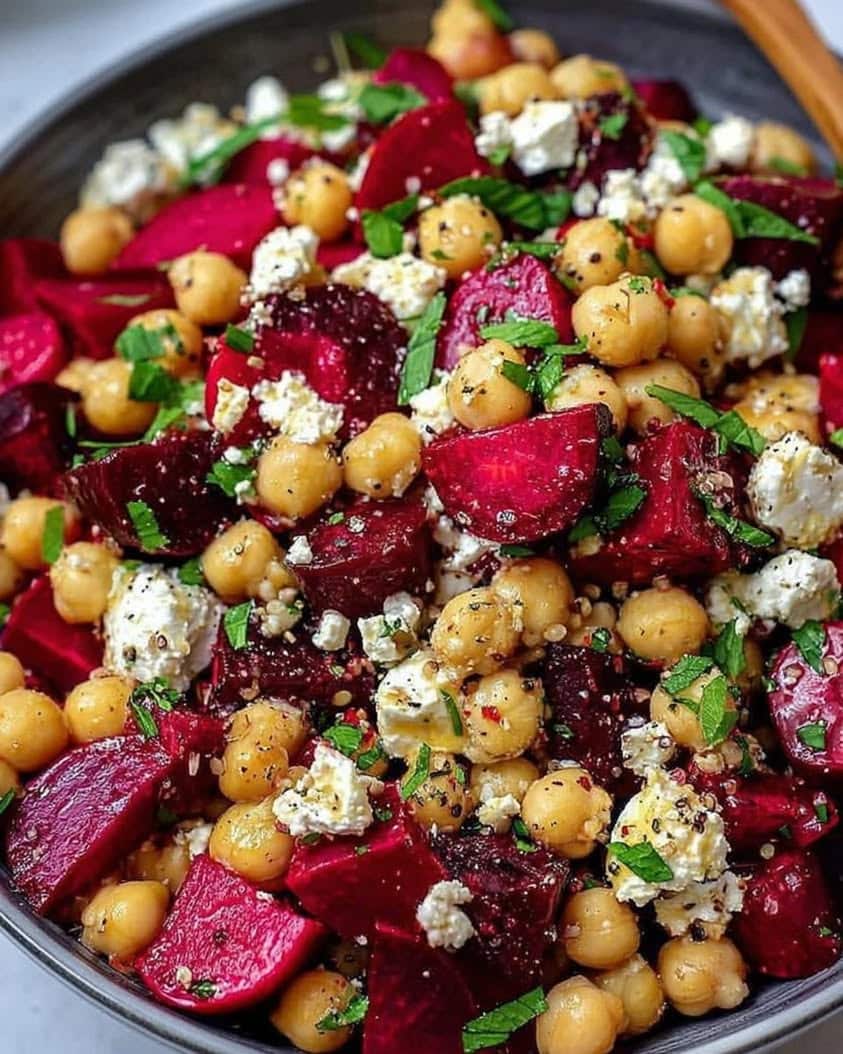
Vibrant Chickpea, Beet, and Feta Salad Recipe with Lemon Dressing: A Colorful Power Bowl
This vibrant chickpea, beet, and feta salad recipe with lemon dressing is a true celebration of color and flavor. Moreover, it transforms simple, wholesome ingredients into a stunning and satisfying meal. The combination of earthy roasted beets, creamy chickpeas, and salty feta cheese creates a perfect harmony. Ultimately, this salad is as nutritious as it is beautiful, making it an ideal choice for any occasion.
Imagine a bowl bursting with deep ruby reds, creamy whites, and vibrant greens. Consequently, every bite delivers a delightful mix of textures and tastes. The lemon dressing, bright and zesty, ties all the elements together beautifully. Furthermore, this chickpea, beet, and feta salad is incredibly versatile, serving perfectly as a light lunch or a substantial side dish. It is a recipe you will return to again and again for its simplicity and impressive results.
Quick Recipe Highlights
- Flavor Profile: This salad masterfully balances earthy sweetness from the beets with the tangy punch of lemon dressing and the salty creaminess of feta. Additionally, fresh herbs add a final aromatic layer that elevates the entire dish.
- Texture: You will enjoy a wonderful contrast between the tender, juicy beets, the firm yet creamy chickpeas, and the crumbly feta cheese. The fresh greens provide a crisp, refreshing base that completes the mouthfeel.
- Aroma: The primary aromatic notes come from the bright, citrusy lemon dressing and the fresh, grassy scent of chopped dill or parsley. Meanwhile, the earthiness of the beets provides a subtle, grounding background scent.
- Visual Appeal: This salad is a feast for the eyes with its striking contrast of deep red beets against white feta and green herbs. The colorful presentation makes it a standout dish on any table, perfect for social media or entertaining.
- Skill Level Needed: This is a beginner-friendly recipe requiring no advanced cooking techniques. Basically, it involves simple chopping, mixing, and tossing, making it accessible for cooks of all experience levels.
- Special Equipment: You only need basic kitchen tools: a mixing bowl, a whisk for the dressing, and a good knife. Using pre-cooked beets and canned chickpeas means no special appliances are required.
Recipe Overview
- Difficulty Level: This chickpea, beet, and feta salad recipe is classified as easy because it involves assembly more than cooking. All components are readily available pre-cooked, and the technique is purely about combining ingredients. Therefore, it is a foolproof recipe perfect for busy weeknights or last-minute guests.
- Category: This dish fits wonderfully into multiple categories: main dish salad, healthy lunch, meal prep option, and vibrant side dish. It is substantial enough to be a vegetarian main yet light enough to accompany grilled proteins.
- Cuisine: While not tied to one specific tradition, this salad draws inspiration from Mediterranean and Middle Eastern culinary styles. The use of chickpeas, lemon, and olive oil is classic to these regions, celebrating fresh, bold flavors.
- Cost: This is a very cost-effective recipe, especially when using canned beans and beets. Most ingredients are pantry staples or affordable produce, yielding a restaurant-quality dish for a fraction of the price.
- Season: This salad is truly a year-round champion. However, it feels particularly refreshing in spring and summer. Conversely, its robust ingredients also make it a welcome, colorful addition to fall and winter tables.
- Occasion: It is perfect for casual lunches, elegant dinners, potlucks, picnics, and holiday feasts. The make-ahead nature and stunning appearance make it a reliable choice for entertaining.
Why You’ll Love This Recipe
First and foremost, the taste and texture appeal of this chickpea, beet, and feta salad is undeniable. Each forkful delivers a complex yet harmonious blend of sweet, salty, tangy, and earthy notes. The creamy chickpeas and soft beets contrast delightfully with the crisp greens and crunchy nuts, if added. This satisfying combination keeps your palate interested from the first bite to the last, making it far from a boring salad.
Next, consider the sheer convenience and preparation benefits. This vibrant chickpea, beet, and feta salad recipe comes together in about fifteen minutes with minimal effort. By utilizing pre-cooked beets and canned chickpeas, you eliminate the most time-consuming steps. Consequently, it is the ultimate solution for a nutritious meal when time is short. You can easily assemble it in the morning for a packed lunch or whip it up quickly for dinner.
Furthermore, the nutritional advantages are incredibly impressive. This salad is packed with plant-based protein from the chickpeas, fiber from both the beets and beans, and healthy fats from the olive oil. Beets provide essential vitamins and minerals like folate and potassium. Altogether, it is a meal that fuels your body, supports digestion, and provides sustained energy without heaviness.
Additionally, the social and entertaining value of this dish is high. Its stunning, colorful presentation is guaranteed to draw compliments from guests. Because it can be made ahead and served at room temperature, it reduces host stress. This chickpea, beet, and feta salad acts as a vibrant centerpiece on a buffet, encouraging everyone to eat their vegetables happily.
Finally, the cost-effectiveness and accessibility of the ingredients make this recipe a kitchen staple. You likely have olive oil, lemon, and basic seasonings on hand. Canned chickpeas and pre-cooked beets are inexpensive and available at any grocery store. Therefore, you can create a gourmet-tasting, healthful meal without a special trip to the market or blowing your food budget.
Historical Background and Cultural Significance
The individual components of this salad have deep and ancient roots. Chickpeas, for instance, are one of the earliest cultivated legumes, with origins in the Middle East over 7,000 years ago. They became a staple across Mediterranean, Indian, and Middle Eastern cuisines, prized for their nutrition and storage ability. Beets also have a long history, initially cultivated for their greens in the ancient Mediterranean. The sweet root we eat today was developed later, becoming popular across Europe and eventually the world.
Combining these ingredients with cheese and lemon reflects a modern, fusion approach to salad-making. While traditional Greek salad features feta with vegetables, and Middle Eastern cuisine pairs chickpeas with lemon, the specific trio is a contemporary creation. This chickpea, beet, and feta salad recipe represents the global pantry of today’s home cook. It borrows confidently from different culinary traditions to create something new, delicious, and visually striking.
The evolution of this recipe parallels the rise of the “power bowl” and meal-sized salad trends. As people seek meals that are both Instagram-worthy and genuinely nourishing, combinations like this have soared in popularity. The recipe is adaptable, allowing for endless personalization with different herbs, nuts, or dressings. It showcases how ancient, wholesome ingredients can be repackaged for modern tastes and lifestyles.
Regional variations of this concept are endless. In the Eastern Mediterranean, you might find a similar salad with added sumac or pomegranate molasses. A North African twist could include cumin and coriander in the dressing. This versatility is a testament to the strong foundation of the core ingredients. Ultimately, this vibrant chickpea, beet, and feta salad is a delicious example of how food traditions evolve and intersect.
Ingredient Deep Dive
Chickpeas (Garbanzo Beans): Cultivated since antiquity, chickpeas are a cornerstone of diets from India to Italy. They are an excellent source of plant-based protein, fiber, and minerals like iron and folate. For the best texture in your chickpea, beet, and feta salad, rinse canned chickpeas thoroughly to remove the starchy liquid. If you have time, pat them dry with a towel to help the dressing cling better. For a substitution, white beans like cannellini or great northern beans work beautifully.
Beets: Beets have been used for thousands of years, initially for medicinal purposes. They are rich in nitrates, which may support blood pressure and athletic performance, and are a great source of folate and vitamin C. For this recipe, pre-cooked vacuum-packed beets offer ultimate convenience. If using fresh, roast them wrapped in foil until tender. Golden beets make a stunning, non-staining variation. Store fresh beets in the refrigerator crisper drawer for weeks.
Feta Cheese: True Greek feta is a protected designation of origin product, made from at least 70% sheep’s milk. It provides a salty, tangy punch and creamy crumbles that contrast perfectly with sweet beets. Feta is a good source of calcium and protein. For a superior chickpea, beet, and feta salad, buy feta in a block and crumble it yourself; it tastes fresher and has better texture than pre-crumbled. For a dairy-free version, use a firm tofu crumbled with nutritional yeast and salt.
The Lemon Dressing: The simple dressing of lemon juice, olive oil, salt, and pepper is classic Mediterranean. Fresh lemon juice is non-negotiable for its bright, clean acidity. Extra virgin olive oil contributes fruity, peppery notes and healthy monounsaturated fats. Whisk them together vigorously to create a temporary emulsion. This dressing not only seasons the salad but also lightly marinates the chickpeas, deepening the flavor over time.
Common Mistakes to Avoid
- Using Watery Canned Beets: Canned beets in liquid often have a tinny flavor and mushy texture. Instead, opt for vacuum-packed cooked beets or roast your own. This ensures a firm, sweet, and earthy base for your salad.
- Not Rinsing the Chickpeas: Skipping the rinse leaves a starchy, slightly slimy residue on the chickpeas. Always drain and rinse canned chickpeas under cold water. This step cleans them and improves their flavor and texture dramatically.
- Over-mixing the Salad: Vigorously stirring can cause the beets to stain everything uniformly pink and crush the delicate feta. Gently fold the ingredients together at the end to maintain distinct colors and textures.
- Using Bottled Lemon Juice: The flavor of bottled juice is flat and often contains preservatives. Freshly squeezed lemon juice is essential for a bright, vibrant dressing that makes the chickpea, beet, and feta salad sing.
- Adding Dressing Too Early: Pouring dressing on the greens long before serving will cause them to wilt. Dress the hearty chickpeas and beets first, then add greens and feta just before serving for optimal crispness.
- Skimping on Seasoning: Chickpeas and beets need ample seasoning. Taste and adjust the salt and pepper after combining everything. Remember, feta is salty, so account for that when seasoning the other components.
- Using Pre-Crumbled Feta: Pre-crumbled feta often contains anti-caking agents that dry it out. A block of feta crumbled by hand is moister, creamier, and far more flavorful in your final dish.
- Ignoring Texture Add-Ins: The salad is delicious as is, but adding a crunchy element like walnuts, pecans, or sunflower seeds provides a welcome textural contrast that elevates the entire experience.
Essential Techniques
Emulsifying the Dressing: Whisking the lemon juice and olive oil together vigorously is a simple form of emulsification. This technique temporarily blends the oil and acid, creating a smoother, more cohesive dressing that coats ingredients evenly. The key is to whisk until the mixture looks slightly thickened and unified. A common pitfall is adding the oil too quickly; instead, drizzle it in slowly while whisking constantly. Success is visible when the dressing no longer separates immediately after whisking.
Gentle Folding: This technique is crucial for combining the salad components without bruising or staining. Use a large, wide bowl and a rubber spatula or large spoon. Cut through the center of the mixture, lift from the bottom, and turn over gently. Repeat just until ingredients are distributed. This method preserves the integrity of the soft beets and creamy feta, ensuring your vibrant chickpea, beet, and feta salad has a beautiful, marbled appearance instead of turning completely pink.
Pro Tips for Perfect Chickpea, Beet, and Feta Salad
Toast your chickpeas for five minutes in a dry skillet for a deeper, nuttier flavor and slightly crispy texture. This simple step adds a whole new dimension to the salad.
Let the dressed chickpeas and beets marinate for 15-30 minutes before adding the feta and greens. This allows the flavors to meld and deepen beautifully.
Use a mix of herbs for complexity. Combine dill for its anise-like brightness with flat-leaf parsley for a fresh, grassy note.
For a stunning presentation, arrange the salad components in sections in the bowl rather than tossing. Let guests mix it themselves at the table.
If using fresh beets, wear disposable gloves to avoid staining your hands. Alternatively, rub your hands with lemon juice after handling to help remove the color.
Add a teaspoon of honey or maple syrup to the dressing if your beets aren’t very sweet. This balances the lemon’s acidity perfectly.
For extra richness, add a handful of creamy avocado chunks just before serving. They complement the other textures wonderfully.
Always taste and adjust the seasoning after adding the feta, as its saltiness will affect the final flavor balance of the dish.
Variations and Adaptations
Regional Variations: Give this chickpea, beet, and feta salad a Greek twist by adding Kalamata olives and oregano. For a Middle Eastern flair, sprinkle with za’atar and drizzle with tahini thinned with lemon juice. An Indian-inspired version could include a pinch of chaat masala in the dressing and a garnish of fresh cilantro.
Seasonal Adaptations: In summer, add fresh corn kernels and cherry tomatoes. For fall, incorporate roasted sweet potato cubes and a sprinkle of pumpkin seeds. Winter versions can include hearty kale massaged with the dressing. Spring welcomes the addition of fresh peas and mint.
Dietary Modifications: For a vegan chickpea and beet salad, omit the feta and use a dairy-free alternative or seasoned tofu crumbles. To make it gluten-free, ensure all packaged ingredients are certified GF, which they typically are. A nut-free version simply omits or substitutes seeds for any nuts.
Flavor Variations: Swap the lemon dressing for a balsamic vinaigrette for a sweeter, deeper note. Use goat cheese instead of feta for a tangier, creamier profile. Add a minced garlic clove or a pinch of red pepper flakes to the dressing for a kick.
Texture Modifications: Add crunch with toasted walnuts, pecans, or pumpkin seeds. For extra creaminess, include diced avocado or a dollop of tzatziki on the side. Using different types of greens, like shredded kale or butter lettuce, also changes the textural experience.
Presentation Alternatives: Serve the salad in individual jars for a portable lunch. Arrange it on a large platter lined with greens for a family-style feast. Or, stuff the mixture into a pita pocket or wrap for a handheld meal.
Serving and Presentation Guide
Plating Techniques: For a casual meal, simply toss everything in a large, shallow serving bowl. For a more elegant presentation, use a ring mold to create a tall, neat cylinder of salad on each plate. Alternatively, compose the salad by arranging rows or piles of each ingredient side-by-side on a long platter for a deconstructed, visually striking effect.
Garnishing Ideas: A final flourish makes your chickpea, beet, and feta salad look restaurant-worthy. Sprinkle with extra fresh herbs, a few whole chickpeas, or some reserved beet crumbles. A drizzle of high-quality olive oil or a twist of black pepper over the top adds polish. Edible flowers make a stunning garnish for special occasions.
Traditional Accompaniments: This salad pairs classically with warm pita bread or crusty baguette for scooping and soaking up dressing. It is a perfect side for grilled lamb chops, chicken souvlaki, or simple baked fish. As part of a mezze spread, serve it alongside hummus, dolmas, and olives.
Modern Serving Suggestions: Top the salad with a grilled chicken breast or piece of salmon to make it a complete protein-packed dinner. Serve it alongside a hearty soup for a satisfying lunch. Or, pack it in a lunch container with the dressing separate to keep greens crisp until ready to eat.
Temperature Considerations: This salad is best served at cool room temperature. If the ingredients are too cold from the fridge, the flavors are muted. Take it out about 15 minutes before serving. However, ensure any dressed greens are added at the last moment to prevent wilting.
Portion Control Tips: As a main dish, aim for about 2 cups per person. As a side, 1 to 1.5 cups is sufficient. Remember that the chickpeas and beets are filling, so a little goes a long way. Using a smaller plate can also help with visual portion satisfaction.
Wine and Beverage Pairing
Wine Pairings: The earthy beets and tangy feta in this salad call for wines with good acidity. A crisp, dry rosé from Provence is a fantastic match, as its berry notes complement the beets and its acidity cuts the richness. A Greek Assyrtiko, with its citrus and mineral qualities, mirrors the lemon dressing beautifully. For a red option, choose a light, low-tannin Pinot Noir that won’t overpower the dish.
Non-Alcoholic Alternatives: Sparkling water with a squeeze of lemon or lime is a refreshing, palate-cleansing choice. Iced herbal tea, like mint or lemon verbena, enhances the salad’s fresh flavors. A tart cherry juice or pomegranate spritzer can also echo the sweet-earth notes of the beets wonderfully.
Coffee/Tea Pairings: While not a typical pairing for salad, if serving this for lunch, a light, citrusy green tea would be complementary. Avoid heavy, bitter coffees or teas that would clash with the salad’s bright and earthy profile.
Temperature Considerations: Serve white and rosé wines well-chilled, around 45-50°F. Red wine should be slightly cooler than room temperature, about 55°F. Non-alcoholic beverages are best served very cold to provide a refreshing contrast to the salad.
Serving Suggestions: Offer a carafe of infused water with cucumber and mint alongside the meal. For a dinner party, consider a signature cocktail like a gin and tonic with a beet slice garnish to tie the themes together elegantly.
Storage and Shelf Life
Storage Methods: Store undressed salad components separately in airtight containers in the refrigerator for the best results. The dressed chickpea and beet mixture (without feta or greens) will keep well for up to 3 days. Store the dressing in its own small jar. This method preserves textures and prevents the beets from bleeding color onto everything.
Temperature Requirements: Always refrigerate this salad at or below 40°F. Do not leave it at room temperature for more than two hours, as the dairy and moist ingredients can promote bacterial growth. For picnics, transport it in a cooler with ice packs.
Container Recommendations: Glass containers are ideal as they don’t absorb stains or odors from the beets. If storing the assembled salad, use a wide, shallow container to allow for even cooling and to prevent the bottom layer from becoming soggy.
Signs of Spoilage: Discard the salad if you notice an off or sour smell, significant liquid separation, or slimy texture on any ingredients, especially the greens or beets. Mold growth, though rare in a vinegar-based dressing, is an absolute sign it should be thrown away.
Reheating Instructions: This salad is meant to be served cold or at room temperature and should not be reheated. If you’ve stored it and it’s too cold, simply let it sit on the counter for 10-15 minutes before serving to take the chill off.
Freezing Guidelines: Freezing is not recommended for this chickpea, beet, and feta salad. The high water content in the beets and cucumbers will cause them to become mushy and watery upon thawing. The texture of the salad will be irreparably compromised.
Make Ahead Strategies
Prep Timeline: You can fully prepare this salad 1-2 days in advance with a smart approach. Up to three days ahead, cook and cube your beets (if using fresh) and make the lemon dressing. One day ahead, rinse and drain the chickpeas and chop any sturdy vegetables like red onion. On the day of serving, simply combine all components and add the fresh herbs and greens.
Storage Between Steps: Keep the dressing in a sealed jar in the fridge. Store prepped beets and chickpeas in separate containers. Chop the onion and store it submerged in cold water in the fridge to keep it crisp and reduce its bite. This prevents flavor transfer and texture loss.
Quality Impact Assessment: Making the dressed base (chickpeas, beets, onion) ahead actually improves the flavor as the ingredients marinate. However, adding feta and greens more than a few hours in advance will cause the cheese to break down and the greens to wilt. Plan your final assembly accordingly.
Assembly Tips: For the freshest result, assemble the salad in layers in your serving bowl. Place the dressed chickpea and beet mixture on the bottom. Then add a layer of sturdy greens like spinach. Top with crumbled feta and delicate herbs. Toss gently at the table just before serving.
Reheating Guidelines: As a cold salad, no reheating is needed. If you’ve stored the base mixture and it’s too cold, let it sit out for 15-20 minutes. You can also briefly microwave just the chickpea/beet portion for 15 seconds to take the extreme chill off, but do not warm it.
Fresh Element Additions: Always add the final elements right before serving. This includes the fresh herbs, any tender greens like arugula, and crunchy garnishes like nuts or seeds. This last-minute touch ensures maximum freshness, texture, and visual appeal in your finished dish.
Scaling Instructions
Halving the Recipe: Halving this chickpea, beet, and feta salad is straightforward. Use half a can of chickpeas (save the rest in water in the fridge for another use) and roughly 8 ounces of beets. Whisk the dressing in a small jar using half the amounts, but taste and adjust, as you may need slightly more than half the lemon for balance. All other ingredients scale down proportionally.
Doubling or Tripling: For a crowd, this recipe doubles and triples beautifully. Use a very large bowl for mixing. When increasing the dressing, you may not need to triple the oil and acid exactly; often, a 2.5x ratio is sufficient for a large batch. Taste diligently after mixing. Consider using different colored beets (red and golden) for a more visually interesting large platter.
Equipment Adjustments: When scaling up, your regular mixing bowl may not be big enough. Use a large stockpot or a clean kitchen sink bowl for tossing. For serving, present on a large platter or in multiple bowls to ensure easy access for guests.
Timing Modifications: The prep time increases linearly when scaling up, mainly due to more chopping and mixing. However, the “cook time” remains zero. Allow a few extra minutes for thoroughly combining a very large batch to ensure the dressing is evenly distributed.
Storage Considerations: A large batch of salad will generate more leftovers. Store in multiple smaller containers rather than one giant one. This limits air exposure and allows you to take out only what you need, keeping the rest fresher for longer.
Nutritional Deep Dive
Macro Breakdown: A serving of this vibrant chickpea, beet, and feta salad provides a balanced mix of macronutrients. The chickpeas are an excellent source of complex carbohydrates and plant-based protein, offering sustained energy. The olive oil and feta contribute healthy fats, crucial for nutrient absorption and satiety. The beets add additional fiber and natural sugars, making this a well-rounded meal that satisfies hunger effectively.
Micronutrient Analysis: This salad is a micronutrient powerhouse. Beets are rich in folate, manganese, and potassium. Chickpeas provide iron, phosphorus, and B vitamins. The fresh lemon juice offers a burst of vitamin C, which can enhance iron absorption from the chickpeas. Feta cheese adds calcium and vitamin B12 to the profile.
Health Benefits: Consuming this salad supports heart health through fiber from chickpeas and beets and monounsaturated fats from olive oil. The nitrates in beets may help lower blood pressure. The combination of fiber and protein promotes stable blood sugar levels and supports digestive health. It’s an anti-inflammatory meal packed with antioxidants.
Dietary Considerations: This recipe is naturally vegetarian and can be made gluten-free and vegan with simple modifications. It is high in fiber, which is beneficial for most but should be introduced gradually for those not used to it. The sodium content is moderate, primarily from the feta, which can be adjusted by using less cheese or a low-sodium variety.
Portion Analysis: As a main dish, one serving provides a substantial and filling meal for most adults. As a side, it contributes significant nutritional value to a plate. The calorie density is moderate, coming primarily from wholesome ingredients rather than empty calories, making it a weight-conscious choice.
Weight Management Tips: This salad is excellent for weight management due to its high fiber and protein content, which increase feelings of fullness. To reduce calories slightly, you can decrease the olive oil by a teaspoon or use a lighter hand with the feta. The volume of vegetables makes it satisfying without being calorie-dense.
Dietary Adaptations
Gluten-free: This chickpea, beet, and feta salad is naturally gluten-free. Simply ensure that any pre-packaged ingredients like canned chickpeas or beets are certified gluten-free, as cross-contamination is rare but possible. Serve with gluten-free crackers or bread if desired.
Dairy-free: For a dairy-free version, omit the feta cheese. You can replace it with diced avocado for creaminess or use a store-bought vegan feta alternative. Another option is to crumble firm tofu and marinate it in lemon juice, nutritional yeast, and salt for a tangy, cheesy flavor.
Vegan: Follow the dairy-free adaptation above to create a fully vegan chickpea and beet salad. Ensure your sweetener in the dressing (if used) is maple syrup or agave, not honey. The result is a completely plant-based, protein-rich meal that’s just as vibrant and satisfying.
Low-carb/Keto: This salad is not inherently low-carb due to the chickpeas and beets. For a keto adaptation, significantly reduce or omit the chickpeas and beets. Focus on a base of low-carb greens and increase the feta, olives, and avocado. Add a protein like grilled chicken to make it a complete keto meal.
Paleo: Traditional paleo excludes legumes and dairy. Replace chickpeas with diced roasted sweet potato or carrot. Substitute the feta with chopped olives or nuts for a salty element. Use avocado oil or extra virgin olive oil in the dressing to keep it paleo-compliant.
Low-FODMAP: Chickpeas are high in FODMAPs. Use a 1/4 cup canned, rinsed chickpeas per serving to stay within limits, or replace them with canned, rinsed lentils. Ensure the beets are limited to about 2 slices per serving. Omit the onion or use only the green tops for flavor.
Troubleshooting Guide
Texture Issues (Soggy Salad): If your salad becomes soggy, it’s likely due to dressing the greens too early or not drying ingredients properly. Solution: Always ensure chickpeas and beets are patted dry. Dress the hearty components first and add delicate greens and herbs at the very last minute. For leftovers, store components separately.
Flavor Balance (Too Tart or Too Bland): An overly tart salad means too much lemon. Balance it with a tiny drizzle of honey or maple syrup. If it’s bland, you likely underseasoned. Add salt and pepper incrementally, tasting as you go. Remember, feta adds salt, so season the base components well before adding the cheese.
Temperature Problems (Too Cold Mutes Flavor): Ingredients straight from the fridge can taste dull. Let the dressed chickpea and beet mixture sit at room temperature for 15-20 minutes before serving. This allows the flavors to wake up and the olive oil to loosen from its chilled state.
Equipment Challenges (Dressing Won’t Emulsify): If your oil and lemon separate instantly, you may not be whisking vigorously enough. Use a small jar with a lid and shake it hard for 30 seconds. Alternatively, add a teaspoon of Dijon mustard to the lemon before whisking in the oil; the mustard acts as an emulsifier.
Ingredient Substitutions (Missing an Item): No feta? Use goat cheese, ricotta salata, or even large-curd cottage cheese. No fresh lemon? A good quality red wine vinegar or white wine vinegar can work in a pinch. No dill? Parsley, mint, or basil are all excellent fresh herb alternatives.
Timing Concerns (Prepping for a Crowd): The most time-consuming part is chopping. To save time, use pre-cubed beets and pre-washed greens. You can also use a food processor with a pulse function to chop onions and herbs quickly. Enlist help for mixing the large batch in a big bowl.
Recipe Success Stories
Community feedback on this vibrant chickpea, beet, and feta salad recipe has been overwhelmingly positive. Many readers report it has become their go-to potluck dish, consistently earning recipe requests. One home cook shared how she brought it to a work luncheon, and several colleagues who “don’t like beets” tried it and loved it, proving its broad appeal.
Variation successes are frequently celebrated. A reader from California added avocado and toasted pepitas, creating a West Coast version she now makes weekly for meal prep. Another successfully adapted it for her vegan daughter by using a almond-based feta, reporting that the flavor profile remained intact and delicious.
Adaptation stories often focus on using different proteins. Many have topped the salad with grilled chicken or flaked salmon to make it a heartier dinner. One creative cook used it as a filling for whole-wheat wraps for her children’s school lunches, a hack that got more vegetables into their diet seamlessly.
Reader suggestions have also improved the recipe. A common tip is to add a grated garlic clove to the dressing for extra zing. Another popular suggestion is to include a handful of massaged kale for added heartiness. These community-driven ideas show how a great recipe serves as a starting point for personal culinary expression.
Photography tips from readers highlight the salad’s visual strength. The best photos use natural light and a simple white or wooden background to make the colors pop. Overhead shots or angled shots showing the different layers are most effective. Many note that this is one of the most “photogenic” and reliably beautiful dishes in their repertoire.
Frequently Asked Questions
Can I use canned beets for this salad? Yes, you can use canned beets, but for the best flavor and texture, I recommend vacuum-packed cooked beets or roasting your own. Canned beets tend to be softer and have a more pronounced tinny taste. If using canned, drain and rinse them thoroughly before cubing.
How long does this chickpea, beet, and feta salad last in the fridge? The dressed base of chickpeas and beets will keep well for up to 3 days. Once you add the feta and fresh greens, it’s best consumed within 24 hours for optimal texture. Store components separately for the longest shelf life.
Can I make this salad ahead of time? Absolutely. You can prep all components up to 2 days in advance. Combine the chickpeas, beets, and dressing, and store them together. Add the feta, fresh herbs, and greens just before serving to keep everything crisp and fresh.
PrintChickpea, Beet & Feta Salad
- Total Time: 45 minutes
- Yield: 4
Description
A vibrant and nutritious salad featuring roasted beets, protein-rich chickpeas, and tangy feta cheese, tossed in a zesty lemon-herb dressing.
Ingredients
- 2 medium beets, peeled and diced
- 1 (15 oz) can chickpeas, rinsed and drained
- 4 oz feta cheese, crumbled
- 1/4 cup fresh parsley, chopped
- 2 tbsp olive oil
- 1 tbsp lemon juice
- 1 tsp honey
- 1 clove garlic, minced
- Salt and black pepper to taste
Instructions
- Preheat oven to 400°F (200°C). Toss diced beets with 1 tbsp olive oil, salt, and pepper. Roast on a baking sheet for 25-30 minutes until tender, then let cool.
- In a large bowl, combine roasted beets, chickpeas, crumbled feta, and chopped parsley.
- In a small bowl, whisk together remaining 1 tbsp olive oil, lemon juice, honey, minced garlic, salt, and pepper to make the dressing.
- Pour dressing over the salad and toss gently to combine. Serve immediately or chill before serving.
Notes
You can customize the seasonings to taste.
- Prep Time: 15 minutes
- Cook Time: 30 minutes
- Method: Main
- Cuisine: Mediterranean