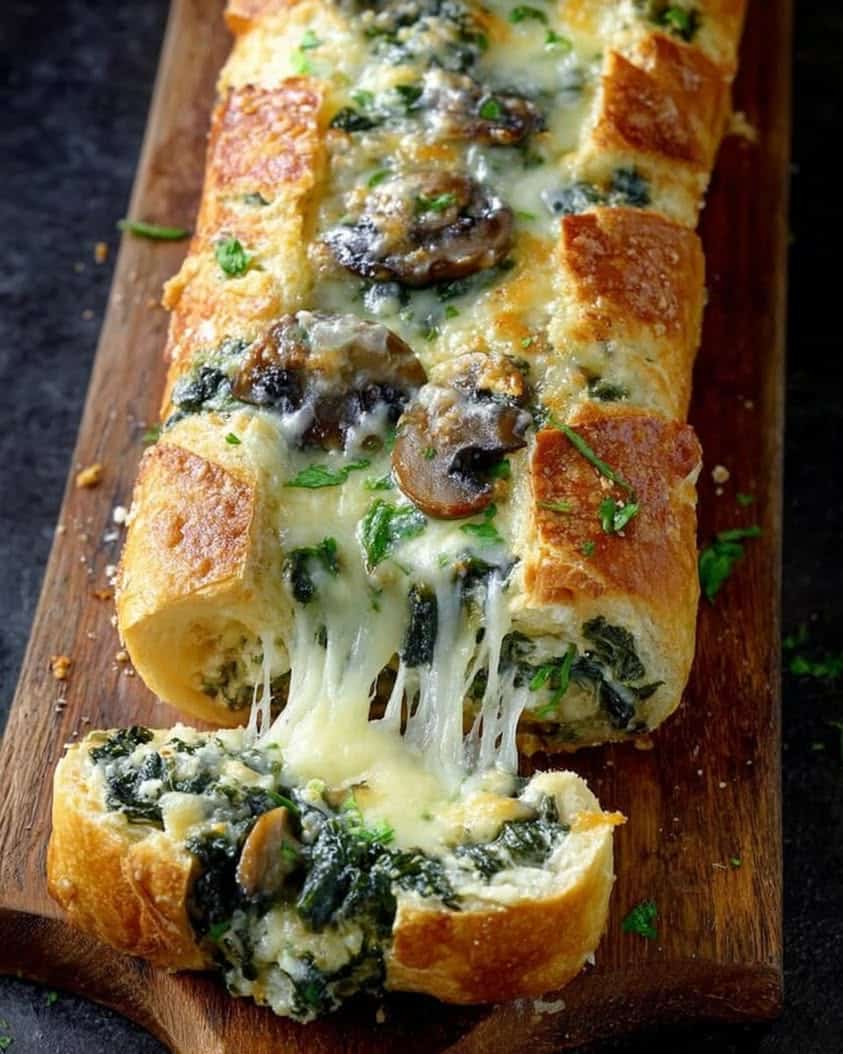
Cheesy Spinach Artichoke & Mushroom Stuffed Baguette: The Ultimate Crowd-Pleasing Appetizer
Imagine pulling a golden, crusty loaf from the oven, its center brimming with a molten, savory filling of spinach, artichoke, and mushrooms. This Cheesy Spinach Artichoke Mushroom Stuffed Baguette recipe transforms a simple French bread into a spectacular centerpiece. Moreover, it combines the beloved flavors of a classic dip with the satisfying, pull-apart fun of stuffed bread. Consequently, it is perfect for game day, holiday parties, or a cozy family dinner. The aroma alone, a blend of toasted garlic, melted cheese, and earthy vegetables, will have everyone gathering in the kitchen.
This recipe is a masterclass in comfort food with a gourmet twist. Importantly, it leverages familiar, accessible ingredients to create something truly special. The process is straightforward, yet the final result looks and tastes impressively complex. Each slice reveals layers of flavor and texture, from the crisp exterior to the creamy, cheesy interior packed with vegetables. Ultimately, this dish proves that impressive entertaining food does not require hours of complicated preparation. In fact, you can have this stunning appetizer ready in under an hour.
Furthermore, the versatility of this Cheesy Spinach Artichoke Mushroom Stuffed Baguette is a major win. You can easily customize the filling based on your preferences or what you have on hand. Serve it as a hearty appetizer, slice it for a fantastic party snack, or pair it with a salad for a complete meal. The combination of textures—creamy, crunchy, and tender—creates a truly addictive eating experience. Once you try this recipe, it will undoubtedly become a permanent fixture in your entertaining repertoire.
Quick Recipe Highlights
- Flavor Profile: This stuffed baguette delivers a powerful savory punch. The tangy cream cheese and Parmesan blend perfectly with the earthy mushrooms and spinach, while the artichoke hearts add a subtle briny note. Garlic and herbs tie everything together for a deeply satisfying taste.
- Texture: Expect a wonderful contrast in every bite. The baguette bakes to a satisfyingly crisp shell, while the interior filling becomes luxuriously creamy and molten. The vegetables retain just enough texture to provide interest against the smooth cheese.
- Aroma: As it bakes, the kitchen fills with an irresistible fragrance. Notes of toasted garlic and onion mingle with the nutty scent of browning cheese and the earthy perfume of sautéed mushrooms. It is an aroma that promises deliciousness.
- Visual Appeal: The finished loaf is a rustic, golden-brown masterpiece. When sliced or torn open, the vibrant green spinach and creamy white filling spill out beautifully, creating a stunning presentation on any platter.
- Skill Level Needed: This is a beginner-friendly recipe. The techniques involve simple sautéing and mixing. If you can chop vegetables and stir ingredients in a bowl, you can absolutely master this impressive dish.
- Special Equipment: You need only basic kitchen tools: a sharp knife, a cutting board, a skillet, a mixing bowl, and a baking sheet. A serrated knife is helpful for hollowing out the baguette cleanly.
Recipe Overview
- Difficulty Level: We rate this recipe as “Easy” for good reason. The steps are sequential and logical, with no advanced culinary skills required. The most technical part is hollowing the bread, which is simple with a steady hand. All cooking is done on the stovetop and finished in the oven, making it very manageable for cooks of any level.
- Category: This dish brilliantly straddles multiple categories. Primarily, it is a phenomenal appetizer or party snack. Additionally, it can serve as a substantial side dish for soups or salads. Some may even enjoy it as a light main course, especially when paired with a fresh green salad.
- Cuisine: While the baguette is distinctly French, the filling is inspired by the popular American spinach and artichoke dip. This fusion creates a modern, crowd-pleasing dish that feels both familiar and novel. It is a perfect example of how global cuisines can blend to create something new and exciting.
- Cost: This is a very cost-effective recipe, especially considering its impressive yield. A single loaf can feed a small crowd. The most expensive components are the cheeses and artichoke hearts, but using a blend of cream cheese and Parmesan keeps costs reasonable compared to using only expensive aged cheeses.
- Season: This is a fantastic year-round recipe. It is comforting and warm for fall and winter gatherings. Conversely, it is also excellent for spring brunches or summer parties when served at room temperature. The ingredients are generally available in every season.
- Occasion: Its versatility makes it suitable for countless occasions. Think football watch parties, holiday cocktail hours, potlucks, book club meetings, or even a fancy movie night at home. It is universally appealing and always a hit.
Why You’ll Love This Recipe
First and foremost, the taste and texture are utterly irresistible. This Cheesy Spinach Artichoke Mushroom Stuffed Baguette combines creamy, tangy, savory, and earthy flavors in perfect harmony. Each component plays a crucial role. The cream cheese provides a rich base, the Parmesan adds a salty sharpness, and the mozzarella offers that iconic stretch. Meanwhile, the vegetables contribute depth and balance, preventing the dish from being overly heavy. The final result is a complex flavor profile that feels indulgent yet balanced, satisfying even the most discerning palates.
From a convenience standpoint, this recipe is a true winner. The preparation is straightforward and uses common ingredients you might already have. Furthermore, you can prepare the filling ahead of time, storing it in the refrigerator until you are ready to stuff and bake the bread. This makes it an ideal choice for stress-free entertaining. When guests arrive, you simply assemble and pop it in the oven. The glorious aroma will then do all the work of building anticipation. Cleanup is also minimal, involving just a few bowls and a skillet.
Nutritionally, this stuffed baguette offers more than just empty calories. Spinach is a powerhouse of vitamins A, C, and K, as well as iron and folate. Artichoke hearts are an excellent source of fiber and antioxidants. Mushrooms provide B vitamins and selenium. By packing the filling with these vegetables, you add valuable nutrients to a comforting dish. Of course, it is a treat, but one that incorporates wholesome ingredients. You can feel good about serving it, knowing it provides more than just delicious flavor.
The social and entertaining value of this dish cannot be overstated. Food that is meant to be shared creates instant connection. A Cheesy Spinach Artichoke Mushroom Stuffed Baguette placed in the center of a table invites people to gather, tear off a piece, and dig in. It is interactive and fun, breaking the ice at any gathering. Its impressive appearance belies its simple preparation, making you look like a culinary rockstar with minimal effort. It is guaranteed to spark conversation and requests for the recipe.
Finally, this recipe is remarkably cost-effective and accessible. You do not need any specialty ingredients or equipment. A basic baguette from the grocery store bakery works perfectly. The vegetable components are affordable, especially if you use frozen spinach. Compared to ordering expensive appetizers at a restaurant or buying pre-made party platters, making this at home saves significant money while delivering far superior flavor and freshness. It is a smart, delicious choice for feeding a group on a budget.
Historical Background and Cultural Significance
The story of this dish is a fascinating fusion of culinary traditions. Its foundation, the baguette, is an iconic symbol of French cuisine, with its origins debated but solidifying in the early 20th century. The long, crisp loaf was designed for convenience. Meanwhile, the filling’s roots are firmly planted in American culinary culture, specifically the beloved spinach and artichoke dip. This dip gained massive popularity in the 1990s, becoming a staple on chain restaurant menus and at parties across the United States. The combination of these two elements is a relatively modern innovation, a testament to the creative, mash-up nature of contemporary home cooking.
Culturally, stuffed breads hold significant importance across the globe. From Italian stromboli to Middle Eastern mana’eesh, the concept of filling dough or bread with savory ingredients is a universal solution for a portable, satisfying meal. This recipe taps into that deep-seated tradition. In American culture, the “pull-apart” or “shareable” appetizer has become central to casual entertaining, emphasizing community and informality. The Cheesy Spinach Artichoke Mushroom Stuffed Baguette fits perfectly into this modern dining ethos, where food is meant to be a centerpiece for interaction rather than a formal, plated course.
The evolution of this specific recipe is linked to the rise of food blogging and social media. Home cooks began experimenting with deconstructing and reinventing classic dips. Stuffing the dip into bread was a natural, visually stunning progression. The addition of mushrooms is a common and logical variation, adding umami depth and extra texture. This evolution showcases how recipes are living documents, constantly adapted and improved by home cooks around the world. The version we know today is likely the result of countless iterations shared in online communities and cookbooks.
Regional variations of this concept abound, demonstrating its adaptability. In the American South, you might find a version with added jalapeños or andouille sausage for a spicy kick. On the West Coast, sun-dried tomatoes and goat cheese might make an appearance. In Italy, a similar concept might use focaccia and incorporate ricotta and prosciutto. The basic framework—a crusty bread vessel and a creamy, flavorful filling—is a canvas for endless creativity. This global resonance underscores the universal appeal of combining bread, cheese, and vegetables in a delicious, shareable format.
Ingredient Deep Dive
Baguette: The baguette is more than just a container; it contributes crucial texture and flavor. A good, crusty artisan baguette will hold its structure during baking, providing a satisfying crunch that contrasts the creamy filling. Historically, the baguette’s thin crust and airy interior were ideal for maximizing crustiness, a prized quality. When selecting, choose a loaf that feels firm with a crisp exterior. Avoid soft, pre-sliced sandwich bread, as it will become soggy. For storage, keep it at room temperature in a paper bag for a day; for longer storage, freeze it whole and refresh in the oven.
Spinach: We use frozen chopped spinach for convenience and consistency. Fresh spinach contains a high water content that can make the filling watery. Frozen spinach is blanched before freezing, which stabilizes it and removes excess moisture. Spinach is nutritionally dense, packed with iron, calcium, and vitamins A and K. Historically cultivated in ancient Persia, it spread across the globe. For this recipe, thoroughly thaw and squeeze the spinach dry using a clean kitchen towel or cheesecloth. This step is non-negotiable for a creamy, not watery, filling.
Artichoke Hearts: Typically canned or jarred in water or brine, artichoke hearts bring a mild, nutty, and slightly tangy flavor. The artichoke itself is a thistle, with a history dating back to ancient Greek and Roman times. They are a good source of fiber, vitamin C, and folate. For the best texture and flavor, use artichoke hearts packed in water and give them a rough chop. Avoid marinated artichokes, as their oil and herb seasoning can alter the balance of the recipe. Always drain and lightly pat them dry before use.
Mushrooms: Cremini or white button mushrooms are perfect here. They provide a deep, savory umami flavor and a meaty texture. Mushrooms have been foraged and cultivated for millennia across many cultures. They are low in calories but rich in B vitamins and selenium. Slice them uniformly for even cooking. Sautéing them until they release their moisture and become golden brown is key to concentrating their flavor and preventing a soggy filling. Do not skip this step; it builds the foundational taste of the dish.
Cream Cheese: This is the primary agent for creaminess and tang. Use full-fat brick cream cheese for the best texture and stability. Low-fat varieties may separate or become watery when baked. Cream cheese is an American invention from the late 19th century. Let it soften at room temperature before mixing to ensure a smooth, lump-free filling that blends seamlessly with the other ingredients.
Parmesan Cheese: Freshly grated Parmesan Reggiano or a good-quality domestic Parmesan adds a salty, nutty, complex sharpness. The pre-grated powder in canisters often contains anti-caking agents that can affect melt and flavor. Parmesan has a storied history in the Parma region of Italy, aged for months or years. Its intense flavor means a little goes a long way, boosting the overall savoriness of the filling without overwhelming it.
Mozzarella Cheese: Shredded low-moisture mozzarella is chosen for its excellent melting qualities and mild flavor. It provides the beloved “cheese pull” effect. Fresh mozzarella, packed in water, has too much moisture and will make the filling soupy. Low-moisture mozzarella ensures the filling holds together beautifully. You can use pre-shredded bags for convenience, but block cheese shredded yourself will melt more smoothly.
Common Mistakes to Avoid
- Not Squeezing the Spinach Dry: This is the number one mistake. Frozen spinach holds a tremendous amount of water. If you do not thoroughly squeeze it in a towel or cheesecloth, that water will release into your filling during baking, creating a soggy, separated mess instead of a creamy one.
- Using Fresh Spinach Without Precooking: If you substitute fresh spinach, you must wilt it first and then squeeze it just as dry. Simply chopping and adding raw fresh spinach will introduce even more water than frozen, ruining the texture.
- Undercooking the Mushrooms: Sautéing mushrooms is about driving off their natural water content. If you stop when they are just soft, they will continue to release steam in the oven. Cook them until they are deeply browned and all liquid has evaporated from the pan.
- Overfilling the Baguette: It is tempting to pack in every bit of filling, but overstuffing can cause the bread to split open unevenly or the filling to bubble over and burn on the baking sheet. Leave a small margin at the ends.
- Using the Wrong Bread: A soft, sandwich-style loaf will turn to mush. You need a crusty, sturdy baguette with a firm exterior that can withstand hollowing and baking without collapsing.
- Not Letting the Filling Cool Slightly: Stuffing the baguette with piping hot filling can start to cook the bread from the inside prematurely and make it difficult to handle. Let the sautéed mixture cool for a few minutes before mixing with the cheeses.
- Skipping the Garlic and Onion Sauté: These aromatics form the flavor base. Adding them raw will result in a harsh, unfinished taste. Taking the time to sauté them until soft and fragrant is essential for a rounded, deep flavor.
- Forgetting to Score the Top: Making a few shallow diagonal cuts on the top of the stuffed loaf isn’t just for looks. It allows steam to escape in a controlled way, preventing the baguette from bursting open haphazardly.
- Underbaking: The exterior needs time to become crisp and golden, and the interior needs to be heated through until bubbly. If you remove it too early, the center may be lukewarm and the bread pale. Bake until it is visibly golden and you can see the filling bubbling through the cuts.
- Cutting Immediately: Allow the baked baguette to rest for 5-10 minutes after removing it from the oven. This lets the filling set slightly, making it easier to slice cleanly without everything oozing out uncontrollably.
Essential Techniques
Squeezing Vegetables Dry: This technique is critical for success. After thawing frozen spinach, place it in the center of a clean, lint-free kitchen towel or several layers of cheesecloth. Gather the edges and twist tightly over the sink, applying strong pressure to wring out every drop of green-tinged water. For other vegetables like artichokes, a thorough pat with paper towels suffices. This step removes excess moisture that would otherwise steam out during baking, diluting flavors and creating a watery, disappointing texture in your Cheesy Spinach Artichoke Mushroom Stuffed Baguette.
Sautéing to Build Flavor: Sautéing is not just about cooking ingredients; it is about developing flavor. Start by cooking the onions and garlic until soft and fragrant, which mellows their raw bite. Then, add the mushrooms. Do not crowd the pan, as this will steam them. Cook over medium-high heat, allowing them to brown and release their liquid. Continue cooking until that liquid evaporates and the mushrooms caramelize. This process, called the Maillard reaction, creates complex, savory umami compounds that form the deep flavor foundation of your filling.
Hollowing the Baguette: Using a sharp serrated knife, slice the baguette in half lengthwise, but do not cut all the way through. Leave about a 1/2-inch hinge along one long side. Next, gently tear out the soft interior bread, creating a “boat.” Leave a border of about 1/2 to 3/4-inch of bread attached to the crust to maintain structural integrity. The removed bread can be saved for breadcrumbs. The goal is a sturdy shell that can hold the filling without leaking or collapsing.
Mixing the Filling: Ensure your cream cheese is fully softened to room temperature for easy blending. In a large bowl, combine the cooled vegetable mixture with the cheeses. Mix until just combined. Overmixing can make the cream cheese greasy. The mixture should be thick and hold its shape. Taste and adjust seasoning at this stage, as it is difficult to correct once baked inside the bread.
Pro Tips for Perfect Cheesy Spinach Artichoke Mushroom Stuffed Baguette
First, always taste your filling before stuffing. Seasoning inside a bread shell is tricky later. Adjust salt, pepper, and even a pinch of red pepper flakes at the mixing stage.
For an extra flavor boost, toast the hollowed-out baguette in the oven for 5 minutes before filling. This creates a stronger barrier against sogginess.
Mix a tablespoon of the reserved, toasted bread crumbs from the hollowed-out center into the filling. This helps absorb any residual moisture and adds textural interest.
If your filling seems too soft to stuff, chill it in the refrigerator for 15-20 minutes. This will firm up the cream cheese, making it easier to pack into the bread neatly.
Brush the outside of the stuffed baguette lightly with olive oil or melted butter before baking. This promotes an even, golden-brown, crispy crust.
Place the stuffed loaf on a parchment-lined baking sheet. Not only does this prevent sticking, but it also makes cleanup from any potential cheese bubble-overs a breeze.
Let the baked loaf rest for a full 10 minutes before slicing. This allows the molten cheese to set slightly, ensuring clean cuts and preventing burns from escaping steam.
For serving, use a sharp serrated knife and a gentle sawing motion to slice through the crisp crust without squishing the filling out the sides.
Variations and Adaptations
Regional Variations: Give this recipe a regional twist easily. For a Southern influence, add diced cooked andouille sausage and a pinch of cayenne. For a Mediterranean flair, incorporate chopped kalamata olives, sun-dried tomatoes, and swap Parmesan for feta cheese. An Italian-inspired version could include diced pepperoni and a sprinkle of oregano.
Seasonal Adaptations: In the spring, add fresh asparagus tips (blanched and chopped) and fresh herbs like chives and tarragon. For summer, mix in roasted corn kernels and poblano peppers. In autumn, roasted butternut squash cubes add sweetness and color.
Dietary Modifications: For a gluten-free version, use a sturdy gluten-free baguette or hollow out large gluten-free rolls. For dairy-free, use high-quality vegan cream cheese and shreddable vegan mozzarella and Parmesan alternatives. The vegetables remain the flavorful star.
Flavor Variations: Experiment with different cheese blends. Smoked Gouda adds a wonderful depth, while pepper jack brings heat. A tablespoon of pesto or sun-dried tomato paste mixed into the filling can completely transform the flavor profile.
Texture Modifications: For added crunch, mix in toasted pine nuts or walnuts into the filling. For a smoother, more dip-like interior, pulse the vegetable mixture in a food processor a few times before combining with the cheeses.
Presentation Alternatives: Instead of one large baguette, use individual mini baguettes or large dinner rolls for personal-sized portions. You can also slice a baguette into thick rounds, hollow out the center of each, and fill them to make individual stuffed bread “cups.”
Serving and Presentation Guide
Plating Techniques: For maximum impact, serve the whole loaf on a large wooden cutting board or a rustic slate platter. Place the knife beside it, allowing guests to slice their own portions. Alternatively, pre-slice it into thick pieces and fan them out slightly on the platter, showcasing the beautiful, oozing filling.
Garnishing Ideas: A simple garnish elevates the presentation. A light sprinkle of chopped fresh parsley, chives, or microgreens adds color and freshness. A final dusting of grated Parmesan or a drizzle of high-quality olive oil just before serving adds a professional touch.
Traditional Accompaniments: This rich, savory bread pairs wonderfully with lighter, acidic sides. A simple mixed green salad with a bright vinaigrette is classic. For a soup-and-sandwich combo, serve it with a bowl of tomato basil soup or a creamy mushroom soup for dipping.
Modern Serving Suggestions: For a party, surround the stuffed baguette with an array of dipping sauces like marinara, ranch, or a spicy arrabbiata. Include crudité sticks (carrots, celery, bell peppers) for those who want a fresh, crunchy contrast.
Temperature Considerations: This dish is best served warm from the oven. However, it is also delicious at room temperature, making it excellent for buffets or picnics. Avoid serving it cold, as the cheese will solidify and lose its appealing creamy texture.
Portion Control Tips: A standard baguette yields about 6 generous servings as an appetizer or 4 as a light main. When serving as part of a larger spread with other foods, you can easily stretch it to 8-10 people by cutting thinner slices.
Wine and Beverage Pairing
Wine Pairings: The rich, creamy, and savory nature of this dish calls for wines with good acidity to cut through the fat. A crisp, unoaked Chardonnay or a Sauvignon Blanc works beautifully. For red wine lovers, a light-bodied Pinot Noir with its bright red fruit and earthy notes complements the mushrooms without overpowering the dish. A dry Rosé is also a fantastic, versatile choice.
Non-Alcoholic Alternatives: Sparkling water with a squeeze of lemon or lime provides a refreshing palate cleanser. For something more flavorful, try a ginger beer or a tart cranberry spritzer. Iced herbal tea, like mint or lemon verbena, also pairs nicely.
Coffee/Tea Pairings: This is not a typical dish for coffee pairing. However, if serving for brunch, a medium-roast coffee can stand up to the robust flavors. A robust black tea like English Breakfast or an earthy green tea could be interesting companions later in the day.
Temperature Considerations: Serve white wines and sparkling beverages well-chilled. Red wines should be served slightly below room temperature. Non-alcoholic spritzers should be ice-cold to provide the best contrast to the warm, rich bread.
Serving Suggestions: Always offer water alongside any other beverages. The saltiness of the cheese makes hydration important. For a crowd, consider setting up a beverage station with a few options so guests can choose their preferred pairing.
Storage and Shelf Life
Storage Methods: Store any leftovers tightly wrapped in aluminum foil or in an airtight container. Refrigerate promptly. Do not leave the stuffed baguette at room temperature for more than two hours due to the dairy content.
Temperature Requirements: Always store in the refrigerator at 40°F or below. For longer storage, freezing is an option (see below). The bread will lose its crispness upon refrigeration but can be revived.
Container Recommendations: An airtight container is best to prevent the bread from absorbing other refrigerator odors. If using foil, wrap it tightly in a second layer of plastic wrap for the best seal.
Signs of Spoilage: Discard the leftovers if you notice any off smells (sour or unpleasant), significant mold growth (often fuzzy green or white spots), or if the texture becomes slimy. When in doubt, throw it out.
Reheating Instructions: To restore crispness, reheat in the oven or toaster oven. Preheat to 350°F. Place slices or the leftover portion on a baking sheet and heat for 5-10 minutes, until warmed through and the crust is crisp again. Avoid the microwave, as it will make the bread very soggy.
Freezing Guidelines: You can freeze the unbaked, stuffed baguette. Wrap it tightly in plastic wrap, then in foil. Freeze for up to 2 months. To bake from frozen, add 10-15 minutes to the baking time, covering loosely with foil if the top browns too quickly. You can also freeze baked leftovers, though the texture of the bread suffers more upon reheating.
Make Ahead Strategies
Prep Timeline: You can prepare the entire filling 1-2 days in advance. Simply sauté the vegetables, let them cool completely, then mix with the cheeses. Store the filling in an airtight container in the refrigerator. The baguette can be hollowed out a day ahead and stored in a bread bag at room temperature.
Storage Between Steps: Keep the prepared filling and the hollowed bread separate until ready to bake. Stuffing the bread more than an hour before baking can lead to a soggy interior as the salt and moisture from the filling begin to break down the bread.
Quality Impact Assessment: Making the filling ahead often improves the flavor, as the ingredients have time to meld. The texture of the final product, when baked from a cold filling, is virtually identical to baking it fresh. Just note you may need to add a few extra minutes to the baking time if the filling goes in cold from the fridge.
Assembly Tips: When ready to serve, simply fill the bread shell with the cold filling, press it in firmly, score the top, and bake. There is no need to bring the filling to room temperature first, though doing so can slightly reduce baking time.
Reheating Guidelines: This strategy is not for reheating a fully baked loaf, but for baking from a pre-assembled state. Follow the standard baking instructions, checking for doneness a few minutes after the suggested time, as ovens vary.
Fresh Element Additions: If making the filling ahead, consider adding a final sprinkle of fresh herbs (like parsley or chives) to the mixed filling just before stuffing the bread. This ensures their bright flavor and color are preserved.
Scaling Instructions
Halving the Recipe: Halving is straightforward for a smaller yield. Use half of all ingredients. Find a smaller, demi-baguette. The baking time may be reduced by 5-7 minutes, so watch for visual cues (golden brown, bubbling filling) rather than relying solely on the timer.
Doubling or Tripling: Doubling is perfect for large parties. Simply double all ingredients. You will need two full-sized baguettes. Use two baking sheets, and consider rotating them halfway through baking for even browning. The prep time will increase slightly, but the process remains the same.
Equipment Adjustments: When scaling up, ensure you have a large enough skillet to sauté the increased volume of mushrooms and onions without crowding. You may need to cook them in batches. Likewise, use a very large mixing bowl for the final filling combination.
Timing Modifications: The active prep time scales almost linearly. However, oven time does not double. Two baguettes on the same rack may need a few extra minutes, but they will bake in roughly the same time as one. Always use the visual doneness indicators as your primary guide.
Storage Considerations: Scaling up means more potential leftovers. Plan your storage containers in advance. Consider whether you will bake all loaves at once or keep one stuffed loaf unbaked in the freezer for a future meal.
Nutritional Deep Dive
Macro Breakdown: A serving of this Cheesy Spinach Artichoke Mushroom Stuffed Baguette provides a balance of macronutrients. The carbohydrates come primarily from the bread, offering energy. The fats, from cheese and a touch of oil, contribute to satiety and carry flavor. The proteins come from the cheeses and, to a lesser extent, the vegetables and mushrooms. This combination makes it a satisfying dish that can curb hunger effectively.
Micronutrient Analysis: This dish is a notable source of several micronutrients. Spinach provides vitamin K for bone health and vitamin A for vision. Artichokes contribute folate and vitamin C. Mushrooms offer B vitamins like riboflavin and niacin, which support energy metabolism. The cheeses provide calcium and phosphorus for strong bones and teeth.
Health Benefits: The vegetable-packed filling increases the dish’s fiber content, which aids digestion and promotes gut health. The antioxidants in spinach and artichokes help combat oxidative stress. Using part-skim cheeses can lower saturated fat content without sacrificing creaminess. As part of a balanced diet, this recipe incorporates vegetables into a format that encourages enjoyment and consumption.
Dietary Considerations: This is a vegetarian dish. It is not suitable for vegan, gluten-free, or low-carb diets in its standard form. However, as outlined in the adaptations section, modifications can be made to accommodate these needs. It is also relatively high in sodium due to the cheeses, so those monitoring sodium intake should be mindful of portion size.
Portion Analysis: One-sixth of a standard loaf is a reasonable appetizer portion. To make it a lighter option, consider serving a smaller slice alongside a large salad. The richness of the cheese and bread means a little goes a long way in terms of flavor and satisfaction.
Weight Management Tips: If you are watching your calorie intake, enjoy this as an occasional treat within your dietary framework. Pair a smaller serving with a large volume of non-starchy vegetables, like a big salad, to increase fullness. You can also use lighter cream cheese and reduce the amount of mozzarella slightly, though this will affect texture.
Dietary Adaptations
Gluten-free: Use a certified gluten-free baguette. Many bakeries and stores now carry them. Ensure all other ingredients, like pre-shredded cheese, are certified gluten-free, as some use wheat-based anti-caking agents. The method remains identical.
Dairy-free: Substitute the cream cheese with a plain, firm vegan cream cheese alternative. Use shreddable vegan mozzarella and Parmesan-style cheeses. Be aware that melting properties vary by brand, so you may need to experiment to find one that melts well for that “stretchy” effect.
Vegan: Follow the dairy-free adaptations above. Also, ensure any baguette you use is vegan (no dairy or eggs). The vegetable base of the recipe is naturally vegan, making this a very achievable adaptation.
Low-carb/Keto: This is challenging due to the bread. For a keto version, consider using the filling as a dip and serving it with low-carb vegetables like bell pepper strips, cucumber slices, or celery. Alternatively, spoon the filling into a small baking dish and bake until bubbly for a crustless “dip.”
Paleo: The dairy and grains in the standard recipe are not Paleo-compliant. A Paleo adaptation would require a grain-free bread alternative and a dairy-free cheese substitute made from nuts or coconut. The vegetable mixture itself is perfectly Paleo-friendly.
Low-FODMAP: For those sensitive to FODMAPs, modifications are needed. Use only the green tops of scallions instead of onion. Omit garlic or use garlic-infused oil (where the solids are removed). Use canned artichoke hearts that are packed in water and limit the portion. Use lactose-free cream cheese. Consult a Monash University FODMAP app for specific serving sizes.
Troubleshooting Guide
Soggy Bread: This is almost always due to excess moisture in the filling. Solution: Be ruthless about squeezing spinach dry and patting artichokes dry. Ensure mushrooms are cooked until all liquid evaporates. Next time, try pre-toasting the Print
Cheesy Spinach Artichoke & Mushroom Stuffed Baguette
- Total Time: 45 minutes
- Yield: 4
Description
A warm, savory baguette stuffed with a creamy blend of spinach, artichokes, mushrooms, and melted cheeses, perfect for sharing as an appetizer or main dish.
Ingredients
- 1 large French baguette
- 2 cups fresh spinach, chopped
- 1 cup canned artichoke hearts, drained and chopped
- 1 cup mushrooms, finely diced
- 1 cup shredded mozzarella cheese
- 1/2 cup grated Parmesan cheese
- 4 oz cream cheese, softened
- 1/2 cup mayonnaise
- 2 cloves garlic, minced
- 1 tbsp olive oil
- 1 tsp dried oregano
- Salt and black pepper to taste
Instructions
- Preheat oven to 375°F (190°C). Line a baking sheet with parchment paper.
- Slice the baguette in half lengthwise and hollow out the center of both halves, leaving a 1/2-inch border to create a cavity. Set aside.
- In a skillet over medium heat, add olive oil and sauté mushrooms until softened, about 5 minutes. Add garlic and spinach, cooking until spinach wilts, about 2-3 minutes. Remove from heat.
- In a mixing bowl, combine the sautéed mixture, artichoke hearts, mozzarella, Parmesan, cream cheese, mayonnaise, oregano, salt, and pepper. Mix until well blended.
- Spoon the filling evenly into the hollowed baguette halves, pressing down gently. Place the halves back together and wrap the stuffed baguette in foil.
- Bake for 20 minutes, then unwrap the foil and bake for an additional 10 minutes until the top is golden and cheese is bubbly.
- Remove from oven, let cool for 5 minutes, then slice into 2-inch pieces and serve warm.
Notes
You can customize the seasonings to taste.
- Prep Time: 15 minutes
- Cook Time: 30 minutes
- Method: Main
- Cuisine: American