Cheesy Ravioli with Spinach, Mushrooms, and Sun-Dried Tomatoes: A Restaurant-Quality Weeknight Wonder
Imagine a dish that delivers the comforting, cheesy goodness of a restaurant pasta but lands on your table in just thirty minutes. This creamy cheesy ravioli with spinach and sun-dried tomatoes is exactly that kind of magic. It transforms humble store-bought ravioli into a gourmet experience with a luxuriously creamy sauce, earthy mushrooms, and vibrant pops of flavor. The result is a meal that feels indulgent and special, yet is deceptively simple to pull off on even the busiest weeknight.
The beauty of this recipe lies in its perfect balance of flavors and textures. Tender cheese-filled ravioli bathe in a velvety, garlic-infused sauce. Meanwhile, meaty mushrooms and nutritious spinach add substance, and the sun-dried tomatoes contribute a sweet-tart intensity that cuts through the richness. Every forkful is a harmonious blend of creamy, savory, and tangy notes. This dish is a guaranteed crowd-pleaser that will have everyone asking for seconds.
Furthermore, this creamy cheesy ravioli recipe is incredibly versatile. You can easily adapt it based on what you have in your fridge or pantry. It serves as a fantastic template for creativity. Ultimately, it proves that you do not need to spend hours in the kitchen to create a meal that tastes like a million bucks. Let us dive into how to make this family favorite.
Quick Recipe Highlights
- Flavor Profile: This dish offers a masterclass in balance. The rich, creamy sauce and mild cheese filling are perfectly offset by the umami of sautéed mushrooms and the bright, tangy punch of sun-dried tomatoes. A hint of garlic and Italian seasoning ties everything together beautifully.
- Texture: Enjoy a delightful contrast in every bite. You get the tender, pillowy pasta of the ravioli, the soft give of the wilted spinach, the meaty chew of the mushrooms, and the pleasing chewiness of the sun-dried tomatoes. The creamy sauce coats everything uniformly for a luxurious mouthfeel.
- Aroma: As this cooks, your kitchen will fill with an irresistible fragrance. First, you will smell the savory garlic and onions sautéing. Then, the earthy aroma of mushrooms will join in, followed by the herbal notes of Italian seasoning. Finally, the creamy sauce melds all these scents into one heavenly perfume.
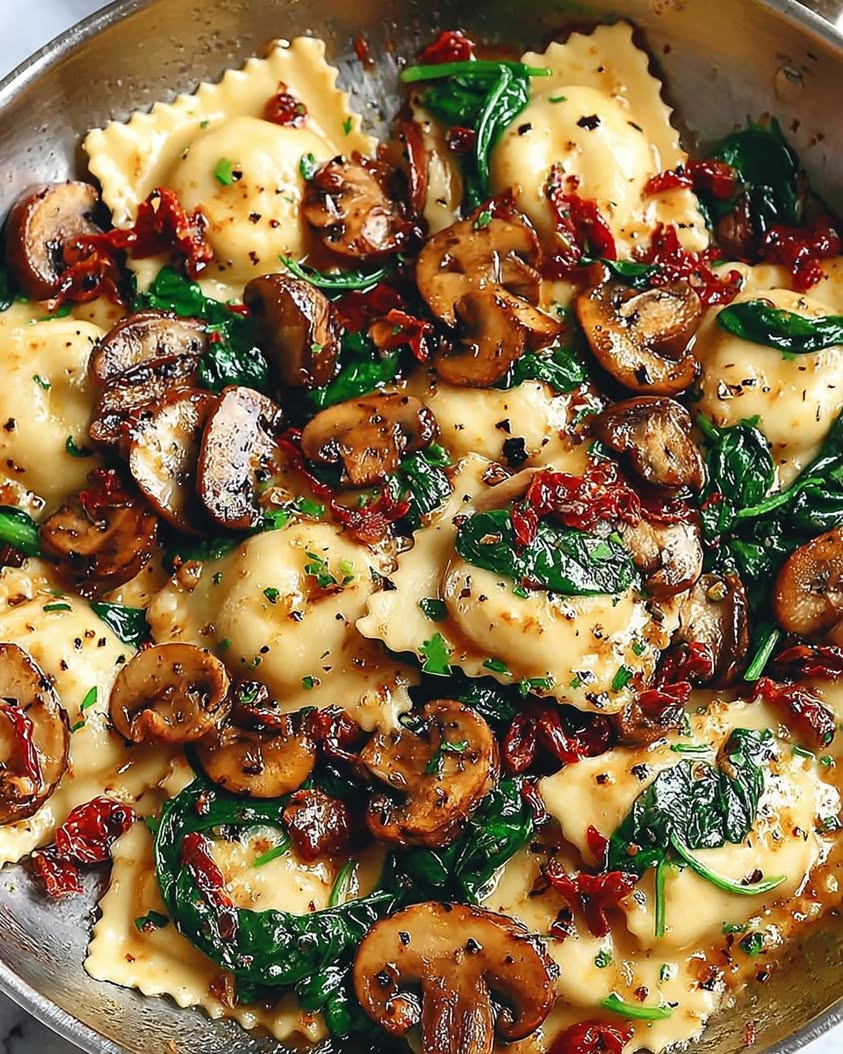
- Visual Appeal: This dish is a feast for the eyes with its gorgeous color palette. The creamy white sauce is studded with deep green spinach, golden-brown mushrooms, and vibrant red sun-dried tomatoes. The plump ravioli peek through, making for a presentation that is as appetizing as it is delicious.
- Skill Level Needed: This is a beginner-friendly recipe designed for success. The techniques involved—sautéing vegetables, making a simple pan sauce, and boiling pasta—are fundamental. If you can follow a straightforward sequence, you can absolutely master this creamy cheesy ravioli with spinach and sun-dried tomatoes.
- Special Equipment: You need only standard kitchen tools: a large skillet or sauté pan, a pot for boiling water, a colander, a wooden spoon or spatula, and a measuring cup. No fancy gadgets are required, making this recipe accessible to every home cook.
Recipe Overview
- Difficulty Level: We rate this recipe as “Easy” for several compelling reasons. The steps are sequential and logical, with no complicated techniques. Most ingredients are pantry staples or easy-to-find fresh items. Additionally, the timeline is forgiving; the sauce can simmer gently while you cook the ravioli. Consequently, even novice cooks can achieve a spectacular result with minimal stress.
- Category: This dish comfortably fits into multiple meal categories. It is a stellar main course for a vegetarian dinner. Simultaneously, it works wonderfully as a hearty side dish for a larger feast. You can also present it as a luxurious pasta course in a multi-course Italian-inspired meal. Its flexibility is a key part of its appeal.
- Cuisine: This recipe draws inspiration from Italian-American cuisine, celebrating bold flavors and comforting, cheesy pasta dishes. While not a traditional regional Italian pasta, it uses classic Italian ingredients—ravioli, garlic, sun-dried tomatoes, Parmesan—in a modern, creamy preparation that has become a beloved staple in home kitchens across America.
- Cost: This is a cost-effective way to enjoy a restaurant-style meal. Using store-bought ravioli as the base keeps costs down. Ingredients like spinach, mushrooms, and sun-dried tomatoes are relatively inexpensive, especially when purchased in bulk or on sale. The cream and cheese are the splurge items, but a little goes a long way in creating a rich sauce.
- Season: This creamy cheesy ravioli is truly a year-round winner. In cooler months, it provides the ultimate warm, creamy comfort food. During spring and summer, the bright notes from the sun-dried tomatoes and spinach keep it feeling fresh and not overly heavy. It is a versatile dish for any calendar page.
- Occasion: Perfect for busy weeknights, casual weekend family dinners, or even a simple date night at home. It is impressive enough to serve to guests but straightforward enough that you will not be stuck in the kitchen all evening. It is also a fantastic option for a comforting “self-care” meal.
Why You’ll Love This Recipe
First and foremost, the taste and texture are utterly irresistible. This creamy cheesy ravioli with spinach and sun-dried tomatoes delivers a symphony of flavors in every single bite. The luxurious sauce clings to each piece of pasta, while the vegetables add contrasting pops of flavor and substance. It is the kind of dish that feels like a hug in a bowl—comforting, satisfying, and deeply flavorful. You will find yourself savoring each component, from the tender pasta to the tangy tomato.
From a practical standpoint, the convenience is a major win. This entire meal comes together in about thirty minutes, making it faster than most delivery options. The process is mostly hands-off sautéing and simmering, allowing you to multitask. Because it uses one skillet and one pot, cleanup is a breeze. This recipe proves that a spectacular dinner does not require a sink full of dishes or hours of prep.
Nutritionally, this dish packs a surprising punch. Spinach is a powerhouse of vitamins A, C, and K, along with iron and fiber. Mushrooms provide B vitamins and antioxidants. Using a moderate amount of a rich cream sauce means you get that indulgent flavor without going overboard. You can easily boost the nutrition further by using whole-wheat or protein-packed ravioli. It is a meal that satisfies both your taste buds and your body.
For entertaining, this creamy cheesy ravioli is a secret weapon. It is universally appealing to both adults and children. You can prepare the sauce in advance and simply toss it with freshly cooked ravioli when guests arrive. The colorful presentation looks beautiful on a dinner table. It is a reliably delicious option that lets you enjoy your company instead of fussing over a complicated recipe.
Finally, it is incredibly cost-effective and accessible. You likely have many of the base ingredients like garlic, butter, and flour already. The ravioli and fresh components are affordable at any supermarket. Compared to ordering similar pasta at a restaurant, you can feed a family for the price of one entrée. This recipe brings gourmet flavor into your home kitchen on a sensible budget.
Historical Background and Cultural Significance
The story of ravioli itself stretches back centuries in Italian culinary history. Early references appear in manuscripts from the 14th century, though these were often sweet fillings wrapped in pasta, served during festivals. The concept of enclosing cheese, meat, or vegetables in pasta dough was a practical one, allowing cooks to stretch expensive or scarce ingredients. This tradition of “cucina povera” or “poor kitchen” ingenuity is the true ancestor of our modern stuffed pastas.
Ravioli’s cultural significance in Italy is profound, with each region boasting its own signature variations. In Liguria, ravioli are filled with prescinsoea cheese and herbs. In Emilia-Romagna, rich meat fillings are common. The version we know today in America—cheese-filled ravioli served with a tomato or cream sauce—is largely an Italian-American creation. Immigrants adapted their traditional recipes using available ingredients, leading to the beloved dishes found in red-sauce joints across the country.
The evolution of the recipe for creamy cheesy ravioli with add-ins like spinach and sun-dried tomatoes is a more recent chapter. It reflects late 20th-century American cooking trends that embraced convenience without sacrificing flavor. The use of pre-made ravioli speaks to our modern need for quick meals. Meanwhile, incorporating sun-dried tomatoes, which became a gourmet staple in the 1980s, and focusing on creamy, garlicky sauces shows a desire for restaurant-style indulgence at home.
Regional variations of this concept are endless. In the Midwest, you might find it made with a heavier Alfredo sauce. On the West Coast, additions like artichoke hearts or kale are popular. The basic formula—stuffed pasta + creamy sauce + vegetables—is a canvas for creativity. This particular combination with spinach, mushrooms, and sun-dried tomatoes has become a modern classic because it perfectly balances ease, flavor, and visual appeal, securing its place in the weeknight dinner rotation.
Ingredient Deep Dive
Cheese Ravioli: The star of the show. Store-bought refrigerated cheese ravioli are a fantastic shortcut. Typically filled with a blend of ricotta, mozzarella, and Parmesan, they provide creamy, salty pockets that pair perfectly with the sauce. For the best texture, look for ravioli sold in the refrigerator section rather than the dry pasta aisle. You can use any size or shape—mini, large, or square all work. For a protein boost, consider ravioli filled with meat or butternut squash.
Fresh Spinach: This leafy green wilts down dramatically, adding nutrition, color, and a mild, earthy flavor. Spinach is rich in iron, calcium, and vitamins. When selecting it, look for bright green, crisp leaves without any sliminess or yellowing. Baby spinach is ideal as it is more tender and requires no stemming. To store, keep it in its original bag in the crisper drawer and use it within a week. If you have kale or Swiss chard, they make excellent, heartier substitutes.
Cremini Mushrooms: Also sold as “baby bellas,” these mushrooms have a deeper, earthier flavor than white button mushrooms. They hold their shape well when sautéed, providing a meaty texture. Mushrooms are a great source of B vitamins and umami. Choose firm mushrooms with closed caps. Avoid any that are slimy or shriveled. Store them in a paper bag in the fridge. For a different flavor, shiitake or oyster mushrooms would be delicious, though more expensive.
Sun-Dried Tomatoes: These are the flavor powerhouses. Sun-drying concentrates the tomato’s natural sugars and acidity, creating an intense sweet-tart punch. They come either dry-packed or oil-packed. For this recipe, oil-packed are preferable because the flavorful oil can be used to sauté the vegetables. If using dry-packed, simply rehydrate them in hot water for 10 minutes before chopping. Their chewy texture and bold taste are irreplaceable, but in a pinch, you could use a tablespoon of tomato paste or some roasted red peppers for a different kind of sweetness.
Heavy Cream & Parmesan: This duo creates the luxurious, velvety sauce. Heavy cream (or whipping cream) has a high fat content that prevents curdling when simmered and creates a rich base. Freshly grated Parmesan cheese is non-negotiable for the best flavor and smooth melting. Pre-grated cheese often contains anti-caking agents that can make your sauce grainy. The Parmesan adds a salty, nutty complexity that elevates the entire dish. For a lighter version, you could use half-and-half, but the sauce will be thinner.
Common Mistakes to Avoid
- Overcooking the Ravioli: This is the most common error. Cook the ravioli just until they float to the top of the boiling water, usually 3-4 minutes. They will continue to cook slightly when tossed with the hot sauce. Overcooked ravioli become mushy and can burst open, losing their cheesy filling.
- Using Pre-Grated Parmesan Cheese: Pre-grated cheese contains cellulose to prevent clumping. This additive prevents it from melting smoothly into the sauce, often resulting in a grainy or gritty texture. Always take the extra minute to grate a block of Parmesan cheese yourself for a perfectly silky sauce.
- Not Reserving Pasta Water: Before draining your ravioli, always scoop out at least a cup of the starchy cooking water. This liquid is gold for sauce-making. If your sauce becomes too thick, adding a splash of pasta water helps loosen it and helps the sauce adhere to the pasta beautifully.
- Crowding the Pan When Sautéing Mushrooms: If you dump all the mushrooms into a cold pan, they will steam and become soggy. Ensure your pan is hot before adding them, and do not overcrowd. Cook them in a single layer so they brown properly, developing deep flavor instead of just softening.
- Adding Spinach Too Early: Spinach wilts in seconds. If you add it at the beginning of making the sauce, it will overcook, lose its vibrant color, and become slimy. Always stir in the fresh spinach at the very end, just until it wilts, to preserve its texture and nutrients.
- Boiling the Cream Sauce: Once you add the cream to the pan, you should bring it to a gentle simmer, not a rolling boil. Boiling heavy cream can cause it to separate or become oily. A low, gentle heat is key to maintaining that luxurious, creamy consistency.
- Forgetting to Season in Layers: Do not wait until the end to add all your salt and pepper. Season the mushrooms as they cook. Season the sauce when you add the cream. This builds a more complex and well-rounded flavor profile throughout the dish.
- Using a Small Skillet: You need ample surface area to sauté the vegetables properly and to later toss the ravioli with the sauce. A large, deep skillet or sauté pan (12-inch is ideal) prevents overcrowding and makes the final combining step much easier.
Essential Techniques
Sautéing Mushrooms to Perfection: This technique is crucial for developing deep, savory flavor. Start with a hot pan and oil. Add the mushrooms in a single layer and resist the urge to stir immediately. Let them sit for a minute to develop a golden-brown sear. Then, stir occasionally. They will release their liquid first, then reabsorb it as they brown. This process, called the Maillard reaction, creates complex, meaty flavors that form the foundation of your sauce.
Building a Roux-Based Cream Sauce: After sautéing the vegetables, you create a simple roux by stirring flour into the butter and oil. Cook this for just a minute to remove the raw flour taste. Then, you slowly whisk in the broth. This prevents lumps from forming. Finally, the cream is added. The roux acts as a thickener, giving the sauce body so it clings to the ravioli instead of pooling at the bottom of the bowl. Constant whisking during the initial liquid addition is the key to smoothness.
Wilting Spinach Properly: The goal is to just wilt the spinach, not cook it to death. The residual heat in the sauce is often enough. Once you turn off the heat, add the fresh spinach leaves and gently fold them in. Within 30 seconds to a minute, they will soften and turn bright green. This preserves their delicate texture, vibrant color, and nutritional value. Overcooked spinach becomes dull and slimy.
Combining Pasta and Sauce: Do not just pour sauce over cooked ravioli on a plate. For the best integration of flavors, add the drained ravioli directly to the skillet with the finished sauce. Gently toss everything together over low heat for a minute. This allows the ravioli to soak up some of the sauce and ensures every piece is perfectly coated. The starchy pasta water is your best friend here for adjusting consistency.
Pro Tips for Perfect Cheesy Ravioli
First, use the oil from the sun-dried tomato jar to sauté your garlic and mushrooms. This infused oil adds an incredible depth of tomato flavor right from the start of the cooking process.
For a richer sauce, substitute half of the vegetable broth with dry white wine. Let the wine simmer and reduce by half before adding the broth and cream. This adds a wonderful complexity.
To prevent ravioli from sticking together after boiling, drain them and immediately toss with a tiny drizzle of olive oil or a ladle of your sauce before adding them all to the skillet.
If you want a thicker sauce without more flour, let it simmer uncovered for an extra 3-5 minutes. The evaporation will naturally concentrate and thicken the creamy mixture.
For a beautiful finish and extra flavor, reserve a tablespoon of your grated Parmesan and some chopped sun-dried tomatoes to sprinkle on top of each plated serving just before eating.
To add a protein boost, sauté diced chicken breast or shrimp with the mushrooms. Alternatively, stir in a can of drained white beans or chickpeas when you add the spinach.
Always taste your sauce for seasoning right before adding the ravioli. Remember that the Parmesan cheese is salty, so you may need less added salt than you think.
For an extra layer of herbal freshness, stir in a handful of chopped fresh basil or parsley along with the spinach at the very end of cooking.
Variations and Adaptations
Regional Variations: Take inspiration from different Italian regions. For a Tuscan twist, use ricotta and spinach-filled ravioli and add cannellini beans. For a Ligurian feel, incorporate pesto by swirling a few tablespoons into the finished sauce. An American-Italian “vodka sauce” variation can be achieved by adding a splash of vodka and a tablespoon of tomato paste with the cream.
Seasonal Adaptations: In spring, use fresh peas and asparagus tips instead of mushrooms. During summer, add fresh cherry tomatoes and zucchini. For fall, incorporate roasted butternut squash cubes and sage. In winter, hearty kale and roasted garlic make it extra comforting.
Dietary Modifications: For a gluten-free version, use gluten-free ravioli and a 1:1 gluten-free flour blend for the roux. To make it dairy-free, use a rich, unsweetened coconut cream or cashew cream and nutritional yeast instead of Parmesan. For a vegan dish, combine dairy-free ravioli with these sauce substitutions.
Flavor Variations: Change the profile entirely by using different ingredients. Add red pepper flakes for heat. Stir in a spoonful of capers or chopped olives for brininess. Use smoked Gouda or fontina cheese in the sauce instead of Parmesan for a different cheesy note. A squeeze of lemon juice at the end can brighten everything up.
Texture Modifications: For more texture, toast pine nuts or walnuts and sprinkle them on top. For a smoother sauce, blend it briefly with an immersion blender after adding the spinach. To make it heartier, use meat-filled tortellini instead of cheese ravioli.
Presentation Alternatives: Serve individual portions in shallow bowls garnished with microgreens. For a family-style presentation, pour everything into a large, warmed serving platter. You can also bake the assembled dish with a breadcrumb and cheese topping for a crispy, baked pasta finish.
Serving and Presentation Guide
Plating is key to making this dish look restaurant-worthy. Use warm, shallow pasta bowls to contain the sauce. Twirl a serving of ravioli with tongs, letting some spinach and mushrooms drape over the top. Spoon extra sauce around the mound. Avoid overfilling the bowl; leaving a clean border makes the presentation more elegant.
Garnishing adds the final touch of color and flavor. A light snowfall of freshly grated Parmesan is a must. Sprinkle with chopped fresh parsley, basil, or chives for a green accent. A few extra sun-dried tomato pieces or a twist of black pepper on top looks beautiful. A drizzle of high-quality extra virgin olive oil adds sheen and richness.
Traditional accompaniments keep the meal Italian-inspired. A simple side salad with a sharp vinaigrette cuts through the richness of the pasta. Garlic bread or a crusty baguette is perfect for sopping up every last drop of the creamy sauce. For a lighter option, serve with steamed broccoli or roasted vegetables.
Modern serving suggestions might include pairing it with a kale Caesar salad or roasted cherry tomatoes on the vine. For a protein-forward meal, add a simple grilled chicken breast or lemon-herb salmon fillet on the side. It also pairs wonderfully with a glass of chilled white wine right at the table.
Temperature is critical. Serve the creamy cheesy ravioli immediately after tossing it in the sauce. Warm your serving bowls beforehand by rinsing them with hot water and drying them. This prevents the dish from cooling down too quickly. The sauce is at its silkiest when hot.
Portion control can be managed by counting ravioli per person—typically 6-8 large ravioli is a satisfying main course serving. Remember that the sauce and vegetables are filling. Serving a large green salad first can help prevent over-serving the richer pasta course.
Wine and Beverage Pairing
Choosing the right wine enhances this dish beautifully. A crisp, acidic white wine like Pinot Grigio or Sauvignon Blanc cuts through the creamy richness perfectly. Their citrus notes complement the sun-dried tomatoes. For a richer option, a lightly oaked Chardonnay mirrors the sauce’s butteriness. If you prefer red, opt for a light-bodied, low-tannin red like a Pinot Noir, which will not overpower the delicate ravioli.
Non-alcoholic alternatives are just as important. Sparkling water with a squeeze of lemon or lime cleanses the palate between bites. For a more crafted option, a virgin basil lemonade or a tart cherry spritzer pairs wonderfully. Iced herbal tea, like mint or peach, offers a refreshing counterpoint to the savory, creamy flavors.
While not traditional after pasta, a coffee or tea pairing can work if serving this as a lunch. A medium-roast coffee with low acidity can be a pleasant finish. Alternatively, a cup of peppermint or ginger tea can aid digestion after the rich meal, making for a comforting end to your dinner.
Temperature considerations are straightforward. White wines should be chilled but not ice-cold (about 45-50°F). Red wines should be slightly cooler than room temperature. Non-alcoholic sparkling drinks are best served very cold. This contrast between the cool drink and the warm pasta is part of the enjoyable experience.
Serving suggestions include offering both wine and water. Always provide a glass of water to sip alongside any other beverage. If serving wine, pour a modest amount to start, allowing guests to enjoy it before it warms up. For a dinner party, you might offer both a white and a red option to cater to different preferences.
Storage and Shelf Life
Proper storage is essential for food safety and quality. Transfer any leftover creamy cheesy ravioli to an airtight container within two hours of cooking. Refrigerate it promptly. The dish will keep safely in the refrigerator for 3-4 days. The sauce may thicken significantly as it cools, which is normal.
Temperature control is critical. Never leave the pasta sitting out at room temperature for extended periods. When reheating, ensure the internal temperature reaches 165°F to eliminate any potential bacteria. Use a food thermometer if you are unsure.
Container recommendations include glass or BPA-free plastic containers with tight-fitting lids. Avoid storing in the skillet you cooked in. If possible, store the ravioli and sauce combined, as separating them can dry out the pasta. A single layer is best, but if stacking, place parchment paper between layers to prevent sticking.
Signs of spoilage include an off or sour smell, visible mold (often fuzzy spots), or a significant change in texture where the sauce appears separated or curdled. If in doubt, throw it out. Dairy-based sauces are particularly perishable.
Reheating instructions are simple but require care to prevent the ravioli from becoming mushy. The best method is on the stovetop. Add leftovers to a skillet with a splash of broth, milk, or water. Gently heat over medium-low, stirring frequently, until warmed through. You can also use a microwave: place in a microwave-safe dish, cover loosely, and heat in 60-second intervals, stirring between each.
Freezing is possible but not ideal due to the dairy-based sauce and pre-cooked pasta, which can become grainy and mushy upon thawing. If you must freeze, do so for no longer than one month. Thaw overnight in the refrigerator before reheating gently on the stovetop, adding extra liquid to reconstitute the sauce.
Make Ahead Strategies
You can significantly streamline your dinner prep with smart planning. The entire sauce can be made 1-2 days in advance. Simply follow the recipe through adding the cream and Parmesan. Let the sauce cool completely, then store it in an airtight container in the refrigerator. The flavors often meld and improve overnight.
For storage between steps, keep the pre-made sauce separate from the uncooked ravioli. Do not combine them until you are ready to serve. You can also pre-chop the mushrooms, garlic, and sun-dried tomatoes a day ahead and store them in separate containers in the fridge to save on prep time.
The quality impact of making the sauce ahead is minimal and can be positive. The garlic and herb flavors have time to permeate the cream. You may need to add a splash of broth or milk when reheating, as the sauce will thicken in the fridge. Gently reheat the sauce in a skillet over low heat before adding the freshly cooked ravioli and spinach.
Assembly tips for make-ahead are straightforward. When ready to serve, cook your ravioli fresh. Reheat your sauce in a large skillet. Once the sauce is hot and bubbly, stir in the fresh spinach to wilt it. Then, add the drained, hot ravioli and toss everything together. This ensures the pasta retains its perfect texture.
Reheating guidelines are crucial. Always reheat the sauce gently over medium-low heat, stirring frequently. Do not boil it vigorously, as this can cause the dairy to separate. Adding the ravioli to the hot sauce at the end means they only warm through, preventing them from overcooking and falling apart.
Fresh element additions are the key to a make-ahead dish tasting freshly made. Always add the spinach at the very end, just before serving, to preserve its color and texture. Garnish with freshly grated Parmesan and herbs after plating. These last-minute touches make all the difference.
Scaling Instructions
Halving the recipe is simple for a smaller meal. Use a smaller skillet and reduce all ingredients by half. The cook times will remain roughly the same. Be especially careful when making the roux with a smaller amount of flour and butter—it can burn more quickly. You may need slightly less liquid to achieve the desired sauce consistency, so add broth and cream gradually.
Doubling or tripling the recipe for a crowd requires some adjustments. Use your largest Dutch oven or pot for the sauce. You may need to sauté the mushrooms in two batches to avoid steaming them. When increasing the roux, ensure the flour cooks for a full minute to avoid a raw taste. The sauce may take a few extra minutes to thicken. Cook the ravioli in multiple batches to prevent overcrowding the pot.
Equipment adjustments are necessary when scaling. For a double batch, a 5-quart Dutch oven is ideal. For a triple batch, consider using two large skillets for the sauce or cooking in sequential batches. Ensure you have a pot large enough to boil a greater quantity of ravioli, or boil them in two separate pots.
Timing modifications are minimal when scaling up. The vegetable sauté time may increase slightly due to larger volume. The sauce simmering time might also be a bit longer to reach the proper thickness. Start the sauce first, and begin boiling water for the ravioli when the sauce is simmering. This ensures everything finishes at the same time.
Storage considerations change with scale. A large batch of leftovers will take longer to cool in the refrigerator, which can be a food safety risk. Divide a large batch into several smaller, shallow containers for quicker cooling. This also makes reheating individual portions easier later on.
Nutritional Deep Dive
A standard serving provides a balance of macronutrients. The ravioli and sauce contribute carbohydrates for energy and a moderate amount of protein from the cheese filling and Parmesan. The heavy cream and olive oil provide healthy fats, which help absorb fat-soluble vitamins from the spinach. This is a satisfying, energy-dense meal ideal for a main course.
The micronutrient analysis reveals hidden benefits. Spinach is loaded with vitamin K for bone health, vitamin A for vision, and iron. Mushrooms provide B vitamins like riboflavin and niacin, which support energy metabolism. Sun-dried tomatoes offer lycopene, a powerful antioxidant. Using whole milk or cream also provides calcium and vitamin D.
Specific health benefits include supporting bone health from the calcium and vitamin K. The antioxidants from the vegetables help combat oxidative stress. The combination of fat, protein, and fiber promotes satiety, which can help with portion control. Using vegetable broth keeps the dish vegetarian and can lower the overall sodium if you choose a low-sodium variety.
Dietary considerations are important to note. This dish contains gluten (in the pasta and flour), dairy, and mushrooms. It is vegetarian but not vegan or gluten-free in its standard form. The richness comes from saturated fat in the dairy, so those monitoring saturated fat intake should be mindful of portion size.
Portion analysis shows that one serving (about 1.5 to 2 cups of the prepared dish) is typically sufficient for a main course. Pairing it with a large salad can help fill you up with fewer calories from the pasta itself. The ravioli are the most calorie-dense component, so moderating the number per plate is an easy way to adjust the meal.
Weight management tips include using a lighter cream alternative like half-and-half or even whole milk thickened with a bit more flour. Increase the volume of spinach and mushrooms to bulk up the dish with low-calorie vegetables. Always measure your oil and cheese to control added fats. Enjoying this as an occasional treat within a balanced diet is a sustainable approach.
Dietary Adaptations
Gluten-Free: Success hinges on two swaps. Use certified gluten-free cheese ravioli, which are available in many stores. For the roux, substitute the all-purpose flour with an equal amount of a gluten-free 1:1 baking blend or rice flour. Ensure your vegetable broth is also certified gluten-free. The cooking method remains identical.
Dairy-Free: Replace the heavy cream with full-fat, unsweetened coconut cream for a similar richness. Use a store-bought vegan Parmesan alternative or make your own from blended nuts and nutritional yeast. For the butter, use a plant-based alternative or more olive oil. Check that your ravioli are made without dairy cheese—many vegan options exist.
Vegan: Combine the dairy-free adaptations with vegan ravioli. Look for ravioli filled with tofu ricotta or nut-based cheeses. Use vegetable broth and ensure all other ingredients are plant-based. The sauce will be different but still creamy and flavorful. A sprinkle of nutritional yeast at the end adds a cheesy, umami finish.
Low-Carb/Keto: This requires the most significant change. Omit the flour in the roux. Thicken the sauce by simmering the cream and broth to reduce it, or use a teaspoon of xanthan gum as a thickener. Replace the ravioli with low-carb alternatives like sliced zucchini noodles (“zoodles”) or commercially available keto-friendly pasta. Increase the mushrooms and spinach for bulk.
Paleo: Avoid grains, dairy, and legumes. Use a dairy-free cream alternative like cashew cream. Thicken with arrowroot powder instead of flour. Serve the sauce over spiralized vegetables like sweet potato noodles or spaghetti squash instead of grain-based ravioli. Ensure the sun-dried tomatoes and broth contain no unwanted additives.
Low-FODMAP: This adaptation is for those sensitive to certain carbohydrates. Use garlic-infused oil instead of sautéing fresh garlic to get the flavor without the fructans. Omit the mushrooms or use only a small amount of oyster mushrooms, which are lower in FODMAPs. Ensure the sun-dried tomatoes are not packed with garlic or onion. Use lactose-free cream or a suitable alternative.
Troubleshooting Guide
Sauce is Too Thin: Do not panic. First, let it simmer uncovered for a few extra minutes to reduce and concentrate. If that is not enough, create a “slurry”: mix one tablespoon of cornstarch with two tablespoons of cold water until smooth. Whisk this into the simmering sauce and cook for one minute until thickened. Avoid adding more flour directly to the hot sauce, as it will clump.
Sauce is Too Thick: This is an easy fix. Gradually whisk in additional vegetable broth, milk, or that reserved pasta water, one tablespoon at a time, until you reach the desired consistency. Remember, the sauce will thicken slightly as it cools on the plate, so aim for a little looser than perfect in the pan.
Sauce Looks Grainy or Curdled: This usually happens if the heat was too high when adding the dairy or if pre-grated cheese was used. To salvage it, remove Print
Cheesy Ravioli with Spinach, Mushrooms, and Sun-Dried Tomatoes
- Total Time: 45 minutes
- Yield: 4
Description
A rich and savory pasta dish featuring cheese-filled ravioli tossed with sautéed spinach, mushrooms, and sun-dried tomatoes in a creamy garlic sauce.
Ingredients
- 1 package (20 oz) cheese ravioli
- 2 tablespoons olive oil
- 3 cloves garlic, minced
- 8 oz cremini mushrooms, sliced
- 2 cups fresh spinach
- 1/2 cup sun-dried tomatoes (oil-packed), chopped
- 1 cup heavy cream
- 1/2 cup grated Parmesan cheese
- Salt and black pepper to taste
- Fresh basil for garnish
Instructions
- Bring a large pot of salted water to a boil and cook the ravioli according to package directions. Drain and set aside.
- In a large skillet, heat olive oil over medium heat. Add garlic and mushrooms, sauté until mushrooms are tender and browned, about 5-7 minutes.
- Stir in spinach and sun-dried tomatoes, cooking until spinach wilts, about 2 minutes.
- Pour in heavy cream and bring to a simmer. Stir in Parmesan cheese until melted and the sauce thickens slightly.
- Add the cooked ravioli to the skillet, tossing gently to coat in the sauce. Season with salt and pepper.
- Serve immediately, garnished with fresh basil.
Notes
You can customize the seasonings to taste.
- Prep Time: 15 minutes
- Cook Time: 30 minutes
- Method: Main
- Cuisine: Italian-American