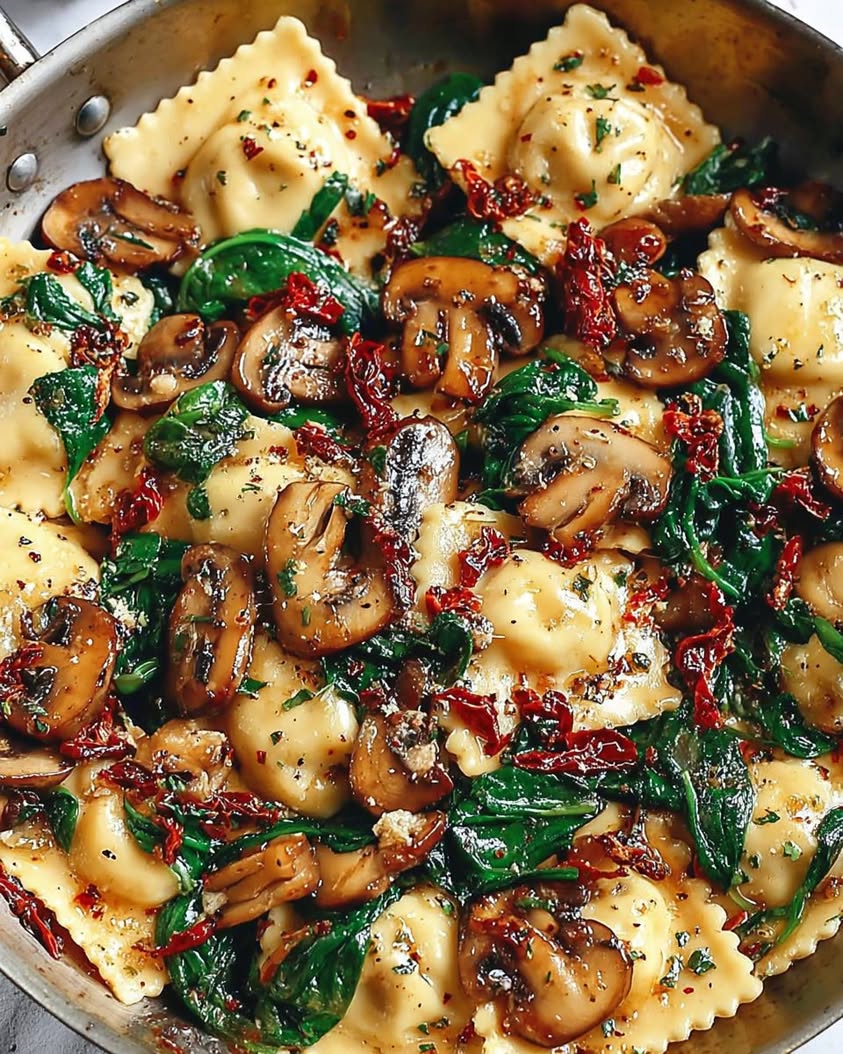
Creamy Cheesy Ravioli with Spinach and Mushrooms: A Restaurant-Quality Dinner in 30 Minutes
Imagine a dinner that feels indulgent and gourmet but comes together faster than ordering takeout. This creamy cheesy ravioli with spinach and mushrooms is exactly that kind of magic. It transforms humble store-bought cheese ravioli into a luxurious, restaurant-worthy meal with a velvety garlic parmesan sauce, earthy mushrooms, and vibrant spinach. The result is a comforting, satisfying dish that will have everyone asking for seconds. Moreover, it’s a perfect solution for busy weeknights when you crave something special without the fuss.
The beauty of this recipe lies in its harmonious blend of flavors and textures. Tender pasta pockets burst with creamy ricotta and mozzarella, while savory mushrooms and sun-dried tomatoes add a deep, umami richness. Fresh spinach wilts into the sauce, providing a pop of color and a nutritional boost. Ultimately, the entire dish is enveloped in a luscious, garlic-infused cream sauce that clings perfectly to every bite. This creamy cheesy ravioli with spinach and mushrooms is a guaranteed crowd-pleaser that proves simple ingredients can create extraordinary meals.
Quick Recipe Highlights
- Flavor Profile: This dish delivers a sophisticated balance of savory, creamy, and tangy notes. The garlic and parmesan create a rich base, while the sun-dried tomatoes offer a sweet-tart punch. Earthy mushrooms and fresh spinach round out the flavor profile beautifully.
- Texture: You’ll enjoy a delightful contrast between the soft, pillowy ravioli and the meaty bite of sautéed mushrooms. The sauce is luxuriously smooth and creamy, coating each element perfectly. Finally, the spinach wilts to a tender consistency that integrates seamlessly.
- Aroma: As it cooks, your kitchen will fill with the irresistible scent of sautéing garlic and mushrooms. The aroma of parmesan cheese melting into warm cream is deeply comforting. Additionally, the herbal note from the Italian seasoning ties the fragrant profile together.
- Visual Appeal: The presentation is stunning with vibrant green spinach, golden-brown mushrooms, and specks of red sun-dried tomatoes against a creamy white sauce. It’s a colorful and inviting plate that looks far more complex than it is to make.
- Skill Level Needed: This is a beginner-friendly recipe requiring only basic sautéing and simmering skills. You need to manage a few components simultaneously, but the steps are straightforward. Consequently, even novice cooks can achieve impressive results.
- Special Equipment: No special tools are required beyond a large skillet or sauté pan and a pot for boiling water. A good chef’s knife for slicing mushrooms and garlic is helpful. Otherwise, standard kitchen equipment is all you need.
Recipe Overview
- Difficulty Level: We rate this recipe as “Easy” because it uses pre-made ravioli and a simple pan sauce technique. The most advanced skill required is properly sautéing mushrooms to a golden brown. Overall, the process is linear and forgiving, making it perfect for cooks of all levels.
- Category: This dish fits perfectly into the categories of quick dinners, pasta recipes, and vegetarian mains. It’s also an excellent choice for date nights at home or family-friendly meals. Furthermore, it serves as a fantastic meatless Monday option.
- Cuisine: The recipe is firmly rooted in Italian-American cuisine, drawing on classic flavors like garlic, parmesan, and sun-dried tomatoes. It takes inspiration from Northern Italian pasta dishes known for their creamy sauces. However, it incorporates modern convenience for a quick, weeknight adaptation.
- Cost: This is a cost-effective meal, especially when using quality store-bought ravioli. Ingredients like mushrooms, spinach, and sun-dried tomatoes are affordable and pack a big flavor punch. Compared to dining out, this creamy cheesy ravioli offers tremendous value for a gourmet-tasting dish.
- Season: This recipe is truly versatile across all seasons. It provides comforting warmth in fall and winter. Conversely, its vibrant colors and fresh spinach make it feel light enough for spring and summer evenings, especially when served with a crisp salad.
- Occasion: It’s ideal for busy weeknights, last-minute entertaining, or a cozy weekend dinner. You can easily dress it up for a casual dinner party with guests. It’s also a wonderful treat-yourself meal after a long day.
Why You’ll Love This Recipe
First and foremost, the taste and texture of this creamy cheesy ravioli are utterly irresistible. Each forkful delivers a symphony of flavors: the deep savoriness of mushrooms, the sweet-tang of sun-dried tomatoes, the freshness of spinach, and the rich, garlicky cream sauce. The cheese-filled ravioli becomes little pockets of joy that soak up the delicious sauce. It’s a comforting, satisfying meal that feels like a hug in a bowl, yet sophisticated enough to serve to company. The combination is simply addictive, guaranteeing empty plates and happy diners every single time.
From a convenience standpoint, this recipe is a true weeknight hero. It utilizes smart shortcuts like pre-made cheese ravioli without sacrificing an ounce of flavor or quality. The entire dish cooks in about the time it takes to boil water and cook the pasta. You essentially build a restaurant-quality sauce in one pan while the ravioli boils. This streamlined process means minimal cleanup and maximum enjoyment. Therefore, you get a spectacular dinner on the table in thirty minutes flat, making it a practical solution for even the busiest schedules.
Nutritionally, this creamy cheesy ravioli with spinach and mushrooms offers more balance than you might expect. Spinach is a powerhouse of vitamins A, C, and K, along with iron and fiber. Mushrooms provide B vitamins and are a great source of umami flavor without added fat. Using a moderate amount of cream and plenty of parmesan creates a luxuriously creamy texture without being overly heavy. You can easily adjust the sauce consistency with a splash of pasta water for a lighter feel. As a result, you enjoy a decadent-tasting meal that still incorporates valuable vegetables.
For social and entertaining value, this dish is a superstar. It’s visually impressive and tastes like you spent hours in the kitchen, making you look like a culinary rockstar. The recipe scales up effortlessly to feed a crowd for a casual dinner party. It’s also a fantastic vegetarian option that will satisfy meat-eaters and vegetarians alike, eliminating the need to cook multiple mains. The entire meal feels special and celebratory, fostering a warm, communal dining experience. Guests will always remember the delicious creamy cheesy ravioli you served them.
Finally, this recipe is remarkably cost-effective and accessible. The ingredients are common and can be found at any standard grocery store. Investing in a good brand of frozen or refrigerated ravioli elevates the dish, but even budget-friendly options work well. You create a meal that rivals a $25 restaurant pasta for a fraction of the cost per serving. Additionally, it uses pantry staples like garlic, oil, and seasonings you likely already have. This accessibility makes it a reliable go-to recipe that fits any budget while delivering gourmet results.
Historical Background and Cultural Significance
The story of ravioli is a journey through Italian culinary history, with roots tracing back to the Middle Ages. While its exact origin is debated among regions like Liguria, Emilia-Romagna, and Lombardy, the concept of enclosed pasta filled with cheese or meat is centuries old. Early mentions appear in 14th-century manuscripts, where they were often served in broth. These stuffed pasta pockets were a practical way to stretch expensive ingredients like cheese and herbs, making them a food of both peasant and noble tables. The evolution of ravioli reflects the ingenuity of Italian cooks in creating satisfying, resourceful meals.
Culturally, ravioli holds a place of honor in Italian cuisine, often associated with family, tradition, and celebration. Making fresh ravioli is frequently a communal, multi-generational activity, especially for holidays and Sundays. The specific fillings and shapes can signify one’s region or even town, acting as a delicious form of culinary identity. In Italian-American communities, ravioli became a centerpiece of Sunday gravy dinners and festive gatherings. This dish symbolizes comfort, heritage, and the love poured into homemade food. Therefore, enjoying ravioli connects us to a rich tapestry of culinary tradition.
The recipe for creamy cheesy ravioli with spinach and mushrooms represents a modern, Americanized evolution of the classic. It embraces the convenience of pre-made pasta while building a sauce that incorporates New World ingredients like spinach and mushrooms in a creamy, garlicky style popularized in Italian-American restaurants. The use of sun-dried tomatoes, a preservation method with Southern Italian roots, adds a contemporary tangy sweetness. This fusion creates a quick, weeknight version that captures the spirit of the original without the hours of labor. It’s a testament to how classic dishes adapt to modern lifestyles while retaining their soul.
Regional variations of stuffed pasta are endless, from the large, round cappelletti of Romagna to the small, hat-shaped agnolotti del plin of Piedmont. Our version, with its creamy vegetable-laden sauce, shares more DNA with the rich, butter-and-cream-based sauces of Northern Italy than the tomato-centric sauces of the South. However, the inclusion of sun-dried tomatoes nods to Southern Italian flavors. Across Italy, ravioli fillings change with the seasons and local produce, a principle we honor by incorporating fresh spinach and mushrooms. This recipe, in its way, continues the tradition of adapting a beloved pasta format to available ingredients and personal taste.
Ingredient Deep Dive
Cheese Ravioli: The star of the show, pre-made cheese ravioli, is a fantastic shortcut. Traditionally, ravioli filling in Italy varies by region but often includes ricotta, Parmigiano-Reggiano, and sometimes leafy greens. Nutritionally, ravioli provides carbohydrates for energy and protein and calcium from the cheese filling. For best results, choose a high-quality refrigerated or frozen brand; look for ravioli with a simple ingredient list. Store unopened packages in the refrigerator or freezer according to package directions. For substitutions, you can use tortellini, meat-filled ravioli, or even cheese-filled gnocchi for a different texture.
Cremini Mushrooms: Also known as baby bellas, cremini mushrooms offer a deeper, earthier flavor than white button mushrooms. Cultivated worldwide, mushrooms have been valued for millennia for their umami properties. They are low in calories and a good source of B vitamins, selenium, and antioxidants. Select mushrooms that are firm with closed caps and no slimy spots. Store them in a paper bag in the refrigerator to prevent moisture buildup. If unavailable, white button mushrooms work, or for a more robust flavor, use sliced portobello mushrooms. Dried mushrooms, rehydrated, can also add intense flavor.
Fresh Spinach: Spinach has a storied history, believed to have originated in Persia before spreading to Europe and Asia. It’s a nutritional powerhouse, packed with iron, vitamins A, C, and K, and folate. It wilts dramatically, allowing you to incorporate a large volume into the sauce, boosting the dish’s vitamin content effortlessly. Choose bunches with vibrant, dark green leaves without yellowing or wilting. Store spinach loosely wrapped in a towel in the refrigerator’s crisper drawer. As a substitute, fresh kale (stems removed) or Swiss chard can be used, though they may require slightly longer cooking to tenderize.
Sun-Dried Tomatoes: These are tomatoes that have been dried, concentrating their sweet and tangy flavor. The practice of sun-drying tomatoes dates back centuries in Southern Italy as a preservation method. They are rich in lycopene, an antioxidant, and provide a chewy texture and intense flavor punch. You can find them dry-packed or oil-packed; for this recipe, oil-packed are easier to slice and incorporate. Store opened jars in the refrigerator. If you don’t have sun-dried tomatoes, a tablespoon of tomato paste or a handful of halved cherry tomatoes sautéed until softened can provide a different but pleasant acidity.
Heavy Cream & Parmesan: Heavy cream creates the luxurious, velvety base of the sauce. Parmesan cheese, or Parmigiano-Reggiano, is a hard, aged cheese from Italy with a complex, nutty, salty flavor. It melts beautifully into the cream, thickening it and adding immense depth. Together, they provide richness, calcium, and fat-soluble vitamins. For the best flavor, grate your parmesan from a block rather than using pre-grated cheese, which contains anti-caking agents. To lighten the sauce, you can substitute half-and-half for the heavy cream, though the sauce will be slightly thinner. For a dairy-free version, use full-fat coconut milk and nutritional yeast, but the flavor profile will change.
Common Mistakes to Avoid
- Overcooking the Ravioli: Follow the package instructions precisely, as overcooked ravioli becomes mushy and can burst open. They will cook further when tossed in the hot sauce. Always taste one for doneness a minute before the suggested time is up.
- Crowding the Pan with Mushrooms: Sautéing mushrooms in a single, uncrowded layer is crucial. If the pan is too full, they will steam and release too much liquid, becoming soggy instead of developing a beautiful golden-brown sear. Cook them in batches if necessary.
- Using Pre-Grated Parmesan: Pre-grated parmesan often contains cellulose to prevent clumping, which can make your sauce grainy and prevent it from melting smoothly. For a silky sauce, always grate fresh parmesan cheese from a block just before using.
- Adding Spinach Too Early: If you add the spinach at the same time as the cream, it will overcook and lose its vibrant color and texture. Instead, stir it in at the very end, allowing the residual heat to wilt it perfectly.
- Not Reserving Pasta Water: The starchy water left after boiling the ravioli is liquid gold for your sauce. It helps emulsify and thin the creamy sauce to the perfect clinging consistency. Always save at least a cup before draining.
- Boiling the Sauce: Once you add the cream, you should only bring it to a gentle simmer. A rolling boil can cause the cream to separate or become oily. Keep the heat medium-low and stir frequently for a stable, velvety texture.
- Underseasoning the Dish: Cream-based sauces need ample seasoning to avoid tasting bland. Season each layer: salt the mushrooms as they cook, and always taste the finished sauce before adding the ravioli. Remember, parmesan adds saltiness, so adjust accordingly.
- Skipping the Garlic Sauté: Briefly cooking the garlic in the mushroom drippings is essential to mellow its raw bite and infuse the oil with flavor. However, watch it closely, as garlic burns easily and will turn bitter if cooked over too high heat.
Essential Techniques
Sautéing Mushrooms to Perfection: This technique is vital for developing deep, savory flavor. Start with a hot pan and enough oil to coat the bottom. Add the mushrooms in a single layer without stirring immediately; this allows them to brown on one side. After a few minutes, stir and continue cooking until they release their moisture and it evaporates, leaving them golden brown. The key is patience—rushing this step by crowding the pan leads to steamed, rubbery mushrooms. Success is visually clear: you want shrunken, richly browned mushrooms with a meaty texture, not pale, watery ones.
Building a Pan Sauce: This method leverages the flavorful browned bits (fond) left in the pan after sautéing the mushrooms. After removing the mushrooms, you sauté garlic and seasonings in the same pan, deglazing with a bit of broth or wine if you like. Then, you add the liquid (cream) and simmer, scraping up all the fond, which dissolves into the sauce, adding incredible depth. The technique maximizes flavor and minimizes cleanup. The common pitfall is burning the fond before adding liquid, so work quickly after removing the mushrooms. A successfully built pan sauce will have a complex, layered taste that feels restaurant-quality.
Wilting Leafy Greens: Properly wilting spinach requires minimal heat. Once your sauce is ready, you simply turn off the heat or reduce it to very low and stir in the fresh spinach. The residual heat from the sauce is sufficient to wilt the leaves into a tender, bright green state. If you apply direct heat, the spinach will overcook, lose its color, and become slimy. The technique preserves nutrients, color, and texture. You’ll know it’s done when the leaves are uniformly wilted and dark green but still retain some structure, not completely dissolved into the sauce.
Pro Tips for Perfect Creamy Cheesy Ravioli
For an extra flavor boost, deglaze the pan with a splash of dry white wine or vegetable broth after sautéing the garlic and before adding the cream. This step lifts all the delicious browned bits from the mushrooms and adds another layer of complexity to your sauce.
If using oil-packed sun-dried tomatoes, use a tablespoon of that flavorful oil to sauté your mushrooms. It infuses the entire dish with a subtle, sweet tomato essence from the very beginning of the cooking process.
To ensure your ravioli doesn’t stick together after draining, toss it gently with a tiny bit of olive oil or a ladle of the sauce immediately after it comes out of the colander. This creates a protective coating while you finish the sauce.
For a thicker, richer sauce without adding more cream, let it simmer gently for an extra 2-3 minutes before adding the ravioli. The reduction concentrates the flavors and thickens the consistency beautifully.
Add a pinch of freshly grated nutmeg to the cream sauce along with the Italian seasoning. Nutmeg has a magical affinity with creamy sauces and spinach, enhancing the overall warmth and depth of the dish.
If you want to incorporate protein, sauté diced chicken breast or shrimp in the pan before the mushrooms, then set aside and add back at the end. Alternatively, cannellini beans make a great vegetarian protein addition.
Always undercook your ravioli by about one minute according to the package directions. They will finish cooking when you toss them in the hot sauce, ensuring they remain perfectly al dente and don’t fall apart.
For a fresher finish, stir in a handful of chopped fresh basil or parsley just before serving. The bright herbal note cuts through the richness and adds a beautiful pop of color.
Variations and Adaptations
Regional Variations: To mimic a Roman flavor, omit the mushrooms and sun-dried tomatoes and instead add peas and pancetta. For a Florentine touch, use a ricotta and spinach-filled ravioli and finish the sauce with a squeeze of lemon juice. A Neapolitan-inspired version would involve replacing the cream with a simple marinara sauce and adding fresh mozzarella pearls at the end.
Seasonal Adaptations: In spring, use asparagus tips and fresh peas instead of mushrooms. For summer, incorporate roasted zucchini and yellow squash and finish with fresh cherry tomatoes. In autumn, swap mushrooms for roasted butternut squash cubes and sage. Winter calls for heartier greens like kale or chard in place of spinach.
Dietary Modifications: For a gluten-free meal, use certified gluten-free cheese ravioli. To make it dairy-free, use a plant-based ravioli, substitute full-fat coconut milk for cream, and use a vegan parmesan alternative. For a keto-friendly version, serve the creamy mushroom and spinach sauce over roasted zucchini noodles or sliced chicken breast instead of pasta.
Flavor Variations: Add heat with a pinch of red pepper flakes sautéed with the garlic. For a smoky note, include a teaspoon of smoked paprika. To enhance umami, add a teaspoon of white miso paste to the cream, whisking until dissolved. A tablespoon of pesto stirred in at the end creates a vibrant, herby twist.
Texture Modifications: For a chunkier sauce, reserve half the sautéed mushrooms and stir them in at the end. To make it ultra-smooth, blend the sautéed mushrooms with the cream before returning it to the pan. Adding a handful of toasted pine nuts or walnuts just before serving introduces a delightful crunch.
Presentation Alternatives: Serve the ravioli and sauce in individual shallow bowls garnished with a parmesan crisp. For a family-style presentation, pour the sauced ravioli into a large, warmed serving platter. You can also layer the components in a baking dish, top with extra cheese, and broil for a few minutes for a gratinated finish.
Serving and Presentation Guide
Plating Techniques: Use a pair of tongs or a large fork to twirl and lift the ravioli onto the plate, ensuring you get a good mix of pasta, mushrooms, and spinach. Spoon the remaining sauce over the top, allowing it to pool slightly around the edges. Avoid overcrowding the plate; a neat central mound looks more appetizing than a spread-out portion.
Garnishing Ideas: A final shower of freshly grated parmesan cheese is essential. Add a twist of freshly cracked black pepper. A drizzle of high-quality extra virgin olive oil adds sheen and flavor. Fresh herb sprigs like basil, parsley, or thyme provide color and aroma. For a touch of luxury, a few shavings of black truffle or a sprinkle of truffle salt elevates the dish instantly.
Traditional Accompaniments: In Italian tradition, a pasta course like this might be followed by a protein, but as a main, it stands alone beautifully. A simple, crisp green salad with a lemony vinaigrette is the perfect counterpoint to the rich, creamy pasta. A side of crusty, warmed bread or garlic breadsticks is essential for soaking up every last drop of the delicious sauce.
Modern Serving Suggestions: For a lighter meal, serve a smaller portion of the ravioli alongside a large, composed salad with roasted vegetables. It also pairs wonderfully with a side of sautéed broccolini or roasted Brussels sprouts. For a dinner party, consider serving it as a primo (first course) before a simple grilled fish or chicken.
Temperature Considerations: Serve this dish immediately after assembling. The sauce is at its creamiest and the ravioli at its most tender when hot. Warm your serving bowls or platter beforehand by rinsing them with hot water and drying them; this helps keep the food hot longer at the table.
Portion Control Tips: A standard serving is about 6-8 large ravioli per person. Remember, the dish is rich, so portions don’t need to be enormous. If serving with multiple sides, you can reduce the ravioli count to 4-5 per person. For a heartier appetite, increase the portion size but balance it with a larger side salad.
Wine and Beverage Pairing
Wine Pairings: The rich, creamy sauce and earthy mushrooms call for a white wine with good acidity to cut through the fat. A Northern Italian white like Pinot Grigio or a crisp Vermentino is a classic choice. Alternatively, a light-bodied red with low tannins, such as a Valpolicella or a Barbera, can work beautifully if served slightly chilled. For a more luxurious pairing, a glass of Franciacorta (Italian sparkling wine) offers celebratory bubbles and cleansing acidity.
Non-Alcoholic Alternatives: Sparkling water with a twist of lemon or lime provides a refreshing palate cleanser. A tart cherry or pomegranate spritzer (sparkling water mixed with a splash of juice) mirrors the sweet-tart notes of the sun-dried tomatoes. For a more complex option, try a non-alcoholic bitter aperitif mixed with tonic water, which mimics the bitterness and complexity of wine.
Coffee/Tea Pairings: After the meal, a cup of espresso is a traditional and perfect finish, its robust bitterness contrasting the meal’s creaminess. For tea drinkers, a cup of Earl Grey with its bergamot citrus notes can be lovely. A light, floral herbal tea like chamomile or peppermint would also aid digestion after a rich meal.
Temperature Considerations: White wines should be served well-chilled, between 45-50°F. Light reds should be served at a cool cellar temperature, around 55-60°F, which often means about 15 minutes in the refrigerator. Non-alcoholic sparkling drinks are best served ice-cold to maximize their refreshing quality.
Serving Suggestions: Always serve wine in appropriate glassware to enhance the aroma and experience. Provide a water glass for each guest to stay hydrated. If offering multiple beverages, consider serving the non-alcoholic option throughout the meal and introducing the wine specifically with the pasta course.
Storage and Shelf Life
Storage Methods: Store any leftovers in an airtight container in the refrigerator. It’s best to store the sauced ravioli together rather than separating components. The pasta will continue to absorb the sauce, so it may thicken upon standing. For best quality, consume within 2 days.
Temperature Requirements: Refrigerate leftovers promptly, within two hours of cooking. The dish must be kept at or below 40°F to prevent bacterial growth. Do not leave the creamy pasta sitting out at room temperature for extended periods.
Container Recommendations: Use a shallow, airtight container to allow the food to cool quickly and evenly. Glass containers are ideal as they don’t absorb odors and allow you to see the contents. If using plastic, ensure it is BPA-free and designed for food storage.
Signs of Spoilage: Discard the pasta if you notice an off or sour smell, significant separation of the sauce into oily and curdled components, or any visible mold. If the texture becomes unpleasantly slimy or the color turns unusually dark, it is best to err on the side of caution and throw it out.
Reheating Instructions: Reheat gently to prevent the sauce from breaking. The best method is on the stovetop over low heat, adding a splash of milk, cream, or broth to loosen the sauce. You can also reheat in the microwave using 50% power in 30-second intervals, stirring between each. Avoid boiling.
Freezing Guidelines: Freezing is not highly recommended for creamy sauces with dairy, as they can separate and become grainy upon thawing. If you must freeze, do so for no longer than one month. Thaw overnight in the refrigerator and reheat very gently on the stovetop, whisking vigorously to re-emulsify the sauce.
Make Ahead Strategies
Prep Timeline: You can prep components 1-2 days in advance. Slice the mushrooms and sun-dried tomatoes, mince the garlic, and grate the parmesan cheese. Store each component separately in airtight containers in the refrigerator. Wash and dry the spinach, then store it in a towel-lined bag in the crisper.
Storage Between Steps: Keep prepped vegetables chilled. The grated parmesan can be stored in the fridge. Having everything measured and ready turns the actual cooking into a simple 15-minute assembly process, making weeknight execution seamless.
Quality Impact Assessment: Pre-mincing garlic may cause it to lose some pungency over a day, but the flavor difference is minimal for a cooked sauce. Pre-sliced mushrooms are fine but may dry out slightly; they’ll still cook well. Freshly grated cheese always tastes best, so that’s the one item to grate just before cooking if possible.
Assembly Tips: When ready to cook, simply pull your prepped ingredients from the fridge. Start boiling your water for the ravioli, then begin sautéing the mushrooms. The parallel processing ensures dinner is still ready in 30 minutes, even with the advance prep.
Reheating Guidelines: This dish is best assembled fresh. If you must make the entire dish ahead, undercook the ravioli by 2 minutes and cool the sauce separately. Combine and reheat gently just before serving, adding a splash of liquid to refresh the sauce.
Fresh Element Additions: Even with advance prep, always add the spinach at the last moment for optimal color and texture. Similarly, final garnishes like fresh herbs or an extra sprinkle of parmesan should be added just before serving to maintain their vibrancy.
Scaling Instructions
Halving the Recipe: To serve two, simply divide all ingredient quantities by two. Use a medium skillet instead of a large one to ensure the mushrooms still brown properly. The cook times will remain roughly the same, though you may need slightly less time to reduce the sauce. This is a perfect option for a romantic dinner for two.
Doubling or Tripling: For a crowd, multiply the ingredients accordingly. The key is to cook the mushrooms in multiple batches to avoid steaming; do not overcrowd the pan. You may need to use a very large pot or multiple pots to boil the ravioli in batches. Use the largest skillet or a Dutch oven for the sauce, or make the sauce in batches as well.
Equipment Adjustments: Scaling up requires larger equipment. Ensure you have a pot large enough to boil the increased pasta volume without sticking. A wide, high-sided sauté pan or a large stockpot is essential for combining everything at the end. Have multiple serving platters or a large chafing dish ready for buffet-style serving.
Timing Modifications: While prep time increases with volume, active cook time for the sauce remains similar if you cook mushrooms in batches. The main timing shift will be boiling multiple batches of ravioli. To keep the first batch warm, toss it with a little sauce or oil and cover loosely with foil while you finish the rest.
Storage Considerations: Leftovers from a scaled-up batch will be more abundant. Plan storage accordingly with multiple airtight containers. Remember that the quality upon reheating is best within 2 days, so scale according to your expected consumption to minimize waste.
Nutritional Deep Dive
Macro Breakdown: A serving provides a balance of carbohydrates from the pasta, protein from the cheese filling and parmesan, and fats from the cream, oil, and cheese. The exact numbers vary by ravioli brand and specific ingredients used, but it’s a satisfying, energy-dense meal. The spinach and mushrooms contribute minimal calories but significant volume and micronutrients, enhancing the dish’s overall nutritional profile.
Micronutrient Analysis: This dish is a notable source of calcium from the dairy, essential for bone health. Spinach provides a wealth of Vitamin K for blood clotting and bone metabolism, Vitamin A for vision and immunity, and folate. Mushrooms contribute B vitamins like riboflavin and niacin, which are crucial for energy production. Sun-dried tomatoes are concentrated sources of the antioxidant lycopene.
Health Benefits: The combination of vegetables adds fiber, which aids digestion and promotes satiety. The calcium and vitamin K support skeletal health. The antioxidants from the tomatoes, spinach, and garlic have anti-inflammatory properties. As a meatless meal, it can be part of a heart-healthy diet when consumed in moderation as part of a balanced diet.
Dietary Considerations: This is a vegetarian dish but contains gluten (in standard pasta) and dairy. It is not suitable for vegan, dairy-free, or gluten-free diets without significant modifications. The dish is also relatively high in saturated fat due to the cream and cheese, so those monitoring saturated fat intake should be mindful of portion size.
Portion Analysis: A standard serving is satisfying due to the richness of the sauce and the density of the cheese-filled pasta. Paying attention to portion size is key to enjoying this as part of a balanced diet. Filling half your plate with a large side salad can help manage portions of the richer main dish naturally.
Weight Management Tips: To lighten the dish for weight management, use half-and-half instead of heavy cream, increase the ratio of spinach and mushrooms to ravioli, and use a lighter hand with the parmesan cheese. Always pair with a large, non-starchy vegetable side. Being mindful of the sauce quantity you spoon over your portion can also significantly reduce calorie intake.
Dietary Adaptations
Gluten-Free: Use a certified gluten-free cheese ravioli, which is readily available in the frozen or refrigerated section of most grocery stores. Ensure all other ingredients, like broth if used, are certified gluten-free. The cooking method remains identical, providing a safe and delicious option for those with celiac disease or gluten sensitivity.
Dairy-Free: Substitute the cheese ravioli for a vegan ravioli filled with plant-based cheeses or vegetables. Replace heavy cream with full-fat canned coconut milk for a rich, creamy base. Use a high-quality vegan parmesan alternative or make your own from blended nuts and nutritional yeast. The result will be different but still creamy and satisfying.
Vegan: Follow the dairy-free adaptations for the sauce and pasta. Also, ensure the ravioli filling is vegan (often made with tofu, cashew cheese, or vegetables). You can add a teaspoon of white miso paste to the coconut milk sauce to boost the umami and cheesy flavor profile missing from the lack of parmesan.
Low-Carb/Keto: Omit the ravioli entirely. Prepare the creamy mushroom, spinach, and sun-dried tomato sauce as directed. Serve it over spiralized zucchini noodles (zoodles), sautéed cabbage noodles, or a grilled chicken breast or salmon fillet. This transforms the dish into a rich, vegetable-forward topping perfect for a low-carb lifestyle.