Cheesy Avocado Caprese Platter: A Creamy Twist on a Classic
Imagine the classic, sun-drenched flavors of a traditional Italian Caprese salad. Now, picture them elevated with a luxurious, creamy twist. This Cheesy Avocado Caprese Platter does exactly that, transforming a simple appetizer into a stunning centerpiece. By introducing rich, buttery avocado and a decadent layer of creamy burrata, this recipe creates a symphony of textures and tastes that will impress any guest. Ultimately, it’s a no-cook masterpiece perfect for warm weather entertaining or a quick, elegant lunch.
The beauty of this dish lies in its stunning visual appeal and effortless preparation. Vibrant red tomatoes, milky white cheese, emerald green basil, and the deep green of ripe avocado create a feast for the eyes before the first bite is even taken. Furthermore, the combination of fresh, high-quality ingredients means each flavor shines through distinctly. This Cheesy Avocado Caprese Platter is more than a salad; it’s an experience that celebrates simplicity and quality in every mouthful.
Traditionally, Caprese is a testament to the Italian flag’s colors: red, white, and green. This version respectfully nods to that heritage while introducing a modern, indulgent element. The creamy avocado and burrata add a delightful richness that complements the juicy tomatoes and aromatic basil perfectly. Consequently, this platter becomes a versatile dish, equally at home on a casual family table or as the star of a sophisticated party spread.
Quick Recipe Highlights
- Flavor Profile: This platter delivers a perfect balance of sweet, tangy, creamy, and herbal notes. The juicy tomatoes offer a sweet acidity, while the burrata and avocado provide a rich, buttery creaminess. Fresh basil and a drizzle of balsamic glaze tie everything together with peppery and sweet-tart accents.
- Texture: Experience a delightful contrast in every bite. You get the juicy burst of tomato, the impossibly soft and creamy pull of fresh burrata, the smooth, dense flesh of avocado, and the delicate, aromatic leaf of basil. This combination creates a truly satisfying mouthfeel.
- Aroma: The dominant aroma is the unmistakable, fresh scent of sweet basil, which is released as you tear the leaves. This is complemented by the mild, milky fragrance of the cheese and the earthy, rich scent of a high-quality extra virgin olive oil.
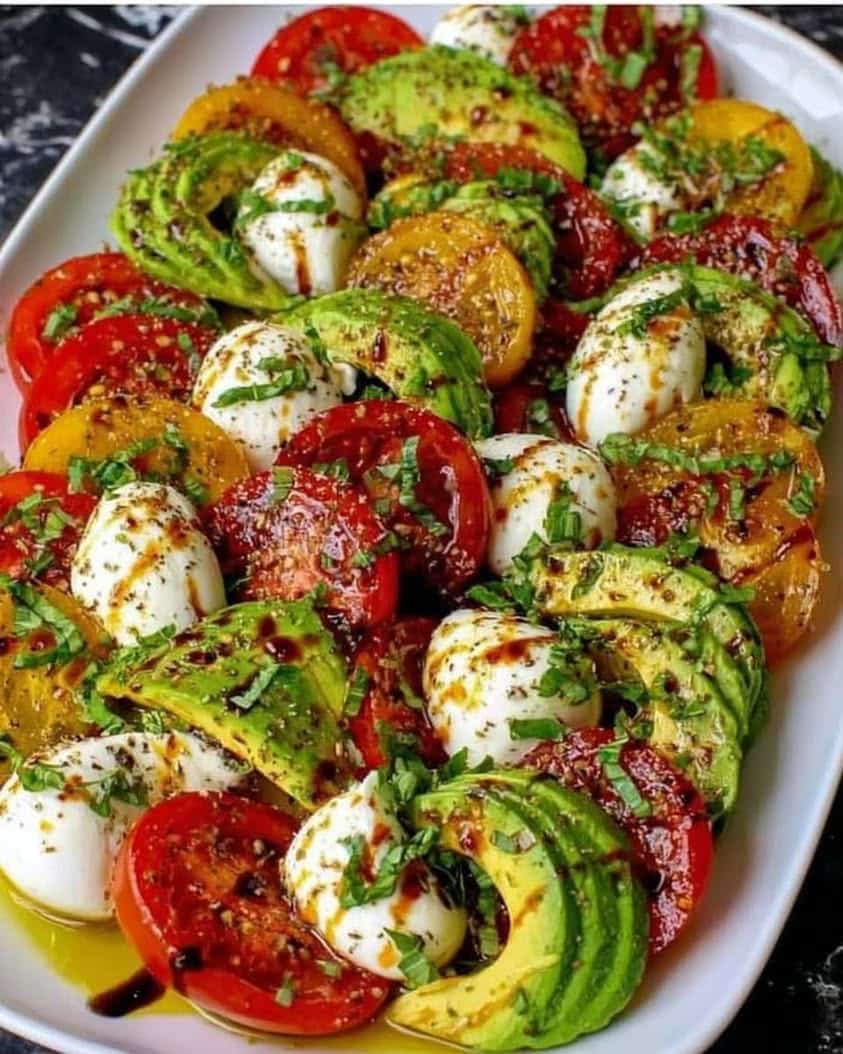
- Visual Appeal: This dish is a colorful work of art. The arrangement of red tomato slices, white cheese, green avocado wedges, and dark green basil leaves is naturally stunning. A final drizzle of dark balsamic glaze adds beautiful visual contrast and sophistication.
- Skill Level Needed: Absolutely beginner-friendly. This recipe requires no cooking, just simple assembly and a bit of knife skills for slicing. The focus is on selecting the best ingredients and arranging them beautifully on a platter.
- Special Equipment: No special tools are required. You just need a sharp knife for clean slicing, a cutting board, and a large serving platter or board to create an impressive presentation.
Recipe Overview
- Difficulty Level: This recipe is rated “Easy” because it involves zero cooking and minimal technical skill. The primary tasks are washing, slicing, and arranging ingredients. Success hinges entirely on ingredient quality and thoughtful presentation, making it accessible for cooks of all levels, especially beginners looking to make something impressive.
- Category: This dish falls squarely into the appetizer or starter category. It is perfect for sharing at the beginning of a meal. Additionally, it can easily serve as a light lunch or a vibrant side dish alongside grilled proteins like chicken or fish.
- Cuisine: The recipe is rooted in Italian cuisine, specifically the Insalata Caprese from the Campania region. The addition of avocado is a modern, global twist often seen in contemporary Californian or fusion cooking, blending Italian tradition with New World ingredients.
- Cost: The cost is moderate and depends heavily on ingredient quality. Heirloom tomatoes, fresh burrata, and a premium aged balsamic glaze will increase the price. However, using in-season, local tomatoes and a good store-brand olive oil can make it very affordable. Avocados add a cost-effective creamy element.
- Season: This platter is ideal for late spring through summer when tomatoes and basil are at their peak flavor and most affordable. Nevertheless, with the global market, you can make a delicious version year-round. For the best taste, always seek out the ripest, most fragrant ingredients available.
- Occasion: It’s incredibly versatile for occasions. Serve it at casual backyard barbecues, elegant dinner parties, holiday gatherings, or even as a special weekend treat. Its no-cook nature makes it a lifesaver for hot days when you don’t want to turn on the oven.
Why You’ll Love This Recipe
First and foremost, you will adore the incredible fusion of flavors and textures in this Cheesy Avocado Caprese Platter. Each component brings something unique to the table. The ripe tomato offers a sweet and slightly tangy juice, while the creamy burrata delivers a luxurious, milky richness. Meanwhile, the avocado adds a nutty, buttery depth that traditional mozzarella doesn’t provide. Finally, the fresh basil and tangy-sweet balsamic glaze cut through the richness, creating a perfectly balanced bite that is both refreshing and indulgent. It’s a familiar taste profile made exciting and new.
Beyond taste, the convenience of this no-cook appetizer is a major win. From start to finish, you can have a restaurant-quality platter ready in about fifteen minutes. There’s no need to preheat an oven or stand over a stove. Consequently, it’s the perfect solution for last-minute guests or when you need an impressive dish without the stress. Simply focus on sourcing the best ingredients you can find, and let their natural quality do the heavy lifting. This makes entertaining feel effortless and enjoyable.
Nutritionally, this platter packs a powerful punch of healthy fats and vitamins. Avocados are famous for their heart-healthy monounsaturated fats and fiber. Tomatoes are rich in lycopene, a potent antioxidant. Additionally, fresh basil provides vitamin K and anti-inflammatory properties. While burrata is indulgent, it also offers a good dose of calcium and protein. Together, they create a dish that feels decadent but is built on wholesome, real-food ingredients. It’s a treat you can feel good about serving.
For social gatherings, this Cheesy Avocado Caprese Platter is a guaranteed crowd-pleaser. Its stunning visual presentation immediately draws people in and becomes a focal point on any table. Because it’s served family-style on a large platter, it encourages sharing and conversation. Guests can help themselves to as much or as little as they like, making it ideal for a mix of dietary preferences. It’s a dish that looks like you spent hours, yet it respects your time and allows you to enjoy your own party.
Finally, this recipe is wonderfully cost-effective and accessible. While you can splurge on artisanal ingredients, a delicious version can be made with supermarket staples. The formula is flexible; you can adjust quantities based on your budget or number of guests. For instance, you can use regular mozzarella balls if burrata is unavailable. Ultimately, it teaches that great cooking isn’t about complexity, but about combining a few excellent ingredients with care and intention.
Historical Background and Cultural Significance
The story of the Caprese salad is deeply intertwined with the identity of Southern Italy, specifically the island of Ischia and the region of Campania. Legend suggests it was created in the 1950s as a patriotic dish for a visiting politician, its colors deliberately mirroring the Italian flag: red tomato, white mozzarella, and green basil. However, its true roots are likely much simpler, born from the necessity and genius of cucina povera, or “poor kitchen,” which celebrates local, fresh ingredients. The original Insalata Caprese was a farmer’s lunch, a testament to the incredible produce of the Mediterranean sun.
Culturally, the Caprese salad represents the soul of Italian cooking: respect for seasonal ingredients, minimal intervention, and regional pride. The mozzarella used is traditionally Mozzarella di Bufala Campana, a protected cheese made from the milk of water buffalo raised in specific marshlands. This cheese, combined with San Marzano tomatoes and fresh basil from the slopes of Mount Vesuvius, creates a taste of place that cannot be perfectly replicated elsewhere. It is a dish that speaks of the land and the sea air of the Amalfi Coast.
The evolution of the recipe is a story of global adaptation. As the Caprese traveled the world, chefs and home cooks began to experiment while respecting its core philosophy. The addition of avocado is a natural and popular modern twist, particularly in places like California where avocados are abundant. This variation adds a creamy texture and healthy fats, creating a richer, more substantial dish. The Cheesy Avocado Caprese Platter is a beautiful example of how classic recipes can evolve through cultural exchange while maintaining their essential spirit.
Regional variations now abound. Some versions include a drizzle of pesto instead of plain basil leaves. Others add slices of prosciutto for a salty, savory element. In some modern restaurants, you might find a deconstructed version or one using different colored heirloom tomatoes. The use of burrata, as in this recipe, is another contemporary upgrade, offering an even more luxurious creamy center. Each variation celebrates the original while reflecting local tastes and ingredient availability, proving the dish’s timeless and adaptable appeal.
Ingredient Deep Dive
Heirloom Tomatoes: Heirloom tomatoes are varieties passed down through generations for their superior flavor, not for shipping durability. They come in a rainbow of colors and irregular shapes. Nutritionally, they are packed with vitamins A and C, and are a premier source of lycopene, an antioxidant linked to reduced risk of heart disease and cancer. For selection, choose tomatoes that feel heavy for their size and have a fragrant smell at the stem end. Avoid refrigerating them, as cold temperatures destroy their texture and flavor. Store at room temperature and use within a few days. If heirlooms are unavailable, the ripest vine-ripe tomatoes you can find are the best substitute.
Burrata Cheese: Burrata, meaning “buttered” in Italian, is a fresh cheese originating from Apulia. It consists of a delicate mozzarella pouch filled with stracciatella (shreds of mozzarella) and cream, creating an incredibly rich, soft center. It provides protein, calcium, and fats. Always look for burrata packed in water and check the “use by” date, as it is highly perishable. It should feel soft and supple in its container. Store it in its liquid in the refrigerator and consume within 1-2 days of opening. For a substitute, fresh mozzarella balls (bocconcini) or a log of high-quality fresh mozzarella will work, though you’ll miss the luxurious creamy center.
Ripe Avocados: Avocados are a fruit native to south-central Mexico, cultivated for thousands of years. They are a nutritional powerhouse, loaded with nearly 20 vitamins and minerals, heart-healthy monounsaturated fats, and more fiber than most other fruits. A perfectly ripe avocado yields slightly to gentle pressure near the stem. To speed ripening, place it in a paper bag with a banana. Once ripe, you can refrigerate it to slow the process. To prevent browning after slicing, a squeeze of lemon or lime juice helps. For this platter, Hass avocados are ideal for their creamy texture and nutty flavor.
Fresh Basil: Basil, a member of the mint family, is central to Mediterranean and Southeast Asian cuisines. In Italy, sweet Genovese basil is revered. It contains antioxidants and essential oils like eugenol, which have anti-inflammatory properties. Choose vibrant green bunches with no black spots or wilting. The best storage method is to treat it like a bouquet: trim the stems and place them in a glass of water on the counter, loosely covered with a bag. Refrigeration often leads to blackening. If you must substitute in a pinch, a high-quality basil pesto can be drizzled, but the fresh leaf is irreplaceable for aroma and texture.
High-Quality Olive Oil & Balsamic Glaze: Extra virgin olive oil (EVOO) is the unrefined juice of olives, prized for its flavor and health benefits, including monounsaturated fats and antioxidants. A robust, peppery EVOO stands up well here. Balsamic glaze is a reduction of balsamic vinegar, sweetened and thickened into a syrup. True Traditional Balsamic Vinegar (Aceto Balsamico Tradizionale) is aged for years and used sparingly. For everyday use, a good commercial glaze is perfect. Store EVOO in a cool, dark place to prevent rancidity. A substitute for glaze can be a reduction of balsamic vinegar with a touch of honey simmered until syrupy.
Common Mistakes to Avoid
- Using Under-ripe Tomatoes: Pale, hard tomatoes will ruin the dish. They lack the necessary sweetness and juice to balance the creamy elements. Always wait for tomatoes to ripen fully at room temperature. The flavor difference between a grocery store tomato and a ripe, in-season one is monumental.
- Slicing the Avocado Too Early: Avocado begins to oxidize and turn brown quickly after cutting. To maintain its vibrant green color, slice the avocado just before you are ready to assemble and serve the platter. A quick brush with lemon juice can also help delay browning.
- Over-chilling Ingredients: Serving tomatoes, cheese, or avocado straight from the refrigerator dampens their flavor. Take all ingredients out about 15-20 minutes before assembling. This allows their true aromas and textures to shine, making the salad taste fresher and more vibrant.
- Drowning the Platter in Dressing: The beauty of a Caprese is its simplicity. A heavy hand with oil or balsamic can mask the delicate flavors of the fresh ingredients. Drizzle lightly and elegantly. You can always offer more on the side for guests who want extra.
- Using Dried Basil: Dried basil has no place in this fresh dish. Its flavor is dusty and concentrated, completely unlike the sweet, peppery punch of a fresh leaf. If you can’t find fresh basil, consider a different herb like fresh oregano or even arugula microgreens as an alternative.
- Choosing the Wrong Platter: A crowded, small plate makes assembly messy and presentation poor. Use a large, flat platter or wooden board. This gives you space to artfully arrange the ingredients without overlapping them too much, ensuring every element is visible and accessible.
- Cutting the Burrata Incorrectly: Don’t just chop burrata like a block of cheese. The magic is in the creamy center. Place the whole ball on the platter and gently tear it open with your hands or a knife to expose the luscious stracciatella inside, letting it spill out naturally.
- Neglecting Seasoning: Even the best ingredients need a lift. Forgetting to season the tomatoes and avocado with flaky sea salt and cracked black pepper is a missed opportunity. Salt enhances natural flavors and is a critical step, not an optional garnish.
Essential Techniques
Selecting and Slicing Ripe Produce: This is the most crucial technique for this recipe. For tomatoes, use a serrated knife to get clean cuts without crushing the flesh. Slice them to a consistent thickness, about 1/4 to 1/2 inch, so they layer evenly. For avocados, slice in half around the pit, twist to separate, and carefully remove the pit. Use a spoon to scoop the flesh from the skin in one piece, then slice it lengthwise into elegant wedges. The goal is uniform, attractive pieces that are easy to eat and look beautiful on the platter.
Artful Platter Arrangement: Presentation is key. Start by placing your larger tomato slices around the platter to create a base. Then, tuck the avocado wedges in between or layer them alternately. Place the whole burrata ball in the center as the jewel. Scatter whole or torn basil leaves generously over everything. Finally, drizzle the oil and glaze in zig-zags or concentric circles. The technique is about creating height, color contrast, and a sense of abundance without looking messy. Think of it as composing a still-life painting with food.
Handling Fresh Burrata: Burrata is delicate. Remove it from its liquid and pat it gently dry with a paper towel. To serve, you can simply place the whole ball on the platter. For a more dramatic presentation, make a shallow “X” on top with a sharp knife and gently open it to reveal the creamy interior. Alternatively, you can tear it into a few large pieces with your hands for a rustic look. The technique avoids over-handling, which can cause it to lose its shape and all the precious creamy filling.
Creating the Perfect Drizzle: A haphazard pour can make the dish look sloppy. For controlled drizzling, use a spoon. Dip the spoon into your oil or glaze, then hold it high over the platter and move your hand back and forth to create thin, elegant lines. You can also use a squeeze bottle for maximum control. The technique is about adding flavor and visual appeal without overwhelming the ingredients. Less is often more; you want accents, not a pool of dressing at the bottom of the platter.
Pro Tips for Perfect Cheesy Avocado Caprese Platter
First, for the most dramatic color contrast, use a mix of heirloom tomato varieties. Incorporate red, yellow, orange, and even purple tomatoes to create a visually stunning and flavorful base. This simple trick elevates the platter from pretty to extraordinary.
Second, season each layer as you build. Lightly sprinkle salt and pepper directly on the tomato slices and avocado wedges as you place them on the platter. This ensures every bite is perfectly seasoned, not just the top layer.
Third, invest in a good, flaky sea salt like Maldon for finishing. The large crystals provide delightful bursts of salinity and a subtle crunch that enhances the creamy textures beautifully. It’s a small detail with a big impact.
Fourth, if your basil leaves are very large, tear them by hand rather than cutting them with a knife. Tearing helps release more of the aromatic oils and gives a more rustic, appealing look than uniformly chopped pieces.
Fifth, add a textural crunch. Just before serving, sprinkle the platter with toasted pine nuts or chopped pistachios. This adds a wonderful nutty flavor and a contrasting crunch that complements the soft ingredients perfectly.
Sixth, for an extra flavor dimension, infuse your olive oil. Before assembling, gently warm the olive oil with a crushed garlic clove and a few chili flakes, then let it cool. This creates a simple, aromatic oil that adds depth.
Seventh, serve with a crusty baguette or grilled ciabatta slices on the side. Guests will love using the bread to scoop up any delicious juices, creamy burrata, and balsamic glaze left on the platter, ensuring nothing goes to waste.
Eighth, keep your serving platter cool. If possible, chill the platter in the refrigerator for 10-15 minutes before assembling. This helps keep the ingredients fresh and cool, especially important on a warm day.
Variations and Adaptations
Regional Variations: To stay true to different Italian regions, consider a Sicilian twist with chopped pistachios and a sprinkle of orange zest. For a Ligurian influence, replace some basil with a dollop of classic pesto. A Southern Italian version might include salty capers and anchovy fillets for a briny, umami kick. Each region’s pantry offers a new way to interpret the core ingredients.
Seasonal Adaptations: In summer, use peak tomatoes and basil. For fall, incorporate roasted cherry tomatoes for a deeper flavor and pair with figs and a honey balsamic reduction. In winter, use ripe greenhouse tomatoes and add segments of blood orange for a citrusy burst. Spring invites the use of tender pea shoots or asparagus tips alongside the classic components.
Dietary Modifications: For a vegan Cheesy Avocado Caprese Platter, replace burrata with a vegan mozzarella or a creamy cashew cheese. Nutritional yeast in the dressing can add a “cheesy” flavor. For a dairy-free version, simply omit the cheese and double down on the creamy avocado, adding cannellini beans for extra protein and body.
Flavor Variations: Experiment with different herbs like mint, tarragon, or lemon thyme for a unique aromatic profile. Add fruit such as sliced peaches or strawberries in summer for a sweet contrast. For a spicy kick, add thinly sliced fresh chili peppers or a drizzle of chili-infused oil. A sprinkle of sumac or za’atar can introduce Middle Eastern flavors.
Texture Modifications: Introduce crunch with additions like crispy prosciutto chips, garlicky breadcrumbs (pangrattato), or seeded crackers served on the side. For a smoother element, serve with a side of whipped ricotta or feta spread. Marinating the tomatoes in the oil and herbs for 30 minutes before assembling can soften their texture and deepen the flavor.
Presentation Alternatives: Instead of a large platter, create individual stacks by layering tomato, avocado, and cheese on small plates. For a deconstructed salad, chop all ingredients into a uniform dice and serve in a bowl. You can also skewer cherry tomatoes, small mozzarella balls (ciliegine), avocado cubes, and basil leaves for Caprese skewers, perfect for passed appetizers.
Serving and Presentation Guide
Plating Techniques: Start with a clean, large canvas—a white platter shows off colors best, while a rustic wooden board adds warmth. Arrange tomato slices in a slightly overlapping circle or fan them out from the center. Place avocado wedges in between, creating a sunburst pattern. Position the burrata as the centerpiece. This structured yet organic arrangement looks intentional and lavish.
Garnishing Ideas: Beyond basil, consider edible flowers like nasturtiums or borage for a special occasion. Microgreens add a delicate, peppery note. A final flourish of flaky sea salt and cracked black pepper is essential. For color, add a sprinkle of pomegranate arils in the fall or finely chopped chives for a hint of onion flavor.
Traditional Accompaniments: In Italy, this would be served as a starter (antipasto) with other small bites like olives, marinated vegetables, and cured meats. A simple, crusty bread is non-negotiable for soaking up the glorious juices and dressing left on the plate. Offer a small dish of extra-virgin olive oil for dipping alongside.
Modern Serving Suggestions: Serve the platter alongside a chilled soup like gazpacho for a cohesive summer meal. It also pairs wonderfully as a side to simply grilled fish, chicken, or steak, where its freshness cuts through the richness of the protein. For a brunch spread, it’s a elegant alternative to a standard fruit salad.
Temperature Considerations: All components should be at cool room temperature, not ice-cold. Cold numbs flavor. Remove cheese from the fridge 20 minutes ahead, and never refrigerate tomatoes. If the day is very hot, you can briefly chill the assembled platter for 5 minutes before serving, but avoid letting it sit too long or it will become watery.
Portion Control Tips: As a shared appetizer for 4-6 people, this platter is perfect. For a larger crowd, simply scale up the ingredients and use multiple platters. As a main course for two, it’s substantial enough, especially with added bread and perhaps a protein like grilled shrimp on the side. Guide guests by providing a large serving spoon and fork to help themselves easily.
Wine and Beverage Pairing
Wine Pairings: The creamy, rich elements of avocado and burrata pair beautifully with crisp, high-acid white wines. A classic Italian Pinot Grigio from Alto Adige or a Vermentino from Sardinia complements the herbal notes and cuts through the fat. For a more aromatic choice, a Sauvignon Blanc with its grassy notes mirrors the basil. If you prefer red, opt for a light, low-tannin red served slightly chilled, like a Frappato from Sicily or a Beaujolais Villages, which won’t overpower the delicate flavors.
Non-Alcoholic Alternatives: Sparkling water with a twist of lemon or lime is always refreshing. For something more crafted, try a basil-infused lemonade or iced tea, which echoes the herbal component of the dish. A virgin mojito (mint, lime, soda) also works wonderfully. For a sophisticated option, seek out non-alcoholic sparkling wines or “spirit-free” aperitifs that offer bitter and herbal complexity.
Coffee/Tea Pairings: While not a typical pairing for this dish, if serving at a brunch or lunch, a light roast coffee with bright acidity can be a pleasant follow-up. For tea, a green tea like Sencha or a herbal tea such as lemon verbena would be cleansing and palate-refreshing after the rich and creamy platter.
Temperature Considerations: Whites and rosés should be served well-chilled, between 45-50°F. Light reds, if chosen, are best served at a “cellar temperature” around 55-60°F, or even slightly chilled for 20 minutes in the fridge. Non-alcoholic beverages should be ice-cold to provide a refreshing contrast to the room-temperature food.
Serving Suggestions: Offer wine in large, balloon-style white wine glasses to allow the aromas to develop. For water and non-alcoholic drinks, use tall glasses with plenty of ice. Always provide a separate water glass for guests. Having a pitcher of infused water or iced tea on the table allows guests to help themselves throughout the meal.
Storage and Shelf Life
Storage Methods: This dish is best enjoyed immediately after assembly. If you must store leftovers, place them in a single layer in a shallow airtight container. Separate layers with parchment paper if stacking is unavoidable. The tomatoes will release water, and the avocado will brown, so expect a decline in quality.
Temperature Requirements: Always refrigerate leftovers promptly. Keep the container in the coldest part of your refrigerator, typically the middle or bottom shelf, at or below 40°F. Do not leave the assembled platter at room temperature for more than two hours, or one hour if the ambient temperature is above 90°F.
Container Recommendations: A glass container with a tight-fitting lid is ideal as it won’t absorb odors and allows you to see the contents. If storing the whole platter, cover it tightly with plastic wrap, pressing it directly onto the surface of the food to minimize air exposure and oxidation of the avocado.
Signs of Spoilage: Discard the platter if you notice a sour or off smell, significant browning and mushiness of the avocado, excessive watery liquid (beyond normal tomato juices), or any mold growth, especially on the cheese. The basil will wilt and turn black quickly; this is unappealing but not necessarily harmful.
Reheating Instructions: This is a cold dish and should not be reheated. Attempting to warm it will melt the cheese, cook the tomatoes and avocado, and ruin all textures. Enjoy leftovers cold directly from the fridge, though the flavors will be muted.
Freezing Guidelines: Freezing is not recommended for the assembled platter. The high water content of tomatoes and avocado will cause them to become mushy and watery upon thawing. The cheese’s texture will also be destroyed. Components like tomato sauce or pesto can be frozen separately, but the fresh salad itself cannot.
Make Ahead Strategies
Prep Timeline: You can prep almost all components 2-3 hours in advance. Wash and slice the tomatoes, storing them in a single layer on a paper-towel-lined tray. Wash and dry the basil leaves, storing them in a damp paper towel in a bag. Make the balsamic glaze if using homemade. Keep everything refrigerated separately.
Storage Between Steps: Store sliced tomatoes at room temperature if using within an hour; otherwise, refrigerate them. Keep the whole, uncut avocado and burrata in their original packaging in the fridge. Have your platter and serving tools ready. This “mise en place” makes final assembly a swift, five-minute task when guests arrive.
Quality Impact Assessment: Pre-slicing tomatoes may cause them to lose some juice, but this is minimal if done a few hours ahead. The basil may wilt slightly. The critical rule: do not slice the avocado or open the burrata until the moment you are ready to assemble and serve. These two ingredients degrade the fastest once cut.
Assembly Tips: When ready to serve, take all prepped components out of the fridge. Slice the avocado. Arrange the tomatoes and avocado on the platter first. Then, add the burrata and basil. Finally, season and drizzle. This staggered approach ensures the most delicate ingredients have the least exposure to air before serving.
Reheating Guidelines: Not applicable. The goal of make-ahead is to avoid any need for reheating. The dish is served cool or at room temperature. If components are too cold from the fridge, the brief 10-minute assembly time allows them to take the chill off naturally.
Fresh Element Additions: Always add the final seasonings (salt, pepper) and drizzles (oil, glaze) at the very last moment before serving. This prevents the salt from drawing out too much moisture and the glazes from bleeding into the ingredients. The fresh basil should also be added last to maintain its vibrant color and aroma.
Scaling Instructions
Halving the Recipe: To serve two, use 1 large tomato, 1 avocado, 1 ball of burrata (4 oz), and a small handful of basil. Reduce oil and glaze by eye, starting with a teaspoon of each. Use a smaller board or plate. The assembly technique remains identical. This is a perfect romantic appetizer or light lunch portion.
Doubling or Tripling: For a party of 8-12, simply multiply the ingredients. The key is to use multiple platters instead of one overcrowded one. Create two identical platters for balance on a buffet. Alternatively, consider the skewer variation for easier serving at a standing party. Ensure you have enough sharp knives and cutting boards for the increased prep work.
Equipment Adjustments: Scaling up requires larger platters or boards. Consider using a large slate slab or a marble board for a dramatic presentation. You may also need a bigger workspace. For very large batches, a mandoline can speed up tomato slicing, but use the hand guard for safety.
Timing Modifications: Prep time increases linearly with quantity. For a double batch, allocate 25 minutes instead of 15. The assembly time also increases as you arrange more food on more platters. Enlist help for washing, drying, and arranging to keep things efficient and fun.
Storage Considerations: When making a large batch, the “make-ahead” strategy becomes even more critical. Prep all components separately and store them. Assemble the platters in stages just before guests arrive to maintain freshness. Have extra oil, glaze, and seasoning on hand to refresh the platters if they sit out for a while.
PrintCheesy Avocado Caprese Platter
- Total Time: 15 minutes
- Yield: 4
Description
A vibrant twist on the classic Caprese salad, featuring creamy avocado slices, fresh mozzarella, juicy tomatoes, and a drizzle of balsamic glaze for a refreshing appetizer or light meal.
Ingredients
- 2 ripe avocados, sliced
- 8 oz fresh mozzarella cheese, sliced
- 3 large heirloom tomatoes, sliced
- 1/4 cup fresh basil leaves
- 2 tbsp extra virgin olive oil
- 2 tbsp balsamic glaze
- Salt and black pepper to taste
Instructions
- Arrange alternating slices of avocado, mozzarella, and tomatoes on a large platter in a circular or linear pattern.
- Tuck fresh basil leaves between the slices and sprinkle the entire platter with salt and black pepper.
- Drizzle with olive oil and balsamic glaze just before serving. Enjoy immediately.
Notes
You can customize the seasonings to taste.
- Prep Time: 15 minutes
- Cook Time: 0 minutes
- Method: Appetizer
- Cuisine: Italian-American