Cheesy Avocado Caprese Platter: A Creamy, Fresh Twist on a Classic
Imagine a classic Caprese salad, then picture it with a luxurious, creamy upgrade. This Cheesy Avocado Caprese Platter does exactly that, blending the timeless Italian trio with rich, buttery avocado and a tangy balsamic glaze. Consequently, you get a stunning appetizer or light meal that feels both familiar and excitingly new. Moreover, it’s a no-cook recipe, meaning you can assemble this beautiful dish in just minutes for any occasion.
The beauty of this Cheesy Avocado Caprese Platter lies in its simplicity and vibrant flavors. Ripe tomatoes offer juicy sweetness, fresh mozzarella provides a soft, milky contrast, and creamy avocado adds a decadent texture. Finally, fresh basil and a drizzle of glaze tie everything together with aromatic and sweet-tart notes. Essentially, this platter is a celebration of fresh ingredients arranged with care, making it perfect for summer entertaining or a quick, healthy lunch.
Furthermore, this dish is incredibly versatile. You can serve it as a stunning centerpiece for a party, a light dinner alongside crusty bread, or even as a flavorful side dish. The combination of healthy fats from the avocado and protein from the cheese also makes it surprisingly satisfying. Ultimately, this Cheesy Avocado Caprese Platter is a foolproof way to impress guests or treat yourself to something special without spending hours in the kitchen.
Quick Recipe Highlights
- Flavor Profile: This platter delivers a perfect balance. Sweet, ripe tomatoes contrast with the mild, milky fresh mozzarella. Meanwhile, the creamy avocado adds a rich, buttery depth that complements the tangy-sweet punch of the balsamic glaze.
- Texture: Experience a delightful play of textures. You get the juicy burst of tomato, the soft, springy bite of mozzarella, and the supremely creamy, smooth flesh of a perfectly ripe avocado. Additionally, the glaze adds a slight sticky sweetness.
- Aroma: The scent is fresh and herbaceous, dominated by the unmistakable fragrance of torn basil leaves. Subtle notes of the olive oil and the sweet acidity of the balsamic reduction round out the aromatic profile beautifully.
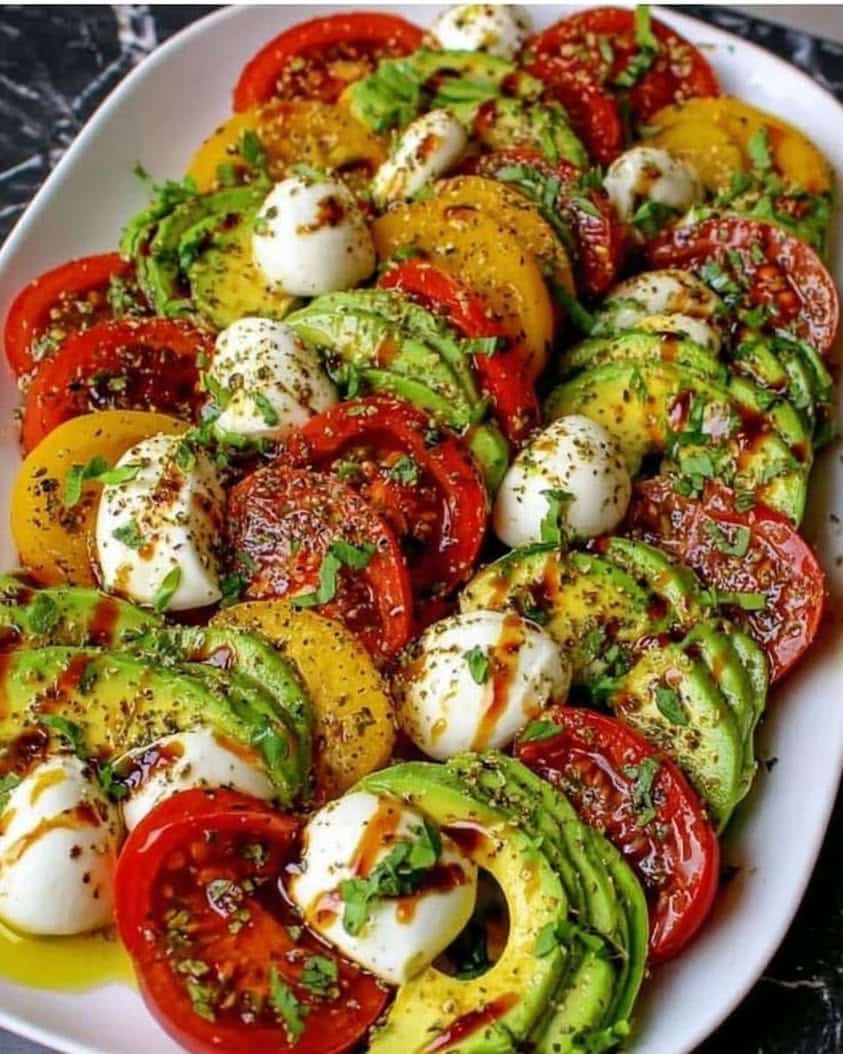
- Visual Appeal: This platter is a feast for the eyes. The vibrant red tomatoes, white cheese, green avocado, and dark balsamic glaze create a stunning, colorful mosaic that looks as good as it tastes.
- Skill Level Needed: Absolutely beginner-friendly. This recipe requires no cooking, just simple assembly and a bit of knife work for slicing. Therefore, anyone can create this impressive dish with confidence.
- Special Equipment: You need only basic kitchen tools: a sharp knife, a cutting board, and a serving platter. A small saucepan is helpful for reducing the balsamic vinegar, but a store-bought glaze works perfectly too.
Recipe Overview
- Difficulty Level: We rate this Cheesy Avocado Caprese Platter as “Easy” because it involves zero cooking techniques. The primary skills are selecting ripe ingredients and arranging them attractively. Essentially, if you can slice and arrange, you can master this recipe.
- Category: This dish fits multiple categories wonderfully. It’s a perfect appetizer or starter for a dinner party. Additionally, it serves as a fantastic light lunch or dinner, especially when paired with a good bread. It also works beautifully as a side salad or a shareable party platter.
- Cuisine: The recipe is rooted in Italian cuisine, taking direct inspiration from the classic Insalata Caprese from the Campania region. However, the addition of avocado gives it a modern, California-style twist, making it a fusion of Mediterranean and contemporary fresh food trends.
- Cost: This is a moderately priced dish, largely dependent on ingredient quality. Fresh mozzarella (like mozzarella di bufala) and a high-quality balsamic glaze will increase the cost. Conversely, using regular fresh mozzarella and making your own glaze keeps it budget-friendly. Seasonal tomatoes and avocados also help manage price.
- Season: This Cheesy Avocado Caprese Platter shines brightest in late summer when tomatoes and basil are at their peak flavor. However, thanks to year-round avocado availability and decent greenhouse tomatoes, you can confidently make a delicious version any time you crave fresh, bright flavors.
- Occasion: It’s incredibly versatile for entertaining. Serve it at casual summer barbecues, elegant dinner parties, holiday gatherings, or even as a romantic picnic item. It’s also perfect for a quick, healthy family meal on a busy weeknight when you want something nutritious and fast.
Why You’ll Love This Recipe
First and foremost, the taste and texture combination is utterly irresistible. Each bite delivers a symphony of flavors: the sweet acidity of tomato, the creamy fat of avocado, the mild freshness of cheese, and the herbal punch of basil. Furthermore, the balsamic glaze adds a concentrated sweetness that elevates every component. The contrast between the soft, yielding ingredients and the glossy sauce creates a mouthfeel that is both luxurious and refreshing. You will find yourself going back for just one more bite, again and again.
From a convenience standpoint, this Cheesy Avocado Caprese Platter is a dream. It requires no cooking, minimal prep, and uses just a handful of ingredients you can find at any grocery store. Moreover, assembly takes mere minutes, making it the ultimate last-minute lifesaver for unexpected guests or when you simply don’t feel like turning on the stove. The simplicity means you can focus on selecting the highest quality ingredients, which directly translates to an outstanding final dish.
Nutritionally, this platter packs a powerful punch. Avocados provide heart-healthy monounsaturated fats and fiber, while tomatoes are rich in vitamins C and K and the antioxidant lycopene. Fresh mozzarella offers a good source of protein and calcium. Consequently, this dish is not only delicious but also supports a balanced diet. It’s a satisfying way to enjoy healthy fats, vitamins, and minerals in one beautiful package.
For social and entertaining value, this platter is unmatched. Its stunning visual appeal makes it a natural centerpiece that encourages sharing and conversation. Guests always appreciate a beautiful, fresh option among heavier party foods. Additionally, because it’s served at room temperature, you can prepare it ahead of time and simply bring it out when needed, allowing you to spend more time with your company and less time fussing in the kitchen.
Finally, this Cheesy Avocado Caprese Platter is cost-effective and accessible. While it looks gourmet, the ingredients are common. You can easily adjust the cost based on your choices, such as using regular fresh mozzarella instead of buffalo mozzarella. The recipe is also highly adaptable to what’s in season or on sale. Essentially, you get a restaurant-quality presentation and flavor for a fraction of the price, making it a smart choice for any home cook.
Historical Background and Cultural Significance
The story of this dish begins with its inspiration: the classic Insalata Caprese. This salad originated on the island of Capri in the Campania region of Italy. Traditionally, it symbolizes the colors of the Italian flag with its red tomatoes, white mozzarella, and green basil. Local lore suggests it was created as a light lunch for workers or as a refreshing dish for visitors to the island. Its simplicity was its genius, relying entirely on the exceptional quality of local, sun-ripened ingredients.
Culturally, the original Caprese salad holds significant meaning in Italian cuisine. It represents a philosophy of eating that prioritizes fresh, seasonal, and high-quality components with minimal interference. The dish is a testament to the Mediterranean diet’s principles. Consequently, it became a staple in Italian restaurants worldwide, introducing global audiences to the beauty of simple, ingredient-driven food. Its popularity cemented its status as an iconic summer dish.
The evolution to include avocado is a more recent, modern twist, often attributed to Californian and fusion cuisine trends. As avocados gained global popularity for their health benefits and creamy texture, creative cooks began incorporating them into traditional dishes. Adding avocado to a Caprese platter introduces a new texture and richness, creating a fusion that respects the original’s spirit while appealing to contemporary tastes for decadent yet healthy fats. This variation showcases how classic recipes can adapt and remain relevant.
Regional variations of the Caprese concept are plentiful. Some versions include pesto drizzles instead of plain basil leaves. Others add ingredients like roasted peppers, olives, or prosciutto. The Cheesy Avocado Caprese Platter sits within this tradition of innovation. It reflects a global pantry where the creamy Hass avocado from Mexico or California finds a happy home alongside Italian mozzarella. This cross-cultural blend is a delicious example of how food traditions can merge to create something new and exciting.
Ingredient Deep Dive
Avocado: The avocado, native to south-central Mexico, has been cultivated for thousands of years. Its name derives from the Nahuatl word “āhuacatl.” Beyond its cultural history, it’s a nutritional powerhouse packed with monounsaturated fats, fiber, potassium, and vitamins C, E, and K. For this platter, select avocados that yield slightly to gentle pressure near the stem. Store unripe avocados at room temperature and refrigerate ripe ones to slow further ripening. If unavailable, a ripe, creamy mango can provide a sweet alternative, though the flavor profile will shift.
Fresh Mozzarella: Authentic fresh mozzarella, or *mozzarella di bufala*, is made from the milk of water buffaloes in specific regions of Italy. The standard fresh mozzarella found widely is made from cow’s milk. It’s a good source of protein and calcium and is lower in sodium than aged cheeses. Look for cheese stored in water (whey) for the best texture and freshness. Always drain it well and pat dry before using to prevent a watery platter. For a dairy-free version, use a high-quality vegan mozzarella-style cheese or marinated tofu slices.
Tomatoes: Tomatoes, originally from South America, are a cornerstone of Italian cuisine after their introduction in the 16th century. They are rich in lycopene, an antioxidant linked to many health benefits. For the best flavor in your Cheesy Avocado Caprese Platter, seek out ripe, in-season tomatoes like heirloom, beefsteak, or ripe vine-ripened varieties. Store tomatoes at room temperature, never in the refrigerator, as cold temperatures degrade their texture and flavor. Off-season, cherry or grape tomatoes often have better flavor than large, out-of-season slicing tomatoes.
Fresh Basil: Basil is a member of the mint family and is deeply associated with Italian cooking, though it likely originated in India and other tropical regions of Asia. It contains antioxidants and essential oils like eugenol. For the brightest flavor, choose vibrant green leaves without black spots. Store basil like a bouquet of flowers: trim the stems and place them in a glass of water on the counter, loosely covering the leaves with a bag. As a substitute, fresh mint or arugula can offer a different but pleasant herbal note.
Balsamic Glaze: True traditional balsamic vinegar (*Aceto Balsamico Tradizionale*) is a aged, complex, and protected product from Modena and Reggio Emilia, Italy. The glaze is a reduction of balsamic vinegar, often with a sweetener, creating a syrupy consistency. It adds a concentrated sweet-tart flavor. You can make your own by simmering balsamic vinegar until thickened, or purchase a ready-made glaze. Store it in a cool pantry. A substitute could be a reduction of pomegranate molasses or a high-quality, aged balsamic vinegar drizzle, though it will be less thick.
Common Mistakes to Avoid
- Using Unripe Avocados: An unripe, hard avocado will ruin the creamy texture of your platter. Always check for ripeness by gently pressing near the stem. Conversely, an overripe, brown, or mushy avocado will look unappetizing and can have an off flavor.
- Not Draining the Mozzarella: Fresh mozzarella packed in water will make your beautiful platter soggy if you don’t drain it thoroughly. Always pat the cheese slices dry with a paper towel before arranging them. This step ensures your ingredients stay distinct and the flavors remain clean.
- Refrigerating Tomatoes: Storing tomatoes in the refrigerator causes them to become mealy and lose their vibrant flavor. Always keep tomatoes at room temperature until you are ready to slice and serve. This simple tip guarantees the juiciest, most flavorful result for your platter.
- Slicing Ingredients Too Early: Preparing the avocado and tomatoes hours in advance leads to oxidation (browning) and loss of juices. For the freshest presentation, slice your ingredients just before assembling the platter. If you must prep ahead, keep components separate and combine at the last minute.
- Overcomplicating the Seasoning: The beauty of this dish is its simplicity. Avoid heavy-handed seasoning with multiple spices or herbs. Typically, flaky sea salt, cracked black pepper, and the basil are sufficient. Let the natural flavors of the high-quality ingredients shine through without competition.
- Using a Low-Quality Balsamic: A harsh, overly acidic, or cheap balsamic vinegar will clash with the delicate flavors. Invest in a decent aged balsamic vinegar or a ready-made glaze specifically for drizzling. The sweet, complex depth it adds is a key component of the dish’s balance.
- Neglecting the Plating: Haphazardly throwing ingredients on a plate misses the visual appeal. Take a moment to arrange the slices in an alternating, overlapping pattern. The care you put into presentation makes the eating experience more enjoyable and impressive for guests.
- Serving Straight from the Fridge: Cold cheese and tomatoes mute their flavors. For the most aromatic and tasty experience, let all ingredients come to room temperature for about 20-30 minutes before assembling and serving. This allows their full flavor profiles to emerge.
Essential Techniques
Selecting and Slicing Avocado: Mastering avocado selection is crucial for your Cheesy Avocado Caprese Platter. Gently press the fruit near the stem; it should yield slightly without feeling mushy. To slice, run a knife lengthwise around the seed, twist to separate, and carefully tap the seed with your knife’s heel to remove it. Use a spoon to scoop out perfect halves, then slice evenly. A common pitfall is using a dull knife, which mashes the flesh. A sharp chef’s knife ensures clean, attractive slices that hold their shape on the platter.
Preparing Fresh Mozzarella: Properly handling fresh mozzarella ensures it doesn’t waterlog your dish. First, remove the cheese from its liquid and place it on a clean paper towel. Gently pat the ball dry, then slice it using a sharp knife that you’ve run under hot water. The warm blade cuts through the soft cheese more cleanly, preventing it from sticking and tearing. The visual cue for success is neat, round slices that maintain their form rather than crumbling or squashing under pressure.
Creating a Balsamic Reduction: While store-bought glaze is convenient, making your own adds a personal touch. Simmer one cup of balsamic vinegar in a small saucepan over medium-low heat. Stir occasionally until it reduces by about half and coats the back of a spoon. It will thicken further as it cools. The key is low, slow heat to prevent burning, which introduces a bitter flavor. The reduction is ready when it has a syrupy consistency and a sweet, concentrated aroma.
Pro Tips for Perfect Cheesy Avocado Caprese Platter
First, use a variety of heirloom tomatoes in different colors and sizes. This approach adds incredible visual depth and a range of subtle flavor nuances to your platter. The mix of reds, yellows, and purples makes the dish look professionally crafted.
Second, season each layer individually. Lightly sprinkle a tiny pinch of flaky sea salt directly on the tomato and avocado slices as you arrange them. This ensures even seasoning throughout the dish, rather than just on the top surface.
Third, tear the basil leaves by hand instead of cutting them with a knife. Tearing prevents bruising and releases more of the fragrant essential oils, which significantly enhances the aromatic quality of your final presentation.
Fourth, for an extra flavor dimension, marinate your mozzarella slices in a little olive oil, salt, and pepper for 15 minutes before assembling. This simple step infuses the cheese with more flavor and adds another layer of complexity to the platter.
Fifth, if preparing components ahead, keep the sliced avocado in a bowl with a squeeze of lemon or lime juice tossed gently. The citric acid creates a barrier against oxidation, keeping your avocado slices looking bright green and fresh.
Sixth, drizzle the olive oil first, then the balsamic glaze. The oil helps the darker glaze slide off the spoon in a more controlled manner, allowing you to create elegant, distinct lines rather than a muddled, mixed puddle.
Seventh, consider adding a textural contrast with a sprinkle of toasted pine nuts or chopped pistachios. The subtle crunch provides a wonderful counterpoint to the creamy avocado and soft cheese, elevating the eating experience.
Eighth, always serve your platter with a high-quality, crusty bread on the side. Guests can use it to scoop up any delicious leftover juices, oil, and glaze, ensuring none of the incredible flavors go to waste.
Variations and Adaptations
Regional Variations: Explore global twists on the classic format. For a Greek-inspired version, substitute the mozzarella with creamy feta cheese and add Kalamata olives. A Mexican twist could feature cotija cheese, cilantro instead of basil, and a drizzle of lime crema. These adaptations show how the basic formula of creamy cheese, fresh produce, and herbs can travel across culinary borders.
Seasonal Adaptations: Adapt your Cheesy Avocado Caprese Platter to the calendar. In winter, use roasted cherry tomatoes and roasted garlic cloves for deeper, caramelized flavors. During spring, incorporate thin slices of fresh strawberries or peaches alongside the tomatoes for a sweet and savory combination. These changes keep the dish exciting and relevant all year long.
Dietary Modifications: This platter is naturally gluten-free. For a vegan version, use a plant-based mozzarella alternative and ensure your balsamic glaze is vegan (some are sweetened with honey). To make it keto or low-carb, simply be mindful of the tomato portion size and ensure your glaze is sugar-free. The avocado and cheese base is already perfect for these diets.
Flavor Variations: Infuse your olive oil with herbs like rosemary or red pepper flakes before drizzling. Alternatively, sprinkle the finished platter with everything bagel seasoning, za’atar, or a pinch of smoked paprika. These small additions can completely transform the flavor profile without complicating the preparation.
Texture Modifications: Introduce different textures for interest. Add crispy prosciutto chips on top, or include marinated artichoke hearts for a briny, firm bite. You could also layer in very thin slices of crisp cucumber or radish for a refreshing crunch that contrasts the creamy elements.
Presentation Alternatives: Instead of a large platter, create individual servings on small plates or in shallow bowls. For a party, make Caprese skewers: thread a cherry tomato, a small mozzarella ball (ciliegine), a folded basil leaf, and a cube of avocado onto small sticks. Drizzle with glaze for a fun, handheld version.
Serving and Presentation Guide
Plating Techniques: The classic presentation for a Cheesy Avocado Caprese Platter involves arranging the slices in a circular, overlapping pattern. Start from the outside edge of a large platter and work your way in. Alternatively, for a more rustic look, group each ingredient in its own section, allowing guests to build their own bites. The key is intentionality; a little effort in arrangement makes the dish look professionally composed.
Garnishing Ideas: Beyond the basic basil leaves, consider microgreens, edible flowers, or delicate basil sprouts for a gourmet touch. A final flourish of flaky sea salt (like Maldon) and a crack of black pepper just before serving adds visual texture and bursts of seasoning. A light grating of lemon zest over the top can brighten all the flavors.
Traditional Accompaniments: In Italy, a Caprese is often served with nothing more than crusty bread to soak up the glorious juices. A loaf of fresh ciabatta, focaccia, or a baguette is the perfect, authentic side. The bread acts as both an accompaniment and a utensil, completing the meal.
Modern Serving Suggestions: Serve the platter as part of a larger antipasti spread with cured meats, marinated vegetables, and olives. For a light meal, place a portion over a bed of peppery arugula or mixed greens. You can also use it as a topping for grilled chicken or fish, turning it into a hearty main course sauce.
Temperature Considerations: All components should be served at cool room temperature. Avoid serving ingredients straight from the refrigerator, as the cold numbs their flavors and aromas. Take everything out about 30 minutes before assembling. This simple step ensures the tomatoes are juicy, the cheese is soft, and the avocado’s flavor is pronounced.
Portion Control Tips: As an appetizer for four people, one large tomato, one avocado, and one 8-ounce ball of mozzarella is typically sufficient. For a main course for two, you might double those amounts. Remember, the platter is rich from the avocado and cheese, so a little goes a long way in terms of satisfaction.
Wine and Beverage Pairing
Wine Pairings: The creamy avocado and fresh acidity in this dish call for wines with good acidity and minimal oak. A crisp Italian Pinot Grigio or Vermentino complements the herbal notes beautifully. Alternatively, a dry Rosé from Provence, with its hints of red fruit and minerality, is a fantastic match. For a red option, choose a light, chilled Beaujolais or a Bardolino, which won’t overwhelm the delicate flavors.
Non-Alcoholic Alternatives: Sparkling water with a twist of lime or a cucumber infusion provides a clean, palate-cleansing effect. For something sweeter, a homemade basil lemonade mirrors the herbal notes in the platter. Iced green tea or a lightly sweetened hibiscus tea also pairs wonderfully, offering refreshing tannins and floral notes.
Coffee/Tea Pairings: While not a traditional pairing for this dish, if serving for a brunch or lunch, a light roast coffee with bright citrus notes can work. More appropriately, a cup of herbal tea like peppermint or chamomile after the meal aids digestion and provides a soothing finish to the fresh, rich flavors.
Temperature Considerations: White and rosé wines should be served well-chilled, between 45-55°F. Light reds like Beaujolais benefit from a slight chill, around 55°F. Non-alcoholic sparkling drinks should be ice-cold. Serving beverages at their ideal temperature ensures they refresh the palate between bites of the creamy, rich platter.
Serving Suggestions: Offer a variety of beverage options to cater to different preferences. Place bottles of chilled wine and sparkling water in ice buckets nearby. For non-alcoholic options, consider a large pitcher of infused water or lemonade so guests can help themselves, creating a relaxed and inviting atmosphere.
Storage and Shelf Life
Storage Methods: The assembled Cheesy Avocado Caprese Platter is best enjoyed immediately. However, if you have leftovers, store them in a single layer in an airtight container in the refrigerator. Place a piece of parchment paper directly on the surface to minimize avocado oxidation. Importantly, store the platter without any balsamic glaze drizzled on it, as the glaze will bleed and make the salad soggy.
Temperature Requirements: Always refrigerate leftovers promptly. The ideal refrigerator temperature is at or below 40°F (4°C). This cold environment slows bacterial growth and helps preserve the freshness of the dairy and avocado, although the texture of the tomatoes will suffer.
Container Recommendations: Use a shallow, wide container with a tight-sealing lid. This allows the ingredients to lie flat without being piled on top of each other, which prevents crushing and further bruising. Glass containers are ideal as they don’t absorb odors and allow you to see the contents.
Signs of Spoilage: Discard the platter if you notice any sour smell from the dairy, excessive browning and mushiness in the avocado beyond surface oxidation, or a slimy texture on the tomatoes or cheese. Mold growth, though rare if consumed quickly, is an absolute indicator that the food is no longer safe to eat.
Reheating Instructions: This dish is not meant to be reheated. The appeal is in its fresh, cool, room-temperature state. Attempting to warm it will melt the cheese, cook the avocado and tomatoes, and ruin the textures completely. Enjoy leftovers cold directly from the fridge, though the flavors will be muted.
Freezing Guidelines: Freezing is not recommended for this platter. The high water content in the tomatoes and mozzarella will cause ice crystals to form, resulting in a watery, mushy, and separated texture upon thawing. The avocado will also turn brown and become unpleasantly grainy. This is a strictly fresh preparation.
Make Ahead Strategies
Prep Timeline: You can prep several components up to a day in advance. Make your balsamic reduction and store it at room temperature. Wash and dry the basil leaves, then store them wrapped in a damp paper towel in a sealed bag in the fridge. Drain the mozzarella, pat it dry, and keep it sealed in a container in the refrigerator.
Storage Between Steps: Keep all prepped ingredients separate until the final assembly. Store sliced tomatoes in a single layer on a plate covered with plastic wrap. For the avocado, wait to slice it until just before serving. If you must slice it early, toss the pieces lightly in lemon juice and store in an airtight container.
Quality Impact Assessment: Prepping the tomatoes and cheese a few hours ahead has minimal impact. The basil may wilt slightly but will revive. The avocado is the most time-sensitive; pre-slicing it more than an hour in advance will lead to noticeable browning, even with acid. Therefore, prioritize last-minute avocado prep for the best visual results.
Assembly Tips: On the day of serving, take the cheese and tomatoes out of the fridge 30 minutes ahead. Slice your avocado. Arrange all components on the platter. Drizzle with oil and glaze only at the very last moment before presenting the dish to your guests to maintain pristine textures.
Reheating Guidelines: As a no-cook dish, no reheating is involved. The goal is to bring refrigerated components to a cool room temperature, which enhances their flavor. Simply follow the timeline of taking items out of the fridge in advance of assembly.
Fresh Element Additions: The final garnishes should always be added right before serving. This includes tearing the basil leaves, adding the final sprinkle of salt and pepper, and drizzling the balsamic glaze. These last-minute touches ensure maximum aroma, vibrant color, and optimal texture.
Scaling Instructions
Halving the Recipe: To serve two, use half a large avocado, 4 ounces of fresh mozzarella, and one medium tomato. Adjust all other ingredients proportionally. A smaller serving platter or even two individual plates work perfectly. The assembly time remains the same, making it an ideal quick dinner for two.
Doubling or Tripling: For a crowd, simply multiply the quantities. Use multiple large platters or one very large board. Arrange ingredients in repeated patterns or separate them by type for a buffet-style presentation. When scaling up, enlist help for last-minute avocado slicing to maintain freshness across the larger quantity.
Equipment Adjustments: Scaling up may require a larger, dramatic serving board or multiple platters. Ensure you have a sharp knife that can handle slicing many tomatoes and avocados efficiently. For the balsamic glaze, make a larger batch in a wider saucepan to allow for faster, more even reduction without burning.
Timing Modifications: While prep time increases linearly with quantity, the assembly time for a large platter may take a few extra minutes to arrange beautifully. Factor this in when planning for an event. The no-cook nature means the time investment is still minimal compared to cooked dishes.
Storage Considerations: Leftovers from a scaled-up recipe will be more abundant. Plan to have enough shallow storage containers on hand. Remember, the dish does not keep well, so encourage guests to enjoy it during the event. Any leftovers should be consumed within 24 hours for the best quality.
Nutritional Deep Dive
Macro Breakdown: A serving of this Cheesy Avocado Caprese Platter provides a balanced mix of macronutrients. The avocado and olive oil contribute healthy monounsaturated fats, which support heart health. The fresh mozzarella offers a good source of protein and saturated fat. The tomatoes add a small amount of natural carbohydrates and fiber. This combination promotes satiety and steady energy release.
Micronutrient Analysis: This dish is rich in essential vitamins and minerals. Avocados are loaded with potassium (more than bananas), vitamin K, folate, and vitamin C. Tomatoes provide vitamin C, vitamin K1, potassium, and the antioxidant lycopene. Mozzarella contributes calcium and phosphorus for bone health. Basil adds vitamin K and antioxidants like beta-carotene.
Health Benefits: The nutrients work synergistically. The healthy fats from avocado and olive oil help your body absorb the fat-soluble vitamins and antioxidants (like lycopene) from the tomatoes more efficiently. The combination supports cardiovascular health, reduces inflammation, and promotes healthy skin. The fiber aids digestion, while the calcium supports bone density.
Dietary Considerations: The platter is naturally gluten-free and low in carbohydrates, fitting into many dietary plans. Those monitoring sodium should note that fresh mozzarella is lower in salt than aged cheeses, but still contains some. Individuals with lactose intolerance may tolerate fresh mozzarella better than other dairy products, but should proceed with caution.
Portion Analysis: A standard serving as outlined is satisfying but not overly caloric, making it an excellent choice for mindful eating. The presence of fat, fiber, and protein helps regulate appetite. As part of a meal with bread or protein, it’s perfectly balanced. As a standalone light lunch, it provides substantial nutrition.
Weight Management Tips: This dish is excellent for weight management due to its high satiety factor. The healthy fats and protein keep you full longer, reducing the likelihood of snacking on less healthy options. To further reduce calories, you can slightly increase the tomato portion and decrease the cheese, or use a lighter hand with the olive oil drizzle.
PrintCheesy Avocado Caprese Platter
- Total Time: 15 minutes
- Yield: 4
Description
A vibrant twist on the classic Caprese salad, featuring creamy avocado slices, fresh mozzarella, juicy tomatoes, and a drizzle of balsamic glaze for a refreshing appetizer or light meal.
Ingredients
- 2 large ripe avocados, sliced
- 8 oz fresh mozzarella cheese, sliced
- 4 medium ripe tomatoes, sliced
- 1/4 cup fresh basil leaves
- 2 tbsp extra virgin olive oil
- 2 tbsp balsamic glaze
- Salt and black pepper to taste
Instructions
- Arrange alternating slices of avocado, mozzarella, and tomatoes on a large serving platter.
- Tuck fresh basil leaves between the slices and sprinkle with salt and black pepper.
- Drizzle evenly with olive oil and balsamic glaze just before serving.
Notes
You can customize the seasonings to taste.
- Prep Time: 15 minutes
- Cook Time: 0 minutes
- Method: Appetizer
- Cuisine: Italian-American