Caramelized Butternut Squash, Carrots, Broccoli & Yukon Potatoes with Feta, Pecans & Cranberry-Honey Glaze: A Festive Fall Feast
Imagine a sheet pan brimming with the vibrant colors and deep, satisfying flavors of autumn. This recipe for caramelized butternut squash, carrots, broccoli, and Yukon potatoes with feta, pecans, and a cranberry-honey glaze is exactly that. It transforms humble, seasonal vegetables into a stunning centerpiece dish that is as nutritious as it is beautiful. Ultimately, the magic happens in your oven where high heat coaxes out natural sugars, creating deliciously caramelized edges on every vegetable.
The final dish is a masterful balance of sweet, savory, tangy, and crunchy. Sweet roasted vegetables get a glossy finish from a simple cranberry-honey glaze. Then, they are topped with creamy, salty feta and toasted pecans for the perfect textural contrast. This recipe is not just a side dish; it is a celebration of fall produce that can easily anchor a vegetarian meal or complement a holiday roast. Moreover, its straightforward preparation and dazzling presentation make it ideal for both weeknight dinners and special occasions.
Furthermore, the aroma that fills your kitchen while these vegetables roast is utterly intoxicating. It is a warm, sweet, and earthy scent that promises a comforting and delicious meal. Each bite delivers a complex symphony of textures, from the tender-crisp broccoli to the creamy potato and the crunchy pecans. This caramelized butternut squash and vegetable medley is sure to become a seasonal favorite in your home.
Quick Recipe Highlights
- Flavor Profile: This dish features a beautiful harmony of sweet caramelized vegetables, tangy feta cheese, and a tart-sweet cranberry-honey glaze. The savory roasted notes from the olive oil and vegetables perfectly balance the brighter, fruitier elements.
- Texture: You will enjoy a delightful mix of creamy soft potatoes, tender squash, slightly crisp-tender broccoli, and the satisfying crunch of toasted pecans. The feta adds a crumbly, creamy element that ties everything together.
- Aroma: As it roasts, the kitchen fills with the warm, sweet scent of caramelizing squash and carrots, the earthy smell of potatoes, and a hint of herbal thyme. The final drizzle of honey glaze adds a final note of fruity sweetness.
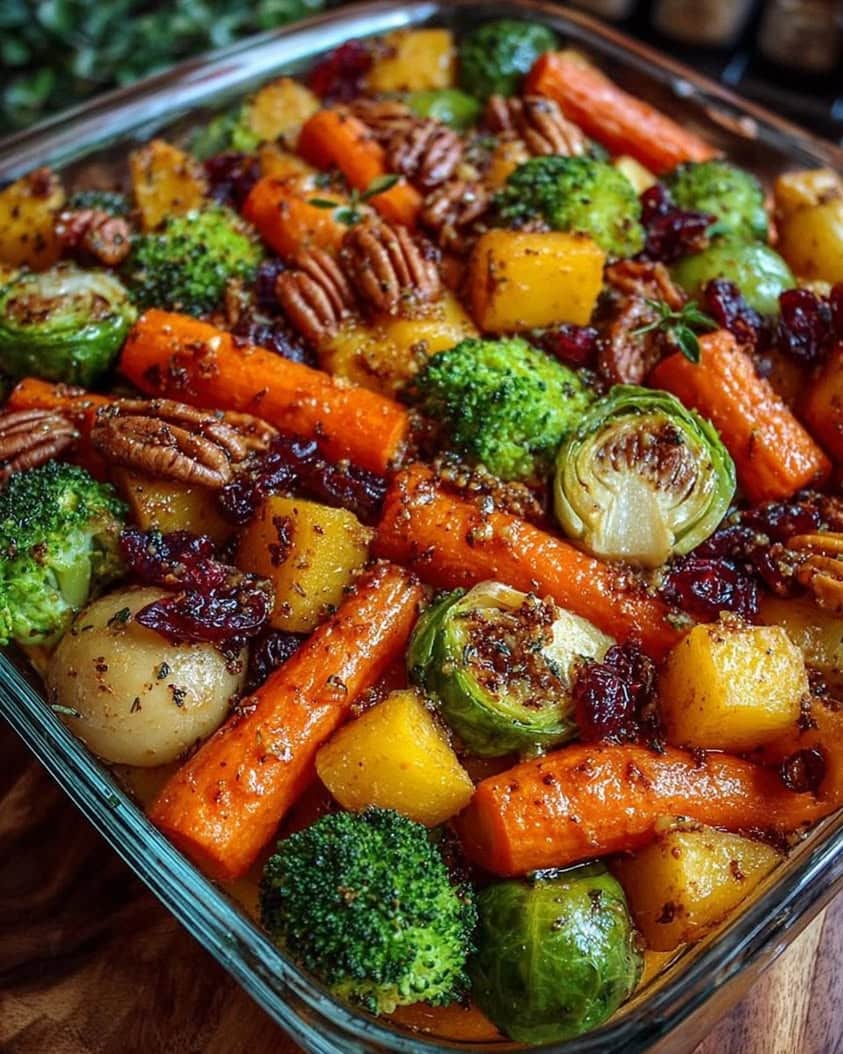
- Visual Appeal: This dish is a feast for the eyes with its vibrant orange squash, bright green broccoli, deep orange carrots, and golden potatoes. The white feta and brown pecans scattered on top create a gorgeous, rustic presentation.
- Skill Level Needed: This is a beginner-friendly recipe. The primary skill is simple vegetable chopping and understanding how to roast different vegetables to perfection simultaneously. No advanced techniques are required.
- Special Equipment: You only need a large baking sheet, a good chef’s knife, and mixing bowls. Parchment paper is highly recommended for easy cleanup and to prevent sticking.
Recipe Overview
- Difficulty Level: We rate this recipe as easy because it involves fundamental kitchen skills like chopping and roasting. The process is straightforward: chop, season, roast, and assemble. However, paying attention to vegetable sizes and roasting times is key to perfect results, which adds a slight layer of thoughtful preparation.
- Category: This dish is incredibly versatile. It functions perfectly as a hearty vegetarian main course, a substantial side dish for Thanksgiving or Christmas, or a flavorful component in a grain bowl. Its flexibility is one of its greatest strengths.
- Cuisine: While not tied to one specific tradition, this recipe draws inspiration from modern American farm-to-table cooking and Mediterranean flavors. The use of feta, olive oil, and honey nods to Greek cuisine, while the cranberry glaze is a classic North American holiday touch.
- Cost: This is a cost-effective recipe, especially in the fall and winter when root vegetables are in season and affordable. Butternut squash, carrots, and potatoes are budget-friendly. The pricier items are the feta, pecans, and fresh cranberries, but they are used as impactful garnishes, so a little goes a long way.
- Season: This recipe is ideal for autumn and winter. It showcases seasonal produce at its peak, providing warmth and comfort during cooler months. The colors and flavors are inherently festive, making it a holiday table natural.
- Occasion: It is perfect for holiday dinners like Thanksgiving, Christmas, or Friendsgiving as a stunning side. Simultaneously, it is simple enough for a cozy family Sunday supper or as a meal-prep option for healthy weekday lunches.
Why You’ll Love This Recipe
First and foremost, the taste and texture of this caramelized vegetable dish are utterly irresistible. The roasting process intensifies the natural sugars in the squash and carrots, creating deep, complex flavors with those coveted crispy, caramelized edges. Then, the bright pop of the cranberry-honey glaze cuts through the richness, while the salty feta and buttery pecans add luxurious layers. Every forkful is a perfect bite, offering a satisfying contrast between soft, creamy, crunchy, and tender textures that will keep you coming back for more.
Convenience is another major benefit of this roasted harvest vegetables recipe. It is primarily a hands-off, one-pan meal. After the quick prep of chopping, you simply toss everything with oil and spices, then let the oven do the work. This frees you up to prepare other parts of your meal or simply relax. Furthermore, cleanup is a breeze, especially if you use parchment paper. This makes it an ideal choice for busy nights when you want a healthy, impressive meal without a sink full of dishes.
From a nutritional standpoint, this dish is a powerhouse. It is packed with vitamins, minerals, and fiber from four different colorful vegetables. Butternut squash and carrots are rich in beta-carotene. Broccoli provides vitamin C and K. Yukon potatoes offer potassium and vitamin B6. Using olive oil adds heart-healthy fats. Consequently, this meal supports overall health, aids digestion, and provides sustained energy, making it a guilt-free indulgence that truly nourishes your body.
For entertaining, this recipe is a true winner. Its vibrant, colorful presentation is guaranteed to impress guests and brighten any holiday table. It caters beautifully to diverse dietary needs, serving as a fantastic vegetarian centerpiece or a crowd-pleasing side dish. You can easily narrate the simple, rustic preparation, which adds to its charm. Ultimately, it is a reliable recipe that delivers consistent, delicious results, removing stress from host duties.
Finally, this caramelized butternut squash and vegetable medley is remarkably cost-effective and accessible. The base ingredients are humble, affordable vegetables available at any grocery store year-round. The special toppings, while flavorful, are used sparingly, so you get maximum impact without a high cost. This accessibility means anyone can create a restaurant-quality, beautiful dish at home without needing exotic or expensive ingredients, making gourmet, healthy eating achievable for every home cook.
Historical Background and Cultural Significance
The practice of roasting vegetables is ancient, rooted in cooking over open fires. However, the specific combination in this caramelized butternut squash recipe is a modern invention, reflecting contemporary culinary trends. It draws from the North American tradition of celebrating autumn harvests, where squash, root vegetables, and cranberries are iconic seasonal symbols. This dish is a direct descendant of simple roasted root vegetable medleys that have warmed homes for generations, now elevated with global ingredients like feta and a refined glaze.
Culturally, this dish sits at the intersection of holiday tradition and everyday nourishment. In the United States and Canada, meals centered around harvest vegetables are deeply tied to Thanksgiving, representing gratitude for the land’s bounty. The inclusion of cranberries explicitly references this heritage. Simultaneously, the use of feta cheese introduces a Mediterranean influence, showcasing how modern cuisine freely blends traditions to create new, exciting flavors that resonate with today’s diverse palates.
The evolution of this recipe mirrors the rise of “vegetable-forward” dining and the sheet-pan supper trend. Home cooks and chefs alike have moved vegetables from the side of the plate to the center, seeking to highlight their inherent flavors. Techniques like high-heat roasting to achieve caramelization have become popularized to maximize taste. This particular recipe represents an evolution from basic roasted veggies to a composed, dressed dish with balanced sweet, savory, and textural elements, appealing to a desire for both health and sophistication.
Regional variations of this concept are endless. In the American South, you might find roasted vegetables with pecans and a bourbon glaze. A Pacific Northwest version could feature hazelnuts and a maple reduction. Mediterranean adaptations might include olives and oregano instead of cranberries and thyme. This adaptability is the recipe’s strength; it provides a versatile template that welcomes local ingredients and personal touches, allowing it to be reimagined across different kitchens and cultures while maintaining its core appeal of celebrating seasonal produce.
Ingredient Deep Dive
Butternut Squash: This winter squash, native to the Americas, has been cultivated for thousands of years. Its sweet, nutty flesh is incredibly versatile. Nutritionally, it is a superstar, loaded with vitamin A (as beta-carotene), vitamin C, fiber, and potassium. When selecting, choose a squash that feels heavy for its size with a firm, matte skin and no soft spots. Store whole squash in a cool, dark place for months. For a quicker prep, look for pre-cubed squash in the produce section. You can substitute with other squash like delicata or acorn.
Yukon Gold Potatoes: Developed in Canada in the 1960s, Yukon Golds revolutionized potato eating with their buttery flavor and creamy texture. They hold their shape well when roasted while becoming tender inside. They provide vitamin C, B6, potassium, and fiber, especially with the skin on. Select firm potatoes without sprouts or green tinges. Store in a cool, dark, well-ventilated place—not the refrigerator. For this recipe, their waxy texture is ideal. You can substitute with other yellow potatoes or red potatoes, but avoid starchy russets which may fall apart.
Fresh Cranberries: These tart, vibrant berries are one of only three fruits native to North America. They were a staple in Native American diets and used for dye, medicine, and food. They are packed with vitamin C, fiber, and unique phytonutrients like proanthocyanidins, known for supporting urinary tract health. Choose plump, bright red berries that bounce when dropped; avoid shriveled or brown ones. Refrigerate in their original bag and rinse just before use. For the glaze, you cannot substitute with sweetened dried cranberries, but you could use frozen cranberries in a pinch.
Feta Cheese: This brined curd cheese has a history dating back to ancient Greece. Traditionally made from sheep’s milk or a sheep-goat blend, its tangy, salty flavor is iconic. It adds protein and calcium to the dish. Look for feta packed in brine for the best flavor and texture. Crumbled feta works, but a block you crumble yourself is often superior. For storage, keep it submerged in its brine in the refrigerator. For a dairy-free version, use a firm, salty vegan cheese or omit it. Goat cheese is also a delicious substitute.
Common Mistakes to Avoid
- Chopping Vegetables Inconsistently: Cutting vegetables into wildly different sizes is a common error. Consequently, smaller pieces will burn before larger ones cook through. Always aim for uniform, bite-sized pieces to ensure even roasting and caramelization.
- Crowding the Pan: Overfilling the baking sheet steams the vegetables instead of roasting them. You need space for hot air to circulate. For proper caramelization, use two pans if necessary or roast in batches to avoid soggy results.
- Underseasoning: Vegetables need ample seasoning. Do not be shy with salt and pepper before roasting. Seasoning layers flavor from the inside out. Taste your vegetables before serving and adjust with a final pinch of salt if needed.
- Adding the Glaze Too Early: Applying the cranberry-honey glaze before roasting will cause it to burn in the high oven heat. Always add glazes and delicate ingredients like nuts and cheese after the vegetables are fully roasted and slightly cooled.
- Neglecting to Preheat the Oven: A properly preheated oven is crucial for immediate caramelization. Starting in a cold oven will cause the vegetables to steam and become mushy before they begin to brown.
- Using Old, Dull Spices: Dried thyme and paprika lose potency over time. If your spices are more than a year old, their flavor will be muted. For the best flavor, use fresh, high-quality spices or consider fresh thyme sprigs.
- Skipping the Toasting Step for Pecans: Raw pecans are good, but toasted pecans are transformative. Toasting in a dry pan for a few minutes unlocks their oils and intensifies their nutty flavor, adding a much deeper dimension to the final dish.
- Overcooking the Broccoli: Broccoli roasts faster than dense root vegetables. Adding it partway through the cooking time prevents it from becoming charred and bitter. This staggered roasting is key to perfect texture for every component.
Essential Techniques
Uniform Chopping: This is the foundational technique for successful roasted vegetables. Consistent size ensures even cooking; every piece will be done at the same time. Use a sharp chef’s knife for control. For butternut squash, first slice off the stem and bulbous end, then peel with a vegetable peeler. Halve it lengthwise, scoop out seeds, and cut into planks before dicing. For carrots, cut on a slight diagonal to create larger surface area for caramelization. Mastering this prep makes the entire roasting process foolproof.
High-Heat Roasting: Roasting at 425°F (220°C) is non-negotiable for achieving caramelization. This high heat quickly evaporates surface moisture on the vegetables, allowing the natural sugars to concentrate and brown. The Maillard reaction creates complex, savory flavors and those desirable crispy edges. Do not open the oven door frequently, as this releases heat and slows the process. Instead, trust the timer and look for visual cues: golden-brown spots and slightly shrunken, tender vegetables.
Staggered Vegetable Addition: Because vegetables have different densities and water contents, they require different cooking times. Dense squash, potatoes, and carrots start first. The more delicate broccoli joins later to prevent overcooking. This technique guarantees that every element in your caramelized butternut squash medley reaches perfect doneness simultaneously. It is a simple but critical step for texture perfection.
Glaze Reduction: A glaze should be syrupy and coat the back of a spoon. Simmering the cranberry, honey, and vinegar mixture allows water to evaporate, concentrating the flavors and thickening the consistency. Watch it carefully toward the end to prevent burning. The glaze will continue to thicken slightly as it cools. Proper reduction ensures it clings to the vegetables in a glossy, flavorful layer instead of running off.
Pro Tips for Perfect Caramelized Butternut Squash and Vegetables
For extra caramelization, give the vegetables space. Use two baking sheets if your single sheet is overcrowded. Overcrowding creates steam, which prevents browning.
Toss the vegetables in oil and seasoning in a large bowl, not on the pan. This ensures a more even, thorough coating on every piece.
Line your baking sheet with parchment paper. This prevents sticking, promotes even browning on the bottom, and makes cleanup incredibly easy.
Do not stir the vegetables too often. Let them sit undisturbed for at least 15-20 minutes to develop those beautiful, flavorful browned spots.
Reserve some feta and pecans for garnish after serving. This keeps them looking fresh and allows guests to appreciate their texture and flavor.
Let the roasted vegetables rest for 5 minutes after adding the glaze. This allows the flavors to meld and the glaze to set slightly before serving.
For a deeper flavor, use a flavored honey, such as wildflower or orange blossom, in the cranberry glaze.
If your vegetables are not browning to your liking, try switching your oven to the broil setting for the final 2-3 minutes, watching closely to prevent burning.
Variations and Adaptations
For regional variations, consider your local ingredients. In the South, add a pinch of smoked paprika and use pecans. In the Northwest, try hazelnuts and a maple syrup glaze. A Mediterranean twist could include olives, lemon zest, and oregano instead of cranberries and thyme. An Italian-inspired version might feature rosemary, pine nuts, and a balsamic reduction. These simple swaps can tailor the dish to reflect different culinary traditions while keeping the satisfying roasted vegetable base.
Seasonal adaptations are straightforward. In spring, use asparagus and new potatoes with a lemon-herb glaze. Summer calls for zucchini, bell peppers, and eggplant with a basil oil. The autumn version here is classic. For deep winter, incorporate parsnips, turnips, and Brussels sprouts with a pomegranate molasses glaze. Using what is freshest and most abundant ensures peak flavor and supports local agriculture, making your roasted harvest vegetables a true reflection of the season.
Dietary modifications are easy. For a vegan dish, omit the feta or use a vegan alternative and ensure your honey substitute is agave or maple syrup. For a nut-free version, use roasted pumpkin seeds (pepitas) or sunflower seeds instead of pecans. To make it gluten-free, simply verify all your packaged ingredients like spices are certified GF—this recipe is naturally compliant. For a lower-carb option, reduce the amount of carrots and potatoes and increase the proportion of broccoli and squash.
Serving and Presentation Guide
Plating techniques matter. For a family-style presentation, transfer the entire mixture to a large, shallow serving platter or bowl. Alternatively, for individual plates, use a ring mold to create a neat, vertical stack of the vegetables in the center of each plate. Drizzle extra glaze around the perimeter for a restaurant-worthy look. Always garnish with the fresh herbs and reserved toppings at the very end to maintain their color and texture.
Garnishing ideas extend beyond the recipe. Beyond the feta and pecans, consider a final flourish of fresh pomegranate arils for a jewel-like burst, microgreens for a peppery freshness, or a light dusting of sumac for tangy color. A drizzle of high-quality extra virgin olive oil just before serving adds richness and shine. A few fresh thyme or rosemary sprigs placed artfully on the platter enhance the rustic, harvest-time feel of the dish.
For traditional accompaniments, this caramelized butternut squash medley pairs beautifully with a simple roast chicken, turkey, or pork tenderloin. It is also excellent alongside creamy polenta or a wild rice pilaf. For a vegetarian feast, serve it with a hearty lentil loaf or stuffed mushrooms. A crisp green salad with a light vinaigrette balances the dish’s richness perfectly. Do not forget warm, crusty bread to soak up any delicious glaze left on the plate.
Wine and Beverage Pairing
Wine pairings should complement the sweet, savory, and tangy notes. A dry Riesling or Gewürztraminer is fantastic; their slight sweetness and acidity mirror the cranberry glaze and cut through the richness. For red wine lovers, a light-bodied, fruity Pinot Noir with low tannins works well without overpowering the vegetables. An oak-aged Chardonnay can also pair nicely with the caramelized flavors and creamy feta. Ultimately, choose a wine you enjoy that has good acidity to cleanse the palate.
Non-alcoholic alternatives can be just as sophisticated. Sparkling water with a twist of orange or a dash of cranberry juice is refreshing. A warm mug of spiced apple cider echoes the autumn flavors. For a crafted mocktail, try muddled cranberries with thyme, lemon juice, and ginger ale. Iced herbal tea, like hibiscus or peppermint, also makes a lovely, palate-cleansing partner to this rich vegetable dish.
Storage and Shelf Life
Store leftovers in an airtight container in the refrigerator for up to 4 days. For best results, store the vegetable base, glaze, and toppings (feta, pecans) separately. This prevents the nuts from becoming soggy and the feta from dissolving. The vegetables will soften over time but remain flavorful.
Reheating instructions are key to preserving texture. Reheat the vegetables in a 350°F (175°C) oven on a baking sheet for 10-15 minutes until warmed through. This method helps re-crisp the edges better than a microwave. If using a microwave, do so in short bursts and expect softer vegetables. Always add the fresh toppings after reheating.
Freezing is not generally recommended for this completed dish, as the texture of the roasted vegetables and broccoli will become mushy upon thawing. However, you can freeze the uncooked, chopped vegetables (except broccoli) in a single layer on a tray before transferring to a bag. The cranberry glaze can also be frozen separately. Thaw both in the refrigerator before proceeding with the recipe.
Make Ahead Strategies
You can prep components up to two days in advance. Chop all the vegetables (except broccoli) and store them submerged in cold water in airtight containers in the fridge; this keeps them fresh and crisp. Dry them thoroughly before roasting. The cranberry-honey glaze can be made and refrigerated in a jar; gently reheat it to liquefy before using. Toast the pecans and store at room temperature. Crumble the feta and keep it chilled. This advance work turns active cooking time into a simple assembly and roast.
For day-of assembly, drain and pat the pre-chopped vegetables completely dry. Toss with oil and seasonings, then roast according to the recipe, adding the broccoli at the noted time. Warm the glaze. Once the vegetables are out of the oven, toss with the warm glaze, then top with the prepared pecans and feta. This strategy makes serving this impressive caramelized butternut squash dish effortless for entertaining.
Scaling Instructions
Halving the recipe is simple for smaller households. Use a standard baking sheet and reduce all ingredients by half. The cook time may be slightly shorter, so start checking for doneness around the 25-minute mark. Keep the oven temperature the same. This adjustment is perfect for creating a cozy dinner for two or three people.
Doubling or tripling for a crowd requires planning. You must use multiple baking sheets and rotate them between oven racks halfway through cooking to ensure even browning. Do not overcrowd any single pan. You may need to roast in batches if oven space is limited. Keep the first batch warm in a low oven (200°F/95°C) while the second batch cooks. Mix the batches together with the glaze in a very large bowl before serving.
Nutritional Deep Dive
This dish provides a well-rounded mix of macronutrients. The vegetables and olive oil offer healthy complex carbohydrates and fats for sustained energy. The feta and pecans contribute protein and additional healthy fats, making the meal more satiating. It is naturally high in fiber from the variety of vegetables, which supports digestive health and helps regulate blood sugar levels. The fats are primarily unsaturated from olive oil and nuts, which are beneficial for heart health.
Micronutrient analysis reveals a vitamin and mineral powerhouse. Butternut squash and carrots deliver massive amounts of Vitamin A (as beta-carotene), crucial for vision and immune function. Broccoli is rich in Vitamins C and K, along with folate. Potatoes provide potassium and Vitamin B6. Together, these ingredients offer a broad spectrum of antioxidants that combat inflammation and support overall cellular health, making this roasted harvest vegetables recipe a true nutritional champion.
Dietary Adaptations
For a vegan version, replace the honey in the glaze with maple syrup or agave nectar. Omit the feta cheese or use a high-quality vegan feta alternative made from tofu or almonds. Ensure all other ingredients are plant-based. The result is still a flavorful, satisfying dish centered on beautiful roasted vegetables.
For a dairy-free adaptation, simply omit the feta cheese. To replicate the salty, tangy element, consider adding a sprinkle of nutritional yeast or a drizzle of tahini mixed with lemon juice over the top after roasting. Kalamata olives can also provide a salty punch in place of the cheese.
For a Paleo or Whole30 version, omit the feta cheese (dairy) and ensure your honey is compliant (allowed on Paleo, not on Whole30). For Whole30, make the glaze with 100% cranberry juice reduced with orange zest and spices instead of honey. Use ghee or avocado oil instead of olive oil if preferred.
Troubleshooting Guide
If vegetables are soggy and not caramelizing, the oven temperature is likely too low, the pan is overcrowded, or the vegetables were wet when they went in. Ensure your oven is fully preheated, use enough space, and always pat vegetables dry. Next time, try increasing the temperature by 25 degrees and resist stirring for the first half of cooking.
If the glaze is too thin, it needs further reduction. Simmer it over medium heat for a few more minutes, stirring frequently, until it thickens to a syrupy consistency that coats the back of a spoon. It will also thicken as it cools. If it is too thick, whisk in a teaspoon of warm water at a time until it reaches a drizzle-able consistency.
If some vegetables are burnt while others are undercooked, your pieces were unevenly sized. For salvage, remove the burnt pieces and return the undercooked pieces to the oven for additional time. In the future, take more care to cut uniform pieces, and consider roasting denser vegetables (squash, potatoes) separately from quicker-cooking ones (broccoli) if precision is challenging.
Recipe Success Stories
Community feedback on this caramelized butternut squash recipe has been overwhelmingly positive. Many home cooks report it becoming their new go-to holiday side dish, often receiving more compliments than the main course. Several readers have successfully adapted it for large Thanksgiving gatherings, doubling the recipe with great success. The common theme is how the dish impresses guests with its appearance while being deceptively simple for the host to prepare.
Many have shared their creative variations. One reader added diced apples in the last 15 minutes of roasting for extra autumn flavor. Another used sweet potatoes instead of Yukon Golds for a deeper orange hue. A popular adaptation is adding a sprinkle of chili flakes to the oil for a subtle heat that contrasts the sweet glaze. These stories highlight the recipe’s fantastic flexibility and how it inspires personal culinary creativity.
Frequently Asked Questions
Can I use frozen vegetables? For best results, use fresh vegetables. Frozen butternut squash, carrots, and broccoli will release too much water during roasting, leading to steaming instead of caramelization. The texture will be soft and mushy rather than tender with crispy edges.
Can I make this ahead of time? Yes, you can prep components ahead. Chop vegetables (store in water) and make the glaze 1-2 days in advance. However, for optimal texture and flavor, roast the vegetables and assemble the dish the day you plan to serve it.
What can I use instead of fresh cranberries? If fresh cranberries are out of season, you can use frozen cranberries (do not thaw) for the glaze. Alternatively, you can substitute with a high-quality cranberry juice or sauce, simmered down with honey until thickened.
Is this recipe gluten-free? Yes, this recipe is naturally gluten-free as it uses only whole vegetables, oils, spices, nuts, and cheese. Always check labels on pre-packaged ingredients like spices to ensure no cross-contamination if you have celiac disease.
How do I prevent the feta from melting everywhere? Add the feta cheese after the roasted vegetables have cooled slightly, just before serving. If the vegetables are piping hot, the feta will soften and melt more readily. Using a block feta you crumble yourself also holds its shape better than pre-crumbled.
Can I use a different type of nut? Absolutely. Walnuts, almonds (slivered or sliced), or pistachios would all be delicious. Toast them lightly before using to maximize their flavor, just as you would with the pecans.
My vegetables are sticking to the pan. How can I prevent this? Always line your baking sheet with parchment paper or a silicone baking mat. This provides a non-stick surface, promotes even browning, and makes cleanup effortless. Also, ensure you are using enough oil to coat the vegetables.
Can I add protein to make it a full meal? Certainly. For a complete one-pan meal, add chickpeas (canned, drained, and patted dry) or cubed tofu to the sheet pan with the vegetables. You can also serve the vegetable medley over a bed of quinoa or farro and top with a fried egg.
Why is my glaze too tart? The tartness depends on the cranberries and your honey. Simmer the glaze a bit longer to concentrate the sugars, or stir in an extra tablespoon of honey at the end to balance the flavor to your liking.
Can I roast the vegetables without oil? A small amount of oil is necessary to conduct heat, promote browning, and prevent sticking. For a lower-fat version, you can use an oil spray to lightly coat the vegetables, but some oil is recommended for proper caramelization.
Additional Resources
For related recipes, explore other sheet-pan dinners like lemon-herb roasted salmon with asparagus or harissa-roasted chicken thighs with sweet potatoes. If you love the flavors here, try a butternut squash and kale salad with a similar cranberry vinaigrette or a wild rice stuffing with roasted vegetables and pecans. These dishes complement the same seasonal palette and cooking style.
For technique guides, brushing up on basic knife skills will make prepping the vegetables faster and safer. Understanding the science of the Maillard reaction (browning) can help you master roasting any vegetable. Learning how to properly toast nuts and reduce a sauce are fundamental skills that elevate countless dishes beyond this one.
For equipment recommendations, a large, heavy-duty half-sheet pan is invaluable. A sharp, comfortable chef’s knife is the most important tool in your kitchen for prepping vegetables. A Microplane zester is perfect for adding citrus zest to the glaze if you choose to adapt it. Investing in these few quality tools makes cooking enjoyable and yields professional results at home.
PrintCaramelized Butternut Squash, Carrots, Broccoli & Yukon Potatoes with Feta, Pecans & Cranberry-Honey Glaze
- Total Time: 45 minutes
- Yield: 4
Description
A vibrant, sweet-and-savory roasted vegetable medley topped with tangy feta, crunchy pecans, and a glossy cranberry-honey glaze.
Ingredients
- 1 small butternut squash, peeled and cubed
- 3 large carrots, sliced into rounds
- 1 head broccoli, cut into florets
- 4 Yukon Gold potatoes, cubed
- 3 tablespoons olive oil
- 1 teaspoon garlic powder
- 1 teaspoon smoked paprika
- Salt and black pepper to taste
- 1/2 cup crumbled feta cheese
- 1/3 cup chopped pecans
- 1/4 cup honey
- 2 tablespoons cranberry sauce or jam
- 1 tablespoon balsamic vinegar
Instructions
- Preheat oven to 400°F (200°C). Line a large baking sheet with parchment paper.
- In a large bowl, toss butternut squash, carrots, broccoli, and potatoes with olive oil, garlic powder, smoked paprika, salt, and pepper until evenly coated.
- Spread vegetables in a single layer on the baking sheet. Roast for 25-30 minutes, stirring halfway, until tender and caramelized at the edges.
- While vegetables roast, prepare the glaze: In a small saucepan over low heat, whisk together honey, cranberry sauce, and balsamic vinegar until smooth and slightly thickened, about 5 minutes. Remove from heat.
- Transfer roasted vegetables to a serving platter. Drizzle with cranberry-honey glaze, then top with crumbled feta and chopped pecans. Serve warm.
Notes
You can customize the seasonings to taste.
- Prep Time: 15 minutes
- Cook Time: 30 minutes
- Method: Main
- Cuisine: American