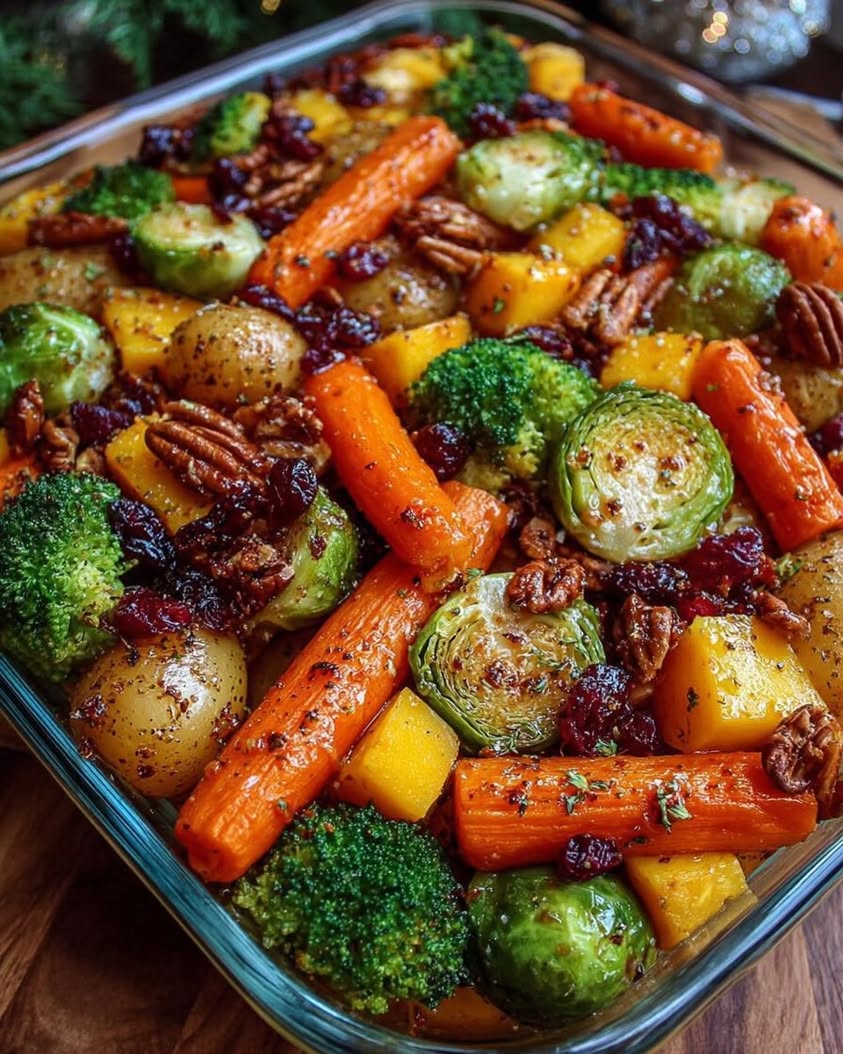
Caramelized Butternut Squash, Carrots, Broccoli & Yukon Potatoes with Feta, Pecans & Cranberry-Honey Glaze: A Festive Fall Harvest Bowl
Imagine a dish that captures the very essence of autumn in a single, stunning bowl. This recipe for Caramelized Butternut Squash, Carrots, Broccoli & Yukon Potatoes with Feta, Pecans & Cranberry-Honey Glaze does exactly that. It transforms humble, seasonal vegetables into a vibrant and sophisticated meal. The process is surprisingly simple, yet the result feels like a special occasion. Roasting coaxes out the natural sugars, creating deep, caramelized edges and tender interiors. Then, a final drizzle of a sweet-tart glaze and a sprinkle of salty feta and crunchy pecans brings everything together in a symphony of fall flavors.
This recipe is more than just a side dish; it’s a complete, satisfying vegetarian main course. It’s perfect for a cozy weeknight dinner or an impressive centerpiece for a holiday table. The combination of textures and tastes is truly unforgettable. You get the creamy sweetness of the squash and carrots, the earthy heartiness of the potatoes, the fresh pop of the broccoli, and the rich, savory crunch of the pecans. Meanwhile, the tangy feta and vibrant cranberry-honey glaze cut through the richness, creating a perfectly balanced bite every single time.
Furthermore, this dish is a celebration of seasonal produce at its peak. Each vegetable brings its unique nutritional profile to the table, making this a meal that is as wholesome as it is delicious. The colors alone—vibrant orange, deep green, and golden brown—are a feast for the eyes. Ultimately, this recipe proves that eating with the seasons can be the most delicious and rewarding culinary adventure. Let’s dive into how to create this masterpiece of roasted fall veggies with feta, pecans, and cranberry glaze.
Quick Recipe Highlights
- Flavor Profile: This dish offers a masterful balance of sweet, savory, salty, and tangy notes. The natural sweetness of the caramelized vegetables meets the salty punch of feta and the rich, buttery crunch of pecans. Finally, the cranberry-honey glaze adds a bright, fruity acidity that ties all the elements together beautifully.
- Texture: Expect a delightful contrast in every mouthful. The roasted vegetables become tender and creamy inside with crispy, caramelized exteriors. The broccoli retains a slight bite, while the pecans provide a satisfying crunch. The crumbled feta adds a soft, creamy element that melts slightly from the warmth of the veggies.
- Aroma: As this dish roasts, your kitchen will fill with the warm, comforting scents of autumn. You’ll smell the earthy sweetness of roasting root vegetables, the nutty fragrance of toasting pecans, and the subtle herbal notes of thyme. The final drizzle of the warm cranberry-honey glaze releases a sweet and tart berry aroma that is simply irresistible.
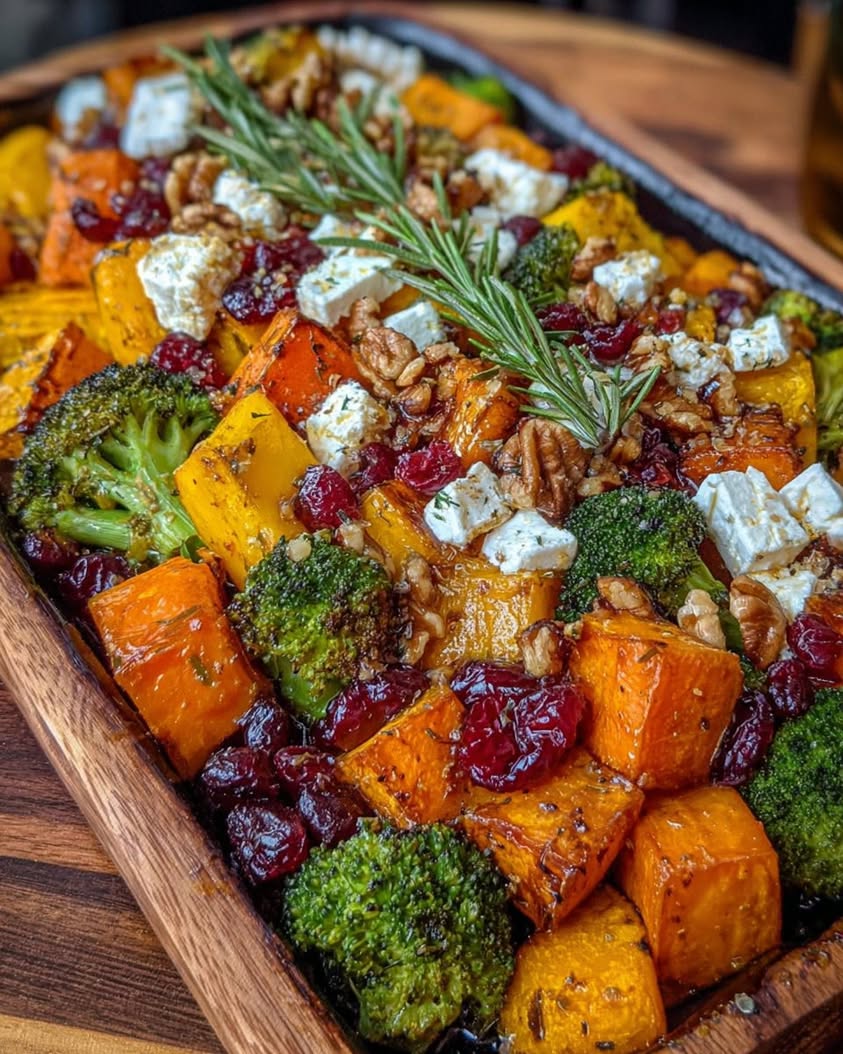
- Visual Appeal: This bowl is a vibrant mosaic of fall colors. The bright orange squash and carrots, deep green broccoli florets, and golden-brown potatoes create a stunning base. The white crumbles of feta, the toasted brown pecans, and the glossy red glaze provide beautiful finishing touches that make the dish look professionally plated.
- Skill Level Needed: This is a beginner-friendly recipe that requires minimal advanced technique. The most important skills are simple vegetable chopping and understanding your oven’s hot spots for even roasting. There’s no fussy sauce-making or complicated steps, making it accessible for cooks of all levels looking to create an impressive roasted fall veggies dish.
- Special Equipment: You only need basic kitchen tools: a large baking sheet, a good chef’s knife, a cutting board, and a small saucepan for the glaze. Parchment paper or a silicone baking mat is highly recommended for easy cleanup and to prevent sticking, but it’s not strictly necessary if you grease your pan well.
Recipe Overview
- Difficulty Level: We rate this recipe as “Easy” because it involves straightforward techniques like chopping and roasting. The steps are sequential and simple to follow. There is no complex knife work or temperamental cooking methods. Success relies more on organization and timing than on advanced culinary skill, making it a perfect confidence-builder.
- Category: This versatile dish straddles multiple categories beautifully. It serves excellently as a hearty vegetarian main course, a standout side dish for roasted meats like turkey or ham, or a warm component for a grain bowl. Its flexibility makes it a valuable addition to your recipe repertoire for any meal occasion.
- Cuisine: While not tied to a single traditional cuisine, this recipe draws inspiration from modern American farm-to-table cooking and Mediterranean influences. The use of feta cheese and olive oil nods to Greek flavors, while the focus on roasted seasonal vegetables is a hallmark of contemporary rustic cooking in North America and Europe.
- Cost: This is a cost-effective meal, especially when made in autumn when these vegetables are plentiful and inexpensive. The main expenses are the block of feta and the pecans. Overall, you can expect to feed four people a generous meal for roughly the cost of a single restaurant entrée, making it fantastic for budget-conscious gourmets.
- Season: This recipe is quintessentially a fall and winter dish. It features vegetables that are at their peak sweetness and flavor during the cooler months. The warm, roasted nature of the meal is particularly comforting when the weather turns chilly. However, you can adapt it with spring and summer veggies for a year-round treat.
- Occasion: It’s incredibly versatile for events. Serve it as a simple yet elegant weeknight dinner, a show-stopping centerpiece for a vegetarian Thanksgiving, or a beautiful side at a festive potluck or Friendsgiving. Its colorful presentation and crowd-pleasing flavors make it suitable for both casual and formal gatherings.
Why You’ll Love This Recipe
First and foremost, the taste and texture appeal is off the charts. Each bite delivers a complex harmony of flavors that dance on your palate. The deep, caramelized sweetness of the roasted vegetables forms the perfect foundation. Then, you encounter the salty, briny pop of feta cheese, followed by the rich, buttery crunch of toasted pecans. The cranberry-honey glaze is the maestro, conducting all these elements with its sweet and tart notes. This combination ensures you never get bored, as each forkful offers a slightly different balance of the components.
Next, consider the sheer convenience and preparation benefits. This is largely a hands-off recipe. After you finish chopping and tossing the vegetables, the oven does most of the work. This gives you time to set the table, prepare a simple salad, or simply relax. The recipe is also incredibly forgiving; a few extra minutes of roasting won’t ruin it. Moreover, cleanup is a breeze, especially if you use parchment paper. For busy home cooks, this combination of impressive results and straightforward process is a true winner.
From a nutritional standpoint, this dish is a powerhouse. It’s packed with vitamins, minerals, and fiber from four different colorful vegetables. Butternut squash and carrots are loaded with beta-carotene. Broccoli provides vitamin C and K. Yukon potatoes offer potassium and vitamin B6. The olive oil contributes heart-healthy fats, and the pecans add protein and more beneficial fats. Together, they create a meal that fuels your body beautifully, proving that healthy eating can be indulgent and deeply satisfying.
This recipe also holds tremendous social and entertaining value. Its stunning visual presentation is guaranteed to draw compliments from guests. It accommodates various dietary preferences effortlessly, being naturally vegetarian and easily made vegan or gluten-free. Serving a beautiful, homemade dish like this roasted fall veggies with feta and pecans creates a warm, welcoming atmosphere. It shows care and thoughtfulness, turning a simple meal into a shared experience that people will remember and request again.
Finally, its cost-effectiveness and accessibility are major advantages. You don’t need expensive or exotic ingredients. Everything can be found at a standard grocery store. The recipe is also scalable, so you can easily double it for a crowd without doubling your budget. Learning to create restaurant-quality meals at home with affordable, seasonal ingredients is empowering. This recipe delivers gourmet flavor and presentation without the gourmet price tag, making it a staple you’ll return to season after season.
Historical Background and Cultural Significance
The story of this dish begins with ancient agricultural practices. Roasting vegetables over fire is one of humanity’s oldest cooking methods. Indigenous cultures across the Americas cultivated squash, potatoes, and similar tubers for millennia. Meanwhile, the carrot has origins in Central Asia, and broccoli was developed from wild cabbage in the Mediterranean. This recipe represents a modern fusion of these globally significant crops, celebrating their journey to our contemporary tables through the simple, timeless technique of roasting.
Culturally, the combination speaks to the autumn harvest tradition prevalent in many temperate regions, particularly North America and Europe. The “harvest bowl” concept, where roasted seasonal vegetables are combined with grains, proteins, and dressings, is a hallmark of 21st-century wellness cuisine. It reflects a desire for food that is both aesthetically pleasing and nutritionally complete. The addition of feta cheese connects to Mediterranean dietary patterns, renowned for their health benefits and emphasis on fresh, simple ingredients.
The recipe has evolved significantly from basic roasted roots. The critical modern addition is the cranberry-honey glaze, which introduces a sweet-and-sour element that elevates the dish from humble to celebratory. Cranberries, native to North America, were used by Indigenous peoples and later became a staple of colonial and modern Thanksgiving tables. Incorporating them into a glaze for roasted vegetables is a contemporary innovation that bridges traditional holiday flavors with everyday vegetable preparations.
Regional variations of this concept are endless. In the American South, you might find roasted vegetables topped with candied pecans and a bourbon glaze. A Mediterranean version could feature roasted eggplant and zucchini with olives and lemon. In Northern Europe, root vegetables like parsnips and rutabaga might take center stage with a dollop of crème fraîche. This particular recipe with butternut squash, carrots, broccoli, and potatoes represents a popular North American interpretation, showcasing the bounty of a typical fall farmers’ market in a single, harmonious dish.
Ingredient Deep Dive
Butternut Squash: This winter squash is a New World native, cultivated for thousands of years. Its sweet, orange flesh is incredibly rich in beta-carotene, which the body converts to vitamin A, essential for vision and immune health. When selecting, choose a squash that feels heavy for its size with a firm, matte skin and no soft spots. Store whole squash in a cool, dark place for months. For a quicker roast, you can often find pre-cubed squash in the produce section. As a substitute, sweet potato or acorn squash work wonderfully.
Yukon Gold Potatoes: Developed in Canada in the 1970s, these potatoes are prized for their buttery flavor and creamy texture that holds up well to roasting. They provide potassium, vitamin C, and vitamin B6. Look for firm potatoes without sprouts or green tinges. Store them in a cool, dark, well-ventilated place—not the refrigerator. For this recipe, their waxy texture is ideal. You can substitute with other roasting potatoes like red bliss or fingerlings, but avoid starchy baking potatoes like Russets, as they may fall apart.
Carrots: Originally purple and yellow, the orange carrot was developed in the Netherlands in the 17th century. They are an excellent source of beta-carotene, fiber, and vitamin K1. Choose firm, smooth carrots with vibrant color and fresh, green tops if possible. Store them in the refrigerator’s crisper drawer in a plastic bag. For this recipe, try to use similar-sized carrots for even cooking. Parsnips make a fantastic seasonal substitute, offering a similar texture with a more peppery, sweet flavor.
Broccoli: A member of the brassica family, broccoli was cultivated from wild cabbage in Italy over 2000 years ago. It’s a nutritional superstar, packed with vitamins C and K, folate, and potent antioxidants like sulforaphane. Select heads with tight, dark green florets and firm stalks. Avoid any with yellowing. Store in the refrigerator and use within a few days. For this dish, broccoli adds crucial color and a fresh counterpoint to the sweeter roots. Cauliflower or Brussels sprouts halves are excellent alternatives.
Feta Cheese: This brined curd cheese has a history dating back to ancient Greece. Traditionally made from sheep’s milk or a sheep-goat blend, its salty, tangy flavor is iconic. It provides protein and calcium. For the best flavor in this roasted fall veggies dish, buy a block of feta in brine rather than pre-crumbled, which often contains anti-caking agents. If you need a dairy-free alternative, a firm tofu crumbled and marinated in lemon juice and salt, or a vegan feta, can work well.
Pecans: Native to North America, pecans were a staple food for Indigenous peoples and are now the official state tree of Texas. They are rich in monounsaturated fats, antioxidants, and minerals like manganese. For optimal flavor, buy raw pecan halves and toast them yourself. Store nuts in the freezer to prevent their oils from going rancid. Their buttery crunch is irreplaceable, but for a different twist, try walnuts or pumpkin seeds (pepitas) for a nut-free version.
Cranberry-Honey Glaze: This simple glaze is the flavor bridge. Cranberries, native to North American bogs, are packed with vitamin C and unique antioxidants called proanthocyanidins. Honey, one of humanity’s first sweeteners, has natural preservative qualities. Using pure maple syrup instead of honey creates a vegan version. The glaze’s balance of tart and sweet is key. In a pinch, a good-quality balsamic glaze can provide a different but equally delicious sweet-tart finish for your roasted vegetables.
Common Mistakes to Avoid
- Overcrowding the Pan: This is the number one mistake in roasting. If the vegetables are piled on top of each other, they will steam instead of roast. You need space for hot air to circulate and create those desirable caramelized edges. Always use a large enough baking sheet or roast in batches.
- Uneven Chopping: Cutting your vegetables into wildly different sizes guarantees uneven cooking. Smaller pieces will burn before larger ones are tender. Aim for a uniform, bite-sized dice, about 3/4-inch to 1-inch pieces. This ensures everything finishes at the same time.
- Skipping the Preheating: Putting vegetables into a cold oven is a recipe for soggy results. Always preheat your oven fully. A hot oven immediately sears the outside of the vegetables, locking in flavor and creating a crisp exterior while the inside cooks through.
- Not Drying the Vegetables: Especially for broccoli, excess water from washing can hinder browning. After washing your veggies, pat them thoroughly dry with a clean kitchen towel or salad spinner. Dry surfaces brown much more effectively than wet ones.
- Using the Wrong Oil: Extra virgin olive oil has a low smoke point and can burn in a hot oven, creating bitter flavors. For high-heat roasting, use a refined, high-smoke-point oil like avocado oil, regular olive oil (not extra virgin), or grapeseed oil. Save your fancy EVOO for finishing.
- Neglecting to Season in Layers: Don’t just sprinkle salt on top after roasting. Season the vegetables generously with salt and pepper before they go in the oven. This allows the seasoning to penetrate and enhances the vegetables’ natural flavors from within.
- Forgetting to Stir: Roasting is not a completely hands-off process. Stirring or flipping the vegetables halfway through the cooking time is crucial. It exposes all sides to the hot pan and oven heat, promoting even browning and preventing burning on one side.
- Adding the Glaze Too Early: If you pour the cranberry-honey glaze over the vegetables before roasting, the sugars will burn and become bitter. The glaze is a finishing element. Always add it after the vegetables are out of the oven and just before serving.
- Using Stale Nuts: Toasted pecans are a key textural element. Using nuts that are old or rancid will impart an unpleasant, bitter flavor. Always taste a pecan before toasting to ensure it’s fresh and sweet.
- Overcooking the Broccoli: Because broccoli cooks faster than dense root vegetables, it’s added partway through. Adding it at the beginning will turn it to mush. Follow the timing to add the broccoli florets later, so they stay vibrant and just tender-crisp.
Essential Techniques
Uniform Chopping (Mise en Place): This French term, meaning “everything in its place,” is the foundation of efficient cooking. For roasting, uniform size is non-negotiable. Take the time to cut your squash, potatoes, and carrots into similarly sized cubes. This technique ensures even cooking, so you don’t end up with some pieces raw and others burnt. A sharp chef’s knife and a stable cutting board are your best tools. The visual cue for success is a pile of vegetables where most pieces are roughly the same dimension.
High-Heat Roasting: This technique uses dry, concentrated heat to caramelize the natural sugars in vegetables. The high temperature (400-425°F) causes the Maillard reaction, creating complex, savory flavors and a beautiful brown crust. The key is to preheat your oven fully and use a heavy-duty rimmed baking sheet that distributes heat evenly. The pitfall is opening the oven door too often, which causes temperature fluctuations. Success is visible when the vegetables have deep golden-brown spots and edges.
Making a Simple Reduction Glaze: A glaze adds shine and concentrated flavor. The technique involves simmering a liquid (here, cranberry juice and honey) until it thickens and reduces in volume. This concentrates the sweetness and tartness. The importance is to cook it over medium-low heat to prevent burning the sugars. Stir frequently. The visual cue for a perfect glaze is when it coats the back of a spoon and leaves a clear trail when you run your finger through it. It will thicken further as it cools.
Toasting Nuts: Toasting unlocks the oils and deepens the flavor of nuts exponentially. The technique can be done in a dry skillet on the stove over medium heat or on a sheet pan in the oven for a few minutes. The key is constant attention, as nuts can go from perfectly toasted to burnt in seconds. Shake the pan or stir frequently for even color. The auditory and visual cues are a fragrant, nutty smell and a slightly darker golden-brown color. Always toast nuts just before using them for maximum crunch.
Pro Tips for Perfect Caramelized Butternut Squash, Carrots, Broccoli & Yukon Potatoes
First, for the crispiest potatoes and squash, soak your cubed potatoes in cold water for 15-30 minutes before roasting. This draws out excess starch, leading to a fluffier interior and crispier exterior. Just be sure to pat them completely dry before tossing with oil.
Second, consider roasting your vegetables on a preheated baking sheet. Place your empty sheet pan in the oven as it preheats. Carefully add the oiled vegetables to the hot pan—this jump-starts the searing process for incredible caramelization from the first moment.
Third, don’t toss the broccoli stems. Peel the tough outer layer with a vegetable peeler, then slice the tender inner stem into coins or batons. Add them to the pan with the florets for zero waste and an extra delicious, crunchy element.
Fourth, amplify the flavor with fresh herbs. Add a few sprigs of rosemary or thyme to the baking sheet with the vegetables. The herbs will infuse the oil and vegetables with their fragrance as they roast.
Fifth, finish with a bright acid. A small squeeze of fresh lemon juice over the plated dish just before serving can elevate all the flavors, cutting through the richness and making the vegetables taste even fresher.
Sixth, if your vegetables aren’t browning to your liking, try switching your oven to the broil setting for the final 2-3 minutes. Watch them closely. This gives a fantastic, restaurant-quality blister and char without overcooking the interiors.
Seventh, for the glaze, a pinch of salt is a secret weapon. Adding a tiny pinch of salt to the cranberry juice and honey as it simmers balances the sweetness and enhances the overall flavor profile of the finished dish.
Eighth, crumble the feta with your hands for the best texture. Pre-crumbled feta is often drier and denser. Crumbling a block yourself results in softer, more irregular pieces that distribute more evenly and melt slightly onto the warm vegetables.
Variations and Adaptations
Regional Variations: Travel your taste buds by swapping ingredients. For a Southern twist, use sweet potatoes and finish with candied pecans and a bourbon-maple glaze. A Mediterranean version could feature zucchini, eggplant, and red onion with kalamata olives and lemon zest instead of cranberries. For a Nordic feel, use parsnips, rutabaga, and beets, and top with dill and a dollop of sour cream.
Seasonal Adaptations: This formula works year-round. In spring, use asparagus, new potatoes, and radishes. Summer begs for bell peppers, zucchini, and cherry tomatoes—add the tomatoes only in the last 10 minutes. The core technique remains the same: roast hearty veggies first, add delicate ones later, and finish with a bright garnish.
Dietary Modifications: For a vegan version, omit the feta or use a vegan alternative, and substitute maple syrup for honey in the glaze. To make it gluten-free, ensure all packaged ingredients (like cranberry juice) are certified GF—this recipe is naturally compliant. For a nut-free dish, replace pecans with toasted pumpkin seeds (pepitas) or sunflower seeds.
Flavor Variations: Change the flavor profile easily with different spice blends. Toss vegetables with smoked paprika and cumin for a smoky vibe. Use curry powder and turmeric for an Indian-inspired dish. An Italian version could include dried oregano and garlic powder, finished with a balsamic reduction instead of cranberry glaze.
Texture Modifications: Love extra crunch? Add a breadcrumb topping. Mix panko breadcrumbs with a little olive oil, grated Parmesan, and herbs, then sprinkle over the vegetables in the last 10 minutes of roasting. For a creamier element, serve the roasted veggies over a bed of creamy polenta or whipped goat cheese.
Presentation Alternatives: Turn this into a warm harvest salad by serving the roasted vegetables over a bed of hearty greens like kale or arugula. The warmth will slightly wilt the greens. You can also pile everything into a toasted grain bowl with quinoa or farro, or stuff the mixture into a roasted acorn squash half for a stunning individual presentation.
Serving and Presentation Guide
Plating Techniques: For a family-style presentation, pile the roasted vegetables high on a large, rustic platter or in a shallow serving bowl. Drizzle the glaze in zig-zags or a spiral over the top, then sprinkle with pecans and feta, allowing them to fall naturally. For individual plates, use a ring mold to create a neat, vertical stack in the center of each plate for a more refined look.
Garnishing Ideas: Beyond the pecans and feta, consider adding fresh microgreens, pomegranate arils for extra color and pop, or finely chopped fresh parsley or chives. A final drizzle of high-quality extra virgin olive oil adds sheen and flavor. A light dusting of flaky sea salt, like Maldon, just before serving enhances both texture and taste.
Traditional Accompaniments: As a main course, this pairs beautifully with a simple green salad with a vinaigrette to cut the richness. As a side, it’s exceptional with roasted turkey, chicken, pork tenderloin, or baked ham. For a vegetarian feast, serve it alongside a hearty lentil loaf or stuffed mushrooms.
Modern Serving Suggestions: Serve it in a bowl over a base of creamy risotto, cauliflower mash, or couscous. For a brunch option, top it with a fried or poached egg; the runny yolk creates a luxurious sauce. It also makes a fantastic filling for warm wraps or pita bread with a swipe of hummus.
Temperature Considerations: This dish is best served warm, not piping hot. Let it rest for 5 minutes after coming out of the oven before adding the glaze and toppings. This allows the flavors to settle and prevents the feta from melting completely. It’s also delicious at room temperature, making it great for potlucks.
Portion Control Tips: This recipe generously serves four as a main. To stretch it further as a side, it can serve 6-8. If serving as part of a larger buffet with multiple dishes, a standard serving spoon portion (about 3/4 cup) per person is appropriate. Remember, the vegetables are nutrient-dense and filling, so a little goes a long way.
Wine and Beverage Pairing
Wine Pairings: The sweet, savory, and tangy elements in this dish call for versatile wines. A crisp, unoaked Chardonnay or a French White Burgundy complements the caramelized vegetables without overpowering them. A dry Riesling beautifully mirrors the sweet-tart glaze. For red wine lovers, a light-bodied Pinot Noir with its red fruit notes and low tannins is an excellent choice, as it won’t clash with the vegetables or the feta.
Non-Alcoholic Alternatives: Sparkling apple cider is a classic fall pairing that echoes the dish’s seasonal vibe. For a more sophisticated option, try a tart cranberry spritzer made with unsweetened cranberry juice, sparkling water, and a squeeze of lime. A warm mug of spiced apple tea or a chilled glass of ginger beer also pairs wonderfully, balancing sweetness with spice.
Coffee/Tea Pairings: After a meal featuring these roasted fall veggies, a medium-roast coffee with low acidity would be a pleasant finish. Better yet, opt for a herbal tea. A cinnamon-orange or a rooibos tea with its natural sweetness and lack of caffeine complements the warm spices and caramelized flavors of the dish perfectly.
Temperature Considerations: Serve white wines well-chilled (45-50°F) and red wines slightly cooler than room temperature (55-60°F). For non-alcoholic sparkling options, serve them cold to provide a refreshing contrast to the warm, roasted vegetables. Warm beverages should be served hot but not scalding.
Serving Suggestions: Always offer water alongside any other beverage to cleanse the palate. If serving wine, consider pouring it just before serving the food to ensure it’s at the ideal temperature. For a crowd, offering one red and one white wine option, plus a non-alcoholic sparkler, covers all preferences beautifully.
Storage and Shelf Life
Storage Methods: Store leftover roasted vegetables in an airtight container in the refrigerator. It’s best to store the components separately if possible: the plain roasted veggies in one container, and the glaze, pecans, and feta in their own small containers. This prevents the vegetables from getting soggy and the nuts from losing their crunch.
Temperature Requirements: All components must be refrigerated at 40°F or below. Do not leave the assembled dish at room temperature for more than two hours. The glaze, due to its sugar content, can be stored at room temperature if used within a day, but refrigeration is safest for longer storage.
Container Recommendations: Use glass containers with tight-fitting lids for the vegetables, as they won’t absorb odors. Small mason jars are perfect for the glaze and nuts. Ensure the roasted vegetables have cooled completely before sealing the container to prevent condensation, which leads to sogginess.
Signs of Spoilage: Discard the dish if you notice an off or sour smell, significant slime on the vegetables, or visible mold. The vegetables will naturally soften upon refrigeration and reheating, but they should not become mushy or develop an unpleasant odor.
Reheating Instructions: To restore texture, reheat the vegetables in a 375°F oven or toaster oven for 10-15 minutes until warmed through. You can also use an air fryer for 5-7 minutes. Avoid the microwave, as it will steam them and make them soggy. Reheat the glaze gently in a small saucepan or microwave for a few seconds, then assemble with fresh toppings.
Freezing Guidelines: Freezing is not recommended for the fully assembled dish, as the texture of the roasted vegetables and broccoli will become very mushy upon thawing. The cranberry-honey glaze freezes well for up to 3 months. You can freeze the raw, chopped vegetables (except potatoes) in a single layer on a tray before bagging them for future roasting.
Make Ahead Strategies
Prep Timeline: You can prep this dish up to 24 hours in advance. The day before, chop all the vegetables (squash, potatoes, carrots, broccoli). Store them in separate airtight containers or resealable bags in the refrigerator. Make the cranberry-honey glaze and store it in a jar in the fridge. Toast the pecans and store them at room temperature.
Storage Between Steps: Keep the chopped root vegetables (squash, potatoes, carrots) together. Store the broccoli separately, as it has a different cooking time and moisture content. This prevents the broccoli from getting soggy and ensures you can add it at the correct time during roasting.
Quality Impact Assessment: Pre-chopping vegetables may lead to slight moisture loss but won’t significantly impact flavor. The glaze may thicken in the fridge; simply warm it gently and add a teaspoon of water to loosen it. Toasted pecans may soften slightly but will still be delicious. The feta should always be crumbled fresh.
Assembly Tips: On the day of serving, take the pre-chopped vegetables out of the fridge 20-30 minutes before roasting to take the chill off. Toss them with oil and seasonings, then roast according to the recipe, adding the broccoli at the designated time. Reheat the glaze, and assemble with fresh feta and the pre-toasted pecans.
Reheating Guidelines: If you must fully assemble the dish ahead, reheat it in the oven, not the microwave. Spread it on a baking sheet and warm at 350°F for 10-15 minutes. Add the fresh feta and pecans after reheating to preserve their textures.
Fresh Element Additions: For the best results, always add the final elements after reheating. Crumble the feta cheese over the warm vegetables just before serving so it softens slightly but doesn’t melt away. Sprinkle the toasted pecans on top at the very last moment to ensure they remain maximally crunchy.
Scaling Instructions
Halving the Recipe: To serve two, simply divide all ingredient quantities by two. Use a standard quarter-sheet pan or a smaller baking dish. The cook time may be slightly reduced by 5-10 minutes because there’s less mass in the oven, so start checking for doneness early. The glaze will also reduce more quickly on the stove, so watch it carefully.
Doubling or Tripling: For a crowd, double or triple the ingredients. The key is to use multiple baking sheets and rotate them in the oven. Do not pile the vegetables higher on one sheet; they must be in a single layer. Switch the positions of the sheets (top to bottom rack) halfway through cooking for even browning. You may need to increase total cook time by 5-10 minutes.
Equipment Adjustments: When scaling up, ensure you have enough large, rimmed baking sheets. Roasting in batches is better than overcrowding. If your oven can’t fit multiple sheets, roast the root vegetables first, then keep them warm in a low oven while you quickly roast the broccoli separately.
Timing Modifications: Larger batches take longer to cook through. However, the oven door should not be opened more frequently than necessary, as this drops the temperature. Rely on visual cues—golden-brown edges and tender flesh when pierced with a fork—rather than strictly adhering to the original timer.
Storage Considerations: Scaling up often means more leftovers. Plan your storage containers in advance. Consider if you want to store components separately for best texture. Leftovers from a large batch are perfect for meal prep; divide into single-serving containers for easy weekday lunches.
PrintCaramelized Butternut Squash, Carrots, Broccoli & Yukon Potatoes with Feta, Pecans & Cranberry-Honey Glaze
- Total Time: 45 minutes
- Yield: 4
Description
A vibrant roasted vegetable medley with sweet caramelization, tangy feta, crunchy pecans, and a drizzle of cranberry-honey glaze for a festive side or light main.
Ingredients
- 1 small butternut squash, peeled and cubed
- 3 large carrots, sliced into rounds
- 1 head broccoli, cut into florets
- 4 Yukon gold potatoes, cubed
- 3 tablespoons olive oil
- 1 teaspoon smoked paprika
- 1/2 teaspoon garlic powder
- Salt and black pepper to taste
- 1/2 cup crumbled feta cheese
- 1/3 cup chopped pecans
- 1/4 cup honey
- 2 tablespoons cranberry sauce or jam
Instructions
- Preheat oven to 400°F (200°C). Line a large baking sheet with parchment paper.
- In a large bowl, toss butternut squash, carrots, broccoli, and potatoes with olive oil, smoked paprika, garlic powder, salt, and pepper until evenly coated.
- Spread vegetables in a single layer on the baking sheet. Roast for 25-30 minutes, stirring halfway, until tender and caramelized at the edges.
- While vegetables roast, warm honey and cranberry sauce in a small saucepan over low heat, stirring until smooth. Set aside.
- Transfer roasted vegetables to a serving dish. Top with crumbled feta and pecans, then drizzle with the cranberry-honey glaze. Serve warm.
Notes
You can customize the seasonings to taste.
- Prep Time: 15 minutes
- Cook Time: 30 minutes
- Method: Main
- Cuisine: American