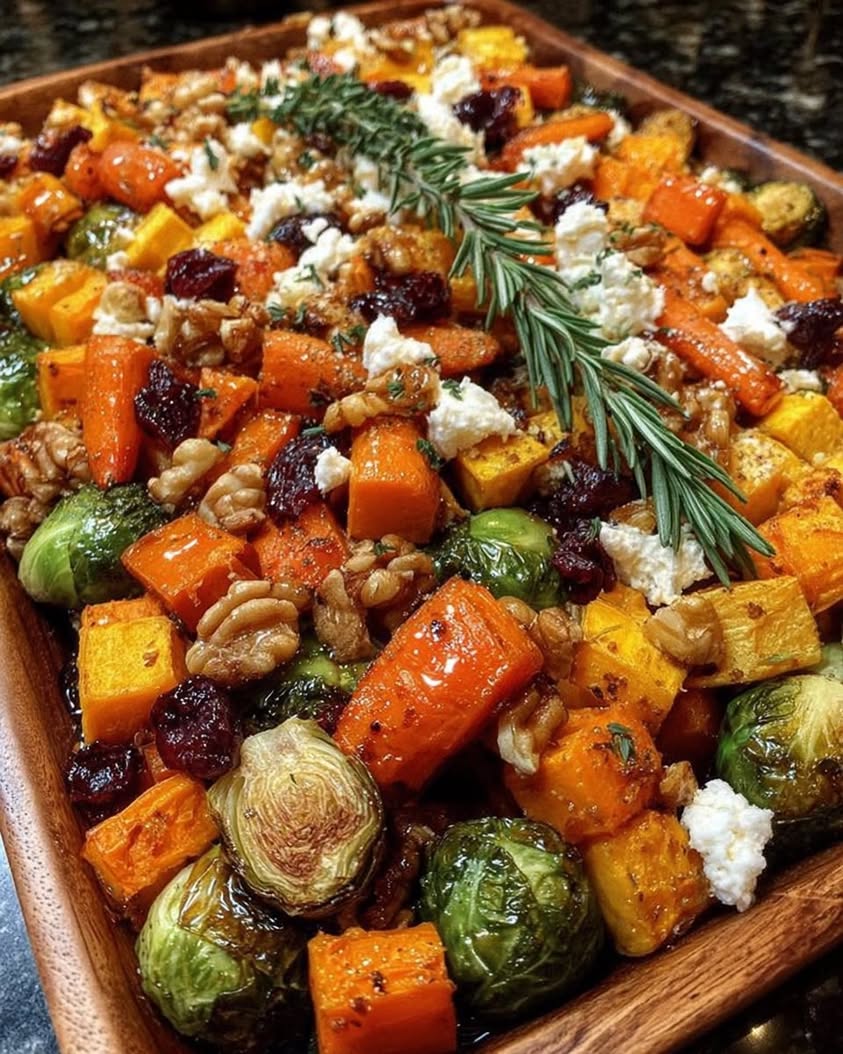
Roasted Harvest Vegetables with Feta, Walnuts & Cranberry Glaze: A Festive Fall Feast
Imagine a dish that captures the very essence of autumn on a single sheet pan. This recipe for Roasted Harvest Vegetables with Feta, Walnuts & Cranberry Glaze is exactly that. It transforms humble root vegetables and hearty greens into a stunning, caramelized masterpiece. The natural sugars in the butternut squash and sweet potatoes deepen into a rich, almost nutty sweetness. Meanwhile, the carrots become tender and the Brussels sprouts develop irresistible crispy edges.
This dish is a celebration of texture and flavor. You get the creamy softness of the squash, the slight bite of the carrots, and the satisfying crunch of the roasted Brussels sprouts. Then, a simple yet transformative cranberry-honey glaze adds a layer of sweet-tart complexity. Finally, a generous sprinkle of salty, crumbled feta and toasted walnuts provides the perfect finishing touch. Consequently, every forkful is a harmonious blend of sweet, savory, salty, and crunchy.
Ultimately, this recipe is more than just a side dish. It is a vibrant, colorful centerpiece perfect for holiday tables or a cozy weeknight dinner. It requires minimal hands-on effort, letting the oven do most of the work. Moreover, it is naturally gluten-free and packed with nutrients, making it a crowd-pleaser for almost any gathering. Let us dive into how to create this unforgettable roasted vegetable medley.
Quick Recipe Highlights
- Flavor Profile: This dish boasts a beautiful balance. You experience the deep, caramelized sweetness of roasted root vegetables first. Then, the tangy-sweet cranberry glaze and salty feta cut through the richness. Finally, the earthy walnuts add a final note of depth and crunch.
- Texture: The texture journey is exceptional. Expect creamy-soft butternut squash and sweet potato contrasting with tender-yet-firm carrots. The Brussels sprouts offer a delightful crispy exterior. Additionally, the crunchy walnuts and creamy feta crumbles create a perfect finish.
- Aroma: As the vegetables roast, your kitchen will fill with an irresistible, warm fragrance. Notes of caramelizing sugar, earthy herbs like thyme, and the subtle nuttiness of roasting vegetables blend together. It is the quintessential smell of a fall feast.
- Visual Appeal: This dish is a feast for the eyes. The vibrant orange squash, deep purple sweet potato, green Brussels sprouts, and bright carrots create a stunning color palette. The white feta and golden walnuts scattered on top make it look professionally plated.
- Skill Level Needed: This is a beginner-friendly recipe. The primary skill is uniform vegetable chopping for even cooking. Otherwise, the process involves simple tossing, roasting, and whisking a glaze. Anyone can achieve fantastic results.
- Special Equipment: A large, rimmed baking sheet is essential for proper roasting without steaming. Parchment paper is highly recommended for easy cleanup. You will also need a good chef’s knife, a mixing bowl, and a small saucepan for the glaze.
Recipe Overview
- Difficulty Level: We rate this recipe as “Easy” for several reasons. The techniques are fundamental: chopping, tossing, and roasting. There is no fussy timing or complex sauces. Furthermore, the oven does the heavy lifting, allowing you to prepare other components of your meal. It is forgiving and adaptable to different ovens.
- Category: This versatile dish fits multiple categories. It shines as a spectacular vegetarian main course for lunch or dinner. Alternatively, it serves as a hearty and impressive side dish alongside roast turkey, chicken, or ham. It is also perfect for potlucks and holiday buffets.
- Cuisine: This recipe draws inspiration from modern American and Mediterranean cuisines. The use of honey, walnuts, and feta cheese is classic to the Eastern Mediterranean. However, the combination with New World vegetables like sweet potatoes and squash creates a contemporary fusion profile loved globally.
- Cost: This is a cost-effective dish, especially in the fall and winter when these vegetables are in season. Butternut squash, carrots, and sweet potatoes are typically inexpensive. Feta, walnuts, and fresh cranberries are the pricier components, but a little goes a long way. Overall, it delivers restaurant-quality presentation on a budget.
- Season: This recipe is ideal for autumn and winter. These are the peak seasons for squash, sweet potatoes, and Brussels sprouts, ensuring the best flavor and price. The warm, hearty nature of the dish is perfect for cooler weather. However, you can adapt it year-round with seasonal substitutes.
- Occasion: It is perfect for Thanksgiving, Christmas, or Friendsgiving as a standout side. It also works for casual weeknight dinners, meal prep lunches, or elegant dinner parties. Essentially, it elevates any meal from ordinary to special with minimal effort.
Why You’ll Love This Roasted Harvest Vegetables Recipe
First and foremost, the taste and texture are utterly captivating. Each vegetable roasts to its own perfect state, creating a symphony in your mouth. The caramelization process unlocks deep, complex flavors that simple boiling can never achieve. You get sweetness, savoriness, and a hint of bitterness from the Brussels sprouts, all balanced masterfully. The added toppings are not just garnishes; they are essential flavor components that tie everything together beautifully.
From a convenience standpoint, this recipe is a dream. It utilizes the beloved sheet pan method, meaning minimal cleanup. You simply chop, toss, and roast. Meanwhile, you can prepare the simple glaze or other parts of your meal. This makes it an ideal recipe for busy hosts or families. Furthermore, the ingredients are easy to find at any grocery store, especially during the fall months.
Nutritionally, this dish is a powerhouse. It is packed with vitamins A and C from the orange vegetables and Brussels sprouts. You also get a good dose of fiber, which aids digestion and promotes fullness. The walnuts add healthy fats and omega-3s, while the feta provides protein and calcium. Therefore, you are serving a meal that is as nourishing as it is delicious.
For entertaining, this roasted vegetable medley is a guaranteed hit. Its vibrant colors make it the centerpiece of any table. It caters to various dietary needs, being naturally gluten-free and vegetarian. Guests will be impressed by the beautiful presentation and complex flavors. They will never guess how straightforward it was to prepare, allowing you to enjoy your own party.
Finally, it is incredibly cost-effective. Root vegetables are some of the most affordable produce items. You can feed a crowd without straining your budget. The recipe is also scalable; you can easily double it for a large gathering using two sheet pans. Consequently, it delivers maximum impact for minimal investment, both in time and money.
Historical Background and Cultural Significance
The practice of roasting vegetables over fire is as old as cooking itself. However, the specific combination in this Roasted Harvest Vegetables recipe is a modern celebration of New World and Old World ingredients. Native American cultures cultivated squash, sweet potatoes, and cranberries for centuries. European settlers later introduced carrots and Brussels sprouts. This dish represents a fusion of these agricultural histories on one pan.
In cultural terms, it embodies the spirit of the American harvest festival and Thanksgiving. The medley of autumnal produce symbolizes abundance and gratitude. The addition of feta and walnuts nods to Mediterranean and Middle Eastern traditions, where roasted vegetables with cheese and nuts are staple meze or side dishes. This blend reflects today’s global pantry and interconnected food culture.
The recipe has evolved significantly from simple roasted roots. The contemporary twist of a sweet-tart glaze and crunchy-salty toppings marks a shift toward more complex, restaurant-style vegetable preparations. Home cooks now seek to elevate vegetables from a simple side to a starring role. This recipe answers that demand perfectly, using technique and complementary flavors to create depth.
Regional variations of this concept are endless. In the South, you might find pecans instead of walnuts and a bourbon-infused glaze. A Pacific Northwest version could include hazelnuts and a maple reduction. Italian-inspired versions might use rosemary and Parmesan cheese. This adaptability is a testament to the recipe’s solid foundation. It provides a perfect template for local and seasonal improvisation.
Ingredient Deep Dive
Butternut Squash: This winter squash originated in the Americas and has been a staple for millennia. It is incredibly rich in beta-carotene, which the body converts to vitamin A, essential for eye and skin health. When selecting, choose a squash that feels heavy for its size with a firm, matte skin. Store it in a cool, dark place for months. For a substitution, acorn squash or pumpkin works well, though cooking times may vary slightly.
Brussels Sprouts: These miniature cabbages have a long history in Europe, particularly Belgium, hence their name. They are part of the nutrient-dense cruciferous vegetable family, packed with vitamins C and K and antioxidants. Look for firm, bright green sprouts that are similar in size for even cooking. Avoid yellowing leaves. Store them unwashed in your refrigerator’s crisper drawer. Broccoli florets or cauliflower can be used as a substitute, offering a different but delicious result.
Sweet Potato: Often confused with yams, sweet potatoes are another New World treasure. They are an excellent source of fiber, vitamin A, and complex carbohydrates that provide sustained energy. Choose firm potatoes without soft spots. Store them in a cool, dark, well-ventilated place, but not the refrigerator. Garnet yams or even carrots can provide a similar sweetness and color if needed.
Feta Cheese: This brined curd cheese has Protected Designation of Origin status in Greece, though similar styles exist worldwide. It adds a salty, tangy punch and creamy texture. Nutritionally, it provides calcium and protein. For the best flavor, buy a block of feta in brine rather than pre-crumbled. Store it in its brine in the refrigerator. For a dairy-free version, consider a firm, salty vegan cheese or simply omit it and add more nuts and a pinch of sea salt.
Cranberry-Honey Glaze: This simple glaze combines the tart, native American cranberry with honey, one of the world’s oldest sweeteners. Cranberries are famous for their proanthocyanidins, which support urinary tract health. Use fresh or frozen cranberries. Honey not only sweetens but helps create a glossy, sticky sauce. Maple syrup or agave nectar can be used for a vegan version. The glaze can be made ahead and gently reheated before serving.
Common Mistakes to Avoid
- Crowding the Pan: This is the most common error. Overcrowding causes the vegetables to steam instead of roast. They will become soggy and will not caramelize properly. Always use a large enough pan and spread the vegetables in a single layer, even if it requires two pans.
- Uneven Chopping: Cutting vegetables into wildly different sizes leads to uneven cooking. Some pieces will burn while others remain hard. Aim for uniform, bite-sized pieces. Take the extra few minutes during prep for perfect results.
- Skipping the Preheat: Putting vegetables into a cold oven drastically changes the cooking process. A properly preheated oven ensures immediate searing and caramelization. Always allow your oven to fully reach the specified temperature before adding your sheet pan.
- Neglecting to Dry Vegetables: If you wash your vegetables, pat them thoroughly dry with a kitchen towel. Excess water on the surface will create steam, hindering the browning process. Dry vegetables equal crispy, caramelized edges.
- Using the Wrong Oil: Olive oil is great, but its smoke point can be exceeded in a hot oven. For high-heat roasting, avocado oil or refined coconut oil are more stable. Alternatively, use a regular olive oil, not extra virgin, for roasting.
- Not Seasoning Enough: Vegetables need ample seasoning. Do not be shy with salt and pepper. Season the vegetables before roasting and consider a final light seasoning after they come out of the oven. Taste and adjust.
- Forgetting to Stir or Flip: For even browning, give the vegetables a good stir or flip them halfway through the roasting time. This ensures all sides get exposure to the hot pan and oven air, preventing one-sided burning.
- Adding Toppings Too Early: Adding delicate toppings like nuts, cheese, or fresh herbs before roasting will cause them to burn or melt away. Always add these elements after the vegetables are fully cooked and out of the oven.
Essential Techniques
Uniform Chopping: This technique is critical for even cooking. Using a sharp chef’s knife, aim to cut all vegetables into similarly sized pieces, about 1-inch cubes or halves for Brussels sprouts. Consistent size ensures that every piece finishes roasting at the same time. A common pitfall is rushing this step. Take your time for the best texture. Visual success is achieved when all pieces are golden brown and tender when pierced with a fork, with no undercooked or burnt bits.
High-Heat Roasting: Roasting at a high temperature (400°F or above) is what creates caramelization. This Maillard reaction browns the natural sugars in the vegetables, developing complex flavors and aromas. The key is to preheat your oven fully and ensure the vegetables are in a single layer. A common mistake is roasting at too low a temperature, which merely bakes the vegetables without browning. Success is visually confirmed by golden-brown, slightly crispy edges on your vegetables.
Making a Simple Reduction Glaze: A reduction concentrates flavor by simmering a liquid to evaporate water. For the cranberry-honey glaze, you combine ingredients and cook until the cranberries burst and the sauce thickens slightly. The importance is building a layer of sweet-tart flavor without adding moisture to the roasted vegetables. A pitfall is overcooking it into a thick jam; it should be syrupy. Master it by watching for the cranberries to pop and the bubbles to become slightly slower and glossier.
Pro Tips for Perfect Roasted Harvest Vegetables
First, line your sheet pan with parchment paper. This prevents sticking and makes cleanup an absolute breeze. You will thank yourself later.
For extra crispy Brussels sprouts, cut them in half and place them cut-side down on the hot pan. This maximizes surface area contact for superior browning.
Toast the walnuts in a dry skillet for a few minutes before adding them as a topping. This enhances their nutty flavor and adds an extra layer of crunch.
If your vegetables are done but you need to hold them, turn off the oven and leave the door slightly ajar with the pan inside. This keeps them warm without continuing to cook.
Reserve a small amount of feta, walnuts, and fresh herbs to sprinkle on top just before serving. This adds a fresh, cool contrast to the warm vegetables.
Use the convection roast setting on your oven if you have it. The circulating air promotes more even browning and can reduce cooking time slightly.
Do not discard any leftover glaze. It makes a fantastic sweet-tart sauce for roasted chicken, pork chops, or even as a swirl into yogurt.
Variations and Adaptations
For regional variations, consider your local ingredients. In the South, substitute pecans for walnuts and add a splash of bourbon to the glaze. A Northeastern version might use maple syrup instead of honey and add dried apples. On the West Coast, try using pistachios and a sprinkle of pomegranate arils for a different color and crunch.
Seasonal adaptations are simple. In spring, use asparagus, radishes, and new potatoes. For summer, try zucchini, bell peppers, and eggplant. The roasting method and glaze principle remain the same, but the vegetable base changes with what is freshest.
Dietary modifications are straightforward. For a vegan version, omit the feta and use maple syrup in the glaze. A nut-free version simply leaves out the walnuts or substitutes roasted pumpkin seeds (pepitas). For a lower-carb approach, reduce the amount of sweet potato and squash, adding more Brussels sprouts and cauliflower.
Flavor variations can take this dish around the world. For an Italian twist, use rosemary, garlic, and Parmesan cheese. A Moroccan-inspired version could include cumin, coriander, and a drizzle of harissa yogurt instead of the glaze. An Asian fusion might use a miso-sesame glaze and garnish with sesame seeds.
Serving and Presentation Guide
Plating is key for visual impact. Instead of dumping the vegetables into a bowl, arrange them purposefully on a large platter. Group the different vegetable types slightly to show off the variety of colors. Drizzle the glaze artistically over the top rather than mixing it in completely.
Garnishing adds the final touch. Beyond the feta and walnuts, consider fresh herbs like chopped parsley, thyme leaves, or microgreens. A final drizzle of high-quality extra virgin olive oil or balsamic glaze just before serving adds shine and a flavor boost.
For traditional accompaniments, this dish pairs beautifully with roast turkey, baked ham, or a simple roast chicken. It also stands up well to hearty grains like farro or quinoa for a vegetarian meal. A crisp green salad with a vinaigrette provides a refreshing contrast.
Modern serving suggestions include using it as a topping for a grain bowl with a lemony tahini sauce. You can also stuff it into warm pita bread with a dollop of tzatziki. For a festive appetizer, serve small portions in endive leaves or on crostini.
Wine and Beverage Pairing
The sweet, earthy, and salty notes in this dish call for versatile wines. A dry Riesling or Gewürztraminer complements the sweetness and handles the tangy glaze beautifully. Alternatively, a light-bodied Pinot Noir with its red fruit notes and low tannins pairs wonderfully without overpowering the vegetables.
For non-alcoholic alternatives, consider sparkling apple cider for a festive touch. A ginger beer or craft ginger ale provides a spicy kick that cuts through the richness. Iced herbal tea, like mint or hibiscus, offers a refreshing and palate-cleansing option.
If serving with coffee or tea, a medium-roast coffee with nutty notes echoes the walnuts. A cup of spiced chai tea in the evening complements the warm, autumnal spices often associated with the dish, even if not in the recipe itself.
Storage and Shelf Life
Store leftover roasted harvest vegetables in an airtight container in the refrigerator for up to 4 days. Keep the glaze, nuts, and feta separate if possible to maintain the best textures. The vegetables will soften upon storage but remain flavorful.
Reheating is best done in the oven or toaster oven at 350°F until warmed through. This helps re-crisp the edges. Avoid the microwave if you can, as it will make the vegetables soggy. If using the microwave, do so briefly and consider finishing in a hot skillet.
For freezing, it is possible but with caveats. Freeze the plain roasted vegetables (without glaze, cheese, or nuts) on a sheet pan first, then transfer to a freezer bag. They will keep for 2-3 months. Thaw in the refrigerator and reheat in the oven. Note that texture, especially of Brussels sprouts, will be softer after freezing.
Make Ahead Strategies
You can significantly streamline your day-of preparation. Chop all the vegetables 1-2 days in advance. Store them in separate airtight containers or bags in the refrigerator. This is the most time-consuming step, so doing it ahead is a huge win.
The cranberry-honey glaze can be made up to 5 days ahead. Simply prepare it, let it cool, and store it in a jar in the fridge. Gently warm it on the stove or in the microwave before using to make it drizzle-able again.
On the day of serving, simply toss your pre-chopped vegetables with oil and seasoning, then roast. The quality impact of pre-chopping is negligible, especially for root vegetables. The key is to add the fresh toppings like cheese and nuts right before serving.
Scaling Instructions
Halving the recipe is simple for smaller households. Use a standard sheet pan and reduce the roasting time by 5-10 minutes, as the pan will be less crowded. Keep an eye on it for doneness. All other steps remain identical.
Doubling or tripling for a crowd is easy but requires equipment planning. Use two or three sheet pans and rotate them in the oven halfway through cooking—switch racks and turn the pans around for even heat distribution. You may need to add a few extra minutes to the cooking time.
The most important scaling tip is to maintain the single-layer rule. Never pile vegetables on top of each other, even if it means using more pans. Crowding is the enemy of caramelization, regardless of batch size.
Nutritional Deep Dive
This dish is a macro-balanced powerhouse. It provides complex carbohydrates from the squash and sweet potatoes for sustained energy. The olive oil and walnuts contribute healthy monounsaturated and polyunsaturated fats. The feta cheese adds a modest amount of protein and fat. It is a well-rounded vegetarian option.
Micronutrient analysis reveals a wealth of vitamins. Butternut squash and sweet potatoes are exceptionally high in vitamin A (as beta-carotene). Brussels sprouts and sweet potatoes are excellent sources of vitamin C. The vegetables also provide potassium, manganese, and various B vitamins. The nuts and seeds add minerals like magnesium and zinc.
The health benefits are extensive. The high fiber content supports digestive health and promotes satiety. The antioxidants in the colorful vegetables combat oxidative stress. The healthy fats support heart and brain health. It is a nutrient-dense choice that supports overall wellness.
Dietary Adaptations
Gluten-Free: This recipe is naturally gluten-free. All ingredients—fresh vegetables, oil, honey, cranberries, nuts, and cheese—are inherently free from gluten. Always check labels on pre-crumbled cheese or dried cranberries if you are highly sensitive, as some may have cross-contamination warnings.
Dairy-Free/Vegan: Omit the feta cheese. For the glaze, substitute maple syrup or agave nectar for the honey. The dish will still be delicious, relying on the roasted vegetables, nuts, and tangy-sweet glaze for flavor. You could add a sprinkle of nutritional yeast for a cheesy flavor if desired.
Low-Carb/Keto: Focus on the Brussels sprouts and reduce or omit the sweet potato and butternut squash. Increase the volume with low-carb vegetables like cauliflower, broccoli, or bell peppers. Use a sugar-free sweetener in the glaze, such as a monk fruit blend, and ensure it is a low-sugar cranberry sauce or omit it.
Nut-Free: Simply omit the walnuts. For added crunch, substitute roasted pumpkin seeds (pepitas) or sunflower seeds. Ensure they are added after roasting to maintain their texture. This adaptation makes the dish safe for schools or parties with nut allergies.
Troubleshooting Guide
Vegetables are Soggy: This is almost always due to overcrowding the pan. The vegetables release steam and cannot brown. For a solution, spread them out more next time. For now, you can try broiling them for a few minutes to crisp up the tops, watching carefully to avoid burning.
Vegetables are Burning on Bottom: Your oven rack may be too low, or your pan may be too thin. Use a heavy, rimmed baking sheet and position the rack in the center of the oven. Lining the pan with parchment paper also provides a slight buffer against direct metal heat.
Glaze is Too Thick/Jammy: You reduced it too long. Simply stir in a tablespoon or two of warm water, orange juice, or even a splash of vinegar to thin it back to a drizzling consistency. Reheat gently if needed.
Glaze is Too Thin: Continue simmering it over medium heat until it reduces further. Remember, it will also thicken slightly as it cools. Aim for a syrup that coats the back of a spoon.
Recipe Success Stories
Community feedback on this Roasted Harvest Vegetables recipe has been overwhelmingly positive. Many readers report it becoming their new go-to holiday side, often stealing the show from the main protein. Several have mentioned that even vegetable-skeptical family members asked for seconds, particularly praising the crispy Brussels sprouts and sweet glaze.
Variation successes are fun to hear. One reader used delicata squash (which does not need peeling) and added a pinch of smoked paprika. Another made it vegan for Thanksgiving and said the maple glaze version was a hit. A common adaptation is adding diced red onion or whole garlic cloves to the roasting pan for extra flavor.
Reader suggestions have included making extra glaze to serve on the side and adding a sprinkle of orange zest over the finished dish for a bright aroma. Photography tips from home cooks emphasize natural light and transferring the vegetables to a beautiful, rustic platter for serving shots, rather than photographing them on the sheet pan.
Frequently Asked Questions
Can I use frozen vegetables? We do not recommend it for this recipe. Frozen vegetables release too much water when roasting, leading to a steamed, soggy result instead of caramelized, crispy edges. Fresh vegetables are essential for the intended texture and flavor.
Can I make this ahead of time? You can prep the vegetables and make the glaze 1-2 days ahead. However, for the best texture, roast the vegetables on the day you plan to serve them. You can roast them a few hours early and re-crisp in a warm oven before adding toppings.
What can I use instead of feta? Goat cheese (chèvre) crumbles are an excellent substitute. For a firmer, saltier option, try ricotta salata or cotija cheese. For a milder flavor, fresh mozzarella pearls added after roasting work well too.
Is there a substitute for honey in the glaze? Absolutely. Pure maple syrup is the best one-to-one substitute and keeps the glaze vegan. Agave nectar also works well. The flavor will be slightly different but still delicious.
My sweet potato is cooking faster than the squash. Why? This can happen if the pieces are cut smaller. Aim for uniform size. If it occurs, you can remove the done pieces to a bowl and return the rest to the oven to finish cooking.
Can I add other vegetables? Certainly. Parsnips, turnips, red onion wedges, or cauliflower florets would all be wonderful additions. Just ensure they are cut to a similar size and consider their cooking times; harder root vegetables may need to go in a few minutes earlier.
How do I prevent the walnuts from getting soggy? Add them right before serving. If you have leftovers, store the walnuts separately in a bag or container and add them fresh when you reheat and serve the leftovers.
Can I use dried cranberries instead of fresh for the glaze? For the glaze, you need fresh or frozen cranberries to create the sauce. You could use dried cranberries as a garnish on top after roasting, but they will not melt down into a proper glaze.
What herb works best with this? Fresh thyme is classic with roasted fall vegetables. Rosemary is also excellent, but use it sparingly as it is potent. Fresh parsley or sage added as a garnish at the end adds a nice touch.
Is this dish served hot or room temperature? It is best served warm from the oven. The flavors are most vibrant and the textures are at their peak (crispy, creamy) when warm. It is still tasty at room temperature, making it good for buffets.
Additional Resources
For related recipes, explore other sheet pan dinners like lemon-herb roasted chicken with vegetables or a Mediterranean salmon bake. If you love the sweet-savory combination, a recipe for pork tenderloin with a similar cranberry glaze would be a perfect next project.
To master the techniques, look for guides on knife skills for uniform chopping or the science of the Maillard reaction for perfect browning. Understanding your oven’s hot spots can also help you become a more consistent cook.
For seasonal variations, bookmark guides to what vegetables are in peak season each month. This allows you to adapt this roasting template year-round. Investing in a few high-quality sheet pans and a sharp chef’s knife will make this and countless other recipes easier and more enjoyable to prepare.
PrintCaramelized Butternut Squash, Carrots, Brussels Sprouts & Sweet Potato with Feta, Walnuts & Cranberry-Honey Glaze
- Total Time: 45 minutes
- Yield: 4
Description
A vibrant, sweet-and-savory roasted vegetable medley topped with tangy feta, crunchy walnuts, and a glossy cranberry-honey glaze.
Ingredients
- 1 small butternut squash, peeled and cubed
- 2 large carrots, sliced into rounds
- 1 pound Brussels sprouts, trimmed and halved
- 1 large sweet potato, peeled and cubed
- 3 tablespoons olive oil
- 1 teaspoon salt
- 1/2 teaspoon black pepper
- 1/2 teaspoon smoked paprika
- 1/2 cup crumbled feta cheese
- 1/2 cup chopped walnuts
- 1/4 cup dried cranberries
- 2 tablespoons honey
- 2 tablespoons cranberry juice
Instructions
- Preheat oven to 400°F (200°C). Line a large baking sheet with parchment paper.
- In a large bowl, toss butternut squash, carrots, Brussels sprouts, and sweet potato with olive oil, salt, pepper, and smoked paprika until evenly coated.
- Spread vegetables in a single layer on the baking sheet. Roast for 25-30 minutes, stirring halfway, until tender and caramelized.
- While vegetables roast, combine honey and cranberry juice in a small saucepan. Simmer over low heat for 3-4 minutes until slightly thickened to form a glaze.
- Transfer roasted vegetables to a serving dish. Drizzle with cranberry-honey glaze, then top with feta, walnuts, and dried cranberries. Serve warm.
Notes
You can customize the seasonings to taste.
- Prep Time: 15 minutes
- Cook Time: 30 minutes
- Method: Main
- Cuisine: American