Roasted Harvest Vegetables with Feta, Walnuts, and Honey Glaze: A Perfect Fall Side Dish
Imagine a dish that captures the very essence of autumn on a single sheet pan. This recipe for Roasted Harvest Vegetables with Feta, Walnuts, and Honey Glaze does exactly that. It transforms humble root vegetables and broccoli into a stunning, caramelized masterpiece. The natural sugars in the butternut squash, carrots, and sweet potato deepen and concentrate in the oven’s heat. Consequently, they create a foundation of profound sweetness that perfectly balances the savory, salty, and tangy toppings.
The final flourish of this dish is nothing short of magical. A quick, warm glaze of honey and cranberry jam gets drizzled over the hot, roasted vegetables. Immediately, it mingles with the olive oil and vegetable juices to form a glossy, flavorful coating. Then, you scatter over creamy, crumbled feta cheese and toasted walnuts for crunch. The result is a symphony of textures and flavors that is both rustic and elegant. Ultimately, this recipe proves that a side dish can easily become the star of any holiday table or weeknight dinner.
Furthermore, this recipe is incredibly versatile and forgiving. It welcomes seasonal swaps and personal touches. Whether you are cooking for a festive Thanksgiving crowd or simply want to elevate your Tuesday night meal, this dish delivers. The process is straightforward, and the payoff is immense. You will fill your kitchen with an irresistible aroma that promises a meal as nourishing as it is delicious.
Quick Recipe Highlights
- Flavor Profile: This dish offers a beautiful harmony of sweet, savory, salty, and tangy notes. The caramelized vegetables provide a deep, earthy sweetness. Meanwhile, the salty feta and rich walnuts create a savory balance. Finally, the honey-cranberry glaze adds a bright, fruity tang that ties everything together.
- Texture: You get a wonderful contrast in every bite. The roasted vegetables become tender and creamy inside with delightfully crisp, caramelized edges. The toasted walnuts add a crucial crunchy element. Additionally, the crumbled feta offers a soft, creamy contrast that melts slightly on the warm veggies.
- Aroma: As the vegetables roast, your kitchen will fill with the warm, sweet scent of caramelizing squash and sweet potato. Hints of rosemary and garlic from the roasting oil add a savory depth. Finally, the warm honey glaze releases a final note of fruity sweetness when it hits the hot pan.
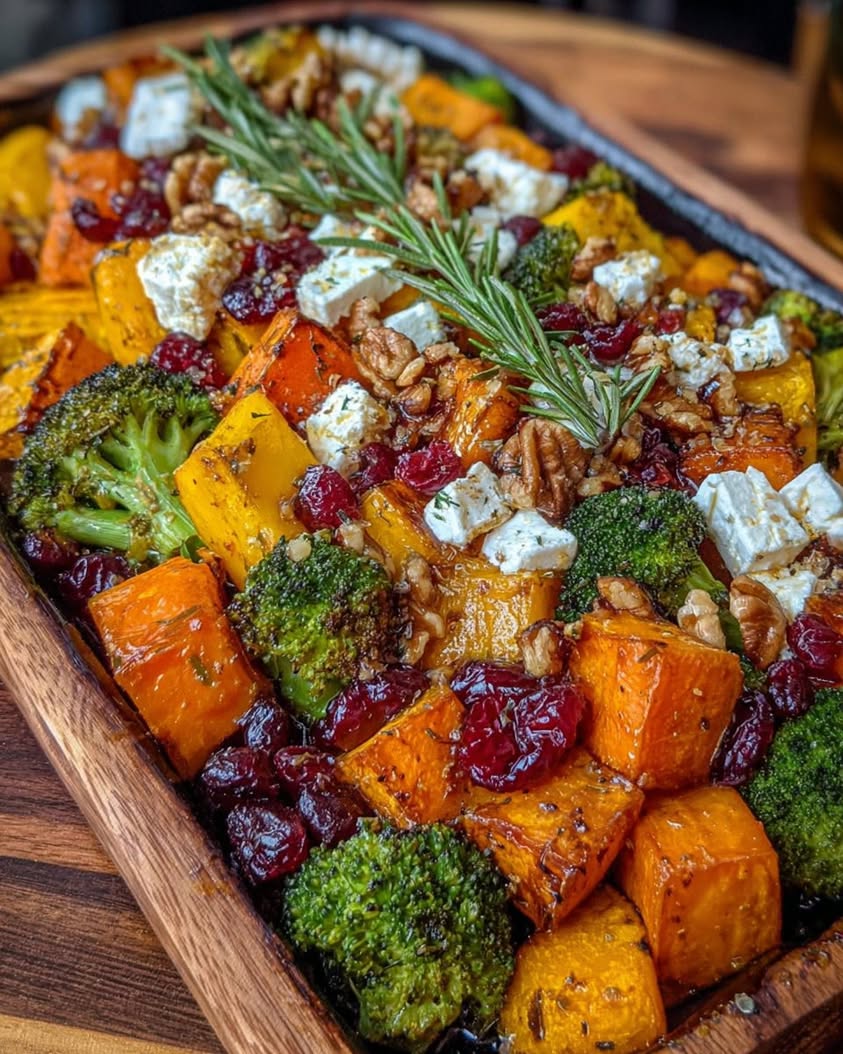
- Visual Appeal: This dish is a feast for the eyes with its vibrant autumn color palette. You see deep orange from the squash, bright orange from the carrots, green from the broccoli, and white from the sweet potato. The red glaze, white feta, and brown walnuts create a stunning, confetti-like finish that is perfect for holiday plating.
- Skill Level Needed: This is a beginner-friendly recipe that requires only basic kitchen skills. You need to be comfortable with simple knife work for chopping vegetables. Additionally, understanding how to toss ingredients on a sheet pan and use your oven’s roasting function is key. There are no complicated techniques, making it accessible for cooks of all levels.
- Special Equipment: A large, rimmed baking sheet is the only essential tool. Using parchment paper or a silicone baking mat is highly recommended for easy cleanup and to prevent sticking. You will also need a small saucepan or microwave-safe bowl for making the simple glaze. Otherwise, standard kitchen utensils like a good chef’s knife, cutting board, and mixing bowls are all you need.
Recipe Overview
- Difficulty Level: We rate this recipe as “Easy” for several important reasons. First, the preparation involves straightforward chopping and tossing—no intricate knife skills are required. Second, the cooking method is passive roasting; once the vegetables are in the oven, they require only an occasional stir. Finally, the assembly is simply layering toppings, which eliminates any stress about precise timing or technique during service.
- Category: This dish fits beautifully into multiple meal categories. Primarily, it serves as an exceptional side dish for holiday feasts like Thanksgiving or Christmas dinner. Alternatively, you can easily bulk it up with a protein like chickpeas or shredded chicken to transform it into a satisfying vegetarian or flexitarian main course. It also works wonderfully as a meal prep component for lunches throughout the week.
- Cuisine: This recipe draws inspiration from modern American and Mediterranean culinary traditions. The use of olive oil, feta cheese, and walnuts is classic to Greek and Eastern Mediterranean cooking. However, the combination with native North American ingredients like sweet potatoes and cranberries, prepared in a simple, oven-roasted style, gives it a contemporary, fusion feel that is very much in line with today’s global pantry.
- Cost: This is a very cost-effective dish, especially when you make it during the fall and winter months when its core ingredients are in peak season and most affordable. Butternut squash, carrots, and sweet potatoes are typically inexpensive staples. Feta cheese, walnuts, and cranberry jam are the “splurge” items, but a little goes a long way. Overall, you can feed a crowd for a fraction of the cost of a meat-centric main dish.
- Season: This recipe is quintessentially autumnal and perfect for the holiday season. The ingredients are at their peak flavor and lowest price from late September through December. The warm, hearty, and sweet-savory profile is ideal for cooler weather. That said, the components are generally available year-round, so you can enjoy this taste of fall anytime you crave it.
- Occasion: It is incredibly versatile for any gathering. It is elegant enough for formal holiday dinners, Thanksgiving, and Christmas celebrations. Simultaneously, it is simple enough for a cozy family Sunday supper or a casual potluck with friends. Its bright colors and stunning presentation also make it a fantastic choice for a festive brunch or buffet table.
Why You’ll Love This Roasted Harvest Vegetables Recipe
First and foremost, the taste and texture experience is truly unforgettable. Each forkful delivers a complex journey. You start with the deep, caramelized sweetness of the roasted root vegetables. Then, you encounter the salty, creamy punch of the feta cheese. Next, the crunchy, toasty walnuts provide a satisfying contrast. Finally, the sweet-tart honey-cranberry glaze wraps it all in a glossy, flavorful embrace. This combination is far more exciting than any plain steamed vegetable side. Consequently, it will have everyone at the table reaching for seconds.
From a convenience standpoint, this recipe is a weeknight and entertaining hero. It utilizes the beloved sheet pan cooking method, which means minimal active cooking time and even easier cleanup. You do most of the work upfront with some simple chopping. After that, the oven does the heavy lifting. This frees you up to prepare the rest of your meal, set the table, or simply relax. Furthermore, the ingredients are easy to find at any standard grocery store, with no obscure or expensive specialty items required.
Nutritionally, this dish is a powerhouse. It is packed with vitamins, minerals, and fiber from its diverse array of colorful vegetables. Butternut squash and sweet potatoes are excellent sources of Vitamin A and antioxidants. Broccoli adds Vitamin C and folate. Carrots contribute beta-carotene. The walnuts provide healthy fats and plant-based protein. Using olive oil as the roasting fat adds heart-healthy monounsaturated fats. Therefore, this is a side dish that nourishes your body as thoroughly as it delights your palate.
For social gatherings and entertaining, this recipe offers immense value. Its stunning visual appeal makes it a centerpiece-worthy addition to any buffet or dinner table. The combination of familiar ingredients presented in an elevated way feels special without being intimidating. It caters beautifully to diverse dietary preferences, as it is naturally vegetarian and can be easily adapted to be vegan or gluten-free. Ultimately, it is a reliable crowd-pleaser that sparks conversation and compliments.
Finally, this recipe is remarkably cost-effective and accessible. Root vegetables are some of the most affordable produce items, especially in season. The recipe stretches a small amount of pricier ingredients like feta and walnuts across a large volume of vegetables. This creates a dish that feels luxurious and abundant without straining your grocery budget. You can easily scale it up to feed a large group or scale it down for a smaller family, making it a practical choice for any household.
Historical Background and Cultural Significance
The practice of roasting vegetables over fire is one of humanity’s oldest cooking methods. However, the specific combination in this Roasted Harvest Vegetables recipe is a modern invention. It reflects a contemporary culinary trend towards “vegetable-forward” eating and global fusion. The technique of roasting to caramelize natural sugars has been used for centuries to preserve and enhance the flavor of fall harvest crops. Historically, root cellars stored squash, potatoes, and carrots through winter, and roasting was a common way to prepare them.
Culturally, this dish is a celebration of the autumnal harvest, a theme central to many traditions, especially Thanksgiving in North America. The inclusion of cranberries directly nods to Native American foodways, as cranberries are one of the few native fruits. Similarly, sweet potatoes have a long history in the Americas. Conversely, ingredients like feta cheese and walnuts anchor the dish in Mediterranean culinary traditions, which have long prized simple preparations that highlight quality ingredients.
The evolution of this recipe follows the broader trend of the “sheet pan supper” that gained massive popularity in home cooking over the last decade. This method appeals to the modern desire for flavorful, healthy meals that require minimal cleanup. The addition of a sweet-and-savory glaze and crunchy toppings transforms basic roasted veggies from a simple side into a composed dish. This evolution mirrors how home cooks today are more adventurous, pulling flavors from different culinary worlds to create something new and personal.
Regional variations of this concept are endless. In the American South, you might find a similar dish with pecans instead of walnuts and a bourbon-infused glaze. A Middle Eastern variation could use sumac and za’atar in the oil and top the vegetables with pomegranate seeds and a tahini drizzle. In Italy, rosemary and garlic would be key, with a finish of aged balsamic vinegar and shaved Parmesan. This recipe’s framework is wonderfully adaptable, allowing cooks to incorporate local ingredients and cultural flavors they love.
Ingredient Deep Dive
Butternut Squash: This winter squash is native to the Americas and is a staple in fall cooking. It is incredibly rich in Vitamin A (in the form of beta-carotene), which supports vision and immune health. It also provides a good amount of Vitamin C, potassium, and fiber. When selecting, choose a squash that feels heavy for its size with a firm, matte skin and no soft spots. Store whole squash in a cool, dark place for months; once cut, wrap tightly and refrigerate for up to five days. For a substitution, try acorn squash or pumpkin.
Sweet Potato: Often confused with yams, sweet potatoes are another New World crop packed with nutrition. They are an excellent source of beta-carotene, Vitamin C, manganese, and fiber. Their natural sweetness intensifies beautifully when roasted. Look for firm potatoes with smooth skin and no bruises. Store them in a cool, dark, well-ventilated place—not the refrigerator, as cold temperatures can alter their texture and flavor. Garnet or jewel varieties are perfect for roasting. As a substitute, you could use regular potatoes, though the flavor profile will be less sweet.
Carrots: Carrots have been cultivated for thousands of years, originally for their aromatic leaves and seeds rather than their roots. They are famously high in beta-carotene and also provide biotin, Vitamin K1, potassium, and antioxidants. Choose firm, smooth carrots with bright color; if they have greens attached, ensure the greens look fresh. Store them in the crisper drawer of your refrigerator in a plastic bag. There is no real substitute for their sweet, earthy flavor, but parsnips would offer a similar texture with a different, spicier taste.
Broccoli: A member of the brassica family, broccoli is known for its potential cancer-fighting compounds like sulforaphane. It is also loaded with Vitamins C and K, folate, and fiber. Select broccoli with tight, dark green florets and firm stalks; avoid any with yellowing or flowering. Refrigerate it in a loose plastic bag. To prepare, simply cut the florets from the stem; you can peel and chop the stem to roast as well—it’s delicious and reduces waste. Broccolini or cauliflower can be used as alternatives.
Feta Cheese: This brined curd cheese has Protected Designation of Origin status in Greece, meaning true Greek feta is made from sheep’s milk or a sheep/goat milk blend. It is a good source of calcium and protein but is also high in sodium. Its tangy, salty flavor and crumbly texture are irreplaceable in this dish. Look for feta packed in brine for the best flavor and texture. For a dairy-free version, use a firm, salty vegan “feta” or omit it. If substituting, ricotta salata or cotija cheese could work in a pinch.
Walnuts: Walnuts are among the oldest tree foods, cultivated for thousands of years. They are uniquely high in alpha-linolenic acid, a plant-based omega-3 fatty acid. They also provide antioxidants and minerals like copper and manganese. Always taste a walnut before using a large quantity to ensure it is not rancid. Store walnuts in an airtight container in the refrigerator or freezer to preserve their oils. For a substitution, pecans or toasted almonds would be excellent, though they will impart a different flavor.
Cranberry Sauce & Honey Glaze: The glaze is a modern shortcut that delivers big flavor. Cranberries, native to North America, are packed with Vitamin C and unique phytonutrients. Honey has been used as a sweetener and preservative since ancient times and contains trace enzymes and antioxidants. Using whole-berry cranberry sauce adds texture and a burst of tart fruitiness. For a substitution, you could use orange marmalade or a red currant jelly. To make it vegan, use maple syrup or agave nectar instead of honey.
Common Mistakes to Avoid
- Crowding the Pan: This is the number one mistake in roasting. If the vegetables are piled on top of each other, they will steam instead of roast. Consequently, you will miss out on the crucial caramelization and end up with soggy, rather than crisp-tender, veggies. Always use a large enough pan and spread the pieces in a single layer.
- Uneven Chopping: Cutting your vegetables into wildly different sizes guarantees uneven cooking. The smaller pieces will burn before the larger ones are tender. Aim for a uniform, bite-sized dice—about 1-inch pieces work perfectly for the roasting time specified.
- Skipping the Oil Toss: Do not just drizzle oil over the vegetables on the pan. You must toss them thoroughly in a bowl with the oil, salt, and pepper. This ensures every surface is lightly coated, which promotes even browning and seasoning.
- Using a Cold Baking Sheet: For extra crispness, preheat your empty baking sheet in the oven for 5-10 minutes before adding the vegetables. The instant sizzle when the veggies hit the hot pan helps start the caramelization process immediately.
- Not Stirring Halfway: Roasting is not a “set it and forget it” process. You must stir or flip the vegetables about halfway through the cooking time. This exposes new surfaces to the hot pan and oven heat, ensuring all sides get beautifully browned.
- Adding Delicate Toppings Too Early: The feta, walnuts, and glaze should always be added after roasting. If you add feta before roasting, it will melt into a greasy mess. Walnuts will burn. The glaze will scorch. These are finishing elements for flavor and texture contrast.
- Neglecting to Toast the Walnuts Separately: While you can add raw walnuts as a garnish, toasting them separately in a dry skillet for a few minutes deepens their flavor dramatically. It brings out their natural oils and adds a nuttier, more complex taste.
- Overcomplicating the Glaze: The glaze is meant to be simple—just warm the jam and honey together until fluid. Do not boil it vigorously or cook it for a long time, as this can cause the honey to become bitter and the jam to over-reduce and thicken too much.
- Serving at Room Temperature: This dish is at its absolute best when served warm. The feta will be slightly soft, the glaze will be glossy, and the vegetables will be at their peak texture. If it sits too long, the vegetables can become limp and the glaze can congeal.
- Forgetting to Season at the End: Always taste the finished dish before serving. Roasting concentrates flavors, so you may find it needs another small pinch of flaky sea salt or a crack of black pepper to make all the flavors pop.
Essential Techniques
Uniform Chopping (Mise en Place): This French term, meaning “everything in its place,” is the foundation of successful cooking. For roasting, evenly sized pieces are non-negotiable. They ensure that every vegetable cooks at the same rate, preventing some from being undercooked while others burn. To master this, take your time at the cutting board. Use a sharp chef’s knife and aim for consistent 1-inch cubes or florets. A common pitfall is rushing this step. The visual cue for success is a bowl of vegetables where all pieces look like they belong to the same family.
Dry Roasting for Caramelization: The goal of roasting is to drive off moisture and brown the natural sugars. The key is ensuring the vegetables are dry before oiling and that they have plenty of space on the pan. Moisture creates steam, which is the enemy of crispness. Pat your chopped veggies dry with a clean kitchen towel if they seem wet. The technique involves high heat (400-425°F is ideal) and time. You will know it’s working when you hear a sizzle as they hit the hot pan and see deep golden-brown spots developing on the edges.
The Halfway Stir: This simple action is what separates okay roasted vegetables from great ones. About 15-20 minutes into cooking, open the oven and use a spatula to flip and stir the vegetables. This moves the pieces from the center (which is often cooler) to the edges and brings the edges to the center. It exposes all sides to direct heat and pan contact. The pitfall is forgetting to do it, leading to one beautifully caramelized side and one pale, steamed side. Success is evident when you see browning on multiple surfaces of each vegetable piece.
Making a Simple Pan Glaze: A glaze adds a professional, finished touch. The technique involves gently heating a jam or jelly with a liquid (like honey, vinegar, or citrus juice) until it becomes syrupy. The importance is in balancing sweetness with acidity and not overcooking. Warm it just until it’s loose enough to drizzle. A common mistake is boiling it hard, which can cause crystallization or burning. The visual cue is a glossy, fluid consistency that coats the back of a spoon. When you drizzle it over the hot vegetables, it should thin out slightly and shimmer.
Pro Tips for Perfect Roasted Harvest Vegetables
First, for the sweetest flavor, do not peel the sweet potato. The skin becomes deliciously crisp in the oven and adds extra fiber and nutrients. Just be sure to scrub it thoroughly under running water before chopping.
Second, consider roasting your vegetables on parchment paper or a silicone baking mat. This not only prevents sticking for easy flipping but also makes cleanup an absolute breeze—you can just lift the paper and toss it.
Third, if you have time, let the tossed vegetables sit for 10-15 minutes before roasting. This allows the salt to draw out a little moisture, which then evaporates quickly in the oven, leading to better browning.
Fourth, add a teaspoon of smoked paprika or a tablespoon of chopped fresh rosemary to the oil before tossing the vegetables. This infuses the oil and gives the entire dish an extra layer of warm, aromatic flavor.
Fifth, reserve a small handful of the raw, chopped walnuts and feta crumbles. After you’ve plated the dish, sprinkle these fresh toppings on top. This provides an extra layer of texture and a cooler temperature contrast.
Sixth, if your broccoli florets are very large, consider adding them to the sheet pan during the last 10-12 minutes of roasting. This prevents them from becoming overcooked and mushy while ensuring they still get nicely caramelized.
Seventh, for a more savory depth, add a tablespoon of balsamic vinegar to the cranberry-honey glaze as it warms. The acidity will balance the sweetness and add a wonderful complexity.
Eighth, always let the roasted vegetables rest for 5 minutes on the pan after taking them out of the oven before adding the glaze and toppings. This allows them to firm up slightly so they don’t get crushed when tossed.
Variations and Adaptations
For regional variations, the possibilities are vast. Give the dish a Moroccan twist by tossing the vegetables with olive oil, cumin, coriander, and cinnamon before roasting. Then, top with toasted almonds, chopped dates, and a drizzle of yogurt instead of the feta and glaze. For an Italian-inspired version, use garlic-infused oil, fresh rosemary, and finish with a balsamic reduction, shaved Parmesan, and pine nuts. A Southern U.S. take could involve a pecan topping and a glaze made with bourbon and peach preserves.
Seasonal adaptations keep this recipe exciting year-round. In spring, swap in asparagus, new potatoes, and radishes. During summer, use zucchini, bell peppers, and cherry tomatoes, but reduce the roasting time slightly. In deep winter, incorporate hardy vegetables like parsnips, turnips, and Brussels sprouts, extending the roasting time by 5-10 minutes as needed. The glaze can also change with the seasons—try apricot jam in summer or a spiced apple butter glaze in fall.
Dietary modifications are straightforward. For a vegan version, omit the feta or use a plant-based alternative and replace the honey with maple syrup or agave nectar. To make it gluten-free, simply ensure your cranberry sauce is a certified gluten-free brand—most are naturally gluten-free anyway. For a nut-free dish, substitute the walnuts with roasted pumpkin seeds (pepitas) or sunflower seeds for a similar crunch.
Flavor variations can come from the seasoning oil. Infuse your olive oil with whole garlic cloves and fresh herbs like thyme or sage before tossing the vegetables. Add a spoonful of harissa paste or gochujang to the oil for a spicy kick. Alternatively, use a flavored finishing oil, like truffle oil or lemon-infused olive oil, tossed with the vegetables after they come out of the oven for a bright, fresh note.
Texture modifications can cater to different preferences. If you love extra crunch, add a second crunchy element like crispy fried onions or shallots on top. For a creamier finish, dollop with a lemony Greek yogurt or tzatziki sauce alongside the feta. If you prefer softer vegetables, cover the sheet pan with foil for the first half of the roasting time to steam them slightly, then uncover to brown.
Presentation alternatives can elevate the dish for special occasions. Instead of tossing everything on the pan, arrange the different roasted vegetables in distinct, colorful sections on a large platter. Drizzle the glaze in artistic stripes, then sprinkle the feta and walnuts in neat piles. Serve individual portions in shallow bowls or on small plates for a more refined, restaurant-style presentation.
Serving and Presentation Guide
Plating techniques matter for visual impact. For a family-style presentation, transfer the warm roasted vegetables to a large, shallow serving bowl or a rustic wooden board. This creates a casual, inviting centerpiece. For individual plates, use a ring mold or a small bowl to create a neat, vertical stack of vegetables in the center of each plate. Carefully remove the mold and drizzle the glaze around the perimeter for a chef-inspired look.
Garnishing adds the final touch of freshness and color. Beyond the walnuts and feta, consider adding a sprinkle of bright green fresh herbs. Chopped parsley, chives, or dill provide a vibrant contrast to the warm autumn colors. A few whole cranberries or pomegranate arils scattered over the top add pops of red and a burst of tart juice. For a luxurious touch, a few microgreens or edible flowers make it truly special.
Traditional accompaniments for this dish are classic holiday fare. It pairs beautifully with roast turkey, baked ham, or a standing rib roast. For a vegetarian feast, serve it alongside a savory bread pudding, lentil loaf, or stuffed mushrooms. It also complements other side dishes like creamy mashed potatoes, green bean casserole, or a simple green salad with a vinaigrette to cut the richness.
Modern serving suggestions are more flexible. Consider serving it warm over a bed of quinoa, farro, or couscous to make it a hearty grain bowl. Top it with a fried or poached egg for a spectacular brunch. Alternatively, let it cool to room temperature and toss it with mixed greens and a light vinaigrette for a robust fall salad. It can even be stuffed into a warm pita or wrap with a smear of hummus.
Temperature considerations are key. This dish is best served warm, not piping hot. The sweet spot is about 5-10 minutes after it comes out of the oven, once the feta has had a chance to soften but not melt completely and the glaze has set slightly. If you must make it ahead, reheat it gently in a 300°F oven until just warmed through to avoid overcooking the vegetables.
Portion control tips help with meal planning. As a substantial side dish, plan for about 1 to 1.5 cups per person. If serving it as a vegetarian main course, aim for 2 to 2.5 cups per serving, perhaps with the addition of a protein like chickpeas or grilled tofu. Remember that the walnuts and feta add richness, so a little goes a long way in terms of satisfaction.
Wine and Beverage Pairing
Wine pairings for this dish should balance its sweet, savory, and tangy profile. A crisp, unoaked white wine like a Sauvignon Blanc or Pinot Grigio works wonderfully. Their high acidity cuts through the richness of the roasted vegetables and feta. Alternatively, a light-bodied red with low tannins, such as a Pinot Noir or Beaujolais, complements the earthy sweetness without overpowering it. For a more adventurous pairing, try an off-dry Riesling; its touch of sweetness will mirror the honey glaze and contrast the salty feta beautifully.
Non-alcoholic alternatives can be just as sophisticated. A sparkling apple cider provides festive bubbles and autumnal flavor. For a more complex option, try a ginger beer with a squeeze of lime—the spice and acidity are fantastic with the dish. A tart cranberry spritzer made with club soda and a splash of 100% cranberry juice echoes the glaze’s flavor. Herbal iced tea, like a mint or hibiscus blend, is also a refreshing and palate-cleansing choice.
While not a classic coffee dish, certain warm beverages could pair nicely if served as part of a brunch or late autumn lunch. A medium-roast coffee with notes of nut or caramel would complement the walnuts and roasted flavors. A chai tea latte, with its warm spices of cinnamon and cardamom, would harmonize with the sweet, spiced notes of the vegetables and glaze. Avoid overly bitter or dark roasts, as they might clash with the dish’s sweetness.
Temperature considerations for beverages are straightforward. White wines and non-alcoholic spritzers should be served well-chilled, around 45-50°F. Light reds like Pinot Noir are best served slightly cooler than room temperature, about 55°F. This ensures they refresh the palate rather than add warmth. For non-alcoholic hot drinks, serve them hot but not scalding to avoid numbing the taste buds for the food.
Serving suggestions enhance the experience. Always offer water on the table to cleanse the palate between bites. If serving wine, consider pouring it just before the dish is served so it’s at its ideal temperature. For a crowd, create a signature mocktail or cocktail station where guests can add a splash of their chosen spirit (like bourbon or vodka) to a non-alcoholic base, allowing for customization.
Storage and Shelf Life
Storage methods are crucial for maintaining quality. Allow any leftovers to cool completely to room temperature before storing—this prevents condensation, which leads to sogginess. Transfer the vegetables (without any additional fresh garnishes) to an airtight container. It is best to store the walnuts and extra feta separately in their own containers to preserve their texture. The glaze can be stored in a small jar or container.
Temperature requirements are standard for cooked vegetables. Store the airtight container in the refrigerator. The ideal temperature is below 40°F. Do not leave the dish at room temperature for more than two hours, as the dairy and moist vegetables can enter the “danger zone” where bacteria multiply rapidly.
Container recommendations focus on preventing moisture loss and odor absorption. Glass containers with tight-sealing lids are ideal. If using plastic, ensure it is BPA-free and designed for food storage. You can also use a bowl tightly covered with plastic wrap, though this is less secure. For the walnuts, a small zip-top bag or a mason jar works perfectly.
Signs of spoilage are usually easy to detect. Visually, look for any mold growth, especially on the feta or in the glaze. Olfactorily, a sour, off, or unpleasant smell indicates fermentation or spoilage. Texturally, if the vegetables become excessively slimy or mushy, they should be discarded. When in doubt, it is always safest to throw it out.
Reheating instructions aim to restore texture without further cooking. The best method is to spread the vegetables in a single layer on a baking sheet and warm them in a 350°F oven for 10-15 minutes. This will re-crisp the edges. You can also use an air fryer for 3-5 minutes at 375°F. Avoid the microwave if possible, as it will steam the vegetables and make them soft. If you must microwave, do so in short bursts and stir between each.
Freezing guidelines come with a caveat. You can freeze the roasted vegetable base (without feta, walnuts, or glaze) for up to 3 months. However, be aware that the texture will become much softer upon thawing and reheating, as the cell structures break down. To freeze, spread the cooled vegetables on a parchment-lined tray until solid (flash freeze), then transfer to a freezer bag. Thaw overnight in the refrigerator before reheating in the oven.
Make Ahead Strategies
A prep timeline can turn this into a stress-free entertaining dish. Two days ahead, chop all the vegetables (except broccoli). Store them in separate airtight containers or zip-top bags in the refrigerator. The broccoli can be chopped 1 day ahead. Also, toast the walnuts and make the glaze up to 3 days ahead; store the glaze in the fridge and gently reheat it before using. The day of, simply toss the pre-chopped veggies with oil and roast.
Storage between steps is simple with proper planning. Pre-chopped root vegetables will keep perfectly for 2 days in the fridge. If they release a little liquid, pat them dry with paper towels before tossing with oil. The cranberry-honey glaze can be stored in a jar in the refrigerator. To reheat, simply place the jar in a bowl of warm water or microwave in 10-second intervals until fluid again.
Quality impact assessment is important. Pre-chopping vegetables has minimal impact, especially for dense root vegetables. Making the glaze ahead actually improves it, as the flavors have time to meld. The only elements that must be done day-of are the actual roasting and the final assembly with feta and walnuts. This ensures the vegetables are hot and crisp and the toppings retain their intended textures.
Assembly tips for make-ahead involve a two-stage process. Roast the vegetables completely and let them cool. Store them as directed. When ready to serve, re-crisp the vegetables in a hot oven (400°F) for 8-10 minutes. While they are reheating, gently warm the glaze. As soon as the veggies come out, drizzle with glaze and immediately add the cold feta and room-temperature toasted walnuts. This method keeps everything at its ideal texture.
Reheating guidelines for pre-roasted vegetables are key. Always reheat in a dry, hot oven or air fryer to restore crispness. Avoid adding the glaze before reheating, as the sugars can burn. Stir the vegetables once during reheating to ensure even warming. The goal is to heat them through and wake up the caramelized edges, not to cook them further.
Fresh element additions are the final touch. Even if you’ve made everything else ahead, add the feta straight from the refrigerator so it stays crumbly. Add the walnuts at the very last second to maintain their crunch. If using fresh herbs, chop and add them just before serving. This layering of make-ahead and fresh components gives you the convenience of preparation with the vibrancy of a just-made dish.
Scaling Instructions
Halving the recipe is perfect for small households. Simply divide all ingredient quantities by two. Use a standard quarter sheet pan or a smaller baking dish to maintain the proper single-layer spacing. The roasting time may decrease by 5-8 minutes, so start checking for doneness at the 25-minute mark. All other techniques remain the same. This is a great way to enjoy the dish without excessive leftovers.
Doubling or tripling the recipe for a crowd requires some adjustments. Do not simply pile twice the vegetables on one pan—this will lead to steaming. Instead, use two or three large sheet pans and rotate them between oven racks halfway through cooking. You may need to extend the total roasting time by 5-10 minutes to account for the increased volume. Mix the oil and seasonings in a very Print
Caramelized Butternut Squash, Carrots, Broccoli & Sweet Potato with Feta, Walnuts & Cranberry-Honey Glaze
- Total Time: 45 minutes
- Yield: 4
Description
A vibrant, sweet-and-savory roasted vegetable medley topped with tangy feta, crunchy walnuts, and a glossy cranberry-honey glaze.
Ingredients
- 1 small butternut squash, peeled and cubed
- 2 large carrots, sliced into rounds
- 1 head of broccoli, cut into florets
- 1 large sweet potato, peeled and cubed
- 3 tablespoons olive oil
- 1 teaspoon smoked paprika
- 1/2 teaspoon garlic powder
- Salt and black pepper to taste
- 1/2 cup crumbled feta cheese
- 1/3 cup chopped walnuts
- 1/4 cup dried cranberries
- 2 tablespoons honey
- 1 tablespoon balsamic vinegar
Instructions
- Preheat oven to 400°F (200°C). Line a large baking sheet with parchment paper.
- In a large bowl, toss butternut squash, carrots, broccoli, and sweet potato with olive oil, smoked paprika, garlic powder, salt, and pepper until evenly coated.
- Spread vegetables in a single layer on the baking sheet. Roast for 25-30 minutes, stirring halfway, until tender and caramelized at the edges.
- While vegetables roast, combine honey and balsamic vinegar in a small saucepan. Heat over low until warm and slightly thickened, about 3-4 minutes. Stir in dried cranberries and set aside.
- Transfer roasted vegetables to a serving platter. Drizzle with cranberry-honey glaze, then top with crumbled feta and chopped walnuts. Serve warm.
Notes
You can customize the seasonings to taste.
- Prep Time: 15 minutes
- Cook Time: 30 minutes
- Method: Main
- Cuisine: American