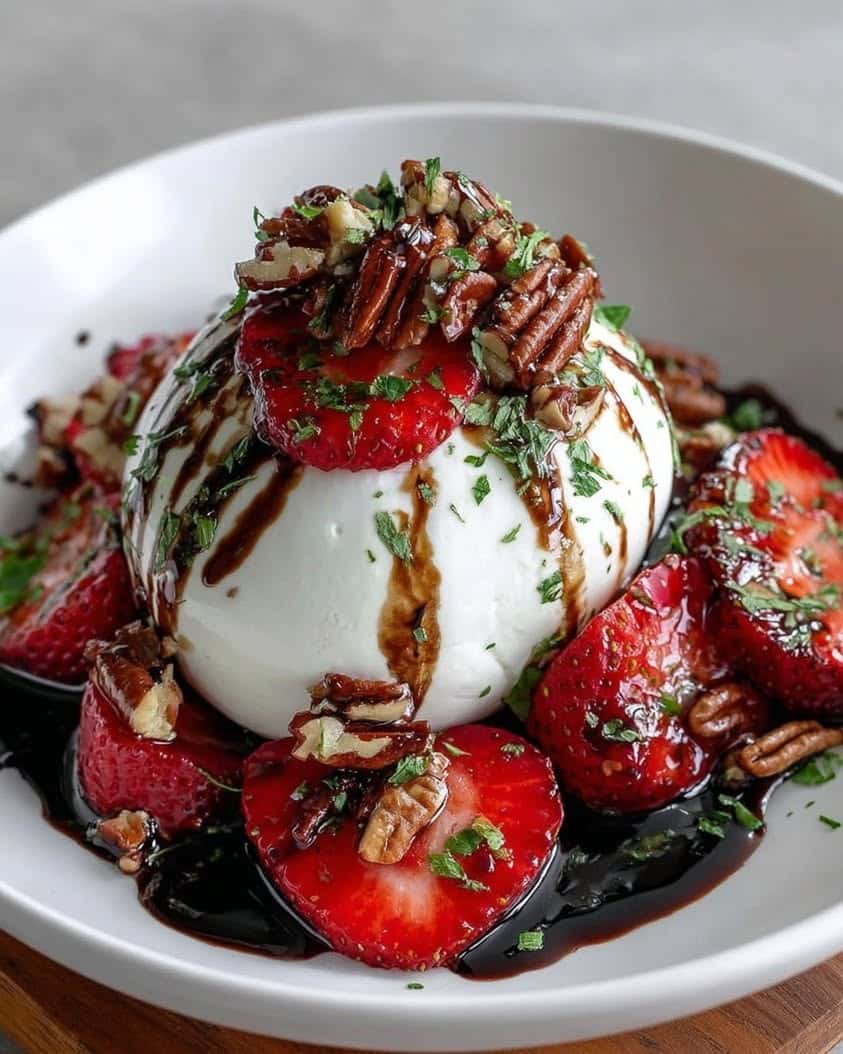
Burnt Orange Bliss: Burrata with Strawberry Balsamic & Pecans
Imagine a dish that feels like a celebration on a plate. This Burnt Orange Bliss: Burrata with Strawberry Balsamic & Pecans is exactly that. It is a stunning appetizer that masterfully balances creamy, tangy, sweet, and crunchy elements. Consequently, it transforms simple, high-quality ingredients into a show-stopping centerpiece for any table. The visual appeal is undeniable, featuring a beautiful contrast of colors and textures. Ultimately, this recipe proves that the most impressive dishes are often the simplest to prepare.
The magic of this Burrata with Strawberry Balsamic & Pecans lies in its harmonious flavor profile. You begin with the luxurious, creamy interior of fresh burrata cheese. Then, you add a vibrant, sweet-tart strawberry balsamic compote. Finally, you finish it with a sprinkle of buttery, crushed pecans for a delightful crunch. Each component complements the others perfectly. Therefore, every bite delivers a complex and satisfying experience. This dish is perfect for entertaining, yet simple enough for a special weeknight treat.
Furthermore, this recipe is incredibly versatile. You can serve it as an elegant appetizer, a light lunch with a side of crusty bread, or even a unique dessert course. The process is straightforward and requires no advanced culinary skills. As a result, even novice cooks can achieve restaurant-quality results. The key is sourcing the best ingredients you can find. Fresh, ripe strawberries and a high-quality burrata ball make all the difference. This Burnt Orange Bliss is sure to become a new favorite in your recipe repertoire.
Quick Recipe Highlights
- Flavor Profile: This dish offers a sophisticated balance of sweet and tangy from the strawberry balsamic reduction, perfectly contrasted by the rich, milky creaminess of the burrata. The pecans add a final note of warm, toasty nuttiness that ties everything together beautifully.
- Texture: Experience a luxurious textural journey from the moment you cut into the pillowy burrata. The creamy stracciatella gives way to the jammy fruit compote, all finished with the satisfying, crunchy bite of crushed pecans for a perfect mouthfeel.
- Aroma: The aroma is an irresistible invitation. First, you smell the sweet, caramelized notes of the reducing balsamic and strawberries. Then, the fragrant, toasted nuts come through, followed by the fresh, milky scent of the cheese as you serve it.
- Visual Appeal: This plate is a masterpiece of color and composition. The stark white of the burrata creates a stunning canvas for the deep, jewel-toned strawberry sauce and the rustic brown pecans, making it incredibly photogenic and impressive.
- Skill Level Needed: This is a beginner-friendly recipe that looks professionally crafted. The techniques involve simple simmering and basic assembly, meaning anyone can create this stunning dish with confidence and fantastic results.
- Special Equipment: You only need basic kitchen tools: a small saucepan for the compote, a cutting board, a knife, and a serving platter. A mortar and pestle or a sealed bag with a rolling pin makes crushing the pecans easy.
Recipe Overview
- Difficulty Level: We rate this recipe as “Easy” because it involves fundamental techniques like simmering a compote and simple assembly. There is no complex knife work or precise baking required. The steps are sequential and forgiving. Therefore, it is an excellent choice for cooks of all levels seeking an impressive result.
- Category: This dish falls perfectly into the appetizer or starter category. It also works wonderfully as a light lunch or a cheese course. Its elegant presentation makes it ideal for parties, while its simplicity suits a cozy dinner for two. You can easily adapt it for different meal occasions.
- Cuisine: While burrata hails from Southern Italy, this preparation is a modern, fusion-style creation. It combines Italian cheesemaking artistry with a sweet-and-savory topping popular in contemporary American cuisine. The result is a globally-inspired dish that celebrates quality ingredients without strict tradition.
- Cost: The cost is moderate and depends largely on the burrata. Fresh burrata can be a splurge item, but strawberries and pecans are generally affordable, especially in season. Overall, you create a restaurant-quality dish for a fraction of the price you would pay dining out.
- Season: This recipe shines brightest in late spring and early summer when strawberries are at their peak of sweetness and flavor. However, you can make it year-round using good-quality frozen strawberries. It brings a taste of sunshine to any table, regardless of the season.
- Occasion: It is perfect for romantic dinners, bridal or baby showers, holiday gatherings, or as a special weekend treat. Its elegant appearance makes it suitable for formal events, while its deliciousness ensures it is always a hit at casual potlucks or picnics.
Why You’ll Love This Recipe
First and foremost, the taste and texture appeal is immediate and profound. The Burnt Orange Bliss: Burrata with Strawberry Balsamic & Pecans delivers an unforgettable symphony in your mouth. You experience the cool, rich burst of creamy cheese, followed by the warm, sweet-tart jam, and finally the crunchy, salty nut. Each element is distinct yet perfectly harmonious. This combination is both comforting and exciting. It is a dish that will have everyone asking for the recipe after just one bite.
Additionally, the convenience and preparation benefits are significant. You can create this stunning appetizer in about twenty minutes with minimal active cooking time. The strawberry balsamic compote can be made ahead of time. Consequently, last-minute assembly is a breeze. You simply place the burrata, spoon over the compote, and sprinkle with nuts. This makes it an ideal stress-free option for entertaining when you want to spend time with guests, not in the kitchen.
From a nutritional perspective, this dish offers several advantages. Burrata provides a good source of calcium and protein, while strawberries are packed with vitamin C, antioxidants, and fiber. Pecans contribute healthy fats, vitamins, and minerals. When enjoyed in moderation as part of a balanced diet, this recipe is a more wholesome choice than many heavy, processed appetizers. It feels indulgent but is made from real, recognizable ingredients.
Moreover, the social and entertaining value of this Burrata with Strawberry Balsamic & Pecans is incredibly high. It is a true conversation starter. The dramatic presentation encourages sharing and interaction, making it perfect for a communal dining experience. It sets a tone of care and sophistication for your meal. Serving this dish shows your guests that you have put thought and love into their experience, elevating any gathering from ordinary to memorable.
Finally, it is cost-effective and accessible. While burrata can be a premium ingredient, the rest of the components are pantry staples or inexpensive fresh produce. You create a dish that looks and tastes luxurious without a luxurious price tag. Most ingredients are readily available at standard grocery stores. This accessibility means you can enjoy a taste of gourmet cooking any time the craving strikes, making it a fantastic addition to your regular cooking rotation.
Historical Background and Cultural Significance
The origin story of this dish is a modern tale of culinary fusion. Burrata cheese itself has a rich history, originating in the Puglia region of Italy in the early 20th century. Cheesemakers created it as a way to use up the leftover stracciatella (shredded mozzarella curds in cream) by enveloping it in a fresh mozzarella shell. The combination of fresh fruit or mostarda with cheese is a longstanding Italian tradition. However, the specific pairing with a reduced strawberry balsamic glaze is a contemporary innovation from modern chefs seeking to balance richness with bright, sweet acidity.
Regarding cultural importance, burrata represents the Italian philosophy of “cucina povera” or “poor cooking”—transforming simple, available ingredients into something extraordinary. This recipe honors that tradition while embracing a more global pantry. The use of balsamic vinegar, a protected product from Modena, connects it to Italian culinary heritage. Meanwhile, the addition of pecans, a native North American nut, introduces a New World element. This blend creates a dish that is both respectful of its roots and creatively forward-thinking.
The evolution of the recipe follows broader food trends. Appetizers have moved from heavy, complicated canapés to simpler, ingredient-driven plates that showcase a few high-quality components. The popularity of cheese boards and shared plates has also influenced this style. This Burnt Orange Bliss recipe fits perfectly into the modern desire for food that is visually stunning, explosively flavorful, and relatively simple to execute. It reflects a shift towards meals that are an experience, emphasizing texture contrast and balanced flavors.
Regional variations of this concept are endless. In Italy, one might find burrata served with fresh tomatoes, basil, and olive oil, or with a drizzle of aged balsamic alone. In other parts of the world, chefs pair it with local fruits like figs, peaches, or mango. The strawberry and balsamic combination has become a classic in its own right, often seen in salads and desserts. This particular recipe standardizes that beloved pairing with the luxurious texture of burrata and the crunch of nuts, creating a version that is both accessible and reliably delicious for home cooks everywhere.
Ingredient Deep Dive
Let us start with the star: Burrata. This cheese is a relatively recent invention from Puglia, Italy, dating to around 1920. Its name means “buttered” in Italian, a nod to its incredibly rich, creamy interior. Nutritionally, it provides a significant amount of calcium and protein, along with fats that help absorb fat-soluble vitamins. When selecting burrata, look for a ball that feels heavy for its size and is stored in liquid. It should be consumed very fresh, ideally within a day or two of purchase. For a substitution, a high-quality fresh mozzarella ball can work, though you will miss the luscious creamy center.
Next, the strawberries. These beloved berries have a history spanning continents, with the modern garden strawberry emerging in 18th-century France. They are a powerhouse of vitamin C, manganese, folate, and antioxidants like anthocyanins, which give them their red color. Always choose berries that are uniformly red, fragrant, and firm with bright green caps. Avoid containers with stains or mushy berries. For the best flavor, use them at room temperature. If fresh strawberries are out of season, frozen whole strawberries are an excellent, cost-effective alternative for the compote.
Balsamic vinegar is the third key player. True Traditional Balsamic Vinegar (Aceto Balsamico Tradizionale) is a protected, aged product from Modena or Reggio Emilia, Italy, and is used sparingly as a finishing condiment. For cooking and reductions, a good-quality “Balsamic Vinegar of Modena” IGP is perfect. It offers a complex balance of sweet and tart. When reduced, its sugars caramelize, creating a luxurious syrup. From a health perspective, it contains antioxidants and may have minimal impact on blood sugar compared to other sweeteners. Never substitute with white vinegar; for a closer alternative, use a mix of red wine vinegar and a touch of honey or maple syrup.
Finally, the pecans. These nuts are native to North America and were a staple food for Indigenous peoples. They are rich in monounsaturated fats, fiber, and minerals like manganese and copper. Toasting them is non-negotiable, as it deepens their flavor and improves their crunch. Look for plump, uniform pieces without cracks or holes. Store them in the freezer to prevent their oils from turning rancid. For a substitution, walnuts offer a similar texture and bitter note, while almonds would provide a firmer crunch. The pecans’ buttery quality, however, is uniquely complementary to the sweet strawberries and creamy cheese.
Common Mistakes to Avoid
- Using Low-Quality Burrata: The entire dish hinges on the quality of the cheese. Avoid burrata that feels light, has a tough outer shell, or smells sour. Always check the “best by” date and purchase from a reputable source with good turnover.
- Not Reducing the Balsamic Compote Enough: If the strawberry balsamic mixture is too thin, it will run off the cheese and make the plate soggy. Cook it until it thickens to a jam-like consistency that will coat the back of a spoon.
- Over-Toasting the Pecans: Pecans burn easily due to their high fat content. Toast them in a dry pan over medium-low heat, shaking frequently, just until fragrant. They continue to cook slightly after being removed from the heat.
- Serving the Burrata Straight from the Fridge: Cold burrata is firm and its flavors are muted. For the best texture and taste, let it sit at room temperature for 20-30 minutes before serving. This allows the creamy interior to soften.
- Adding Salted Pecans: It is best to use raw or unsalted toasted pecans. Salted nuts can make the overall dish too salty, especially if you also season with flaky sea salt at the end. You want to control the salt level yourself.
- Cutting the Strawberries Too Large: Large strawberry chunks in the compote are difficult to eat gracefully with the creamy cheese. Dice them into small, uniform pieces so they spoon easily and distribute well in every bite.
- Assembling Too Far in Advance: Once assembled, the pecans will lose their crunch from the moisture of the compote. For perfect texture, assemble the dish just before you are ready to serve it to your guests.
- Skipping the Fresh Basil or Mint: The fresh herb garnish is not just for color. It adds a necessary bright, aromatic note that cuts through the richness. Do not omit this final, impactful layer of flavor.
Essential Techniques
Reducing the Balsamic Compote: This technique is crucial for concentrating flavor and achieving the right texture. Simmering the diced strawberries with balsamic vinegar and a sweetener allows the fruits’ juices to release and combine with the vinegar. As the liquid evaporates, the natural sugars caramelize, creating a glossy, thick sauce. The key is to maintain a gentle simmer—a rapid boil can scorch the sugars. Stir occasionally to prevent sticking. You know it is done when the mixture coats the back of a spoon and leaves a clear trail when you run your finger through it. This reduction is the flavor backbone of the entire dish.
Toasting and Crushing Pecans: Toasting nuts unlocks their essential oils, dramatically enhancing their aroma and taste. Spread the pecans in a single layer in a dry skillet over medium-low heat. Shake the pan frequently for even toasting. They are done when they become fragrant and slightly darker—this happens quickly. Immediately transfer them to a plate to stop the cooking. For crushing, you want a rustic texture with both fine crumbs and small chunks. Use a mortar and pestle for control, or place them in a sealed plastic bag and gently crush with a rolling pin. This technique provides the essential contrasting crunch.
Properly Serving Burrata: Handling burrata with care preserves its dramatic presentation. Use a sharp knife to make a clean, deep cross-cut on the top of the ball, gently pressing down to just break the outer shell and reveal the creamy interior. Do not fully slice it into pieces. Place it on the serving platter and let it rest so the stracciatella begins to ooze out naturally. Spoon the warm compote around and over it, allowing some to pool in the center. The contrast of warm topping and cool cheese is part of the magic. This technique showcases the cheese’s beautiful structure.
Pro Tips for Perfect Burnt Orange Bliss
For an extra layer of flavor, add a twist of black pepper or a tiny pinch of red pepper flakes to the strawberry balsamic compote as it simmers. The subtle heat creates a more complex flavor profile that beautifully offsets the sweetness.
Use a microplane to zest a little orange or lemon directly over the assembled dish just before serving. The citrus oils add a fantastic burst of freshness that brightens all the other components.
If your balsamic reduction is not thickening, create a quick slurry with a teaspoon of cornstarch and a tablespoon of cold water. Whisk it into the simmering compote and cook for one more minute until glossy and thick.
For the ultimate presentation, drizzle a small pool of high-quality extra virgin olive oil on the plate before placing the burrata. The fruity, peppery notes of the oil complement the other flavors wonderfully.
To make the pecans extra special, toss the warm, toasted nuts with a tiny drizzle of honey or maple syrup and a pinch of flaky sea salt before crushing. This creates a sweet-and-salty candied effect.
If serving as a dessert, a light sprinkle of finely chopped dark chocolate or a dusting of cocoa powder over the top adds a sophisticated, bittersweet note that pairs perfectly with the strawberries.
Always taste your balsamic vinegar before using it. If it is overly harsh or acidic, balance it with a touch more honey or maple syrup in the compote to achieve the perfect sweet-tart balance.
For a neat presentation when crushing pecans, place them in the center of a clean kitchen towel, gather the edges, and crush them through the cloth with a rolling pin. This contains the mess and makes cleanup easy.
Variations and Adaptations
Consider regional variations to tailor the dish to different palates. A Mediterranean twist could use fresh figs and a drizzle of honey with chopped pistachios. For a fall version, try roasted grapes or a pear compote with walnuts and a hint of rosemary. A tropical adaptation might feature mango and a lime-infused reduction with macadamia nuts. These changes keep the core structure while introducing new, seasonal flavors that can make the recipe feel fresh and exciting all year round.
Seasonal adaptations are easy and rewarding. In spring, use rhubarb compote with strawberries. Summer offers endless possibilities with peaches, nectarines, or cherries. Autumn calls for roasted stone fruits or a spiced apple compote. Even in winter, you can use high-quality frozen berries or a citrus salad of blood oranges and grapefruit. The key is to adjust the sweetener in your compote based on the natural sweetness of the fruit you choose, ensuring the final balance remains perfect.
For dietary modifications, this recipe is naturally gluten-free. To make it vegan, substitute the burrata with a high-quality vegan mozzarella or a thick, creamy cashew cheese. Use maple syrup or agave instead of honey. For a lower-carb or keto version, use a sugar-free sweetener like monk fruit or erythritol in the compote and increase the ratio of nuts. A paleo adaptation would follow similar sweetener guidelines and ensure all ingredients are whole-food based. The basic formula is highly adaptable to meet various nutritional needs.
Serving and Presentation Guide
Plating techniques are essential for visual impact. Choose a wide, shallow bowl or a neutral-colored platter that provides a clean backdrop. Place the whole burrata ball slightly off-center. Use the back of a spoon to create swoops and dollops of the strawberry balsamic compote around it, allowing some to cascade over the cheese. Do not cover the burrata completely—the contrast of white cheese and red sauce is key. Scatter the crushed pecans in a deliberate, artful manner, focusing on areas where the compote pools.
Garnishing adds the final touch of freshness and color. A few whole small basil or mint leaves are classic. You can also add a sprinkle of edible flowers like pansies or nasturtiums for a special occasion. A final flourish of flaky sea salt (like Maldon) and a crack of black pepper directly over the cheese elevates the flavors. A light drizzle of your best extra virgin olive oil around the perimeter of the plate adds shine and richness. Remember, garnish should be edible and enhance the eating experience.
Consider traditional and modern accompaniments. Serve with slices of grilled or toasted crusty bread, such as a baguette or ciabatta, for scooping. For a lighter option, offer endive leaves or crisp crackers. If serving as a dessert, almond biscotti or shortbread cookies on the side are delightful. For a complete meal, pair it with a simple arugula salad dressed with lemon vinaigrette. The peppery greens complement the sweet and creamy components perfectly, making for a well-rounded and satisfying plate.
Wine and Beverage Pairing
Selecting wine pairings requires balancing the dish’s sweet, creamy, and acidic notes. A sparkling wine like Prosecco or Champagne is a fantastic choice. The bubbles cut through the richness of the cheese and complement the fruit. A dry Rosé, with its berry notes and crisp acidity, mirrors the strawberry flavors beautifully. For white wine lovers, an off-dry Riesling or a Gewürztraminer handles the sweetness well. If you prefer red, opt for a light, low-tannin red like a Pinot Noir served slightly chilled, which will not overpower the delicate cheese.
For non-alcoholic alternatives, consider sophisticated options that match the dish’s complexity. A sparkling elderflower cordial with soda water offers floral notes. A homemade strawberry-basil infused water or iced tea echoes the main ingredients. A tart lemonade or a ginger beer provides a refreshing contrast to the creaminess. For a warm option, a delicate herbal tea like peppermint or chamomile can be lovely, especially if serving this as a dessert course. The goal is to choose a beverage that cleanses the palate between bites.
Storage and Shelf Life
Understanding storage methods is important for food safety and quality. Once assembled, this dish is best enjoyed immediately. However, you can store components separately. The strawberry balsamic compote can be refrigerated in an airtight container for up to 5 days. The toasted, crushed pecans can be stored at room temperature in a sealed container for a week, or frozen for a month to maintain crispness. Fresh burrata must be consumed by its “use by” date and kept refrigerated in its liquid. Never freeze burrata, as it will completely destroy its texture.
Recognizing signs of spoilage is crucial. Discard the burrata if the outer mozzarella shell feels slimy, the liquid becomes cloudy or foul-smelling, or if there is any visible mold. The strawberry compote should be discarded if it develops an off smell, visible mold, or an alcoholic fermentation odor. Pecans that smell like paint or chemicals have gone rancid and should not be eaten. When in doubt, always err on the side of caution and throw the ingredient away. The fresh nature of this dish means it has a relatively short shelf life.
Make Ahead Strategies
A smart prep timeline makes entertaining effortless. You can prepare the strawberry balsamic compote up to 3 days in advance. Simply let it cool, then store it covered in the refrigerator. Reheat it gently on the stove or in the microwave before serving. Toast and crush the pecans up to 2 days ahead; store them in an airtight container at room temperature. On the day of your event, take the burrata out of the fridge 30 minutes before serving. Then, all you need to do is assemble the components on a platter, which takes less than five minutes.
Consider the quality impact of each step when making ahead. The compote’s flavors often improve after a day, allowing them to meld. The pecans will stay crunchy if stored properly. The only element that cannot be prepared ahead is the burrata itself, as slicing it causes the cream to leak out. By preparing the two most time-consuming elements in advance, you ensure a stress-free experience. This strategy allows you to present a seemingly complex, fresh dish with minimal last-minute effort, giving you more time to enjoy your company.
Scaling Instructions
Halving the recipe is straightforward for a smaller gathering. Use one 4-ounce ball of burrata. Halve all other ingredient quantities precisely. Use a smaller saucepan for the compote, as a small volume in a large pan can burn easily. The cooking time for the compote will be slightly shorter. The assembly and presentation principles remain exactly the same. This is perfect for an intimate dinner for two, ensuring no wasteful leftovers while still enjoying the full experience of the dish.
Doubling or tripling the recipe for a crowd requires minor adjustments. For the compote, use a wider, heavy-bottomed pot to allow for more surface area and even reduction. You may need to increase the simmering time by a few minutes to reach the proper jammy consistency. Purchase individual small burrata balls (often called “bocconcini”) and place them spaced out on a large platter, or use two or three large balls. Increase the quantity of toasted pecans proportionally. When serving, provide multiple serving spoons so guests can help themselves from different parts of the platter.
Nutritional Deep Dive
A macro breakdown of this dish reveals a balance of fats, proteins, and carbohydrates. The burrata contributes most of the fat and protein, providing sustained energy and satiety. The strawberries and balsamic reduction are the primary sources of carbohydrates, including natural sugars and fiber. The pecans add healthy fats, a small amount of protein, and additional fiber. While this is not a low-calorie dish, the calories come from nutrient-dense, whole-food sources. When enjoyed as a shared appetizer, the portion size naturally helps manage calorie intake.
The micronutrient analysis is impressive. Burrata is an excellent source of calcium for bone health and phosphorus. Strawberries deliver a huge dose of vitamin C, essential for immune function and collagen production, along with manganese and folate. Pecans provide vitamin E, an antioxidant, and minerals like copper and zinc. The balsamic vinegar contains antioxidants from the grapes. Together, these ingredients offer a range of vitamins and minerals that support overall health, making this indulgent-tasting dish more nutritious than it might initially appear.
Dietary Adaptations
For a vegan adaptation, replace the burrata with a vegan alternative. Many stores now carry convincing vegan mozzarella balls. Alternatively, make a creamy center from blended soaked cashews with lemon juice and salt, formed into a ball. Use maple syrup instead of honey in the compote. Ensure your balsamic vinegar does not contain any hidden animal-derived fining agents (most do not). All other components are naturally vegan. This adaptation allows everyone to enjoy the same beautiful presentation and flavor contrasts.
Creating a keto or low-carb version is simple. The primary adjustment is in the compote. Use a sugar-free sweetener like erythritol or allulose that measures like sugar. You may need a small amount of xanthan gum to help thicken the syrup if the berries are very juicy. The burrata and pecans are already keto-friendly in moderation. Be mindful of portion sizes to stay within your daily carb limit. This adaptation lets those on restrictive diets partake in a special, gourmet-style dish without compromising their nutritional goals.
Troubleshooting Guide
If your compote is too watery, you likely did not reduce it enough. Return it to a simmer and cook for a few more minutes, stirring frequently. If you are short on time, create a cornstarch slurry (1 tsp cornstarch mixed with 1 tbsp cold water) and whisk it into the simmering compote. Cook for one additional minute until thickened. This will save the texture and prevent a soggy plate. Remember, the compote will also thicken slightly as it cools.
If the burrata seems bland, the issue is often seasoning and temperature. Ensure you let the cheese come to room temperature to maximize its flavor. Always finish the assembled dish with a generous pinch of flaky sea salt and a crack of black pepper. The salt is crucial for elevating all the other flavors. Additionally, the quality of the burrata itself is paramount. A bland, low-quality cheese cannot be fixed with seasoning alone, so invest in the best you can find.
If the pecans have lost their crunch, they were likely assembled too early or stored improperly. To revive them, spread the crushed pecans on a baking sheet and toast in a 350°F oven for 3-5 minutes, watching carefully to prevent burning. Let them cool completely before using. To avoid this issue in the future, store toasted nuts in an airtight container in a cool, dark place and only sprinkle them on the dish at the very last moment before serving.
Recipe Success Stories
Community feedback on this Burnt Orange Bliss recipe has been overwhelmingly positive. Many readers report that it has become their “secret weapon” for impressing guests. One home cook shared that she served it at a book club meeting and received more compliments on the appetizer than on the book discussion. Another reader adapted it for a bridal shower, serving individual small burrata balls on appetizer plates, which was a huge hit. These stories highlight the recipe’s reliability and its power to create memorable dining moments.
Readers have also shared brilliant adaptation successes. One person used a mix of strawberries and raspberries for the compote and added a hint of fresh thyme. Another substituted the pecans with candied walnuts for a holiday version. A family with nut allergies used toasted pumpkin seeds (pepitas) for crunch. These variations show the recipe’s fantastic flexibility. The core formula is so strong that it encourages creativity, allowing cooks to make it their own while still achieving stunning results. Sharing these successes inspires others to experiment confidently.
Frequently Asked Questions
Can I make the entire dish ahead of time? We do not recommend fully assembling ahead. The pecans will get soggy. Instead, make the compote and toast the nuts up to 2 days in advance. Store them separately. Assemble the burrata, compote, and nuts just before serving for perfect texture.
What can I use instead of burrata? The best substitute is a high-quality fresh mozzarella ball. While you will miss the creamy center, the texture is similar. For a different twist, try a log of creamy goat cheese or even ricotta salata for a firmer, saltier option.
My balsamic vinegar is very acidic. What should I do? Balance a harsh vinegar by adding a bit more sweetener (honey or maple syrup) to the compote. You can also splash in a tablespoon of orange juice or a pinch of baking soda while simmering to help neutralize some of the sharp acidity.
Can I use frozen strawberries? Absolutely. Frozen strawberries work perfectly for the compote. There is no need to thaw them completely; just add them frozen to the pan. You may need to increase the simmering time by a few minutes to cook off the extra water they release.
Is this served warm or cold? It is best served at a contrast of temperatures. The burrata should be cool (not ice-cold) from resting at room temperature. The strawberry balsamic compote is ideally warm or at room temperature. This contrast is part of what makes the dish so special.
How do I store leftovers? Leftovers are tricky due to the soggy nuts. If you have any, store components separately if possible. Combined leftovers can be stored in an airtight container in the fridge for one day. The texture will not be ideal, but the flavors will still be good.
Can I use a different type of nut? Yes. Walnuts are the closest substitute. Almonds (sliced or slivered) will give a firmer crunch. Pistachios offer a beautiful green color and distinct flavor. Avoid strongly flavored nuts like peanuts, as they can overpower the other delicate ingredients.
What kind of bread is best to serve with it? A crusty, neutral bread is ideal. A baguette, ciabatta, or sourdough toasted with a brush of olive oil is perfect. The bread acts as a vehicle to scoop up the delicious combination of cheese, compote, and nuts.
Can I turn this into a salad? Definitely. Toss fresh arugula or mixed greens with a simple vinaigrette. Place a portion of burrata in the center, top with the strawberry compote and pecans. It transforms the appetizer into a hearty, satisfying main course salad.
My compote is too thick. How can I fix it? Simply stir in a teaspoon of water, balsamic vinegar, or orange juice at a time over low heat until it reaches your desired consistency. It should be thick but still spoonable, not a solid paste.
Additional Resources
If you loved this Burnt Orange Bliss: Burrata with Strawberry Balsamic & Pecans, explore related recipes that use similar techniques or ingredients. A classic Caprese salad with heirloom tomatoes and basil is a savory cousin. A strawberry spinach salad with goat cheese and balsamic vinaigrette offers a lighter take. For a dessert, a panna cotta topped with berry compote captures the same creamy-and-fruit essence. Learning these recipes builds your confidence with balancing sweet, creamy, and acidic elements, making you a more versatile cook.
For technique guides, delve deeper into working with fresh cheeses. Learn how to make a simple burrata at home (it is a project, but rewarding). Master the art of reducing sauces and glazes, a skill applicable to everything from pan sauces to dessert toppings. Understanding how to properly toast and season nuts will elevate countless dishes, from salads to baked goods. These fundamental skills, demonstrated in this accessible recipe, are building blocks for countless other culinary creations.
PrintBurrata Bomb with Strawberry Balsamic & Crushed Pecans
- Total Time: 15 minutes
- Yield: 4
Description
A stunning appetizer featuring creamy burrata cheese topped with sweet strawberries, tangy balsamic glaze, and crunchy pecans, perfect for summer gatherings.
Ingredients
- 1 large burrata cheese ball (about 8 oz)
- 1 cup fresh strawberries, hulled and sliced
- 2 tbsp balsamic glaze
- 1/4 cup pecans, roughly crushed
- 1 tbsp extra virgin olive oil
- Fresh basil leaves for garnish
- Salt and black pepper to taste
Instructions
- Place the burrata cheese in the center of a serving plate or shallow bowl.
- Arrange the sliced strawberries around the burrata.
- Drizzle the balsamic glaze and olive oil over the cheese and strawberries.
- Sprinkle the crushed pecans evenly on top.
- Season lightly with salt and black pepper.
- Garnish with fresh basil leaves and serve immediately with crusty bread or crackers.
Notes
You can customize the seasonings to taste.
- Prep Time: 15 minutes
- Cook Time: 0 minutes
- Method: Appetizer
- Cuisine: Italian