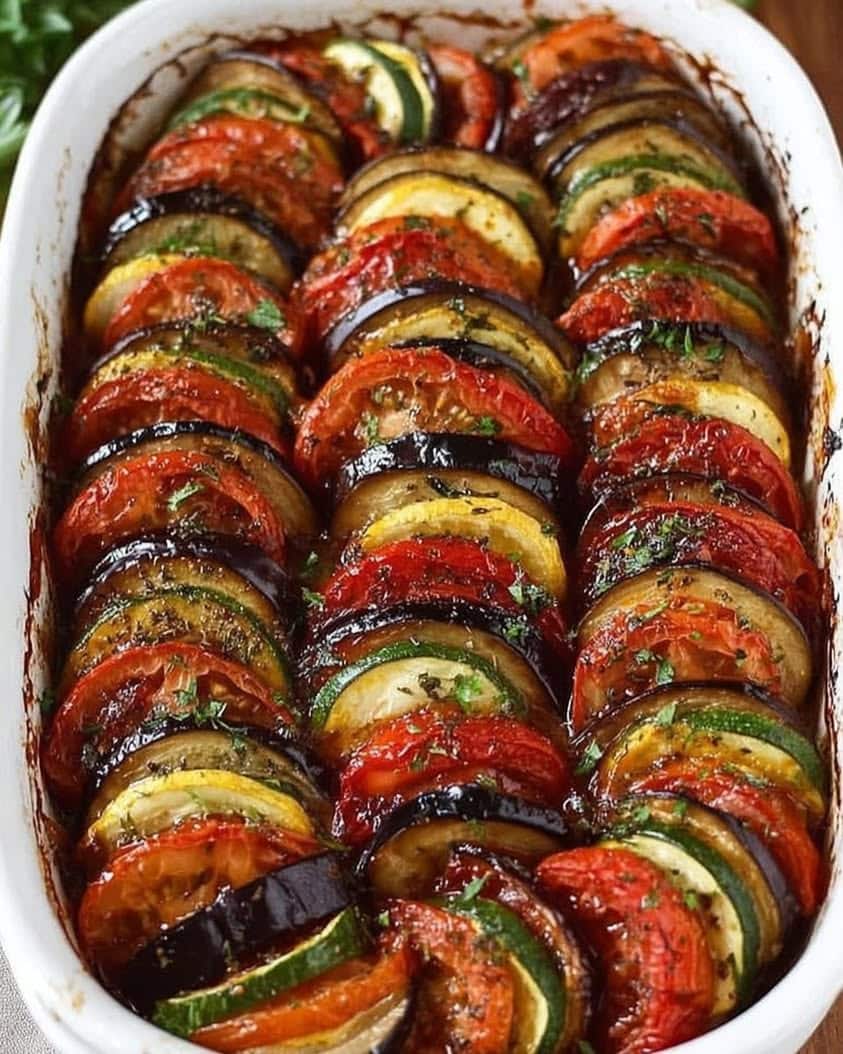
Easy Baked Ratatouille Recipe with Tomatoes, Zucchini, and Eggplant: A Rustic French Classic
Imagine a dish that captures the very essence of a sun-drenched summer garden. This easy baked ratatouille recipe with tomatoes, zucchini, and eggplant does exactly that. It transforms humble vegetables into a vibrant, deeply flavorful masterpiece. The oven does most of the work, slowly roasting the ingredients until they become meltingly tender and their flavors beautifully concentrated. Consequently, you get a rustic, comforting meal that feels both nourishing and incredibly satisfying.
The beauty of this baked ratatouille lies in its simplicity and versatility. It is a celebration of peak-season produce, where each vegetable maintains its distinct character while harmonizing into a greater whole. You will love the rich, savory tomato base, the sweet softness of the roasted zucchini, and the creamy, almost meaty texture of the eggplant. Moreover, this dish is naturally gluten-free, vegan-friendly, and packed with nutrients, making it a perfect centerpiece for any table.
Traditionally from Provence, ratatouille is more than just a vegetable stew; it is a symbol of French country cooking. This baked version simplifies the classic stovetop method, resulting in less hands-on time and even deeper, caramelized flavors. Whether served as a hearty main with crusty bread, a elegant side to roasted chicken, or even spooned over pasta or polenta, this easy baked ratatouille recipe with tomatoes, zucchini, and eggplant promises to become a staple in your kitchen repertoire.
Quick Recipe Highlights
- Flavor Profile: This easy baked ratatouille recipe with tomatoes, zucchini, and eggplant delivers a symphony of savory, sweet, and herbal notes. The tomatoes provide a bright, acidic base, while the roasted vegetables develop a natural caramelized sweetness. Fresh herbs like thyme and basil add a fragrant, earthy complexity that ties everything together beautifully.
- Texture: Expect a delightful contrast in textures. The zucchini and eggplant become wonderfully soft and almost creamy inside, while the edges caramelize and develop a slight bite. The bell peppers retain a pleasant tenderness, creating a satisfying mouthfeel that is neither mushy nor too firm.
- Aroma: As it bakes, your kitchen will fill with an irresistible aroma. First, you will smell the sweet, pungent garlic and onions sautéing. Then, the herbal notes of thyme and rosemary will waft through the air, followed by the deep, rich scent of roasting tomatoes and vegetables, signaling that dinner is almost ready.
- Visual Appeal: This dish is a feast for the eyes with its brilliant colors. The deep red of the tomatoes, vibrant green of the zucchini, rich purple of the eggplant, and bright pops from the bell peppers create a stunning mosaic. It looks incredibly impressive straight from the oven, making it perfect for entertaining.
- Skill Level Needed: This is a beginner-friendly recipe. The techniques involved—chopping, sautéing, and roasting—are fundamental. There is no need for advanced knife skills or tricky procedures. Basically, if you can slice vegetables and stir a pot, you can absolutely master this easy baked ratatouille recipe.
- Special Equipment: You need only basic kitchen tools. A sharp chef’s knife and cutting board are essential for prepping. A large oven-safe skillet or Dutch oven is ideal for both stovetop and oven steps. Alternatively, you can use a regular skillet to start and then transfer everything to a baking dish.
Recipe Overview
- Difficulty Level: We rate this easy baked ratatouille recipe as “Easy” for several reasons. The prep work is straightforward vegetable chopping. The cooking process is largely hands-off once the dish goes into the oven. There are no complicated techniques like blanching or frying required. Furthermore, the recipe is forgiving; slight variations in vegetable size or roasting time still yield delicious results.
- Category: This dish is wonderfully versatile across meal categories. It shines as a vegetarian or vegan main course, especially when paired with grains or bread. Simultaneously, it makes an exceptional side dish for grilled meats, fish, or roasted chicken. You can even use it as a flavorful sauce for pasta, a topping for bruschetta, or a filling for omelets and tarts.
- Cuisine: This is a quintessential dish from the Provence region of France. It embodies the principles of Mediterranean cuisine: highlighting fresh, seasonal produce, using olive oil as a primary fat, and incorporating aromatic herbs. The baked method is a modern twist on the traditional stovetop “sweating” of vegetables, offering a deeper flavor profile with less active cooking time.
- Cost: This is an incredibly cost-effective meal, especially in the summer when the main ingredients are at their peak and most affordable. Eggplant, zucchini, and bell peppers are typically budget-friendly. Canned tomatoes are a pantry staple that provides great value. The fresh herbs are the only potential splurge, but you can often substitute dried herbs or grow your own to save money.
- Season: Late summer and early fall are the absolute best seasons for this easy baked ratatouille recipe. This is when tomatoes, zucchini, eggplant, and bell peppers are at their flavorful peak at farmers’ markets and grocery stores. The dish perfectly captures the bounty of the harvest. However, thanks to reliable greenhouse produce and canned tomatoes, you can enjoy a very good version year-round.
- Occasion: This dish suits countless occasions. It is a perfect, healthy weeknight dinner for the family. It is impressive enough for a casual dinner party with friends. It makes excellent leftovers for lunches. Additionally, it is a fantastic potluck or picnic dish, as it can be served warm, at room temperature, or even cold.
Why You’ll Love This Recipe
First and foremost, the taste and texture of this easy baked ratatouille recipe are utterly captivating. Each bite offers a complex layering of flavors. You get the sweet intensity of roasted vegetables, the bright acidity from the tomatoes, and the fragrant earthiness of Provençal herbs. The texture is equally satisfying, with tender-crisp peppers and meltingly soft eggplant and zucchini that have soaked up all the savory juices. It is a comforting, rustic dish that feels both hearty and light at the same time.
From a convenience standpoint, this recipe is a true winner. The oven does the heavy lifting, meaning you are free to prepare other parts of your meal or simply relax. Unlike traditional stovetop ratatouille that requires constant stirring and attention, the baked method is largely hands-off. Furthermore, it is a fantastic “clean out the fridge” recipe; you can easily incorporate other summer squash, mushrooms, or even potatoes. The leftovers taste even better the next day, making it a brilliant meal-prep option.
Nutritionally, this easy baked ratatouille recipe with tomatoes, zucchini, and eggplant is a powerhouse. It is packed with vitamins, minerals, and antioxidants from its colorful array of vegetables. The olive oil provides heart-healthy monounsaturated fats. It is naturally low in calories and carbohydrates while being high in fiber, which promotes digestive health and helps you feel full. This makes it an excellent choice for anyone looking to eat more plant-based meals without sacrificing flavor or satisfaction.
For social and entertaining value, this dish is incredibly versatile and always a crowd-pleaser. It caters to diverse dietary needs effortlessly, being naturally gluten-free, vegan, and vegetarian. Its stunning visual presentation in a baking dish makes it look like you spent far more time than you actually did. You can serve it family-style for a cozy gathering, or plate it elegantly for a more formal dinner. It pairs wonderfully with a wide variety of wines and other dishes.
Finally, the cost-effectiveness and accessibility of this recipe cannot be overstated. The ingredients are humble, affordable, and widely available. You do not need any special equipment or expensive proteins. It teaches fundamental cooking techniques that build kitchen confidence. Essentially, this easy baked ratatouille recipe delivers restaurant-quality flavor and impressive presentation on a very modest home-cooking budget, which is a win in anyone’s book.
Historical Background and Cultural Significance
The origin story of ratatouille is deeply rooted in the peasant farming culture of Provence, in southeastern France. The name itself comes from the Occitan word “ratatolha,” which means “to stir up” or “to toss.” Historically, it was not a refined dish but a practical way for farmers and home cooks to use up the abundant summer harvest from their gardens. Tomatoes, zucchini, eggplant, and bell peppers all ripen around the same late summer period, making them the natural foundation of the stew. Originally, it was a simple, rustic meal designed to be economical and nourishing.
The cultural importance of ratatouille extends far beyond its ingredients. It is a symbol of Provençal identity and the Mediterranean way of life. The dish embodies the region’s culinary philosophy: “faire son marché” (doing one’s market), which emphasizes cooking with the freshest local and seasonal products. It represents a connection to the land and a respect for simple, honest food. In many Provençal households, the specific method for making ratatouille is a cherished family tradition, passed down through generations, with each cook adding their own subtle touch.
The evolution of the recipe from a stovetop stew to this easy baked ratatouille recipe reflects modern cooking preferences. Traditionally, each vegetable was sautéed separately in olive oil before being combined to stew slowly together. This method ensured each component cooked perfectly but was undeniably time-consuming. The contemporary baked method, where vegetables are layered or combined and roasted, simplifies the process significantly. This adaptation retains the essential flavors while making the dish more accessible to busy home cooks, contributing to its global popularity.
Regional variations of ratatouille abound, even within Provence. Some versions insist on cooking each vegetable separately. Others, like the “confit byaldi” popularized by the film *Ratatouille*, feature thinly sliced vegetables arranged in precise, overlapping spirals. Different herbs can define a version; some use herbes de Provence, while others prefer a simple bay leaf. The inclusion of bell peppers or onions is sometimes debated. These variations highlight the dish’s adaptability, proving that at its heart, ratatouille is less about rigid rules and more about celebrating the glorious produce of summer.
Ingredient Deep Dive
Eggplant (Aubergine): Originally from Southeast Asia, the eggplant traveled to the Mediterranean via Arab traders. It adds a meaty, creamy texture and acts like a sponge, absorbing the flavors of the tomatoes and herbs. Nutritionally, it is low in calories and a good source of fiber and antioxidants like nasunin, found in its purple skin. For the best results in your easy baked ratatouille recipe, choose firm, glossy eggplants that feel heavy for their size. Avoid those with wrinkled skin or soft spots. Salting eggplant before cooking was traditionally done to draw out bitterness, but most modern varieties are mild; salting primarily helps reduce oil absorption if frying, which is less critical for baking.
Zucchini (Courgette): A summer squash native to the Americas, zucchini was brought to Europe in the late 17th century. It provides a mild, slightly sweet flavor and a tender texture that holds its shape well when baked. It is rich in water, vitamin C, manganese, and antioxidants like lutein. Select small to medium-sized zucchini with bright, taut green skin. Larger zucchinis can be seedy and watery, which might dilute your ratatouille. If you only have large ones, consider scooping out the seedy center before dicing. No need to peel; the skin adds color, texture, and nutrients.
Tomatoes: The tomato is the foundational flavor of the sauce. Using canned whole peeled San Marzano or good-quality plum tomatoes provides a consistent, rich, and sweet base year-round. They are an excellent source of lycopene, a powerful antioxidant whose bioavailability increases when cooked. For a fresh summer version, you can substitute about 2 pounds of ripe, chopped fresh tomatoes. The key is to build a robust, simmered sauce that will coat and flavor the other vegetables as they roast, creating the cohesive, saucy element that defines a great easy baked ratatouille recipe.
Bell Peppers: Bell peppers contribute a crucial sweetness and a slight crunch. They are packed with vitamin C (especially red peppers), vitamin A, and various antioxidants. You can use any color, but red, yellow, or orange peppers are sweeter than green ones, which have a slightly more bitter, vegetal taste. For the most complex flavor, consider using a mix of colors. Ensure you core and seed them thoroughly, as the seeds and white pith can add unwanted bitterness to the final dish.
Aromatics & Herbs: Onion and garlic form the savory flavor base. Yellow onions are ideal for their balance of sweetness and pungency. Fresh garlic is non-negotiable for its aromatic punch. The herbs are the soul of the dish. Fresh thyme and rosemary offer woody, earthy notes during cooking, while a generous handful of fresh basil stirred in at the end provides a bright, sweet, and peppery fragrance that defines the finished dish. If using dried herbs, add them with the canned tomatoes so they have time to rehydrate and infuse the sauce.
Common Mistakes to Avoid
- Cutting Vegetables Inconsistently: Chopping your vegetables into wildly different sizes is a common error. Consequently, some pieces will be overcooked and mushy while others remain underdone. Aim for a uniform, bite-sized dice (about 1-inch pieces) for even cooking throughout your easy baked ratatouille recipe.
- Skipping the Sauté for Aromatics: Do not simply dump raw onions and garlic into the baking dish. Sautéing them first in olive oil is essential to soften their raw bite and develop a sweet, foundational flavor. This step builds a flavor base that permeates the entire dish.
- Overcrowding the Pan: If you try to sauté all the vegetables at once in a small pan, they will steam instead of brown. Cook in batches if necessary to ensure they get a little color, which adds depth of flavor to the final baked ratatouille.
- Using Watery Fresh Tomatoes Off-Season: In winter or early spring, fresh tomatoes often lack flavor and are too watery. This can make your ratatouille soup. Rely on high-quality canned tomatoes for a concentrated, reliable tomato base outside of peak summer months.
- Underseasoning the Sauce: The tomato and vegetable mixture needs adequate seasoning before it goes into the oven. Taste your sauce after combining everything and before baking. Remember, vegetables release water as they cook, diluting flavors slightly, so season confidently.
- Stirring During Baking: Resist the urge to open the oven and stir the ratatouille frequently. Let it bake undisturbed. This allows the top layer of vegetables to caramelize slightly and the flavors to concentrate. Stirring will make everything steam and become mushy.
- Adding Delicate Herbs Too Early: Putting fresh basil or parsley into the hot oven will destroy their vibrant flavor and color. These delicate herbs should always be stirred in after the dish comes out of the oven, allowing their fresh aroma to shine.
- Not Letting it Rest: Serving your easy baked ratatouille recipe straight from the oven is tempting, but a 5-10 minute rest allows the juices to redistribute. The flavors will meld together more harmoniously, and it will be the perfect serving temperature.
Essential Techniques
Sautéing Aromatics: This is the first and most critical technique for building flavor. Heat your olive oil over medium heat until it shimmers. Then add the diced onions with a pinch of salt. The salt helps draw out moisture and encourages even softening. Cook, stirring occasionally, until the onions are translucent and just beginning to turn golden at the edges—this takes about 5-7 minutes. Next, add the garlic and cook for just 30-60 seconds until fragrant. The key is to avoid burning the garlic, as it becomes bitter instantly. This process creates a sweet, savory foundation that will infuse the entire dish.
Building the Tomato Sauce: After the aromatics are ready, you add the canned tomatoes. Use your spoon or spatula to break the whole tomatoes up directly in the pan. Bring the mixture to a simmer and let it cook for about 5-10 minutes. This step is crucial for concentrating the tomato flavor, cooking off excess liquid from the can, and allowing the tomatoes to meld with the onion and garlic. You should see the sauce thicken slightly and darken in color. Season well here with salt, pepper, and any dried herbs.
Uniform Vegetable Prep: Consistent cutting is not just for looks; it ensures even cooking. Aim for a 1-inch dice on all your vegetables: eggplant, zucchini, and bell peppers. Try to keep the pieces as uniform as possible. For the eggplant, you can leave the skin on for color and nutrients. This uniformity means every vegetable will reach the perfect stage of tender-caramelized at the same time in your easy baked ratatouille recipe, preventing some pieces from turning to mush while others are still crunchy.
Oven Roasting (Baking): This technique transforms the dish. The dry, ambient heat of the oven caramelizes the natural sugars in the vegetables, creating deep, complex flavors that stovetop stewing cannot achieve. It also evaporates excess water, concentrating the sauce. The key is to bake uncovered at a moderately high temperature (around 400°F / 200°C). Do not cover the dish, as this will trap steam and make the vegetables soggy. The visual cue for success is seeing the top layer of vegetables slightly browned and the sauce bubbling thickly around the edges.
Pro Tips for Perfect Easy Baked Ratatouille
- For maximum flavor, let your diced eggplant, zucchini, and peppers sit in a colander with a generous sprinkle of salt for 20-30 minutes before cooking. This draws out excess moisture, which results in less steaming and better caramelization in the oven.
- Invest in a high-quality, flavorful extra virgin olive oil. Since it is a primary fat and flavor carrier, a good oil with fruity or peppery notes will make a noticeable difference in the final taste of your dish.
- If you have time, prepare the ratatouille base (through the sauce simmering step) up to a day in advance. Store it covered in the fridge. Then, simply combine with the fresh vegetables and bake before serving. This deepens the flavors even further.
- Add a Parmesan rind to the baking dish if you are not making a vegan version. As it bakes, it will melt into the sauce, adding an incredible layer of savory, umami depth that is absolutely magical.
- For a smoky undertone, char the bell peppers directly over a gas flame or under the broiler until blackened. Place them in a bowl covered with plastic wrap to steam, then peel off the skin before dicing and adding to the recipe.
- Do not discard the liquid from the canned tomatoes. Instead, add it all to the pan. The starchy liquid helps create a luscious, cohesive sauce as it reduces and mingles with the vegetable juices during baking.
- Finish the dish with the best quality finishing olive oil you have. A drizzle over the top just before serving adds a fresh, luxurious aroma and flavor that elevates the entire easy baked ratatouille recipe.
Variations and Adaptations
Regional Variations: Across the Mediterranean, similar dishes exist with local twists. The Italian “ciambotta” or “caponata” (from Sicily) includes eggplant and often has a sweet-sour agrodolce profile with capers and vinegar. The Spanish “pisto manchego” is very similar to ratatouille and is often served with fried eggs on top or as a tapa. The Turkish “türlü” is a baked vegetable casserole that often includes potatoes and green beans. Exploring these variations can inspire your own twists on the classic easy baked ratatouille recipe.
Seasonal Adaptations: While summer is prime time, adapt the recipe for other seasons. In fall, add cubes of roasted butternut squash or sweet potato. In winter, incorporate hearty mushrooms or parsnips. For a spring version, use asparagus tips and fresh peas, adding them in the last 10 minutes of baking. You can also use jarred roasted red peppers in the off-season for a burst of color and sweetness when fresh bell peppers are lackluster.
Dietary Modifications: This dish is naturally vegan and gluten-free. For a protein boost to make it a complete meal, stir in a can of drained chickpeas or white beans before baking. For a keto or low-carb version, reduce or omit the onions and bell peppers, focusing on eggplant and zucchini, and ensure you use no-sugar-added canned tomatoes. To make it more substantial, top the baked ratatouille with breadcrumbs mixed with olive oil and herbs during the last 10 minutes of baking for a crispy topping.
Flavor Variations: Experiment with different herb profiles. Try adding a teaspoon of smoked paprika or a pinch of saffron threads to the tomato sauce for a different dimension. For a spicy kick, include a diced chili pepper or red pepper flakes with the garlic. A splash of balsamic vinegar or a teaspoon of tomato paste added during the sauce simmering stage can intensify the savory-sweet balance beautifully.
Texture Modifications: If you prefer a smoother, more stew-like consistency, you can use an immersion blender to partially puree the baked ratatouille before serving. Conversely, for more distinct vegetable pieces and a chunkier texture, cut your vegetables into larger 1.5-inch pieces and reduce the baking time slightly to prevent them from breaking down too much.
Presentation Alternatives: For a stunning “confit byaldi” style, use a mandoline to slice the eggplant, zucchini, and tomatoes into very thin, uniform rounds. Then, arrange them in overlapping concentric circles over the tomato sauce in a baking dish before baking. This creates the visually striking spiral pattern seen in the famous film, though the flavor profile remains very similar to this easy baked ratatouille recipe.
Serving and Presentation Guide
Plating Techniques: For a casual family meal, serve your easy baked ratatouille recipe directly from the baking dish at the center of the table. For more elegant plating, use a shallow bowl or pasta plate. Spoon a generous portion into the center. You can create a slight well in the middle to hold a garnish or a drizzle of oil. If you have made the confit byaldi style with spiraled vegetables, slice it like a pie or cake for serving to showcase the beautiful layers.
Garnishing Ideas: Fresh herbs are the simplest and most effective garnish. A scattering of torn basil leaves, chopped flat-leaf parsley, or fresh thyme sprigs adds color and a burst of fresh aroma. A final drizzle of high-quality extra virgin olive oil or a flavored oil (like basil or chili oil) adds shine and richness. For non-vegan servings, a sprinkle of shaved Parmesan, Pecorino, or crumbled goat cheese or feta adds a salty, creamy contrast.
Traditional Accompaniments: In Provence, ratatouille is often served as a side dish with roasted or grilled meats, such as lamb, chicken, or sausages. It is also classic alongside a simple omelet. Most traditionally, it is eaten with plenty of crusty French bread to soak up every last drop of the flavorful juices. A crisp green salad with a sharp vinaigrette provides a refreshing counterpoint to the rich, savory vegetables.
Modern Serving Suggestions: Transform your easy baked ratatouille recipe into a main course by serving it over creamy polenta, couscous, quinoa, or pasta like spaghetti or penne. It makes an incredible filling for savory crepes or a topping for bruschetta or crostini. You can also use it as a flavorful base for baked eggs: make small wells in the hot ratatouille, crack eggs into them, and bake until the eggs are set.
Temperature Considerations: This dish is wonderfully flexible. It is delicious served piping hot straight from the oven. It is equally excellent at room temperature, making it perfect for picnics, buffets, or summer lunches. Some people even enjoy it cold from the fridge the next day. Letting it sit for 10-15 minutes after baking allows the flavors to settle and the temperature to become perfect for eating without burning your mouth.
Portion Control Tips: As a main dish, plan for about 1.5 to 2 cups per person. As a side dish, ¾ to 1 cup is sufficient. Remember that ratatouille is very satisfying but not overly heavy. If serving with hearty sides like bread and a protein, you can adjust portions downward. Leftovers keep beautifully, so err on the side of making more rather than less.
Wine and Beverage Pairing
Wine Pairings: The vibrant acidity and herbal notes of this easy baked ratatouille recipe call for wines with similar characteristics. A classic Provençal rosé is a perfect match, offering bright fruit and refreshing acidity that cleanses the palate. A light-bodied, earthy red wine from the same region, like a Côtes de Provence or a Grenache-based blend, complements the savory, roasted vegetable flavors beautifully. For white wine lovers, a crisp Sauvignon Blanc, a Vermentino, or a dry Riesling can stand up to the dish’s acidity and herbal components.
Non-Alcoholic Alternatives: Sparkling water with a squeeze of lemon or a twist of citrus peel is always a refreshing choice. For something more crafted, try a homemade herbal iced tea using thyme, rosemary, or basil to echo the flavors in the dish. A tart cherry or pomegranate spritzer (sparkling water mixed with a splash of unsweetened juice) provides a fruity counterpoint that works well with the tomatoes and sweet peppers.
Coffee/Tea Pairings: While not a typical pairing for the meal itself, a post-dinner espresso can be a nice finish. For tea, consider a light, floral herbal tea like chamomile or a mint tea, which would be soothing after the savory meal. A green tea with subtle vegetal notes could also create an interesting, reflective pairing if you are enjoying the ratatouille for lunch.
Temperature Considerations: Serve rosé and white wines well-chilled, around 45-50°F (7-10°C). Light reds should be served slightly cooler than room temperature, around 55-60°F (13-16°C), to keep them fresh and prevent the alcohol from overpowering the food. Non-alcoholic spritzers and iced teas should be very cold to provide a refreshing contrast to the warm, baked dish.
Serving Suggestions: Always offer water alongside any other beverage. If serving wine, pour a small taste first to allow guests to experience the pairing. For a dinner party, you might offer both a rosé and a light red option to cater to different preferences, as both work wonderfully with this versatile easy baked ratatouille recipe.
Storage and Shelf Life
Storage Methods: Allow your baked ratatouille to cool completely to room temperature before storing. Do not leave it out for more than two hours. Transfer it to an airtight container. Glass containers are ideal as they do not absorb odors or stains. You can also store it in the original baking dish if you cover it tightly with a lid or several layers of plastic wrap, ensuring a good seal.
Temperature Requirements: Refrigerate promptly. The ideal refrigerator temperature is at or below 40°F (4°C). Properly stored, your easy baked ratatouille recipe will keep for 4 to 5 days in the refrigerator. The flavors often improve after a day, as they have more time to meld together.
Container Recommendations: Use shallow containers rather than deep ones. This allows the ratatouille to cool more quickly and evenly, reducing the risk of bacterial growth. If storing a large batch, divide it into several smaller containers. Ensure the lids seal tightly to prevent the dish from absorbing other flavors from your fridge and to maintain moisture.
Signs of Spoilage: Before eating leftovers, always check for signs of spoilage. Discard the ratatouille if you notice an off or sour smell, significant mold growth (often fuzzy white, green, or black spots), or if the texture becomes excessively slimy or mushy beyond its normal softness. When in doubt, throw it out.
Reheating Instructions: Reheat gently to preserve texture. The best method is on the stovetop over medium-low heat, stirring occasionally, until heated through. You can also reheat it in the microwave in a covered, microwave-safe dish, stirring every 30 seconds to ensure even heating. Add a splash of water or broth if it seems dry. Avoid boiling vigorously, as this can break down the vegetables further.
Freezing Guidelines: This dish freezes exceptionally well for up to 3 months. Cool it completely, then portion it into freezer-safe bags or containers, leaving about ½ inch of headspace for expansion. Thaw overnight in the refrigerator before reheating. Note that the texture of the zucchini and eggplant may become a bit softer after freezing and thawing, but the flavor will remain excellent.
Make Ahead Strategies
Prep Timeline: You can prepare nearly the entire easy baked ratatouille recipe a day in advance. Up to 24 hours ahead, complete all steps through simmering the tomato sauce with the sautéed aromatics. Let this base cool, then cover and refrigerate. You can also chop all your fresh vegetables (eggplant, zucchini, peppers), store them separately in airtight containers in the fridge, and even toss them with a little oil to prevent browning.
Storage Between Steps: Store the pre-cooked tomato sauce base and the pre-chopped raw vegetables in separate containers in the refrigerator. This prevents the raw vegetables from releasing moisture into the sauce and becoming soggy before cooking. Bringing everything to a similar cool temperature before combining also helps with even baking later.
Quality Impact Assessment: Making the sauce base ahead actually improves the final dish. The flavors have time to deepen and marry overnight. The fresh vegetables will retain their texture and bright color since they are not cooked until the final bake. This strategy ensures you get the benefits of advanced prep without sacrificing the fresh, vibrant quality of the finished easy baked ratatouille recipe.
Assembly Tips: When ready to cook, simply take the sauce base and chopped vegetables from the fridge. Combine them in your baking dish, stirring to coat the vegetables in the sauce. You may need to add 2-3 minutes to the covered baking time if the ingredients are very cold straight from the fridge. Proceed with the recipe as written.
Reheating Guidelines: If you have fully baked the ratatouille ahead of time and are reheating the whole dish, cover it with foil and warm it in a 350°F (175°C) oven for 20-25 minutes, or until hot throughout. Stir gently halfway through. You can also reheat individual portions on the stovetop or microwave as needed.
Fresh Element Additions: Regardless of your make-ahead strategy, always add the final fresh herbs (like basil or parsley) after reheating, just before serving. This ensures they retain their bright color, fresh aroma, and delicate flavor, providing that essential finishing touch to your make-ahead easy baked ratatouille recipe.
Scaling Instructions
Halving the Recipe: Halving this easy baked ratatouille recipe is straightforward for smaller households. Simply divide all ingredient quantities by two. Use a smaller oven-safe skillet or a 2-quart baking dish. The prep time will remain similar, but the cook time may reduce by 5-10 minutes because there is less volume to heat through. Start checking for doneness at the 30-minute mark. The flavors will be just as concentrated, making it a perfect cozy dinner for two with maybe one lunch leftover.
Doubling or Tripling: Doubling or tripling is excellent for meal prep or feeding a crowd. Multiply all ingredients accordingly. You will need a very large Dutch oven or multiple baking dishes. If using multiple dishes, place them on different oven racks and rotate them halfway through baking for even cooking. The baking time will increase; for a double batch, plan on an additional 10-15 minutes. The vegetables release more water, so the sauce may be slightly thinner but will still be delicious.
Equipment Adjustments: Scale your equipment to match your batch size. A deep 12-inch oven-safe skillet or a 5-quart Dutch oven works for a single recipe. For a double batch, a large roasting pan or two 9×13 dishes are necessary. Ensure your baking vessel is not filled more than ¾ full to prevent bubbling over in the oven. If you lack a large enough oven-safe pot, sauté in batches on the stove, then combine everything in a large roasting pan for the oven phase.
Timing Modifications: While active prep time scales linearly, oven time does not. A single recipe takes about 40-45 minutes. A double batch in a larger, deeper vessel may take 50-55 minutes. Always rely on visual and textural cues rather than strict time: the vegetables should be tender, the sauce thickened, and the top lightly caramelized. Use a fork to test the tenderness of the largest piece of eggplant or zucchini.
Storage Considerations: When scaling up, think about storage from the start. Portion the finished ratatouille into meal-sized containers before refrigerating or freezing. This makes reheating easier and helps with Print
Baked Ratatouille with Tomatoes, Zucchini, and Eggplant
- Total Time: 45 minutes
- Yield: 4
Description
A vibrant, oven-baked vegetable medley inspired by the classic French dish, featuring layers of tomatoes, zucchini, and eggplant in a savory tomato-herb sauce.
Ingredients
- 2 medium tomatoes, thinly sliced
- 1 medium zucchini, thinly sliced
- 1 small eggplant, thinly sliced
- 1 yellow onion, diced
- 3 cloves garlic, minced
- 1 can (14 oz) crushed tomatoes
- 2 tbsp olive oil
- 1 tsp dried thyme
- 1 tsp dried oregano
- Salt and black pepper to taste
- Fresh basil leaves for garnish
Instructions
- Preheat oven to 375°F (190°C). Lightly grease a baking dish.
- In a skillet, heat 1 tbsp olive oil over medium heat. Sauté onion and garlic until softened, about 5 minutes. Stir in crushed tomatoes, thyme, oregano, salt, and pepper. Simmer for 10 minutes, then spread evenly in the baking dish.
- Arrange alternating slices of tomato, zucchini, and eggplant in overlapping layers over the sauce. Drizzle with remaining olive oil and season with salt and pepper.
- Cover with foil and bake for 25 minutes. Remove foil and bake for another 10-15 minutes until vegetables are tender and lightly browned.
- Let cool slightly, garnish with fresh basil, and serve warm.
Notes
You can customize the seasonings to taste.
- Prep Time: 15 minutes
- Cook Time: 30 minutes
- Method: Main
- Cuisine: French