Baked Pears with Brie and Walnuts: An Elegant Holiday Dessert
Imagine a dessert that feels both decadent and wholesome, a dish that fills your kitchen with the warm, inviting scent of cinnamon and roasted fruit. This recipe for baked pears with Brie and walnuts delivers exactly that experience. It transforms simple, seasonal pears into a stunning centerpiece that is as beautiful to look at as it is delicious to eat. The process is remarkably straightforward, yet the final result looks like it came from a professional pastry kitchen. Consequently, this dish is perfect for impressing guests without spending hours on complicated techniques.
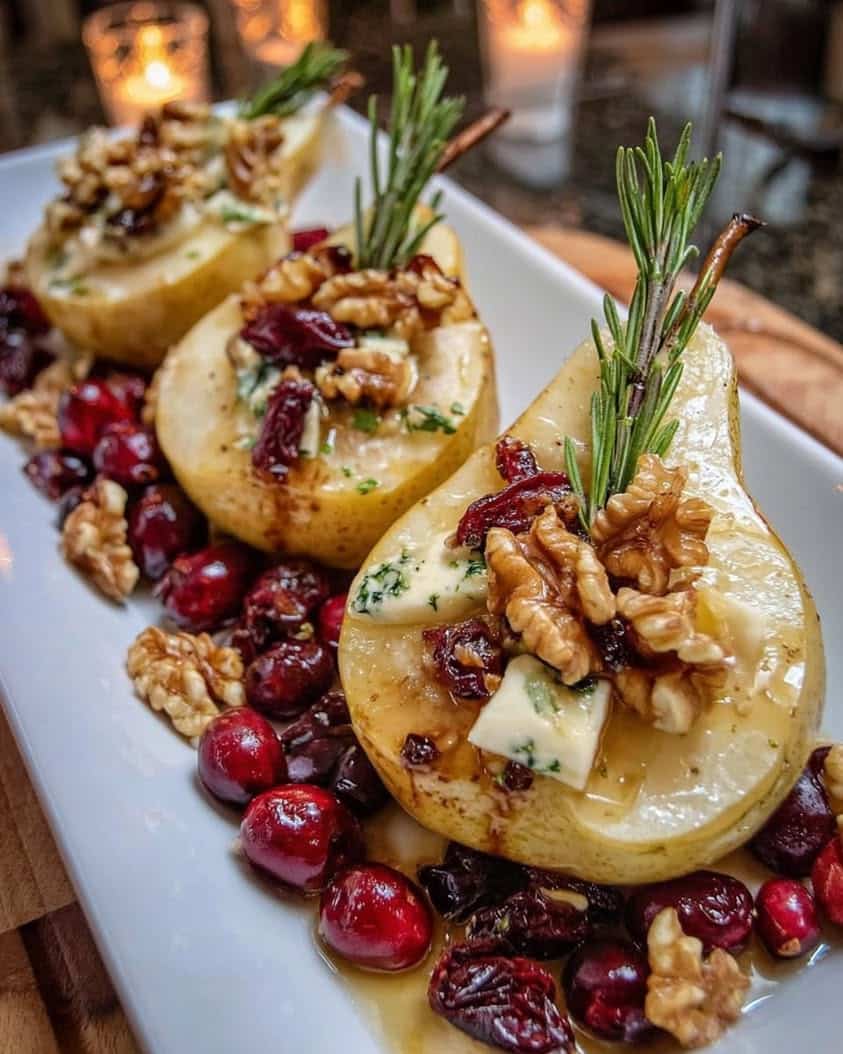
The magic of these baked pears lies in the harmonious blend of textures and flavors. Sweet, juicy pear halves become tender and caramelized in the oven. Meanwhile, creamy Brie cheese melts into a luxurious pool, and toasted walnuts add a crucial crunch. Tart dried cranberries provide a pop of color and a bright, acidic contrast that cuts through the richness. Drizzled with honey and a hint of cinnamon, every bite is a perfect balance. Ultimately, this dessert feels special enough for the most festive holiday table yet simple enough for a cozy weeknight treat.
Furthermore, this recipe celebrates the best of autumn and winter produce. Pears reach their peak sweetness during the cooler months, making them the ideal foundation for a warm dessert. The combination of fruit, cheese, and nuts is a classic one, found in many culinary traditions for its satisfying and complex profile. This particular version, with its elegant presentation and quick preparation, is a modern take on those timeless flavors. It is a dessert that promises comfort and sophistication in every single spoonful.
Quick Recipe Highlights
- Flavor Profile: This dish masterfully balances sweet, savory, creamy, and nutty notes. The natural sweetness of the pears deepens with baking, while the Brie offers a mild, buttery savoriness. Toasted walnuts contribute an earthy depth, and the cranberries bring a necessary tangy brightness that prevents the dish from being too cloying.
- Texture: You experience a delightful contrast in every mouthful. The baked pear becomes soft and almost spoonable, while the melted Brie is luxuriously smooth and creamy. In contrast, the walnuts provide a firm, crunchy counterpoint, and the cranberries offer a pleasingly chewy element. This interplay makes the dessert incredibly satisfying to eat.
- Aroma: As the pears bake, your kitchen will fill with an irresistible fragrance. The primary scent is of warm, caramelizing fruit and cinnamon. Subtle notes of toasted nuts and the rich, earthy aroma of melting cheese round out the olfactory experience, creating an ambiance that is quintessentially cozy and festive.
- Visual Appeal: The presentation is stunningly simple. The pear halves cradle the golden, bubbling Brie beautifully. Vibrant red cranberries and the deep brown of the walnuts create a festive color palette against the soft beige of the pear flesh. A final drizzle of honey adds a glossy sheen, making the dish look professionally finished.
- Skill Level Needed: This is an ideal recipe for cooks of all levels. The techniques involved—scooping, filling, and baking—are fundamental. There is no intricate pastry work or precise tempering required. Even a beginner can achieve impressive results by following the clear, step-by-step instructions provided below.
- Special Equipment: You only need very basic kitchen tools. A sharp paring knife and a melon baller or small spoon are essential for coring the pears. A baking dish large enough to hold the pear halves without crowding is necessary. Otherwise, you likely have everything else already in your kitchen drawers.
Recipe Overview
- Difficulty Level: We rate this recipe as “Easy” for several compelling reasons. First, the ingredient list is short and composed of whole foods requiring minimal prep. Second, the active hands-on time is under 15 minutes. The oven does most of the work. Finally, the techniques are basic kitchen skills like coring fruit and simple assembly. There is no fussy decoration or complex cooking methods involved.
- Category: This versatile dish comfortably fits into multiple categories. Primarily, it is a stunning warm dessert. However, it also makes an exceptional cheese course to conclude a formal dinner. Alternatively, you could serve it as a luxurious brunch item or a special weekend breakfast. Its flexibility is one of its greatest strengths.
- Cuisine: While not tied to one specific national cuisine, the dish draws inspiration from European and American farmhouse traditions. The combination of fruit and cheese is classic in French and Italian dining. The use of honey and nuts as garnishes has roots in many Mediterranean and Middle Eastern culinary practices. It is a beautiful fusion of simple, rustic elements.
- Cost: This is a relatively affordable dessert, especially when pears are in season. Pears, Brie, walnuts, and cranberries are all accessible ingredients available at most grocery stores. You can control cost by choosing store-brand nuts and dried fruit. A block of Brie is often more economical than many specialty dessert ingredients like chocolate or exotic fruits.
- Season: This recipe is perfect for fall and winter. Pears are at their best from late summer through early winter. The warm, spiced flavors are inherently comforting during colder months. The red and gold colors of the dish also align perfectly with autumn and holiday tablescapes. It is a seasonal celebration on a plate.
- Occasion: It is ideal for holiday dinners like Thanksgiving, Christmas, or New Year’s Eve. It also makes a wonderful dessert for a dinner party or a romantic date night at home. Because it is so easy, it is equally suitable for a quiet family treat to make an ordinary evening feel special.
Why You’ll Love This Recipe
First and foremost, the taste and texture are utterly divine. Each component plays a specific role in creating a symphony in your mouth. The warm, soft pear melts against the rich, gooey Brie. Then, you get the satisfying crunch of the walnut and the chewy, tart pop of the cranberry. The honey and cinnamon tie everything together with a warm, sweet spice. This combination is deeply comforting yet sophisticated. It feels like a treat without being overly heavy or sugary. Many people find it a refreshing alternative to very sweet, chocolate-based desserts.
Additionally, the convenience factor is a huge win. From start to finish, you need only about 40 minutes, with most of that being hands-off baking time. The prep is simple and mess-free. You can easily assemble the pears ahead of time and just pop them in the oven before you sit down for your main course. Consequently, you get to enjoy your dinner party instead of being stuck in the kitchen. This recipe proves that impressive food does not require complicated procedures or hours of labor.
From a nutritional perspective, this dessert offers more benefits than many traditional options. Pears are an excellent source of dietary fiber and vitamin C. Walnuts provide healthy fats, protein, and omega-3 fatty acids. While Brie is a richer cheese, it also offers calcium and protein. Using honey as a sweetener is a more natural choice than refined sugar. Compared to a slice of pie or cake, this dish is generally lower in refined carbohydrates and higher in beneficial nutrients. It is a dessert you can feel good about serving.
Moreover, the social and entertaining value is incredibly high. This dish is a true showstopper when brought to the table. The presentation is rustic yet elegant, guaranteed to elicit compliments. It encourages sharing and conversation, as guests can spoon the delicious filling directly from the baking dish. It creates a warm, communal dining experience. Serving a beautiful, homemade dessert like this makes your guests feel truly cared for and celebrated. It elevates any meal from ordinary to memorable.
Finally, it is cost-effective and accessible. You do not need any specialty equipment or hard-to-find ingredients. Everything can be sourced from a standard supermarket. The recipe is also easily scalable. You can bake two pears for a couple or ten for a large gathering. The ingredients are forgiving. For instance, you can substitute pecans for walnuts or dried cherries for cranberries based on what you have available. This flexibility makes it a reliable go-to recipe for any event.
Historical Background and Cultural Significance
The practice of baking fruit is ancient, spanning countless cultures. Early cooks would have stuffed fruits with available nuts, sweeteners like honey, and perhaps cheese or grains before roasting them over fire. This method preserved fruit, enhanced its natural sweetness, and created a more substantial dish. The specific combination of pear and cheese, however, has strong roots in European culinary history. In France, serving cheese after a meal or with fruit is a long-standing tradition. The French often pair Poire William (Williams pear) with creamy cheeses like Brie or Camembert, believing the flavors cleanse the palate.
Culturally, baked fruit dishes often symbolize hospitality and abundance. Offering a warm, prepared fruit dessert to guests signifies effort and care. In many Western holiday traditions, meals end with a fruit-based dessert, such as mince pies or baked apples, symbolizing the harvest and the sweetness of life. This baked pears with Brie and walnuts recipe fits neatly into this tradition. It uses seasonal, autumnal ingredients to create a celebratory finale to a feast. The red cranberries even add a festive holiday color, linking it visually to Christmas and Thanksgiving tables.
The recipe has evolved significantly with modern kitchen technology and ingredient availability. Historically, such a dish would be cooked in a hearth or a primitive oven. Today, our consistent home ovens make the process foolproof. The availability of pre-shelled walnuts and dried cranberries year-round simplifies preparation. The use of Brie, a cheese that became widely popular outside France in the late 20th century, marks this as a contemporary interpretation. It is a fusion dish that takes a classic flavor pairing and presents it in an easy, accessible format for the modern home cook.
Regional variations of baked stuffed fruit are endless. In the American South, you might find baked apples with cheddar cheese. In the Middle East, dates are stuffed with nuts and spices. Italian cuisine features baked figs with prosciutto and cheese. This recipe for baked pears with Brie and walnuts is a versatile template. You can see how different cultures apply the same core concept—enhancing fruit with fat, protein, and spice—using their local ingredients. This universality is a testament to the fundamental appeal of the dish.
Ingredient Deep Dive
Pears (Bosc or Anjou): Bosc and Anjou pears are ideal for baking because they hold their shape beautifully. Unlike very juicy varieties, they become tender but not mushy. Pears have been cultivated for thousands of years, originating in Asia and beloved by ancient Romans. They are a fantastic source of soluble fiber, which aids digestion, and are rich in antioxidants like vitamin C and copper. When selecting pears, choose ones that are firm with only a slight give at the stem. Avoid bruised or overly soft fruit. Store unripe pears at room temperature and move them to the refrigerator once they ripen to slow further softening.
Brie Cheese: Hailing from the Île-de-France region, Brie is known as the “Queen of Cheeses.” This soft-ripened cheese has a creamy, edible rind and a rich, buttery interior that melts superbly. Nutritionally, it provides a good amount of calcium, protein, and vitamin B12. For baking, choose a ripe wheel that feels soft under its rind. You can use a wedge from a larger wheel, but a small whole wheel makes for a beautiful presentation. Store Brie in the refrigerator in its original wrapping. Let it sit at room temperature for about 30 minutes before using for easier slicing and better flavor.
Walnuts: Walnuts are one of the oldest tree foods, with remnants found in Neolithic sites. They are celebrated for their brain-like shape and their high concentration of omega-3 fatty acids, which support heart and brain health. They also offer protein, magnesium, and antioxidants. Toasting walnuts is a critical step; it deepens their flavor and improves their crunch. Always buy walnuts in small quantities from a store with high turnover, as their high fat content makes them prone to rancidity. Store them in an airtight container in the freezer for maximum freshness.
Dried Cranberries: Unlike fresh cranberries, dried cranberries are sweetened, providing the necessary sweet-tart contrast in this dish. Cranberries are native to North America and were used by Indigenous peoples for food and medicine. They are packed with vitamin C and unique plant compounds called proanthocyanidins, known for supporting urinary tract health. When purchasing, look for brands with no added artificial colors or excessive sugar. You can often find “juice-sweetened” varieties. Store dried cranberries in a cool, dark pantry in a sealed bag or container to keep them chewy.
Honey & Cinnamon: Honey, used as a sweetener for millennia, adds a floral, complex sweetness that refined sugar cannot match. It also helps create a lovely glaze. Cinnamon, one of the world’s oldest spices, adds warm, woody notes that pair perfectly with autumn fruits. It contains antioxidants and has anti-inflammatory properties. For the best flavor, use pure, local honey if possible and true Ceylon cinnamon. Ground cinnamon loses potency over time, so check its aroma before using. Store honey at room temperature and cinnamon in a sealed container away from light and heat.
Common Mistakes to Avoid
- Using Overripe Pears: Overly soft pears will collapse into mush during baking. You need fruit with structural integrity. Always select pears that are firm to the touch, perhaps with just a slight yield at the neck. Under-ripe is better than over-ripe for this application, as the baking process will soften them perfectly.
- Skipping the Toasting Step for Walnuts: Raw walnuts can taste slightly bitter and lack the deep, toasty flavor that elevates the dish. Toasting them in a dry skillet or the oven for a few minutes wakes up their oils and maximizes their crunch and nutty taste. It is a simple step with a major impact.
- Overfilling the Pear Cavity: It is tempting to pack in as much cheese and topping as possible. However, overfilling causes the Brie to spill over and burn on the baking dish instead of melting neatly into the pear. A moderate, level filling ensures even cooking and a cleaner presentation.
- Using Cold Brie Straight from the Fridge: Very cold Brie is difficult to slice neatly and may not melt as evenly. Let the cheese sit out for 20-30 minutes to take the chill off. This makes it easier to work with and promotes that perfect, creamy melt in the oven.
- Neglecting to Drizzle with Honey Before Baking: Adding a bit of honey before baking helps the pears caramelize and allows the flavors to meld. If you only add honey at the end, it sits on top as a separate layer rather than integrating into the warm fruit and cheese.
- Baking in a Dish That’s Too Small: Crowding the pears in a small dish creates steam, which can prevent proper caramelization and lead to soggy pears. Give them some space so hot air can circulate, ensuring they roast instead of steam.
- Underbaking the Pears: Removing the pears too early means the fruit will still be firm and not fully sweetened. The pears should be easily pierced with a fork or paring knife. The extra baking time is crucial for developing deep, rich flavor and a tender texture.
- Forgetting to Let it Rest Before Serving: The melted Brie and hot pear filling will be extremely hot straight from the oven. Let the dish rest for 5-7 minutes. This allows the cheese to set slightly, making it easier to serve, and prevents burnt tongues.
Essential Techniques
Coring and Hollowing Pears: This technique is vital for creating a stable vessel for the filling. Using a sharp paring knife or a melon baller, carefully cut out the core from the bottom, leaving the stem intact for presentation. Then, gently scoop out a bit more flesh to create a small well. The goal is to remove the tough, fibrous core and seeds while maintaining the pear’s structural integrity. A common pitfall is digging too deep and puncturing the sides or bottom. Work slowly and use a spoon to feel the thickness of the pear walls as you hollow.
Toasting Nuts: Toasting nuts is a fundamental skill that enhances flavor and texture. Spread walnuts in a single layer on a dry baking sheet or skillet. Heat them in a 350°F oven or over medium-low heat on the stove, shaking frequently. Watch them closely, as they can burn in moments. They are done when they become fragrant and take on a slightly darker color. The importance lies in the Maillard reaction, which develops complex, roasted flavors not present in raw nuts. The visual cue for success is a golden-brown color and a rich, nutty aroma.
Melting Cheese in a Fruit Cavity: The goal is to have the Brie melt evenly into the pear without leaking excessively. The key is to cube the cheese into small pieces so it distributes and melts quickly. Placing the cheese directly into the hollow ensures it melts into the fruit, flavoring it from the inside. The pitfall is using one large chunk, which may not melt through before the pear is done. The oven’s heat should transform the cheese into a uniform, creamy pool. Success is visible when the cheese is completely molten, bubbly, and integrated with the pear juices.
Pro Tips for Perfect Baked Pears with Brie and Walnuts
First, always choose pears that are just shy of ripe. They should be firm, not soft. This ensures they hold their shape through the baking process and provide a pleasing texture contrast to the soft filling.
Second, toast your walnuts ahead of time. You can do this in bulk and store them. Toasted nuts have a deeper, more complex flavor that raw nuts simply cannot provide, elevating the entire dish.
Third, use a high-quality, fluid honey for the final drizzle. A thick, crystallized honey will not drizzle nicely. Warm the honey slightly in a microwave or in a jar of hot water to make it perfectly pourable.
Fourth, consider adding a pinch of flaky sea salt over the finished dish before serving. The tiny burst of saltiness will heighten the sweetness of the pear and honey and balance the richness of the Brie beautifully.
Fifth, if your pears won’t sit flat, carefully slice a very thin piece off the bottom to create a stable base. This prevents them from tipping over in the oven and spilling their precious filling.
Sixth, for an extra flavor dimension, add a teaspoon of orange zest or a splash of brandy to the cranberry and walnut mixture before stuffing the pears. This adds a wonderful aromatic complexity.
Seventh, let the baked pears rest for at least five minutes after removing them from the oven. This allows the molten cheese to set slightly, making serving much cleaner and safer.
Eighth, garnish with fresh herbs for color and freshness. A small sprig of thyme or rosemary looks beautiful and adds a subtle savory note that complements the other flavors perfectly.
Variations and Adaptations
Regional Variations: Embrace local ingredients. In the South, use pecans instead of walnuts and a sharp cheddar instead of Brie. For a Mediterranean twist, stuff pears with crumbled feta, chopped dates, and pistachios, drizzled with date syrup. An Alpine version could feature Gruyère cheese and toasted hazelnuts.
Seasonal Adaptations: In summer, use ripe peaches or nectarines, pairing them with goat cheese and basil. For spring, try baked apples with Camembert and fresh thyme. The core technique remains the same, allowing you to enjoy a version of this dish year-round with the best produce available.
Dietary Modifications: For a vegan version, use a high-quality vegan cream cheese or a soft cashew cheese and maple syrup instead of honey. For a gluten-free diet, this recipe is naturally perfect. To reduce sugar, use unsweetened dried cranberries or chopped fresh cranberries with a zero-calorie sweetener in the filling.
Flavor Variations: Experiment with different spices. Cardamom or ginger can replace cinnamon for a different warm note. Add a dash of vanilla extract to the honey drizzle. Incorporate chopped fresh rosemary into the walnut mixture for a savory-herbal accent that pairs wonderfully with the cheese.
Texture Modifications: For extra crunch, sprinkle the top with panko breadcrumbs tossed in melted butter before baking. For a smoother, creamier filling, blend the Brie with a tablespoon of mascarpone or ricotta cheese before stuffing the pears.
Presentation Alternatives: Instead of baking pear halves, slice pears into thick rounds, top each round with a slice of Brie and the toppings, and broil for a few minutes for easy, individual crostini-style appetizers. Alternatively, dice the pears and bake the mixture in a small skillet for a deconstructed, shareable fruit crisp.
Serving and Presentation Guide
Plating Techniques: Serve the pears directly in the baking dish for a rustic, family-style presentation. For individual plating, use a wide, shallow bowl or plate. Carefully transfer one pear half per person, spooning any extra melted cheese and syrupy juices from the dish over the top. Ensure each plate gets a generous sprinkling of the toasted walnuts and cranberries that may have scattered during baking.
Garnishing Ideas: Beyond the basic honey drizzle, garnish with a few extra whole cranberries and walnut halves for visual appeal. A dusting of powdered sugar or cinnamon looks beautiful. Fresh mint leaves or edible flowers add a touch of elegance and color contrast. A dollop of lightly sweetened whipped cream or crème fraîche on the side is a classic and delicious addition.
Traditional Accompaniments: This dish is rich, so a simple, crisp accompaniment is ideal. A light, buttery shortbread cookie or a simple vanilla wafer provides a nice textural contrast. A small glass of dessert wine, like a Sauternes or late-harvest Riesling, served alongside is the traditional European way to enjoy fruit and cheese desserts.
Modern Serving Suggestions: For a trendy brunch, serve a baked pear half alongside a small salad of bitter greens like arugula with a lemon vinaigrette. The savory salad balances the sweet pear perfectly. You can also crumble the baked pear over vanilla ice cream or Greek yogurt for an incredible dessert parfait.
Temperature Considerations: Baked pears with Brie and walnuts are best served warm, when the cheese is still soft and gooey. However, they are also delicious at room temperature, making them suitable for a buffet where they may sit out for a short while. Avoid serving them cold, as the cheese will solidify and lose its luxurious texture.
Portion Control Tips: One pear half is a standard serving for a dessert course following a full meal. If serving as part of a larger cheese board or as an appetizer, you can cut each half into two or three pieces. For a more substantial standalone dessert, consider serving a whole pear per person.
Wine and Beverage Pairing
Wine Pairings: The sweet, creamy, and nutty profile of the dessert calls for wines with balancing acidity and complementary flavors. A classic Sauternes from France, with its honeyed apricot notes, is a sublime match. A late-harvest Riesling or Gewürztraminer also works beautifully, offering bright acidity to cut the richness. For a red wine lover, a lighter Pinot Noir with low tannins and notes of cherry can be surprisingly good. Avoid heavy, tannic reds like Cabernet Sauvignon, as they will clash with the sweetness and cheese.
Non-Alcoholic Alternatives: Sparkling apple cider is a fantastic choice, offering effervescence and apple notes that complement the pear. A warm mug of spiced chai tea mirrors the cinnamon in the dish. For a cooler option, a ginger beer or a tart cranberry spritzer (made with cranberry juice and club soda) provides a refreshing contrast to the warm, rich dessert.
Coffee/Tea Pairings: A medium-roast coffee with low acidity and notes of caramel or nut pairs wonderfully. Avoid very dark, bitter roasts. For tea, consider a creamy Earl Grey, a vanilla rooibos, or a simple chamomile tea. The floral and gentle notes in these teas will not overpower the delicate flavors of the pear and Brie.
Temperature Considerations: Serve dessert wines slightly chilled, not ice cold, to allow their aromas to open up. Sparkling ciders should be well-chilled. Coffee and tea should be served hot. The goal is to have the beverage temperature provide a pleasant contrast or complement to the warm dessert, enhancing the overall experience.
Serving Suggestions: Always pour wine and sparkling beverages just before serving to preserve their bubbles and freshness. Offer coffee and tea in a pot so guests can help themselves. For a formal dinner, present the wine pairing in appropriate glassware—a smaller dessert wine glass for Sauternes or a flute for sparkling cider.
Storage and Shelf Life
Storage Methods: Store any leftover baked pears in an airtight container in the refrigerator. They are best consumed within 2 days. The texture of the pear will soften further upon refrigeration, and the cheese will solidify. Do not leave the dish at room temperature for more than 2 hours due to the dairy content.
Temperature Requirements: Refrigeration at or below 40°F (4°C) is mandatory for food safety. The Brie is a perishable dairy product. Allow the baked pears to cool completely on the counter before covering and transferring them to the fridge to prevent condensation, which can make the topping soggy.
Container Recommendations: Use a shallow, glass or ceramic container with a tight-fitting lid. A deep container can cause the pears to be crushed. If you need to stack them, place a layer of parchment paper between the pears to prevent them from sticking together.
Signs of Spoilage: Discard the leftovers if you notice any off smells, such as sourness or ammonia. Visible mold growth (beyond the natural white mold of the Brie rind, which is safe) is a clear sign. If the pears develop an excessively slimy texture, it is time to throw them away.
Reheating Instructions: Reheat gently to avoid overcooking the pear. Place a portion in a microwave-safe dish and heat in 20-second intervals until just warmed through. Alternatively, reheat in a 300°F oven for 10-15 minutes, covered with foil to prevent drying out. The cheese will become soft again but may not return to its original molten state.
Freezing Guidelines: Freezing is not recommended. The high water content in the pears will cause them to become mushy and watery upon thawing. The dairy in the Brie may separate and become grainy. The walnuts will lose their crunch. This is a dish best enjoyed fresh.
Make Ahead Strategies
Prep Timeline: You can prepare the components up to 24 hours in advance. Core and hollow the pears, then submerge them in a bowl of water with a squeeze of lemon juice to prevent browning. Store them tightly wrapped in the refrigerator. Toast the walnuts and mix them with the cranberries. Cube the Brie. Keep all components separate until you are ready to assemble and bake.
Storage Between Steps: Store the prepared pear halves in a sealed container or zip-top bag with the lemon water in the fridge. Keep the toasted nut mixture at room temperature in an airtight container. The cubed Brie should be kept refrigerated in a separate container. This compartmentalization maintains the quality and texture of each ingredient.
Quality Impact Assessment: Prepping the pears ahead has minimal impact if you use the acidulated water bath. Toasted nuts stored properly will remain crunchy. The only component that must be handled last-minute is the assembly, as stuffing the pears too far in advance can make them soggy. Overall, advance prep saves crucial time on the day of your event.
Assembly Tips: When ready to bake, simply pat the pear halves dry with a paper towel. Assemble them in your baking dish with the Brie, nut mixture, and honey. This process should take no more than 5 minutes if your components are prepped and ready to go.
Reheating Guidelines: This strategy is for pre-baking assembly only. Do not bake the pears ahead and reheat them, as the texture will suffer. The beauty of make-ahead is having everything ready to pop into a preheated oven 25 minutes before you want to serve dessert.
Fresh Element Additions: If you pre-toast the walnuts, you might want to add a few fresh, untoasted walnuts as a garnish after baking for an extra layer of texture. A final fresh drizzle of honey after baking is also recommended to revive the glossy appearance.
Scaling Instructions
Halving the Recipe: Halving is straightforward for a smaller batch. Use two pear halves, half the amount of all other ingredients, and a smaller baking dish. The cook time may reduce by 3-5 minutes, so start checking for doneness a bit earlier. All other techniques remain identical.
Doubling or Tripling: For a crowd, simply multiply the ingredients by your desired factor. The key is to use a baking dish large enough that the pears are in a single layer with a little space between them. You may need to use two dishes or bake in batches. The cook time may increase slightly (5-10 minutes) due to the fuller oven, so rely on the visual and textural doneness cues rather than the timer alone.
Equipment Adjustments: When scaling up, ensure your baking sheets or dishes are heavy-duty and not warped. A warped pan can cause juices to pool unevenly. If baking multiple trays, rotate them front-to-back and top-to-bottom halfway through cooking to ensure even browning and caramelization.
Timing Modifications: The prep time will increase linearly with the number of pears you need to core. The baking time, however, does not double. It increases modestly. Always bake until the pears are tender and the filling is bubbly, regardless of the batch size. Use the largest pears you can find for a big event to make prep more efficient.
Storage Considerations: Leftovers from a large batch should be cooled and stored as directed. Remember that a large quantity of hot food will raise the temperature of your refrigerator, so divide leftovers into several smaller, shallow containers for faster, safer cooling.
Nutritional Deep Dive
Macro Breakdown: A serving of baked pears with Brie and walnuts provides a balance of macronutrients. The pears and honey contribute carbohydrates, primarily natural sugars and fiber. The Brie and walnuts are excellent sources of healthy fats and protein. This combination provides sustained energy rather than a simple sugar spike and crash, making it a more satisfying dessert choice.
Micronutrient Analysis: This dish is rich in several key micronutrients. Pears offer vitamin C and copper. Walnuts are a top source of manganese and provide magnesium and phosphorus. Brie contributes calcium, vitamin B12, and vitamin A. The cranberries add vitamin C and vitamin E. Together, they provide a wide spectrum of vitamins and minerals that support immune function, bone health, and energy metabolism.
Health Benefits: The fiber in pears promotes digestive health and helps regulate blood sugar. The omega-3 fatty acids in walnuts are renowned for their anti-inflammatory properties and benefits for heart and brain health. The probiotics in aged cheeses like Brie can support gut health. The antioxidants in all the components combat oxidative stress in the body.
Dietary Considerations: This recipe is naturally gluten-free. It contains dairy (Brie) and tree nuts (walnuts), which are common allergens. For those monitoring sodium, note that cheese does contain salt. Individuals with lactose intolerance may tolerate aged cheeses like Brie better than fresh dairy, but caution is advised.
Portion Analysis: One pear half is a reasonable dessert portion, providing satisfaction without excessive calories. The presence of protein and fat from the cheese and nuts increases satiety, helping to prevent overeating. Compared to a slice of pie with ice cream, this portion is typically lower in calories, sugar, and refined carbohydrates.
Weight Management Tips: To make this dish even more weight-conscious, you can slightly reduce the amount of Brie and walnuts, though this will affect richness. Using a sugar-free maple syrup or a light drizzle of honey can lower the sugar content. Remember, the natural sweetness of the baked pear itself is significant, so you may not need as much added sweetener as you think.
Dietary Adaptations
Gluten-free: This recipe is naturally gluten-free as written. Simply ensure that any packaged ingredients like dried cranberries are certified gluten-free, as some brands may be processed in facilities with wheat.
Dairy-free: Substitute the Brie with a high-quality vegan soft cheese that melts well. Brands made from cashews or almonds often work. Alternatively, use a dollop of thick, unsweetened coconut cream in the cavity. Use vegan butter or oil to grease the dish if necessary.
Vegan: Follow the dairy-free adaptation and replace the honey with maple syrup, agave nectar, or a vegan honey alternative. Ensure the vegan cheese you choose is also free of animal-derived enzymes or additives.