Baked Pears with Berries, Honey, Walnuts & Blue Cheese: An Elegant Dessert for Any Occasion
Imagine a dessert that feels both rustic and refined, a dish that perfectly balances sweet and savory notes. This recipe for Baked Pears with Berries, Honey, Walnuts & Blue Cheese is exactly that. It transforms simple, wholesome ingredients into a stunning finale for a dinner party or a special weeknight treat. The warm, tender pears, the burst of juicy berries, the crunch of toasted walnuts, and the creamy, tangy blue cheese create a symphony of flavors and textures in every bite. Moreover, this dish is as beautiful to look at as it is delicious to eat, making it a surefire way to impress your guests.
The beauty of these Baked Pears with Honey, Berries, Walnuts, and Blue Cheese lies in its elegant simplicity. You do not need advanced culinary skills to achieve a restaurant-quality dessert at home. Essentially, the oven does most of the work, gently caramelizing the pears and honey while softening the berries into a luscious sauce. Consequently, you are free to focus on your guests or the main course. The final assembly is a creative act, allowing you to artfully drizzle, sprinkle, and crumble the toppings for a presentation that looks professionally crafted.
Furthermore, this recipe is incredibly versatile across seasons. While perfect for autumn when pears are at their peak, you can adapt it year-round using frozen berries or different pear varieties. It is a dessert that feels indulgent yet is packed with natural goodness. Ultimately, this dish proves that sophisticated flavor does not require complicated techniques or a long list of obscure ingredients. Instead, it celebrates the magic that happens when a few high-quality components are combined with care.
Quick Recipe Highlights
- Flavor Profile: This dish masterfully combines the natural sweetness of baked pears and honey with the bright acidity of fresh berries. The rich, savory punch of blue cheese adds a sophisticated depth that prevents the dessert from being overly sweet, creating a perfectly balanced and complex taste experience.
- Texture: You will enjoy a delightful contrast between the soft, yielding flesh of the warm pear and the satisfying crunch of toasted walnuts. Meanwhile, the berries offer a juicy burst, and the blue cheese provides a creamy, crumbly element that melts slightly from the residual heat.
- Aroma: As the pears bake, your kitchen will fill with a warm, comforting scent of caramelizing fruit and honey. The toasted walnuts add a nutty fragrance, and the subtle tang of the blue cheese creates an intriguing and inviting aromatic profile that hints at the flavor adventure to come.
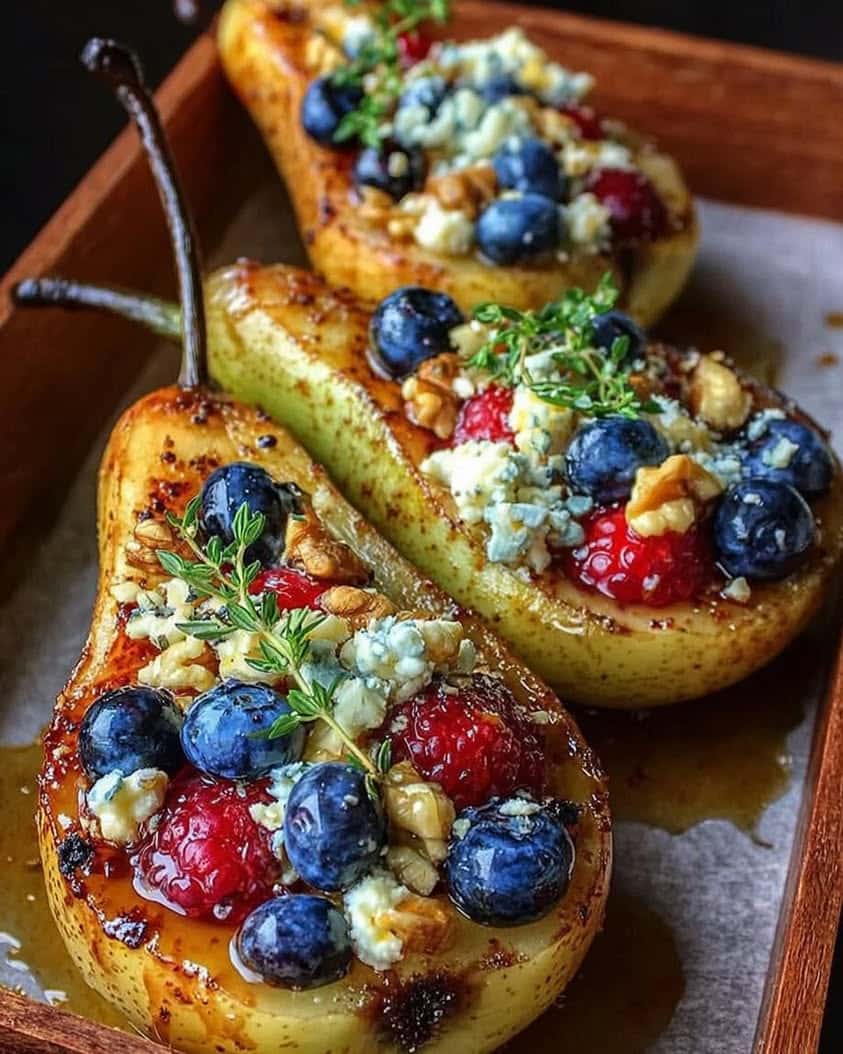
- Visual Appeal: This dessert is a feast for the eyes with its golden-brown pear halves, vibrant red and blue berries, and artful drizzles of amber honey. The white and blue crumbles of cheese and the earthy walnuts add beautiful texture and color contrast, making it ideal for photography.
- Skill Level Needed: This is a beginner-friendly recipe requiring only basic kitchen skills like coring fruit, mixing, and using an oven. There is no intricate pastry work or precise tempering of chocolate, making it accessible for cooks of all levels who want to create something special.
- Special Equipment: You only need a basic baking dish, a small bowl for mixing, and a spoon. A melon baller or small spoon is helpful for coring the pears, but a regular teaspoon works perfectly. No stand mixers, blenders, or specialty pans are required.
Recipe Overview
- Difficulty Level: We classify this recipe as “Easy” because it involves straightforward techniques like coring, baking, and assembling. There is no fussy dough to roll or delicate sauces to emulsify. The steps are sequential and simple, with minimal room for error, making it a confident choice for novice cooks and a relaxing one for experts.
- Category: This dish shines as a standout dessert, but it also crosses into other categories beautifully. It can serve as a luxurious breakfast or brunch item, a sophisticated cheese course after a meal, or even a unique side dish for a holiday table alongside roasted meats.
- Cuisine: While not tied to one specific tradition, this recipe draws inspiration from modern American and European farm-to-table cooking. It embodies a contemporary approach that prioritizes quality, seasonal produce and elegant, simple preparations that let the ingredients speak for themselves.
- Cost: This is a moderately priced dessert, especially if you use seasonal fruit. Pears and berries can be affordable in season, and a small amount of high-quality blue cheese and walnuts goes a long way. Overall, it offers a gourmet experience for a fraction of the cost of a restaurant dessert.
- Season: This recipe is ideal in the fall when pear varieties like Bosc and Anjou are perfectly ripe and firm. However, it is highly adaptable for winter with stored pears, spring with early berries, or summer by utilizing a mix of fresh, peak-season berries.
- Occasion: Perfect for dinner parties, holiday meals like Thanksgiving or Christmas, romantic dates at home, or as a special treat to elevate a regular weeknight. Its elegant presentation makes it suitable for formal gatherings, while its simplicity keeps it approachable for casual dining.
Why You’ll Love This Recipe
First and foremost, the taste and texture appeal is undeniable. Each component of these Baked Pears with Berries, Honey, Walnuts & Blue Cheese brings a unique sensation to your palate. The warm, soft pear acts as the perfect base, soaking up the flavors of honey and berry juices. Then, you get a pop of freshness from the berries, a rich crunch from the walnuts, and that unforgettable creamy, tangy finish from the blue cheese. This combination is far more interesting and satisfying than a standard sugary dessert, leaving you feeling pleasantly full but not weighed down.
Secondly, the convenience and preparation benefits are a major win. You can have this impressive dessert prepped and in the oven in about 15 minutes. Unlike finicky cakes or pies that demand precise baking times and cooling periods, this dish is forgiving and served warm. You can easily prepare the components ahead of time, then simply bake and assemble when ready to serve. This makes entertaining stress-free, as you are not stuck in the kitchen while your guests enjoy themselves.
From a nutritional perspective, this dessert offers distinct advantages over traditional options. Pears and berries are packed with fiber, vitamins, and antioxidants. Walnuts provide healthy fats, protein, and omega-3s. Even the blue cheese contributes calcium and protein. While it is still a treat, it is made from whole, recognizable ingredients without refined sugars or processed fats. Consequently, it is a dessert you can feel good about serving to your family.
Furthermore, the social and entertaining value of this dish is high. It is a natural conversation starter due to its unique flavor combination and beautiful presentation. Serving it family-style on a platter encourages sharing and interaction. It feels special and thoughtfully prepared, showing your guests that you care about their dining experience. It is a dessert that people remember and often ask for the recipe.
Finally, the cost-effectiveness and accessibility are key. You do not need expensive, hard-to-find ingredients. Most components are pantry staples or readily available at any grocery store. A single recipe yields four generous servings, making it an economical choice for a gourmet dessert. Additionally, the recipe is highly adaptable; if you cannot find one ingredient, there are easy substitutions, ensuring you can make it anytime the craving strikes.
Historical Background and Cultural Significance
The practice of baking fruit with sweeteners and spices is ancient, spanning countless cultures. Early methods likely involved cooking fruit over open fires with honey, which was a primary sweetener before the widespread availability of sugar. Combining fruit with cheese and nuts also has deep roots, particularly in European and Middle Eastern culinary traditions. For instance, the French often pair pears with Roquefort cheese, while the Italians serve pears with pecorino and walnuts. This modern recipe for Baked Pears with Berries, Honey, Walnuts & Blue Cheese is a direct descendant of these timeless, intuitive pairings that celebrate regional, seasonal bounty.
Culturally, baked fruit dishes have often occupied a space between everyday sustenance and celebratory fare. In many agrarian societies, a baked apple or pear was a common, humble dessert. However, when enriched with precious ingredients like nuts, dried fruits, or honey, it became special enough for festivals and gatherings. The addition of blue cheese, a product of careful aging and craftsmanship, elevates the dish from simple peasant food to something worthy of a fine dining table. This reflects a broader culinary trend of elevating rustic, ingredient-driven dishes to a level of sophistication.
The evolution of this specific recipe mirrors the modern farm-to-table and “new American” cuisine movements. Chefs began reimagining classic flavor combinations with a focus on plate presentation and balanced flavor profiles. The specific combination of baked pears with berries, honey, walnuts, and blue cheese gained popularity in upscale restaurants in the late 20th and early 21st centuries as a signature fall dessert. It successfully bridged the gap between familiar comfort food and innovative gastronomy, making it a favorite to replicate at home.
Regional variations of this concept are plentiful. In the American South, you might find a similar dish using pecans instead of walnuts and a bourbon-honey glaze. In the Mediterranean, it could feature figs or dates alongside the pears, with a drizzle of reduced balsamic vinegar. Some Scandinavian versions might incorporate lingonberries and a dollop of crème fraîche instead of blue cheese. This global tapestry of variations underscores the universal appeal of warm, baked fruit enhanced with complementary textures and flavors, proving that the core idea is both timeless and endlessly adaptable.
Ingredient Deep Dive
Pears: Pears have been cultivated for thousands of years, originating in Asia and later spreading through Europe and the Americas. They are a symbol of immortality in Chinese culture and were sacred to Greek and Roman goddesses. Nutritionally, they are an excellent source of dietary fiber, particularly in the skin, and provide vitamin C, potassium, and antioxidants. For this recipe, choose firm, ripe-but-not-soft varieties like Bosc or Anjou, which hold their shape well during baking. Store unripe pears at room temperature and move them to the refrigerator once they yield slightly to pressure at the stem.
Berries (Mixed): Berries like raspberries and blueberries are some of the oldest known foods foraged by humans. They are celebrated in summer festivals across Europe and North America. They are nutritional powerhouses, loaded with vitamin C, manganese, and potent antioxidants like anthocyanins, which give them their vibrant color. For best results, use fresh, plump berries without mold or mushiness. If using frozen, do not thaw them first; add them directly to the baking dish. Store fresh berries unwashed in a single layer in the refrigerator and rinse just before using.
Honey: Honey’s history is intertwined with human civilization, used as food, medicine, and currency. Its flavor profile changes dramatically based on the flowers foraged by bees, from light and floral to dark and robust. It contains trace enzymes, minerals, and antioxidants, and is a natural humectant, helping keep the baked pears moist. For this recipe, a mild, liquid honey like clover or orange blossom works well, allowing the other flavors to shine. Store honey at room temperature in a sealed container; if it crystallizes, gently warm the jar in a bowl of hot water.
Walnuts: Walnuts are among the oldest tree foods, with remnants found in Neolithic sites. The ancient Romans considered them the food of the gods. They are rich in alpha-linolenic acid, a plant-based omega-3 fat, and provide protein, magnesium, and antioxidants. Toasting is crucial as it deepens their flavor and adds crunch. Buy walnuts in small quantities from a store with high turnover, as their high fat content makes them prone to rancidity. Store them in an airtight container in the refrigerator or freezer for maximum freshness.
Blue Cheese: Blue cheese’s discovery is famously attributed to accidental mold growth in caves. Varieties like Gorgonzola, Roquefort, and Stilton are protected by origin laws. It is a good source of calcium, protein, and probiotics. The sharp, salty, tangy flavor cuts through the sweetness of the dish. For baking, a creamy, crumbly blue that melts slightly is ideal. Wrap the cheese tightly in parchment or wax paper, then in plastic wrap, and store in the coldest part of your refrigerator. Bring it to room temperature for 15 minutes before crumbling for the best texture and flavor.
Common Mistakes to Avoid
- Using Overripe Pears: Overly soft pears will turn to mush in the oven. You need fruit that is firm enough to hold its shape during the baking process. A pear that yields slightly at the stem is perfect; one that feels soft all over is too ripe for this application.
- Skipping the Toasting Step for Walnuts: Raw walnuts can taste slightly bitter and lack the deep, nutty aroma that toasted walnuts provide. Toasting them in a dry pan for a few minutes until fragrant is a simple step that dramatically elevates the entire dish’s flavor profile.
- Overbaking the Pears: The goal is tender pears that still offer some resistance, not pear sauce. Check for doneness with a paring knife or skewer; it should slide in with just a little effort. Remember, the pears will continue to soften slightly from residual heat after being removed from the oven.
- Adding Blue Cheese Before Baking: If you add the blue cheese before or during baking, it will melt completely and lose its distinct crumbly texture and sharp flavor. Always add the cheese as a final garnish after the pears come out of the oven so it retains its character.
- Using Crystallized or Solid Honey: Honey that has solidified will not drizzle properly. If your honey has crystallized, gently warm the jar in a bowl of hot water until it returns to a liquid state. This ensures you can evenly coat the pears and berries for consistent sweetness.
- Not Seasoning the Dish: Even a sweet dish benefits from a pinch of salt to balance the flavors. A tiny sprinkle of flaky sea salt over the finished dessert or a crack of black pepper can actually enhance the perception of sweetness and complexity.
- Crowding the Baking Dish: If the pear halves are packed too tightly, they will steam rather than roast, preventing proper caramelization. Arrange them with a little space between each one to allow hot air to circulate and promote browning.
- Using Pre-Crumbled, Dry Blue Cheese: The pre-crumbled cheese found in tubs often contains anti-caking agents and can be dry and lacking in flavor. For the best experience, buy a small wedge of blue cheese and crumble it yourself just before serving.
Essential Techniques
Coring and Halving Pears: This technique is fundamental for creating an edible vessel that holds the toppings. Using a melon baller or a small teaspoon, start from the bottom blossom end and scoop upward in a circular motion to remove the core and seeds, leaving a neat cavity. Slice the pear in half from stem to bottom first for stability. A sharp knife ensures clean cuts without bruising the fruit. The goal is to remove the tough, inedible parts while maximizing the amount of tender flesh that will bake and caramelize.
Toasting Nuts: Toasting walnuts is a dry-heat technique that drives off moisture and triggers the Maillard reaction, creating new, deeper flavor compounds. Spread the nuts in a single layer in a dry skillet over medium heat. Shake the pan frequently for even toasting. Listen for a faint sizzle and watch for them to become fragrant and slightly darker in color, which usually takes 3-5 minutes. Immediately transfer them to a plate to stop the cooking process, as they can burn quickly. This step is non-negotiable for achieving maximum nutty flavor and crunch.
Baking for Caramelization: Baking at a moderately high temperature (375°F/190°C) is key. This heat encourages the natural sugars in the pears and honey to caramelize, developing rich, complex flavors and a beautiful golden color. Basting the pears halfway through with the pan juices ensures they do not dry out and promotes even glazing. The visual cue for success is pears that are tender when pierced but still hold their shape, with the edges and honey showing signs of browning.
Pro Tips for Perfect Baked Pears with Berries, Honey, Walnuts & Blue Cheese
Choose the Right Pear: Firm-fleshed varieties like Bosc or Anjou are ideal because they maintain structure during baking. Avoid Bartlett pears, as they become too soft and mushy. The pear should be ripe but firm, yielding only slightly at the stem when pressed.
Boost Flavor with Spices: Add a pinch of cinnamon, cardamom, or a star anise to the baking dish. These warm spices infuse the pears and berries with an extra layer of aromatic complexity that complements the honey and cheese beautifully.
Control Juiciness: If your berries are very juicy, toss them with a teaspoon of cornstarch before adding to the dish. This will help thicken the natural juices as they bake, creating a more sauce-like consistency instead of a watery pool.
Finish with Freshness: After baking, garnish with a few fresh, uncooked berries and a sprinkle of fresh thyme or mint leaves. This adds a bright pop of color, a fresh flavor contrast, and makes the presentation look more vibrant and professional.
Adjust Sweetness at the End: Taste the baked pears and berry juices before final assembly. Depending on the natural sweetness of your fruit, you may want to drizzle with a little extra honey or a pinch of sugar after baking to achieve your desired level of sweetness.
Warm Your Serving Plates: For the ultimate experience, serve the baked pears on slightly warmed plates. This small step keeps the dessert at the perfect eating temperature longer, ensuring the cheese stays slightly soft and the flavors remain pronounced.
Experiment with Cheese: While blue cheese is classic, do not be afraid to try other bold cheeses. A creamy goat cheese, a sharp aged cheddar, or even a funky Gorgonzola dolce can create delicious and unique variations on the same theme.
Variations and Adaptations
Regional Variations: Embrace global influences by changing the nuts and cheese. For a French twist, use Roquefort cheese and hazelnuts. An Italian version might feature Gorgonzola, toasted pine nuts, and a balsamic glaze reduction instead of honey. In the American South, substitute pecans for walnuts and add a splash of bourbon to the honey before drizzling.
Seasonal Adaptations: This recipe is a canvas for the seasons. In winter, use dried cranberries or cherries instead of fresh berries and add warming spices like cloves or allspice. For spring, incorporate sliced strawberries and rhubarb. In summer, use a mix of peak-season peaches, nectarines, and berries alongside the pears.
Dietary Modifications: For a vegan version, use maple syrup or agave nectar instead of honey and a vegan blue cheese alternative or crumbled, marinated tofu for tang. To make it gluten-free, ensure all packaged ingredients are certified GF—this recipe is naturally gluten-free by design. For a dairy-free option, omit the cheese or use a nut-based “cheese” crumble.
Flavor Variations: Infuse the honey beforehand by warming it gently with a sprig of rosemary, a vanilla bean pod, or a strip of orange zest. You can also add a tablespoon of brandy, rum, or amaretto to the baking dish with the berries for an adult-oriented depth of flavor.
Texture Modifications: For added texture, sprinkle a crunchy oat and brown sugar streusel over the pears before baking. Alternatively, for a smoother experience, blend the baked berries into a coulis to serve underneath the pear halves. You can also chop the toasted walnuts more finely for a subtler crunch.
Presentation Alternatives: Instead of serving pear halves, slice the baked pears and fan them out on a plate. For individual servings, bake the pears in ramekins. For a deconstructed version, serve pear puree, berry compote, candied walnuts, and cheese crumbles in separate small bowls for guests to assemble themselves.
Serving and Presentation Guide
Plating Techniques: For a family-style presentation, arrange the warm baked pear halves cut-side up on a large, rustic wooden board or elegant platter. Spoon the berries and pan juices over and around the pears. For individual plates, place one or two pear halves in the center of a shallow bowl or plate, creating a base for the toppings.
Garnishing Ideas: The final garnish is where you make the dish your own. Drizzle honey in a zigzag pattern over everything. Generously sprinkle the toasted walnuts and crumbled blue cheese. Add a final flourish with edible flowers, microgreens, a dusting of powdered sugar, or a few delicate leaves of fresh mint or thyme.
Traditional Accompaniments: While stunning on its own, this dessert pairs wonderfully with a simple side. A scoop of vanilla bean ice cream or a dollop of lightly sweetened whipped cream or crème fraîche provides a cool, creamy contrast. A crisp, buttery shortbread cookie on the side is also a delightful addition.
Modern Serving Suggestions: Serve it as part of a dessert grazing board with other fruit, chocolates, and cookies. Alternatively, present it in a stemless wine glass layered with yogurt or mascarpone for a parfait-style treat. For brunch, serve it alongside Greek yogurt and granola.
Temperature Considerations: This dish is best served warm, not piping hot. Let the baked pears rest for 5 minutes after removing them from the oven. This allows the juices to settle and the fruit to firm up slightly, making them easier to handle and plate. The residual heat will slightly soften the blue cheese without melting it entirely.
Portion Control Tips: One pear half per person is a standard serving for a multi-course meal. For a more substantial dessert or a standalone treat, plan for two halves per person. The recipe scales easily, so you can adjust based on your guest count and the context of the meal.
Wine and Beverage Pairing
Wine Pairings: The sweet, savory, and tangy notes in this dessert call for wines with good acidity and complementary flavors. A late-harvest Riesling or Gewürztraminer with its floral notes and slight sweetness is a classic match. Alternatively, a Sauternes or other dessert wine pairs beautifully. For red wine lovers, a lighter, fruit-forward Pinot Noir can work surprisingly well, especially if the dish features blackberries or cherries. The key is to choose a wine that is at least as sweet as the dessert to avoid a bitter taste.
Non-Alcoholic Alternatives: Sparkling apple cider or a ginger beer provide festive effervescence that cleanses the palate. A warm, spiced chai tea latte echoes the warm baking spices. For a simpler option, a glass of cold, whole milk or a creamy oat milk perfectly complements the rich and tangy flavors of the cheese and nuts.
Coffee/Tea Pairings: A medium-roast coffee with nutty or chocolatey notes complements the walnuts and caramelized pears. For tea, consider an Earl Grey with its bergamot citrus, which pairs nicely with the berries, or a smoky Lapsang Souchong for a bold contrast. Herbal teas like peppermint or chamomile offer a soothing, clean finish.
Temperature Considerations: Serve dessert wines slightly chilled, not ice cold, to allow their aromas to open up. Non-alcoholic sparklers should be well-chilled. Coffee and tea should be served hot to provide a temperature contrast with the warm dessert, enhancing the overall sensory experience.
Serving Suggestions: Offer a small pour of dessert wine (2-3 ounces) in a proper wine glass. For non-alcoholic options, serve in elegant flutes or tempered glass mugs. Always provide water on the table to cleanse palates between bites and sips, allowing guests to fully appreciate the evolving flavors of the Baked Pears with Berries, Honey, Walnuts & Blue Cheese.
Storage and Shelf Life
Storage Methods: Store any leftover baked pears (without the fresh cheese and walnut garnish) in an airtight container in the refrigerator. It is best to keep the components separate: store the baked pears and berry mixture in one container and the toasted walnuts and crumbled blue cheese in another. This prevents the walnuts from becoming soggy and the cheese from melting into the fruit.
Temperature Requirements: Refrigerate leftovers promptly. The baked fruit mixture will keep for up to 3 days. The toasted walnuts, stored at room temperature in a sealed container, will stay crunchy for about a week. The blue cheese should always be stored in the refrigerator and is best used within 5-7 days of opening.
Container Recommendations: Use shallow glass or BPA-free plastic containers for the fruit to allow for quick cooling and even storage. For nuts and cheese, use small jars or zip-top bags with the air pressed out. Label containers with the date to keep track of freshness.
Signs of Spoilage: Discard the baked fruit if you notice any off smells, significant mold growth (beyond a few harmless spots on berries), or an overly fermented taste. Walnuts that smell like paint or have a bitter taste are rancid. Blue cheese will develop excessive blue or green mold beyond its intended veining and may become unpleasantly ammonia-smelling when spoiled.
Reheating Instructions: Reheat only the baked pear and berry portion. Place it in a microwave-safe dish and warm in 30-second intervals until just heated through, or warm gently in a covered saucepan over low heat. Do not overheat, as the pears can become too soft. Re-assemble with fresh garnishes of room-temperature cheese and walnuts after reheating.
Freezing Guidelines: Freezing is not recommended for the assembled dish, as the texture of the pears and berries will become mushy upon thawing. The toasted walnuts can be frozen successfully in an airtight bag for up to 3 months to maintain freshness.
Make Ahead Strategies
Prep Timeline: You can prepare nearly every component 1-2 days in advance. Core and halve the pears, then submerge them in a bowl of water with a squeeze of lemon juice to prevent browning; store covered in the fridge. Toast the walnuts and store at room temperature. Wash and dry the berries, then refrigerate. Crumble the cheese and keep it wrapped in the fridge. This leaves only the baking and final assembly for the day of serving.
Storage Between Steps: Keep the prepped pears in the acidulated water until ready to use, then pat them dry before baking. Store toasted nuts in an airtight container away from heat and light. Keep berries in a single layer on a paper towel-lined container to absorb excess moisture and prevent mold.
Quality Impact Assessment: Prepping ahead has minimal negative impact and can actually improve the dish. The lemon water keeps pears fresh, and toasting nuts ahead allows their flavor to settle and deepen. The only element that must be absolutely fresh is the final garnish of cheese, as pre-crumbled cheese can dry out.
Assembly Tips: On the day of serving, simply arrange the prepped pears in your dish, scatter the berries, drizzle with honey, and bake. While the pears are baking, take your pre-crumbled cheese out of the fridge to come to room temperature. This streamlined process reduces active kitchen time to under 10 minutes.
Reheating Guidelines: If you baked the pears a few hours ahead, you can re-warm them gently in a 300°F (150°C) oven for 10-15 minutes before serving. Cover the dish with foil to prevent excessive browning or drying out. Always add the fresh garnishes after this final warm-up.
Fresh Element Additions: The strategy is to do all cooking and heating ahead of time, but reserve the final texture and fresh elements for serving. Always add the room-temperature crumbled blue cheese, the toasted walnuts, and any fresh herb garnishes just before the dish hits the table to ensure maximum flavor and textural contrast.
Scaling Instructions
Halving the Recipe: To serve two, simply use 2 pears, halve all other ingredient quantities, and use a smaller baking dish like a bread loaf pan or pie dish. The bake time may be slightly reduced by 5-7 minutes, so start checking for doneness early. This is perfect for a romantic dinner or a small household.
Doubling or Tripling: For a crowd, double or triple the ingredients proportionally. Use a very large baking dish or two standard-sized dishes. It is crucial not to overcrowd the pears; they should still have space between them for proper caramelization. You may need to increase the bake time by 5-10 minutes and rotate the pans halfway through for even cooking.
Equipment Adjustments: When scaling up, ensure your baking dishes are the appropriate size. Using a dish that is too small will cause steaming, while one that is too large may cause the juices to burn. If doubling, two 9×13 inch dishes are ideal. Have a large serving platter ready for the finished product.
Timing Modifications: While prep time scales linearly, bake time does not double when you double the recipe. A doubled recipe in a properly sized dish will typically need an additional 10-15 minutes of baking. Always rely on the visual and textural doneness cues (tender pears, bubbling berries) rather than strictly following the clock.
Storage Considerations: Scaling up means you are more likely to have leftovers. Plan your storage containers in advance. Consider if you will serve all the dessert at once or if you will bake and store a portion for another event within 3 days.
Nutritional Deep Dive
Macro Breakdown: A serving of this dessert provides a balanced mix of macronutrients. The pears and berries contribute complex carbohydrates and dietary fiber, which aid digestion and provide sustained energy. The walnuts are a source of healthy fats and plant-based protein. The blue cheese adds additional protein and fat. The honey provides simple carbohydrates for quick energy, but in a more natural form than refined sugar.
Micronutrient Analysis: This dish is rich in essential vitamins and minerals. Pears offer vitamin C and potassium. Berries are loaded with antioxidants like vitamin C and manganese. Walnuts provide magnesium, phosphorus, and copper. Blue cheese contributes significant calcium, which is crucial for bone health, along with B vitamins and vitamin A.
Health Benefits: The fiber from the fruit promotes gut health and satiety. The antioxidants in the berries and walnuts combat oxidative stress and inflammation. The healthy fats in walnuts support brain and heart health. The probiotics in blue cheese can contribute to a healthy gut microbiome. Together, these ingredients make for a dessert that supports overall wellness.
Dietary Considerations: This recipe is naturally gluten-free. It contains dairy (cheese) and nuts. For those monitoring sugar intake, the primary sweetener is honey, which has a lower glycemic index than white sugar, but portion control is still advised. It is not suitable for a strict vegan or dairy-free diet without modifications.
Portion Analysis: One serving (one pear half with toppings) is a satisfying dessert portion that typically contains under 300 calories, depending on specific ingredient amounts. It is more nutrient-dense and less calorie-heavy than many traditional desserts like cake or ice cream, making it a smarter choice for those mindful of their intake.
Weight Management Tips: This dessert can be part of a balanced diet. Its high fiber and protein content help you feel full, potentially preventing overeating. To reduce calories slightly, you can use a light hand with the honey or cheese. Remember, the focus is on quality ingredients that provide nutrition and satisfaction, not just empty calories.
Dietary Adaptations
Gluten-free: This recipe is naturally gluten-free as written. Simply ensure that any packaged ingredients like pre-crumbled cheese or flavored honey are certified gluten-free, as cross-contamination can sometimes occur in processing facilities.
Dairy-free: Omit the blue cheese entirely for a simpler fruit and nut dessert, or use a high-quality dairy-free alternative. Look for cultured nut-based “cheeses” made from cashews or almonds that have a tangy, crumbly profile to mimic blue cheese. Vegan feta can also be a good substitute.
Vegan: Replace the honey with maple syrup, agave nectar, or date syrup. Use a vegan cheese alternative as mentioned above, or create a tangy crumble from mashed tofu mixed with nutritional yeast, lemon juice, and salt. Ensure the sweetener you choose is truly vegan, as some strict vegans avoid honey.
Low-carb/Keto: This recipe is higher in natural sugars from fruit, so it is not ideal for strict keto. For a lower-carb version, use a small amount of blackberries and raspberries (lower in sugar than blueberries), reduce the honey significantly or use a keto-friendly sweetener, and increase the proportion of walnuts and cheese.
Paleo: Omit the blue cheese Print
Baked Pears with Berries, Honey, Walnuts & Blue Cheese
- Total Time: 45 minutes
- Yield: 4
Description
A warm, elegant dessert featuring tender baked pears topped with fresh berries, crunchy walnuts, and crumbled blue cheese, all drizzled with honey for a perfect balance of sweet and savory flavors.
Ingredients
- 2 ripe but firm pears, halved and cored
- 1 cup mixed fresh berries (such as blueberries, raspberries, or strawberries)
- 1/4 cup chopped walnuts
- 2 ounces blue cheese, crumbled
- 3 tablespoons honey, plus extra for drizzling
- 1 tablespoon unsalted butter, melted
- 1/2 teaspoon ground cinnamon
- Pinch of salt
Instructions
- Preheat the oven to 375°F (190°C). Lightly grease a baking dish.
- Place the pear halves cut-side up in the baking dish. Brush the cut sides with melted butter and sprinkle with cinnamon and a pinch of salt.
- Bake the pears for 20-25 minutes, or until tender when pierced with a fork.
- Remove from the oven and let cool slightly. Top each pear half with mixed berries, walnuts, and crumbled blue cheese.
- Drizzle generously with honey and serve warm.
Notes
You can customize the seasonings to taste.
- Prep Time: 15 minutes
- Cook Time: 30 minutes
- Method: Dessert
- Cuisine: American